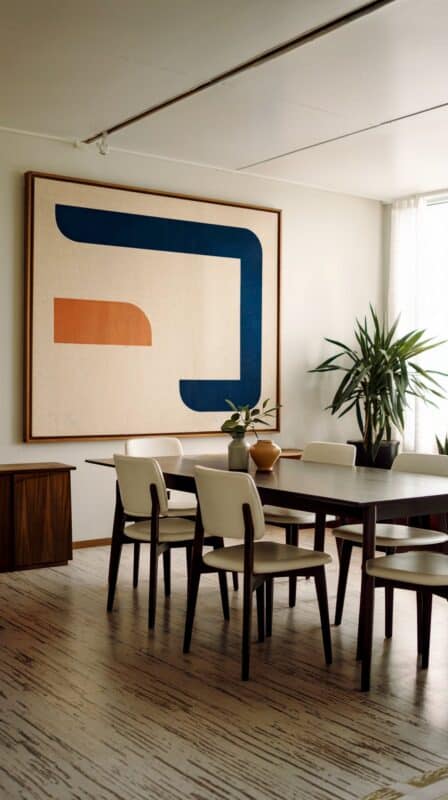
Revamp your dining area with these mid century modern dining room ideas! Discover how to craft a stylish and timeless space with clean lines, warm textures, and iconic decor.
So, you’re looking to design a mid-century modern dining room? Great choice! This style is a perfect blend of functionality, simplicity, and sophistication. With its timeless appeal and effortless elegance, mid-century modern design turns your dining space into a stylish yet welcoming area where meals and memories are shared.
At its core, mid-century modern is about clean lines, warm wood tones, and an emphasis on form and function. It balances bold accents with minimalist design, creating a space that feels inviting without being overwhelming. Whether you’re starting from scratch or giving your existing dining room a makeover, these 15 best mid-century modern dining room ideas will help you achieve that sleek, retro-inspired look.
Key Takeaways:
- Focus on clean lines and functional furnishings
- Incorporate bold accents, geometric patterns, and warm wood tones
- Choose statement lighting and iconic mid-century furniture
- Blend natural elements and modern simplicity
Timeless Mid-Century Modern Dining Room Trends
Select Streamlined Furnishings with Clean Lines

Mid-century modern dining rooms are celebrated for their focus on simplicity, practicality, and understated elegance. Unlike traditional or ornate styles that rely on heavy, bulky furniture pieces, mid-century modern design emphasizes sleek, streamlined furnishings that bring a sense of openness and lightness to the space. When selecting dining room furniture, look for pieces with clean lines, smooth surfaces, and tapered legs that add a subtle touch of sophistication without overwhelming the room.
Tables in this style are typically rectangular or round, featuring thin, angular legs that create an airy feel. These shapes help maintain balance and flow within the room. For chairs, opt for designs with slender frames and upholstered seats that offer comfort while retaining the minimalist aesthetic. Upholstery materials like leather, tweed, or tightly woven fabrics work particularly well, as they complement the clean structure of the furniture without detracting from its form.
Decor Tip: Choose tables finished in warm woods such as walnut, teak, or oak to achieve an authentic mid-century look. These woods have rich grains and tones that add warmth and natural beauty to the dining space. Pair your table with chairs that have simple, gently curved backs; this subtle curvature softens the overall geometric lines of the furniture and adds visual interest without sacrificing the streamlined vibe.
DIY Idea: If you already have existing furniture, consider refinishing tabletops with walnut or teak veneer and replacing bulky legs with tapered wooden legs available at craft stores. This can give your older pieces an instant mid-century modern facelift while saving costs.
Incorporate Iconic Mid-Century Modern Chairs

No mid-century modern dining room is truly complete without incorporating some of the era’s most iconic chair designs. These chairs are more than just functional seating—they are timeless pieces of art that combine aesthetic appeal with ergonomic comfort. Classics like the Eames Molded Plastic Chair, the Wishbone Chair by Hans Wegner, and the Cesca Chair by Marcel Breuer each bring a unique personality to your dining space.
The Eames Molded Plastic Chair is known for its smooth curves and molded seat that molds comfortably to your body. It often comes in bright colors but also works beautifully in neutral tones. The Wishbone Chair stands out for its elegant Y-shaped backrest and hand-woven seat, creating a blend of craftsmanship and modernity. The Cesca Chair features tubular steel frames paired with cane seats and backs, offering an industrial yet refined look.
Decor Tip: Don’t hesitate to mix and match different mid-century chair styles around your dining table. Combining chairs with varied silhouettes but similar materials or colors creates an eclectic yet cohesive look that adds dimension and personality to your dining area. This approach also allows you to personalize your space while honoring mid-century modern design principles.
DIY Idea: Reupholster vintage chairs with fabrics in bold solid colors or subtle geometric patterns to update their appearance while maintaining their classic shapes.
Add a Pop of Color with Vibrant Accents

Mid-century modern interiors often feature neutral or muted backdrops such as whites, creams, grays, or natural wood tones. To keep the space lively and engaging, adding vibrant color accents is essential. Signature mid-century hues include mustard yellow, deep teal, burnt orange, and olive green—each offering a rich but grounded tone that complements natural materials.
Incorporate these colors through easily changeable elements such as seat cushions, throw pillows, wall art, decorative vases, or even a boldly painted accent wall. This method allows you to experiment with color without committing to permanent changes. Vibrant accents create focal points that draw the eye around the room and break up the otherwise neutral palette.
Decor Tip: Use color strategically and sparingly to avoid overwhelming the room. For example, a single mustard-yellow cushion on neutral chairs or a deep teal vase on the credenza can create just enough contrast to energize the space. Layer different textures alongside these colors—such as soft textiles or glossy ceramics—to create depth and interest.
DIY Idea: Paint wooden chair legs or small furniture pieces in mid-century colors using matte or satin finishes for subtle yet effective color pops.
Pair Clean Lines with Warm Textures

One challenge in mid-century modern design is balancing its sharp, clean lines with warmth and comfort so the space doesn’t feel cold or sterile. Introducing warm textures is a simple way to soften the angular shapes of furniture and add inviting layers to the room.
Consider incorporating wool area rugs that have a low pile for durability under dining tables or velvet-upholstered chairs that add tactile richness. Natural fiber curtains such as linen or jute bring an organic softness while complementing wooden furniture finishes. Textured ceramic vases or woven baskets can also serve as warm accent pieces on shelves or sideboards.
Decor Tip: Mixing smooth surfaces—like polished wood or metal—with cozy textiles creates a harmonious contrast that feels both modern and lived-in. For example, a woven jute rug under a teak dining table surrounded by velvet-upholstered chairs balances sleek design with comfort.
DIY Idea: Knit or crochet simple wool cushion covers in earthy colors for your dining chairs to add warmth that’s easy to swap out seasonally.
Curate a Mid-Century Modern Centerpiece

The dining table is often the focal point of any dining room, so choosing a centerpiece that reflects mid-century elegance is important. Mid-century modern centerpieces tend to favor sculptural objects over cluttered arrangements. Opt for bold yet simple pieces like a large ceramic bowl in matte glaze, an abstract-shaped vase in a single color, or a brass candlestick holder with geometric detailing.
The key is restraint—choose one statement piece rather than several small items competing for attention. A well-chosen centerpiece enhances the table’s clean lines without adding visual noise.
Decor Tip: Place your centerpiece on a natural wood table to highlight contrasts between organic textures and sculptural shapes. For added visual interest, alternate between metallic finishes like brass or chrome and matte ceramics depending on your room’s lighting and color scheme.
DIY Idea: Create your own centerpiece by painting smooth river stones with mid-century-inspired colors or arranging simple dried branches in a sleek vase.
Install a Statement Light Fixture

Lighting plays an essential role in setting the mood and defining the style in any mid-century modern dining room. The lighting fixtures should be both dramatic and functional, often serving as sculptural focal points themselves.
Popular mid-century lighting choices include Sputnik chandeliers characterized by their starburst design; globe pendant lights with simple spherical forms; and arc floor lamps that extend elegantly over the dining table. Materials like brass, matte black metal, and chrome are commonly used finishes that add a sleek vintage flair to lighting fixtures.
Decor Tip: When selecting lighting, consider how its color temperature complements your wood finishes and accent colors. Warm LED bulbs work well to preserve the cozy yet sophisticated atmosphere typical of mid-century spaces. Dimmer switches offer flexibility for adjusting ambiance from casual dinners to formal occasions.
DIY Idea: Repurpose vintage lighting parts or spray-paint existing fixtures in brass or matte black for an affordable statement piece upgrade.
Include a Wooden Credenza for Storage

A wooden credenza or sideboard is a must-have in mid-century modern dining rooms. Beyond providing practical storage space for dishware, linens, and other essentials, credenzas also serve as stylish display surfaces that contribute to the room’s character.
Look for credenzas with signature mid-century features such as tapered legs that elevate them off the ground, sliding doors for sleek functionality, and minimalist hardware. Materials like walnut or teak are preferred for their rich grain patterns and warm tone.
Decor Tip: Style your credenza minimally with a few select items such as a pair of geometric vases, stacks of art books, or framed artwork leaning casually against the wall. This keeps the surface uncluttered while showcasing personality.
DIY Idea: Add retro-style hardware knobs or repaint your existing sideboard in classic mid-century colors to renew its look without full replacement.
Use Geometric Patterns in Textiles

Textiles offer an excellent opportunity to introduce visual interest into your mid-century modern dining room without overpowering its clean aesthetic. Geometric patterns—such as triangles, circles, diamonds, or abstract shapes—are hallmark motifs from this period and work well on table runners, seat cushions, curtains, or throw pillows.
Bold prints can inject energy into neutral spaces while retro-inspired designs bring authenticity. However, it’s important to keep patterns balanced within a cohesive color palette so they enhance rather than dominate the room’s overall look.
Decor Tip: Choose textiles featuring earth tones mixed with accent colors like mustard yellow or teal for harmony. For instance, cushions with subtle geometric prints on solid-colored chairs maintain cohesion while adding depth.
DIY Idea: Sew your own cushion covers using fabric remnants with mid-century geometric patterns for an affordable yet personalized touch.
Opt for a Round Dining Table

While rectangular tables are traditional choices for dining rooms due to their versatility in seating arrangements, opting for a round dining table can make your space feel more intimate and inviting. Round tables also work particularly well in smaller rooms by maximizing usable space and encouraging conversation flow among diners.
For authenticity in mid-century style, choose round tables with pedestal bases rather than four legs; this design element emphasizes openness beneath the table and lends an elegant silhouette.
Decor Tip: Pair your round table with contrasting dining chairs—such as molded plastic seats combined with wooden legs—to introduce visual personality and balance softness with structure.
DIY Idea: If you have a rectangular table but want a round shape temporarily, consider adding a circular tabletop overlay or cover during meals for an instant style update.
Incorporate Indoor Plants for a Natural Touch

Mid-century modern interiors emphasize connecting indoor spaces with nature through organic shapes and materials. Incorporating indoor plants into your dining room not only brings life and vibrancy but also complements wooden furniture finishes beautifully.
Large leafy plants such as fiddle leaf figs, rubber plants, snake plants, or monstera are popular choices because of their bold silhouettes and lush greenery. Smaller succulents or cacti grouped together can also provide subtle natural accents without overwhelming surfaces.
Decor Tip: Use ceramic or wooden planters that match your existing decor for consistency in style. Consider placing plants near windows where they receive sufficient light but avoid overcrowding the room to maintain clean lines.
DIY Idea: Create unique planters by painting terracotta pots in mid-century colors or wrapping them with jute twine for added texture aligned with natural aesthetics.
Choose a Bold Area Rug with Abstract Designs

A carefully selected area rug can unify your dining room design by anchoring furniture placement while adding warmth and texture underfoot. Mid-century modern rugs often feature abstract designs or geometric patterns rendered in muted earth tones such as rust, ochre, olive, or navy blue.
Low-pile wool rugs are ideal because they offer durability against frequent chair movement while being easy to clean. The softness contributes to comfort during meals without interfering with chair adjustments.
Decor Tip: Position rugs so that all dining chairs remain on them even when pulled out; this defines the eating area clearly while adding visual cohesion through pattern repetition.
DIY Idea: If you already have neutral flooring but want mid-century flair instantly, source vintage rugs from thrift stores or online marketplaces specializing in retro home goods.
Display Mid-Century Modern Artwork

Art is one of the simplest ways to reinforce mid-century modern style within your dining room environment. Abstract prints featuring bold shapes, line drawings emphasizing simplicity of form, or vintage-inspired posters from designers of the era provide authentic character on walls.
When selecting artwork, focus on pieces that incorporate strong colors associated with mid-century palettes—such as mustard yellows, deep blues, greens—or stick to black-and-white themes for timeless sophistication. Thin wood or metal frames complement these works by maintaining sleek edges without distraction.
Decor Tip: Arrange art in groups either symmetrically aligned above sideboards or asymmetrically scattered over walls depending on your preference for order versus eclecticism.
DIY Idea: Scan mid-century pattern books or posters online and print high-quality reproductions yourself framed simply to personalize your collection affordably.
Use Mismatched Chairs for an Eclectic Look

Mismatched chairs bring character and playfulness to any dining room while still respecting mid-century aesthetics when chosen thoughtfully. Mixing different chair styles around one table allows you to combine varied shapes and materials but still maintain harmony by focusing on common elements such as color schemes or finishes.
For example, pairing wooden chairs alongside molded plastic versions works well if they share complementary hues like natural wood tones balanced by neutral shades. Similarly colored upholstery across different chair styles can unify disparate silhouettes visually.
Decor Tip: If your dining table is neutral-toned wood or white finish, experiment with colorful chairs in mustard yellow, teal blue, or burnt orange as accent pieces for surprise pops of personality within an otherwise restrained palette.
DIY Idea: Refurbish thrifted chairs individually using different paint colors from classic mid-century palettes while keeping upholstery consistent across seats for cohesion amid variety.
Highlight Natural Wood Finishes

Wood is one of the defining elements of mid-century modern design — its warmth and organic texture provide authenticity and depth to interiors. Whether it’s a teak dining table showcasing its distinctive grain patterns; a walnut sideboard exuding richness; or oak chairs offering sturdy elegance—natural wood finishes are key contributors to this style’s enduring appeal.
Avoid painting over wood surfaces; instead let the natural beauty of grain variations become focal points within your space. Applying clear varnish or oil enhances these features further while protecting furniture from wear.
Decor Tip: Mix different types of wood finishes thoughtfully by balancing lighter woods like oak against darker ones such as walnut without creating visual clutter—this diversity adds interest but adheres to natural consistency.
DIY Idea: Maintain wood furniture yourself by regularly cleaning surfaces with natural oils like linseed oil to preserve luster and prevent drying out over time without harsh chemicals.
Combine Blues and Greens in the Color Scheme

A classic color combination often seen in mid-century modern interiors includes various shades of blue and green. These cool hues create a calming yet stylish atmosphere perfect for dining rooms where relaxation meets social interaction.
You might pair deep navy walls with olive-green upholstered chairs for contrast rooted in nature-inspired palettes; alternatively aqua blues combined with mustard yellow accents add brighter energy balanced by earthy undertones.
Decor Tip: Use these colors selectively across upholstery fabrics, artwork frames, decorative accessories like vases or candle holders to maintain visual harmony rather than overwhelming the room’s neutral base tones like white walls or light wood floors.
DIY Idea: Paint one wall navy blue behind your dining area paired with olive-green cushions on chairs to create an easy-to-implement focal point reflecting authentic mid-century style without major renovations.
Conclusion
Creating a mid-century modern dining room is all about blending clean lines, bold accents, and timeless furnishings. By incorporating iconic furniture, geometric patterns, and natural wood tones, you can transform your dining space into a stylish, functional retreat.
Whether you start with a statement chandelier, a round dining table, or a curated centerpiece, every small change brings you closer to the perfect mid-century modern aesthetic.
Ready to give your dining room a makeover? Start with one or two key elements, and soon, you’ll have a space that feels effortlessly chic and undeniably mid-century modern!