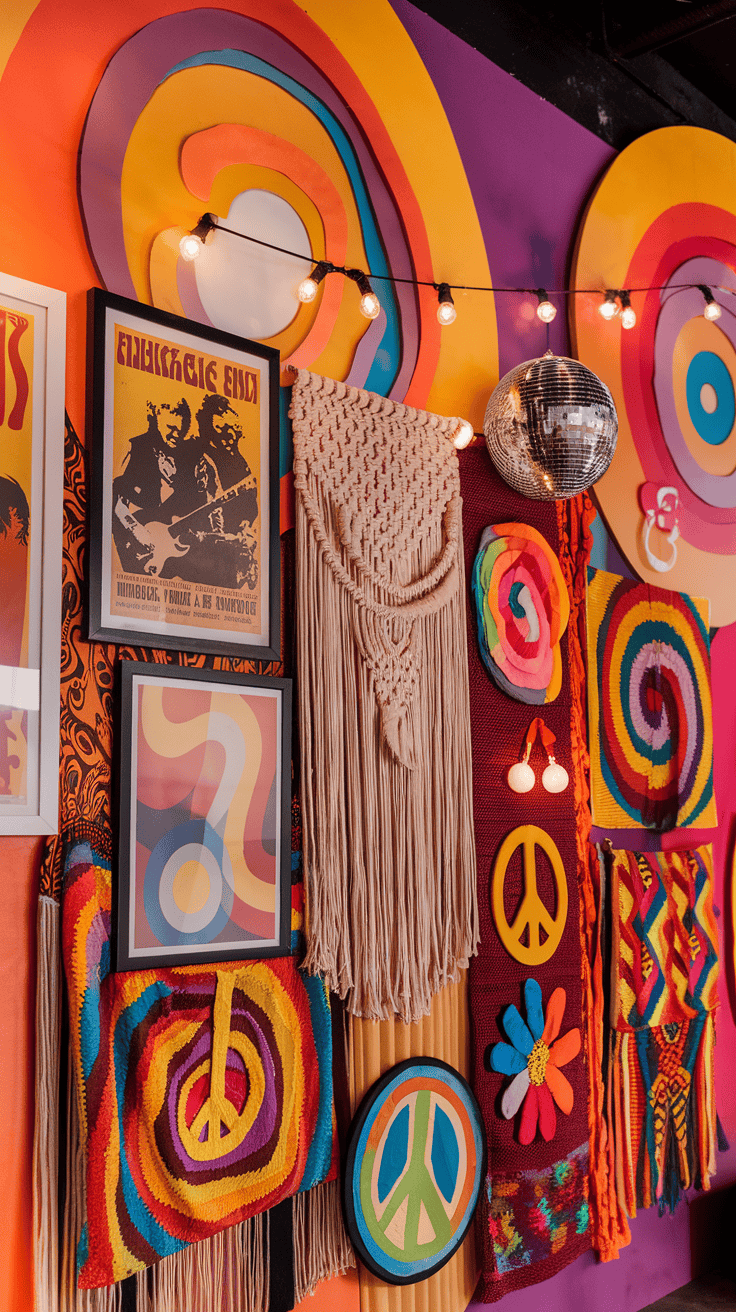
Bring groovy vibes to your dining space with these 70s dining room decor ideas that embrace the era’s bold colors and textures without looking like a time capsule. Get earthy palettes, pattern-mixing tips, and retro furniture finds that actually work in modern homes.
What You’ll Learn From This Post:
- 10+ distinct 70s-inspired dining room setups from subtle vintage touches to full-on retro commitments for every decorating comfort level
- Color palettes, pattern combinations, and material choices that capture the decade without overwhelming your space or sanity
- Budget-friendly sourcing strategies and one simple DIY proving retro style doesn’t require vintage store prices or perfect authenticity
Your dining room probably looks fine but kind of boring. Beige walls, basic table, nothing that makes you excited to host dinner parties or even eat regular Tuesday takeout in there. Meanwhile, you’re scrolling through photos of 70s dining rooms with their burnt orange walls, macramé wall hangings, and those chairs that somehow look both ridiculous and amazing at the same time.
Here’s the truth about 70s decor: it’s having a genuine moment because people are tired of the gray-and-white minimalism that dominated the 2010s. The 70s offered warmth, personality, and a “more is more” energy that feels refreshing after years of sterile neutrals. You can embrace this aesthetic without committing to full period accuracy or making your dining room look like a museum exhibit.
What follows are styling ideas ranging from subtle vintage touches to full retro immersion. Pick your comfort level and start there, because the beauty of 70s style is that it encouraged individual expression over following rigid rules.
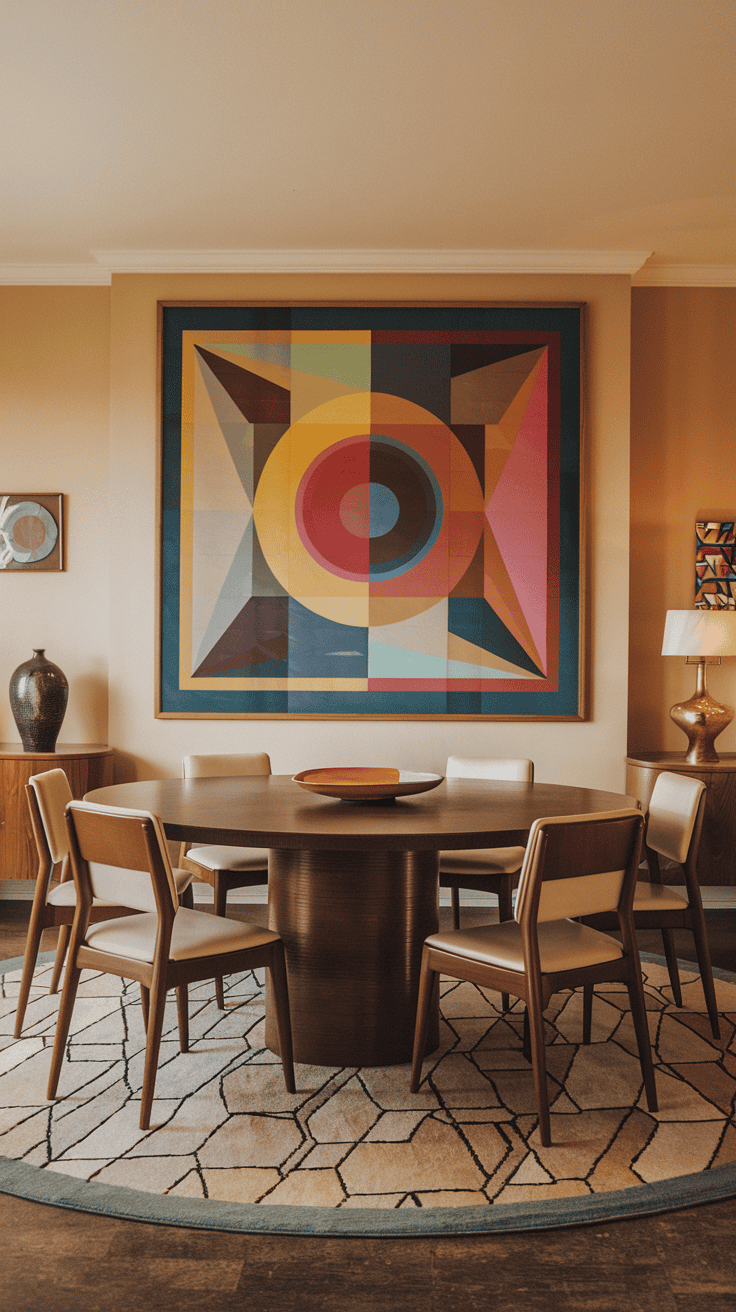
70s Dining Room Decor Ideas for Every Level
1. Burnt Orange Accent Wall Behind Dining Table
70s home decor starts with the era’s signature colors. I paint one wall behind the dining table in burnt orange, rust, harvest gold, or avocado green, keep other walls neutral preventing overwhelming intensity, position dining furniture to face or complement the accent wall, and let the bold color be the room’s statement rather than adding too many competing elements.
The single accent wall provides instant 70s vibes without drowning the room in color. These earthy tones actually work surprisingly well in modern spaces when used strategically. The warmth makes dining rooms feel cozier and more inviting than stark white walls ever manage.
Quick tip: Test paint samples on large poster boards and observe them at different times of day before committing. These bold colors look dramatically different in morning versus evening light. Living with samples for a week prevents expensive regret. Similar color boldness works for best 70s living room decor ideas too.
2. Tulip Table with Iconic Mid-Century Chairs
Retro dining table options include the classic tulip-style pedestal table. I choose a round or oval tulip table in white or wood finish, pair with molded plastic chairs in bold colors or wood versions with curved lines, mix chair colors for eclectic 70s energy or keep uniform for subtle approach, and position in space where pedestal base’s sculptural quality shows.
The tulip table bridges mid-century modern and 70s style perfectly. The single pedestal base provides legroom from all angles and creates visual lightness. This works particularly well in smaller dining rooms where traditional four-leg tables feel heavy.
Quick tip: Authentic vintage tulip tables cost hundreds or thousands. Modern reproductions from places like Article, AllModern, or even Target provide the look for $300-800. Unless you’re a purist, the reproduction serves you just as well while saving serious money. Check out more retro dining room decorating ideas for additional period-authentic inspiration.
3. Teak Dining Set with Warm Wood Tones
Retro dining set favorites include teak furniture popular throughout the 60s and 70s. I source vintage or vintage-style teak dining table and chairs, embrace the warm honey-colored wood, pair with burnt orange or rust-colored cushions and textiles, add brass or gold accents complementing warm wood, and maintain the wood properly with occasional oiling keeping it beautiful.
Teak furniture has serious staying power because the wood itself is gorgeous and the craftsmanship from that era often beats modern mass production. The warm tones create cozy atmosphere perfect for gathering. Plus, quality teak lasts literally decades with minimal care.
Quick tip: Shop estate sales and vintage stores for real teak pieces at reasonable prices. Mid-century and 70s furniture is trendy so prices are up, but deals exist if you’re patient. Refinishing beat-up pieces yourself saves even more money. Similar wood warmth enhances mid-century modern dining room ideas across eras.
4. Macramé Wall Hanging Creating Textile Interest
1970s dining room essentials include macramé in all its knotted glory. I hang large macramé wall hanging behind buffet or on main wall, choose natural cotton or jute in cream or tan, position where it won’t get food-splattered, embrace the bohemian texture it provides, and resist overthinking whether it’s “too much” because confident commitment sells any bold choice.
Macramé adds that unmistakable 70s texture nothing else replicates. The handmade quality feels warmer than printed art. Modern macramé has gotten more sophisticated than the owl wall hangings your aunt had, so current versions work in contemporary spaces while still reading vintage.
Quick tip: Buy macramé secondhand if possible since vintage pieces often have better quality than new mass-produced versions. Etsy also has talented makers creating beautiful pieces. Or learn to make your own since YouTube tutorials make macramé surprisingly accessible for beginners.
5. Pendant Lights in Amber Glass or Rattan
Retro kitchen table and chairs deserve period-appropriate lighting. I hang pendant lights in amber or smoked glass over dining table, consider rattan or wicker shades for bohemian 70s vibe, choose globe or dome shapes characteristic of the era, install dimmers for ambiance control, and ensure lights hang at proper height (30-36 inches above table surface).
Lighting affects room atmosphere more than almost any other element. The warm amber glass creates that cozy 70s glow we associate with the decade. The materials themselves (glass, rattan, wood) add textural interest and organic warmth.
Quick tip: Thrift stores and architectural salvage shops often carry vintage light fixtures needing minor rewiring. For safety, have an electrician handle wiring even if you install the fixture yourself. The vintage authenticity and quality often beat new “vintage-inspired” versions. Similar lighting choices enhance zen home entrance decor ideas for warm welcomes.
6. Shag Rug Under Dining Table
Shag rug dining room ideas might sound impractical but they work when done right. I use shag rug in rust, burnt orange, or brown under dining table, choose rug large enough extending beyond chairs when pulled out, vacuum regularly preventing food accumulation, accept that shag requires more maintenance than flat weaves, and embrace the textural warmth and unmistakable 70s vibe it provides.
Yes, shag rugs under dining tables need more cleaning. But the softness underfoot and the visual texture are worth it if you’re truly committed to the 70s aesthetic. Plus, modern rug pads prevent slipping and many new shag rugs are easier to clean than vintage versions.
Quick tip: Skip shag if you have young kids who drop food constantly or if cleaning stress outweighs aesthetic pleasure. This is a commitment piece requiring acceptance of extra maintenance. Be honest about your lifestyle before buying. Alternative textures can provide similar warmth with less upkeep.
7. Velvet Dining Chairs in Jewel Tones
Vintage dining room ideas embrace luxe fabrics. I reupholster existing chairs or buy new ones in velvet, choose jewel tones like emerald green, sapphire blue, or deep burgundy, mix with warm wood table, add brass or gold hardware accents, and let the velvet provide that rich 70s glamour.
Velvet was everywhere in 70s interiors because it feels luxurious and the deep colors look rich and saturated. Modern performance velvets resist staining better than vintage versions, making them actually practical for dining chairs. The texture also catches light beautifully, creating depth and interest.
Quick tip: If reupholstering sounds intimidating, many upholsterers charge $50-100 per chair which often costs less than buying new vintage-style velvet chairs. Provide your own fabric to save more. DIY reupholstery is also surprisingly manageable for dining chair seats with YouTube guidance. Similar velvet richness works for best 70s bedroom decor ideas too.
8. Geometric Wallpaper Making Bold Statement
70s living room style patterns work beautifully in dining rooms. I wallpaper one accent wall in geometric 70s-inspired pattern, choose colors from earthy palette (oranges, browns, golds, greens), keep furniture and other walls relatively simple letting wallpaper shine, and embrace the bold graphic quality characteristic of the era.
70s wallpaper patterns are having a huge resurgence because they’re interesting without being precious. The geometric designs feel modern enough for contemporary homes while still reading vintage. One wallpapered wall transforms an entire room’s energy.
Quick tip: Removable peel-and-stick wallpaper lets renters embrace bold patterns without risking deposits. The quality has improved dramatically in recent years. This flexibility also lets you change patterns when you tire of them without major commitment or damage. Testing waters before permanent choices reduces risk.
9. Brass Bar Cart and Accessories
Retro dinette set areas benefit from brass accents. I style brass bar cart near dining area, add brass candlesticks on table, include brass-framed mirror or art, choose brass or gold-toned hardware if updating buffet or cabinet, and let the warm metallic tie the room together while feeling authentically period.
Brass and gold tones dominated 70s design for good reason. They add warmth and richness without the coldness of silver or chrome. The metal also complements the earthy color palettes popular in the era. The best part? Vintage brass pieces are often cheaper than new ones.
Quick tip: Tarnished brass has character and authentic vintage appeal. You can polish it if you prefer shine, but the patina often looks better and more interesting than spotless new brass. Embrace imperfection as part of the aesthetic. The lived-in quality adds authenticity.
10. Floating Buffet in Wood Veneer
Mid century meets 70s dining through furniture styles. I mount floating buffet or credenza on wall for storage and serving surface, choose piece with wood veneer (walnut or teak especially), style top with vintage barware and plants, appreciate the space underneath keeping floor visible, and let the piece provide necessary function with period-appropriate style.
Floating credenzas create visual lightness while providing substantial storage. The exposed legs or floating mount shows more floor space, making rooms feel larger. This matters in dining rooms where too much furniture can make spaces feel cramped.
Quick tip: Vintage credenzas require proper wall mounting to handle weight safely. Use heavy-duty anchors into studs, not just drywall. The last thing you need is your buffet crashing down during dinner parties. When in doubt, hire help for mounting. Safety beats DIY pride every time.
11. Oranges and Browns Color Palette Throughout
70s dining room color palette guide focuses on warm earthy tones. I build around burnt orange, rust, chocolate brown, and mustard yellow as primary colors, add olive or avocado green as accent, include natural wood tones, throw in some cream or tan as neutrals, and commit to the warmth rather than trying to cool it down with grays.
The cohesive warm palette creates that signature 70s feeling. These colors make spaces feel cozy and gathering-friendly rather than cold or sterile. The earth tones also work surprisingly well with natural materials like wood, plants, and woven textiles.
Quick tip: Start with one or two colors and add others gradually. Going full rainbow of 70s colors immediately can overwhelm. Build confidence through success with a few shades before expanding palette. The same measured approach helps best 70s party decor ideas avoid theme park territory.
12. Woven Placemats and Natural Textures
Easy 70s dining room updates include textile changes. I use woven jute or seagrass placemats, add linen or cotton napkins in rust or mustard, include wood serving pieces and bowls, incorporate ceramic or stoneware dishes in earthy tones, and layer textures creating that organic 70s sensibility.
The natural materials feel handmade and authentic. They’re also relatively inexpensive and easy to swap if you want changes. Table linens and serving pieces make huge impact without permanent commitment, perfect for testing whether you actually enjoy living with 70s style.
Quick tip: Mix patterns and textures confidently. 70s style embraced maximalism and mix-and-match aesthetics. Worrying about everything matching perfectly actually makes spaces look less authentically vintage. Trust your eye and edit what genuinely bothers you rather than following rigid rules.
13. Plants Everywhere in Ceramic Pots
Vintage-inspired dining room on a budget benefits from abundant greenery. I hang pothos or spider plants in macramé hangers, position larger plants like fiddle leaf fig or monstera in corners, use ceramic pots in earthy tones or with geometric patterns, group plants at varying heights, and let the jungle vibe contribute to 70s bohemian energy.
Plants were absolutely everywhere in 70s homes because the decade embraced bringing nature indoors. The greenery softens spaces and provides living elements that synthetic decorations can’t match. Plus, many popular 70s plants (pothos, spider plants, snake plants) are incredibly easy to maintain.
Quick tip: Start with 3-5 plants in your dining area rather than buying dozens immediately. Learn what thrives in your specific conditions before investing heavily. Dead plants are sad and expensive, while thriving ones encourage expansion. Build from success, not wishful thinking.
14. Sunburst Mirror or Wall Clock
How to style a 70s dining room includes iconic accessories. I hang sunburst mirror above buffet or on main wall, choose gold or brass finish, appreciate the starburst rays radiating outward, or use sunburst wall clock serving dual function, and let this signature 70s element signal your commitment to the aesthetic.
Sunburst mirrors and clocks are so iconically 70s that one piece immediately establishes the vibe. They’re also having a major resurgence so finding them isn’t difficult. The sculptural quality adds visual interest beyond just reflective surface.
Quick tip: Vintage sunburst mirrors range from $20 thrift store finds to $200+ designer versions. Start at thrift stores and vintage markets before buying new reproductions. The hunt is half the fun, and vintage pieces often have better quality and character. Similar vintage hunting helps housewarming party decor ideas on budgets.
15. Patterned Curtains in Natural Fabrics
10 retro dining room ideas to copy include window treatments. I hang curtains in geometric or floral patterns characteristic of the era, choose natural fabrics like cotton or linen, select colors from warm palette coordinating with room, hang panels wider and higher than window maximizing light and height, and embrace pattern boldly rather than defaulting to safe solids.
Curtains frame your dining room and contribute significantly to overall atmosphere. 70s patterns add personality and visual interest. The natural fabrics also drape better than polyester, creating that casual elegant look rather than stiff formal appearance.
Quick tip: If bold pattern curtains feel risky, start with vintage fabric as placemats or napkins. Live with the pattern in small doses before committing to curtains. The trial run prevents expensive regret. You can always upgrade to curtains if you love the pattern after testing.
Styling and Sourcing Tips
Mixing Vintage and Modern Successfully
Last-minute 70s dining room styling tips include balance. I combine 1-2 authentic vintage pieces with modern reproductions or inspired items, choose what to splurge on (dining table, statement lighting) versus save (accessories, textiles), ensure everything functions for actual use not just appearance, and accept that perfect period accuracy matters way less than cohesive vibe.
You don’t need every single item from 1974 to create convincing 70s dining room. Strategic vintage combined with well-chosen modern pieces looks better than trying to make everything perfectly authentic. The mixing also makes spaces feel lived-in rather than museum-like.
Quick tip: Prioritize comfort over authenticity. If vintage chairs kill your back, get modern ones with period-appropriate styling. You need to actually use and enjoy your dining room, not just admire it. Function always beats aesthetic purity for spaces you live in daily.
Shopping Vintage for Dining Pieces
Vintage dining room ideas benefit from smart sourcing. I shop estate sales for major furniture pieces (tables, chairs, buffets), check thrift stores for accessories and lighting, browse Facebook Marketplace and Craigslist for local vintage, visit antique malls for curated selection, and understand that patience and persistence find the best deals.
Vintage shopping requires more effort than buying new but rewards you with unique pieces at better prices. Learning to recognize quality and fair pricing takes time but saves money and results in more interesting rooms than buying everything from one store.
Quick tip: Bring measurements when shopping vintage. Nothing worse than finding perfect table that doesn’t fit your space. Keep dimensions of your dining room and existing furniture on your phone for reference. The preparation prevents heartbreak and wasted trips. Similar measured shopping helps mid-century modern kitchen ideas stay scaled properly.
Color Palette Building and Testing
70s dining room color palette guide requires experimentation. I gather paint samples in multiple 70s-appropriate colors, test large swatches on walls observing them for at least a week, consider undertones and how colors interact with lighting, choose 2-3 main colors with 1-2 accents, and trust that bold choices work when committed to fully.
Color commitment feels scary but the 70s aesthetic requires some boldness. Half-measures with timid color won’t achieve the vibe. Testing extensively before painting entire rooms reduces risk while building confidence in your choices.
Quick tip: Photograph paint samples in different lighting conditions rather than just observing in person. Phone photos often reveal undertones and color shifts you don’t notice with naked eye. The multiple perspective prevents surprises after painting entire walls.
Avoiding Time Capsule Territory
How to style a 70s dining room without looking costumey requires restraint. I choose elements genuinely appealing to me rather than checking boxes on “70s required items” list, mix in modern pieces preventing museum effect, edit anything making the room feel like parody, keep functionality paramount, and remember that inspired-by works better than exact replica.
The goal is creating space you love using, not recreating your grandparents’ 1975 home with perfect accuracy. Cherry-picking elements you genuinely like while skipping others prevents the room from feeling like a costume rather than authentic style.
Quick tip: If something makes you laugh rather than smile, it might be crossing into parody territory. The line between fun vintage and ridiculous costume varies by person, but trust your gut. Remove anything that bugs you regardless of its “authenticity.” This is your home, not a museum exhibit.
DIY Macramé Placemat Set
Create custom macramé placemats adding handmade texture. Learn basic macramé knots from YouTube tutorials (square knot and half-hitch cover most patterns), cut cotton cord into lengths needed (about 8-10 cords per placemat, each 6-8 feet long depending on desired finished size), secure to dowel or directly to table working surface, follow simple pattern creating 12×16 inch rectangular mats, trim fringe evenly at bottom, and make 4-6 matching placemats for full set.
This project costs $15-25 for materials making full set versus $60-100 buying similar quality new. The handmade quality adds authenticity that purchased items often lack. Plus, the meditative knotting process is surprisingly relaxing once you get the rhythm.
Quick tip: Start with just one placemat learning the technique before making full set. The practice piece might not be perfect, but it teaches you the pattern and tension before committing to entire set. Confident execution on subsequent mats makes better finished product.
Final Thoughts
The best 70s dining room decor ideas embrace the era’s warmth, pattern, and personality without taking themselves too seriously. Your dining room can honor 70s aesthetics while remaining functional space you actually use for meals, homework, and gathering rather than preserved museum exhibit nobody touches.
Focus on warm earthy colors, natural materials, and bold pattern or texture in strategic doses. The vintage-inspired space should make you happy and excited to use it, not stressed about maintaining perfect period accuracy. Your comfort with the aesthetic matters more than any design rules.
If you’re organizing your vintage shopping and tracking home decor purchases, check out The Ultimate Budget Planner to manage spending. For maintaining sanity while transforming your space, grab The Self-Care & Wellness Planner. Find more home and lifestyle content at Oraya Studios.
Now go hunt for that perfect teak dining set and some burnt orange paint samples. Your dining room’s groovy transformation awaits, and those Tuesday takeout dinners are about to get way more interesting.
FAQs
How do you style a 70s dining room without looking dated?
Mix vintage pieces with modern elements, choose 2-3 70s colors rather than using every era shade, incorporate natural materials and textures, embrace pattern strategically, and skip anything feeling costume-y. These how to style a 70s dining room approaches create inspired vintage spaces rather than time capsules.
What colors work for 70s dining rooms?
Burnt orange, rust, mustard yellow, avocado green, chocolate brown, and harvest gold work as primaries. Add cream or tan as neutrals. Choose warm earthy tones over cool colors. These 70s dining room color palette guide shades create authentic period feeling while working in modern homes.
Where do you find affordable retro dining furniture?
Shop estate sales for major pieces, check thrift stores for accessories, browse Facebook Marketplace and Craigslist locally, visit antique malls, and watch for vintage reproduction sales at retailers. These vintage-inspired dining room on a budget sourcing strategies find quality pieces without designer prices through patience and persistence.