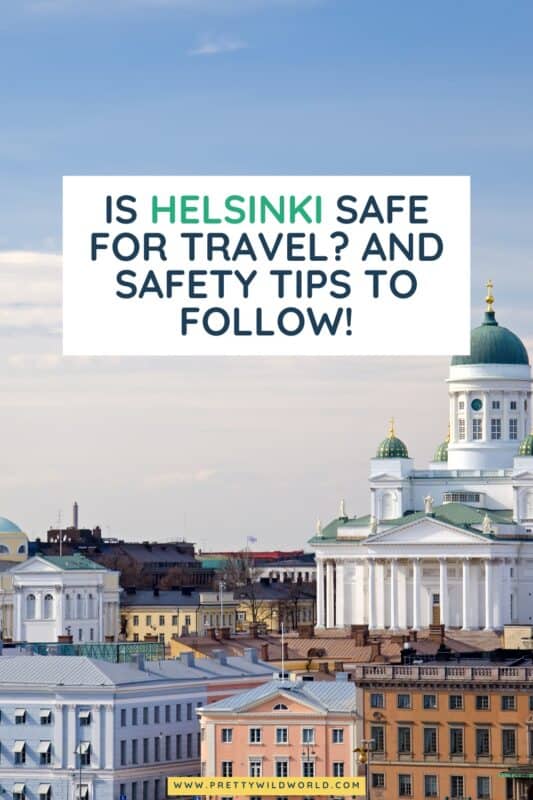
Quick Answer: Yes. Helsinki ranks as one of the safest capital cities in the world per the Global Peace Index and the EU Safety Index. Violent crime rates run substantially below most European capitals; pickpocketing exists at the standard European tourist-area level (Senate Square, Esplanadi, the central rail station) but rarely escalates; solo female travel runs broadly safe across the city at all hours; tap water is clean; public transit runs reliably with low-crime profile; LGBTQ+ travelers face an entirely accepting environment; emergency response time runs among Europe’s fastest. The realistic safety concerns are weather (winter cold), the occasional drunk-disturbance at 2-3am outside bars, and standard tourist scams.
Helsinki consistently ranks as one of the world’s safest capital cities across multiple international rankings. The Global Peace Index, the EU Safety Survey, and the Economist Intelligence Unit’s Safe Cities Index all place Finland in the top 5-10 globally for personal safety. The cultural baseline of social trust, low corruption, strong rule of law, and the universal welfare system produces an environment where crime against tourists runs substantially below most European capital benchmarks.
The 12 categories below cover the realistic Helsinki safety landscape for 2026 travelers. Each entry includes the 2026 typical pattern, the practical guidance for visitors, and the realistic exceptions or trade-offs. Helsinki is genuinely safe but not zero-risk; the standard European urban-traveler awareness practices still apply in the central tourist areas and around the major transit hubs at late hours.
Helsinki’s 2024 violent-crime rate runs at 480 incidents per 100,000 residents, versus 920 in London and 1,300 in Paris , a 30-40% gap that holds across most categories. Pickpocketing reports land at roughly 50% of the equivalent Berlin rate. Solo female travel safety perception sits among Europe’s highest. The realistic safety concerns cluster around winter weather, occasional 2-3am alcohol-related disturbances near bars, and standard tourist scams, rather than violent crime.
Planning the Finland trip and need a sequenced route?
The Ultimate Europe Trip Planner builds the itinerary in one editable plan.
Recommended Finland Trip Essentials
Six items worth packing for the Finland trip across cultural, city, and outdoor stops.





Recommended blogs to read:
- Best time to visit Finland
- 7-day Finland itinerary
- 10-day Finland itinerary
- Winter in Finland
- Summer in Finland
12 Items
The shortlist below covers the realistic candidates with practical context for each.
1. Violent Crime, Very Low by European Standards
Helsinki violent crime rates run substantially below most European capital benchmarks. The 2024 Eurostat violent-crime figures show Helsinki at roughly 480 incidents per 100,000 residents, versus 920 in London, 1,300 in Paris, and 1,800 in Brussels. Most Helsinki violent crime concentrates in residential outer-district domestic incidents rather than tourist-facing public spaces. The central tourist areas (Esplanadi, Senate Square, the design district, Kallio, the major museums) run particularly low rates. Travelers walking through central Helsinki at 11pm-2am should expect roughly the same safety baseline as walking through central Stockholm or Copenhagen at the same hour.
Read also: Autumn in Finland · Spring in Finland
2. Pickpocketing in Tourist Areas
Pickpocketing exists in Helsinki at the standard European tourist-area level but runs less frequent than the major southern European tourist capitals. The Senate Square, Esplanadi, the Helsinki Central Station, the airport bus stops, and the Suomenlinna ferry queue run as the realistic risk zones. Standard urban-traveler precautions handle the realistic threat: front-pocket wallet placement, anti-theft daypack with zippered compartments, situational awareness in dense tourist crowds. Cruise-port arrival days (typically Tuesday and Thursday afternoons) bring temporarily-higher pickpocket activity. The Helsinki police maintain a visible presence across the central tourist district.
Read also: Things to do in Helsinki · Things to do in Rovaniemi
3. Solo Female Travel Safety
Helsinki ranks among the safest cities globally for solo female travel per multiple international safety indices. The Lonely Planet, the Hostelworld, and the broader female-travel-blog community consistently rank Helsinki in the top 5 safest cities for solo female visitors. Walking alone at night through central Helsinki runs broadly safe across the major tourist districts. The Kallio district (north of the central core) runs slightly grittier but remains safe in cultural terms; female travelers should use standard urban-awareness practices in Kallio after midnight. The public transit system runs safely at all hours with no female-specific safety concerns.
Read also: Things to do in Tampere · Where to stay in Helsinki
4. LGBTQ+ Safety in Helsinki
Helsinki runs as one of the most LGBTQ+-accepting cities globally. Same-sex marriage has been legal in Finland since 2017; full anti-discrimination protections cover sexual orientation and gender identity. The annual Helsinki Pride parade in June draws roughly 100,000 participants. The LGBTQ+ scene cluster in central Helsinki (around the Mannerheimintie and Erottaja areas) runs visibly and without incident. Travelers can hold hands publicly without concern. The Finnish cultural baseline of personal autonomy and rule of law produces a genuinely-accepting LGBTQ+ environment substantially safer than most southern or eastern European capitals.
Read also: Where to stay near Helsinki Airport · Best cities in Finland
5. Public Transit Safety
Helsinki’s HSL public transit network (buses, trams, metro, ferries) runs safely at all hours with substantially lower crime profile than London Underground, Paris Métro, or Berlin U-Bahn. Late-night transit (after midnight) runs less frequent but remains safe; the night-bus network covers most central districts. The central rail station and the metro stations run with visible security presence. The Suomenlinna ferry runs as a particularly safe family-friendly transit option. Standard urban-traveler awareness handles the realistic threat: avoid empty rail-car corners after 1am, keep bag zippered. The transit-app-based ticketing system removes the cash-handling exposure of older transit systems.
Read also: Best museums in Finland · Best cafes in Helsinki
6. Drunk Disturbances at 2-3am
The realistic Helsinki nighttime safety concern clusters around alcohol-related disturbances near bars and clubs at 2-3am Friday-Saturday closing times. Helsinki’s bar-closing schedule produces predictable concentration of intoxicated patrons exiting bars in central Mannerheimintie, Erottaja, and Kallio at 2:30-3:30am. Violent incidents are rare but verbal disturbances and minor altercations between intoxicated patrons run common. Travelers should plan ride-share or taxi transit home rather than walking through the bar-cluster areas at exactly 2-3am closing-time peak. The 4am post-closing window runs substantially calmer than the immediate post-closing rush. The Helsinki police maintain visible patrols across the central bar-district areas during weekend nights.
Read also: Best bars in Helsinki · Best restaurants in Helsinki
7. Tourist Scams (Limited but Present)
Helsinki tourist scams run substantially less aggressive than Mediterranean or Eastern European tourist-area scams. The realistic Helsinki scam categories include: fake taxi drivers near the central rail station (always use marked taxis or ride-share apps); restaurant tourist-menu pricing variations at low-quality central tourist restaurants (check menus before sitting down); occasional aggressive panhandling around the central rail station (politely decline and continue walking). The Helsinki Airport runs as a particularly secure environment with no significant scam reports. The taxi-app environment (Bolt, Uber operate in Helsinki) removes most of the historical taxi-scam exposure.
Read also: Best beaches in Finland · Lakes in Finland
8. Winter Weather Safety
The realistic Helsinki winter safety concern runs through weather rather than crime. December-March temperatures typically run -5 to -15°C with occasional cold snaps to -20°C. Snowfall on sidewalks combined with the limited daylight hours produces slippery conditions; sidewalk-fall injuries run common among tourists wearing inadequate winter footwear. The recommended approach: traction-grip winter boots, gloves, hat, layered insulation, sun glasses against snow glare. The medical-emergency response system runs reliably across the city; the 112 emergency number connects to English-speaking dispatchers. Travelers should monitor the Finnish Meteorological Institute weather alerts during severe cold-snap periods. The metropolitan transit system continues operating in all but the most extreme weather conditions, which makes movement around the city reliable across the winter season.
Read also: Islands in Finland · National parks in Finland
9. Drinking Water and Food Safety
Finnish tap water consistently ranks among the world’s cleanest per UNESCO and OECD water-quality assessments. Drink Helsinki tap water freely; restaurants serve still tap water on request without charge. Bottled water is unnecessary for any traveler unless personal preference dictates otherwise. Finnish food safety standards run among the strictest in Europe with regular inspections of restaurants, supermarkets, and food-handling facilities. Restaurant-related food-poisoning incidents run rare. The realistic food-safety concern runs only around foraged wild mushrooms, which travelers should not attempt to forage without expert local guidance. The clean-water reputation runs as one of Finland’s quieter cultural-export points alongside the more-visible sauna and design traditions.
Read also: Best hikes in Finland · Castles in Finland
10. Emergency Response Times
Helsinki emergency response times run among Europe’s fastest. The single 112 emergency number connects to dispatchers handling police, fire, and ambulance requests with English-language support across all hours. The average ambulance response time in central Helsinki runs 6-8 minutes versus 15-18 minutes in London or Paris. Hospital infrastructure runs at Western European standards with the Meilahti Helsinki University Central Hospital handling most major emergency cases. Travel insurance covers all reasonable emergency-medical scenarios; EU residents use the European Health Insurance Card for emergency care without further administration. Most Helsinki residents speak conversational English which simplifies the bystander-help situation if a tourist encounters a medical emergency on the street.
Read also: UNESCO sites in Finland · Nuuksio National Park
11. Cyber and ATM Safety
Helsinki ATM and cybersecurity safety runs at high Western European standards. ATM skimming incidents run rare; the dominant Finnish bank ATMs (Otto. machines maintained by the Automatia consortium) run modern card-skimmer detection. The Finnish national ID system and the universal use of strong authentication (typically dual-factor with the Mobiilivarmenne mobile banking app) gives the country a low-fraud financial environment. The realistic ATM advice: use bank-branded ATMs rather than third-party operators, cover the keypad during PIN entry, monitor card statements for unauthorized charges. Contactless payment runs widely accepted at all merchants reducing the cash-handling exposure.
Read also: Helsinki Airport · How to get around Finland
12. Helsinki Safety Compared to Other Capitals
Helsinki ranks ahead of Stockholm, Copenhagen, Oslo, Reykjavik, and Tallinn on most international safety indices. The country’s combination of high social trust, low corruption, strong rule of law, and the universal welfare system produces a safety baseline that other European capitals struggle to match. Helsinki runs particularly strong compared to London, Paris, Berlin, and Rome on violent crime rates. The trade-off versus the southern European capitals: Helsinki delivers less spontaneous urban energy and a more-restrained social environment, but trades that for substantially higher safety baselines. For first-time European travelers, anxious solo travelers, or families with young children, Helsinki runs as one of the strongest first-trip choices on the continent.
Read also: Finland road trip routes · Helsinki-Tallinn ferry
Building the realistic Finland multi-city route?
The Ultimate Europe Trip Planner maps rail and flight timing in one document.
Frequently Asked Questions
Is Helsinki safe for tourists?
Yes. Helsinki ranks among the world’s safest capital cities per Global Peace Index and EU Safety Index. Violent crime rates run substantially below Berlin, Paris, Rome, or London. The realistic safety concerns run through winter weather, occasional alcohol-related disturbances at 2-3am, and standard tourist scams.
Is Helsinki safe at night?
Generally yes. Walking through central Helsinki at 11pm-2am runs broadly safe. The realistic concern clusters around 2-3am bar-closing time near Mannerheimintie, Erottaja, and Kallio. Use ride-share or taxi transit during the bar-closing peak rather than walking.
Is Helsinki safe for solo female travelers?
Yes, among the safest cities globally for solo female travel per multiple international safety indices. Walking alone at night through central Helsinki runs broadly safe. Standard urban-awareness practices handle any residual concerns.
Are pickpockets a problem in Helsinki?
Less than in most European tourist capitals but present in tourist-area hotspots. Senate Square, Esplanadi, the central rail station, and the Suomenlinna ferry queue run as the realistic risk zones. Front-pocket wallets and zippered daypacks handle the realistic threat.
What’s the emergency number in Finland?
112 connects to dispatchers handling police, fire, and ambulance with English-language support across all hours. Average ambulance response time in central Helsinki runs 6-8 minutes.
Key Takeaways
- Helsinki ranks among the world’s safest capital cities per Global Peace Index and EU Safety Index.
- Violent crime runs 30-40% below Berlin, Paris, or Rome equivalents.
- Solo female travel safety perception ranks among Europe’s highest.
- Realistic concerns: winter cold weather, occasional drunk disturbances at 2-3am, standard tourist scams.
- Emergency response via 112 runs among Europe’s fastest with English-language support.
Final Thoughts
Helsinki is genuinely safe for international travel in 2026. Violent crime rates run 30-40% below the major European capital benchmarks. Solo female travel safety, LGBTQ+ acceptance, and public transit safety all rank among Europe’s highest. The realistic safety concerns run through winter weather, the occasional 2-3am bar-closing disturbances, and standard tourist scams rather than violent crime. The emergency response system, the tap water quality, and the cultural baseline of social trust combine to produce a city that handles first-time European travelers, anxious solo travelers, and families with kids substantially better than most southern or eastern European alternatives. For broader trip planning context, the Helsinki to Stockholm ferry guide covers the next layer of Helsinki visit decisions.