Quick Answer: The twelve best Finnish cities to visit in 2026 cluster geographically. Helsinki anchors the south as the capital and cruise hub. Rovaniemi is the Lapland and Santa Claus Village gateway. Turku holds the medieval-castle and oldest-city titles plus the archipelago start. Tampere is the official Sauna Capital and Moomin Museum city. Porvoo, Naantali, and Rauma deliver wooden-old-town day-trips and UNESCO listings. Kuopio anchors the Lakeland, Savonlinna holds the Olavinlinna castle opera-festival. Oulu, Vaasa, and Lappeenranta give regional coverage across the Gulf of Bothnia and Saimaa lake-system. Realistic trip math is 3 to 4 cities per 7-day visit, clustered geographically.
Finland has roughly 100 designated cities but the realistic visit list lands around twelve. The places worth planning a stop around for architecture, museums, a lake setting, an archipelago, an aurora gateway, or a winter resort. Helsinki anchors the south coast and runs as the cruise-and-Tallinn hub. Rovaniemi serves as the Lapland gateway and the registered Santa Claus address. Turku holds the medieval-castle and oldest-city titles. Tampere runs the sauna and Moomin museums. Porvoo, Naantali, and Rauma deliver the wooden-old-town aesthetic. Kuopio anchors the Lakeland. Oulu, Vaasa, and Lappeenranta give regional coverage.
Finnish city distances run longer than the map suggests because population density is low and rail and bus services are spaced accordingly. Helsinki to Rovaniemi is an overnight sleeper or 1h15 flight; Helsinki to Turku is 2h by train; Helsinki to Tampere is 1h35; Kuopio sits 4h north of Helsinki by rail. The realistic city-trip math is 2 to 4 cities per 7-day visit, not 8 to 10.
The cities below cover the genuinely visitable shortlist for 2026 with airport access, hotel inventory, English-friendly visitor infrastructure, and a clearly distinct reason to stop. Population figures use the 2024 Tilastokeskus municipality data. Visit-shape notes cover what each city is structurally good for, what season suits it, and which dedicated guide picks up the detailed planning.
Picking the right combination of Finnish cities for your trip and sequencing the rail and flight legs?
The Ultimate Europe Trip Planner maps the multi-city Finland routes with realistic timing in one editable document.
Recommended Finland City-Trip Essentials
Six items worth packing for the multi-city Finland trip across summer and shoulder seasons; the layered approach handles Helsinki summer rain and Lapland chill in the same suitcase.


Recommended blogs to read:
- things to do in Helsinki
- 7-day Finland itinerary
- best time to visit Finland
- how to get around Finland
- is Finland expensive
12 Best Cities in Finland to Visit in 2026
The shortlist below covers the realistic visit candidates from south coast to Lapland. Each city includes population, the visit-shape, the season fit, and the most relevant dedicated guide.
1. Helsinki, the Capital and Cruise Hub
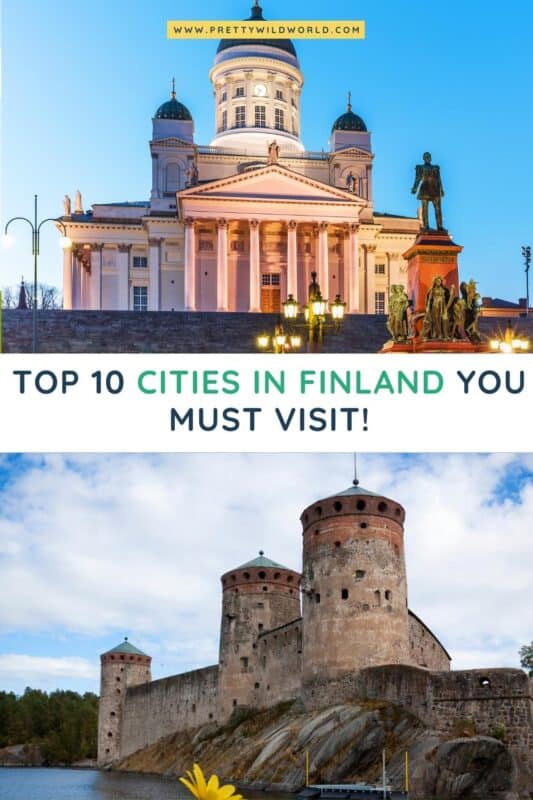
Helsinki, population 674,000, runs as the country’s design-and-architecture flagship and the natural arrival city for almost every Finland trip. The visit shape combines the Senate Square neoclassical core, the Allas Sea Pool and Löyly waterfront saunas, Suomenlinna sea-fortress (a UNESCO World Heritage site), the Oodi central library, the Kamppi Chapel of Silence, and the design district through Punavuori. Two daytime ferry departures to Tallinn and one to Stockholm depart from the same port complex, which makes Helsinki the obvious base for a Baltic capital combination. The cruise-port arrival brings around 380 cruise ships per summer season, so peak July weekends run dense in the Old Market Hall and Esplanadi area.
The realistic visit is 2 to 3 nights for a first trip, 4 nights if Tallinn day-trip is on the list. Helsinki delivers strongly in summer for sea-pool and archipelago access, and again in late November and early December for Christmas markets at the Esplanadi and Senate Square. The shoulder seasons (May, September) hit the strongest price-to-weather balance for a city trip.
Read also: Where to stay in Helsinki · Day-trips from Helsinki
2. Rovaniemi, the Lapland Gateway
Rovaniemi, population 64,000, sits 8km south of the Arctic Circle and operates as the official UN-recognized Lapland gateway and the registered address for Santa Claus. Rovaniemi Airport (RVN) runs direct connections to Helsinki, London, and several European seasonal routes, which makes it the realistic entry city for any aurora or Christmas-themed Finland trip. The visit shape combines Santa Claus Village (located at the Arctic Circle line, free entry, year-round Santa meetings), the Arktikum science center and museum, the Korundi art museum, husky and reindeer safari operators, and the Aurora Sky Station observation points around the city. December and January run as the dominant booking months for Santa-focused trips. September through April covers the broader aurora season window.
The realistic visit is 3 to 4 nights for an aurora-and-Santa combination, 2 nights for a Santa-only shorter trip. Glass igloo accommodations cluster in Ranua and along the Kemijoki river outside Rovaniemi proper; pricing runs €450 to €900 per night in December peak season.
Read also: Rovaniemi guide · Santa Claus Village guide
3. Turku, the Medieval Capital and Archipelago Start
Turku, population 200,000, served as the Finnish capital until 1812 and holds the country’s oldest-city designation. The visit shape combines Turku Castle (13th-century medieval fortress beside the harbor), the Turku Cathedral, the Aboa Vetus archaeological museum, the Forum Marinum maritime museum, the riverside river-boat restaurant fleet along the Aurajoki, and the start of the 250km Archipelago Trail through the Turku archipelago. Two daily Viking Line and Tallink-Silja ferries connect to Stockholm via the Åland Islands, which makes Turku a natural Sweden-combination city. The summer river-boat-restaurant season (June through August) draws domestic Finnish tourism heavily; book a table 1 to 2 days ahead.
The realistic visit is 2 nights for the medieval core, 4 to 5 nights if the Archipelago Trail by bicycle or car is on the plan. Turku to Naantali is 20 minutes by bus, which makes the Moomin World day-trip easy.
Read also: Archipelago Trail guide · Naantali and Moomin World
4. Tampere, the Sauna Capital and Moomin Museum City
Tampere, population 252,000, holds the Finnish-government-recognized Sauna Capital title and runs roughly 30 public saunas in active operation, including Rajaportti (the oldest continuously operating public sauna in Finland, founded 1906). The visit shape combines the Rajaportti and Rauhaniemi public saunas, the Tampere Cathedral, the Moomin Museum (the official Tove Jansson-licensed collection), the Vapriikki industrial-history museum complex, and the harbor-side ferry departures across Lake Näsijärvi. The city sits 1h35 from Helsinki by direct rail and runs as the realistic 1-night stop on a Helsinki-Lapland combination route.
The summer waterfront season (June through August) hits strongest, but Tampere’s public-sauna culture runs year-round and the winter sauna-then-ice-swim sequence at Rauhaniemi runs as a distinctive Finnish-winter experience.
Read also: Ice swimming in Finland · Best museums in Finland
5. Porvoo, the Wooden Old Town Day-Trip
Porvoo, population 51,000, sits 50km east of Helsinki and runs as the country’s most-visited wooden-old-town day-trip from the capital. The visit shape combines the red-painted riverside warehouses (Porvoo’s signature postcard view), the 15th-century Porvoo Cathedral, the cobbled Old Town streets, the Brunberg chocolate factory shop, and the runokirja Albert Edelfelt and J.L. Runeberg house-museums. Direct bus service from Helsinki Kamppi runs every 15 to 30 minutes; the journey is 50 minutes each way. Summer day-trip volume runs heaviest July through August, particularly for Helsinki cruise-passenger arrivals.
The realistic visit is a day-trip from Helsinki rather than an overnight stop, though a single quiet night in summer at a Porvoo riverside hotel is the calmer alternative to a Helsinki city-center stay.
Read also: Things to do in Finland · Helsinki cafe scene
6. Kuopio, the Lakeland Hub and Puijo Tower City
Kuopio, population 124,000, anchors the eastern Lakeland and runs as the Finnish summer-lake destination for the regional visitor flow. The visit shape combines the Puijo Tower (75m observation deck overlooking Kallavesi Lake and surrounding forest), the Kuopio Market Square and traditional kalakukko fish-pie purveyors, the Jätkänkämppä smoke sauna (one of the largest public smoke saunas in the world, weekly public sessions), and lake-cruise departures around Kallavesi. Kuopio Airport runs daily Helsinki flights (45 minutes); rail from Helsinki is 4h direct. The visit period runs strongest June through August for full midnight-sun lake conditions.
The realistic visit is 2 to 3 nights for a Lakeland summer trip, often paired with Savonlinna 1h45 south for the Olavinlinna castle and the July opera festival.
Read also: Kuopio Lakeland guide · Lakes in Finland
7. Naantali, the Moomin World Summer Resort
Naantali, population 19,000, sits 16km west of Turku and runs as the summer-season Moomin destination plus the wooden-old-town Naantali harbor. The visit shape combines Moomin World (the licensed Tove Jansson theme park on Kailo Island, open June through August), the wooden Naantali Old Town along the harbor, the Naantali Spa Hotel (the official presidential summer-residence neighbor), and the regular ferry departures to the Naantali archipelago islands. The June-through-August season is the operating window for Moomin World; outside those dates the city runs quiet. Bus from Turku is 25 minutes; from Helsinki, the trip is a 2h train plus 30min bus combination.
The realistic visit is a day-trip from Turku for the Moomin World stop, or a 1 to 2 night overnight for the wider Naantali experience including the spa hotel and harbor restaurants.
Read also: Finland with kids · Islands in Finland
8. Rauma, the UNESCO Wooden-Town Stop
Rauma, population 39,000, sits 90km north of Turku and holds UNESCO World Heritage status for its wooden Old Town. The largest preserved wooden-town district in the Nordic countries, with around 600 traditional wooden houses across the protected area. The visit shape combines the wooden Old Town streets (Old Rauma is a living residential district, not a museum), the lace-making tradition still active in workshops along Kuninkaankatu, the Pyhän Ristin Church (15th-century stone church inside Old Rauma), and the Sammallahdenmäki Bronze Age burial site (a separate UNESCO World Heritage listing, 18km north of the city). The August lace week (Pitsiviikko) runs as the calendar peak.
The realistic visit is a day-trip stop from Turku, or a 1-night overnight in summer when the wooden-town cafes and craft workshops run full hours. November through March, the operating hours run thin.
Read also: Rauma UNESCO wooden town · UNESCO sites in Finland
9. Savonlinna, the Lake Castle and Opera Festival
Savonlinna, population 32,000, sits in the deep eastern Lakeland and runs as the home of Olavinlinna Castle (built 1475, the northernmost surviving medieval stone castle in the world) and the Savonlinna Opera Festival (running every July inside the castle courtyard since 1912). The visit shape combines the Olavinlinna Castle visit and tour, the opera-festival evening performances (advance booking required, May-July), the Linnansaari National Park boat trips for Saimaa ringed-seal sightings, and the wider Saimaa lake-system access for canoe and houseboat trips. Rail from Helsinki is 4h direct; from Kuopio, 1h45.
The realistic visit is 2 to 3 nights including a castle tour and a festival evening if visiting in July, or 1 night for a year-round castle stop. The winter Lake Saimaa freezes and Linnansaari shifts to snow-trail access.
Read also: Castles in Finland · National parks in Finland
10. Oulu, the Northwest Coast and Air-Guitar City
Oulu, population 215,000, sits on the Gulf of Bothnia and runs as the largest city in northern Finland. The realistic alternative entry point to Lapland when Rovaniemi flights run full or expensive. The visit shape combines the Oulu Market Square and the Toripolliisi market-policeman bronze statue, the Tietomaa science center, the Nallikari Beach district (sand beach on the Gulf of Bothnia), and the annual Air Guitar World Championships every August (the unofficial city festival). The university-city demographic keeps Oulu young, with a strong cafe and craft-beer scene around the city center. Oulu Airport runs daily Helsinki flights and seasonal European connections.
The realistic visit is 1 to 2 nights as a Lapland-gateway alternative, or 3 to 4 nights if the Nallikari beach summer scene and the air-guitar August festival are the trip anchor.
Read also: Things to do in Lapland · Best beaches in Finland
11. Vaasa, the Bilingual Gulf of Bothnia City
Vaasa, population 67,000, sits on the Gulf of Bothnia roughly halfway between Helsinki and Oulu and runs bilingually in Finnish and Swedish (around 23% of the city speaks Swedish as a first language). The visit shape combines the Kvarken Archipelago UNESCO World Heritage Site (the only Finnish natural-heritage UNESCO listing, accessible by boat or by the Replot bridge), the Vaasa City Hall and the wooden Korsholm Castle ruins, the daily ferry crossing to Umeå Sweden (4 hours, the shortest Bothnia crossing), and the rising-coastline phenomenon visible across the Kvarken landscape (the land rises 8mm per year from post-glacial rebound). Vaasa Airport runs daily Helsinki flights.
The realistic visit is 2 nights for the Kvarken archipelago boat trip, or 1 night as a Sweden-ferry stopover. The summer season (June through August) runs strongest for the archipelago boat access.
Read also: Finland road trip routes · ETIAS visa guide
12. Lappeenranta, the Saimaa Southern Gateway
Lappeenranta, population 73,000, sits at the southern end of Lake Saimaa near the Russian border and runs as the realistic Saimaa entry city from Helsinki (rail 2h direct). The visit shape combines the Lappeenranta Fortress (an 18th-century Russian-era earthwork fortification overlooking the harbor), the summer Sandcastle Festival every July (a 6,000-tonne sand-sculpture build along the harbor), the Saimaa Canal boat trips (during open seasons, Russian-border-permitting), and access to the wider Saimaa lake system including the rare Saimaa ringed-seal habitat. The summer June-August season runs as the visit peak.
The realistic visit is 2 nights as a Saimaa southern-base, or 1 night as a stop on a Helsinki to Kuopio rail loop. The winter season runs quiet and the lake-cruise infrastructure operates on a reduced schedule.
Read also: Midnight sun in Finland · Mökki cottage culture
How to Combine These Cities into a Realistic Trip
The most efficient 7-day Finland city combinations cluster geographically. A southern coast loop covers Helsinki plus Porvoo plus Turku plus Naantali in 5 to 6 days via rail and bus. A Lakeland loop covers Helsinki plus Tampere plus Kuopio plus Savonlinna in 6 to 7 days. A north combination covers Helsinki plus Rovaniemi plus 1 Lapland-resort stop in 6 days. The west coast covers Helsinki plus Vaasa plus Oulu with rail and short flights across 5 to 6 days. Mixing southern wooden-towns with Lapland aurora in a single 7-day trip is technically possible but compresses each leg to 1 to 2 nights and removes the local-feel benefit each city offers.
Mapping the multi-city Finland trip with rail timing, flight legs, and hotel windows in one editable document?
The Ultimate Europe Trip Planner matches each Finnish city to the right season and the right rail leg.
When to Visit Each City
City weather and operating hours run distinctly across the seasons. Helsinki, Turku, Tampere, Porvoo, and Naantali all run strongest June through August for summer waterfront and outdoor cafe seasons, with shoulder months May and September running calmer and cheaper. Helsinki adds the late November-December Christmas market season. Rovaniemi runs strongest December and January for Santa-and-aurora trips, with the secondary aurora season extending late August through April. Kuopio, Savonlinna, and Lappeenranta all hit peak June through August for the Lakeland summer; Savonlinna’s July opera festival is the calendar anchor. Rauma summer wooden-town hours run June through August. Oulu and Vaasa run more weather-neutral year-round but show clear summer waterfront preference. November and early December run as the quietest visit period for most cities outside Rovaniemi and Helsinki.
Frequently Asked Questions
What is the best Finnish city to visit?
Helsinki is the realistic first answer for a first-time visit because it combines the most direct flights, the strongest hotel inventory, the highest concentration of UNESCO and major museum sites, and the easiest day-trip access to Porvoo and Tallinn. Rovaniemi is the answer for a Santa-and-aurora winter trip. Turku is the answer for medieval architecture and an archipelago start.
How many days do I need for Helsinki?
2 to 3 nights covers the core Helsinki visit (Senate Square, Suomenlinna, the saunas, the design district). 4 nights gives the Tallinn day-trip on top. 5+ nights starts duplicating effort unless using Helsinki as a base for multiple day-trips including Porvoo, Sipoonkorpi National Park, and Tallinn.
Is Helsinki or Rovaniemi better for first-timers?
Helsinki for a city-and-culture first trip in summer or shoulder season. Rovaniemi for a Santa, aurora, or winter-activity first trip in December through March. A combined 6 to 7 day Helsinki plus Rovaniemi trip is the realistic best-of-both option, with 2 to 3 nights Helsinki and 3 to 4 nights Rovaniemi.
Can I visit all the cities in one trip?
Realistically no. A 7-day trip handles 3 to 4 cities well. A 10-day trip handles 5 to 6 cities. Trying to cover all 12 in one visit reduces each stop to a single night and removes the cafe-and-sauna-and-walk pace that makes Finnish cities worth visiting.
Which Finnish city has the most museums?
Helsinki has the highest museum density with the Ateneum, Kiasma, the National Museum, the Design Museum, HAM Helsinki Art Museum, and the Amos Rex collection in the city center. Tampere runs second with the Vapriikki complex (six museums under one roof) and the Moomin Museum.
Key Takeaways
- Helsinki anchors the capital, design, and cruise-ferry hub for almost every Finland trip.
- Rovaniemi runs as the Lapland gateway and Santa Claus Village base for aurora and winter trips.
- Turku, Tampere, Porvoo, Naantali, and Rauma cluster on the south coast for medieval and wooden-town visits.
- Kuopio, Savonlinna, and Lappeenranta cluster in the Lakeland for the summer lake-and-sauna trip shape.
- Realistic 7-day trip math handles 3 to 4 cities, clustered geographically rather than spread across the country.
Final Thoughts
Finland’s twelve genuinely-visitable cities cover the realistic stop list across the country. Helsinki anchors the south coast and runs as the cruise-and-Tallinn hub. Rovaniemi delivers Santa Claus Village and the Lapland gateway access. Turku and Naantali combine medieval and Moomin in the southwest. Tampere holds the Sauna Capital title. Porvoo, Rauma, and Savonlinna deliver the wooden-town and castle aesthetic. Kuopio, Vaasa, Lappeenranta, and Oulu give regional coverage across the Lakeland, the Gulf of Bothnia, and the northwest. The realistic trip-shape math is 3 to 4 cities per 7-day visit, clustered geographically. For deeper Lapland planning beyond the city stops, the Inari and Saariselkä guide covers the deep-north destinations beyond Rovaniemi.
The deep-dive Lappeenranta guide sits at things to do in Lappeenranta.
For the family-friendly Naantali visit, the Naantali Moomin World guide covers the theme-park and town visit.
For deep-eastern Finland, the Kuhmo guide covers the Wild Taiga region near the Russian border.