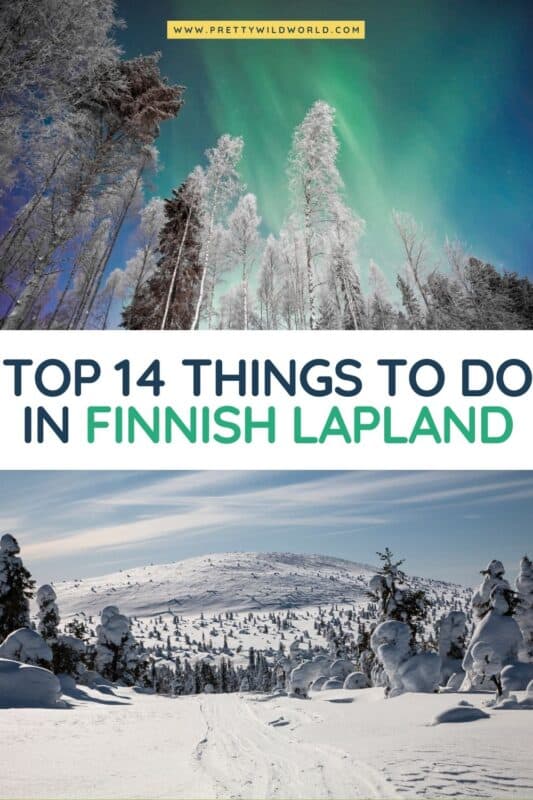
Quick Answer: The 18 best things to do in Lapland Finland split into three buckets: aurora and winter magic (northern lights, glass igloo at Saariselkä, husky sledding from Rovaniemi, reindeer with Sami families, snowmobile safari, Santa Claus Village), real activities (avantouinti ice swimming, cross-country skiing, downhill at Levi, an ice-hotel night, ice fishing, snowshoeing), and slow Lapland (the Sami town of Inari, Saariselkä, Rovaniemi as gateway, Levi village, the Salla wilderness, the midnight sun in summer). Visit December-March for the aurora and snow, late May to July for the midnight sun, and budget €200-500 per day in winter or €100-180 in summer.
Finnish Lapland is the bucket-list version of a Finland trip. Everything north of the Oulu line and above the Arctic Circle, with Rovaniemi as the gateway city, Saariselkä and Inari pushing deeper into the proper Arctic, Levi anchoring the ski scene, and the Sami homelands extending up to Utsjoki on the Norwegian border. Most people come for one specific thing (the aurora, Santa, a glass igloo) and stay for the rest of the landscape.
The truth not many guides tell you: Lapland is a winter destination at heart but the summer version is its own kind of magical. June and July deliver the midnight sun that does not set for weeks, fewer crowds, hiking in the national parks, and prices roughly 40% below the December peak. The winter version is what gets booked, the summer version is what the Finns themselves go up for. Pick the season based on what you actually want from the trip.
2026 is a strong year to go. Finland landed on Lonely Planet’s Best in Travel list, the country sits near the peak of the 11-year solar cycle so aurora odds across Lapland are at their highest since 2014, and Lapland operators have invested in new glass-igloo properties and husky kennels for the Christmas season. This guide walks through 18 things to do in Lapland grouped under three regional H2 sub-sections, plus a dedicated travel-tips section with the practical questions every first-time visitor asks.
Booking a Lapland trip and trying to sequence Rovaniemi, a husky kennel, and a glass igloo night without spending half the trip in transit?
The Ultimate Europe Trip Planner sequences the sleeper-train timing from Helsinki, the husky and aurora tour windows, and the glass-igloo booking lead times into one day-by-day grid so the Lapland leg actually flows.
Recommended Lapland Travel Gear
Six pieces worth packing for a winter Lapland trip, where the temperature can drop to -30°C and the right gear is genuinely the difference between an unforgettable day and a miserable one.




Recommended blogs to read:
- things to do in Rovaniemi, the Lapland gateway
- the 10 best Finland holiday destinations
- the best time to visit Finland overall
- winter in Finland overview
- Finland ski resorts including Levi and Saariselkä
Aurora and Winter Magic (Things 1 to 6)
The signature Lapland experiences, the reason most first-time visitors book the trip. These six are what every Lapland operator builds packages around, and they pair naturally into a 4 to 6 night winter itinerary based out of Rovaniemi or Saariselkä.
1. Hunt for the Northern Lights
The aurora belt sits roughly above 67°N, which means anywhere in Finnish Lapland is in play during the September-to-March window. Saariselkä, Inari, and Levi sit deep enough north that you get aurora visibility on roughly two of every three clear nights during peak season; Rovaniemi (just on the Arctic Circle) gets thinner odds (about one in three) but better tour-operator infrastructure. The trick almost nobody mentions: you do not need a tour the first night. Walk 200 metres away from any hotel light source, look north, and let your eyes adjust for ten full minutes before deciding the sky is empty. Most aurora is invisible at first glance and obvious by minute eight. Pair the first-night DIY attempt with one paid aurora tour later in the trip (operators take you to dark-sky spots away from light pollution and have backup heated cabins for cloudy nights, €100 to €180 per person).
2. Sleep in a Glass Igloo at Saariselkä or Kakslauttanen
The Kakslauttanen glass igloos are the original, the most-photographed accommodation in Finland, and they book out 8 to 10 months in advance for December and January dates. The whole point: a thermal glass dome over your bed so you can lie there and watch the aurora overhead without leaving the warmth. Several newer properties at Saariselkä, Levi, and around Inari now compete on price and design (Aurora Village, Northern Lights Village, Wilderness Hotel Muotka), with packages in the €350 to €700 per night range depending on season and view. The honest advice: spend one night, not three. The novelty is real but loses force after the first morning, and the cost-per-night argument starts losing to a regular hotel plus a dedicated aurora tour. Book the glass-igloo night for the middle of the trip when energy is high.
3. Husky Sledding (Half-Day or Overnight)
Husky sledding is the single most-booked Lapland experience and the one most travelers underestimate. The dogs run hard, the sled requires real concentration to steer (you brake constantly on a downhill), and you actively drive your own team rather than ride in the back. Half-day tours from Rovaniemi run around €180 to €240 and include thermals, mittens, and a hot drink. Overnight wilderness trips at €600 to €900 take you deeper into the kennels and add a sauna and reindeer-skin sleeping setup at a remote cabin. Pick a kennel where the dogs are visibly working dogs rather than pets-in-uniform. Hetta Huskies (near Enontekiö) and Bearhill Husky (near Rovaniemi) both score well on the dog-welfare front and have the experience to give you a proper run rather than a 20-minute photo op.
4. Reindeer Safari at a Sami-Owned Farm
The reindeer sledding experience splits into two distinct categories: Sami-owned working farms where the herd is real and the experience is grounded in the actual culture, versus resort-run “Sami experiences” which are essentially a costume show. Pick the first every time. The Reindeer Farm in Inari, Tunturi-Lapin Poro near Muonio, and the Sami villages around Hetta all run authentic half-day visits in the €120 to €180 range, with a slow reindeer sled ride, coffee around an open fire in a kota (traditional tent), and a Sami host who can answer questions about herding and the politics of the modern Sami situation. Avoid anything sold as a “Sami show” on a resort schedule, the gap in quality is real.
5. Snowmobile Safari Through the Arctic Forest
Snowmobile tours are often sold as the “easy” Lapland activity, which is mostly true but undersells how physical they actually are. You drive your own machine, in pairs (with one person as passenger that swaps midway), through frozen lake systems and pine forest on marked safari trails. Half-day tours from Levi, Rovaniemi, or Saariselkä run €180 to €240. The trick is to book a guided wilderness safari over a “fast” speed-track operator because the wilderness route gets you into the actual Lapland landscape rather than a noisy 30-minute loop. A driving licence is required for the lead position, and you do need to be physically alert: the machines are heavy and the turns are real. Layer up beyond what the operator suggests, especially feet and hands.
6. Meet Santa at Santa Claus Village (Rovaniemi)
Santa Claus Village sits 8 kilometres north of central Rovaniemi, right on the Arctic Circle, and is open year-round with free admission. The Arctic Circle line is painted across the floor of the main building and stepping across it the first time is an oddly powerful moment regardless of age. Meeting Santa himself is free, the photos are not (€40 to €60 per family for the studio package, and personal photos with him are banned in the official meeting room). The Post Office is the workable substitute if the meeting queue runs long: you can post a letter from the Arctic Circle that gets a special seal, and pre-pay one to be sent in December the following year as a gift. Most visitors spend 3 to 4 hours total. Bus 8 from central Rovaniemi runs every 30 minutes and takes 25 minutes. Visit early morning before the cruise-bus groups arrive.
Activities and Outdoors (Things 7 to 12)
The active layer of a Lapland trip. These six activities are the ones that turn a passive sightseeing visit into a proper Arctic experience, and they spread across winter (ice swim, ski, snowshoe, ice hotel) and shoulder seasons (ice fishing, cross-country).
7. Ice Swimming (Avantouinti) at a Lake Sauna
Avantouinti is the Finnish ritual of cutting a hole in the lake ice and lowering yourself into water at roughly 1°C straight from the sauna. Done correctly it is invigorating and surprisingly addictive after the first attempt. Done incorrectly it is dangerous. The rule is short and clear: never go in alone, never stay in longer than 30 seconds, exit feet-first by ladder onto matted boards, and warm up in the sauna immediately. Many Lapland resorts maintain a winter avanto (ice hole) for guest use, and most have a wood-fired sauna directly on the lake edge. If you have done it once in Helsinki, do it again at a quiet Lapland lake for the proper version, the silence on the second sauna trip out is the part nobody warns you about.
8. Cross-Country Skiing on Marked Lapland Tracks
Finland is genuinely famous for cross-country (Nordic) skiing, far more than for downhill, and Lapland has the highest-quality tracks in the country. The marked trails run hundreds of kilometers through pine forest and across frozen lakes, with shelters every few kilometers and groomed daily by the local municipalities. Rovaniemi’s Ounasvaara hill, Saariselkä’s broader trail network, Levi’s lit tracks for evening skiing, and the wilder routes around Inari all rent gear for €25 to €40 per day. The first attempt is humbling (cross-country involves the whole body and is harder than it looks) but a half-day lesson with a local instructor (€60 to €100) drops you into the rhythm by the end of the session. The best winter activity Lapland has on the active-but-not-extreme end.
9. Downhill Skiing at Levi or Saariselkä
Levi is Finland’s largest ski resort and the obvious downhill choice in Lapland, with 43 lifts, 230 km of pistes, an Alpine World Cup stop every November, and a proper resort village at the base of the fell. Saariselkä is the smaller alternative with 15 lifts, quieter slopes, and easier integration with aurora and husky activities mid-trip. Ruka further south is a third option (28 lifts, near Kuusamo, easier from Oulu than Helsinki). Lift passes run €50 to €60 per day at Levi, slightly less at Saariselkä; ski rental adds €35 per day. The slopes are not steep by Alpine standards but the unique selling point is the Arctic setting: skiing under a 11am twilight in December, or under the aurora on a clear night with Levi’s lit-track evening sessions.
10. Stay in an Ice Hotel or Snow Castle
The SnowHotel in Kemi, the SnowVillage in Kittilä, and the Arctic SnowHotel near Rovaniemi each rebuild from scratch every winter starting in December and melt completely by April. A night in an ice room runs €350 to €500 and includes the thermal sleeping bag system, sauna access, and a backup warm room. Most visitors do not actually sleep through the full night (the novelty fades around 2am), but the rooms themselves are genuinely spectacular before lights-out: hand-carved ice walls, ice furniture, an ice glass for a welcome drink at the in-property ice bar. If you are not sleeping over, the day-visit ticket (€20 to €30) lets you walk the property in the late afternoon while the natural light is good for photos. Kemi’s SnowCastle has the added pull of the SnowExperience365 indoor display open all year for travelers who land outside winter.
11. Ice Fishing on a Frozen Lake
Ice fishing (pilkki) is the slow Lapland activity that most travelers do not book but should. A local guide drills a hole through 40 to 60 cm of lake ice with a hand auger, you sit on a small folding stool with a short rod, and pull up perch and pike-perch from the dark water below. Half-day guided trips run €80 to €120 and usually include the fish-and-grill lunch in a lakeside kota at the end. The activity is genuinely meditative once you accept the pace: long silence, mittens-on-mittens-off rhythm with the rod, occasional pulls, hot coffee from a thermos. Most operators in Saariselkä, Inari, and Rovaniemi run pilkki trips alongside their husky and snowmobile packages; just ask. Best paired with a slow morning after a heavy aurora night.
12. Snowshoeing Through the Pine Forests
Snowshoeing is the easiest entry-level winter Lapland activity, requiring no technical skill, no licence, and no expensive gear. Strap on modern aluminum snowshoes (rented €15 to €25 per day at any tourism office), grab two trekking poles, and walk into the pine forest the way summer hikers would. Lapland’s snowpack is deep enough that anywhere off the marked trails sinks you to mid-thigh without snowshoes; with them, you walk on the surface. Half-day guided tours through Saariselkä’s Urho Kekkonen National Park or around Rovaniemi run €60 to €100 and include the gear plus a fire-cooked sausage lunch in a kota. Best for early-morning routes when the pine boughs are still loaded with overnight snow, the silence is genuine, and animal tracks (hare, fox, ptarmigan) are visible in the fresh powder.
Culture, Towns, and Slow Lapland (Things 13 to 18)
The depth layer of a Lapland trip. These six items round out the trip beyond the obvious bucket-list activities and give you proper time with the towns, the Sami culture, and the summer Lapland that most international visitors never see.
13. Visit Inari and the Siida Sami Museum
Inari is the cultural capital of Finnish Lapland, a small town on Lake Inari about 250 km north of Rovaniemi, and the proper home of the Sami people in Finland. The Siida Sami Museum (admission €15, allow 2 hours) is the single best place to understand Sami history, the eight-season calendar, traditional reindeer herding, and the contemporary issues of land rights and language preservation. The museum was renovated in 2022 and is now genuinely world-class. Around the museum, Inari town itself has the Sami Parliament building, a few good restaurants (Aanaar at Hotel Inari serves Sami cuisine), and Sami-owned silversmith shops where the kaminek jewelry is made on-site. Inari adds two nights to a Lapland trip and is worth every minute, especially paired with one of the Sami-owned reindeer farms (item 4) nearby.
14. Explore Saariselkä Village and Urho Kekkonen National Park
Saariselkä is the small resort village at the southern edge of Urho Kekkonen National Park, 250 km north of Rovaniemi and the deepest-into-Lapland base for most international winter visitors. The village itself is small enough to walk across in 15 minutes but packs in glass-igloo properties (Northern Lights Village, Wilderness Hotel Muotka), the Lapland Hotels Riekonlinna spa, several restaurants serving proper Lapland cooking (reindeer carpaccio at Restaurant Petronella), and direct trail access into Urho Kekkonen National Park. The park itself is the third-largest in Finland at 2,550 square km, with marked snowshoe and cross-country trails leading directly out of the village. Two to three nights at Saariselkä is the standard slot inside a 5-to-7-day Lapland itinerary.
15. Use Rovaniemi as the Lapland Gateway
Rovaniemi is the official capital of Lapland and the city most international visitors fly or train into. The Santa Claus Express sleeper train from Helsinki pulls in at 8am, the city sits right on the Arctic Circle, and 90% of Lapland tour operators run their packages from a Rovaniemi base. The city itself has the strongest Lapland infrastructure (50+ husky kennels and tour operators within a 30-minute drive), the Arktikum science museum and Pilke Science Centre on the river, decent restaurants (Nili for Sami cuisine, Restaurant Roka for fine-dining Arctic), and the Santa Claus Village at the airport edge. Use Rovaniemi as the first 2 nights of a Lapland trip for the iconic experiences, then push deeper north to Saariselkä or Inari for the Arctic-proper days.
16. Stay in Levi Village for the Resort Experience
Levi is Finland’s largest ski resort and a viable alternative base to Rovaniemi or Saariselkä, especially for trips heavier on downhill skiing or for families who want everything walkable from one resort village. The village wraps around the base of Levitunturi fell, with 43 ski lifts, the famous Levi Igloos glass-roof accommodation, the Northern Lights Ranch for husky and reindeer combos, an Arctic Circle line painted through the village (Levi is technically a few km south of the actual Arctic Circle but the marketing leans in anyway), and an Alpine World Cup slalom every November. The village has the strongest food scene of any Lapland base after Rovaniemi (Restaurant Tuikku, Hullu Poro complex), and the Levi Ski Inn does year-round indoor skiing if you visit in summer.
17. Visit Salla for the Wild Lapland Edge
Salla is the wilder, smaller alternative to Rovaniemi and Saariselkä, a small village in southeastern Lapland 150 km east of Rovaniemi with one of the country’s most remote-feeling national parks and the famous “Salla, in the middle of nowhere” tourism slogan playing it up. The Salla Reindeer Park does the most-intimate Sami-style reindeer experience (small groups, working farm). Salla Ski Resort is a tiny 18-lift downhill option with empty slopes, and the surrounding Oulanka and Riisitunturi national parks offer some of the best wilderness hiking in Lapland (Riisitunturi’s snowy fells in February are otherworldly). Salla rewards travelers willing to trade resort infrastructure for genuine quiet, and the local Salla travel guide covers the practical logistics.
18. Experience the Midnight Sun in June and July
From mid-May to early August the sun does not properly set north of the Arctic Circle. The phenomenon is called nightless night (yötön yö) and at the latitude of Inari and Utsjoki the sun stays above the horizon continuously from around 21 May to 23 July, around two solid months. Summer Lapland is the version most international visitors never see: pine forests under 24-hour daylight, hiking in Urho Kekkonen and Pallas-Yllästunturi national parks without snowshoes, wild berry picking in late July (cloudberries are the prize), reindeer roaming freely along the roads, and prices roughly 40% lower than the winter peak. Pack a serious sleep mask; the hotel curtains rarely block enough of the light, and your body’s circadian rhythm will take 3 to 5 days to adjust either direction.
Lapland Travel Tips and Practical Planning
The practical questions every first-time Lapland visitor asks, in the order they actually come up when planning the trip.
When to visit Lapland. The two strong seasons are December-March (snow, aurora, husky, Santa) and late May-July (midnight sun, hiking, low prices). The dead months are April (snow melts but mud has not dried) and October-November (no snow yet, no daylight). Peak Christmas (15 December to 6 January) is the most expensive and most crowded window; book 8-10 months ahead for glass igloos and 4-6 months for hotels. February and March are the underrated sweet spot: full snow, longer daylight than December, lower prices, and the strongest aurora odds of the year.
How many days to spend. Four nights is the realistic minimum for a Lapland-only trip: 1 Rovaniemi, 2-3 Saariselkä or Levi, including one glass-igloo night. Five to seven nights is the sweet spot, adding Inari and one rest day. Anything under four nights forces you to skip either the deep-Arctic Saariselkä experience or one of the major activities (husky, ice hotel, midnight sun depending on season). Combine with a 2-3 day Helsinki leg for an 8-10 day Finland trip total.
How to get to Lapland from Helsinki. Three options: fly (90 minutes Helsinki to Rovaniemi on Finnair, €80-180), the Santa Claus Express overnight VR train (12 hours, €180-250 per person for a 2-berth cabin with private shower), or driving (12 hours, snow tires required by law). The sleeper train is the way to arrive in Lapland that actually makes the trip feel like a trip; flights cost roughly the same once you factor a saved hotel night. The car option only makes sense if you also want to road-trip the Lakeland or stop in Oulu, otherwise rent at Rovaniemi airport.
Where to stay in Lapland. Three tiers. Glass igloos (Kakslauttanen, Northern Lights Village Saariselkä, Aurora Village) at €350-700/night for the bucket-list one-or-two-night stay. Mid-range Arctic hotels (Lapland Hotels Riekonlinna, Hotel Levi Panorama, Arctic SnowHotel) at €180-280/night with sauna and good food. Wilderness cabins (Hetta Huskies wilderness lodge, Salla cabins) at €120-180/night for the rural-quiet version. Mix two of three across a 5-night trip for the right balance.
How to dress for Lapland winter. The standard Arctic kit: merino wool base layer (top and bottom), wool mid-layer (sweater or fleece), insulated outer jacket (down or synthetic), windproof outer shell, wool beanie, insulated mittens (not gloves, fingers freeze faster), insulated snow boots rated for sub-zero. Tour operators usually provide a thermal overall on top of your own layers for husky and snowmobile activities, so do not over-buy the outermost layer. Hand and toe warmers (cheap disposables) are non-negotiable for any activity over 2 hours in -15°C or colder. The AAWP list above covers the gear specifics.
How much a Lapland trip costs. Daily budgets land around €200-500 per person in winter (driven by glass-igloo nights and activity costs) and €100-180 in summer. A standard 5-night winter trip including flights from London/New York, accommodation, 3-4 paid activities, food, and transit lands around €1,800-3,500 per person. The biggest line items are accommodation (glass igloos are 3-4x normal hotels) and activities (husky overnight + ice hotel + glass igloo together can add €1,500). Book the highest-cost items first; the rest of the trip fills in around them.
Combining a Lapland leg with a Helsinki stop and trying to make the sleeper-train timing actually work for the 5-night version of the trip?
The Ultimate Europe Trip Planner gives you a day-by-day grid that handles the Santa Claus Express boarding window, the Rovaniemi to Saariselkä transfer, and the glass-igloo booking lead times together so the full Finland route lands without losing days to transit.
Frequently Asked Questions
What is the best month to visit Lapland?
February and March are the underrated sweet spot: full snow cover, longer daylight than December, lower prices than the Christmas peak, and the strongest aurora odds of the year (the solar maximum in 2026 makes these months especially strong). December is peak crowded for the Santa and Christmas magic; book 8-10 months ahead. Late May to July gives you the midnight sun version of Lapland at 40% lower prices.
How many days do you need in Lapland Finland?
Four nights is the realistic minimum (1 Rovaniemi + 2-3 Saariselkä or Levi), five to seven is the sweet spot adding Inari and a rest day. Anything under four nights forces you to skip either the deep-Arctic experience or major activities like husky and ice hotel. Combine with a 2-3 day Helsinki leg for an 8-10 day Finland trip total.
What is the number-one thing to do in Lapland?
Chasing the northern lights is the single highest-impact Lapland activity, paired with one glass-igloo night and one husky safari for the proper bucket-list combination. Base in Saariselkä or Inari for the highest aurora odds (above 67°N), allow 3-4 nights minimum to give the weather a chance to clear, and pair the first-night DIY aurora attempt with one paid tour later in the trip.
How do you get to Lapland from Helsinki?
Three options. Fly Finnair from Helsinki to Rovaniemi in 90 minutes (€80-180). Take the Santa Claus Express overnight VR train (12 hours, €180-250 per person for a 2-berth cabin with private shower). Drive (12 hours, snow tires required by law). The sleeper train is the most atmospheric arrival, the flight is fastest and roughly the same total cost factoring a saved hotel night.
Is Lapland expensive?
Lapland in winter is the expensive part of Finland: daily budgets land at €200-500 per person driven by glass-igloo nights (€350-700) and activity costs (husky €180-240, snowmobile €180-240, aurora tour €100-180). A 5-night winter trip with flights, accommodation, 3-4 paid activities, and food lands around €1,800-3,500 per person. Summer Lapland runs roughly 40% cheaper at €100-180 daily.
Key Takeaways
- Lapland splits into three buckets: aurora and winter magic (1-6), active outdoors (7-12), and culture/towns/slow Lapland (13-18). Pick 4-6 items across the buckets for a balanced 5-night trip.
- February and March beat December for aurora odds, snow cover, longer daylight, and lower prices. December is peak Christmas crowded; book 8-10 months ahead if you want it.
- Base in Rovaniemi for 1-2 nights of iconic experiences, then push north to Saariselkä or Inari for 2-3 nights of the deeper Arctic. Levi is the resort alternative if you want everything in one walkable village.
- Glass-igloo nights, husky overnights, and ice-hotel stays are the big-budget items. Book those first; the rest of the trip fills in around them.
- Summer Lapland (late May-July) is the under-visited version: midnight sun, hiking, berry picking, 40% lower prices. Worth a separate trip if you have already done the winter version.
Final Thoughts
Lapland rewards a deliberate pace more than a long activity list. Most travelers come back from a Lapland trip with one image lodged: the silence after a sauna at -20°C, the first aurora through the glass-igloo roof, the moment a husky team finds its rhythm and the sled finally pulls itself. Pick the one experience that sounds most like that for you, build the rest of the trip around it, and the Arctic does the work.
For the wider Finland context, the things to do in Finland guide covers how Lapland fits with Helsinki and the Lakeland, and the unique hotels in Finland guide handles the glass-igloo and tree-house accommodation comparisons across the country.
For the dedicated dog-team experience, the husky sledding in Finland guide covers operators, pricing, and the realistic 2026 booking timing.
The motorized winter-activity option lives in the snowmobile safari Lapland guide.
The dedicated Levi destination guide at Levi Finland covers the resort visit shape.
The realistic 10-day Lapland-extended trip is mapped in the 10-day itinerary guide.
For dedicated ice-hotel accommodations, see the ice hotel Finland guide.
For Rovaniemi in the winter window, the Rovaniemi winter guide covers 16 winter-specific activities.
The Kainuu region around Kuhmo sits south of Lapland for travelers wanting the deep-eastern alternative.