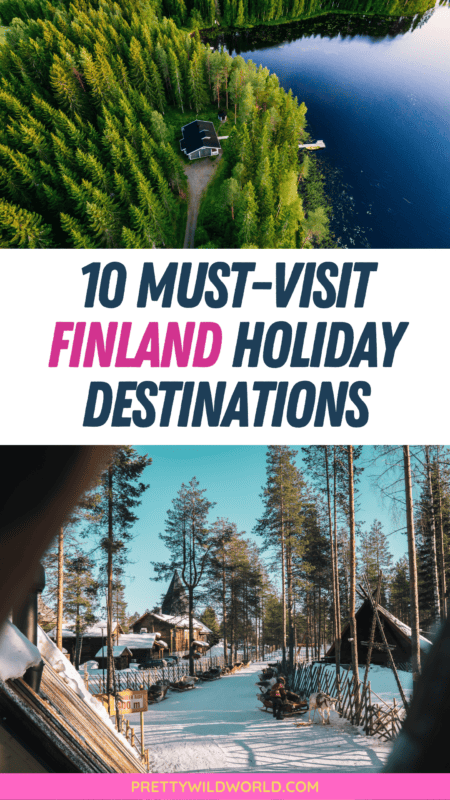
Quick Answer: The 10 best Finland holiday destinations span the country, Rovaniemi for Santa and the Arctic Circle, Helsinki for design and harborside saunas, Saariselkä for glass igloos under the aurora, Porvoo for medieval old town charm, Turku for the archipelago, Savonlinna for castle opera, Tampere for industrial-chic Lakeland life, Oulu (European Capital of Culture 2026), Levi for husky safaris, and the Åland Islands for ferry-hopping. Each destination below comes with a unique-experience callout so you book the right base for the trip you actually want.
The Arctic Circle line is painted across the floor at Santa Claus Village, and stepping across it the first time is an oddly powerful moment. Half a country and a different season away, you can be sitting on a wooden bench at the Löyly sauna in Helsinki, walking out the door and dropping straight into the Baltic Sea. Two completely different holidays in the same Finland.
That is the thing about a Finland trip. It is not one country in the experiential sense, it is at least three: Lapland in the far north, the Lakeland in the middle, and the southern coast around Helsinki. Picking destinations means picking which Finland you want, and most great Finland holidays mix two of the three rather than trying to cover all three in one visit.
2026 is an unusually good year to actually book the trip. Finland landed on Lonely Planet’s Best in Travel list, the country sits near the peak of an 11-year solar cycle that boosts aurora odds across Lapland, and Oulu is European Capital of Culture for the year. This guide walks through the 10 destinations that anchor a Finland holiday, ordered roughly by how iconic the experience is, each with a unique-experience callout so you book the right base for the trip you actually want.
Picking which Finland destinations to actually visit and feeling overwhelmed by the choices?
The Ultimate Europe Trip Planner gives you a destination-by-destination framework for building the itinerary, so the Finland holiday you book actually matches the trip you’ve been picturing in your head.
Recommended Finland Holiday Gear
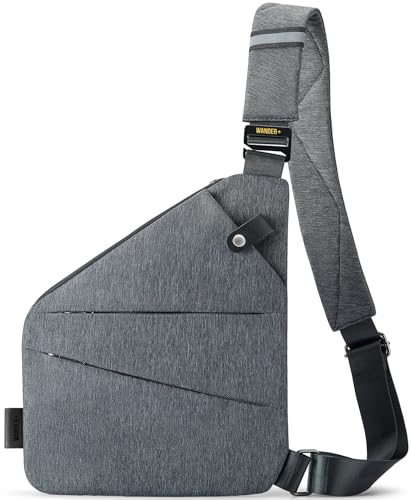
Six pieces worth packing for almost any Finland trip, from a real Finland guidebook to a power adapter the Type F outlets actually accept.



Recommended blogs to read:
- the full country things to do guide
- Helsinki things to do
- Lapland things to do
- the best time to visit Finland
- things to do in Rovaniemi
The 10 Best Finland Holiday Destinations
Ten destinations that capture the full range of a Finland trip, from the Arctic far north to the southern archipelago, each chosen for a clear, specific experience worth booking the destination around.
The ordering is rough rather than strict. Rovaniemi tops the list because it is the single most iconic Finland destination and the easiest to commit to, but a southern-Finland-only trip might lead with Helsinki and never go further north. Read the unique-experience callout for each, and the right two or three destinations for your trip will become obvious quickly.
1. Rovaniemi, Lapland
Rovaniemi is the official hometown of Santa Claus and the gateway to Finnish Lapland, the single most internationally recognized Finland destination. The city sits right on the Arctic Circle, with Santa Claus Village built around the line itself and a small but excellent Arktikum science museum on the river. From Rovaniemi you can launch every iconic Lapland experience, husky safaris, reindeer sledding, snowmobile trips, aurora hunting, ice fishing, all within an easy drive of the city. Direct flights from Helsinki take 90 minutes, and the overnight Santa Claus Express train runs December and on through the winter season. The unique experience to plan a trip around: meeting Santa at his official office year-round and crossing the Arctic Circle line painted across the floor of the village, which is genuinely a strange and lovely moment regardless of your age. Most Lapland holidays should start here.
2. Helsinki
Helsinki is the design capital of the Nordics, a low, walkable seaside city built on islands, with an unusually strong public-sauna culture and one of the best modern library buildings in Europe (the Oodi, which you should make time for). Three or four days covers it: Senate Square and the cathedral, the Rock Church, Suomenlinna sea fortress (UNESCO), the Market Square waterfront, the design district, Esplanadi park, and the underground Amos Rex museum. Cafe Regatta and the Sibelius monument make a perfect afternoon walk. The unique experience to plan a trip around: taking a public sauna at Löyly on the harbor, then walking straight out the door and dropping into the Baltic Sea from the wooden dock, all year round. It is the most distinctly Finnish thing you can do in Helsinki, and it does not feel like a tourist attraction even though everyone tries it.
3. Saariselkä and Inari, Northern Lapland
Saariselkä is a small fell village in far northern Lapland, two hours by road north of Rovaniemi and the launching point for the most photogenic accommodation in Finland: the glass igloos at Kakslauttanen Arctic Resort. Nearby Inari is the cultural capital of the Finnish Sami, with the excellent SIIDA museum and a quieter, wilder feel than the Rovaniemi area. The two together make a richer Lapland base than Rovaniemi alone for travelers who want both the bucket-list nights and a real cultural depth. The aurora odds here are among the best in Finland thanks to the high latitude, and the surrounding Urho Kekkonen National Park is one of Europe’s great wilderness areas. The unique experience: sleeping in a glass igloo at Kakslauttanen with the aurora directly overhead, which is exactly the bucket-list moment the photos promise and which earns its price tag in February or March.
4. Porvoo
Porvoo is Finland’s second-oldest city, a medieval old town of red-painted riverside warehouses and cobbled streets just an hour by road from Helsinki. The day-trip version is doable, but Porvoo rewards an overnight, when the day-trippers leave and the small town quiets to almost nothing. The cathedral on the hill, the artisan shops along the river, and the cafes around the old market square cover an easy afternoon. The unique experience worth planning around: in summer, taking the historic M/S J.L. Runeberg steam-built day boat from Helsinki’s Market Square to Porvoo, a three-and-a-half-hour cruise through the islands of the Helsinki archipelago. It is a wildly more atmospheric arrival than the bus, and it turns the trip from a day-trip side-quest into a proper Finnish experience. Pair it with one night in Porvoo and you have a trip in miniature.
5. Turku and the Turku Archipelago
Turku is Finland’s oldest city and former capital, sitting at the mouth of a river on the southwestern coast. The medieval Turku Castle, the riverside Aboa Vetus museum (built around an excavated medieval city beneath the floor), and the working market square are the headline urban draws, but the real Turku experience is the archipelago beyond the city. Thousands of islands stretch southwest into the Baltic, connected by a network of small free ferries that make island-hopping easy. The unique experience: cycling the Archipelago Trail, a roughly 250 km circular route through the islands using the ferries as bridges. The full loop takes 4-7 days, but you can ride a one-day section out of Turku and back. It is the most Finnish kind of summer trip, slow, blue, lightly populated, with sauna stops at small island guesthouses.
6. Savonlinna and Finnish Lakeland
Finnish Lakeland is the middle band of the country, a region of thousands of interconnected lakes, deep forests, and the highest concentration of mökki (traditional summer cottages) in Europe. Savonlinna is the Lakeland’s most postcard town, built across a chain of islands with the medieval Olavinlinna Castle rising from the water at its center. The Lakeland is best experienced from a rented mökki on a quiet lakeshore, with a wood-fired sauna by the dock and a rowboat tied up nearby. The unique experience: catching opera inside Olavinlinna Castle during the Savonlinna Opera Festival in July, a 90-year-old festival held in the medieval courtyard under the open Nordic summer sky. It is a remarkable cultural event in a remarkable place, and the contrast of the medieval stone, the summer light, and the music is genuinely unforgettable. Book months ahead for the festival weeks.
7. Tampere
Tampere is Finland’s third-largest city and an underrated trip, sitting between two large lakes connected by the rapids of the Tammerkoski river that powered the city’s 19th-century industrial heyday. Today the brick factory buildings have been turned into design hotels, museums, restaurants, and the new Tampere Hall arts center. The city has the country’s best public sauna scene outside Helsinki, the world’s only Moomin Museum (the second-most-Finnish cultural export after Marimekko), and excellent fast train service from Helsinki. The unique experience: riding the small 1929-era elevator to the top of the Pyynikki Observation Tower in the ridge above the city for a view across both lakes, then eating the legendary cinnamon-sugar doughnut at the cafe at the base. The doughnut is a Tampere institution and it really is as good as locals say, even though that is essentially the whole story.
8. Oulu, European Capital of Culture 2026
Oulu is a coastal university town in northern Finland, halfway between Helsinki and Lapland, and through 2026 it is sharing the European Capital of Culture title alongside Trenčín (Slovakia) and Bad Ischl (Austria). The Capital of Culture program runs the full year, with art installations, performances, festivals, and pop-up cultural events spread across the city and the surrounding region. Even outside the festival year, Oulu is genuinely worth a stop, a riverside cycling capital with a beautiful market square, the iconic Toripolliisi (Market Square Police) bronze statue, a strong cafe scene, and access to the surrounding lake and coast. The unique experience worth planning a trip around in 2026: catching one of the Capital of Culture art installations or performances and then cycling the riverside paths that the locals use every day. Oulu earns its place on this list this year for exactly this reason.
9. Levi, Kittilä
Levi is Finland’s largest ski resort, an alpine village built around a single fell in central Lapland, served by direct flights into Kittilä Airport. The skiing is moderate by Alpine standards but excellent for families and intermediate skiers, and the village is purpose-built around winter activities: husky farms, reindeer parks, snowmobile rentals, and the Levi Ice Gallery (an ice-sculpture pavilion rebuilt fresh each winter). It is more polished and family-resort than Saariselkä or Inari, which makes it the easiest Lapland base for first-time visitors who want a planned, hand-held experience rather than a wilder one. The unique experience: taking a husky safari at sunset across the open fells, when the low Arctic light turns pink and gold across the snow and the team of huskies pulls in near-silence. It is a different feeling than a midday husky run, calmer and more atmospheric, and it photographs beautifully.
10. The Åland Islands
The Åland Islands are a Swedish-speaking autonomous archipelago of 6,500 islands and skerries between mainland Finland and Sweden, an utterly different place from the rest of Finland. Politically Finnish, culturally and linguistically Swedish, with its own flag, its own postage stamps, and a long tradition of seafaring. The main town, Mariehamn, sits on the largest island and serves as the base for ferry-hopping smaller islands, cycling rural lanes, eating the local Åland pancake, and visiting the maritime museum. Summer is the season, when the long Nordic days light the islands until midnight. The unique experience: taking the inter-island ferry network to spend a day or two hopping between islands by short boat rides, a slow, blue, almost meditative version of Finnish travel that exists nowhere else in the country. It is the destination on this list that surprises people most, and it is worth the journey.
When Is the Best Time to Visit Finland for Your Holiday
The answer depends on which Finland you are going for. Lapland is essentially two destinations in one: the winter season (late November through April) for aurora, snow, huskies, Santa, and skiing, and the summer season (June through August) for midnight sun and national park hiking. Avoid the shoulders (October, May, early November) when there is neither enough snow nor enough light. February and March are the peak for aurora odds combined with reliably snowy landscapes.
Southern Finland, including Helsinki, Turku, Porvoo, the Lakeland and Tampere, is best from May through September, with June through August the peak for warmth and outdoor life. The midnight sun reaches the south in a weaker form (long bright evenings rather than a full 24-hour sun), but it is enough to extend dinner on a terrace until midnight. December gives southern Finland the most charming Christmas-market season, but it is dark and cold. For a trip mixing south and north, May or September are the practical sweet spots if you are happy to skip aurora; February or March if aurora is the main goal.
Ready to turn this Finland list into an actual booked itinerary across multiple stops?
The Ultimate Europe Trip Planner walks you through sequencing the glass igloos, ferry crossings, and Capital of Culture nights into a route that flows, with packing and timing pages alongside the day-by-day grid.
How to Plan the Perfect Finland Itinerary
For 7 days, pick two destinations and resist the urge to add a third. A classic 7-day winter Finland trip is Helsinki (2-3 nights) plus Rovaniemi or Saariselkä (4-5 nights), connected by a 90-minute flight or the overnight Santa Claus Express train. A 7-day summer trip swaps Lapland for the Lakeland or the Turku Archipelago.
For 10-14 days, you have room for three destinations: Helsinki + one Lapland base + one Lakeland or southern town (Savonlinna, Tampere, Porvoo, or Turku). For 14+ days, add a side trip to the Åland Islands or stretch into a small Finnish road trip. Domestic flights are cheap and frequent; trains are excellent between Helsinki and Tampere/Turku/Rovaniemi. Most travelers underestimate distances: Finland is much bigger than it looks, so build buffer days when crossing latitudes.
What to Pack for a Finland Holiday
For winter Lapland: a real cold-weather outer layer (down or synthetic insulated), a merino wool base layer set, waterproof and insulated snow boots rated for sub-zero, a windproof outer shell, a wool beanie, an insulated mitten and inner glove combo, and hand and toe warmers. Tour operators usually provide a thermal overall on top of your own layers for husky and snowmobile activities, so do not over-buy the outermost layer.
For summer Finland anywhere: lightweight layers (Nordic summer can swing from 12°C to 28°C in a week), a packable rain jacket, comfortable walking shoes for cobbled old-town streets, a swimsuit for sauna and lake swimming, and mosquito repellent if you are heading to the Lakeland or Lapland between June and August. For Helsinki specifically, a comfortable walking shoe matters more than anything else, the city is genuinely walkable and the cobbles are unforgiving. An adapter for the Type F plug works everywhere in Finland.
Frequently Asked Questions
What is the most beautiful place in Finland to visit?
The answer depends on the season and the kind of beauty you are after. For winter, the glass igloos of Saariselkä with the aurora overhead are the iconic image. For summer, the Lakeland around Savonlinna and the Turku Archipelago compete for the title, both built on water, light, and the long Nordic summer evenings. Porvoo’s red-painted old town is the most photogenic urban beauty in the country, while Rovaniemi delivers the most consistently magical Arctic scenery. There is no single most-beautiful Finland destination, the country rewards different beauty in different regions.
What is the best time of year to visit Finland?
February and March are peak winter for Lapland (best aurora odds, reliable snow, full daylight returning). June through August is the southern Finland peak (warm, long days, midnight sun further north). September is the underrated month for ruska autumn color in Lapland with a small aurora bonus. December is dark and cold but delivers the best Christmas-market season and the most magical Santa Claus Village visit. Avoid October, May, and early November as shoulder months when the country is between seasons.
How many days do you need in Finland?
Seven days is the realistic minimum to do justice to two destinations (typically Helsinki plus one Lapland base, or Helsinki plus a southern town like Porvoo or Turku). Ten to 14 days is the sweet spot for a trip that mixes south and north without rushing. Two weeks lets you add a side trip to the Lakeland or the Åland Islands. Finland is larger than it appears, so build a buffer day per region switch into your itinerary.
Is Finland expensive to visit?
Finland is moderately expensive by European standards, comparable to other Nordic countries but generally cheaper than Norway and Iceland. Helsinki accommodation runs around 100-200 euros per night for mid-range, with Lapland glass igloos and ice hotels far above that for the iconic stays. Eating out is the largest daily cost, alcohol is heavily taxed, and public transport between cities is excellent value. Tap water is exceptional and free, the supermarkets are well-stocked, and many of the headline Finland experiences (saunas, hikes, midnight sun walks) are essentially free.
Do you need a visa to travel to Finland?
Finland is part of the Schengen Area, so EU and EEA citizens need no visa. US, UK, Canadian, Australian, and most other developed-country passport holders can stay up to 90 days in any 180-day period without a visa. From 2026, US, UK, Canadian, and other visa-exempt travelers need to apply for an ETIAS travel authorization before arrival, an online pre-screening that costs roughly 7 euros and lasts 3 years. Check the current ETIAS rollout status before traveling and apply at least a few weeks ahead to be safe.
Key Takeaways
- The 10 best Finland destinations span Lapland’s Santa magic to Helsinki’s design capital to the Åland archipelago, with a unique-experience callout for each.
- 2026 is an exceptional year: Lonely Planet Best in Travel pick, solar maximum aurora peak, and Oulu as European Capital of Culture.
- Pick 2 destinations for 7 days, 3 for 10-14 days, and resist the urge to cram south and north into a short trip.
- Lapland is best in winter (Feb-Mar) or summer (Jun-Jul); southern Finland is best May-September; avoid October and May shoulders.
- Finland is moderately expensive but rewards the cost with experiences (saunas, midnight sun, free national parks) that exist nowhere else.
Final Thoughts
A Finland holiday is really a choice between several different Finlands, the Arctic Lapland of Santa and aurora, the seaside Helsinki of design and saunas, the lake-and-forest middle, and the Swedish-speaking Åland archipelago. Pick two of those, plan around the unique experience that each destination is genuinely best at, and you have the trip rather than a hurried tour.
2026 in particular is worth the planning energy: Lonely Planet, solar maximum, and Oulu’s Capital of Culture year are all converging. To dig deeper into specific bases, the best cities in Finland guide expands the urban options beyond this top 10, and the rundown of Finland’s ski resorts is useful if Levi or another winter-sports base is in the plan. Pick your destinations, lock the unique experiences, and Finland becomes one of the most distinctive holidays you can take.