
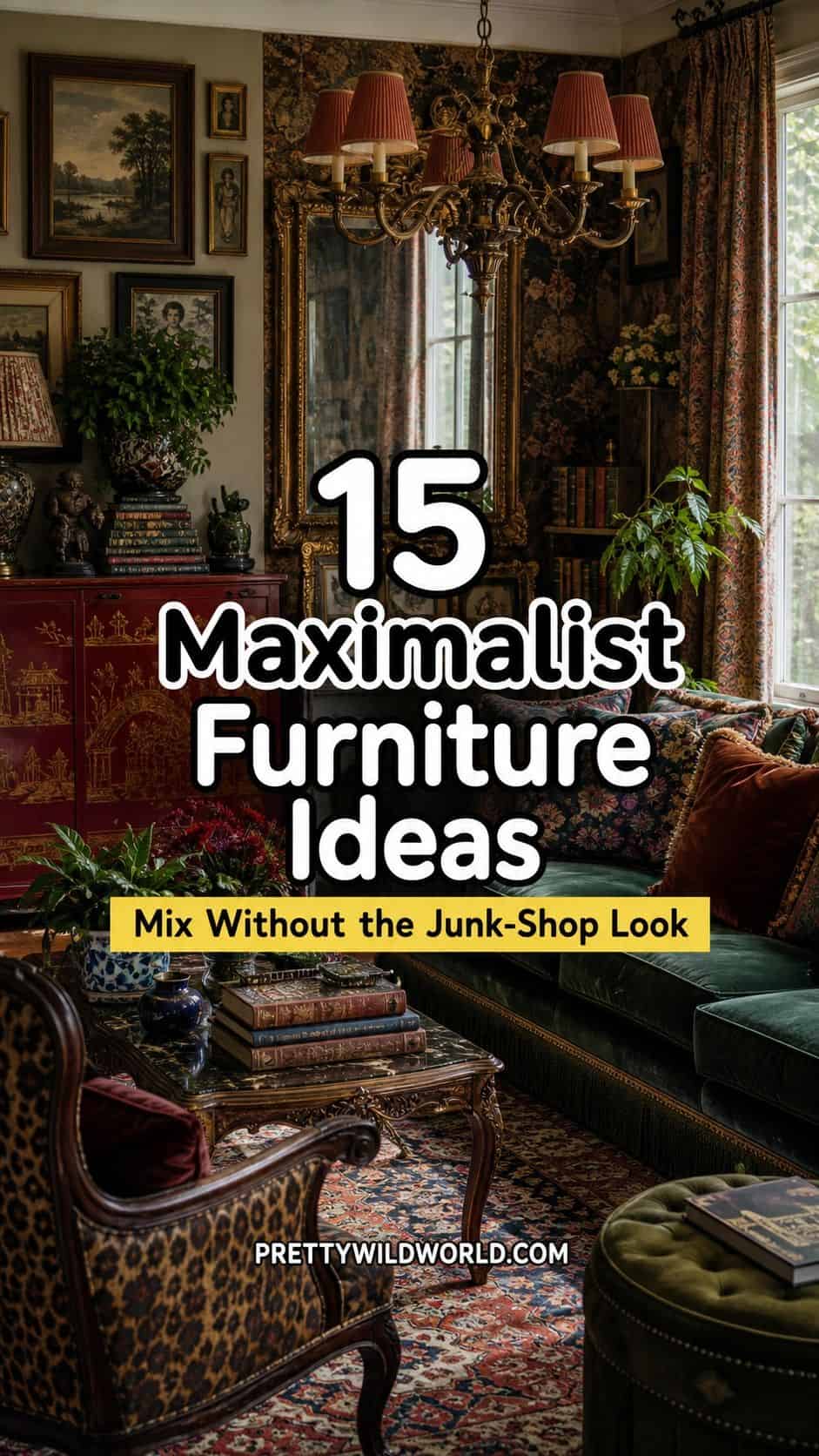
Maximalist furniture is built on statement silhouettes, bold upholstery, mixed eras, and ornament, pulled together by a consistent color story. The 15 pieces below build the look, with the rules for mixing eras and patterns without it reading like a junk shop.
Maximalist furniture is about the mix. Different eras, different patterns, different origins, all in one room. The fear, and the failure mode, is that the mix reads like a junk shop instead of a collection.
The difference is structure. A maximalist room that looks intentional is following a few quiet rules underneath the visible chaos. Below are the 15 furniture pieces that build a maximalist room, what makes each one work, and the rules that hold the mix together.
Recommended blogs to read:
- mid-century modern living room furniture
- retro 70s statement pieces
- a French country coffee table
- vintage 70s furniture
- eclectic zen boho furniture
What Makes Furniture Maximalist
Four things. Statement silhouettes over plain ones, the curved, the carved, the sculptural. Bold upholstery, color and pattern over flat neutrals. Mixed eras, an antique next to a modern piece next to a vintage find. And ornament, the room embraces decoration rather than stripping it away. Lock your maximalist color palette first so the pieces, however different, all pull in the same color direction.
15 Maximalist Furniture Pieces That Build the Look
1. A statement sofa
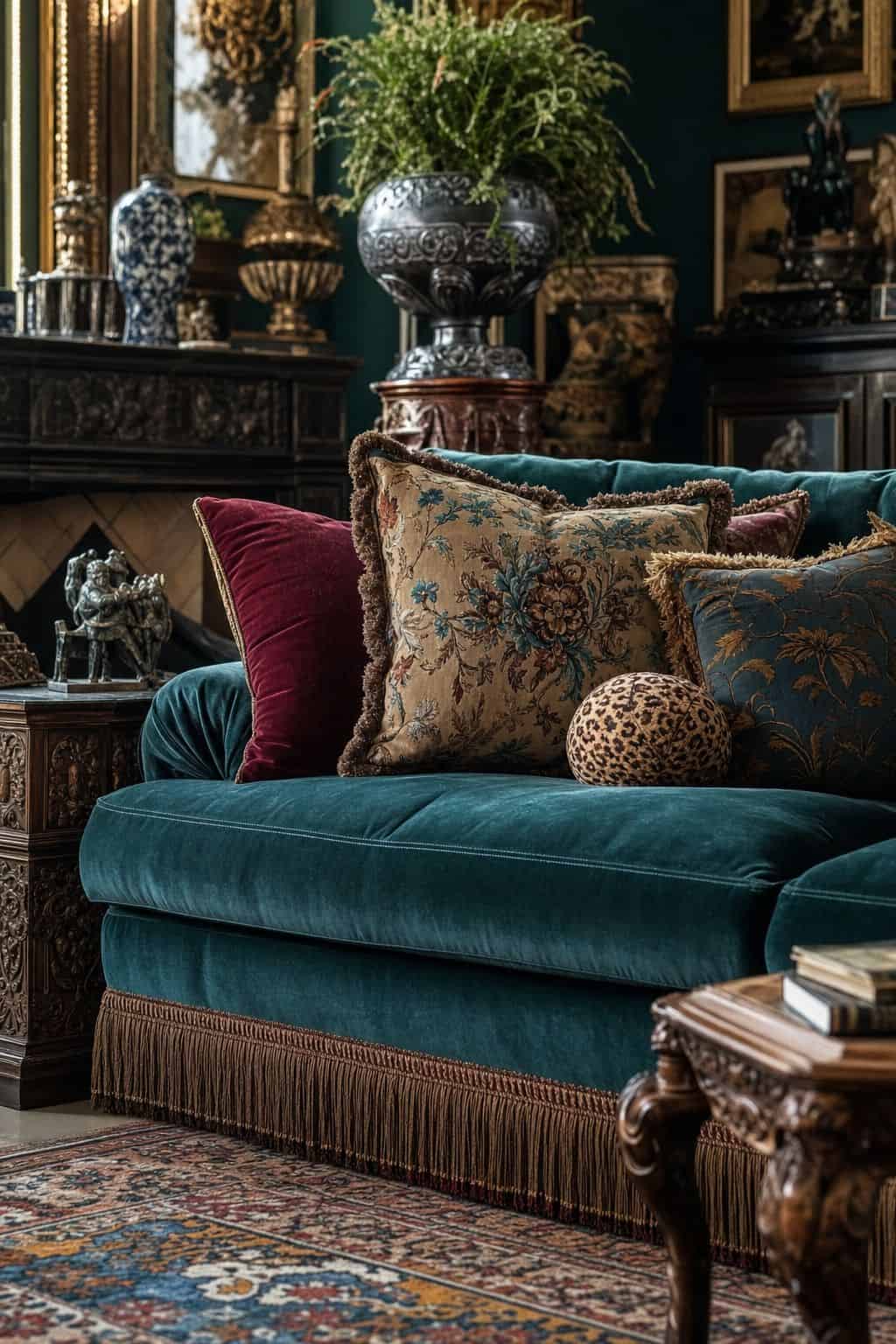


The anchor of a maximalist living room. A sofa in a bold color or a strong pattern, not a safe neutral. Velvet in a jewel tone, or a patterned upholstery, sets the energy for the whole room. A slipcover in a bold fabric fakes it on a budget, and it lets you keep a sofa you already own.
2. An ornate accent chair
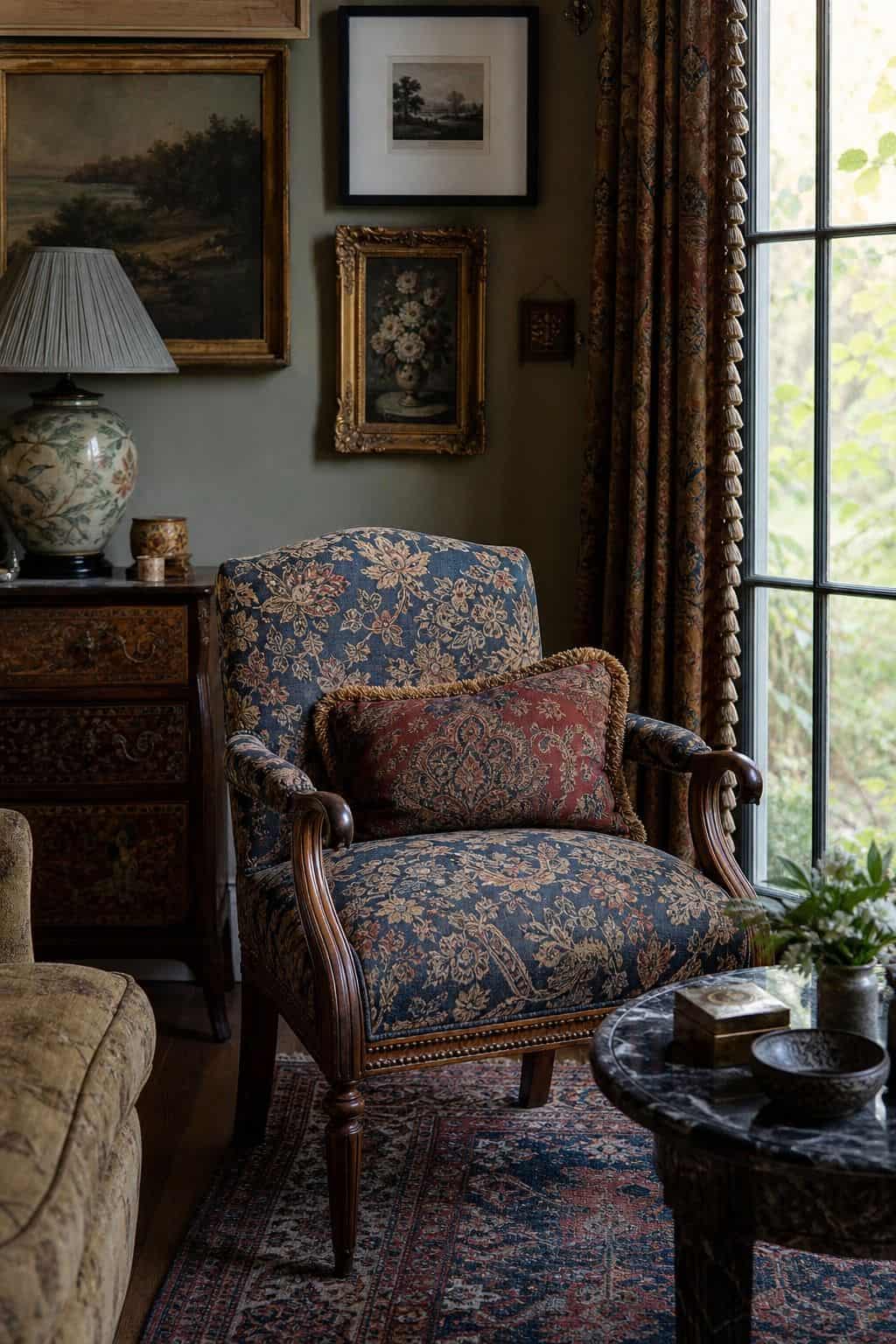


A carved, curved, or otherwise ornate accent chair brings the decorative detail maximalism wants. It does not need to match the sofa. A chair from a different era in a different fabric is the point, not a problem, and a thrifted chair in a different era is usually cheaper than a matching set anyway.
3. A carved accent chair
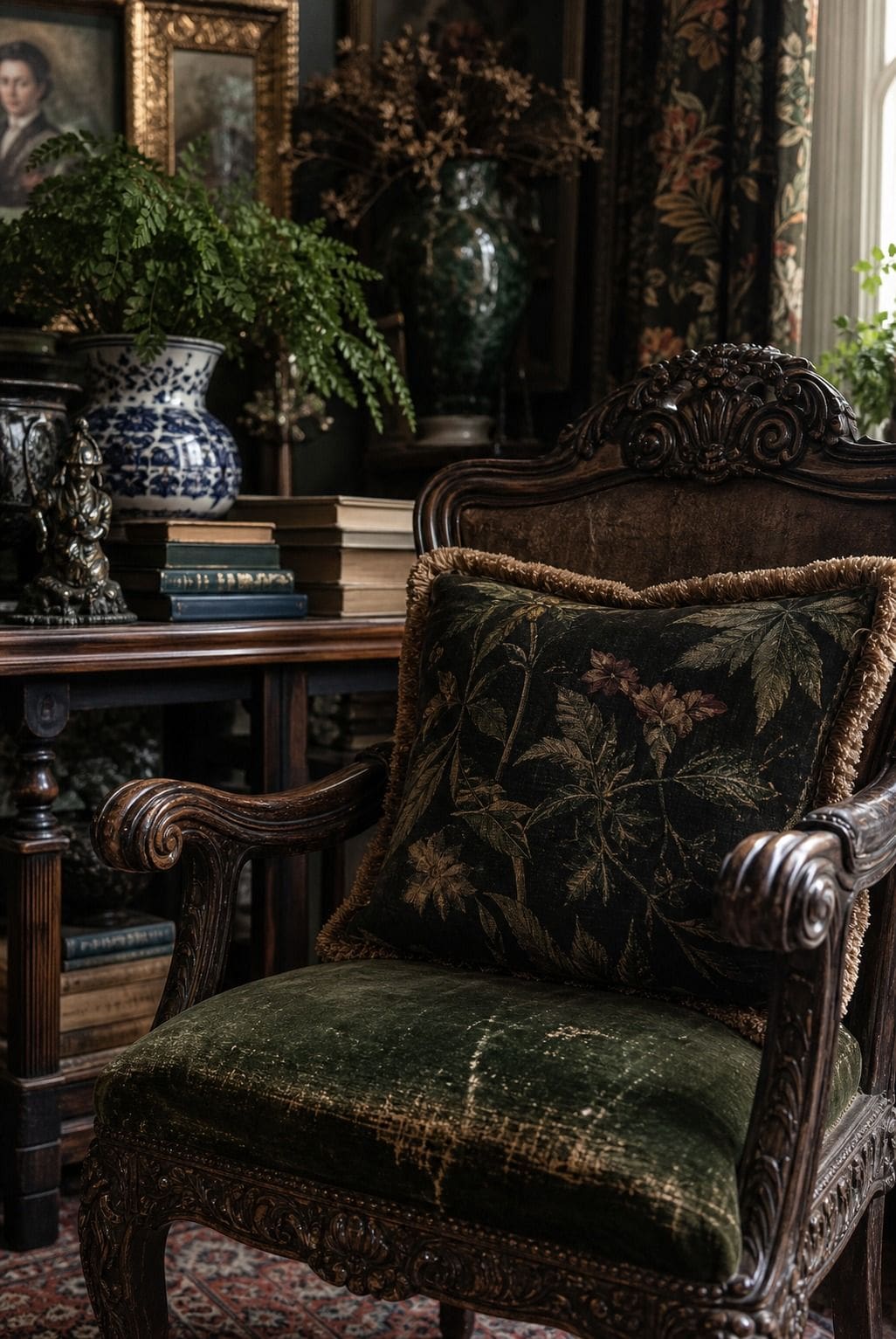


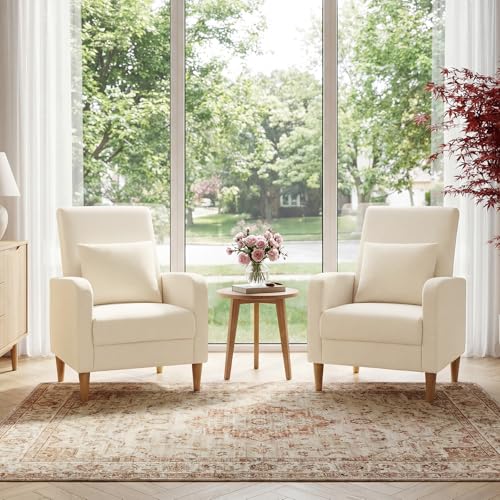
A second seat with visible carving, a wooden frame with detail, an exposed carved leg, adds craft and history. Two mismatched accent chairs in different patterns flanking a sofa is a classic maximalist arrangement, and the carving adds craft the upholstered pieces cannot.
4. A patterned cabinet
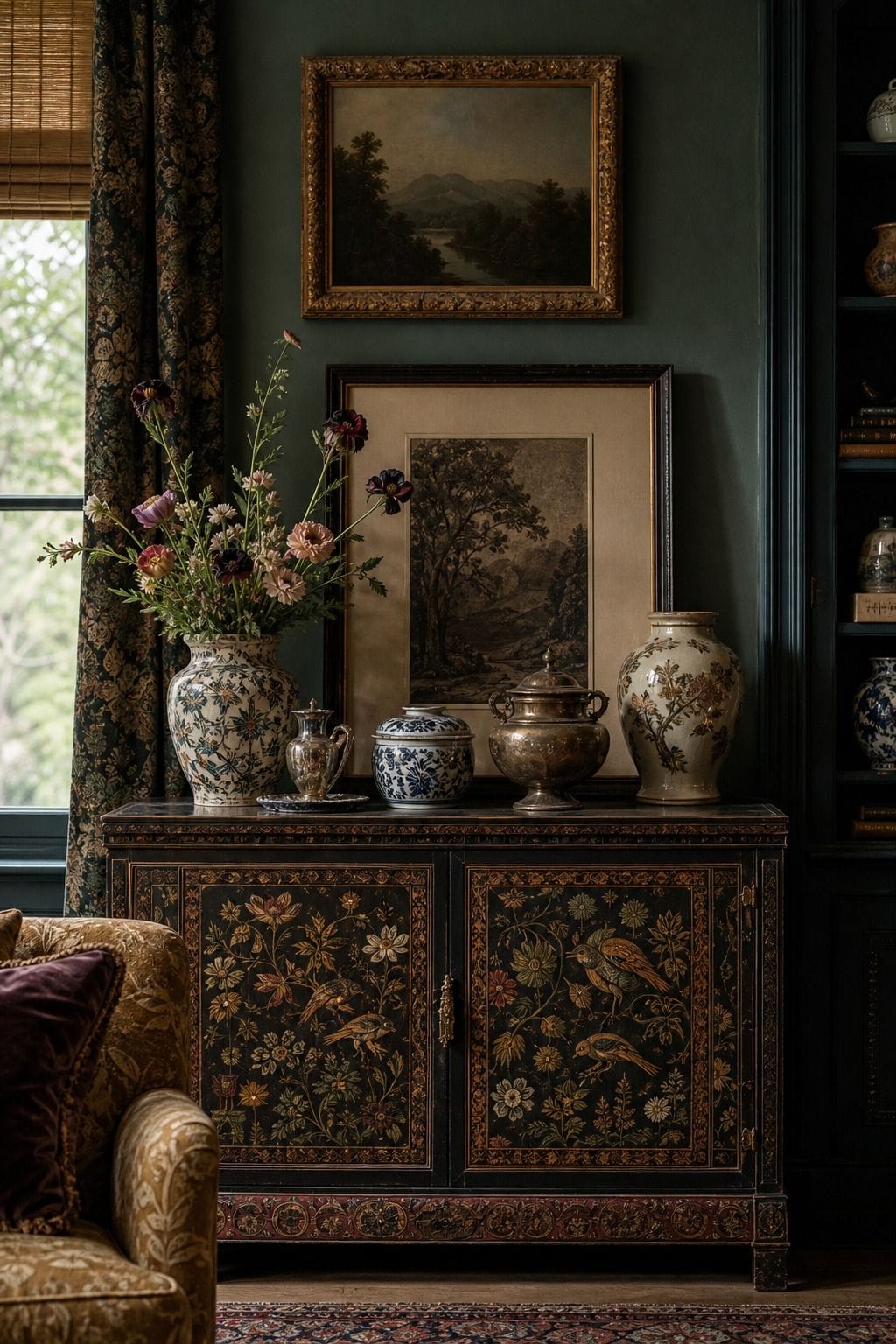

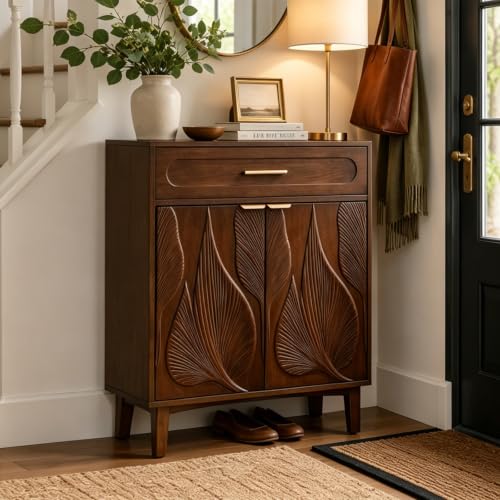
A cabinet with a painted pattern, an inlay, or a bold finish turns storage into a statement. It can be a vintage piece with original detailing or a plain cabinet given a painted treatment. Either way, it stops storage from being a quiet box, and a plain cabinet given a painted treatment is the cheapest way to get one.
5. A lacquered cabinet
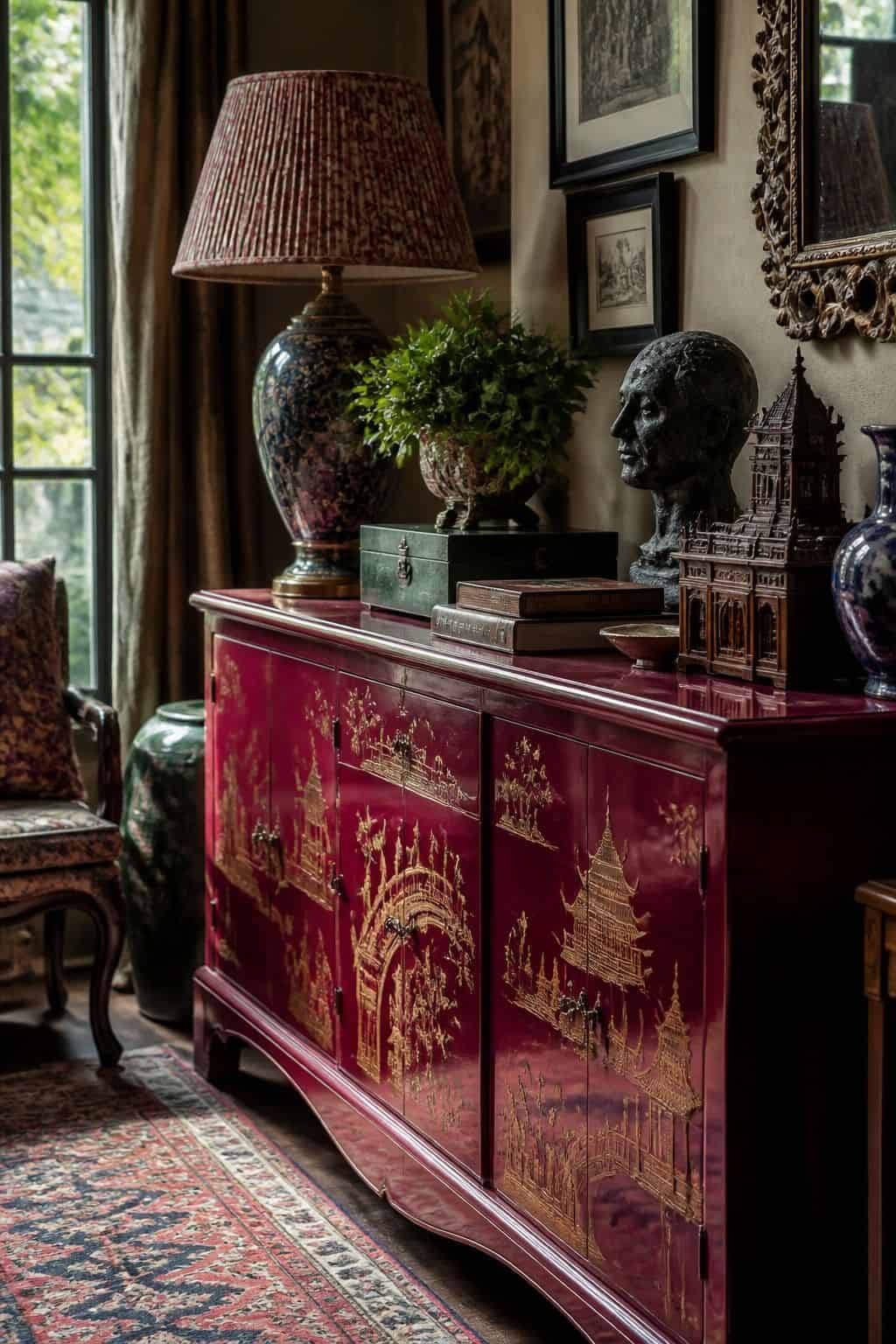
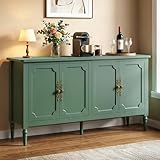

High-gloss lacquer in a bold color brings shine and saturation. A lacquered cabinet or sideboard reflects light and color around the room and reads dressy and confident. One lacquered piece per room is plenty, since the high shine reads as a deliberate accent rather than a finish for everything.
6. Mixed-era coffee tables
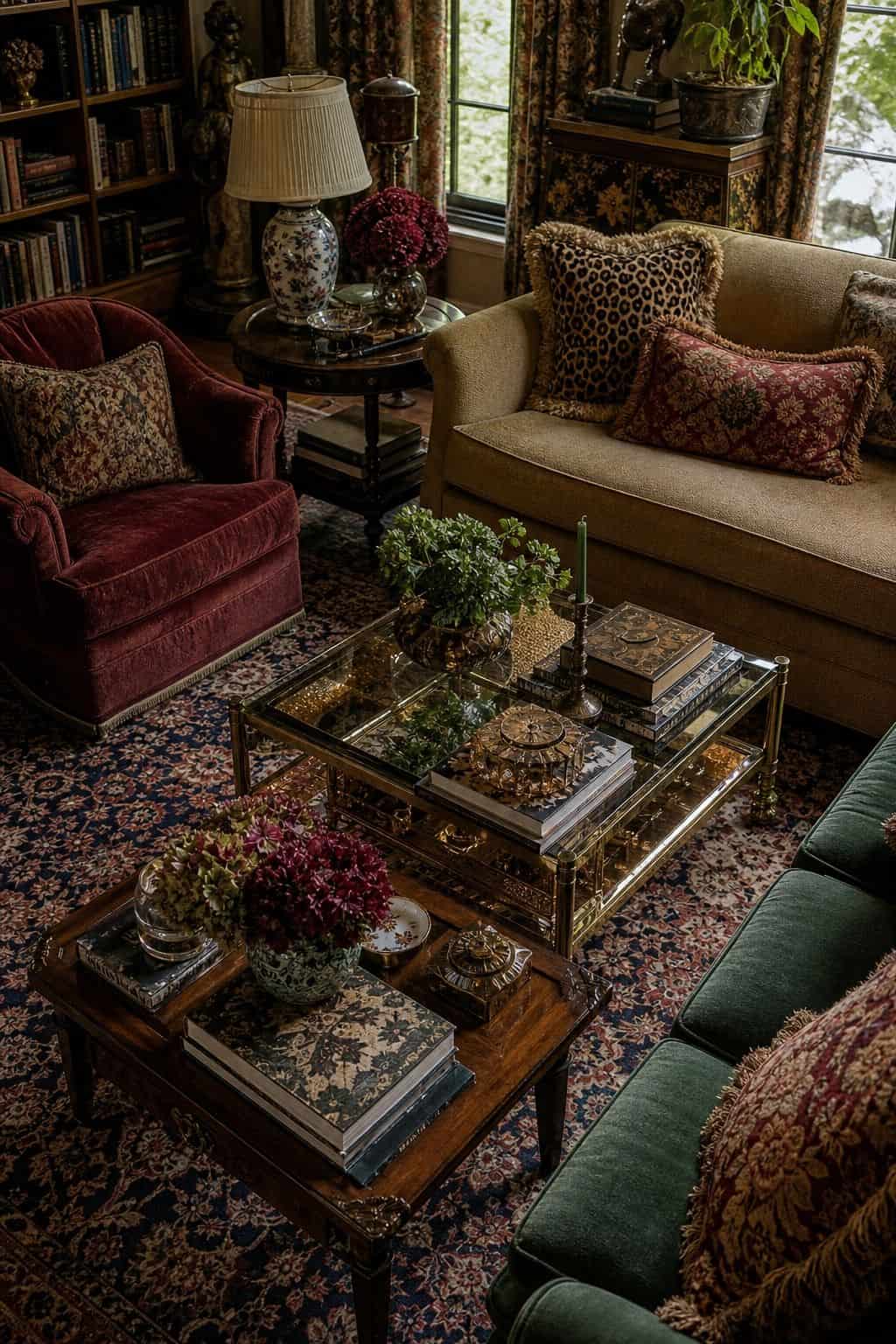

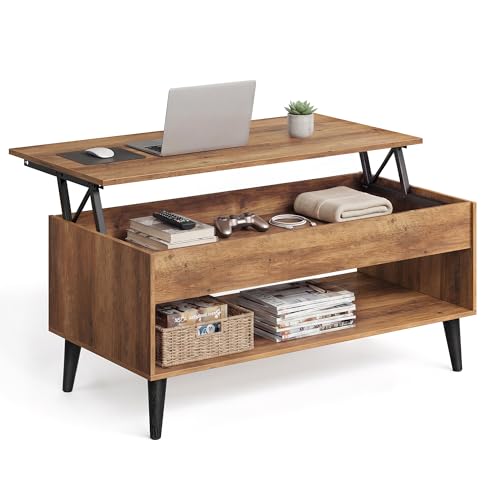

Maximalism loves a coffee table that does not match anything. An ornate antique, a sculptural modern piece, a vintage trunk. The table is a chance to introduce a different era and a different material into the center of the room, which is exactly the kind of mix maximalism wants.
7. Sculptural lighting
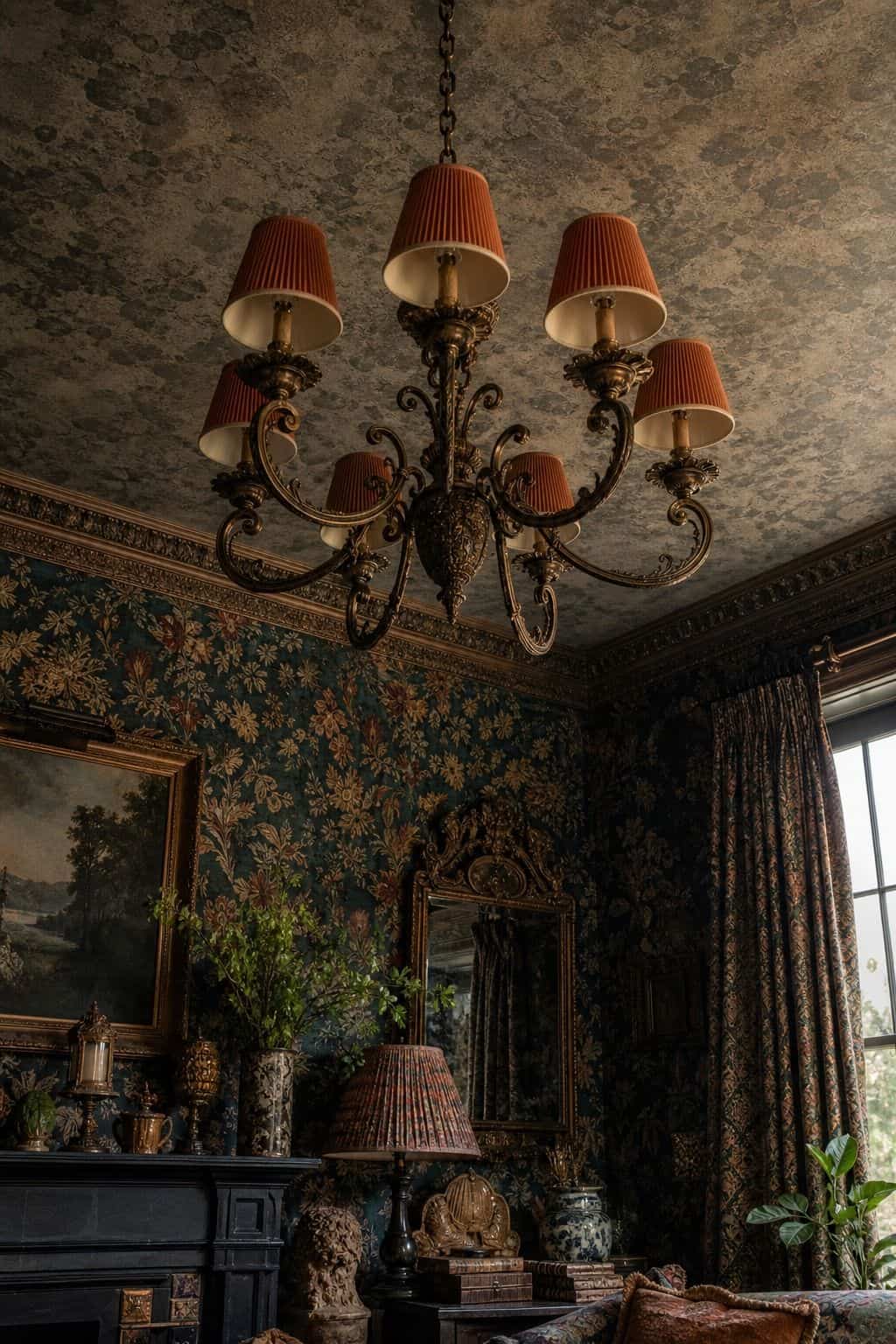


A sculptural lamp or pendant, something with a strong, unusual shape, doubles as decor. Maximalist lighting is not just functional; the fixture itself is a statement piece, ideally one that adds another era or material to the mix.
8. An oversized mirror
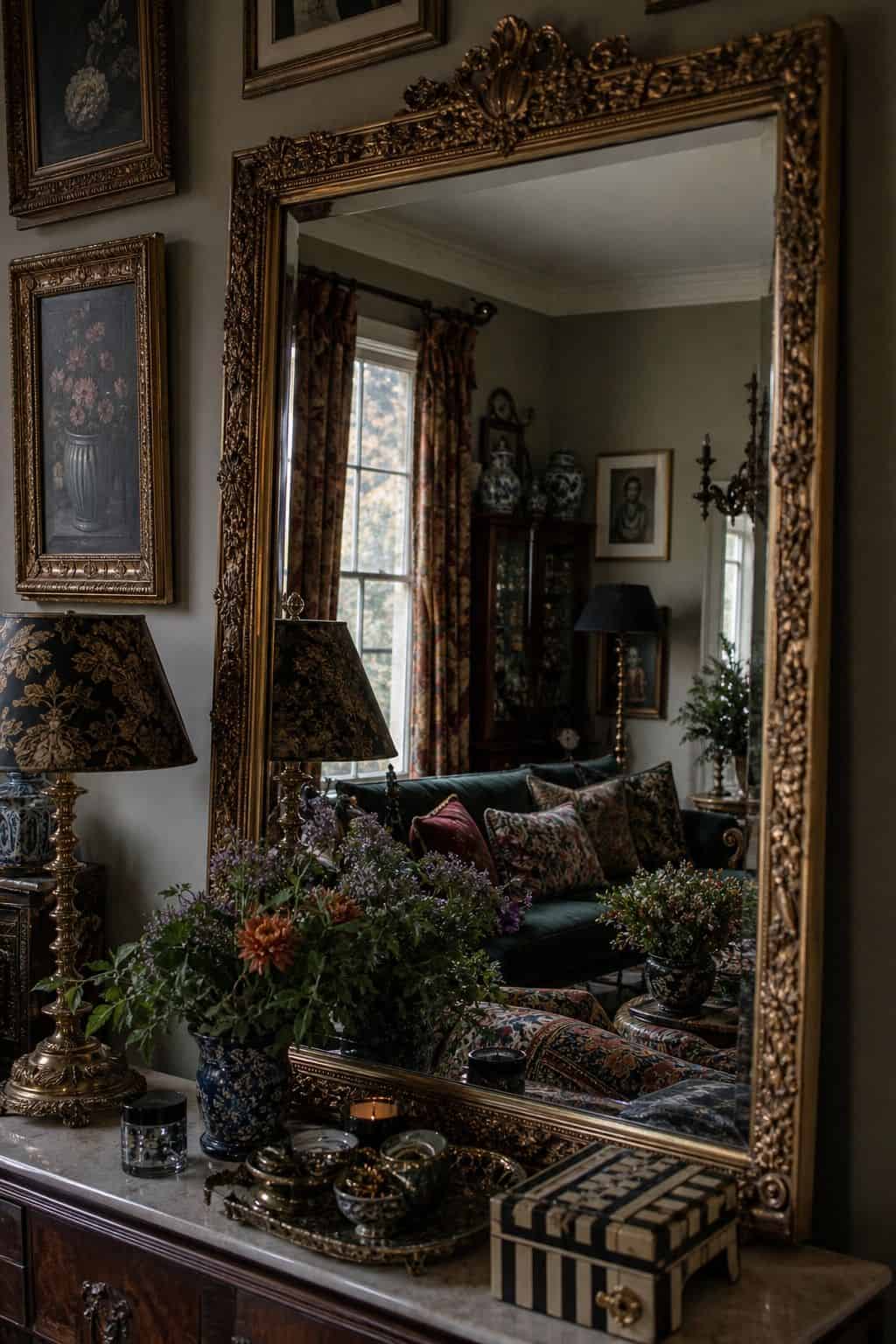


An ornate, oversized floor or wall mirror adds scale, reflects the colorful room back at itself, and brings a decorative frame into the space. Leaned against a wall, it reads casual and collected, and a leaned mirror is also the most renter-friendly way to use one.
9. Open shelving
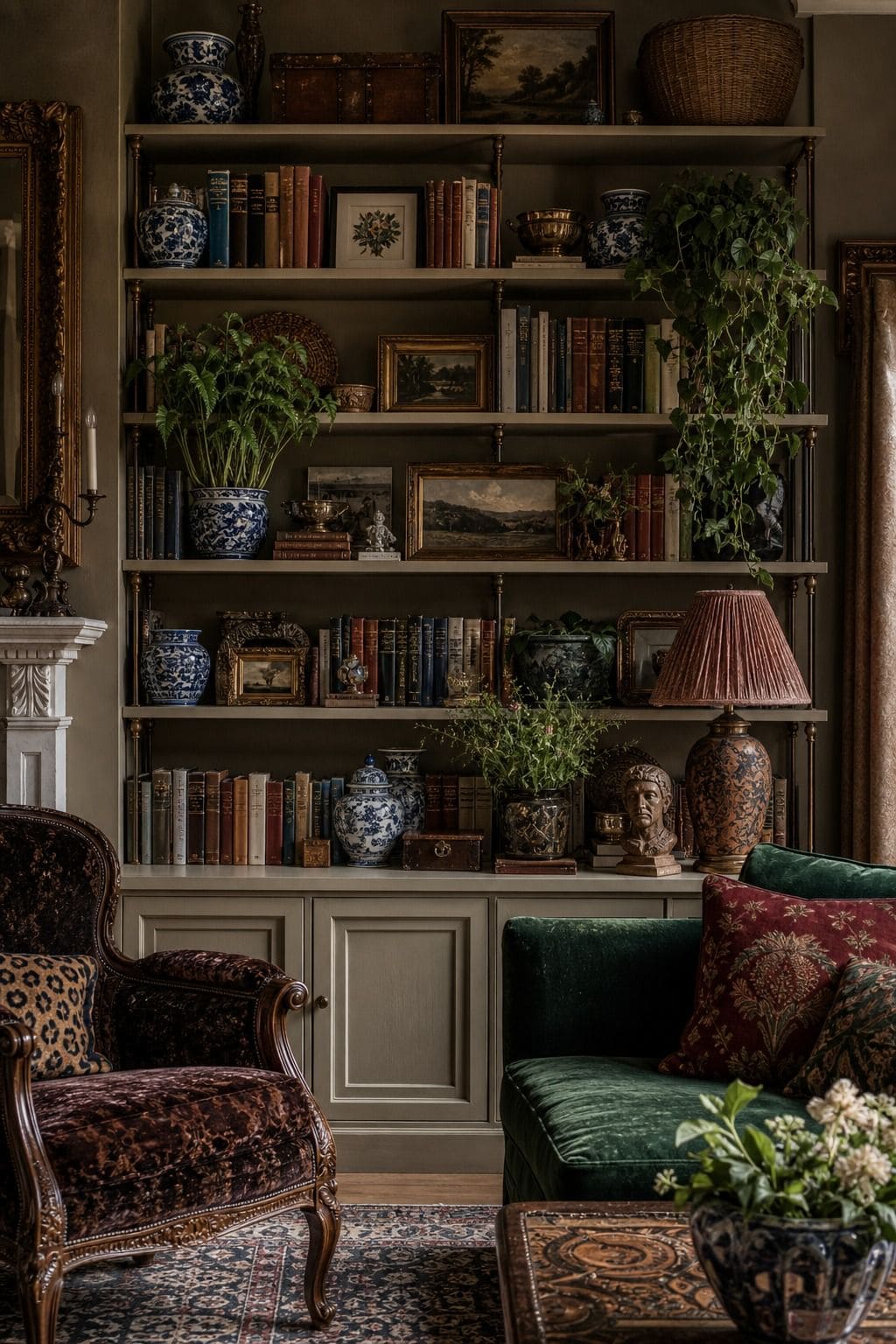


Maximalism is a displayed aesthetic, so open shelving earns its place. A bookshelf or display unit styled with books, ceramics, art, and objects becomes a whole wall of the collected look in one piece, and styling it densely is half the maximalist aesthetic done in one spot.
10. A vintage statement piece

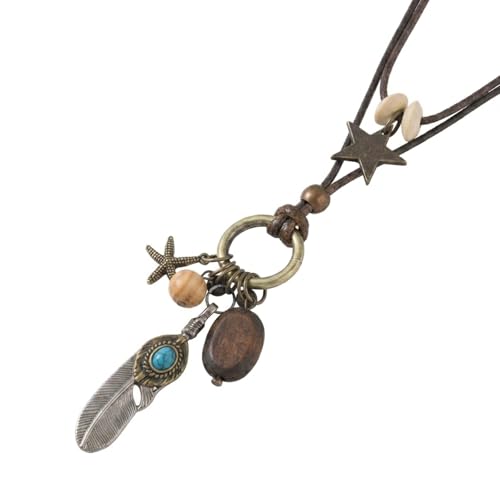


Every maximalist room needs one piece with a real story, the conversation starter. An unusual vintage chair, an antique trunk, an odd carved cabinet. It anchors the room’s collected-over-time feel and gives the eye a focal point, and it is usually the piece guests ask about first.
11. A patterned ottoman

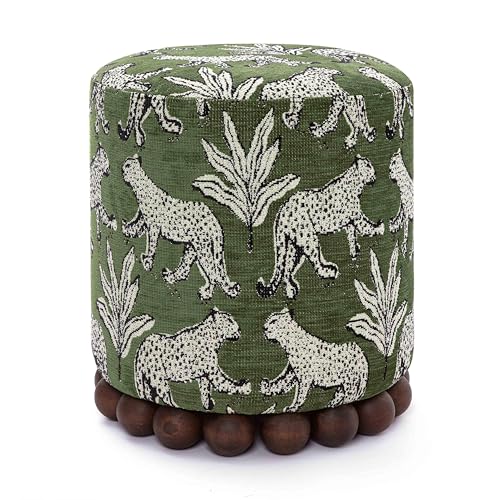


An ottoman in a bold pattern or a rich fabric adds flexible seating, a surface for a tray, and another shot of pattern at a low level. A storage version earns its keep twice over in a layered room.
12. A bold bookcase


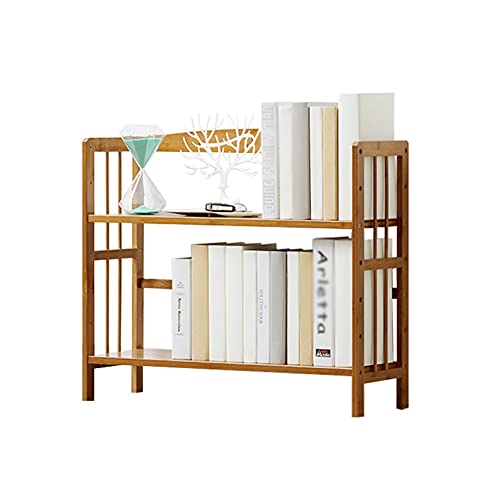
A bookcase painted a bold color, or backed with a patterned wallpaper, becomes a statement rather than a background piece. It is one of the easiest maximalist upgrades, since a plain bookcase plus a can of bold paint is most of the way there.
13. An antique sideboard


An antique sideboard brings craft, history, and a generous styling surface. It works in a dining room or a living room, and it is the kind of solid old piece that grounds a colorful, layered room.
14. A gallery-style console


A console table styled densely, lamps, books, art leaned behind it, objects grouped on top, becomes a gallery moment. In an entryway or behind a sofa, it is a concentrated dose of the maximalist styled-surface look.
15. A tufted settee

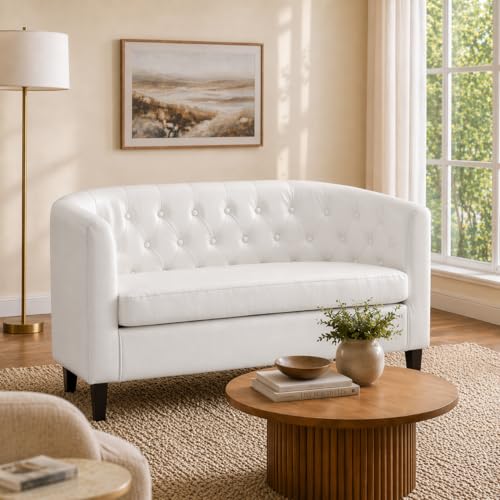
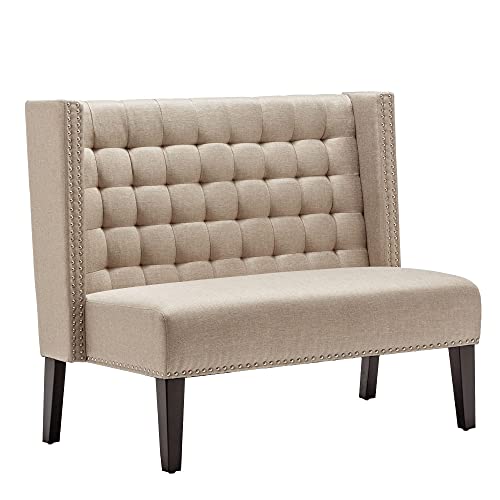
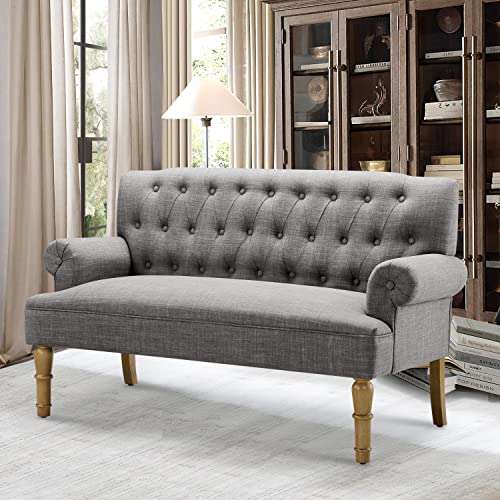
A tufted settee or chaise in a bold fabric brings curved, decorative seating and a slightly opulent texture. It is a flexible extra seat that reads as a statement piece, good in a bedroom, an entryway, or a larger living room.
How to Mix Maximalist Furniture Without It Looking Like a Junk Shop
The mix is the aesthetic, but the mix needs rules. First, a consistent color story. The pieces can be from five different eras, but if they all sit in the same three or four colors, the room reads as a deliberate collection. Color is the thread that ties wild variety together.
Second, repeat your materials and metals. Brass in the lamp, the mirror frame, and the hardware. Velvet on the sofa and an ottoman. Repetition signals intent. Third, the one-quiet-thing rule: every maximalist room needs one calmer piece, a plain side table, an unadorned chair, to give the eye a rest and make the bold pieces read as choices. Get those three right and the mix reads collected. Skip them and it reads junk shop. Layer the color in alongside the furniture using a maximalist color palette.
Where to Find Maximalist Furniture
Maximalist furniture loves a hunt. Vintage shops, estate sales, and Facebook Marketplace are where the carved chairs, antique sideboards, and odd statement pieces turn up, often cheap. For new pieces in bold colors and shapes, World Market, Anthropologie, and Wayfair all carry them now.
The smart split is to hunt the character pieces, where the savings and the soul both are, and buy new only where you want a specific bold color or shape. A maximalist room is often cheaper to build than a minimalist one, since the thrift store is full of exactly the ornate, characterful pieces it wants. For where furniture sits room by room, our guide to doing maximalism on a budget breaks it down.
One habit worth building: shop slowly. Maximalism rewards the room that comes together over a year of finds, not the one bought in a single weekend. A fast-bought maximalist room tends to read as a showroom rather than a collection, because nothing in it has a story. Buy the statement sofa when you are ready, then let the carved chair, the lacquered cabinet, and the odd vintage piece arrive one at a time as you find them. The slow build is not a compromise; it is the aesthetic working as intended.
Read also: a rich maximalist living room, a bold layered maximalist bedroom, maximalist home decor for every room.
Frequently Asked Questions
What furniture is maximalist?
Maximalist furniture has statement silhouettes, bold or patterned upholstery, mixed eras, and decorative ornament. Key pieces include a statement sofa, ornate and carved accent chairs, a patterned or lacquered cabinet, sculptural lighting, and a vintage statement piece.
How do I mix furniture for a maximalist look?
Mix freely across eras and patterns, but tie it together with three rules: a consistent color story across all the pieces, repeated materials and metals, and one quieter piece per room to rest the eye. Those rules turn a wild mix into a collection.
Does maximalist furniture have to be vintage?
No, but a mix of eras is part of the look, so at least a few vintage or antique pieces help. New bold-colored and sculptural furniture works alongside them. The point is the mix, not the age of any one piece.
How do I do maximalism without it looking cluttered?
Keep a consistent color story so variety reads as a collection, repeat your materials and metals, and include one quieter piece per room. Cluttered maximalism has no structure underneath; collected maximalism follows quiet rules behind the visible abundance.
Where do I buy maximalist furniture?
Vintage shops, estate sales, and Facebook Marketplace for the carved, antique, and statement pieces, often cheaply. World Market, Anthropologie, and Wayfair carry new bold-colored and sculptural furniture. Hunt the character pieces, buy new for specific colors.
Key Takeaways
- Maximalist furniture runs on statement silhouettes, bold upholstery, mixed eras, and ornament.
- The 15 pieces span statement seating, patterned and lacquered storage, sculptural lighting, mirrors, and vintage anchors.
- The mix only works with structure: a consistent color story, repeated materials and metals, and one quieter piece per room.
- Every maximalist room needs one vintage statement piece with a real story as the focal point.
- Hunt the character pieces at estate sales and Marketplace, and buy new only for specific bold colors and shapes.
Final Thoughts
Maximalist furniture is a collection, not a set, and a collection needs quiet rules to keep it from reading as clutter. Mix the eras, mix the patterns, but tie it all together with a consistent color story, repeated materials, and one calm piece to rest the eye. Hunt the character pieces and buy new only where you must. When you are ready for the rest, the maximalist color palette and the guide to maximalism on a budget cover the next steps.