Quick Answer: Best Hiking Trips in Europe
The best hiking trips in Europe range from the iconic Tour du Mont Blanc through France, Italy, and Switzerland to the volcanic landscapes of Iceland‘s Laugavegur Trail. For coastal drama, Portugal’s Fishermen’s Trail wins every time, while the Scottish Highlands deliver moody beauty on the West Highland Way. Budget-conscious hikers should look at Slovenia’s Juliana Trail or Bulgaria’s Pirin Mountains, where trail fees and lodging cost a fraction of Alpine prices.
Europe has some of the most varied hiking terrain on the planet. It is also one of the safest continents to travel, and you do not need to be a mountaineer to enjoy it. Whether you want a week-long trek through Alpine passes or a two-day coastal walk with wine stops, there is a trail here for you.
I have spent the better part of five years hiking across this continent, from black sand deserts in Iceland to limestone gorges in Croatia. This list pulls together the trails that left the biggest impression, not just on me, but on the hikers I met along the way. Every trail here is doable for someone with average fitness and a decent pair of boots.
Below you will find 11 of the best hiking trips in Europe, with practical details on difficulty, length, best season, and what makes each one worth the flight.
Planning your hiking budget? Grab The Ultimate Budget Planner to map out daily expenses for accommodation, food, gear, and transport before you book anything. It works for any European hiking trip and keeps your spending on track so you actually come home with money left over.
Recommended Hiking Gear for Europe


Tour du Mont Blanc, France/Italy/Switzerland
Distance: 170 km (105 miles) | Duration: 10-12 days | Difficulty: Moderate to strenuous | Best season: Late June through September
The Tour du Mont Blanc circles the highest peak in the Alps and passes through three countries in a single loop. You start in Chamonix, climb into Italian valleys where rifugios serve pasta and local wine, cross into Switzerland for chocolate and cheese, and return to France with sore legs and a full camera roll.
Daily stages average 15-23 km with around 1,000 meters of elevation gain, so this is not a casual stroll. But mountain huts break up the effort nicely, and most are spaced 4-6 hours apart. Booking refuges in advance is mandatory during July and August because this trail gets busy. The payoff is 360-degree views of glaciers, wildflower meadows, and some of the most dramatic mountain scenery in all of Europe.
Laugavegur Trail, Iceland
Distance: 55 km (34 miles) | Duration: 2-4 days | Difficulty: Moderate | Best season: Late June through early September
If you want a trail that looks like another planet, Laugavegur is it. The route runs from Landmannalaugar to Thorsmork through rhyolite mountains painted in orange, green, and purple, black obsidian fields, steaming hot springs, and river crossings that will test your waterproof boots.
You can stay in mountain huts operated by the Icelandic Touring Association or bring a tent and camp at designated sites. Weather changes fast here, so pack layers even in summer. Temperatures can drop to near freezing overnight, and fog rolls in without warning. The trail itself is well-marked, and the terrain is moderate with no technical sections, making it accessible to most fit hikers.
West Highland Way, Scotland
Distance: 154 km (96 miles) | Duration: 5-8 days | Difficulty: Moderate | Best season: April through October
Scotland’s most famous long-distance trail starts just outside Glasgow and ends in Fort William at the foot of Ben Nevis. The route passes through Loch Lomond, Rannoch Moor, and Glen Coe, which is arguably the most cinematic valley in the British Isles.
The beauty of the West Highland Way is its accessibility. Towns and villages break up the walk every day, so you can sleep in a proper bed, eat a cooked meal, and dry your socks before setting off again. Rain is almost guaranteed, but that is part of the charm. The mist rolling over the moors is half the reason people come here. Baggage transfer services are available if you want to walk without a heavy pack, which makes this trail ideal for first-time long-distance hikers.
Camino de Santiago, Spain
Distance: 780 km (485 miles, French Way) | Duration: 30-35 days | Difficulty: Easy to moderate | Best season: May, June, September, October
The Camino is less a hike and more a walking pilgrimage that crosses northern Spain from the French border to Santiago de Compostela. You do not need to be religious to walk it. Most people come for the rhythm of daily walking, the social aspect of meeting fellow pilgrims, and the chance to unplug for a month.
The French Way (Camino Frances) is the most popular route, with albergues (pilgrim hostels) every 10-15 km offering a bed for around 6-12 euros. Daily stages are flat to rolling, averaging 20-25 km through vineyards, wheat fields, and medieval villages. July and August are hot and crowded, so spring and early autumn are the sweet spot. If a month feels like too much, the last 100 km from Sarria still qualifies you for the Compostela certificate.
Fishermen’s Trail (Rota Vicentina), Portugal
Distance: 226 km (140 miles) | Duration: 10-13 days | Difficulty: Easy to moderate | Best season: March through May, September through November
The Fishermen’s Trail follows Portugal’s Alentejo coastline along sandy cliffs, empty beaches, and fishing villages where grilled sardines cost less than a coffee in Paris. This is a coastal walk at its finest, with salt air, crashing waves, and almost no elevation gain to speak of.
What sets this trail apart is the combination of stunning scenery and rock-bottom costs. Guesthouses along the route charge 30-50 euros per night, and a full seafood dinner with wine rarely tops 20 euros. The trail is well-marked with red and white blazes, and you can easily section-hike the best parts in 4-5 days if you do not have two full weeks. Avoid summer, when the Alentejo coast bakes under temperatures above 35 degrees Celsius.
Alta Via 1, Dolomites, Italy
Distance: 120 km (75 miles) | Duration: 8-12 days | Difficulty: Moderate to strenuous | Best season: Late June through September
Alta Via 1 is the classic Dolomites traverse, running from Lago di Braies in the north to Belluno in the south. The trail threads between pale limestone towers, crosses high passes above 2,500 meters, and drops into green valleys dotted with rifugios serving polenta and strudel.
The scenery here is unlike anything else in the Alps. The Dolomites have a vertical, almost alien quality that makes them feel more like a movie set than a mountain range. Rifugios are spaced a day apart and range from basic bunks to surprisingly comfortable lodges with hot showers and three-course meals. Some sections involve exposed scrambling with fixed cables (via ferrata), so bring a harness and helmet if you plan to tackle those optional detours.
Juliana Trail, Slovenia
Distance: 270 km (168 miles) | Duration: 16 stages | Difficulty: Easy to moderate | Best season: May through October
Slovenia is one of Europe’s most underrated hiking destinations, and the Juliana Trail is one reason why. This circular route loops around Triglav National Park through alpine meadows, turquoise rivers, traditional villages, and forests that feel untouched. It was designed to be accessible, with stages averaging 17 km and modest elevation changes.
The costs are noticeably lower than in neighboring Austria or Switzerland. A night in a mountain hut or guesthouse runs 25-40 euros, and meals are hearty and affordable. The trail connects to local bus routes, so you can easily bail out or skip a section if needed. Slovenia also has excellent trail infrastructure with clear signage and well-maintained paths, making it a strong pick for solo hikers or anyone looking for Alpine beauty without the Alpine price tag.
Pirin Mountains, Bulgaria
Distance: Varies (multi-day circuits from 40-100 km) | Duration: 3-7 days | Difficulty: Moderate to strenuous | Best season: July through September
Bulgaria’s Pirin National Park is a UNESCO World Heritage Site that most Western hikers have never heard of. The range features granite peaks above 2,900 meters, over 180 glacial lakes, and dense forests of ancient Bosnian pines. The marquee hike is the ascent of Vihren (2,914m), the third-highest peak in the Balkans, which can be done as a challenging day hike from Vihren Hut.
For a multi-day trek, the hut-to-hut circuit connecting Vihren Hut, Yavorov Hut, and Bezbog Hut covers the best of the range in 4-5 days. Mountain huts here are basic but cheap, around 15-20 euros for a bed and a simple meal. Bulgaria is easily the best value hiking destination in Europe, and the trails are gloriously empty compared to the Alps.
Cinque Terre Coastal Trail, Italy
Distance: 12 km (7.5 miles) | Duration: 1 day | Difficulty: Moderate | Best season: April through May, September through October
The trail connecting the five colorful villages of Cinque Terre is one of the best day hikes in all of Europe. The route climbs through terraced vineyards and olive groves above the Ligurian Sea, with each village offering a chance to stop for focaccia, pesto, and cold white wine before continuing.
You will need a Cinque Terre Card (around 7.50 euros) to access the trails. The most scenic section runs between Monterosso and Vernazza, with steep stone steps and panoramic views. Spring and autumn are the only reasonable times to go since summer brings crushing crowds and heat. Start early in the morning to get ahead of the day-trippers arriving by train from Florence and Pisa.
Velika Paklenica Canyon, Croatia
Distance: 11 km loop (7 miles) | Duration: 1 day | Difficulty: Moderate | Best season: April through June, September through November
Paklenica National Park sits on the Croatian coast between Zagreb and Zadar, and its canyon trail is one of the most dramatic day hikes in southern Europe. The route follows a deep limestone gorge with towering cliff walls, pine forests, and karst rock formations that look like they belong in a geology textbook.
The park entrance fee is around 8 euros, and the canyon trail can be extended with a climb to Manita Pec cave or a longer loop to the mountain huts higher up. Combine this with a few days on the Dalmatian Coast and you have a trip that mixes hiking with beach time, which is hard to beat.
Kungsleden (King’s Trail), Sweden
Distance: 440 km (273 miles, full trail) | Duration: 15-20 days (or 4-5 for the popular northern section) | Difficulty: Easy to moderate | Best season: Late June through mid-September
Kungsleden runs through Swedish Lapland, one of the last true wilderness areas in Europe. The most popular section covers the 105 km from Abisko to Nikkaluokta, passing through birch forests, open tundra, and alongside the Kebnekaise massif, Sweden’s highest mountain. If you are also considering city stops between hikes, check out some of the most affordable cities in Europe.
Mountain huts operated by the Swedish Tourist Association (STF) are spaced a day apart and provide bunks, cooking facilities, and a small shop selling basic supplies. The trail is flat to rolling with no technical sections, and wooden boardwalks cover the boggy parts. Summer days in Lapland are long, with 24 hours of daylight in late June, so you can hike at midnight if the mood strikes.
How to plan a hiking trip in Europe
Planning a European hiking trip is simpler than most people think, but a few things are worth sorting out before you go.
Best time of year for hiking in Europe
Alpine trails (Switzerland, Austria, Dolomites, Slovenia) open from late June through September once snow clears from the high passes. Coastal and Mediterranean trails (Portugal, Croatia, Cinque Terre) are best in spring (March-May) and autumn (September-November) when temperatures are pleasant and crowds thin out. Iceland and Scandinavia have a short window from late June to early September. Shoulder seasons offer the best combination of weather, availability, and fewer hikers on the trail.
Guided vs. self-guided hiking
Most trails on this list are well-marked and do not require a guide. Self-guided hiking keeps costs down and gives you flexibility to adjust pace and stages. That said, guided trips work well for first-time trekkers or anyone who wants logistics handled for them, including luggage transfers, pre-booked accommodations, and daily route briefings. Companies like Much Better Adventures, Exodus, and Macs Adventure run group and private trips on nearly all of these trails.
Budget breakdown
Costs vary wildly by country. A day of hiking in Switzerland or Norway will run 100-180 euros for hut accommodation and meals. The same day in Bulgaria, Portugal, or Slovenia costs 40-70 euros. The Camino de Santiago is the cheapest long-distance trail in Western Europe, with daily expenses as low as 25-35 euros if you stay in albergues and eat pilgrim menus. Flights within Europe are affordable if booked early, and trains connect most trailheads.
Plan your budget before your next adventure!
Stay on top of your savings with The Savings Tracker Planner — designed to help you reach your travel and lifestyle goals faster.
FAQ about hiking trips in Europe
What is the easiest long-distance hike in Europe?
The Camino de Santiago (French Way) is the most beginner-friendly long-distance trail. The terrain is mostly flat to rolling, stages are short, and infrastructure along the route is excellent with frequent hostels, restaurants, and pharmacies. The Fishermen’s Trail in Portugal is another strong choice for its gentle elevation and forgiving coastal terrain.
Do I need special gear for hiking in Europe?
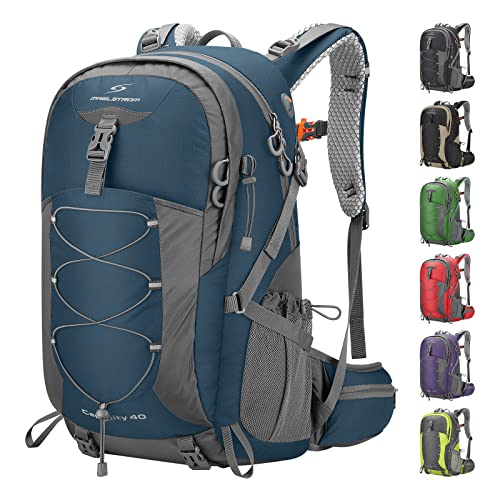
A good pair of broken-in hiking boots, a waterproof jacket, and a 40-50 liter backpack cover the essentials for most trails. Alpine routes above 2,000 meters call for extra layers, sun protection, and trekking poles. Hut-to-hut hikers can get by with a lighter pack since sleeping bags are often provided (bring a liner). A headlamp and basic first aid kit should always be in your bag regardless of the trail.
Is it safe to hike solo in Europe?
Yes. Europe is one of the safest continents for solo hiking. Trails are well-marked, rescue services are reliable, and mobile phone coverage reaches most popular routes. The Camino de Santiago and West Highland Way are particularly social trails where solo hikers naturally fall into groups. That said, tell someone your route plan, carry a charged phone, and check weather forecasts daily.
How fit do I need to be for European hiking trails?
Most trails on this list suit anyone who walks regularly and can handle 15-20 km a day with a light pack. The Tour du Mont Blanc and Alta Via 1 are the most physically demanding, with sustained climbs and high-altitude passes. If you can comfortably walk 10 km on hilly terrain back home, you are ready for the moderate trails. Start training 6-8 weeks before departure with loaded day hikes to build leg strength and break in your boots.
What is the cheapest country for hiking in Europe?
Bulgaria is the cheapest hiking destination on this list, with mountain hut stays at 15-20 euros and meals under 10 euros. Portugal, Slovenia, and Spain (on the Camino) are also very affordable compared to Switzerland, Norway, or Iceland. Eastern Europe in general offers excellent trails at a fraction of Western European costs.
Key Takeaways
- The Tour du Mont Blanc is the gold standard for multi-day Alpine treks, but requires advance hut bookings in peak summer.
- Iceland’s Laugavegur Trail offers landscapes unlike anything else in Europe, with volcanic terrain and natural hot springs.
- For budget hiking, Bulgaria’s Pirin Mountains and Portugal’s Fishermen’s Trail give you world-class scenery at Eastern European prices.
- The Camino de Santiago is the best trail for beginners and solo travelers thanks to flat terrain and strong social infrastructure.
- Slovenia’s Juliana Trail is the most underrated option, combining Alpine beauty with low crowds and affordable accommodation.
- Spring and autumn are the sweet spot for Mediterranean and coastal trails. If you are planning a spring trip to Europe, many of these trails are at their best, while Alpine routes peak June through September.
Final Thoughts
Europe has hiking trails that range from gentle coastal walks to full-on alpine scrambles. Whatever your fitness level or comfort zone, there is a trail out there with your name on it. Just make sure your boots are broken in before you go.