Quick Answer: Mediterranean furniture is built from natural materials, carved and rustic wood, wrought iron, rush and rattan, slipcovered linen, and stone or tile tops, in pieces that look handmade rather than matched. The 15 pieces below cover the warm, sun-washed look room by room, plus the handcrafted-not-matched rule that ties a Mediterranean room together.
The thing that separates a Mediterranean room from a furniture-showroom version of one is that nothing in it looks like it was bought as a set. The carved wood table does not match the rush-seat chairs around it. The slipcovered sofa does not match the wrought-iron console behind it. Every piece looks like it arrived on its own, at its own time, and that is the whole effect.
Handcrafted, not matched. That is the rule the whole style runs on, and it is what most “Mediterranean furniture” roundups miss when they sell you a coordinated five-piece collection. The pieces that genuinely build the look, carved wood, woven seating, wrought iron, slipcovered linen, stone tops, are chosen precisely so they can be mixed across eras and finishes rather than bought as a set. The section at the end covers exactly how the handcrafted-not-matched rule works, so the mix reads collected instead of chaotic.
Building a Mediterranean room piece by piece and not sure where to start?
The Aesthetic Apartment Makeover Guide walks you through furnishing a room in the right order, so a handcrafted, mixed Mediterranean look comes together collected instead of chaotic.
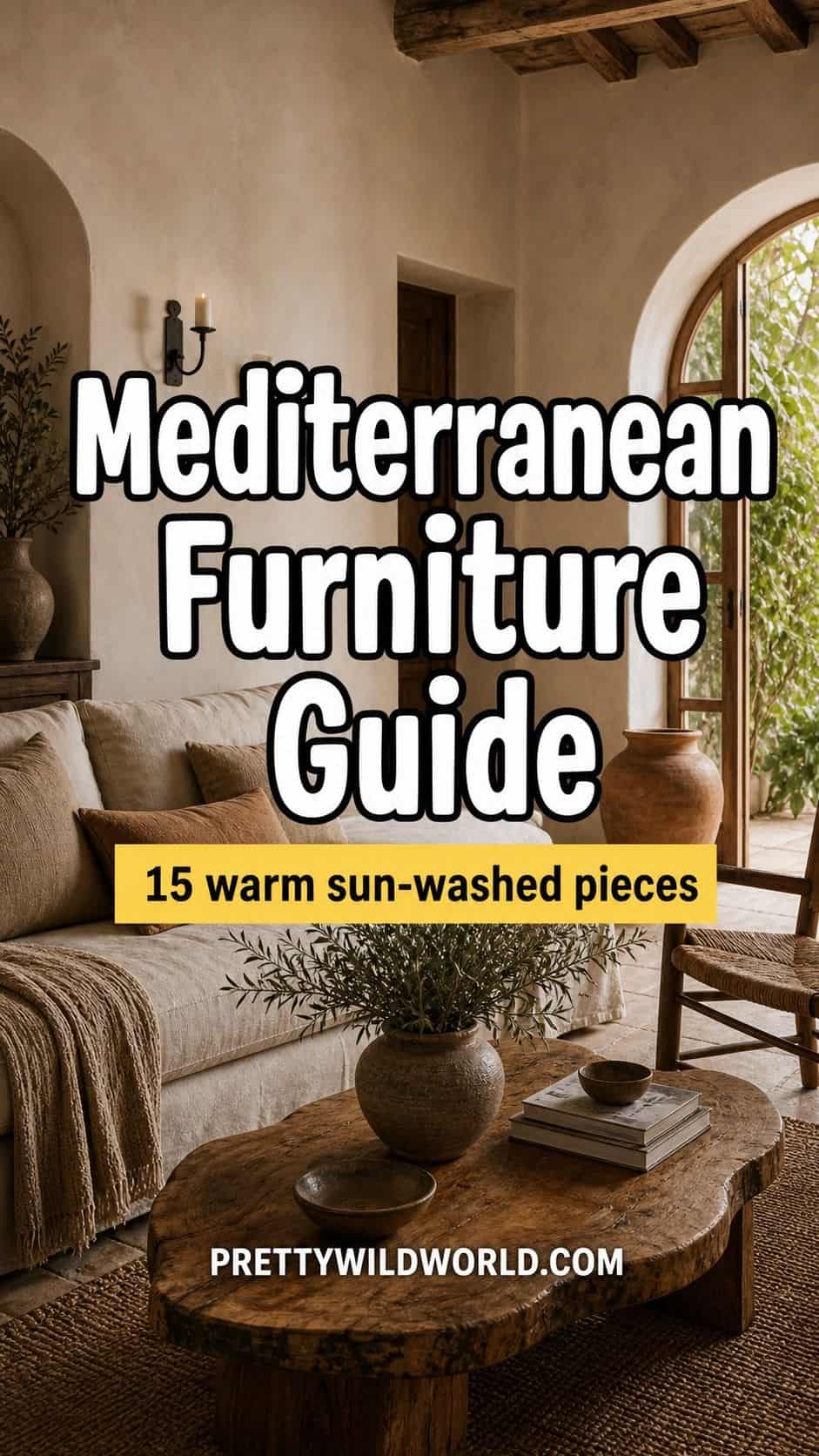
Recommended Mediterranean Furniture
Six pieces that build the warm, sun-washed look, from woven rush seating to a carved wood coffee table.



Recommended blogs to read:
- a coastal living room
- the french country aesthetic
- a coastal bedroom
- zen modern decor
- french country coffee table styling
What Makes Furniture Mediterranean
Mediterranean furniture is defined by material before style. It is wood with visible grain and a little carving, wrought iron, rush, cane, rattan, woven seagrass, slipcovered linen, and stone or tile tops. These are materials that come from the region and age well in strong light and warm air, and they are what give the furniture its grounded, sun-baked weight.
The shapes are simple and a little rustic. Mediterranean pieces are not fussy or ornate, they are honest, sturdy forms with the marks of being made by hand. Color comes from the wood tone, the iron, and the natural fiber rather than from paint. Tie the pieces to a scheme with our guide to the colors to upholster these pieces in, which covers the warm bases and accents that suit them.
One rule before the list: buy slowly. Mediterranean furniture is meant to be gathered, not delivered all at once. A room that comes together over months, with thrifted and inherited pieces mixed in, will always read more authentically Mediterranean than one ordered as a matching collection.
15 Mediterranean Furniture Pieces
Mix these across the room rather than matching them. The section after the list covers the handcrafted-not-matched rule.
1. A Carved or Rustic Wood Table
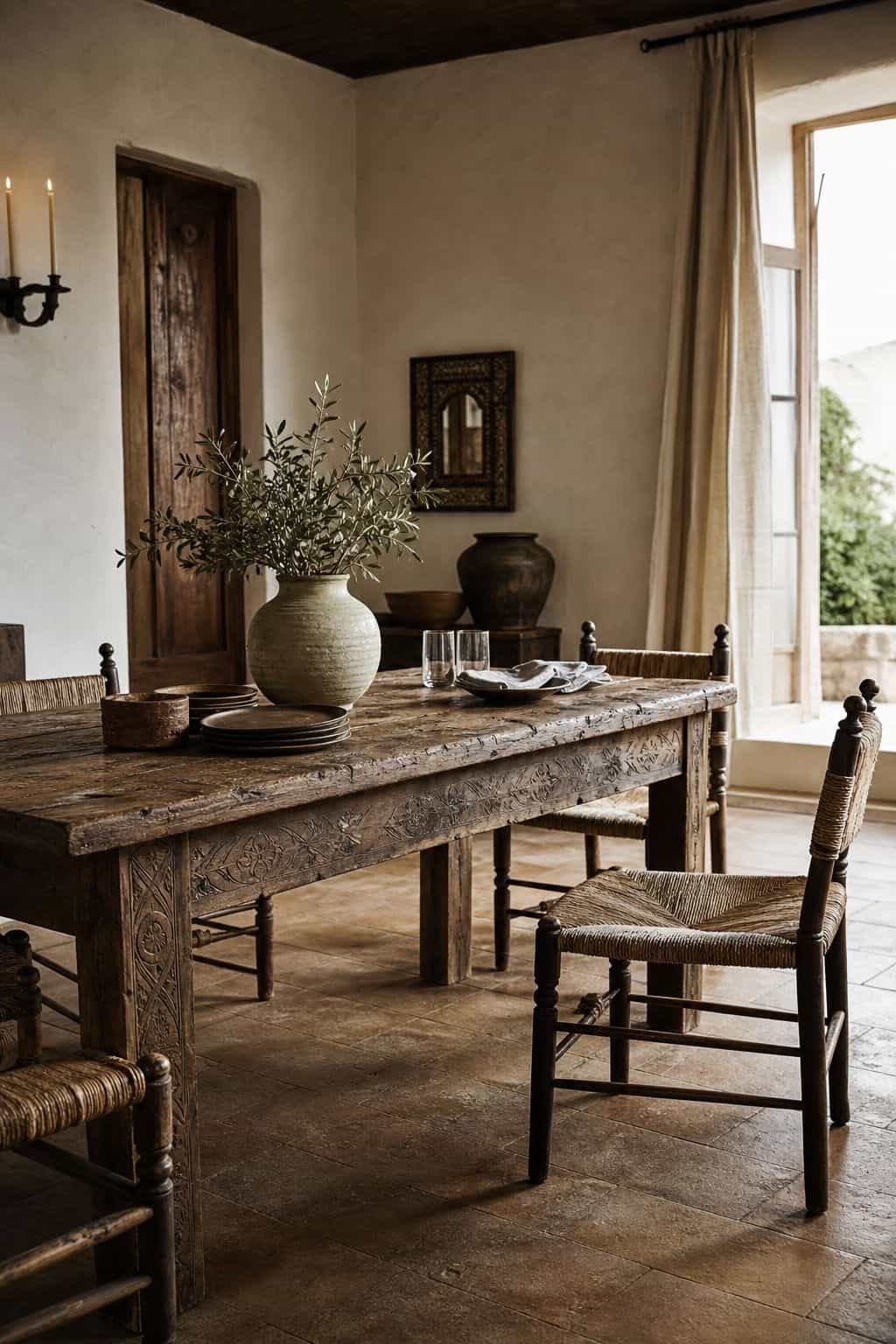

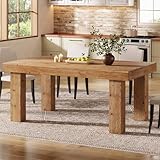
The dining table is the anchor of a Mediterranean room, and it should be solid wood with character. Look for a trestle base, turned legs, or simple carving, in a warm mid-tone wood like olive, oak, or walnut, with visible grain and ideally a little honest wear. A rustic farmhouse-style table works, so does a heavier carved one. The point is that it looks made rather than manufactured. A thrifted or inherited table is ideal here, since age only improves it. Pair it deliberately with chairs that do not match, that mismatch is the Mediterranean signature, and let the table be the one piece in the room everyone gathers around.
2. Rush or Woven-Seat Chairs
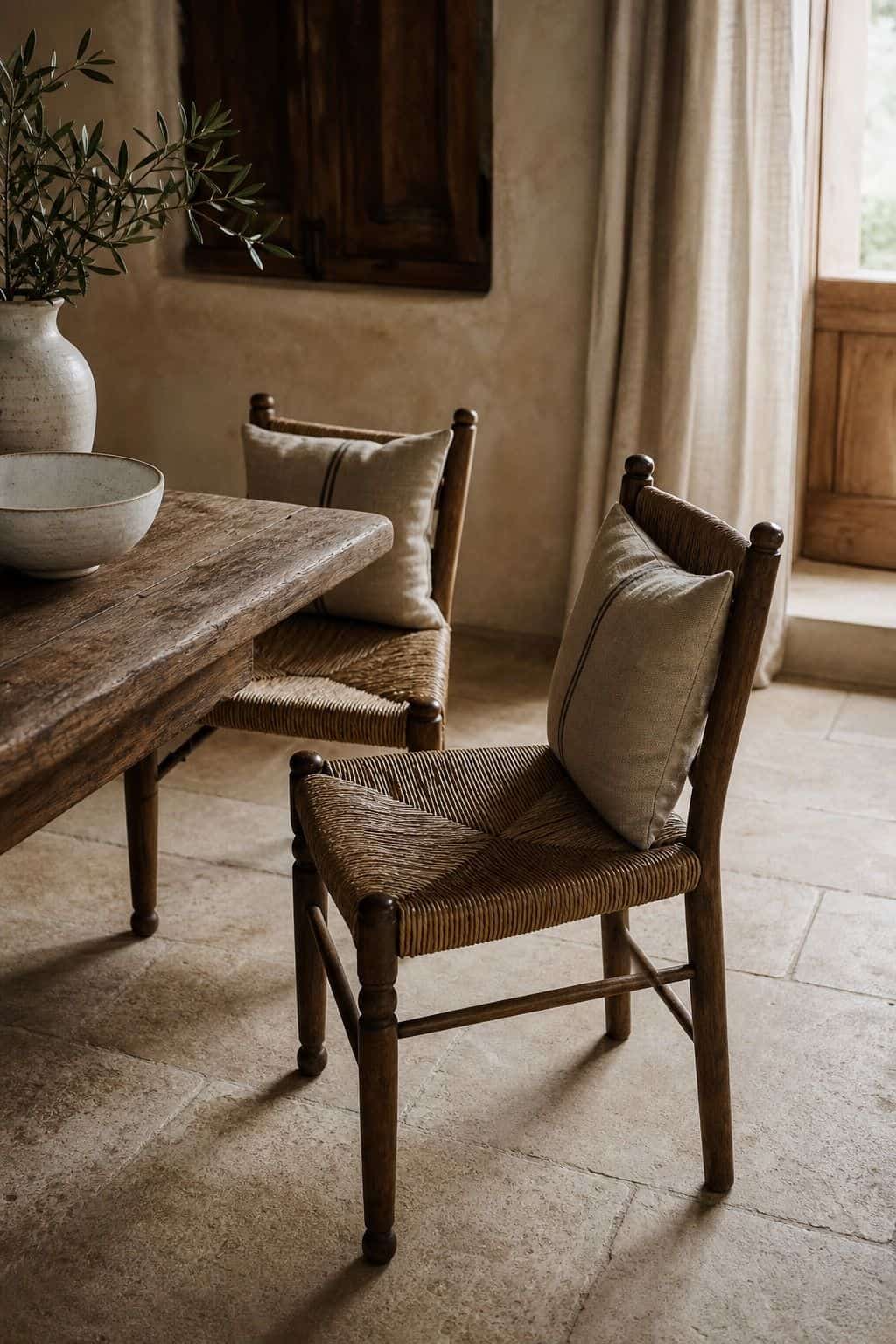


Around that table go rush, cane, or woven-seat chairs, the single most Mediterranean seating choice there is. The classic is a ladder-back or simple wood-frame chair with a woven rush seat, the kind found in farmhouses across southern Europe. The natural fiber adds warmth and texture, and the chairs are light enough to move easily. Buy them in a loose set, four to six, and do not worry if they are not all identical, a near-matching mix reads more authentic than a perfect set. They are also widely available secondhand, which keeps the look affordable and adds the genuine age the style wants.
3. Wrought-Iron Accents
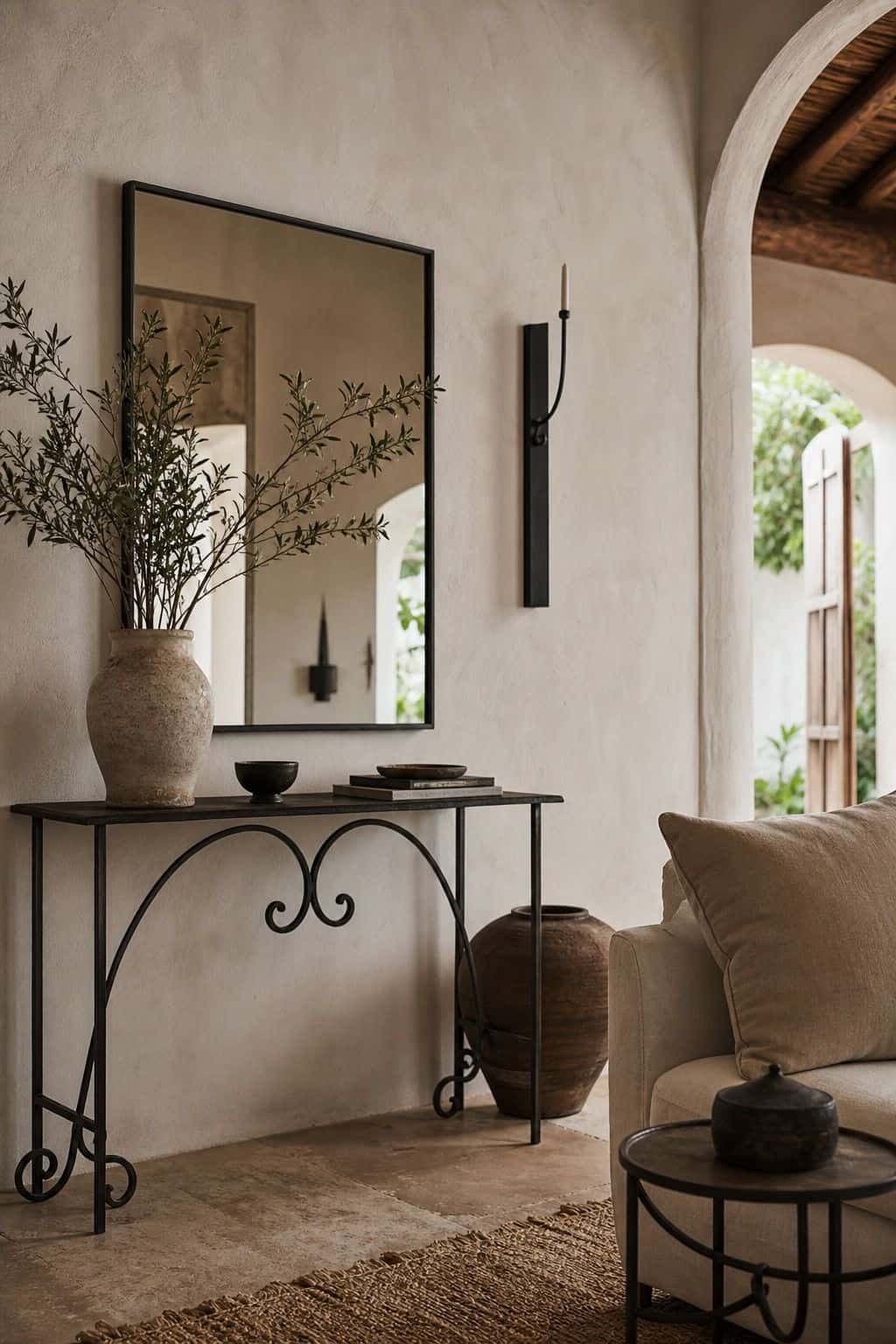


Wrought iron is the Mediterranean metal, and it shows up as console tables, bistro chairs, bed frames, plant stands, and curtain rods. The black, slightly hand-forged look of iron against warm plaster walls is deeply of the region. Iron is also strong and architectural, so a single iron piece, a console, a headboard, anchors a room without bulk. Look for genuinely forged or forged-look pieces with a little irregularity rather than slick powder-coated ones. One or two wrought-iron pieces per room is enough, used as the dark, linear counterpoint to all the warm wood and woven fiber. Iron is also one of the easiest Mediterranean materials to find secondhand, since old bistro sets, bed frames, and plant stands turn up constantly and only improve with a little age and patina.
4. A Slipcovered Linen Sofa
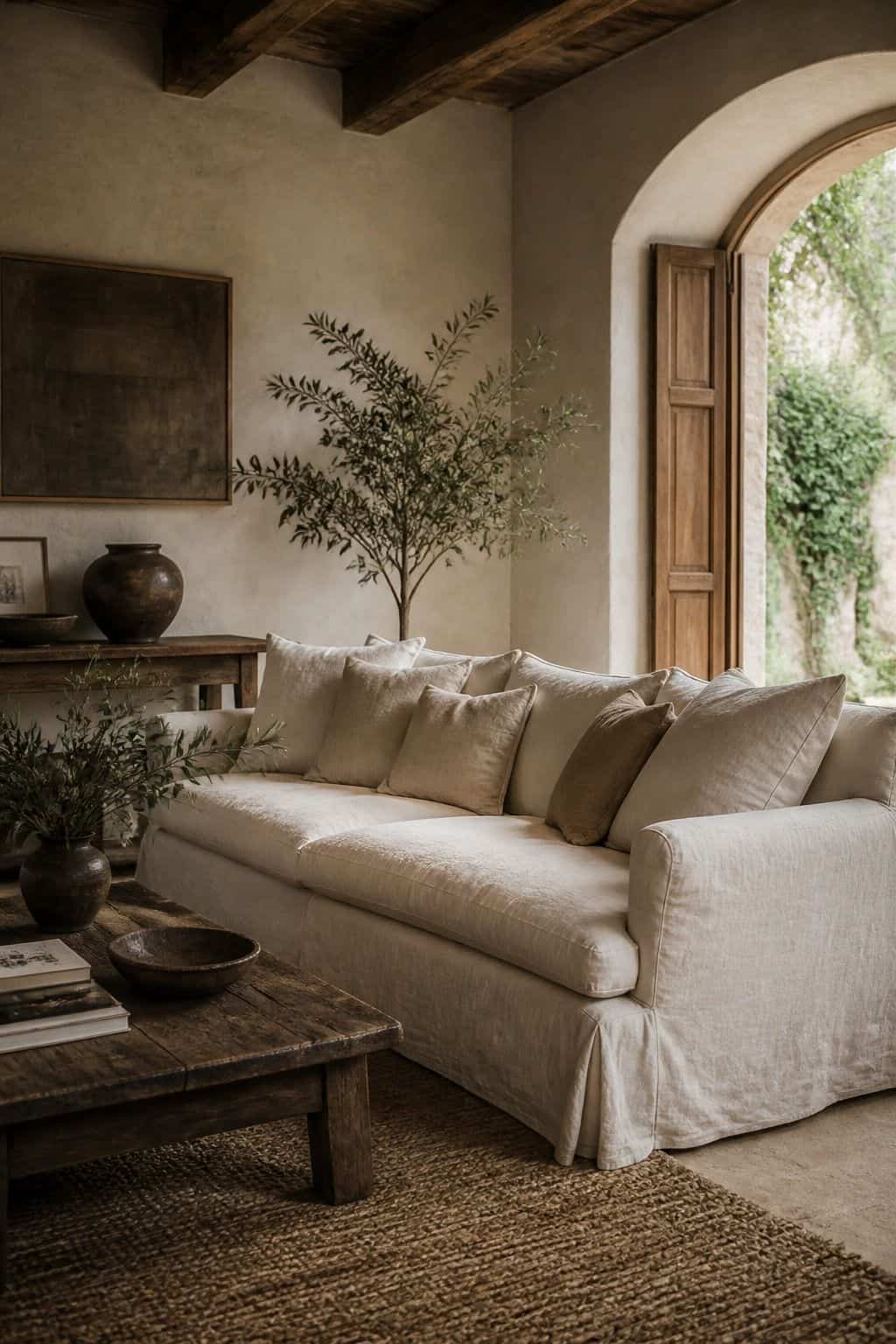


The sofa is where Mediterranean style softens. A slipcovered sofa in natural linen, in oatmeal, cream, or a warm sand, brings the relaxed, lived-in comfort the look needs alongside all the wood and iron. The slipcover matters: it can be washed, it wrinkles into a soft, unfussy shape, and it reads casual rather than formal. A roll-arm or simple low-back shape suits the style best. If a new sofa is out of reach, a good linen slipcover over the sofa you own gets most of the way there, and it is one of the highest-impact single changes in the room.
5. Terracotta-Toned Upholstery
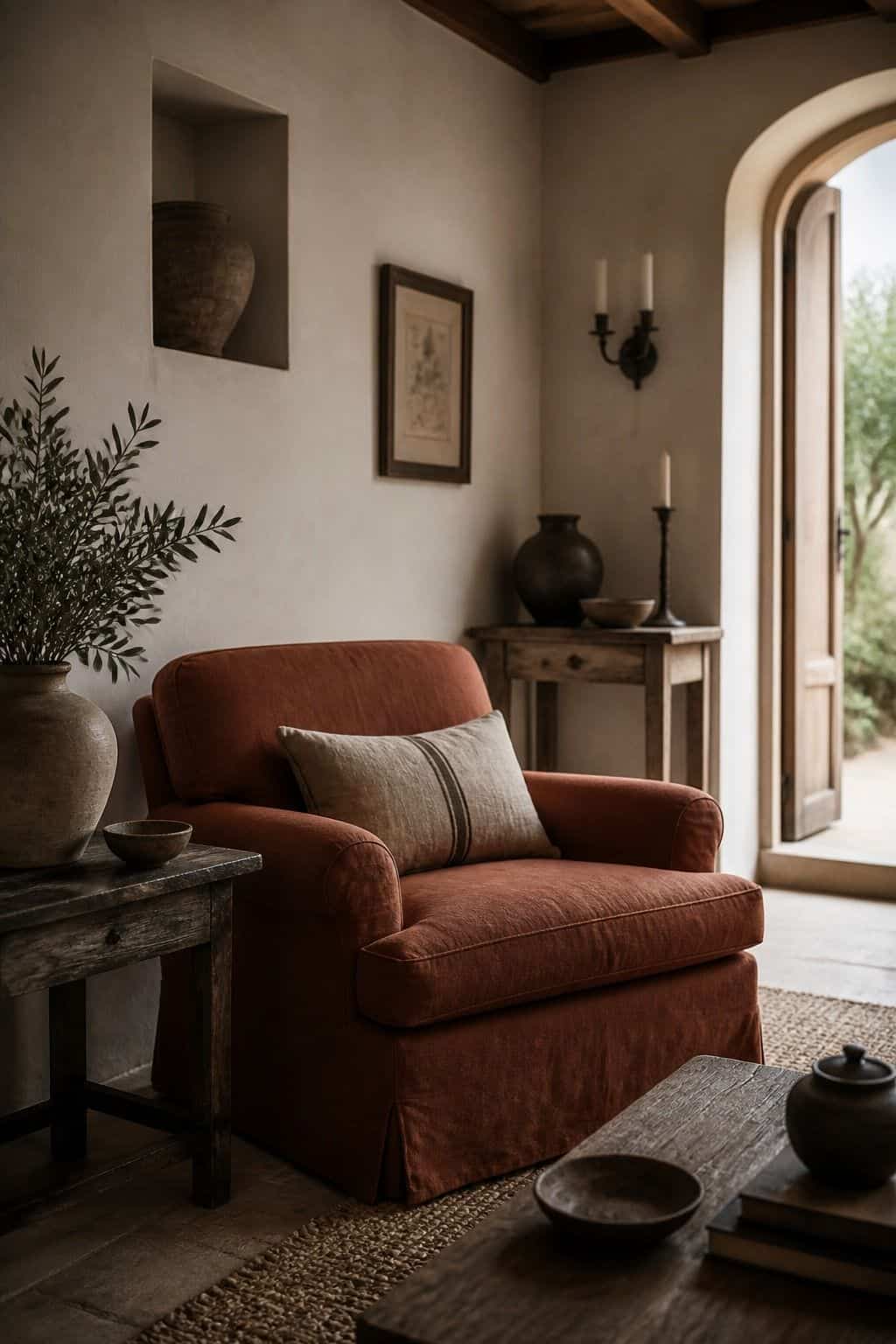


Where the room takes a hit of color in its upholstery, terracotta is the Mediterranean choice. An accent chair, an ottoman, or a bench in a warm terracotta, rust, or ochre fabric brings the region’s earth tones onto a piece of furniture rather than just the walls. Keep it to one upholstered piece in a saturated tone, with the rest of the seating in neutral linen, so the terracotta reads as a deliberate accent. Velvet, linen, and woven textures all work in this tone, though a slightly matte, natural-fiber fabric reads most authentic. Reupholstering a thrifted chair in a terracotta fabric is a particularly good-value move, and our guide to thrifting Mediterranean wood and iron covers finding these pieces secondhand.
6. A Low Wood Bench
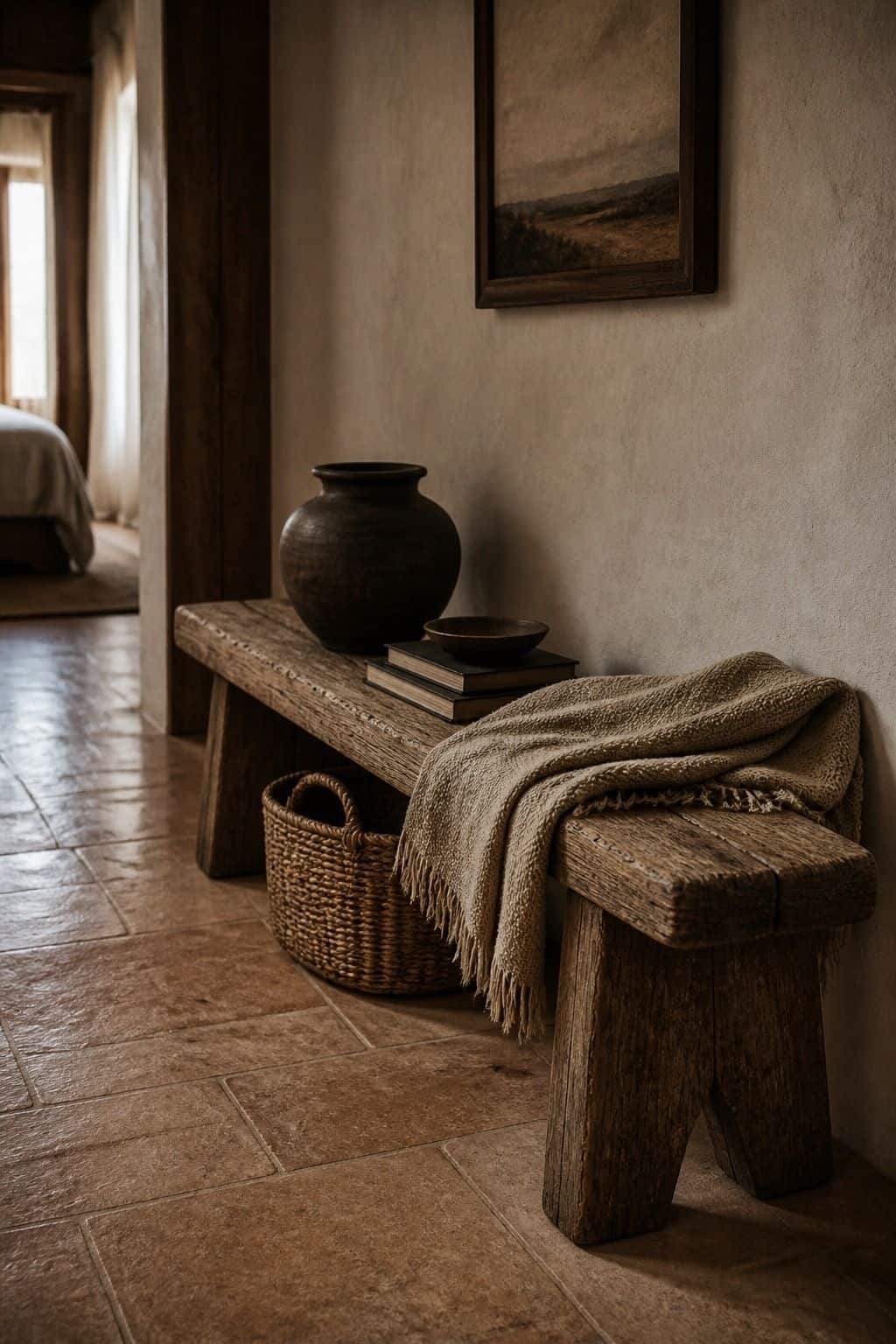


A simple low wood bench is one of the most useful and most Mediterranean pieces you can own. At the foot of a bed, along an entry wall, or pulled up to one side of the dining table instead of chairs, a bench adds seating and a long horizontal line without visual bulk. Look for a solid, plain wood bench, maybe with a little carving on the legs, or a rustic plank-topped one. It is genuinely flexible furniture that moves around the home as needed, and its honest, simple form is exactly the unfussy quality the style is built on.
7. Rattan and Cane Chairs
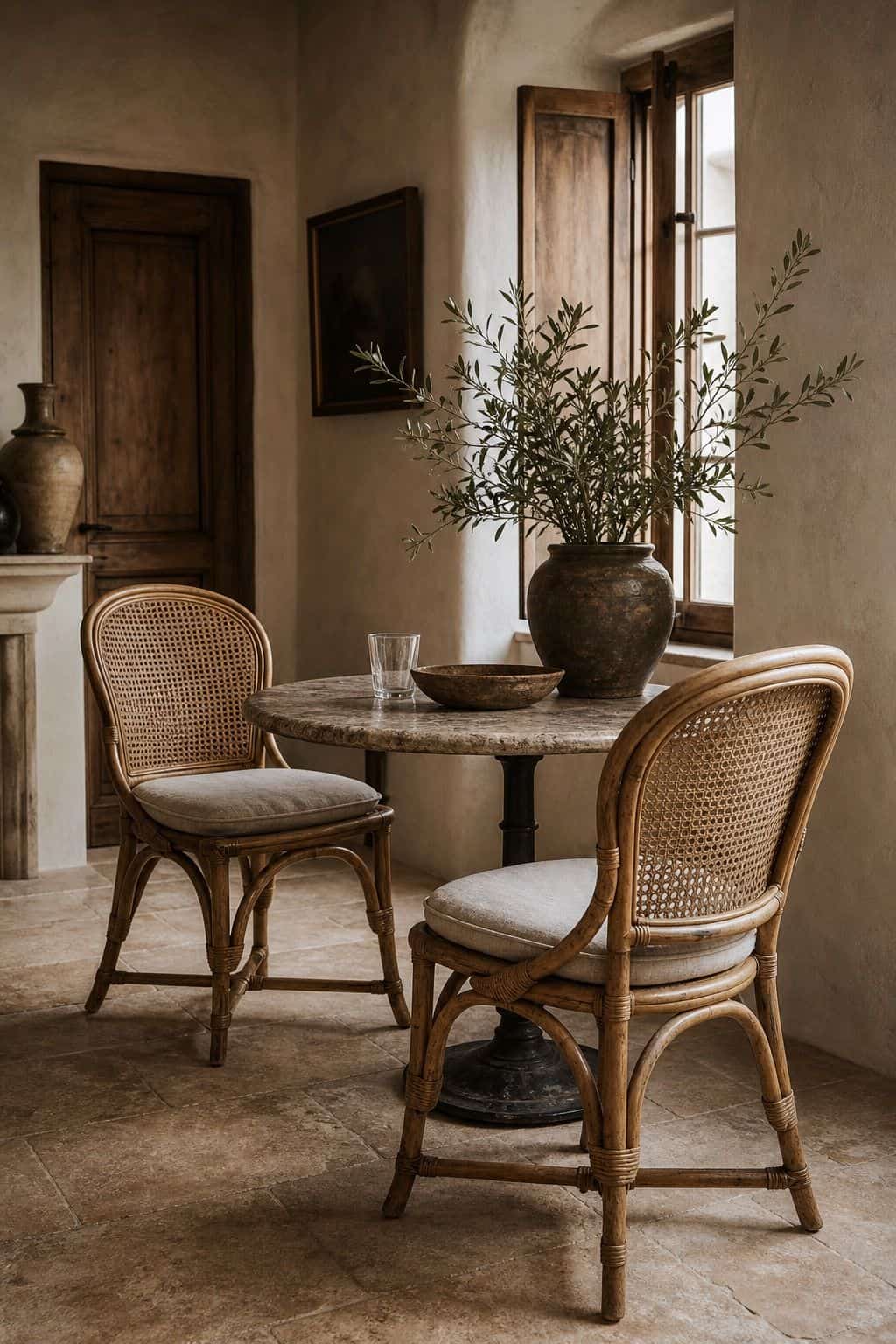

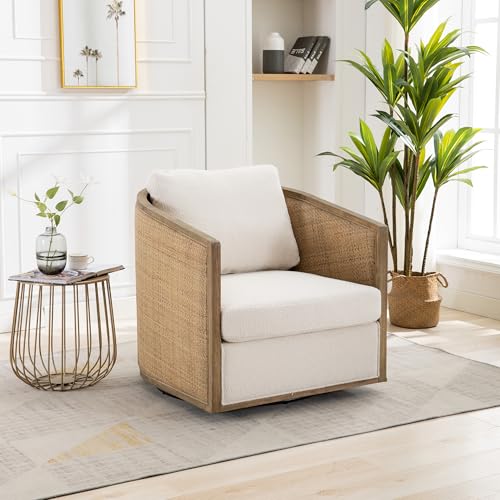

Beyond rush-seat dining chairs, full rattan and cane chairs bring the woven, airy side of Mediterranean style into the living room and bedroom. A rounded rattan armchair, a cane-back lounge chair, or a peacock-style chair adds texture and a relaxed, indoor-outdoor feeling. Rattan is light, both visually and physically, so it keeps a room from feeling heavy even when there is a lot of wood and iron elsewhere. One or two rattan pieces per room is the right amount. They also bridge Mediterranean and coastal style cleanly, which makes them a flexible buy if your taste leans seaside. Look for vintage rattan with tight, intact weaving, since older pieces were often better made, and a worn but solid frame reads more genuine than a glossy new one.
8. A Tiled or Stone-Top Table
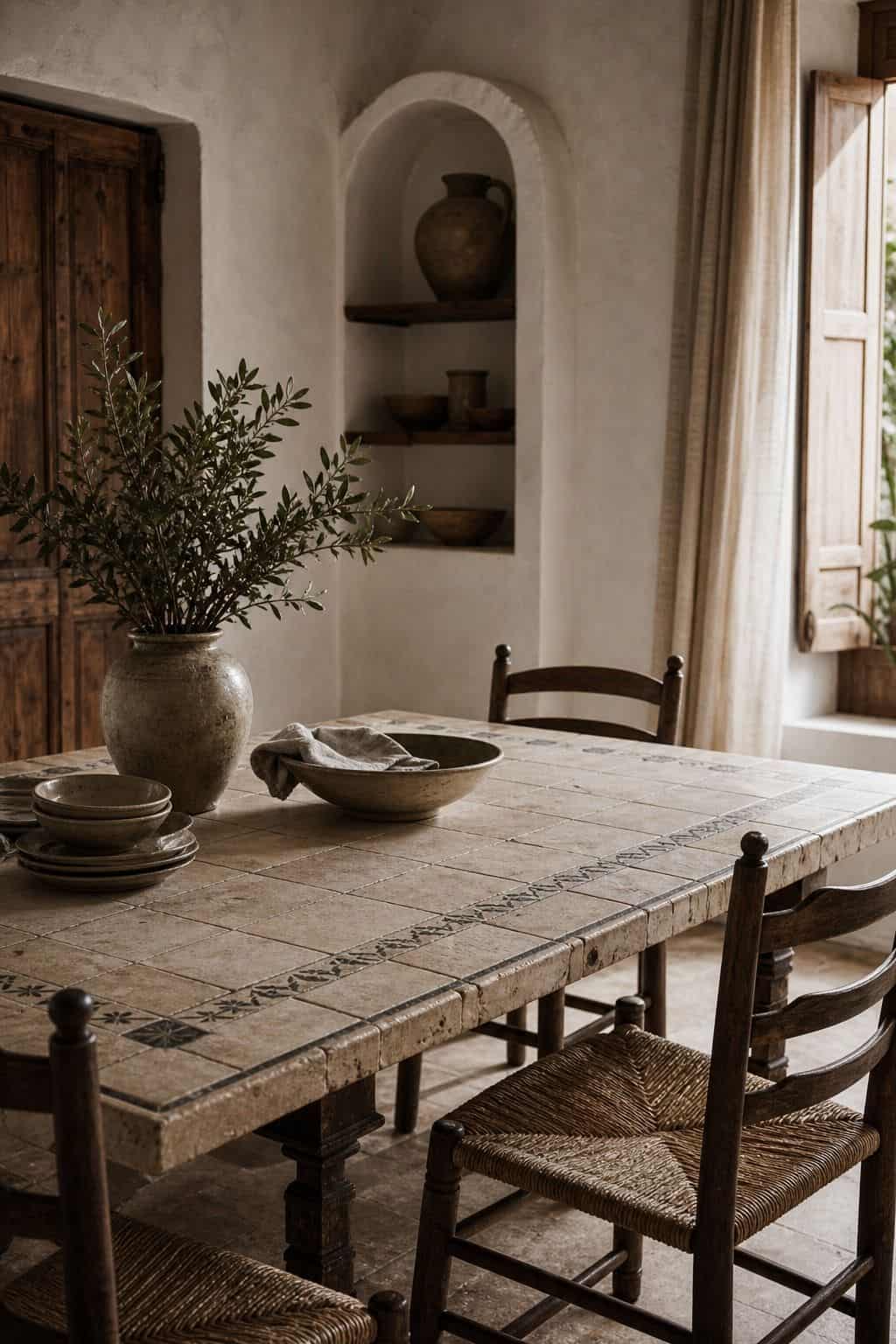


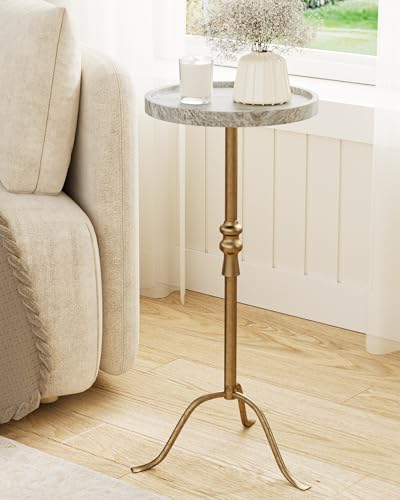
A table with a tiled or stone top is a quintessentially Mediterranean piece, especially as a side table, a small dining table, or an outdoor-leaning indoor table. Hand-painted tile, terrazzo, travertine, or rough stone all read of the region, and the hard, cool top is a deliberate contrast against the warm wood and soft linen around it. The pattern of a tiled top can also bring a small dose of the region’s color without committing a whole surface to paint. Even one tile-topped side table adds an unmistakable Mediterranean note to an otherwise simple room. Stone and tile tops are also genuinely practical, they shrug off heat, water, and wear, which is why the region used them in the first place, so the piece earns its place beyond just the look.
9. An Arched Cabinet
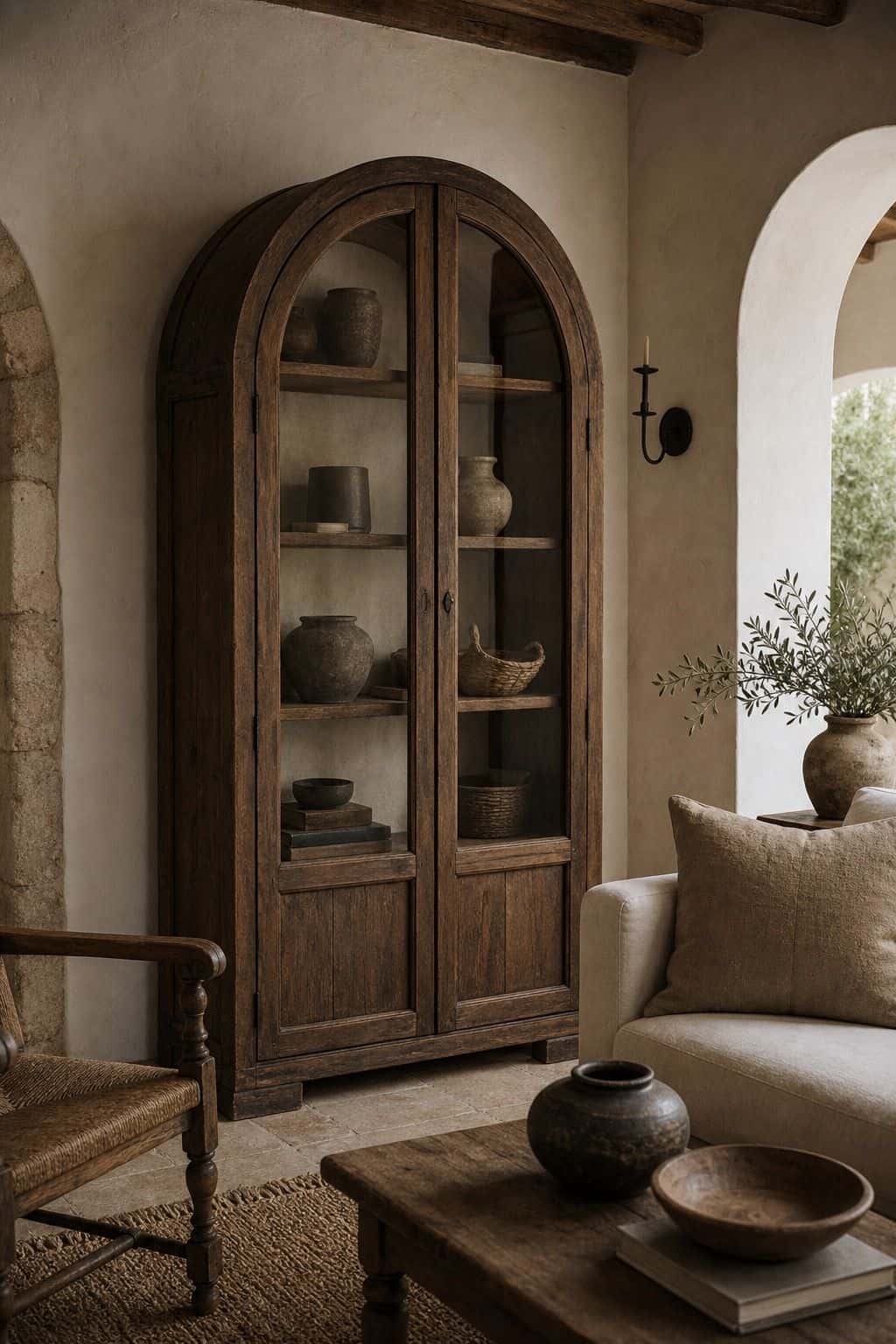

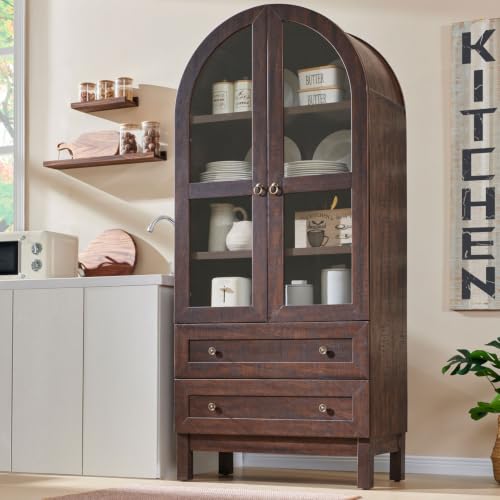

The arch is a core Mediterranean architectural shape, and it shows up in furniture as arched cabinet doors, arched mirror frames, and curved-top sideboards. An arched-door cabinet or sideboard in warm wood brings that architecture into a room that does not have real arched doorways or niches. It is a substantial piece, so one per room is plenty, in a dining room, an entry, or a living room. The curve softens all the straight lines of the iron and the plank tables, and it signals the style clearly even from across the room. Look for solid wood with simple hardware.
10. A Woven Pendant or Light Fixture
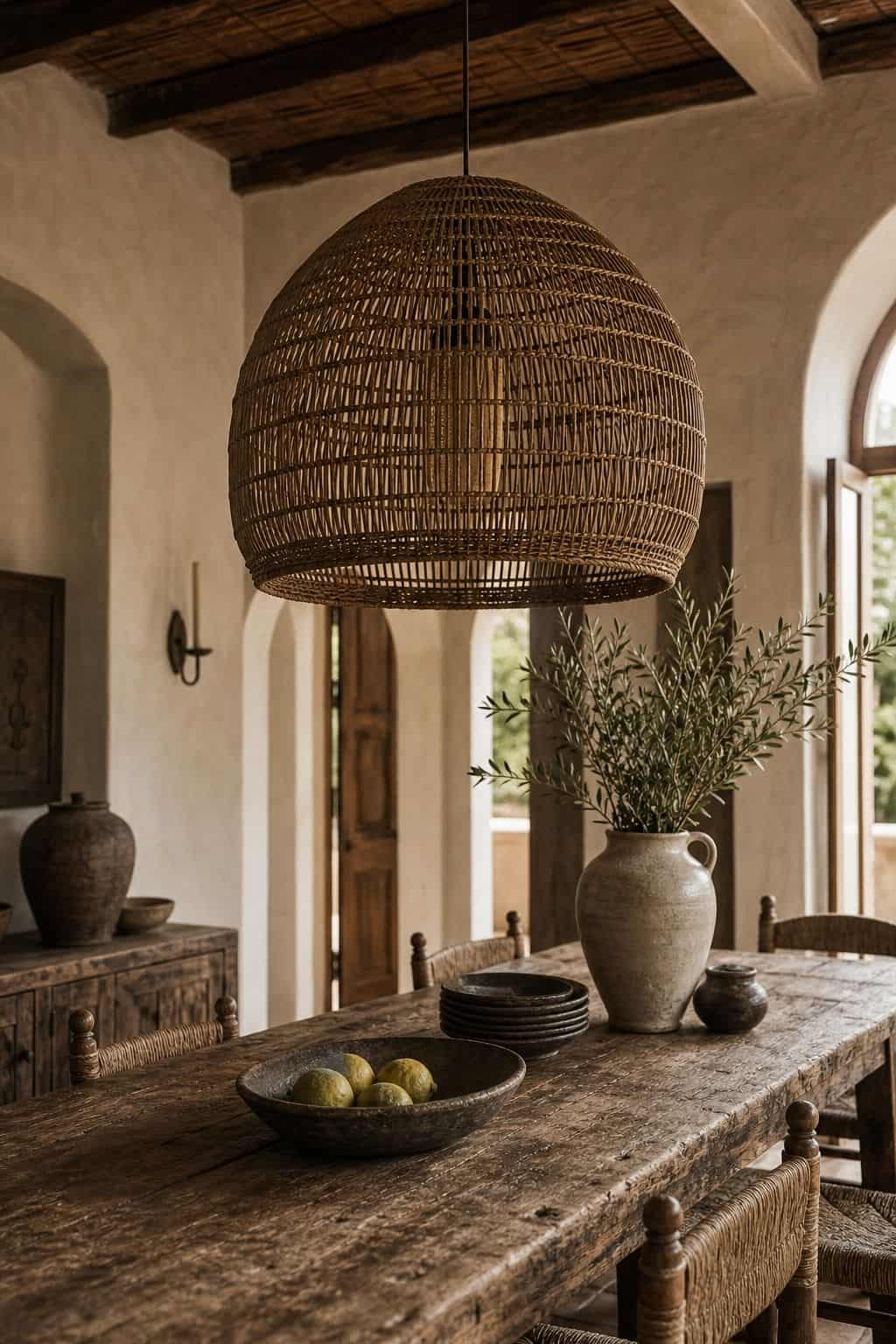


While lighting gets its own full treatment elsewhere, a woven pendant counts as a furniture-level decision because of how much it shapes a room. A rattan, seagrass, or woven-fiber pendant over the dining table or in a living room corner adds the natural texture the style runs on, up at eye level where it reads clearly. The woven shade also casts a soft, dappled light that suits the warm Mediterranean palette. Hang it lower than feels normal, the way the region drops light close to a table, so the pendant becomes part of the room rather than a ceiling afterthought. Pair it with the rest of your fixtures from our guide to warm Mediterranean lighting, and let this one woven piece be the anchor.
11. A Ceramic Table Lamp
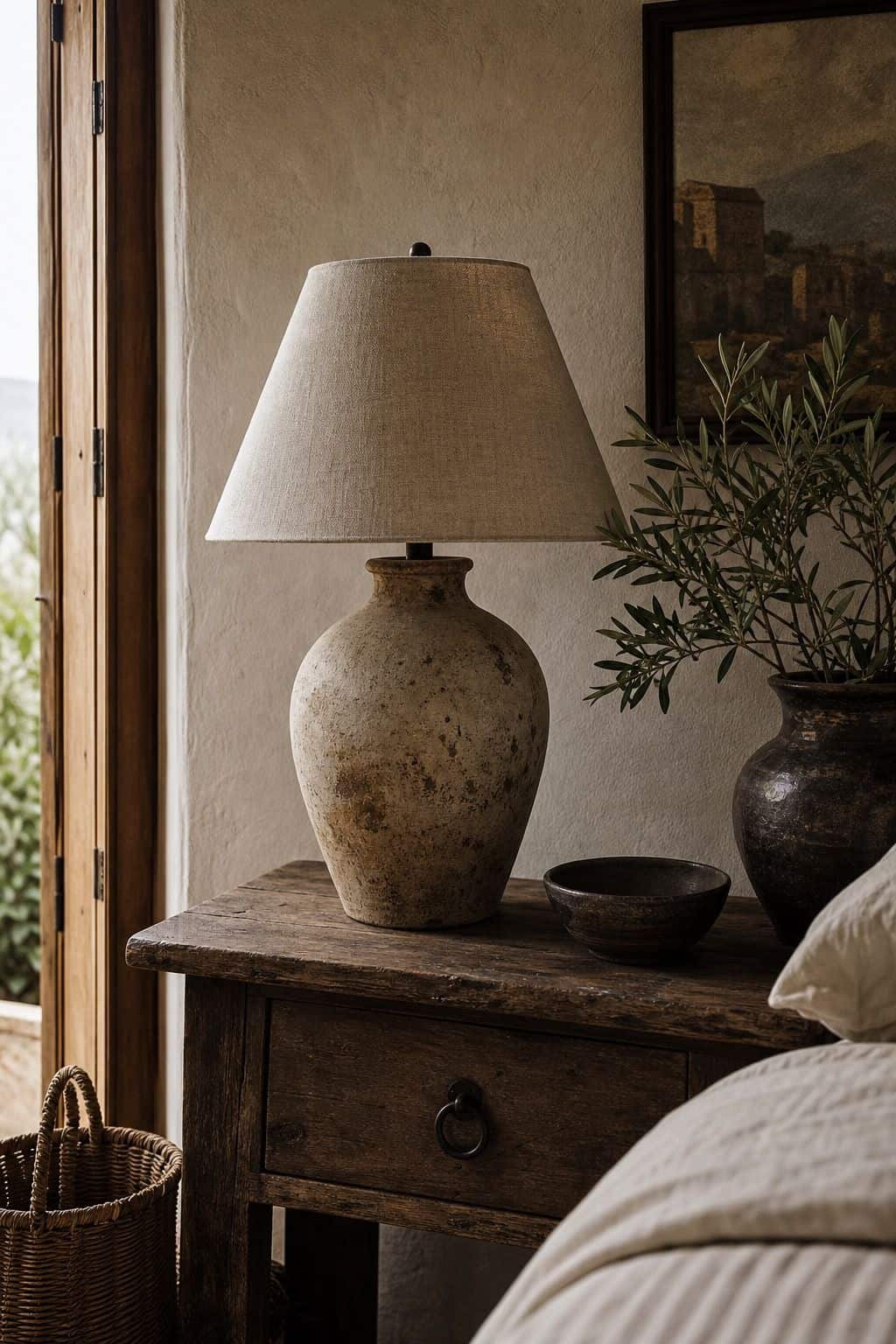


A ceramic-base table lamp is a small piece of furniture that does real Mediterranean work. A hand-thrown or hand-glazed ceramic base, in terracotta, warm white, or a Mediterranean blue, topped with a simple linen shade, reads as craft as well as light. Ceramic ties into the pottery and vessels a Mediterranean room uses elsewhere, so the lamp feels part of a family rather than an isolated object. One on a console and one on a side table, ideally not identical, fits the handcrafted-not-matched approach perfectly. Look for genuine ceramic with a little irregularity rather than a smooth machine-made base. The slight unevenness of a hand-made glaze is exactly what catches the warm light and reads as Mediterranean rather than mass-produced.
12. A Carved Headboard
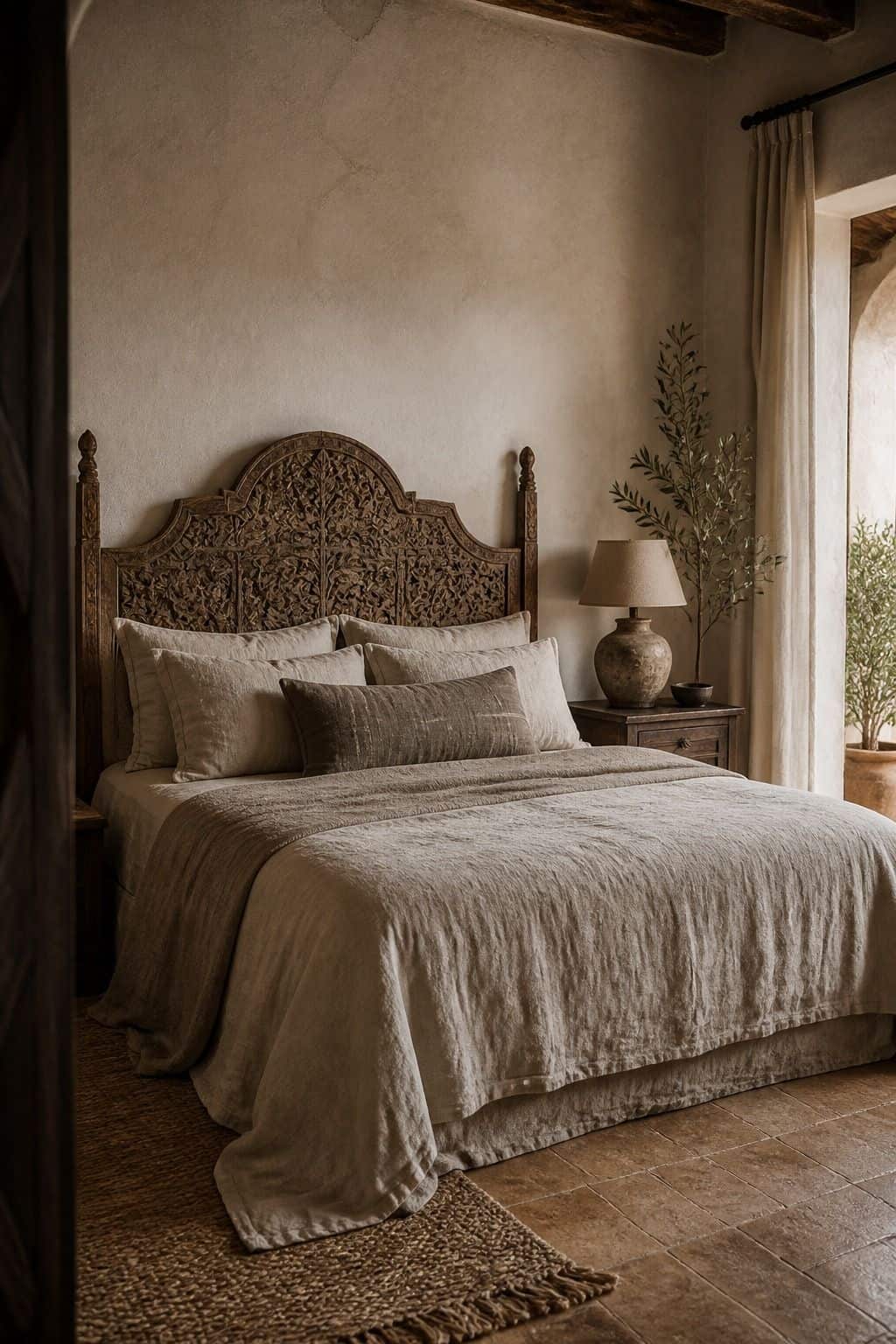
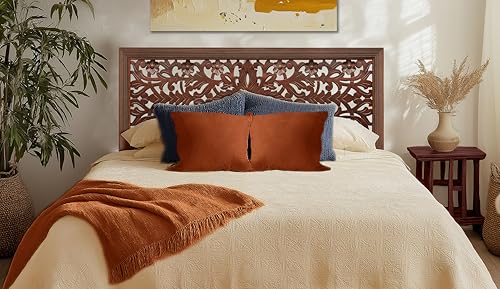
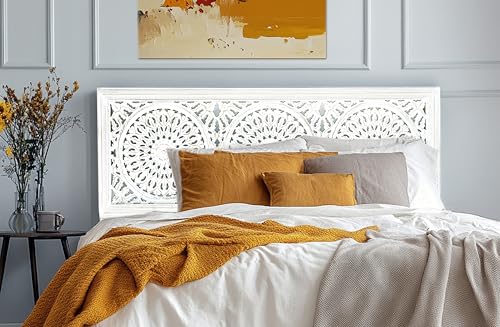
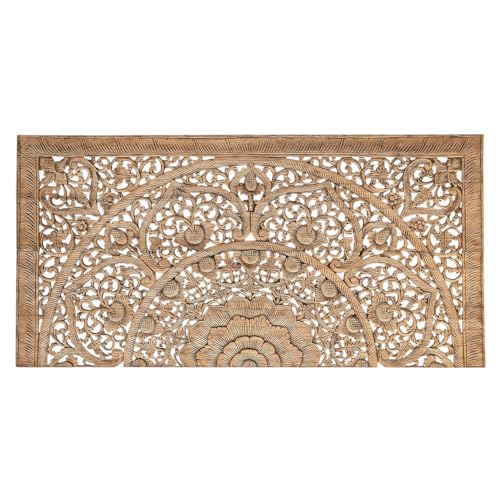
In the bedroom, a carved wood headboard is the Mediterranean centerpiece. Look for a solid wood headboard with simple carving, a paneled design, or a gently arched top, in a warm wood tone. It brings the same handmade, grounded quality the dining table brings to the main room. An iron headboard is the alternative, the dark, forged-look counterpart, and either suits the style. Avoid anything tufted, glossy, or upholstered in a slick fabric, those read wrong for Mediterranean. A thrifted or vintage carved headboard, even one that needs refinishing, is more authentic than a new reproduction, and the cost of stripping and re-oiling an old one is usually far less than buying new.
13. Olive-Wood and Live-Edge Accents
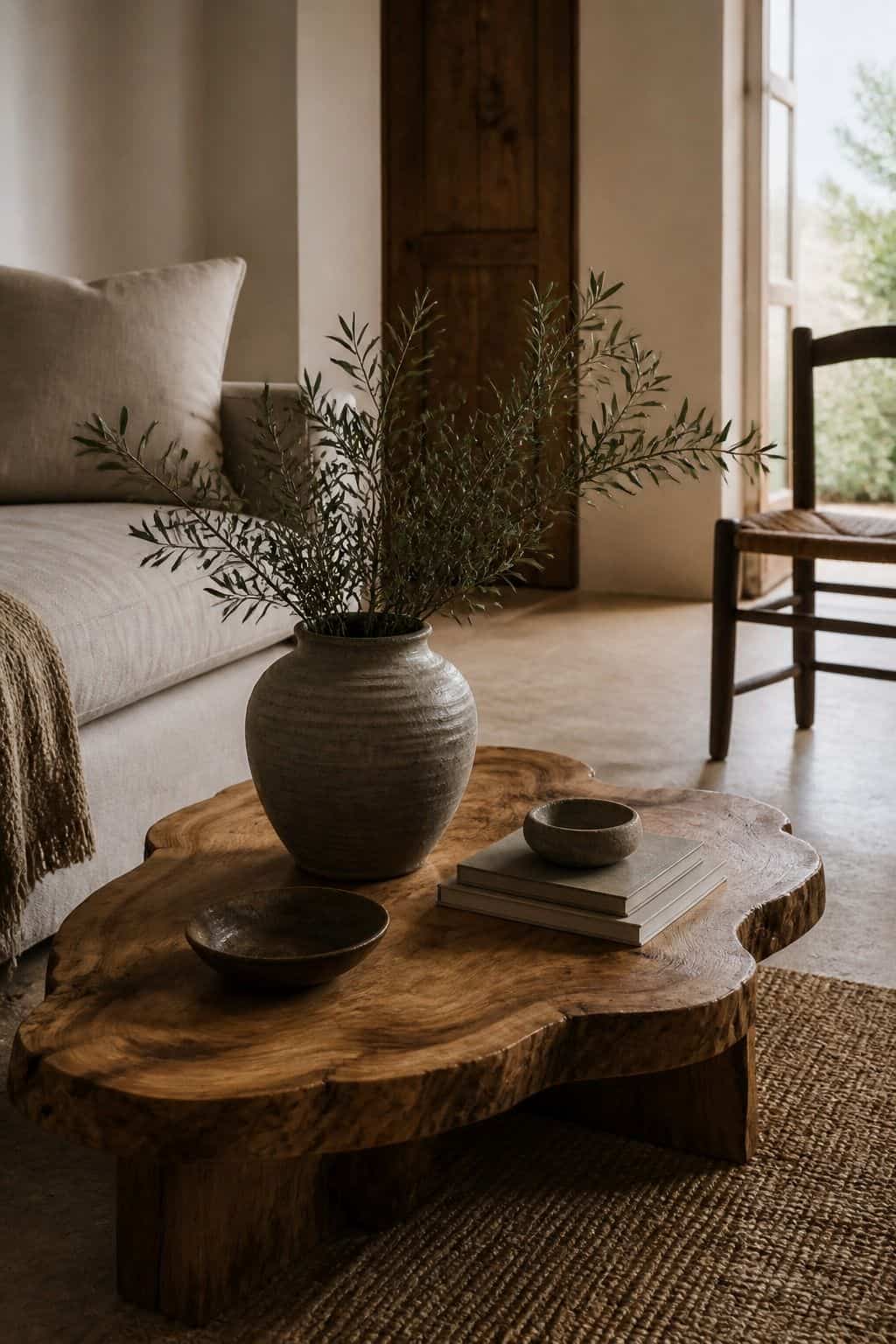
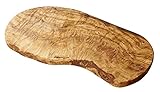
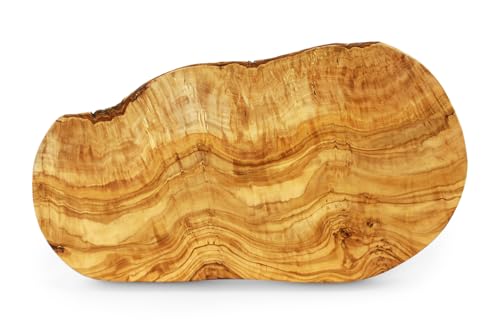
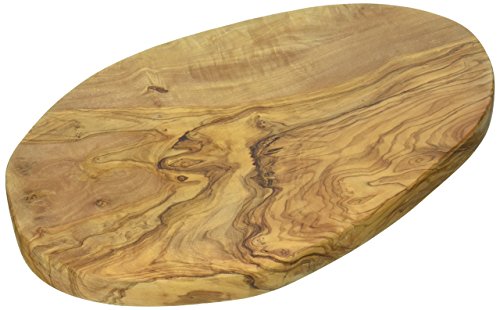
Small olive-wood and live-edge pieces are the finishing furniture-level touches, a chunky olive-wood stool, a live-edge side table, a thick wood serving board left out as decor. Olive wood in particular, with its swirling grain and warm tone, is deeply tied to the Mediterranean and brings the region in even at a small scale. These pieces are sculptural as much as functional, so they work as accents that fill the gaps between the larger furniture. One or two per room is enough. They also make excellent first purchases when you are building the look slowly, since they are small and affordable.
14. A Daybed or Low Lounge
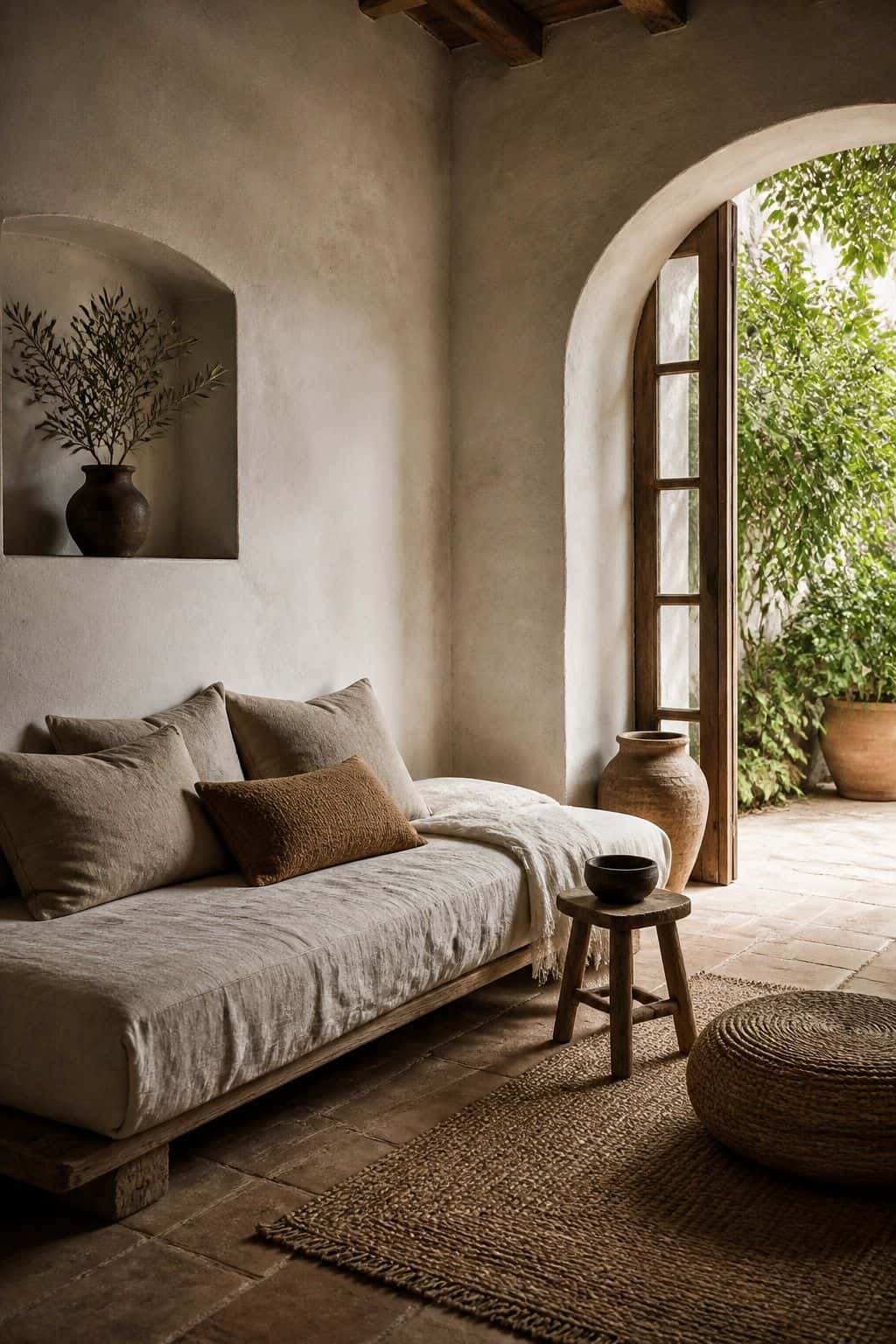


The daybed is the Mediterranean piece that captures the region’s relaxed, sun-soaked rhythm. A low wood or iron-framed daybed, dressed with a linen mattress and a pile of textured cushions, gives a living room, a sunroom, or a bedroom corner a place to genuinely lounge. It reads more casual and more Mediterranean than a formal chaise. The frame should be simple, wood or iron, and the comfort comes entirely from the linen and cushions piled on top. It is a generous, inviting piece that signals the unhurried Mediterranean way of using a room. Placed near a window where the afternoon light lands, a daybed becomes the spot the whole room organizes itself around, which is exactly how the region treats one.
15. The Mix-Don’t-Match Set
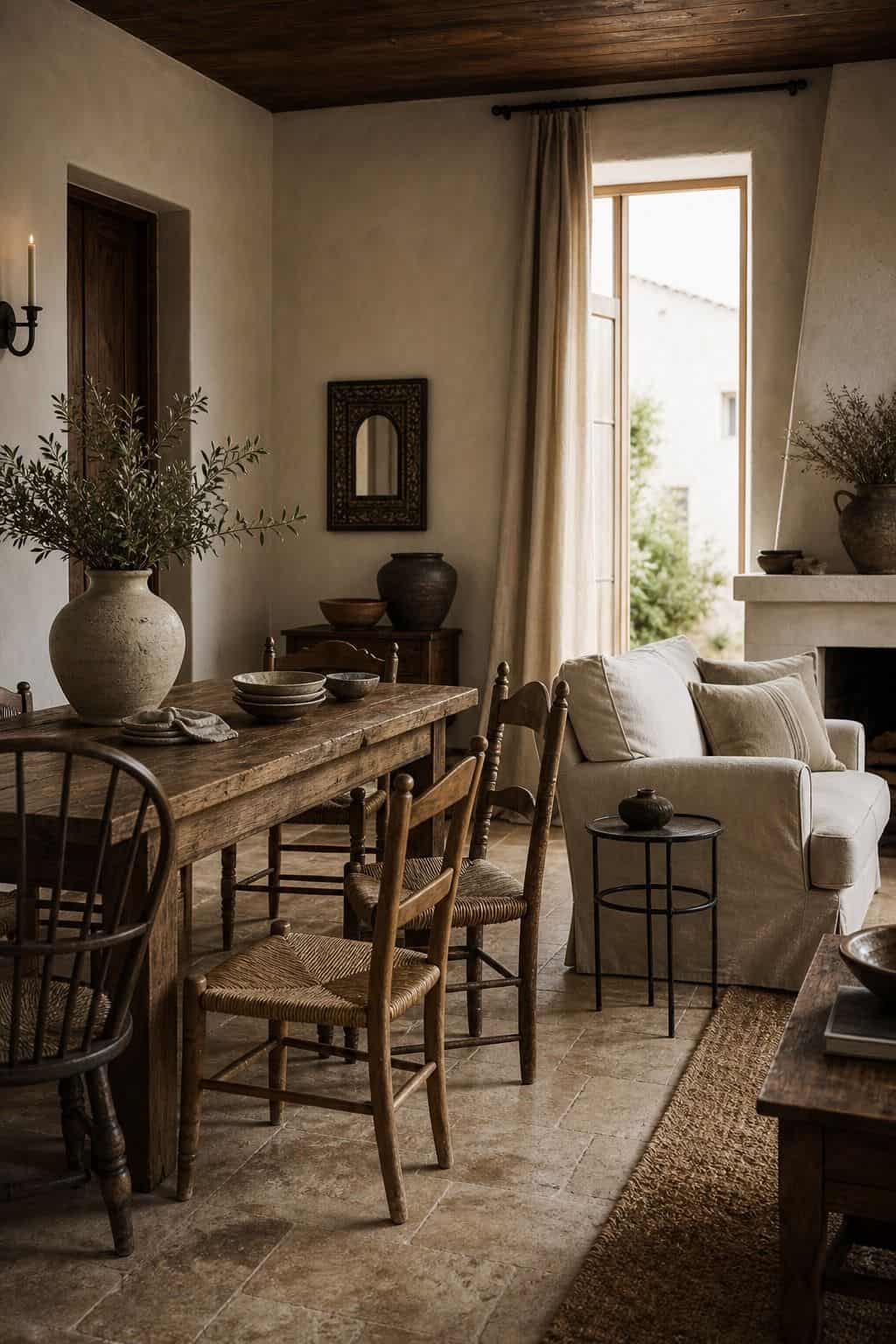


The final “piece” is really an approach: assemble your dining or seating group from deliberately different pieces. A carved wood table with rush chairs on one side and a wood bench on the other. A linen sofa flanked by one rattan chair and one iron-and-cushion chair. The mix is the Mediterranean look, and it is also the most budget-friendly way to furnish, since you are buying single pieces secondhand rather than collections. The only rule is that the pieces share materials and warmth even when they do not share a design, which the next section covers in full. Built this way, a room can be furnished a piece at a time as you find the right things, and it will look intentional at every stage rather than half-finished.
The Handcrafted-Not-Matched Rule
The handcrafted-not-matched rule is what keeps a mixed Mediterranean room from looking like a mistake. The principle is simple: the pieces do not need to match in design, but they must agree on material and warmth. A carved oak table, a walnut bench, and rush-seat chairs are all different, but they are all warm natural wood and woven fiber, so the eye reads them as one family. What breaks the look is mixing in a material that does not belong, a glossy lacquer piece, a chrome-and-glass table, a slick synthetic.
So when you are deciding whether a piece works, ignore its style and check its material and tone. If it is honest wood, wrought iron, natural fiber, stone, tile, or linen, and it sits in the warm range, it belongs, regardless of whether it matches anything else. If it is not, no amount of styling will make it sit right. This is also why buying slowly works so well, each piece gets judged against the room on its own terms. For the full room build, our guide to these pieces room by room shows the mix in context.
Worried your mixed pieces will look mismatched instead of collected?
The Aesthetic Apartment Makeover Guide helps you mix pieces across eras and finishes with confidence, so a gathered Mediterranean look comes together as one warm, intentional room.
Frequently Asked Questions
What furniture is Mediterranean?
Mediterranean furniture is built from natural materials: carved and rustic wood, wrought iron, rush and rattan and cane, slipcovered linen, and stone or tile tops. The shapes are simple and a little rustic, and the pieces look handmade rather than manufactured or matched.
Does Mediterranean furniture have to be wood?
Wood is central, but not the whole story. Wrought iron, rush and rattan, woven seagrass, slipcovered linen, and stone or tile tops are all core Mediterranean materials. A good Mediterranean room mixes several of these, the variety of natural materials is part of the look.
What materials are Mediterranean?
Honest wood with visible grain, wrought iron, rush, cane, rattan, woven seagrass, natural linen, and stone or tile. These materials come from the region, age well in strong light, and give the furniture its grounded, sun-baked weight. Avoid glossy lacquer, chrome, and slick synthetics.
How do I do Mediterranean furniture on a budget?
Buy single pieces secondhand rather than matching collections, which is both cheaper and more authentic to the style. Rush-seat chairs, carved wood tables, and wrought-iron pieces turn up regularly at thrift stores and estate sales. A linen slipcover over a sofa you already own is a high-impact, low-cost change.
How do I mix Mediterranean furniture?
Use the handcrafted-not-matched rule: pieces do not need to match in design, but they must agree on material and warmth. A carved table, a walnut bench, and rush chairs all read as one family because they are all warm natural wood and fiber. What breaks the look is a material that does not belong, like lacquer or chrome.
Key Takeaways
- Mediterranean furniture is defined by material before style: honest wood, wrought iron, rush and rattan, slipcovered linen, and stone or tile tops.
- The 15 pieces span the whole home, carved tables, rush chairs, iron consoles, linen sofas, carved headboards, daybeds, chosen to be mixed rather than matched.
- Buy slowly and secondhand: a room gathered over months reads more authentically Mediterranean, and it is the most budget-friendly route.
- The handcrafted-not-matched rule: pieces need not match in design but must agree on material and warmth, that shared material family is what makes the mix read collected.
- Avoid glossy lacquer, chrome, and slick synthetics entirely, one wrong material breaks the whole sun-washed look.
Final Thoughts
Mediterranean furniture is the rare style where buying slowly, secondhand, and a little mismatched is not a compromise, it is the correct approach. Choose pieces by material and warmth rather than by matching design, lean on honest wood, wrought iron, woven fiber, and linen, and let the room come together over time. The handcrafted-not-matched rule does the rest. To complete the room, our guide to textured Mediterranean wall decor covers the walls, and our guide to a relaxed coastal home shows how the same natural materials carry into a related, breezier look.