Quick Answer: Mediterranean decor on a budget comes down to lime-wash or warm-white paint, thrifted wood and wrought iron, terracotta pots, linen remnants, and secondhand ceramics. The 16 moves below get the warm, sun-washed look for less, plus a worked room refresh that shows the numbers adding up.
Mediterranean decor photographs like money. The plaster walls, the carved wood, the stacks of glazed ceramics, it all reads expensive. But the look was built by people who furnished homes from what the region produced cheaply and locally: clay, lime, iron, olive wood, linen. The polish in the photos comes from warmth and texture, not from price tags.
That gap, between how Mediterranean decor photographs and what it actually costs, is the whole opportunity. The 16 budget moves below cover the cheap, high-impact swaps: paint techniques, where to thrift, what to DIY, and the one or two places worth a small splurge. The section at the end is a worked room refresh with real numbers, so you can see exactly how a sun-washed Mediterranean room comes together for far less than it looks.
Want the sun-washed Mediterranean look without the price it photographs at?
The Aesthetic Apartment Makeover Guide walks you through styling a room with paint, thrift finds, and what you already own, so a Mediterranean space comes together warm and considered for less.
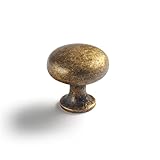
Recommended Budget Mediterranean Decor
Six pieces that bring the sun-washed look for less, from terracotta pots to peel-and-stick tile.




Recommended blogs to read:
Why Mediterranean Works on a Budget
Mediterranean decor is one of the cheapest period looks to pull off, because it was never an expensive look to begin with. The region’s style grew out of practical, local materials, lime for the walls, clay for the pots and floors, iron for the hardware, olive wood and linen for the rest. None of those were luxury goods; they were what was available and durable.
That history is why the budget version is not a watered-down compromise, it is closer to the real thing than a designer showroom version. The look also rewards age and imperfection, so thrifted and worn pieces read as authentic rather than second-best. Match the cheap pieces to a scheme with our guide to a cheap lime-wash palette, which covers the warm tones that hold the whole budget room together.
One rule before the list: spend on paint and texture, thrift everything else. Paint is the cheapest, highest-impact change in any Mediterranean room, and natural texture, terracotta, linen, woven fiber, is what sells the look. Furniture and decor can almost all come secondhand.
16 Budget Mediterranean Moves
Mix a handful of these. The worked room refresh after the list shows them adding up to a finished room.
1. Lime-Wash or Warm-White Paint
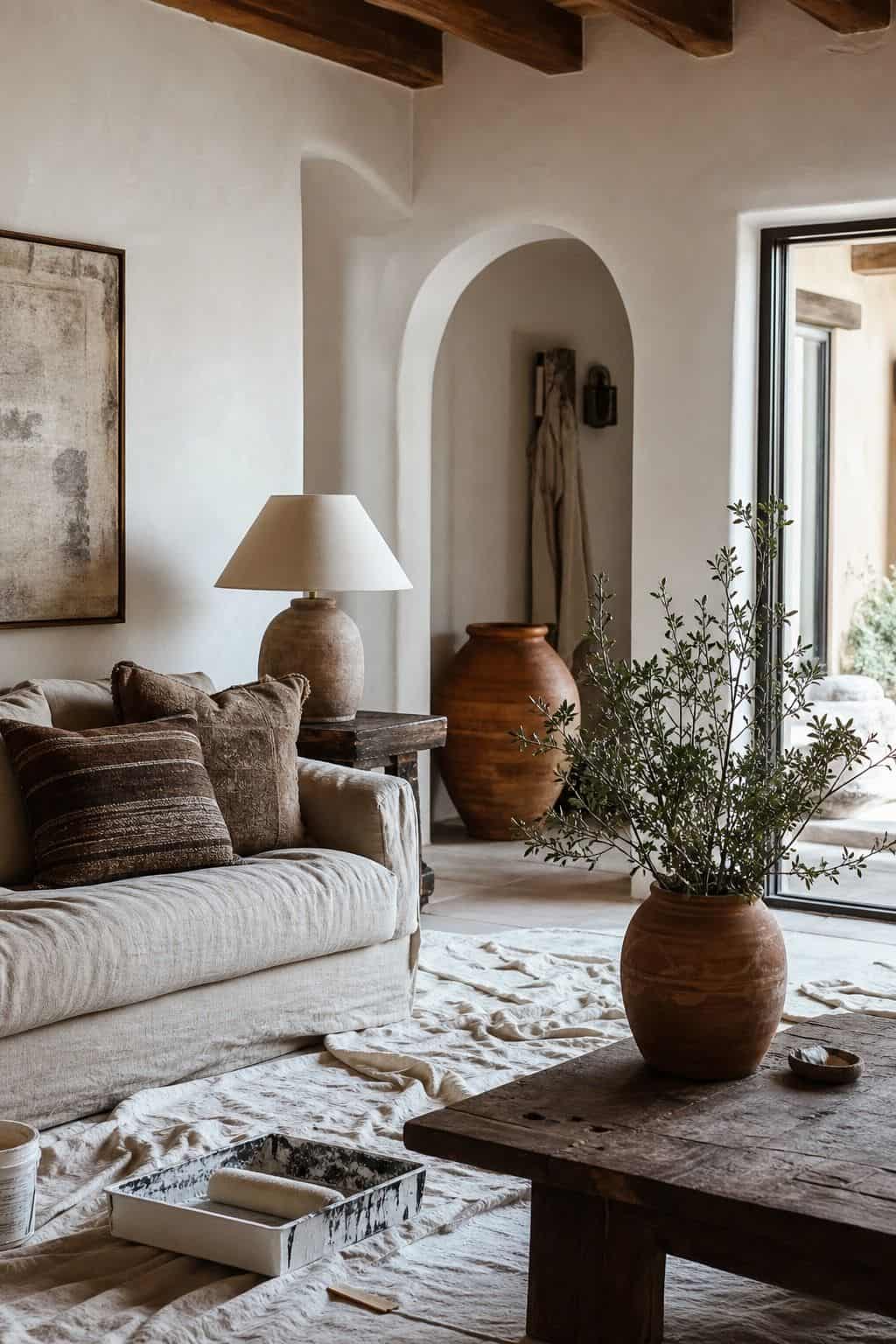


Paint is the single highest-impact budget move, and a warm white or lime-wash finish is the foundation of the whole look. A warm white costs the same as any other paint, so this one is essentially free upside. Lime-wash paint, or a DIY lime-wash technique using watered-down paint applied in cross-hatched strokes, gives the walls the soft, cloudy, sun-faded texture that flat paint cannot. That texture is what makes a budget room read as plastered Mediterranean walls rather than a builder-grade box. Start here before anything else, because every other move looks better against a warm, textured wall, and a single room of paint transforms the space for the price of a couple of cans.
2. Thrifted Wood and Wrought Iron
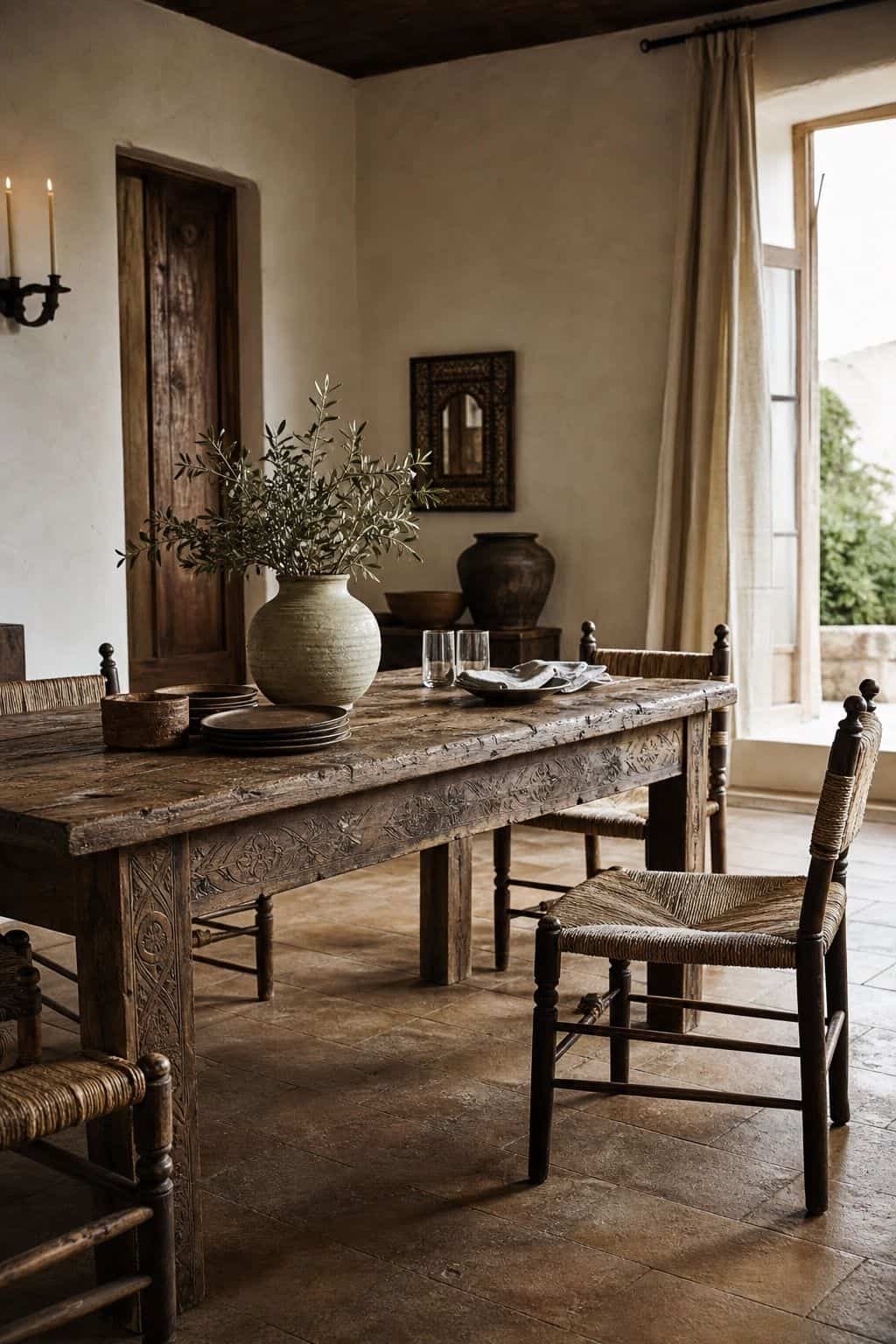


The big furniture pieces should come secondhand. Carved wood tables, rush-seat chairs, wrought-iron consoles, bistro sets, and plant stands turn up constantly at thrift stores, estate sales, and online resale, because these are old, common, durable pieces that people regularly offload. Condition barely matters, since age and a little wear only make wood and iron read more Mediterranean. A wood piece that needs cleaning and re-oiling, or an iron piece with honest patina, is the goal, not a problem. Buying the furniture this way is both far cheaper than new and more authentic to a style built on gathered, lived-in pieces rather than matched collections.
3. Terracotta Pots Everywhere
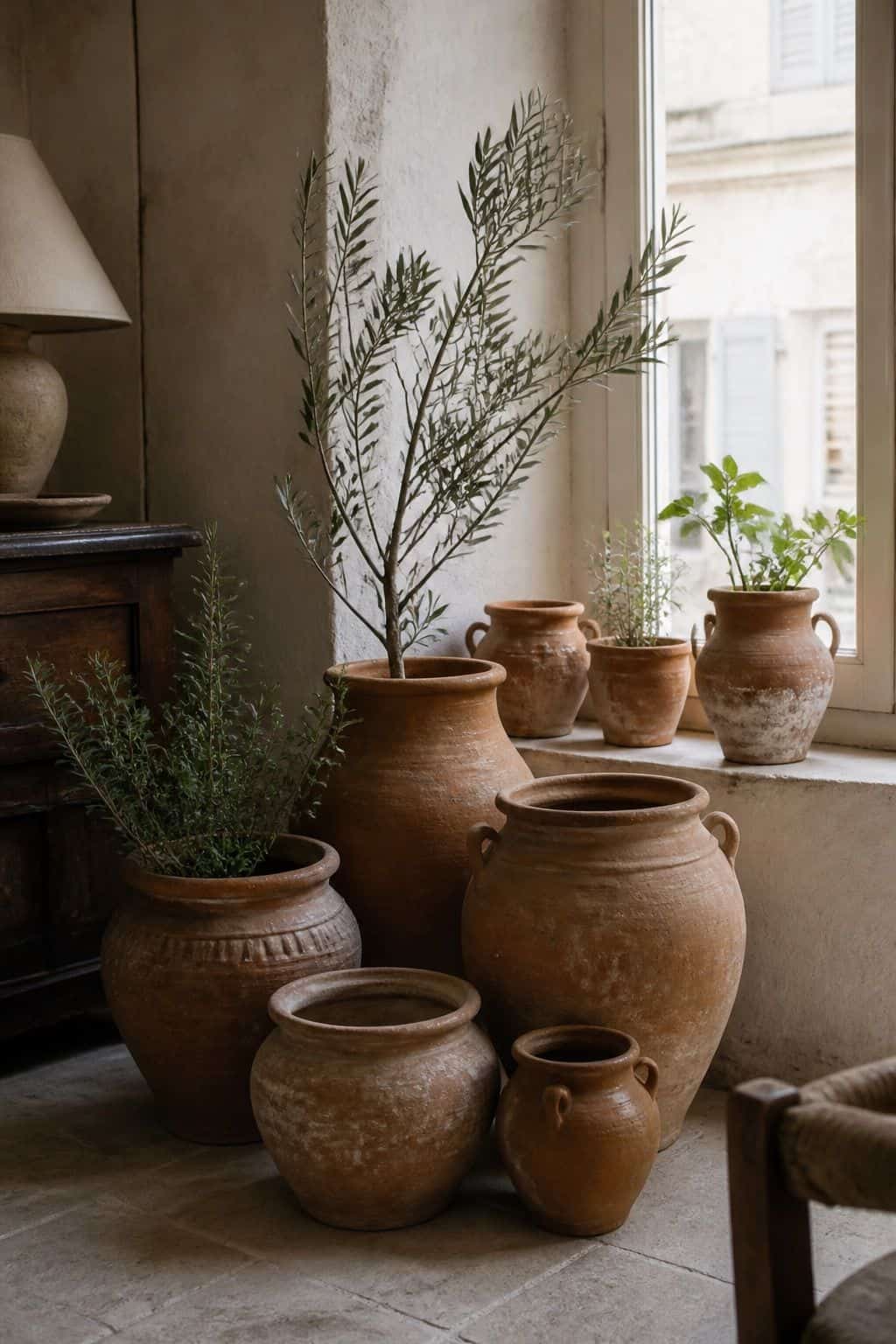


Plain terracotta pots are one of the cheapest materials in any garden center, and they are pure Mediterranean. Used generously, a cluster on the floor, a row on a windowsill, a few on a console, with plants or just empty as objects, they scatter the region’s signature warm clay color across a room for very little. Unglazed terracotta is the most authentic and the least expensive. You can also age new pots quickly with a wash of watered-down paint or a few weeks outdoors. A dozen terracotta pots costs less than one decorative vase from a home store and does far more for the look.
4. Linen Remnants and Slipcovers
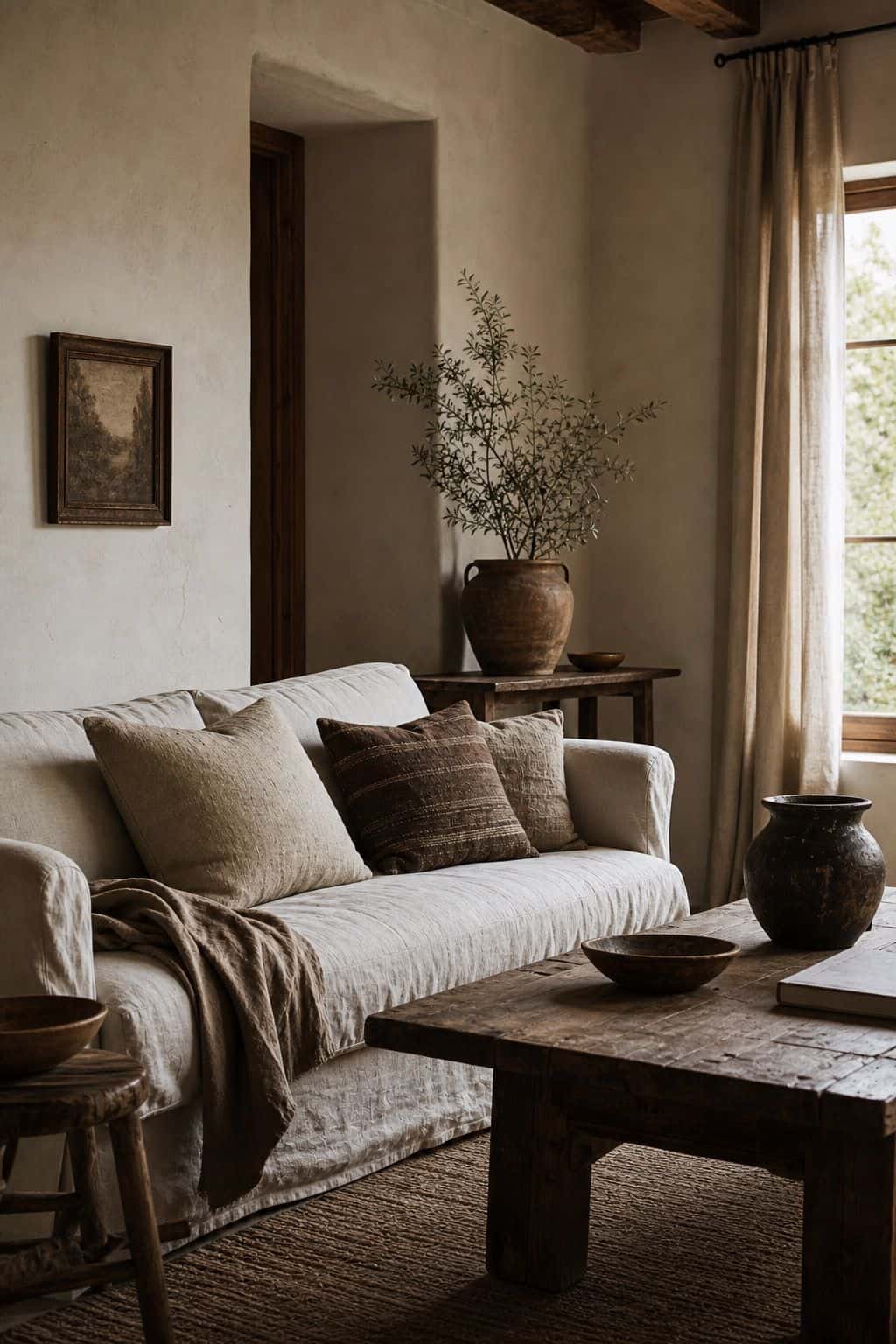
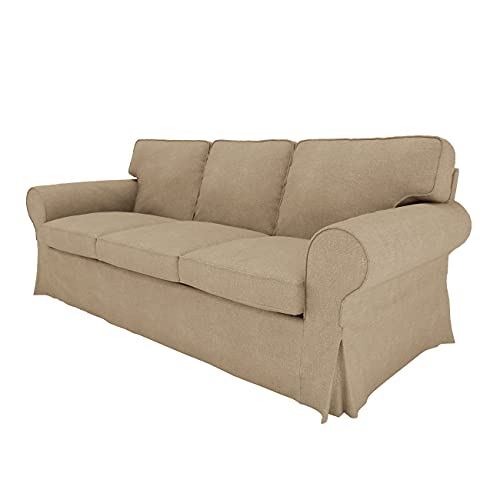
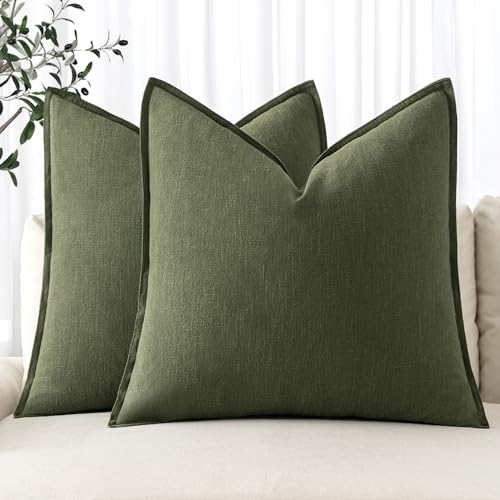
Linen is the Mediterranean textile, and you do not need to buy linen furniture to get it. A linen slipcover over the sofa you already own transforms it, and remnant linen from a fabric store, sold at a steep discount, sews into cushion covers, simple curtains, and table linens for a fraction of retail. The natural creasing of linen is part of the look, so it does not even need to be pressed perfectly. Concentrate the linen where it shows most, the sofa, the cushions, the windows, and the room immediately reads softer, warmer, and more Mediterranean without a single new piece of furniture.
5. Secondhand Ceramics
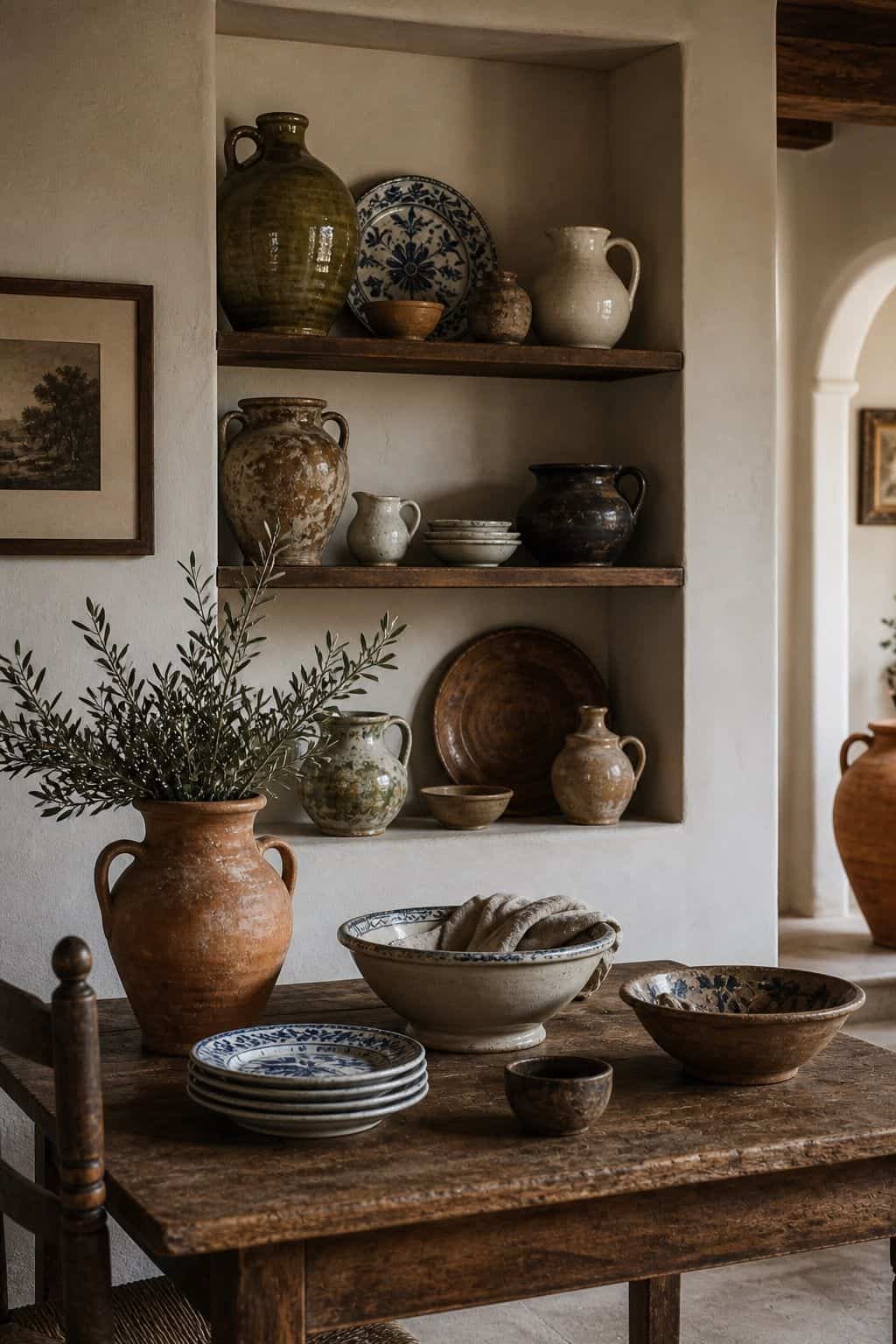


Glazed ceramics, jugs, bowls, vases, plates, blue-and-white china, are everywhere secondhand and cost very little. A shelf or a tabletop styled with a collection of thrifted ceramics in terracotta, warm white, and Mediterranean blue reads instantly of the region. They do not need to match; a gathered mix is more authentic than a matched set. Look at thrift stores, estate sales, and the back shelves of charity shops, where glazed pottery is often overlooked and cheap. A handful of secondhand ceramic pieces is one of the highest-impact, lowest-cost styling moves in the whole budget toolkit, and because you are buying singles rather than sets, you can keep adding to the collection over time as you find good pieces.
6. A DIY Plaster-Look Wall
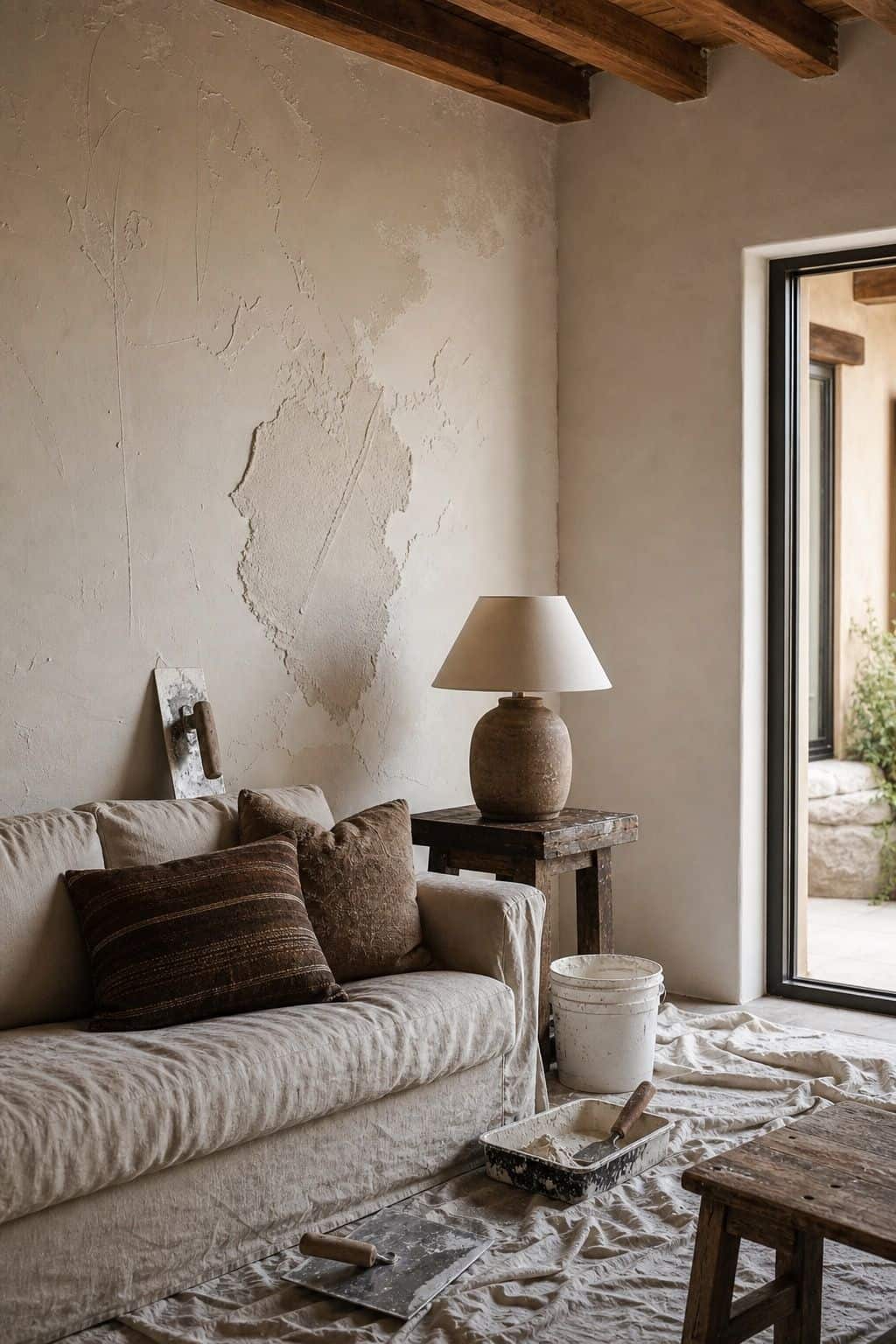
For a single statement wall, a DIY plaster-look finish goes beyond what flat paint can do. Using a cheap pre-mixed joint compound or a textured paint applied with a trowel or wide putty knife, you can build up the soft, irregular, hand-finished texture of real Mediterranean plaster. It takes an afternoon and costs a fraction of professional Venetian plaster. Keep the technique loose and a little imperfect, since the irregularity is the point. One plaster-look accent wall, behind a bed or a sofa, anchors a whole room and is the kind of detail that makes a budget Mediterranean space look genuinely considered. Our guide to a DIY plaster-look wall covers the technique in full.
7. Peel-and-Stick Tile
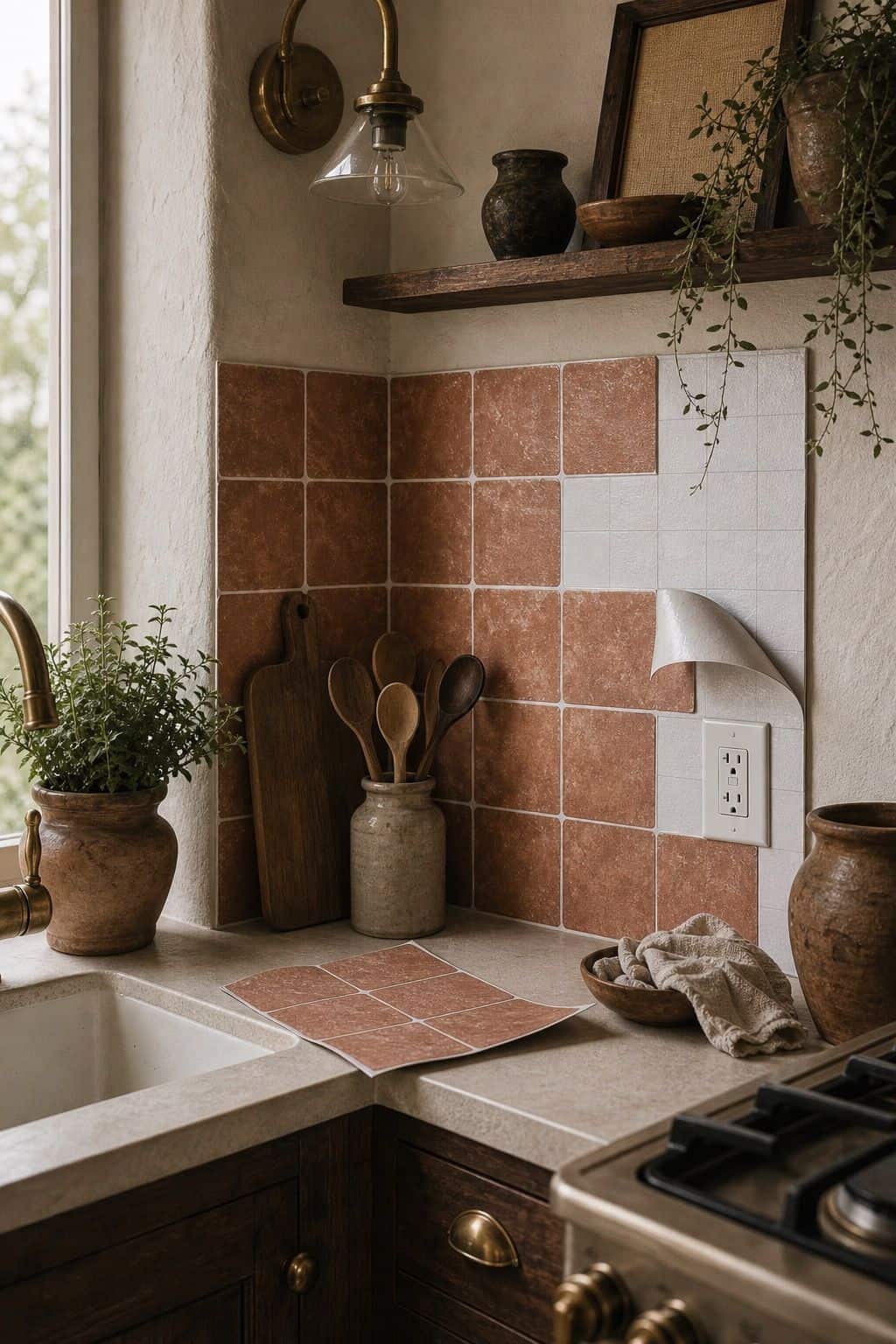


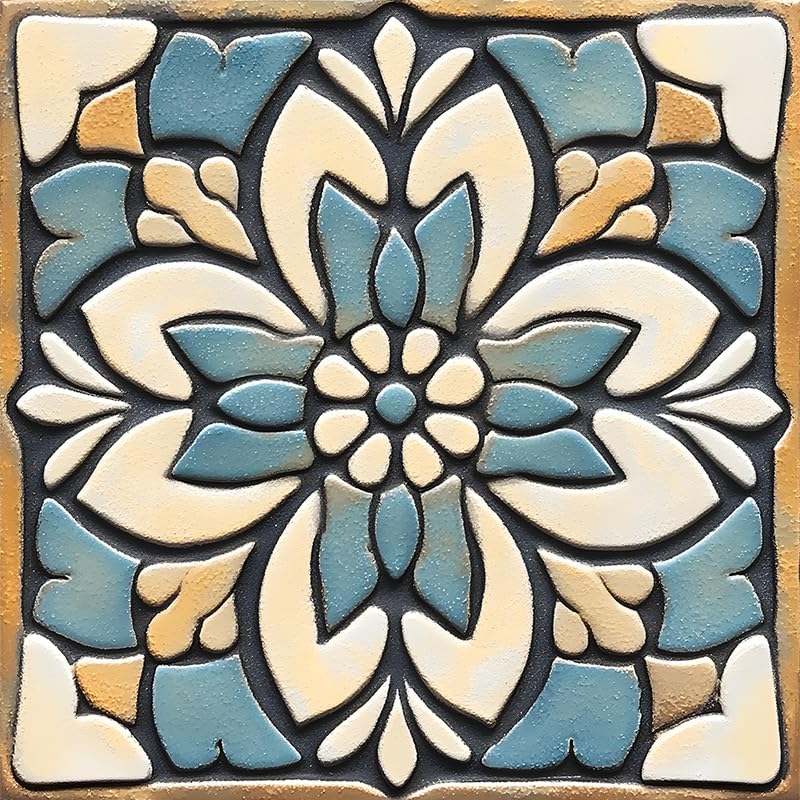
Tile is a Mediterranean signature, and peel-and-stick vinyl tile delivers it for a fraction of real tile, with no installer and no permanence. A peel-and-stick terracotta, hand-painted-look, or geometric tile works on a backsplash, a small floor, a stair riser, or as a band around a niche. It reads convincingly from a normal viewing distance, and it lifts cleanly when you move, which makes it ideal for renters. Concentrate it on one high-impact spot rather than spreading it thin. A single peel-and-stick tiled surface brings one of the region’s most recognizable details into a budget room cheaply and reversibly. Used reversibly like this, peel-and-stick tile lets a renter commit to one of the region’s boldest details without committing to it permanently.
8. Woven Thrifted Baskets
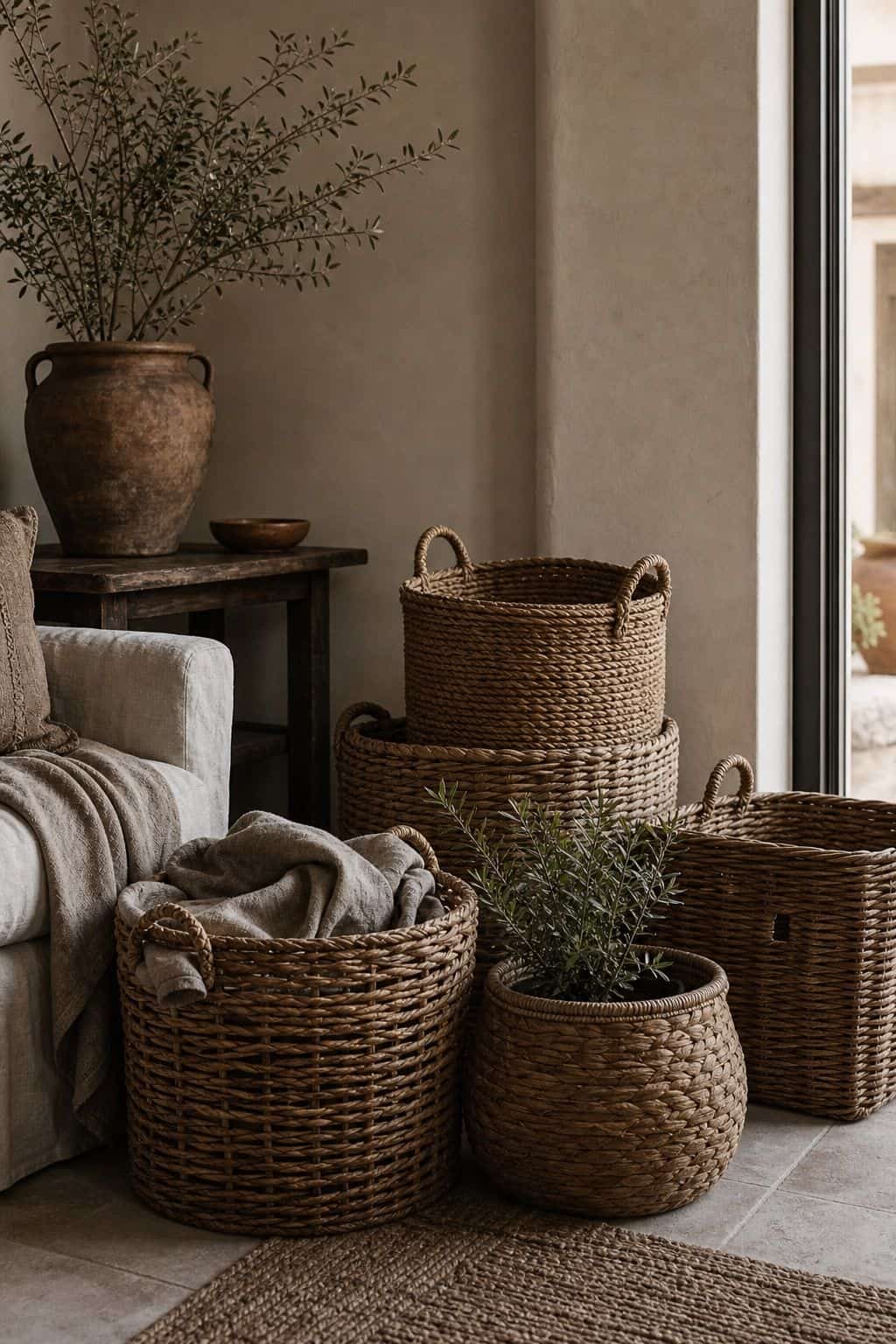
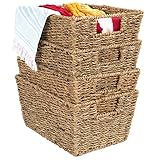


Woven baskets, seagrass, rattan, willow, are both useful storage and pure Mediterranean texture, and they are abundant and cheap secondhand. A cluster of baskets in different sizes, used for blankets, plants, firewood, or just stacked as objects, adds warm natural texture to a room and hides clutter at the same time. Wall-hung flat baskets also work as inexpensive wall decor. Thrift stores overflow with woven baskets because they are bulky and people clear them out, which means you can build a whole collection for a few dollars. They earn their place twice over, as storage and as texture. Because baskets are bulky and cheap to clear out, a single thrift trip can usually furnish a whole room’s worth of woven storage at once.
9. Dried Olive and Eucalyptus Branches
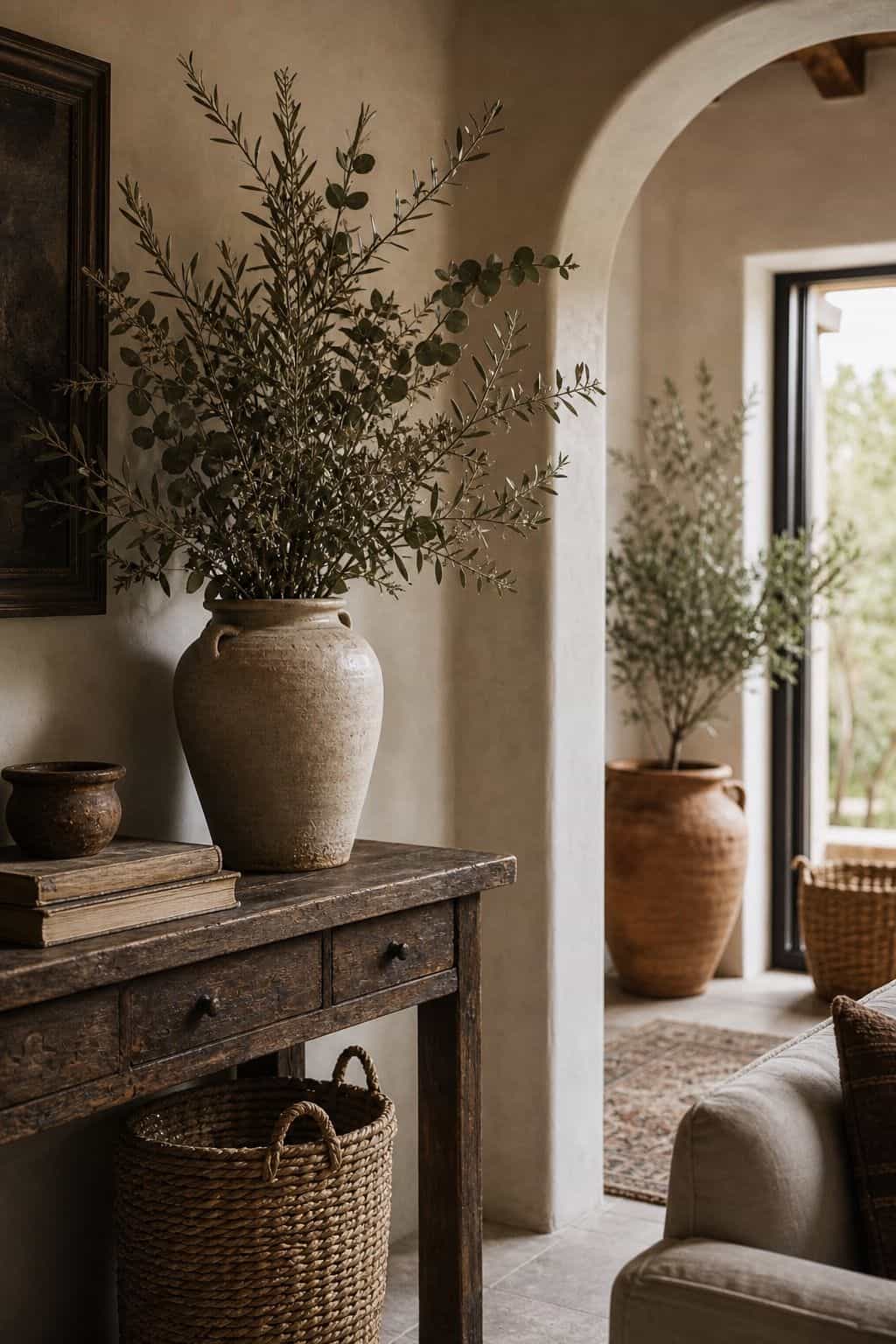



Greenery brings a Mediterranean room to life, and the dried, long-lasting kind costs almost nothing. A tall vase of dried olive branches, eucalyptus, or pampas, or a few cut branches from a walk, brings the region’s foliage indoors without the cost or upkeep of plants. Dried branches last for years, suit the muted Mediterranean palette, and read as effortless and unfussy. One generous vase of branches on a console or floor is a high-impact, near-free styling move. Fresh olive or citrus branches work too if you have access to them, and they dry naturally over time. Grouped with a few terracotta pots, a vase of dried branches reads like the room has been lived in and tended rather than recently decorated.
10. Swap Hardware to Aged Brass
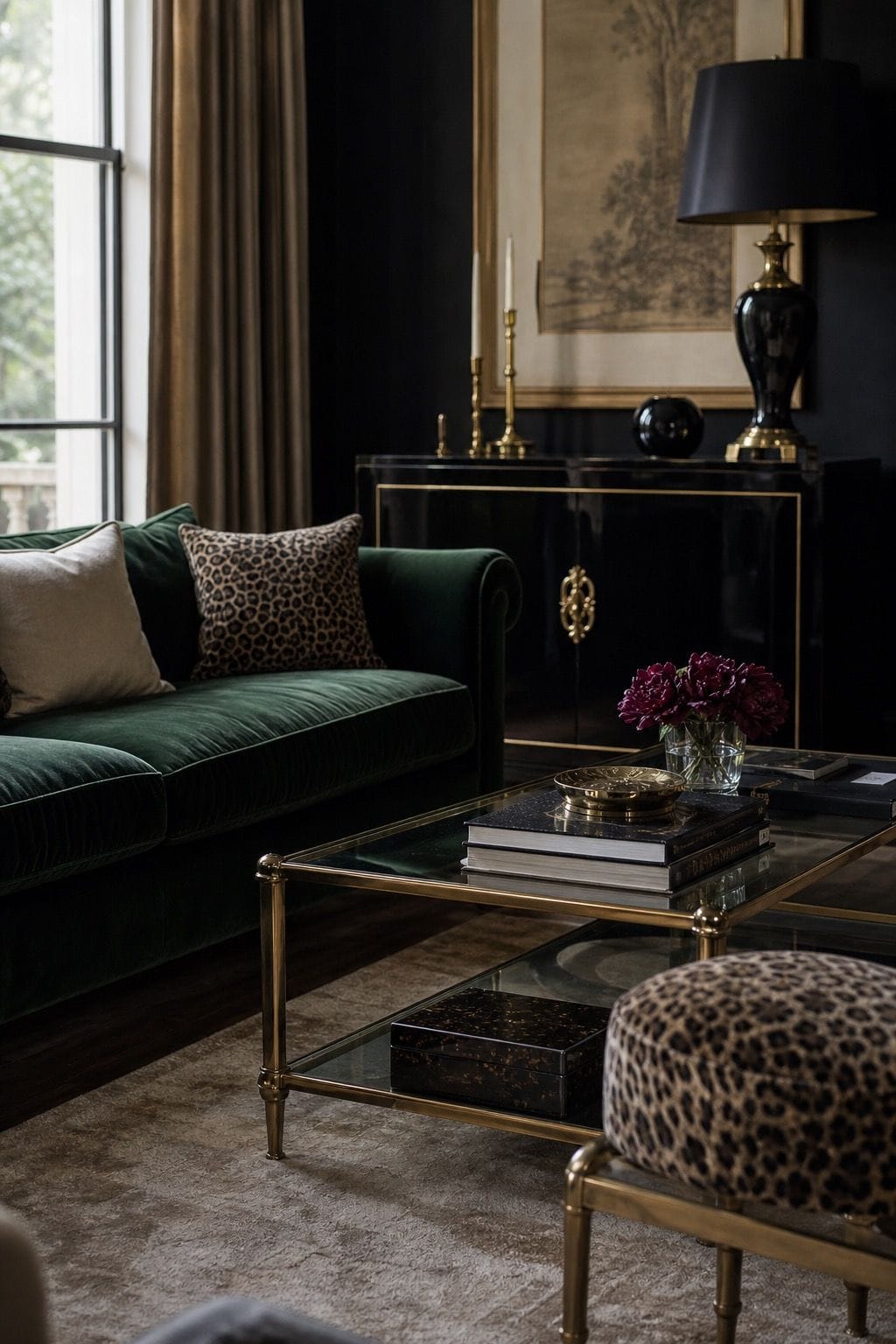


The cheapest way to lift existing furniture and cabinetry is the hardware. Swapping plain or modern knobs and pulls for aged or antique brass shifts a piece toward Mediterranean for the price of a small pack of hardware and an afternoon with a screwdriver. Aged brass, with its warm, slightly tarnished finish, ties into the wrought iron and warm wood elsewhere in the room. Do it across a kitchen, a dresser, a cabinet, and the warm-metal accents start to read as a deliberate, cohesive scheme. It is one of the highest-value-per-dollar changes available in a budget Mediterranean room. Aged brass also forgives fingerprints and wear in a way polished hardware does not, so it keeps looking right with no upkeep.
11. One Handmade Splurge
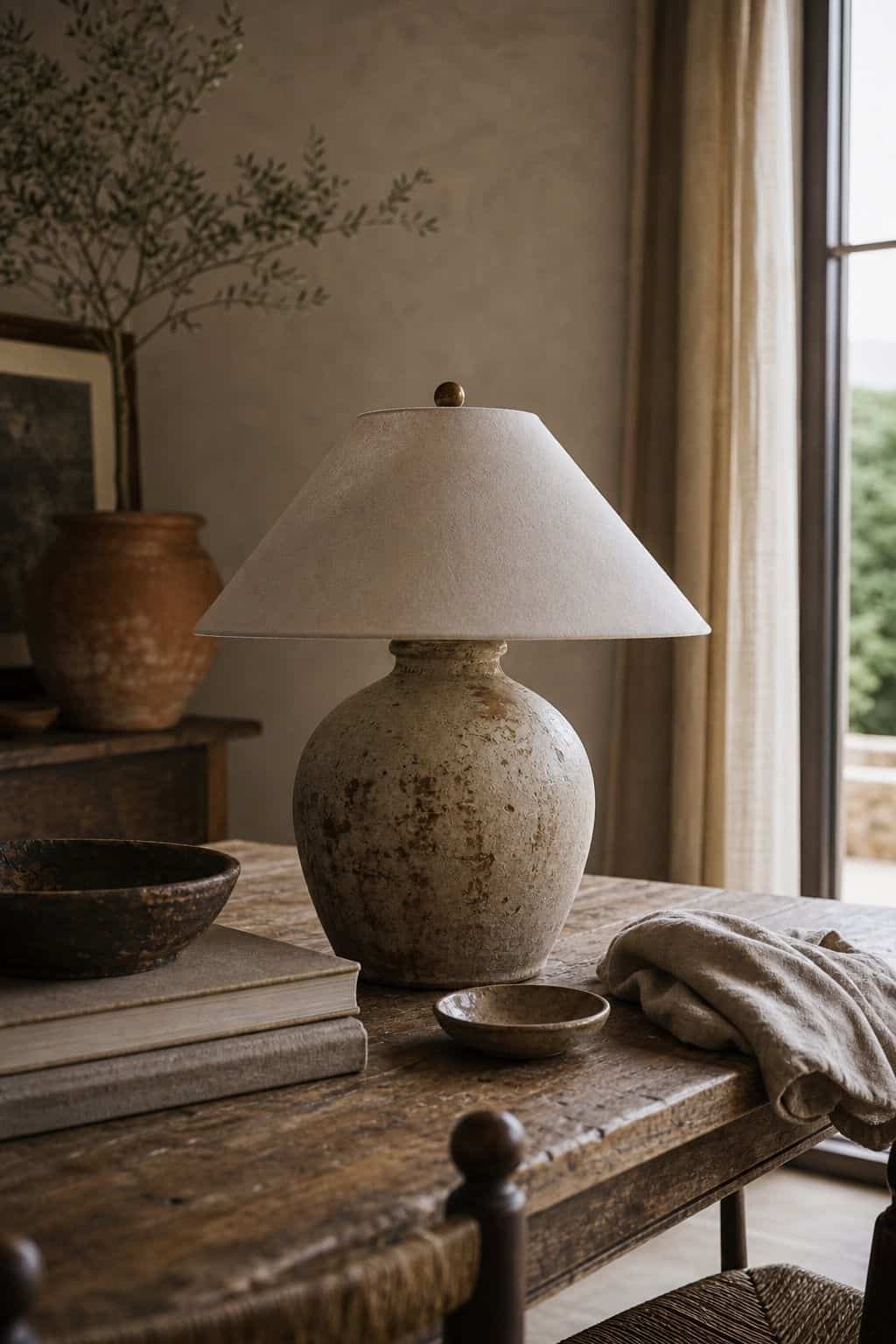


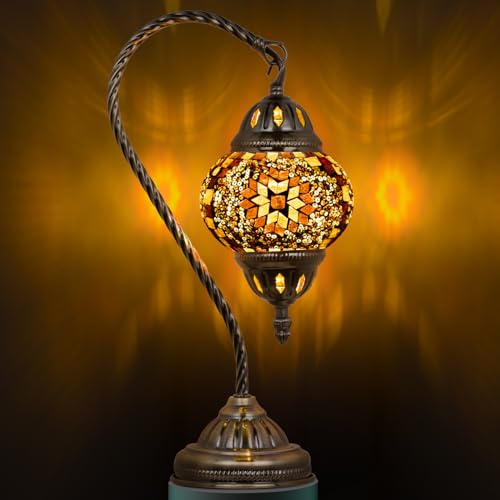
With everything else thrifted and DIYed, there is room for one genuine handmade splurge, and it pays off. A single hand-thrown ceramic vase, a handwoven rug, a piece of hand-painted tile art, or an artisan-made lamp brings a note of real craft that anchors the room and lifts the budget pieces around it. Because Mediterranean style is built on handmade objects, one genuinely crafted piece reads as the soul of the room rather than an indulgence. Put your one real spend here, on something made by hand, rather than spreading the budget thin across more mass-produced decor. Spread your budget thin across many mass-produced pieces and the room stays flat; concentrate it on one made object and the whole space lifts.
12. Thrifted Blue-and-White China
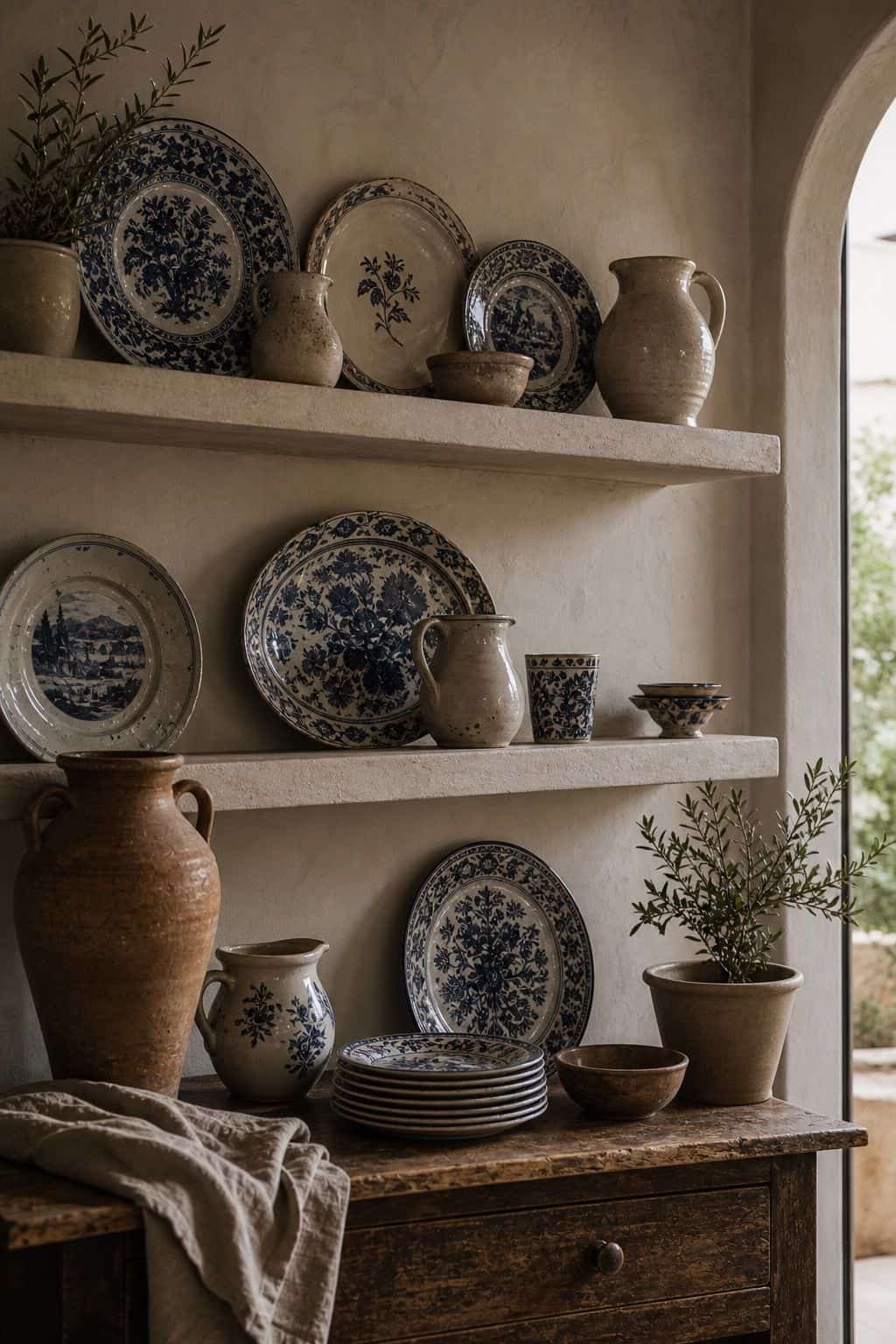


Blue-and-white china is one of the most reliable thrift-store finds there is, and it is a Mediterranean classic, especially for the Greek-leaning version of the style. Plates, jugs, bowls, and tureens in blue-and-white patterns can be found for a few dollars each, displayed on a shelf, hung on a wall, or used as everyday objects. The mismatched-pattern look of a gathered collection is more authentic than a matching set. Build the collection slowly from charity shops and estate sales, and a whole wall or shelf of blue-and-white china costs less than a single piece of new decor while doing far more for the look.
13. Aged New Terracotta
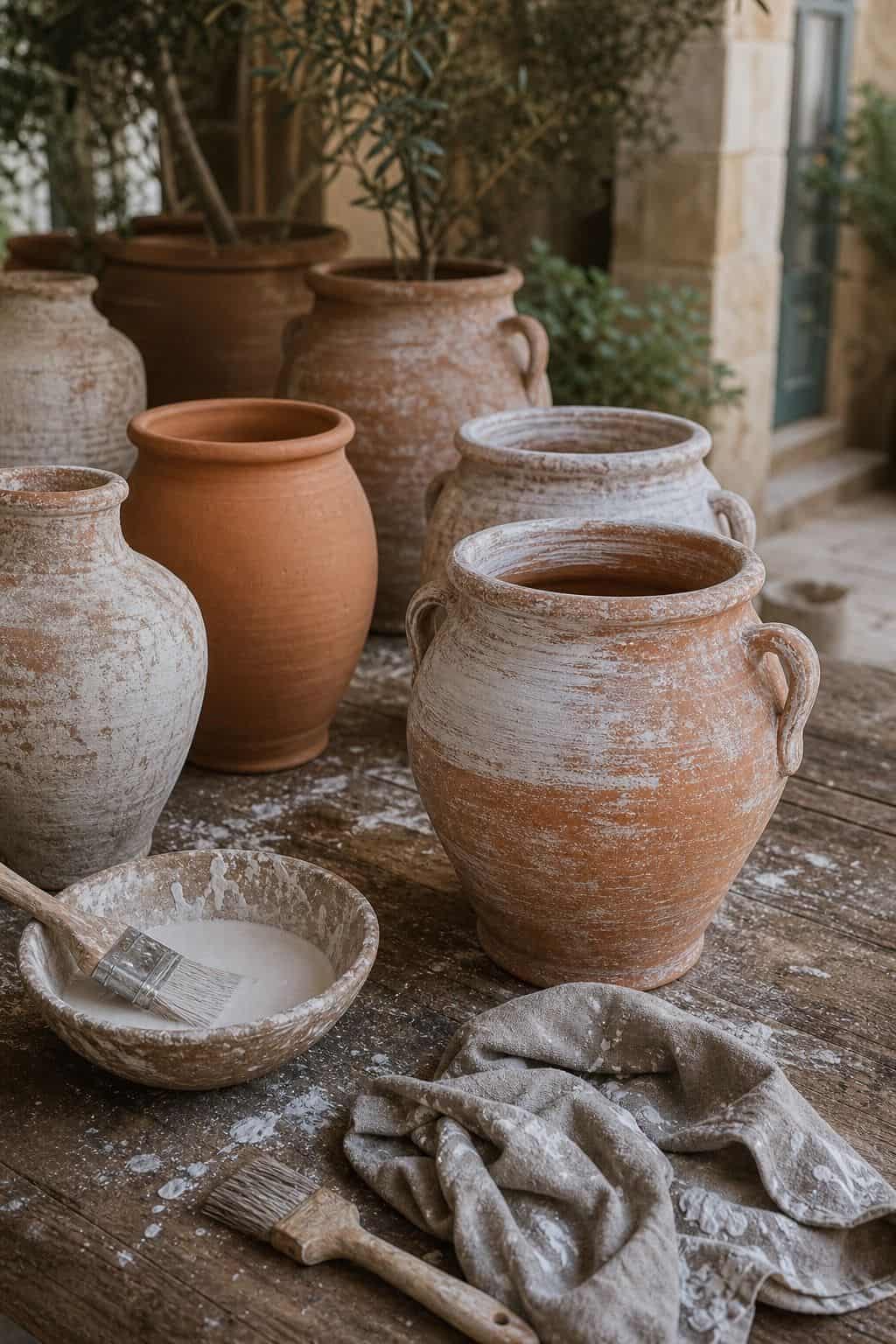
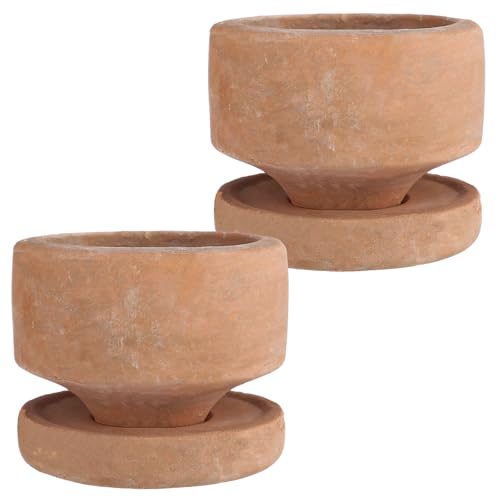
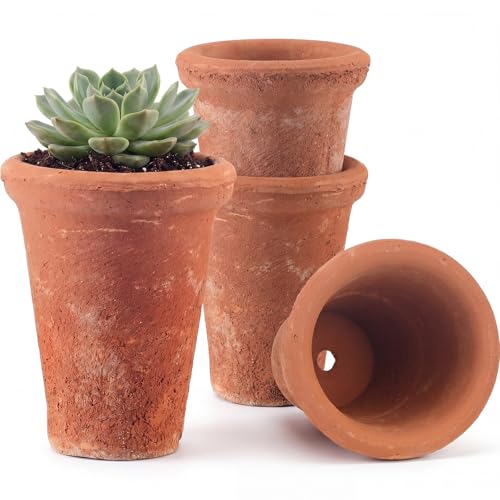

New terracotta pots and tiles read a little too orange and uniform. Aging them quickly is a free upgrade. A wash of watered-down white or grey paint, wiped back, gives new terracotta the soft, lime-dusted, weathered look of old Mediterranean clay. Yogurt or diluted paint left to develop a patina works too, as does simply leaving pots outdoors for a few weeks. The aged finish is what separates a budget terracotta piece that looks cheap from one that looks genuinely old and Mediterranean. It costs nothing but a little time and turns the cheapest material in the room into one of the most convincing.
14. Natural-Fiber Rugs
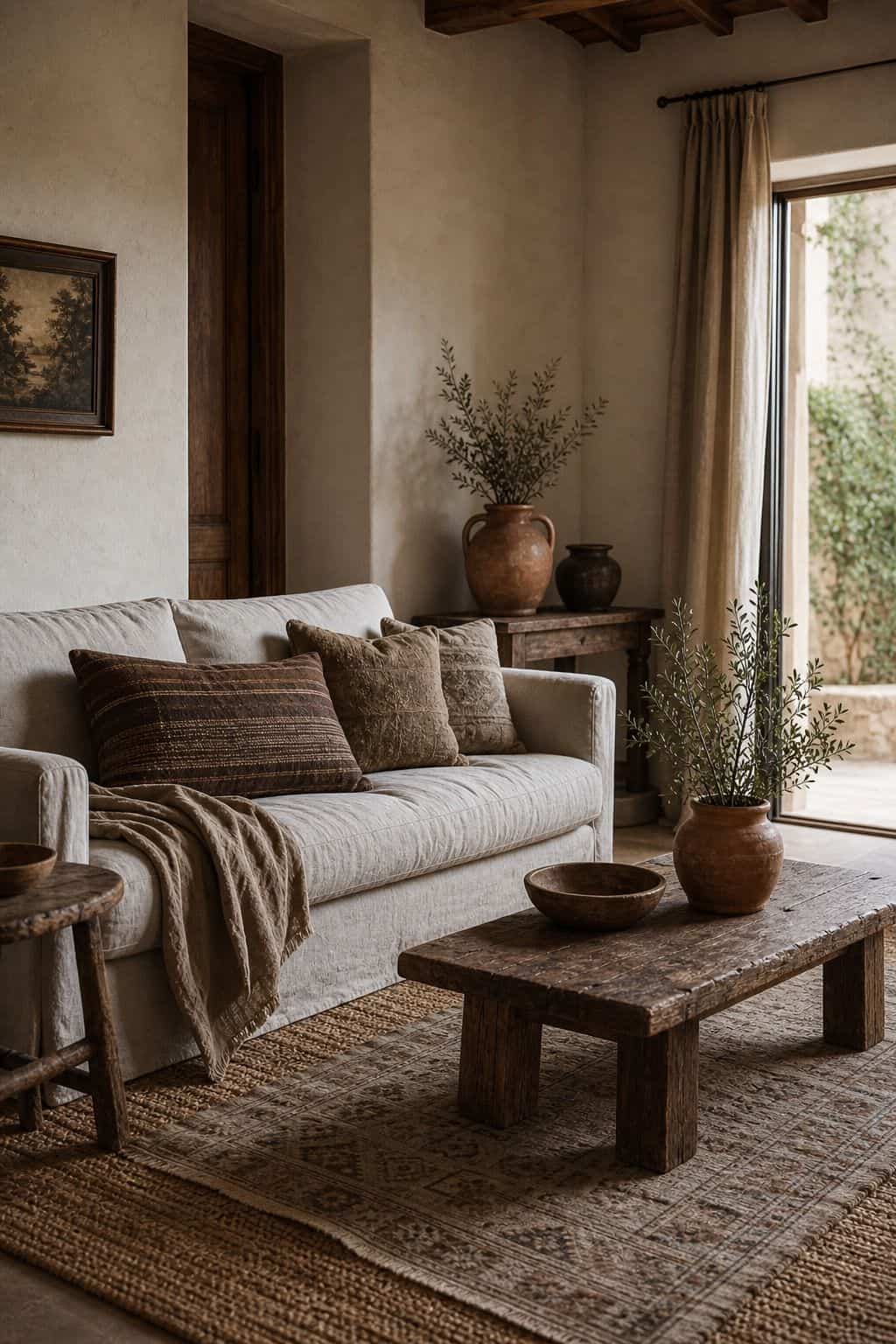


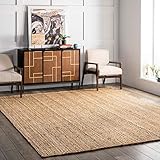
A jute, sisal, or seagrass rug is inexpensive and exactly right for a Mediterranean floor. The warm, woven, natural texture grounds a room and reads of the region, and these rugs are among the cheapest floor coverings available new. For more pattern, a flatweave or worn vintage rug in faded Mediterranean tones can be thrifted. Layering a smaller patterned rug over a larger natural-fiber base is the budget way to get depth. The natural-fiber rug is a rare case where the cheap option is also the authentic one, since the region’s floors were always natural fiber or bare tile. Natural-fiber rugs are also hard-wearing and easy to clean, which suits the practical, unfussy spirit the region built the look on.
15. The Renter-Friendly Version
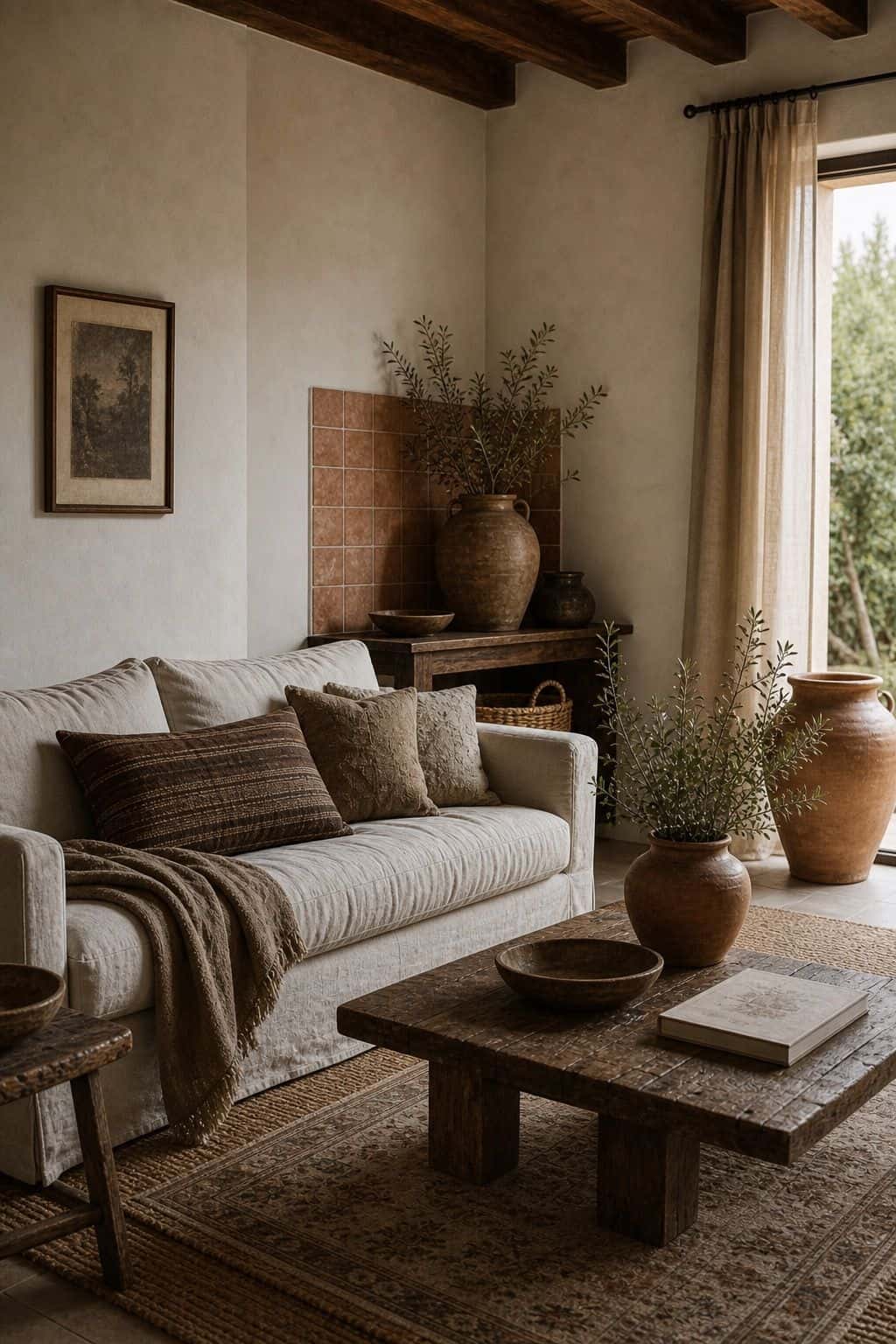
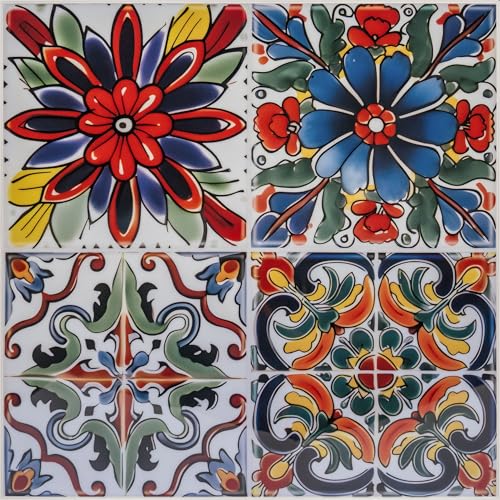
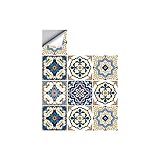

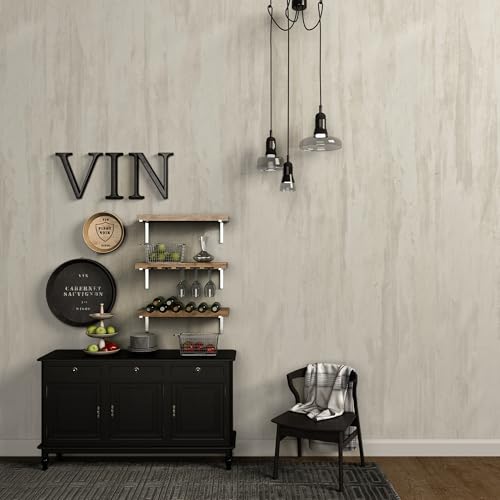
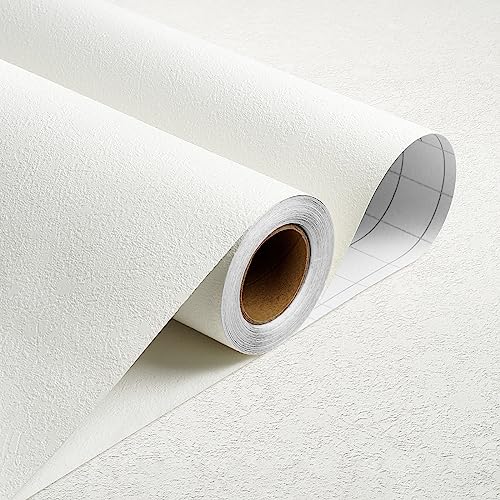
If you cannot paint or touch the walls, the look still comes together. Lean on the fully reversible moves: a linen slipcover and remnant cushions, peel-and-stick tile on a backsplash, terracotta pots, thrifted ceramics and baskets, dried branches, natural-fiber rugs, and swapped hardware you keep to reinstall later. A large lime-wash-look fabric panel or removable wallpaper can stand in for a painted wall. Every one of these lifts out when you move. Stacked together, they read as a fully committed Mediterranean room that happens to be completely reversible, which is exactly what a renter needs. The renter version is not a lesser version, it is simply the same materials chosen for reversibility, and it photographs identically.
16. Shop the Whole Region’s Look, Not One Store
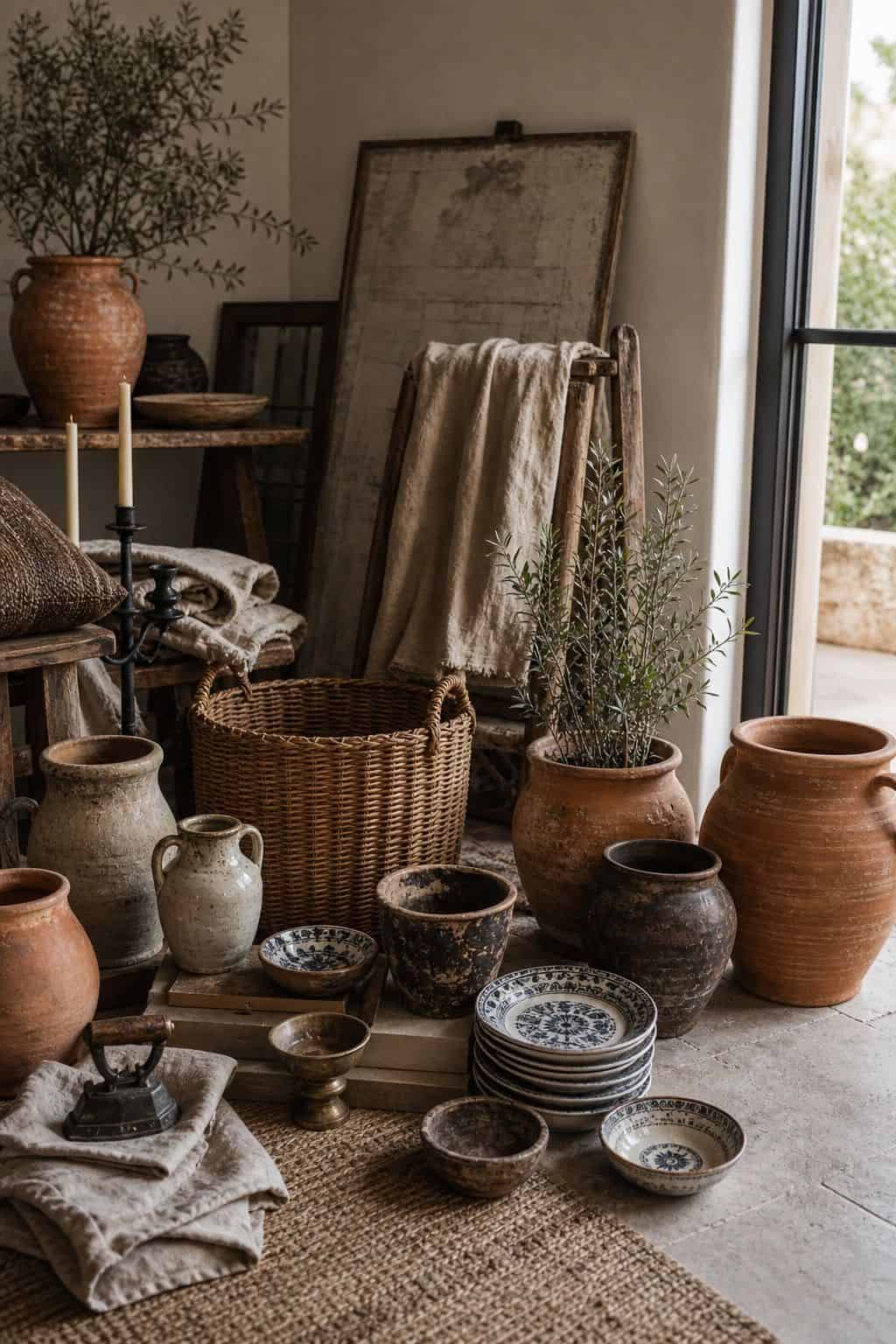
The final budget move is a mindset: stop shopping for “Mediterranean decor” as a category and start shopping for its materials anywhere they turn up. Terracotta from a garden center, baskets from a thrift store, linen from a fabric remnant bin, iron from an estate sale, ceramics from a charity shop. The look is a collection of materials, not a product line, so the cheapest sources are rarely the home-decor stores that sell “Mediterranean” at a markup. Train your eye on clay, iron, linen, wood, and woven fiber, and you will find the look everywhere for almost nothing. Once you start seeing the look as clay, iron, linen, wood, and fiber rather than a store aisle, the budget version stops feeling like a hunt and starts feeling obvious.
A Worked Mediterranean Room Refresh on a Budget
Here is roughly how a budget Mediterranean living room refresh adds up. Two cans of warm-white paint plus a lime-wash technique on the walls, around 60 to 80 dollars. A linen slipcover for the sofa, about 50 to 90 dollars, or far less in remnant fabric sewn yourself. A thrifted wrought-iron console and a carved side table, roughly 40 to 80 dollars together. A dozen terracotta pots and a collection of thrifted ceramics, around 30 to 50 dollars. Remnant linen cushions, a natural-fiber rug, and a stack of woven baskets, about 80 to 120 dollars. That is a warm, finished Mediterranean room for somewhere near 260 to 420 dollars.
Then the one handmade splurge, another 50 to 150 dollars on a single hand-thrown vase, a handwoven rug, or an artisan lamp, and the room gains the note of real craft that makes the whole thing read intentional. The total lands well under what a single new “Mediterranean” sofa would cost at retail, and the room is more authentic for having been gathered rather than ordered. For the look applied across the rest of the home, our guide to the modern Mediterranean home room by room shows where each material goes.
Want to map your Mediterranean refresh against a real number?
The Ultimate Budget Planner helps you plan a room refresh against an actual budget, so the paint, the thrift finds, and the one splurge all add up without overspending.
Frequently Asked Questions
How do I do Mediterranean cheaply?
Spend on paint and texture, thrift everything else. A warm-white or lime-wash wall is the cheapest high-impact move, then bring in thrifted wood and wrought iron, terracotta pots, linen slipcovers and remnants, and secondhand ceramics. Put your one real splurge into a single handmade piece.
What is the cheapest Mediterranean change?
Paint, or terracotta pots. A warm white costs the same as any other paint, so a lime-wash-effect wall is essentially free upside. Plain terracotta pots are among the cheapest materials in any garden center, and used generously they scatter the region’s signature warm clay color across a room.
Can renters do Mediterranean?
Yes. Lean on the reversible moves: a linen slipcover and remnant cushions, peel-and-stick tile, terracotta pots, thrifted ceramics and baskets, dried branches, natural-fiber rugs, and swapped hardware you keep to reinstall. A removable lime-wash-look fabric panel can stand in for a painted wall.
Is Mediterranean decor expensive?
It photographs expensive but it is not. The style grew out of cheap, local, practical materials, lime, clay, iron, olive wood, linen, none of which were luxury goods. The polish comes from warmth and texture, not price, which is why the budget version is closer to the real thing than a designer showroom version.
How much does a Mediterranean room cost?
A worked budget living room refresh, warm-white and lime-wash paint, a linen slipcover, thrifted wood and iron, terracotta and ceramics, cushions, a natural-fiber rug, and baskets, lands around 260 to 420 dollars, plus 50 to 150 dollars for one handmade splurge. That is well under the cost of a single new Mediterranean sofa.
Key Takeaways
- Mediterranean decor photographs expensive but was built from cheap local materials, lime, clay, iron, olive wood, linen, so the budget version is closer to the real thing.
- Spend on paint and texture, thrift everything else: a warm-white or lime-wash wall is the cheapest high-impact change in the room.
- The 16 moves lean on terracotta pots, thrifted wood and iron, linen remnants, secondhand ceramics, peel-and-stick tile, and DIY plaster and aging techniques.
- Put the one real splurge into a single handmade piece, it anchors the room and lifts the budget pieces around it.
- A worked budget living room refresh lands around 260 to 420 dollars plus one splurge, well under the cost of a single new Mediterranean sofa.
Final Thoughts
Mediterranean decor on a budget is not a compromise, it is the style working the way it always did, built from cheap, warm, local materials and gathered slowly rather than ordered as a set. Spend on paint and texture, thrift the wood, iron, and ceramics, lean on terracotta and linen, and put one real splurge into something handmade. The room that results photographs like money because warmth and texture, not price, were always what made the look. To carry it further, our guide to a relaxed coastal living room and our guide to french country coffee table styling cover related warm, gathered looks worth borrowing from.
For a warm, earthy cousin of this look, an English country color palette and the English country furniture guide share the same sun-washed, hand-touched feeling.