Quick Answer: Mediterranean wall decor leans on plaster and lime-wash texture, hand-painted tile, arched mirrors, woven baskets, botanical and citrus prints, and wrought-iron pieces. The 16 ideas below build a warm, textured wall, plus a section on layering that texture without the wall tipping into clutter.
Late afternoon, a plaster wall in a Mediterranean room does something a painted wall never can. The low sun rakes across it and the surface comes alive, every trowel mark and soft undulation throwing its own small shadow. The wall is barely decorated, a single arched mirror, a cluster of baskets, but it is the most alive surface in the room.
That is the key to Mediterranean wall decor: the texture of the wall itself does most of the work, and what you hang on it is restrained. The 16 ideas below cover both halves, the plaster and lime-wash finishes that give the wall its life, and the tile, mirrors, baskets, and prints that go on top. The section at the end covers the balance point, how to build genuine texture without the wall crossing over into busy and cluttered.
Want a Mediterranean wall that reads warm and textured, not cluttered?
The Aesthetic Apartment Makeover Guide walks you through composing a wall the right way, so a textured Mediterranean wall lands rich and balanced instead of busy.
Recommended Mediterranean Wall Decor
Six pieces that build a warm, textured wall, from an arched mirror to a terracotta wall hanging.




Recommended blogs to read:
What Makes Wall Decor Mediterranean
Mediterranean wall decor starts with the wall itself, not the things hung on it. A plaster or lime-wash finish, with its soft, irregular, hand-troweled surface, is the foundation, and it is doing more for the look than any single hung object. The wall is treated as a textured surface to be seen, not just a flat backdrop.
What goes on top is warm, handmade, and restrained: hand-painted tile, ceramic plates, woven baskets, wrought iron, arched mirrors, and botanical or citrus prints. The materials echo the rest of a Mediterranean room, clay, iron, fiber, glass, and the arrangement is loose rather than gridded. Tie the wall color to a full scheme with our guide to a color-washed wall palette, which covers the warm tones the texture sits in.
One rule before the list: the wall texture comes first, the objects second. Get a plaster or lime-wash finish on the wall, then add only a few well-chosen pieces. A textured wall with three objects reads richer than a flat wall covered in twelve.
16 Mediterranean Wall Decor Ideas
Start with the wall finish, then layer a few objects. The section after the list covers building texture without clutter.
1. A Plaster or Lime-Wash Texture Wall
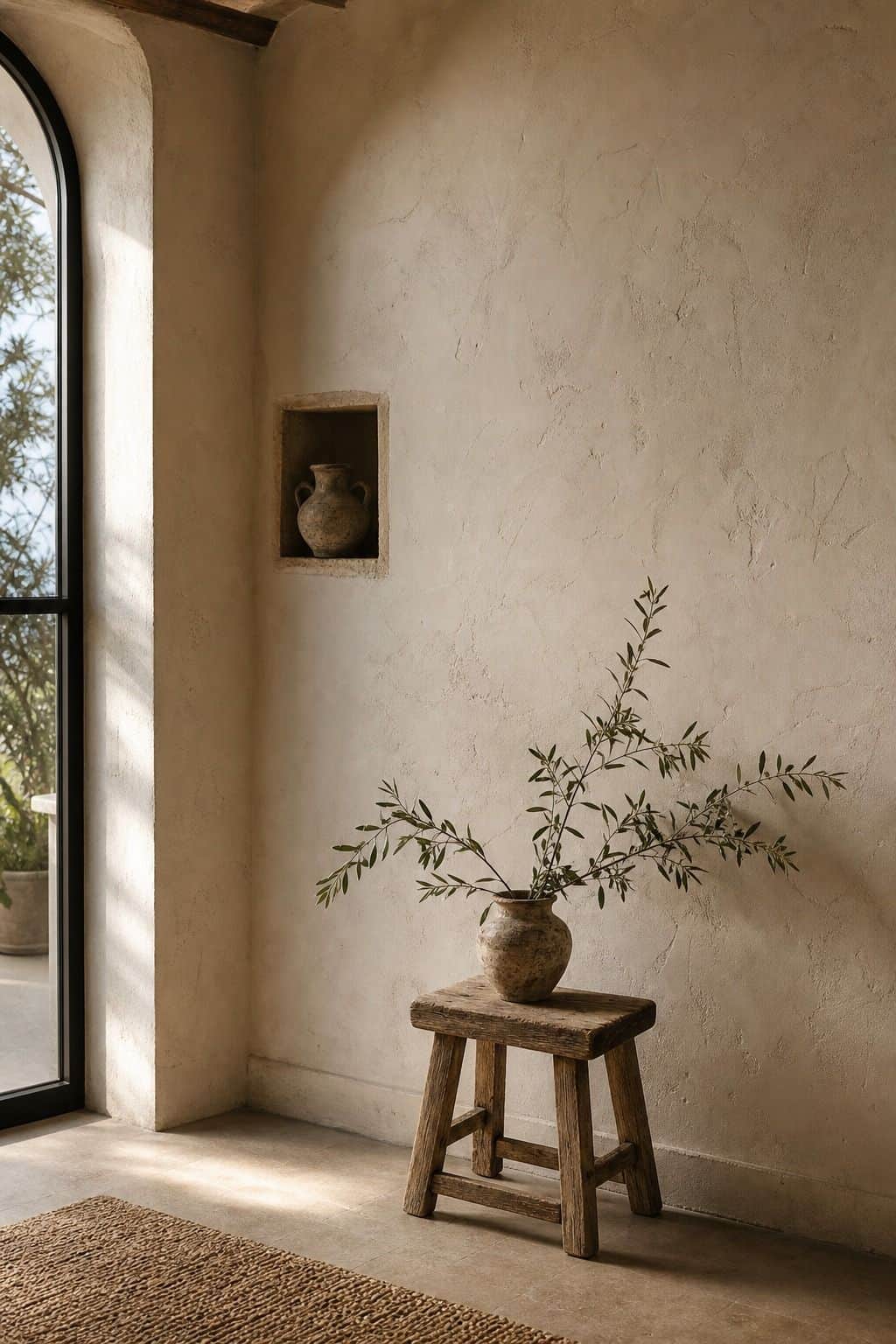
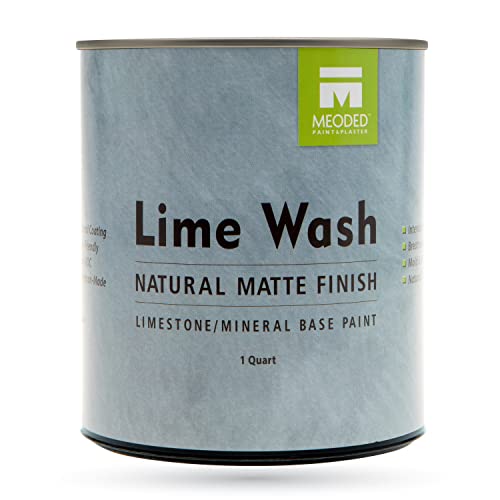
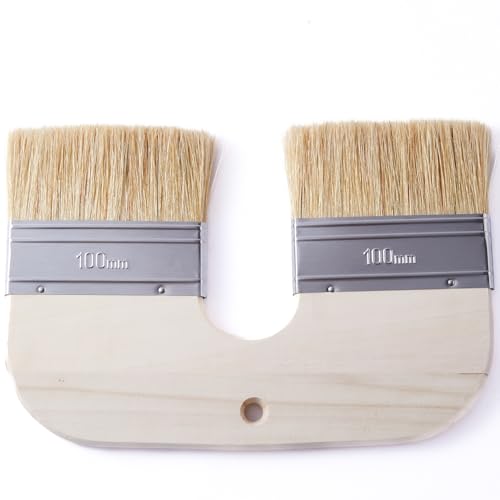
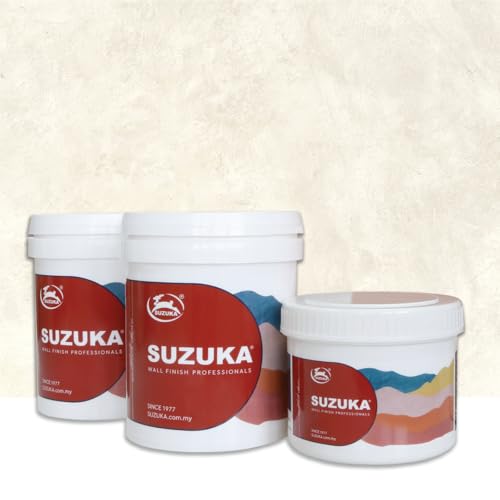
This is the foundation, and it is the one move that matters most. A plaster or lime-wash finish gives the wall a soft, cloudy, hand-troweled surface that catches light and throws gentle shadow, the quality a flat painted wall can never have. You can use real lime-wash paint, a textured paint applied with a trowel, or a DIY joint-compound technique for a deeper plaster look. Keep the application loose and a little irregular, since the imperfection is the entire point. Even one accent wall finished this way transforms a room, and it is the surface every other idea on this list looks better against.
2. Hand-Painted Tile
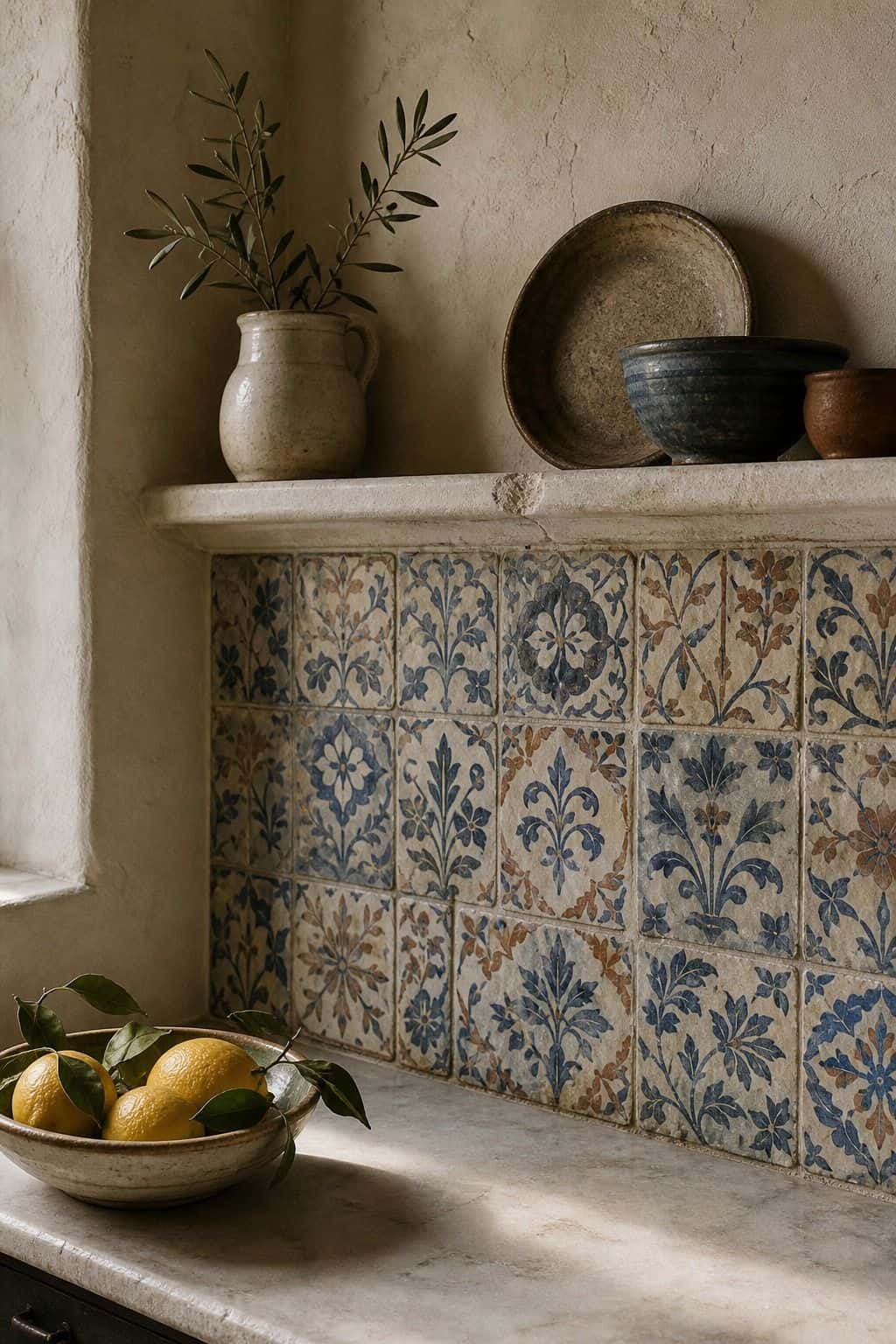


Hand-painted tile is one of the most recognizable Mediterranean wall details, and it does not need to cover much surface to land. A band of patterned tile around a mirror, behind a sink, up a stair riser, or as a framed inset panel brings the region’s color and craft in a contained way. Look for tile with the slight irregularity of hand-painting rather than perfectly uniform printed tile. For a budget or renter version, peel-and-stick tile in a hand-painted-look pattern reads convincingly from a normal distance. Concentrated on one small area, hand-painted tile is a high-impact, deeply Mediterranean accent. Frame the tile inset in simple wood or iron so it reads as a deliberate panel rather than an unfinished patch of the wall.
3. Woven Baskets as Wall Art
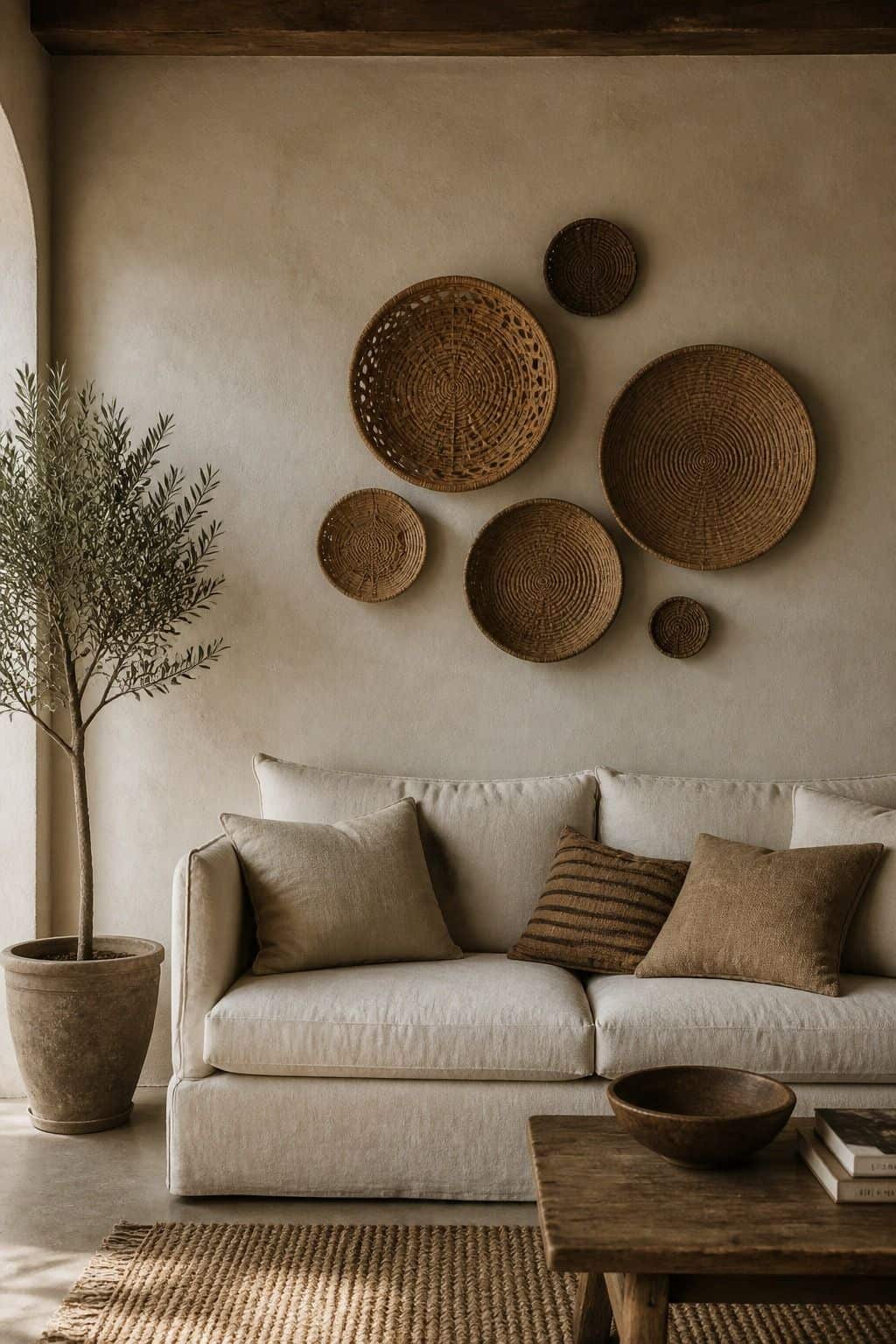


Flat woven baskets hung as a cluster are pure Mediterranean wall decor, warm, textured, and almost free if thrifted. A grouping of baskets in different sizes and weaves, seagrass, rattan, willow, arranged loosely on a wall reads as a textured composition rather than a set of objects. The natural fiber adds the woven warmth the style runs on, and the slight irregularity of handmade baskets suits the look. This is one of the cheapest wall treatments available, since thrift stores overflow with baskets, and it brings real texture to a wall with no framing or printing required. Vary the depth of the baskets too, a few that sit flat and one or two with more dimension, so the cluster catches shadow the way the plaster does.
4. An Arched Mirror
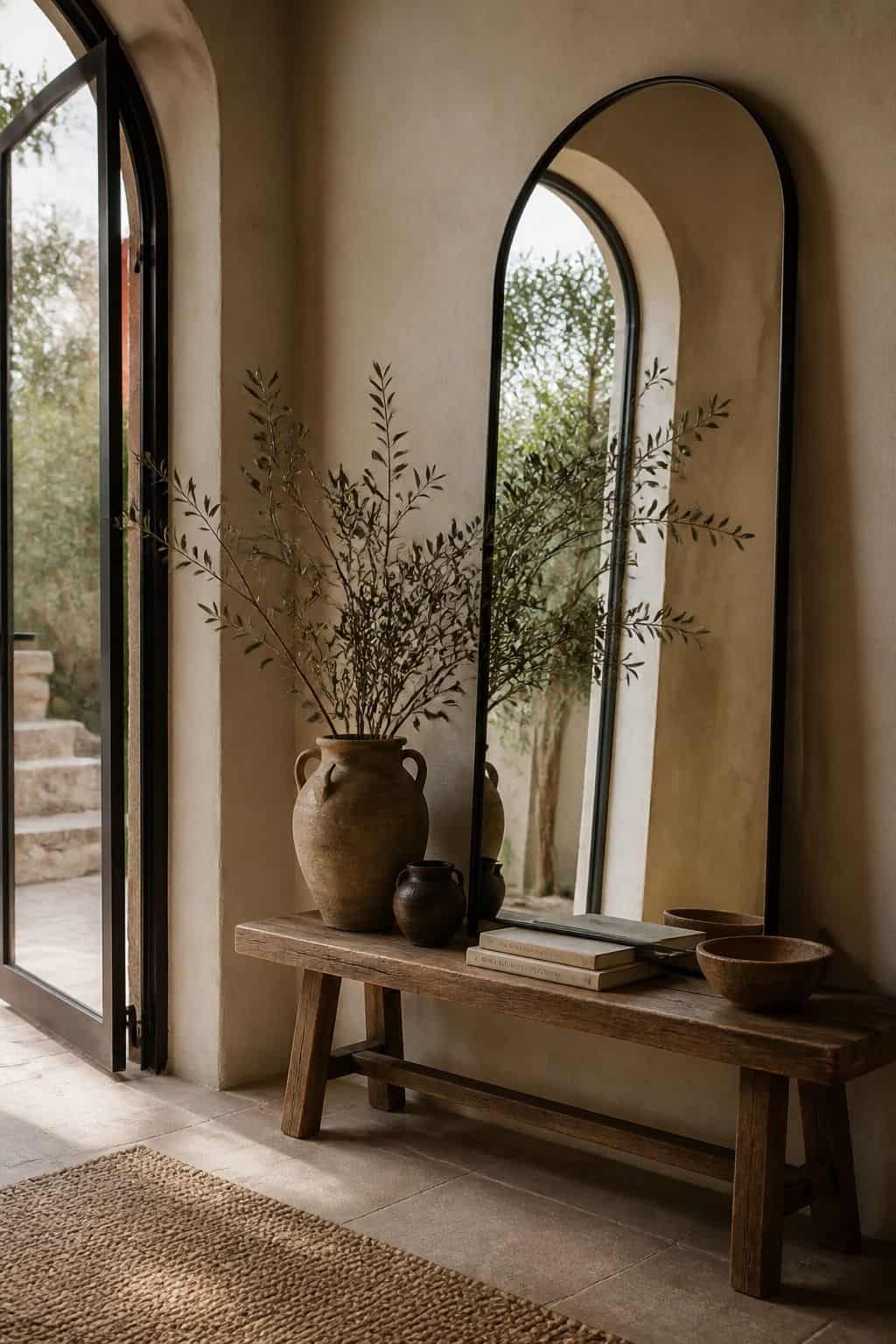


The arch is a core Mediterranean shape, and an arched mirror brings that architecture onto a wall that has no real arched openings. A simple arched mirror, in warm wood, aged iron, or an unframed shape, over a console, a mantel, or a bathroom sink reads instantly of the region. It also bounces light around the room, which suits the sun-washed palette. One arched mirror is often the single hung piece a textured plaster wall needs, since the wall is already doing so much. Keep the frame simple and warm rather than ornate. If the room has a real arched doorway or niche, echo its curve in the mirror, and the two arches will quietly reinforce each other.
5. Botanical and Citrus Prints
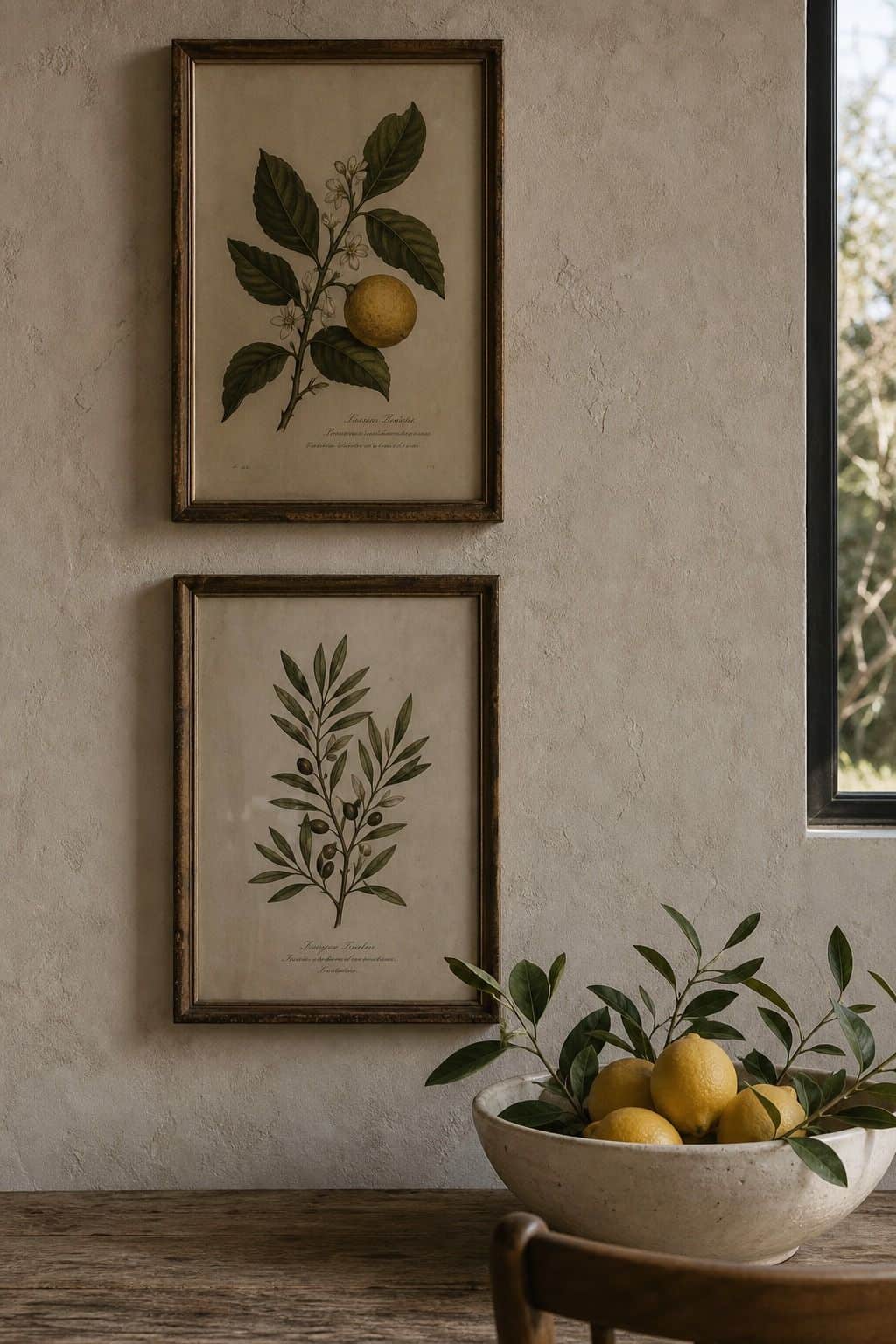
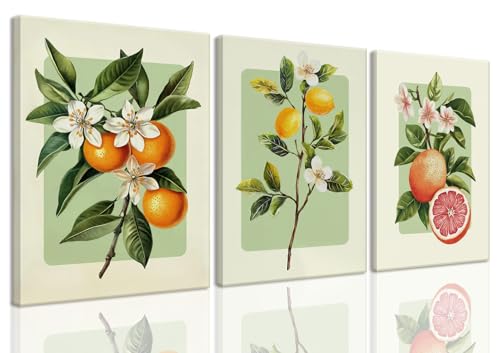
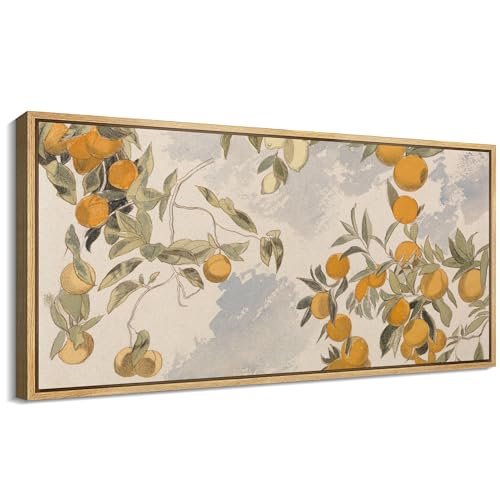

Framed botanical and citrus prints, lemons, olives, figs, herbs, vines, bring the Mediterranean landscape onto the wall. The imagery is tied directly to the region’s gardens and groves, and the muted, natural colors of botanical art suit the warm palette. Hang them as a loose pair or a small grouping rather than a rigid grid, in simple warm-wood or thin iron frames. Vintage botanical prints thrift well and read more authentic than glossy modern ones. A few citrus or olive prints add a quiet, regional note without the weight of a large statement piece. Leave a wide mat around each print, the generous border reads calm and considered, and it lets the plaster wall breathe between the frames.
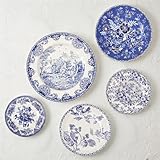
6. A Ceramic Plate Wall
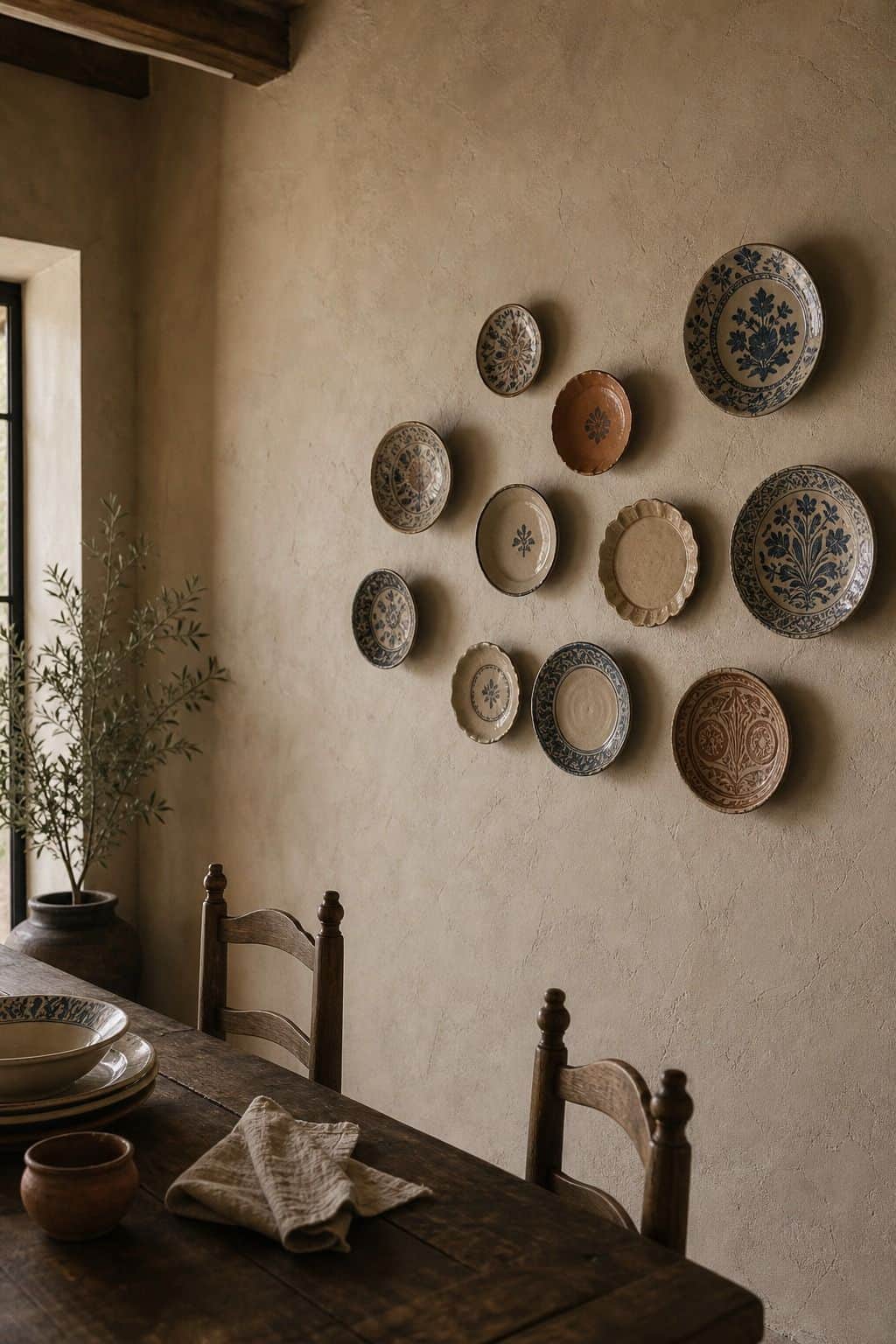


A wall of ceramic plates is a classic Mediterranean display, especially in a kitchen or dining room. Hand-painted, blue-and-white, or terracotta-glazed plates, arranged in a loose cluster, turn everyday ceramics into wall decor and bring the region’s pottery up to eye level. The plates do not need to match; a gathered mix of patterns and sizes reads more authentic than a coordinated set. Thrifted plates make this nearly free to assemble. A plate wall adds color, pattern, and craft to a wall while staying flat and unfussy, which keeps it from feeling cluttered. Hang the plates with the largest near the center and let the grouping fade outward, so the cluster has a clear anchor rather than reading as scatter.
7. Wrought-Iron Wall Pieces
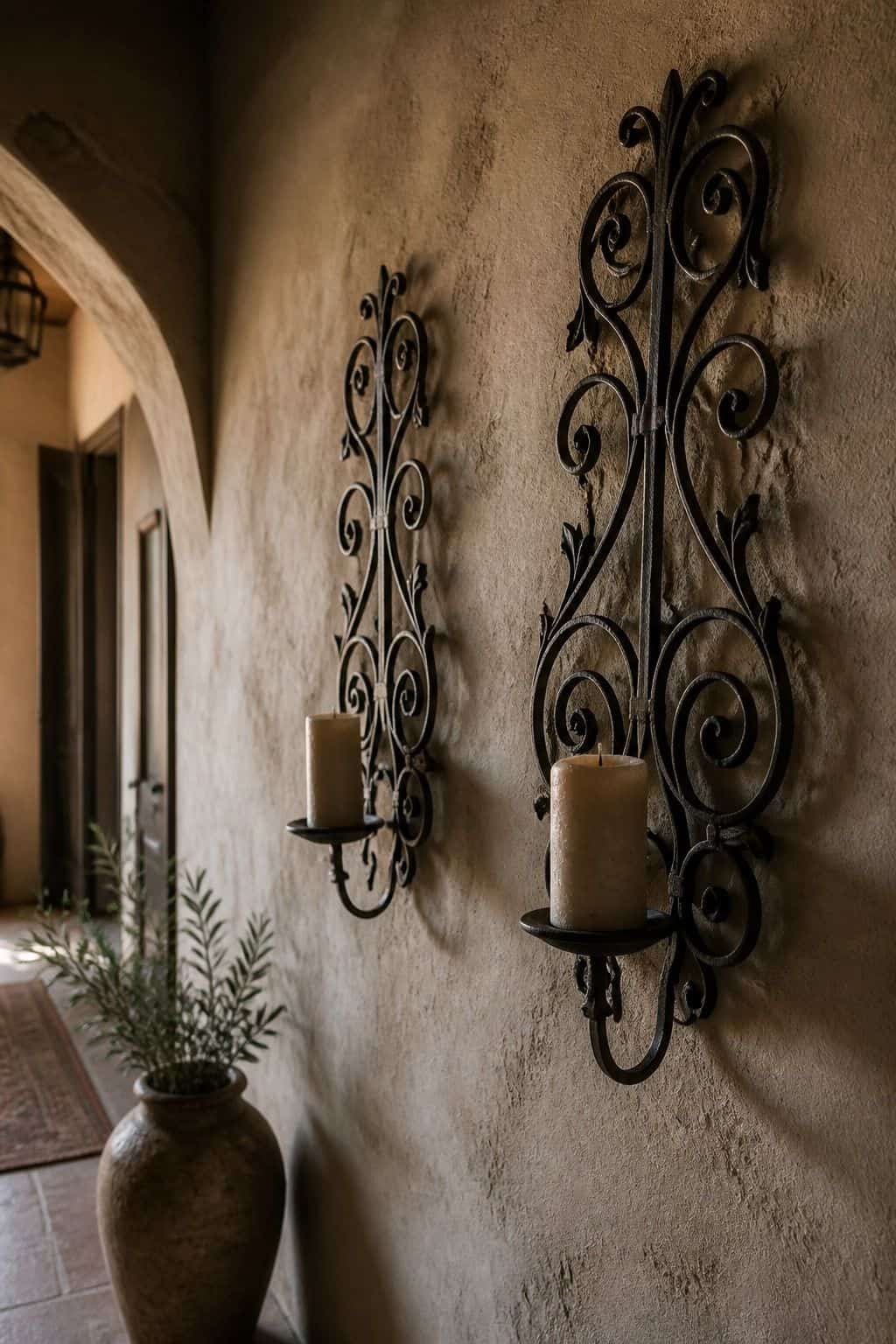

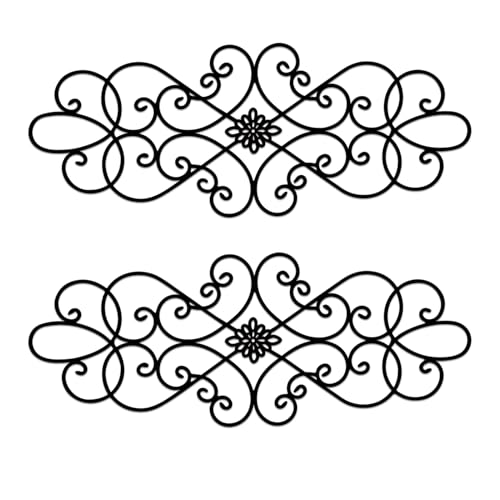

Wrought iron is the Mediterranean metal, and as wall decor it shows up as iron sconces, decorative grilles, candle holders, and sculptural iron pieces. The dark, hand-forged look of iron against a warm plaster wall is a strong, simple contrast that signals the style clearly. An iron piece reads as architecture as much as decoration, so one well-placed piece carries a wall. Look for genuinely forged or forged-look iron with a little irregularity rather than slick powder-coated reproductions. One or two iron wall pieces per room is plenty, used as the dark, linear accent against all the warm texture. Iron also pairs naturally with candlelight, so an iron sconce or candle bracket does double duty as both wall sculpture and a warm light source.
8. Framed Landscape Art
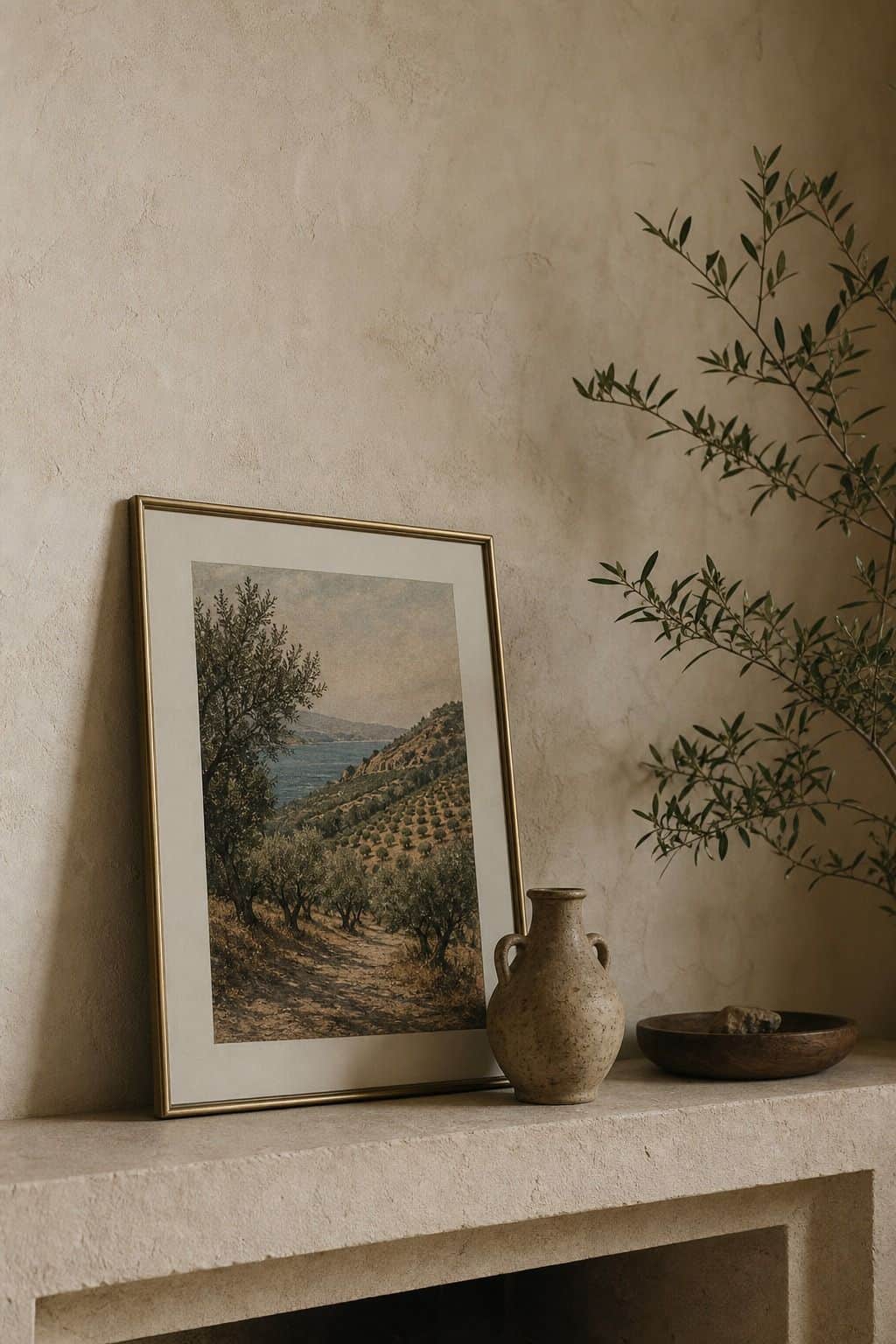

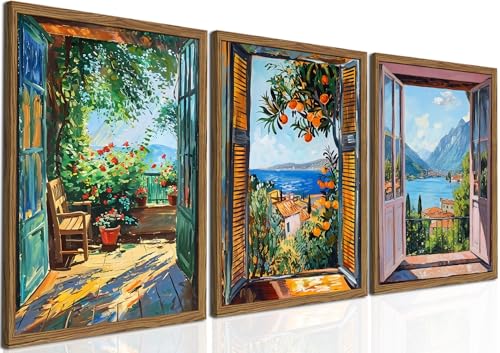
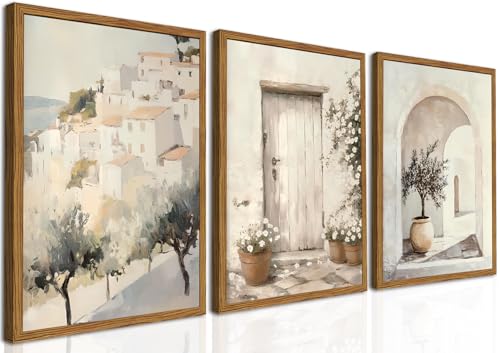
A piece of framed landscape art, a coastline, a hill town, an olive grove, a sun-faded countryside, brings the Mediterranean place itself onto the wall. The colors of a good landscape print echo the room’s palette, warm earth, faded blue, olive green, and the imagery reinforces the regional feeling. One larger landscape piece can be the single statement on an otherwise quiet wall. Vintage or vintage-look paintings and prints read more authentic than crisp modern photography here. Choose something soft and a little faded rather than sharp and high-contrast, so it sits naturally against the warm wall. Lean a larger landscape on a console or mantel rather than hanging it, the casual placement suits the unhurried Mediterranean way of using a room.
9. A Terracotta Relief or Wall Hanging
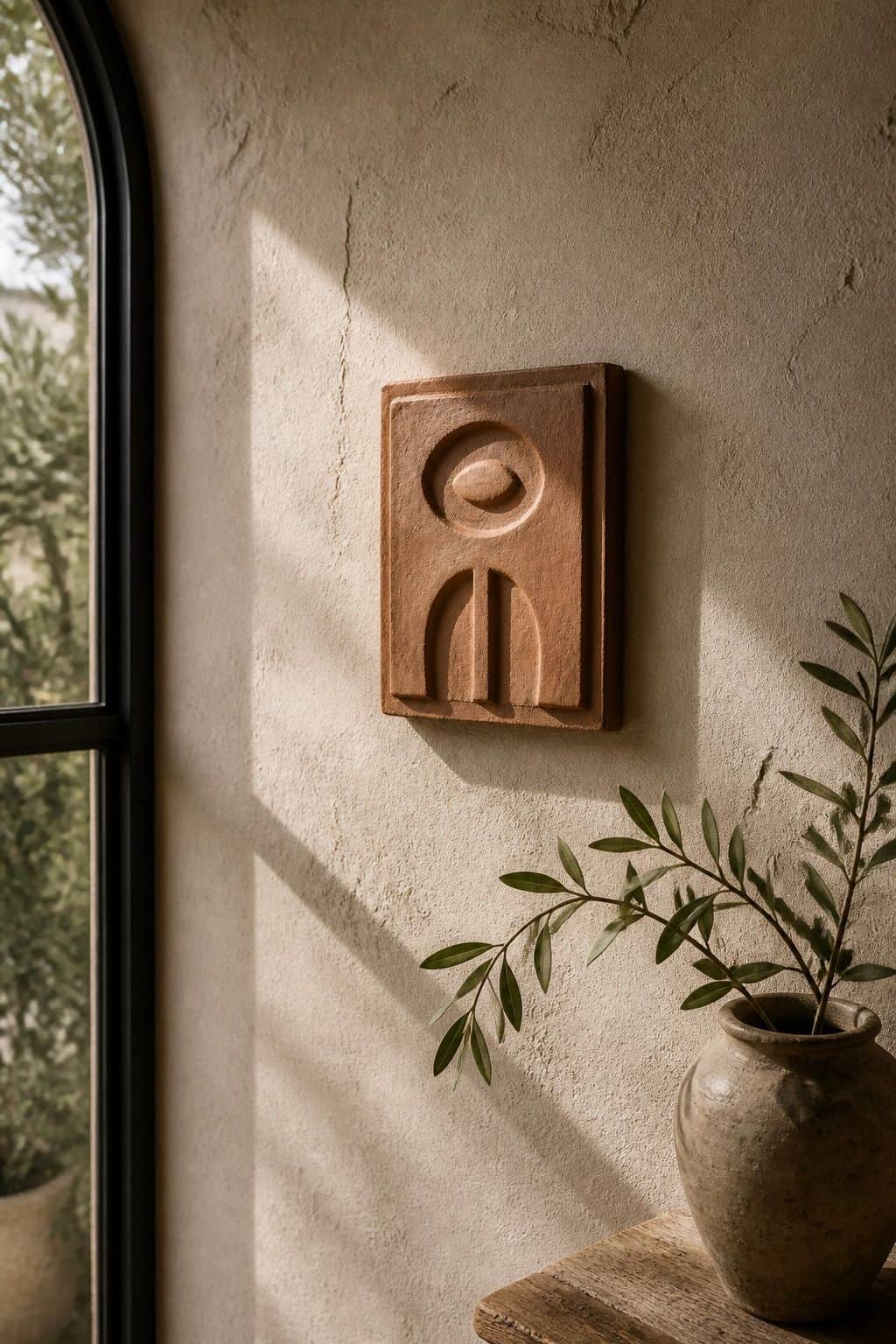


A terracotta relief, a glazed ceramic wall hanging, or a sculptural clay piece brings the region’s signature material onto the wall in three dimensions. Unlike a flat print, a terracotta piece casts its own shadow and reads as craft and texture at once. It pairs naturally with a plaster wall, since both are clay-based, and it ties the wall to the terracotta pots and ceramics used elsewhere in the room. One terracotta wall piece is enough; it is a distinctive, regional accent that does not need repeating. Look for handmade pieces with the irregularity of real clay work. Position a terracotta relief where raking light will hit it, near a window or a lamp, so its dimensional surface earns the wall space it takes.
10. A Single Large Textured Piece
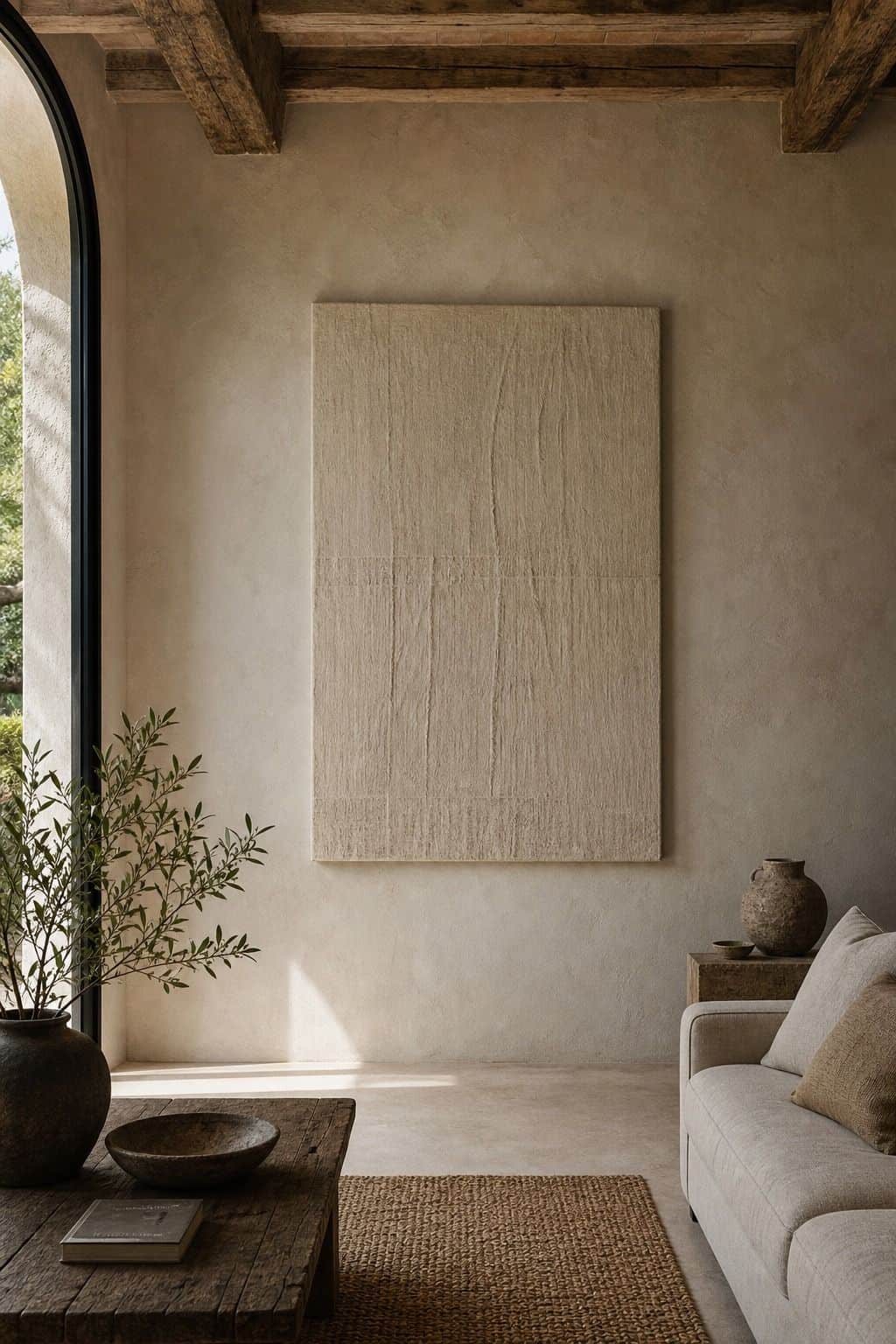


Sometimes the whole wall is one large, textured piece. An oversized woven hanging, a big abstract canvas in earth tones, a large unframed linen artwork, or a single substantial mirror, hung alone on an otherwise bare plaster wall, is a confident Mediterranean move. The empty textured wall around it amplifies the piece, and the restraint reads as intentional. This works especially well on a wall that needs a focal point but would feel cluttered with a grouping. It is also the simplest wall to execute: get the plaster finish right, then hang one good thing. The discipline here is trusting the empty wall, a single strong piece on bare plaster reads far more confident than the same piece crowded by others.
11. Dried-Botanical Hangings
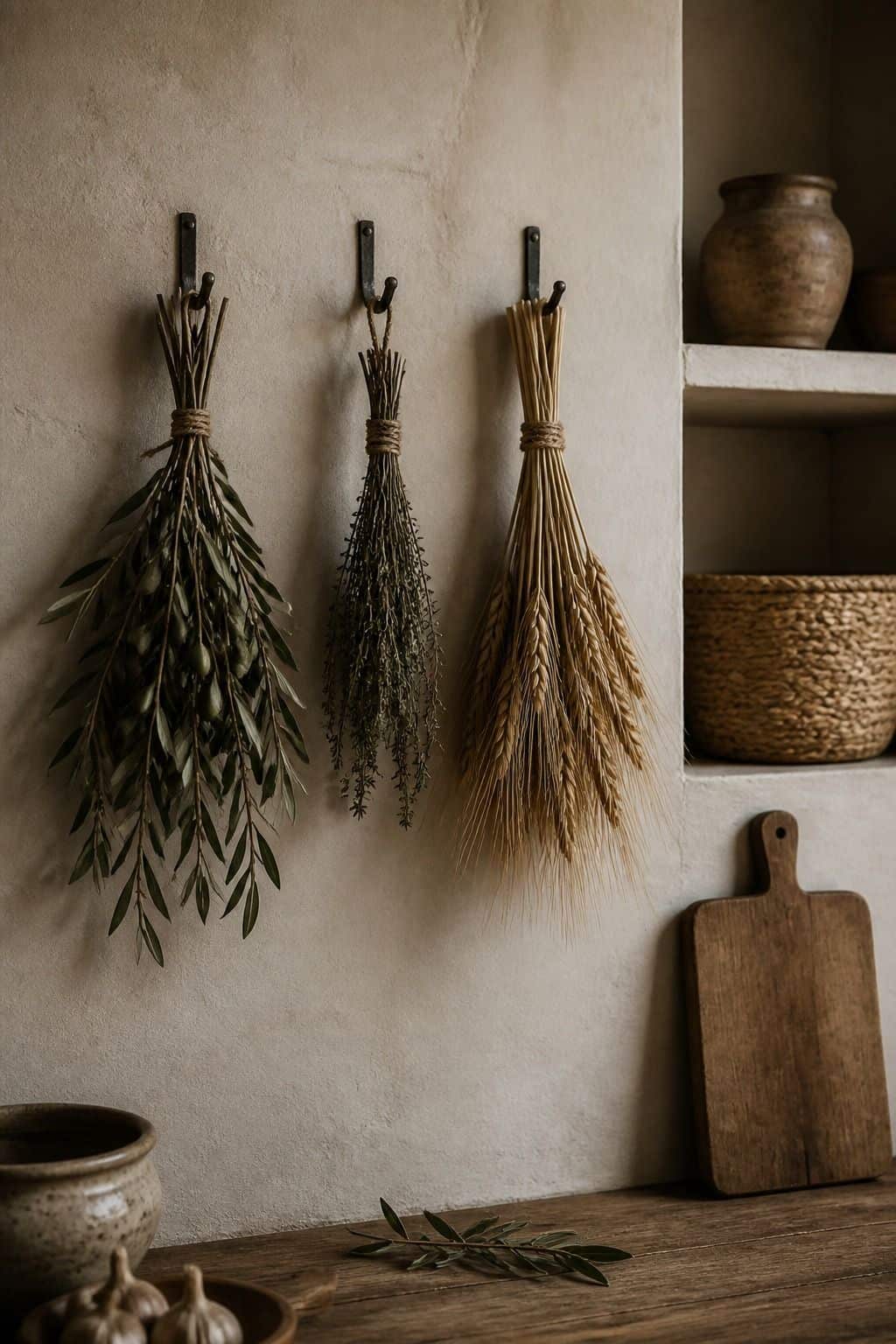
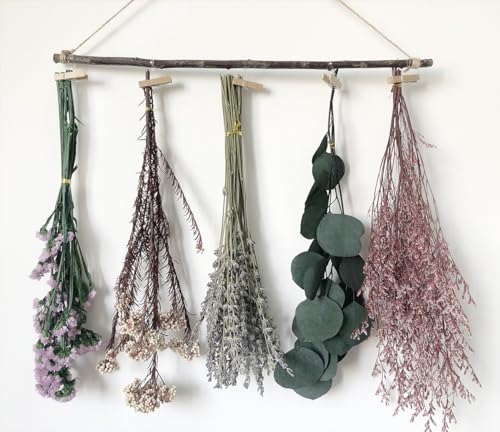
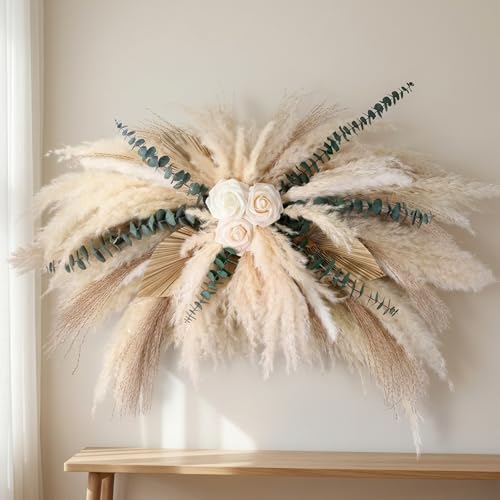
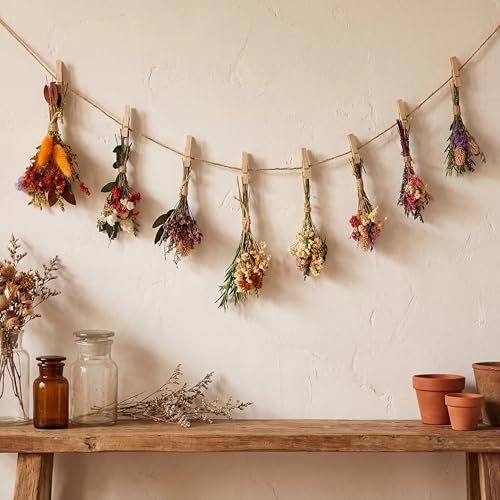
Dried botanicals hung directly on the wall, a bundle of dried herbs, a sheaf of wheat, dried olive or eucalyptus branches, bring the region’s foliage onto the wall with real, three-dimensional texture. The muted colors of dried plant material suit the warm palette, and the imperfect, natural shapes read as effortless. A single dried bundle on a wall hook, or a few hung in a loose row, adds a quiet organic note for almost nothing. Dried botanicals last for years, so this is a near-permanent, near-free piece of wall texture that suits the unfussy Mediterranean spirit. Refresh the dried bundle every season or two as it fades, the small act of swapping it keeps the wall feeling tended rather than forgotten.
12. Carved-Wood Wall Objects
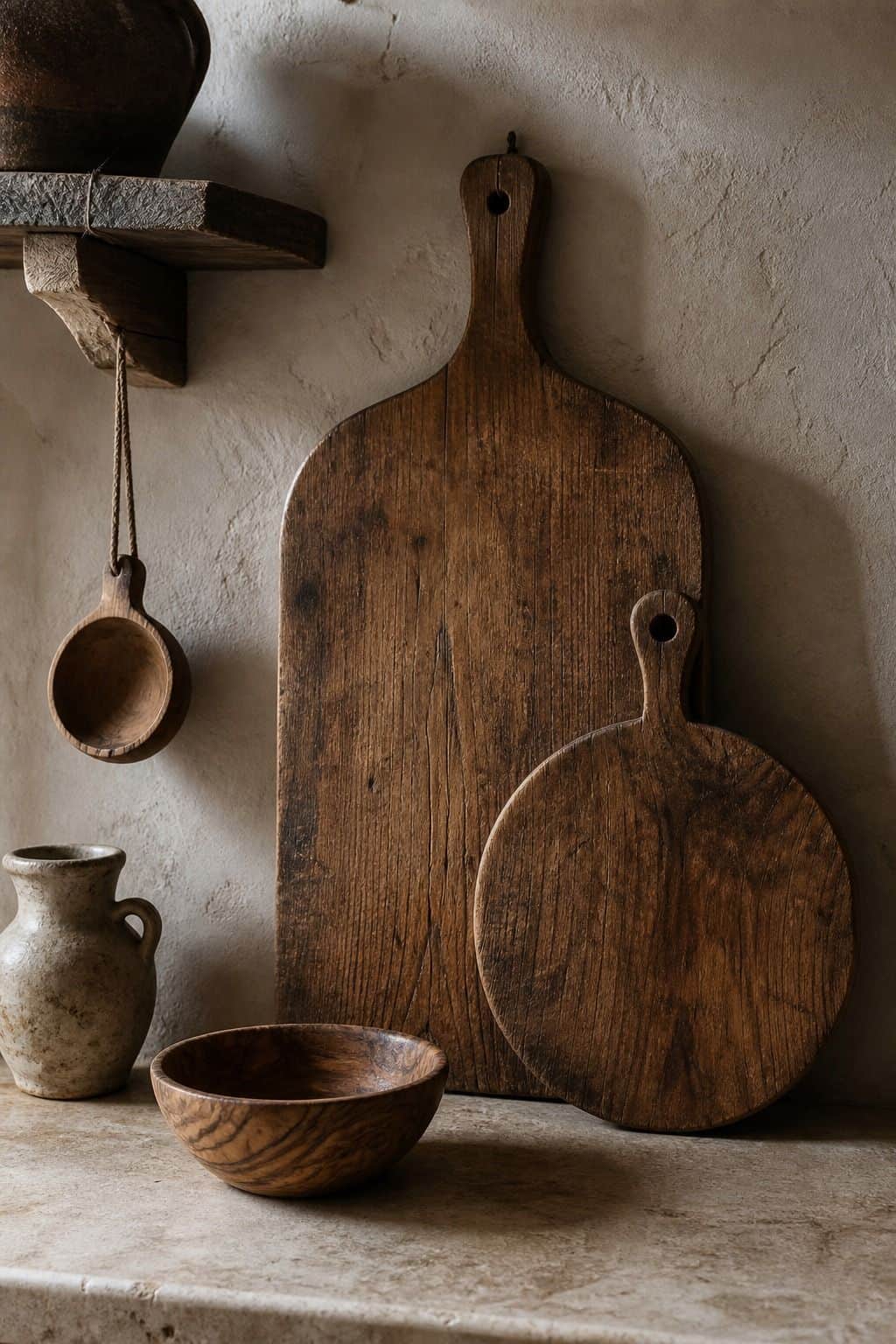


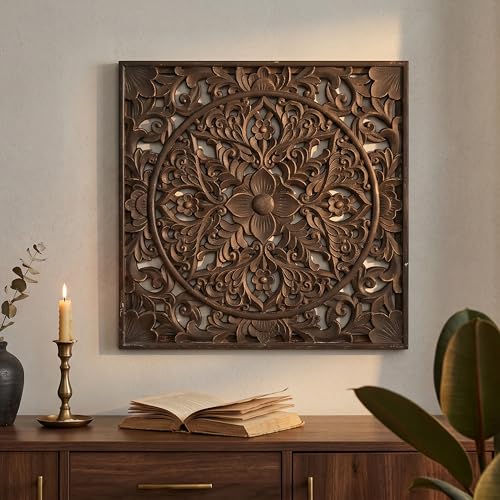
Carved-wood objects hung on the wall, an antique bread board, a carved panel, a wooden trivet, a sculptural olive-wood piece, bring warm wood texture up onto a vertical surface. Wood against plaster is a natural Mediterranean pairing, both honest, both warm, both a little irregular. Old wooden kitchen tools and boards in particular thrift well and read authentically of the region’s domestic life. A small grouping of carved-wood objects, or one substantial piece, adds the warmth of wood to a wall without the formality of framed art. Keep the pieces genuinely worn rather than new and uniform. Old kitchen boards in particular carry the marks of real use, and that honest wear is exactly what a new reproduction piece can never fake.
13. The Negative-Space-Respecting Gallery
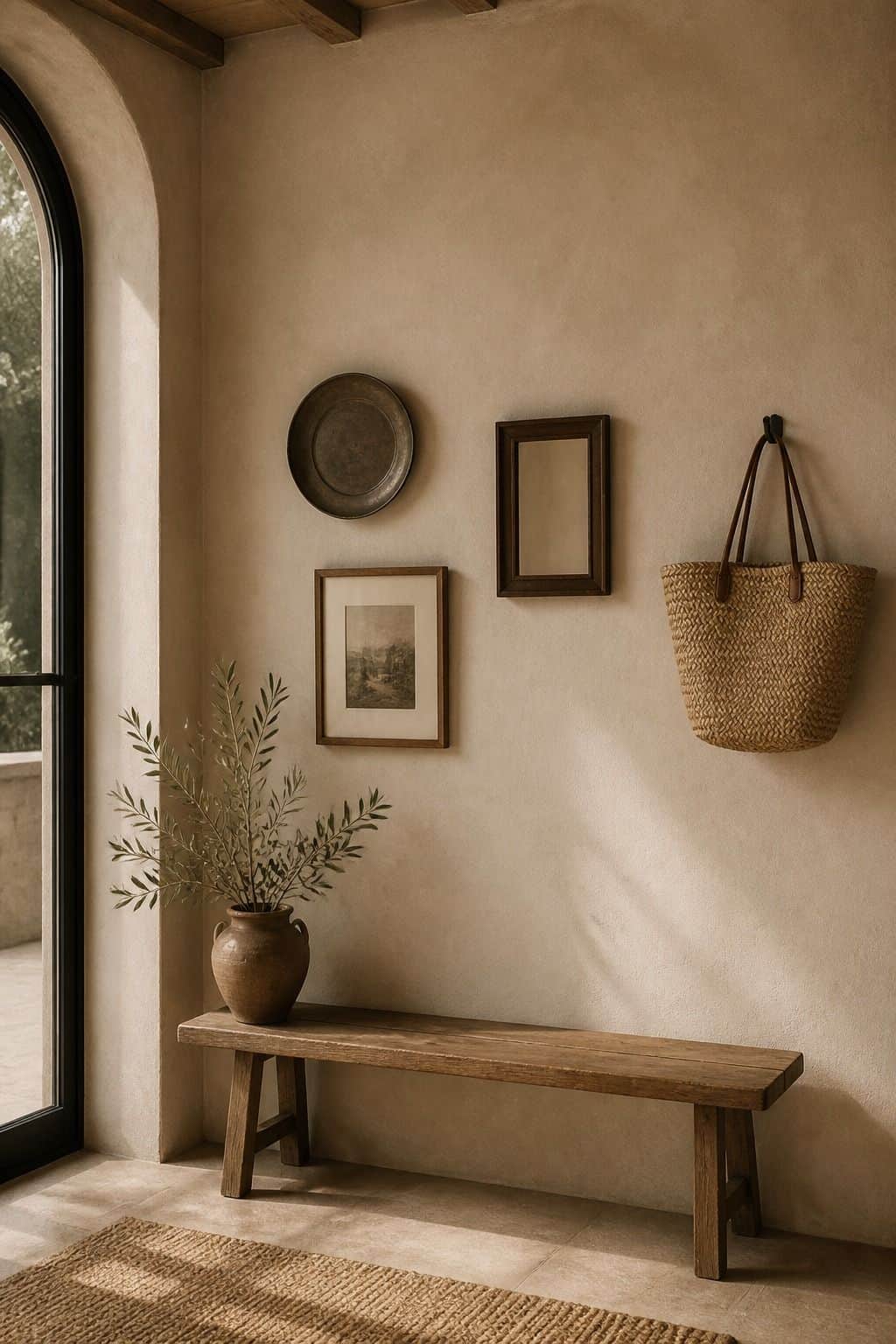
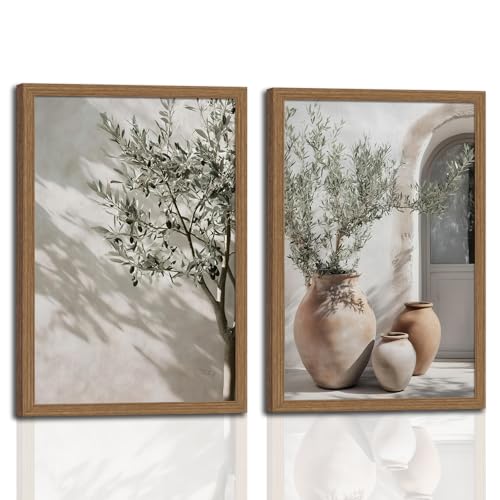
If you do want a gallery wall, the Mediterranean version respects negative space. Rather than packing the wall edge to edge, a Mediterranean gallery uses a loose, asymmetric grouping with generous gaps, so the textured plaster shows between the pieces and becomes part of the composition. Mix the media, a print, a plate, a small mirror, a basket, rather than uniform framed art, and keep the overall footprint contained to one part of the wall. The empty plaster around and within the grouping is what keeps it from reading as clutter, and it stays distinctly Mediterranean rather than generic. Step back often as you hang, the negative space between pieces is as much a design decision as the pieces themselves, and it is easy to lose.
14. A Color-Washed Accent Wall

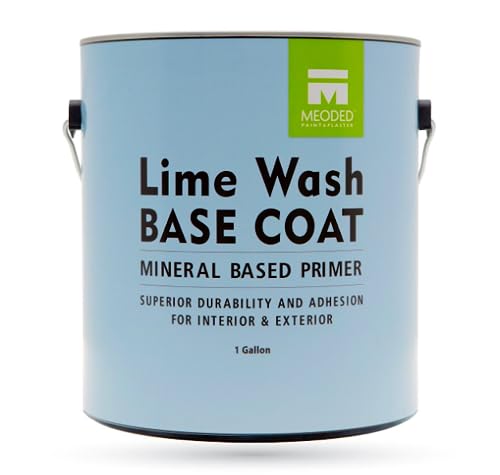
Beyond plain plaster, a color-washed accent wall takes the texture and adds a wash of warm color, terracotta, ochre, olive, dusty coral, applied in a loose, cloudy technique so the color varies across the surface. The color-washed wall is itself the wall decor; it may need nothing hung on it at all, or just one simple piece. It brings the region’s color in at architectural scale while keeping the soft, sun-faded quality of plaster. Pair the wall with pieces from our Mediterranean furniture guide so the warm color has honest wood and iron to sit against rather than floating on its own. Test the color-wash technique on a board first, since the cloudy, variable effect is hard to predict and far easier to get right with one practice run.
15. Sconces as Decor
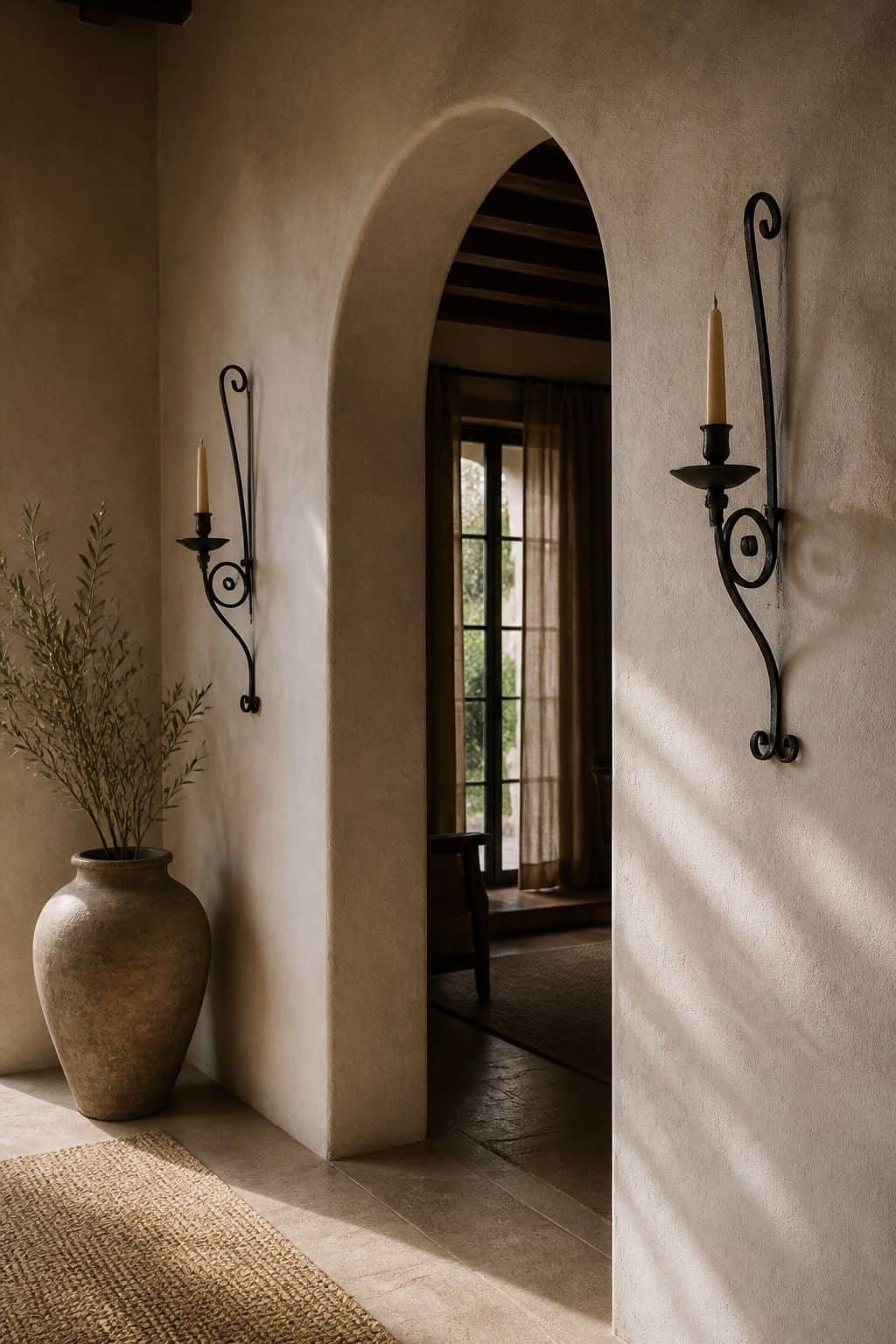


Wall sconces in a Mediterranean room are decor as much as light. An iron, ceramic, or plaster sconce, or a pair flanking a mirror or a doorway, adds a sculptural object to the wall and a pool of warm light at the same time. Even unlit, a well-shaped sconce reads as a deliberate wall piece. The materials, iron, ceramic, plaster, tie directly into the rest of the room. Our guide to sconces styled as wall decor covers the fixtures in full; here, treat them as part of the wall composition rather than just lighting. Mount sconces a little higher than feels standard, the raised placement washes light down the textured wall and shows off the plaster after dark.
16. A By-Room Guide
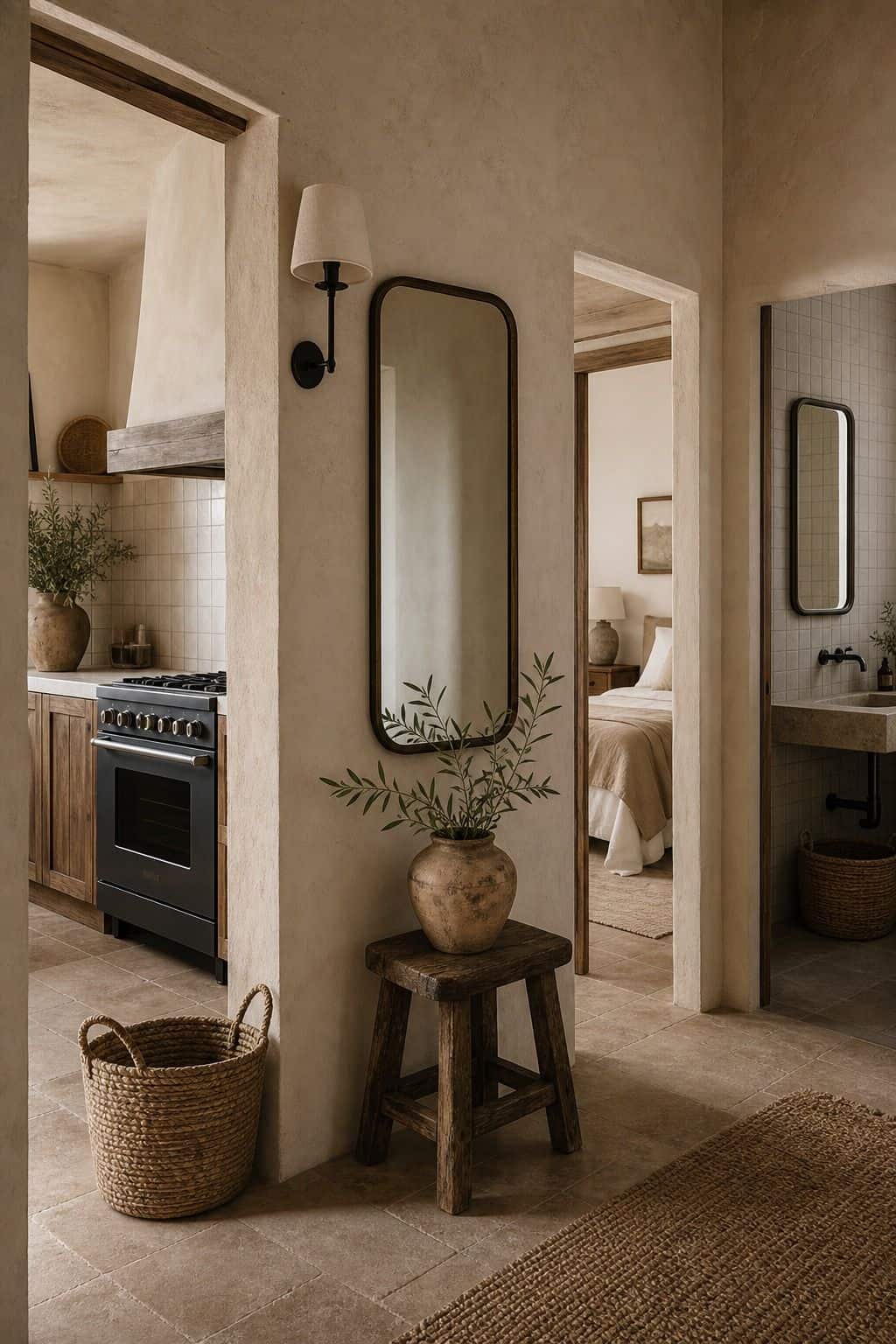
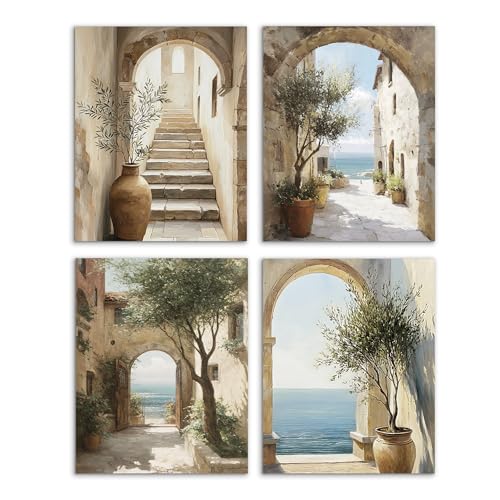
Tune the wall decor to the room. A kitchen or dining room suits a ceramic plate wall, hand-painted tile, and dried herbs, the domestic, edible side of the region. A living room takes the larger statement pieces, an arched mirror, a landscape, a single big textured work, against a plaster wall. A bedroom wants the quietest treatment, a color-washed wall with one simple piece, since rest is the goal. A bathroom or entry can carry tile and an arched mirror well. Match the intensity to how the room is used, and for the lowest-cost route to all of it, our guide to Mediterranean decor on a budget covers the cheap and DIY versions of these wall treatments.
How to Build Texture Without Clutter
The risk with a textured wall is that texture becomes clutter. The two are not the same. Texture is depth in a few materials, a plaster surface, a woven basket, an iron sconce, where each element is distinct and has room around it. Clutter is too many objects competing, where the eye cannot settle and the wall reads as noise rather than warmth.
The fix is to let the wall finish carry most of the load. A genuine plaster or lime-wash wall is already a full layer of texture, so it needs very little hung on it, often just one to three pieces. Then space those pieces generously, so the textured wall shows between and around them. And keep the materials in a tight family, clay, iron, fiber, wood, glass, so even a grouping reads as one coherent set rather than a jumble. Texture done right is mostly restraint: a rich surface and a few honest objects, with the confidence to leave the rest of the wall bare. For the look across a whole home, our guide to the modern Mediterranean home room by room shows the balance in context.
Not sure how many pieces a textured wall should actually hold?
The Aesthetic Apartment Makeover Guide helps you compose a wall with the right restraint, so a textured Mediterranean wall reads rich and intentional rather than cluttered.
Frequently Asked Questions
What wall decor is Mediterranean?
Mediterranean wall decor starts with a plaster or lime-wash texture wall, then layers in hand-painted tile, arched mirrors, woven baskets, ceramic plates, botanical and citrus prints, wrought-iron pieces, and terracotta reliefs. The wall texture itself does most of the work, and what is hung on it stays restrained.
How do I do a plaster wall?
Use real lime-wash paint, a textured paint applied with a trowel, or a DIY technique with pre-mixed joint compound spread with a wide putty knife. Keep the application loose and a little irregular, since the soft, hand-troweled imperfection is the entire point. One accent wall is enough to transform a room.
What art is Mediterranean?
Botanical and citrus prints (lemons, olives, figs, herbs), framed landscapes of coastlines and hill towns, ceramic plates, and terracotta reliefs. The colors echo the room’s warm palette, and vintage or vintage-look pieces read more authentic than crisp modern photography. Hang art loosely rather than in rigid grids.
How do I do Mediterranean wall decor on a budget?
A DIY plaster or lime-wash finish costs the price of paint or joint compound. Then thrift the objects: woven baskets, ceramic plates, vintage botanical prints, and old carved-wood boards all turn up cheaply secondhand. Peel-and-stick tile gives the hand-painted-tile look for a fraction of real tile.
How much wall decor in a Mediterranean room?
Less than you would expect. A genuine plaster or lime-wash wall is already a full layer of texture, so it needs only one to three hung pieces, spaced generously so the textured wall shows around them. A textured wall with three objects reads richer than a flat wall covered in twelve.
Key Takeaways
- Mediterranean wall decor starts with the wall itself, a plaster or lime-wash texture finish, which does more for the look than any hung object.
- What goes on top is warm, handmade, and restrained: hand-painted tile, arched mirrors, woven baskets, ceramic plates, botanical prints, iron, and terracotta.
- Hang things loosely, never in rigid grids, and let the textured wall show between and around the pieces.
- Many of the ideas are cheap or DIY: a lime-wash finish costs the price of paint, and baskets, plates, and prints all thrift well.
- Texture is not clutter, let the wall finish carry the load, keep to one to three pieces in a tight material family, and leave the rest bare.
Final Thoughts
Mediterranean wall decor is the rare case where the wall matters more than the decor. Get a plaster or lime-wash finish on the surface first, then add only a few honest, handmade pieces, tile, a mirror, a basket, a print, spaced generously so the texture shows. Restraint is the whole skill: a rich surface and a few good objects beat a flat wall packed edge to edge. To finish the room, our guide to a relaxed coastal bathroom and our guide to french country coffee table styling cover related warm, textured looks worth borrowing from.