A dark living room can be deeply cozy when it is built with warm color, warm light, and rich texture. The 16 ideas below show how, plus a cave-avoidance checklist so a dark living room reads inviting rather than dim.
The fear with a dark living room is the cave effect, a space that feels closed-in, dim, and a little oppressive. It is a real risk, but it comes from specific mistakes, cold colors, cold light, no texture, not from the darkness itself. A dark living room built the right way is the coziest room in the house.
The 16 ideas below cover how a dark living room stays warm and inviting, from the walls and the sofa to the lighting and the textiles. The cave-avoidance checklist at the end is the quick test for whether your dark living room is cocooning or just dim.
Building a dark living room and not sure where to start?
The Aesthetic Apartment Makeover Guide walks you through a living room in the right order, so a dark room comes together warm and inviting rather than dim.

Recommended Dark Living Room Decor
Six pieces that keep a dark living room warm and inviting, from a deep velvet sofa to warm brass lighting.





Recommended blogs to read:
- building a moody color palette
- choosing moody furniture
- a witchier living room
- mid-century in a darker palette
- a retro take on a dark room
How a Dark Living Room Stays Warm
A dark living room stays warm through three things: warm-leaning color, generous warm light, and rich texture. The color sets the base, a charcoal with brown in it, a deep forest, an oxblood, never a cold blue-black. The light returns warmth the dark surfaces absorb. And the texture, velvet, wool, aged wood, gives the room depth so it reads layered rather than flat.
The cave effect is what happens when any of those three is missing. Cold paint, cold light, or a room with no texture all push a dark living room toward oppressive. Get all three right and the same darkness reads as a cocoon. Start from a warm-leaning palette, and our guide to a moody color palette covers choosing colors that read warm in a living room.
One rule before the list: a dark living room needs more light planning, not less. The instinct to add one bright overhead to compensate is the exact wrong move, it floods the room cold and flat. What it wants is many warm pools of light, layered through the space.
16 Dark Living Room Ideas
Layer several of these together. The cave-avoidance checklist after the list is the quick test for whether it is working.
1. A Warm-Deep Wall Color
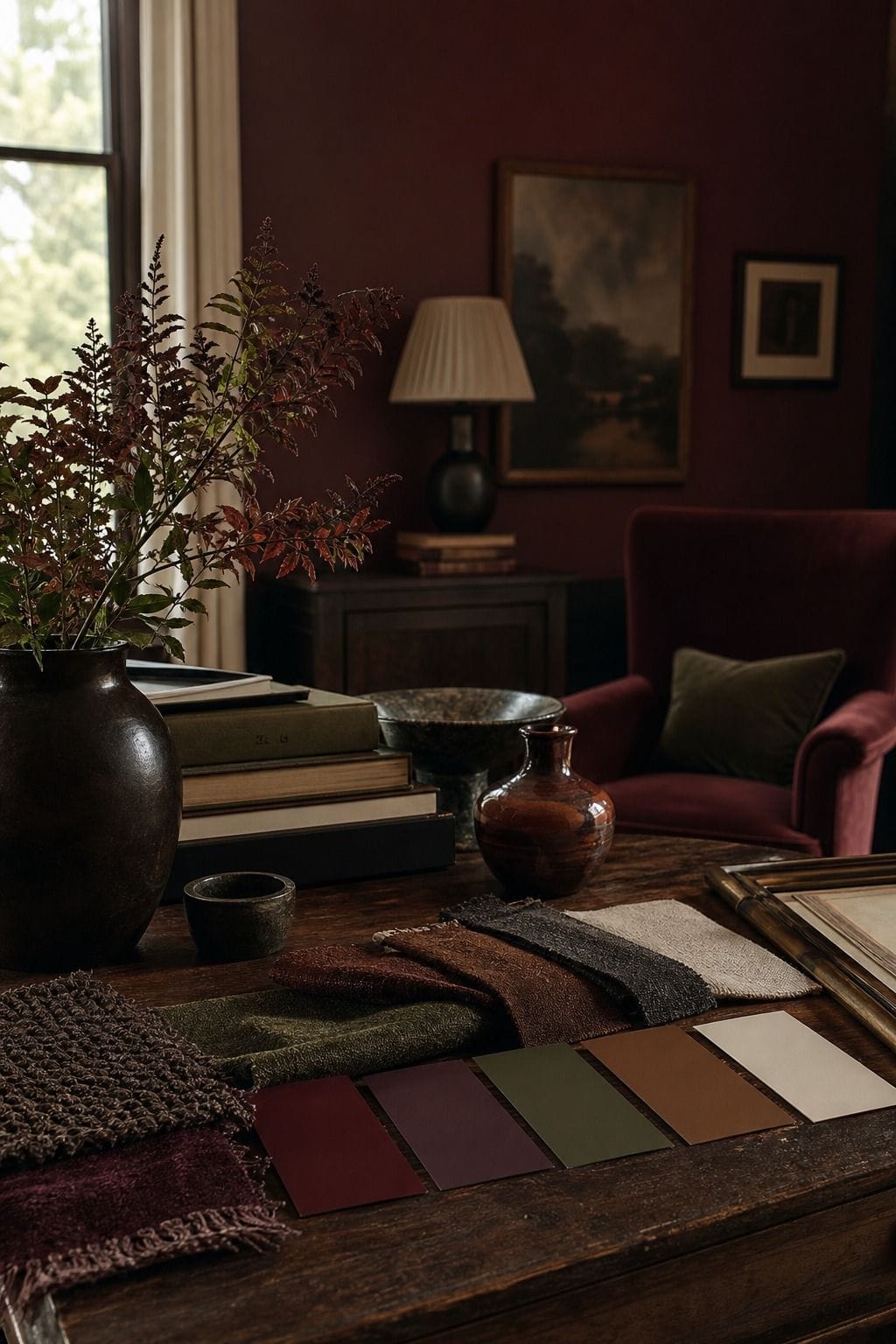


The foundation of a dark living room. Choose a deep color with warmth in it, a charcoal that leans brown, a forest green, a deep aubergine, an oxblood, and paint at least one wall, ideally all of them. The warm undertone is what decides everything, the same depth of color in a cold blue-black would read cave-like, while the warm version reads enveloping the moment the light hits it.
2. Color-Drench the Whole Room
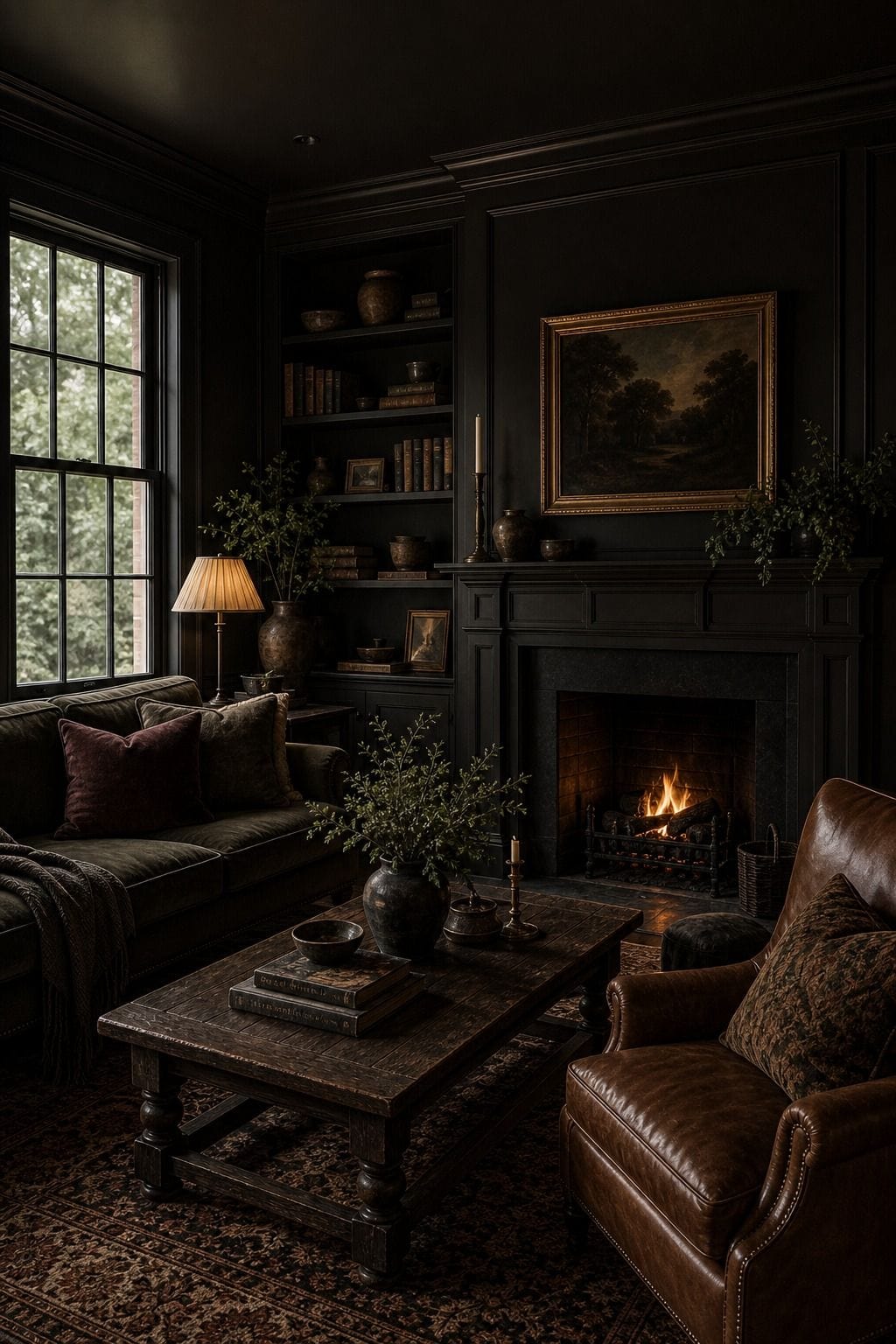


Painting the walls, trim, and ceiling all in the same deep color wraps a living room completely and removes the choppy white breaks that fragment a space. Color-drenching reads as the most confident, considered version of a dark living room, the whole room becomes one rich plane. It also makes the ceiling feel lower and the room cozier, which is exactly the cocooning effect a dark living room is going for.
3. A Deep Velvet Sofa
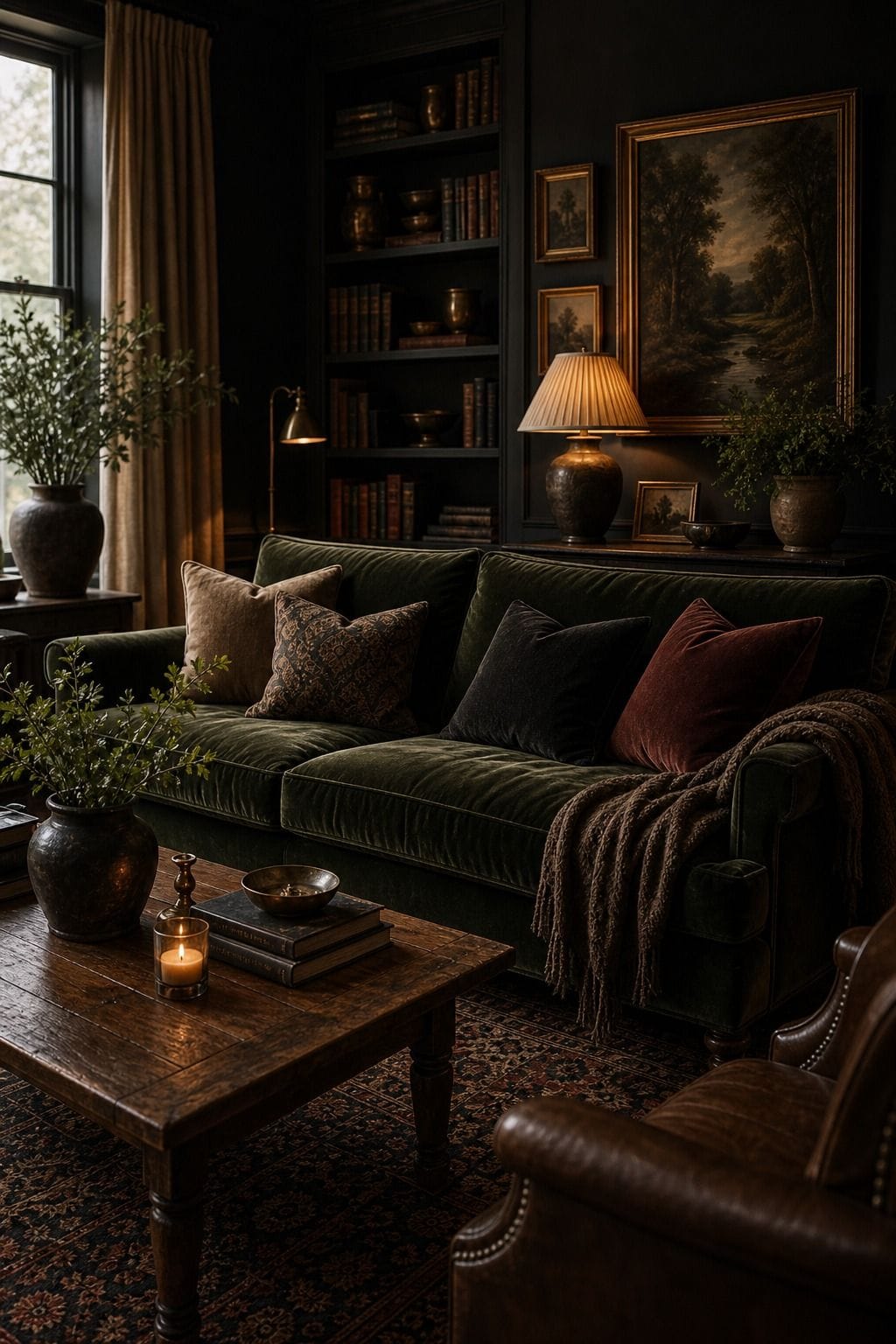


The dark living room’s anchor. A sofa in deep velvet, emerald, navy, oxblood, charcoal, brings color, warmth, and texture in one piece, and the velvet pile catches light so it reads rich rather than flat. If a new sofa is not in the budget, a deep velvet cover transforms a plain one. The sofa is the largest soft surface in the room, so getting it deep and textured does a lot of the work.
4. Layered Warm Lighting
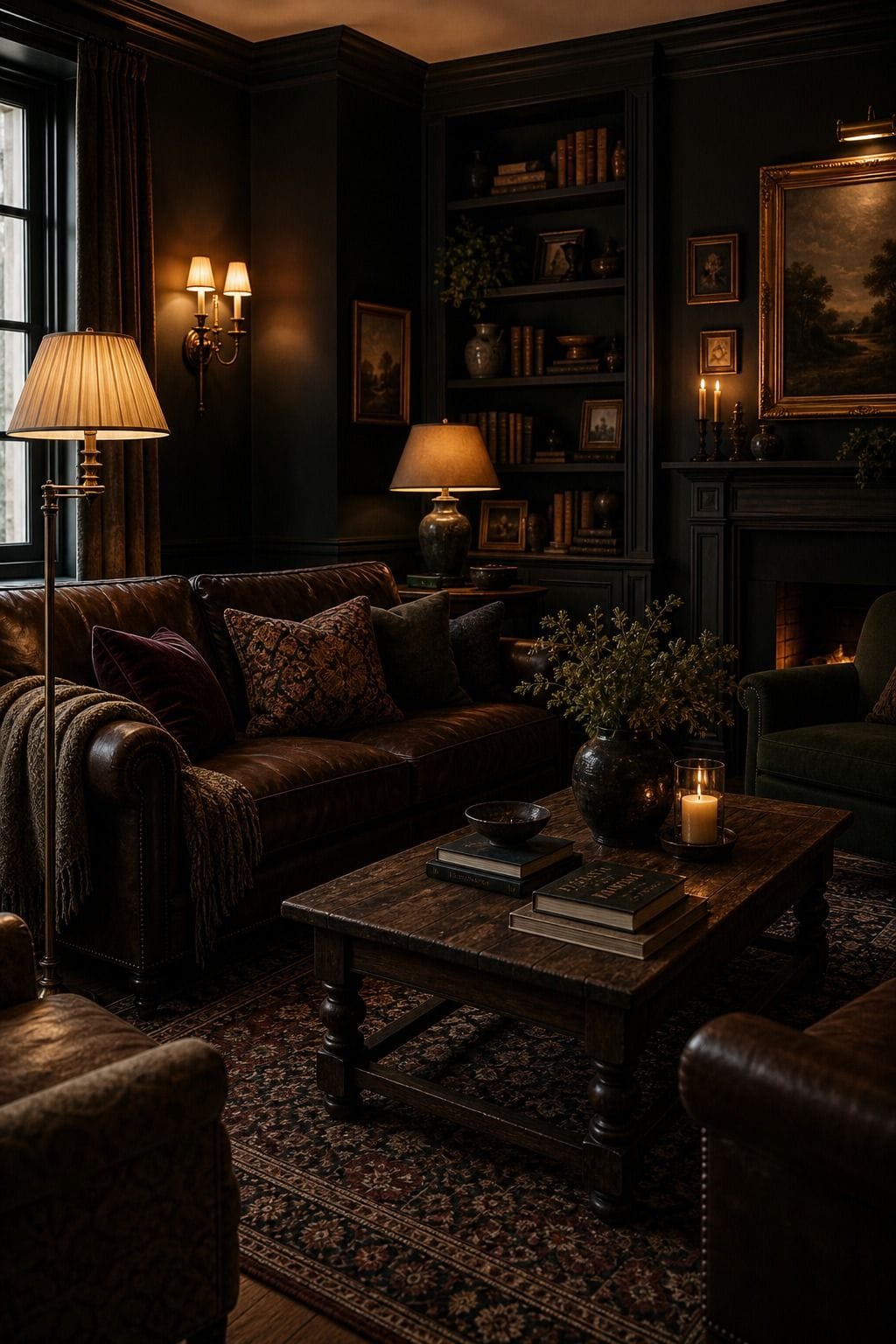
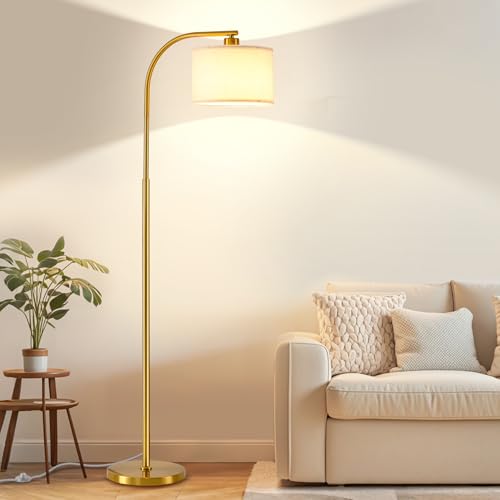

A dark living room needs warm light at three or four heights, an overhead fixture on a dimmer, a floor lamp, table lamps, maybe sconces, so the room is lit in warm pools rather than one cold wash. Layered lamplight is the single biggest thing that keeps a dark living room from feeling like a cave. Our moody lighting guide covers building a full warm lighting plan.
5. A Rich Patterned Rug
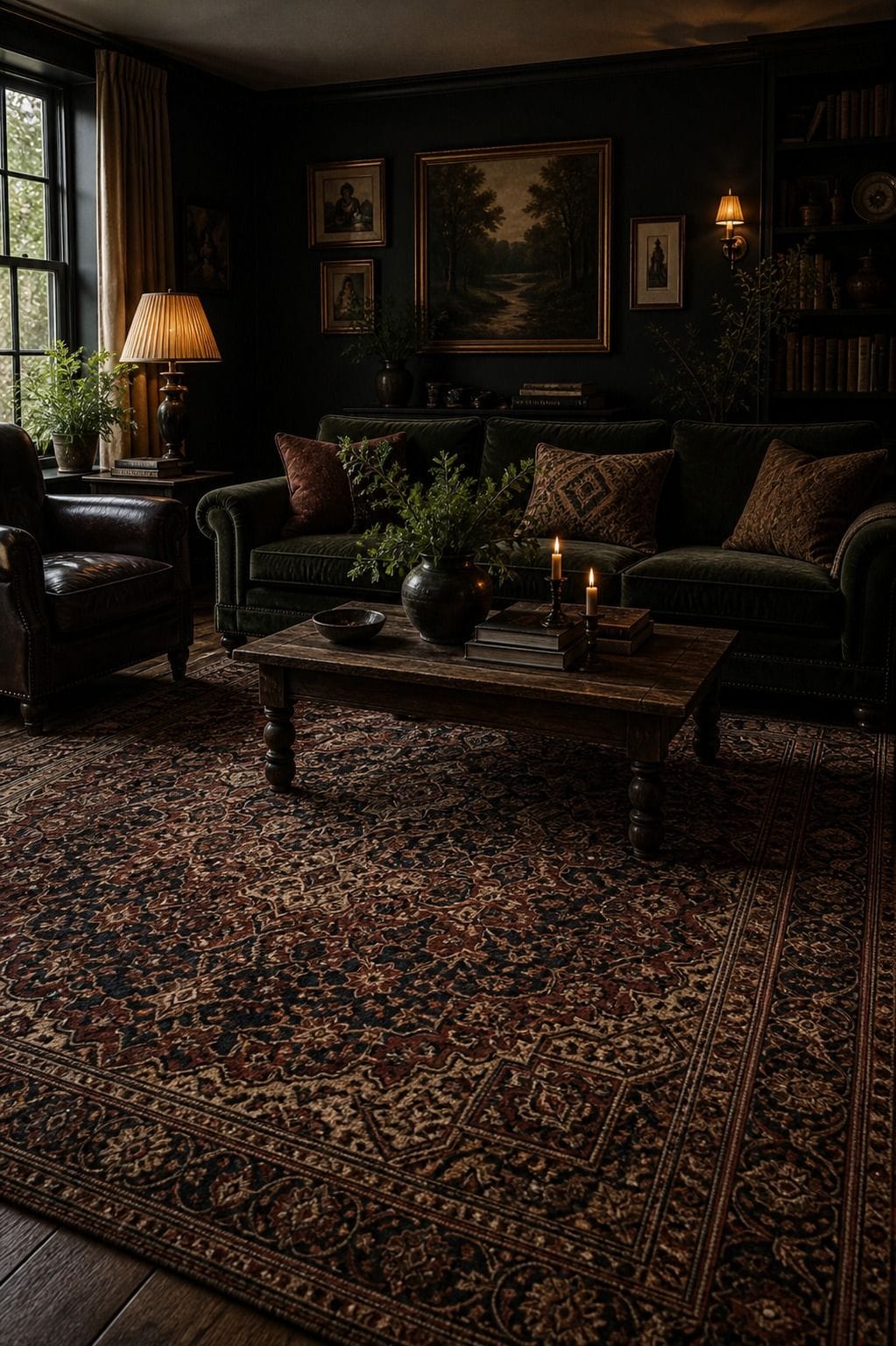



A deep-toned or richly patterned rug grounds a dark living room and adds warmth underfoot. A vintage Persian suits a dark room especially well, its faded saturated colors and worn pile read as collected and warm. Go large enough that the furniture sits on it, and let the rug repeat the room’s warm palette at floor level so the whole space ties together from the floor up.
6. Heavy Warm Curtains
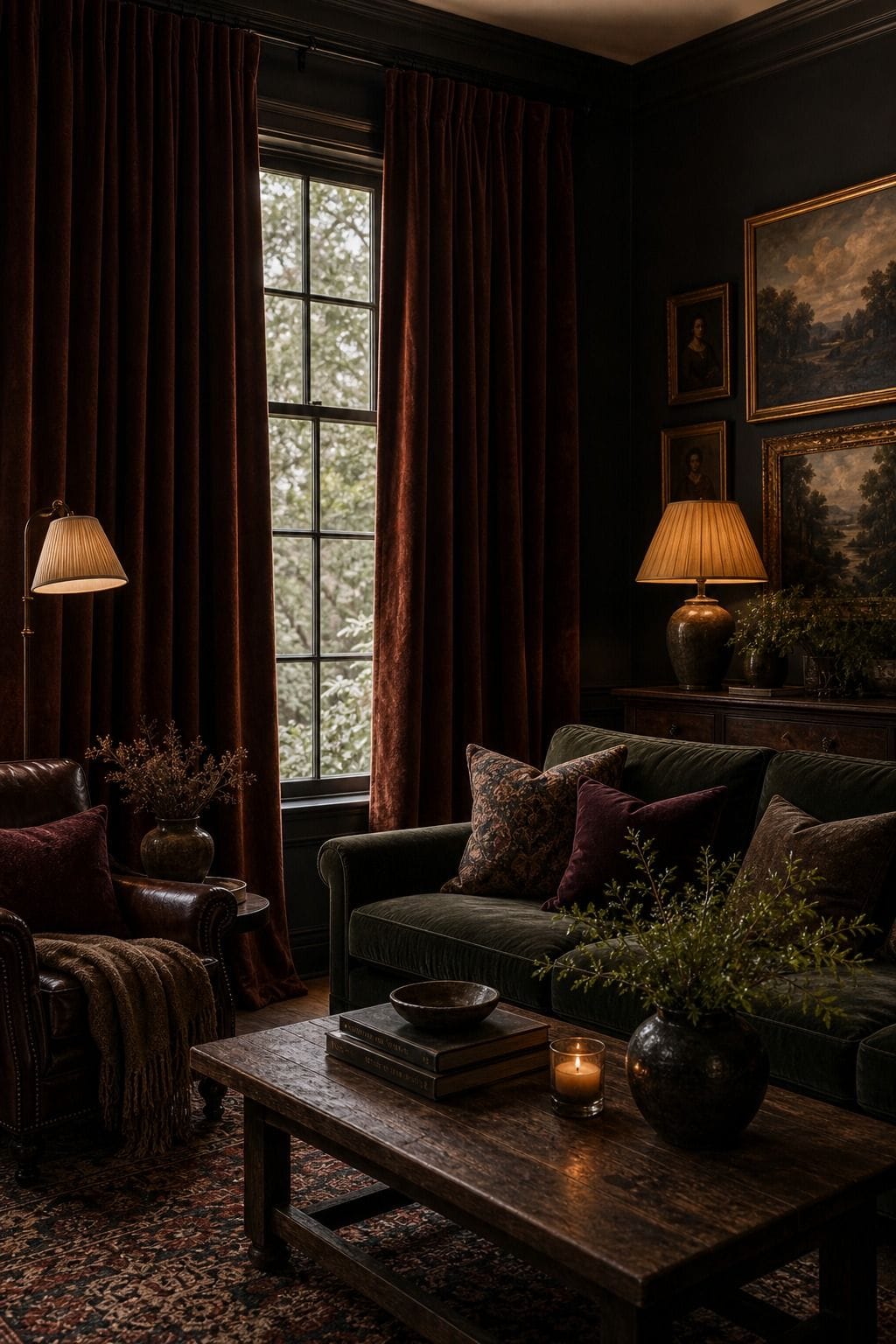
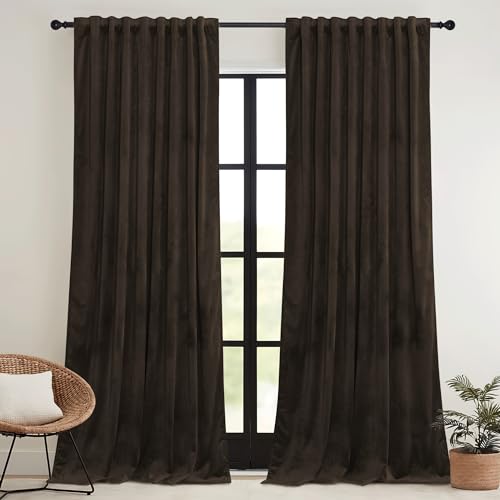

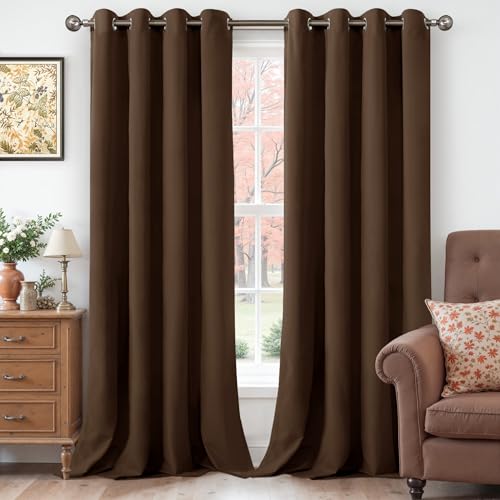
Floor-length curtains in deep color and heavy fabric, velvet, heavy linen, wool, frame the windows and add a large block of warm texture. Hung high and wide, they make the room feel taller and more enclosed, which suits the cocooning goal. Heavy curtains also hold warmth and soften sound, so they make a dark living room feel as good as it looks, especially in the evening.
7. Mirrors to Bounce Light
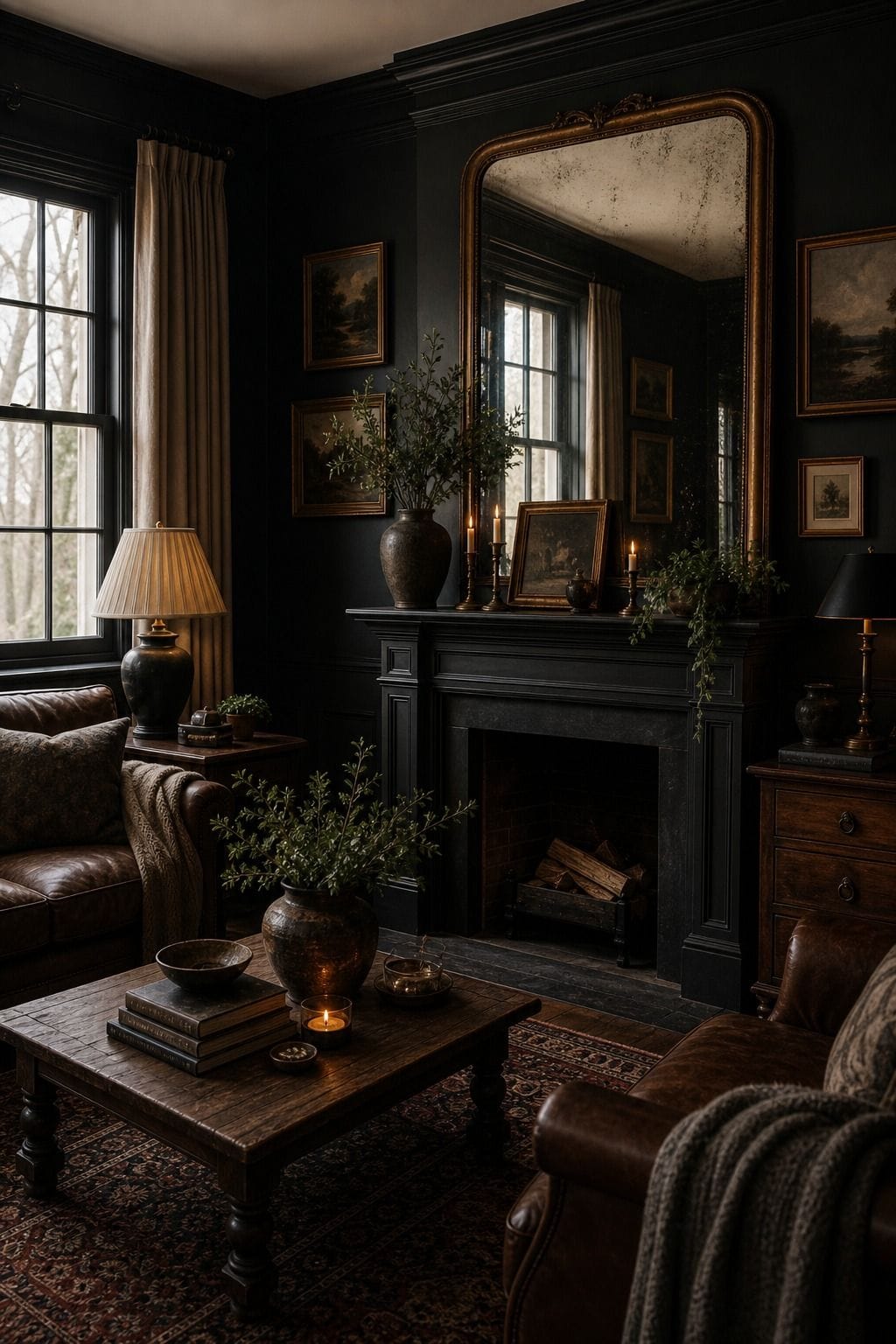


A large mirror, hung opposite a window or near a lamp, bounces warm light back into a dark living room and effectively doubles what light the room has. An antique or dark-framed mirror keeps it in the palette while doing real practical work. In a dark living room, mirror placement is part of the lighting plan, a well-placed mirror can be the difference between cocooning and dim.
8. Warm Wood Furniture
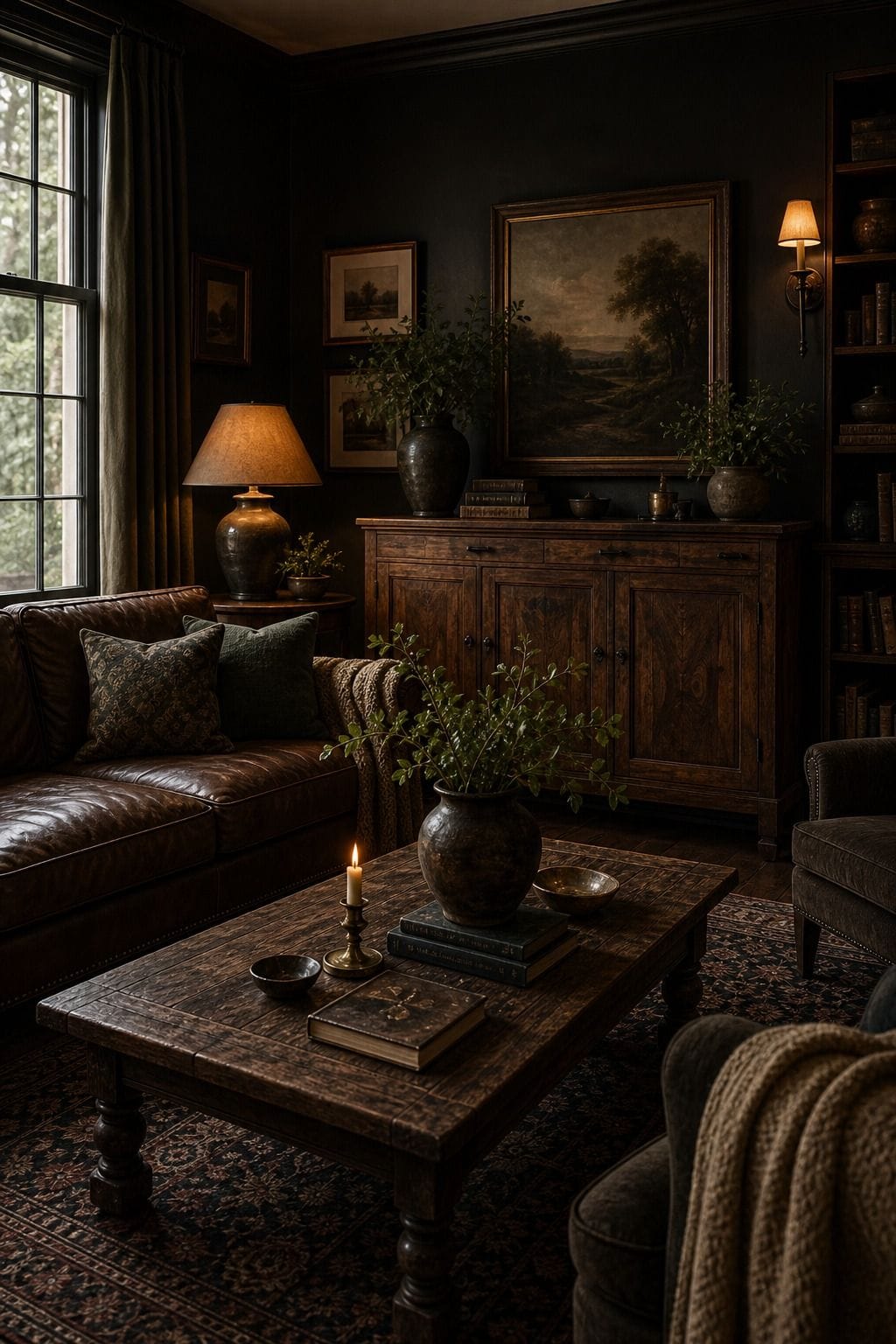



Dark warm-toned wood, walnut, mahogany, aged oak, on a coffee table, console, or shelving brings warmth and natural texture against deep-painted walls. Vintage wood pieces are ideal, they carry age and patina along with the right tone, and they keep a dark living room from looking like a showroom. Warm wood is also a tonal break from velvet and paint, which keeps the room from reading as one solid mass.
9. Brass and Warm-Metal Accents
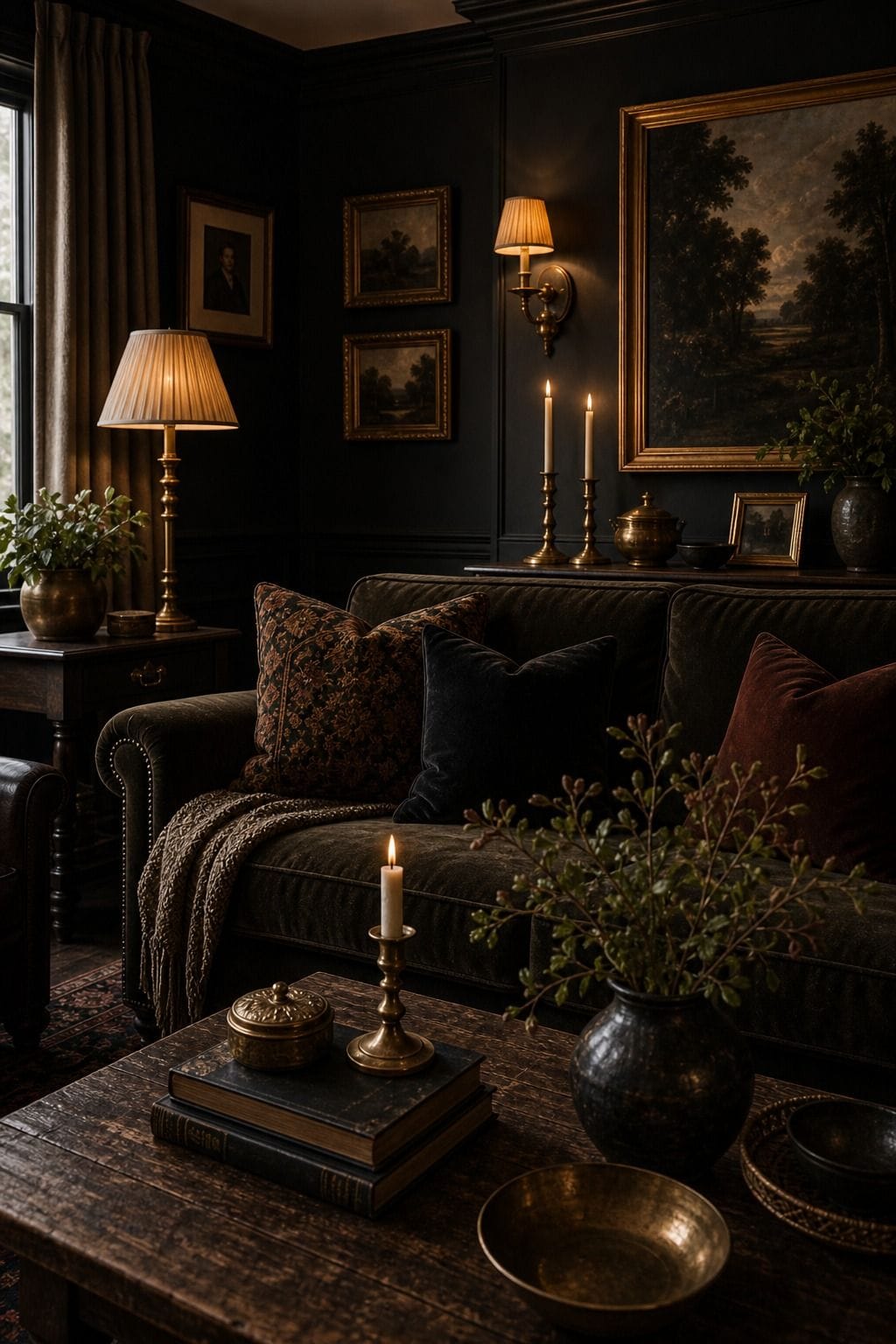


Brass and aged-gold accents, on lamps, frames, hardware, and small objects, catch the warm light and glow against deep walls. They add small bright points that break up the darkness without lightening the overall scheme. Running one warm metal as a thread through the living room quietly ties everything together, and the glint of metal is part of what stops a dark room from reading as flat.
10. A Dark Gallery Wall
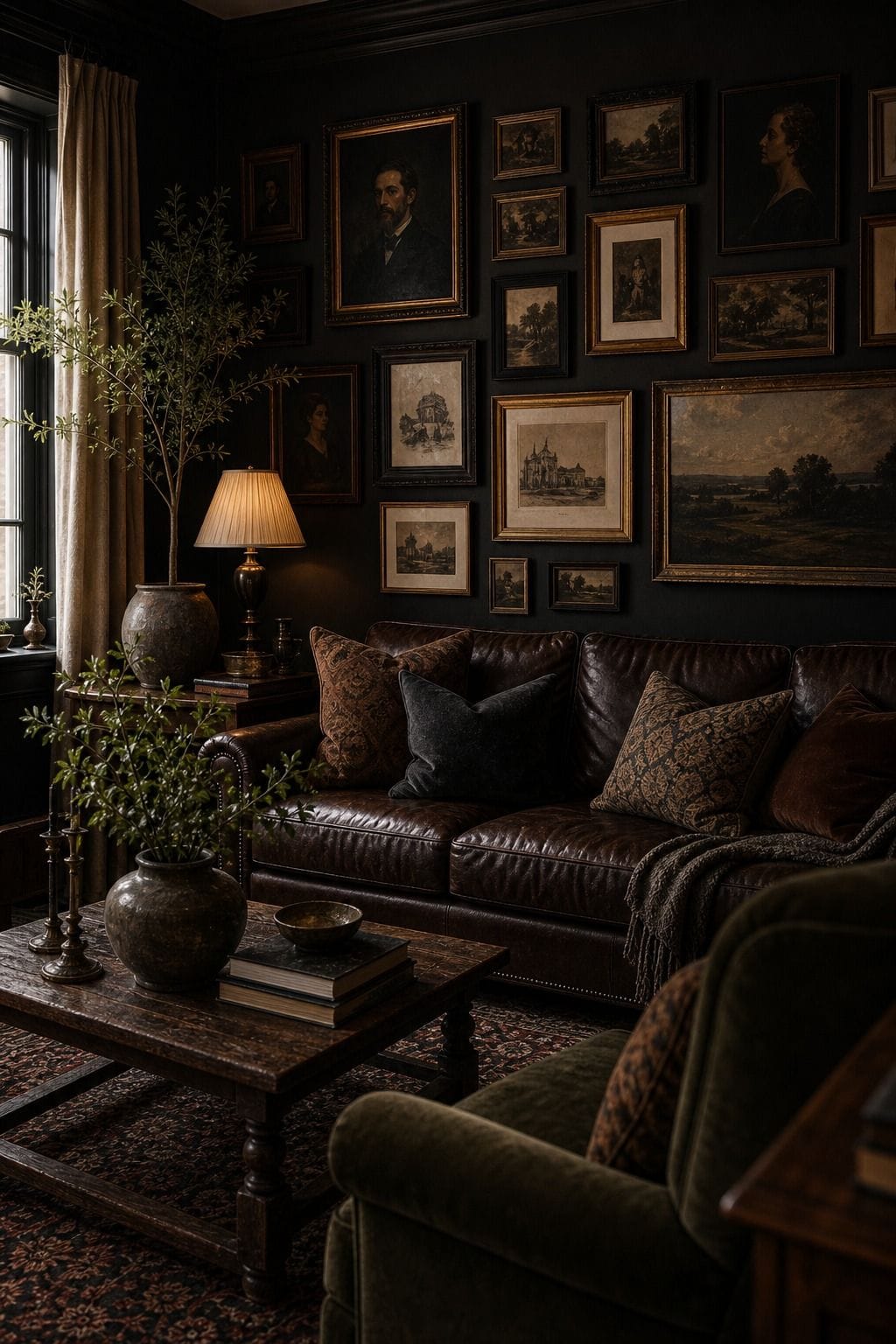

Art in dark frames against a dark wall is a striking dark living room move, the frames almost disappear and the art floats. Build it around a few large anchor pieces, fill in with smaller frames, keep the gaps even, and add a picture light or two so the wall does not read as one mass. Our moody wall decor guide covers dark gallery walls in full.
11. Layered Textiles
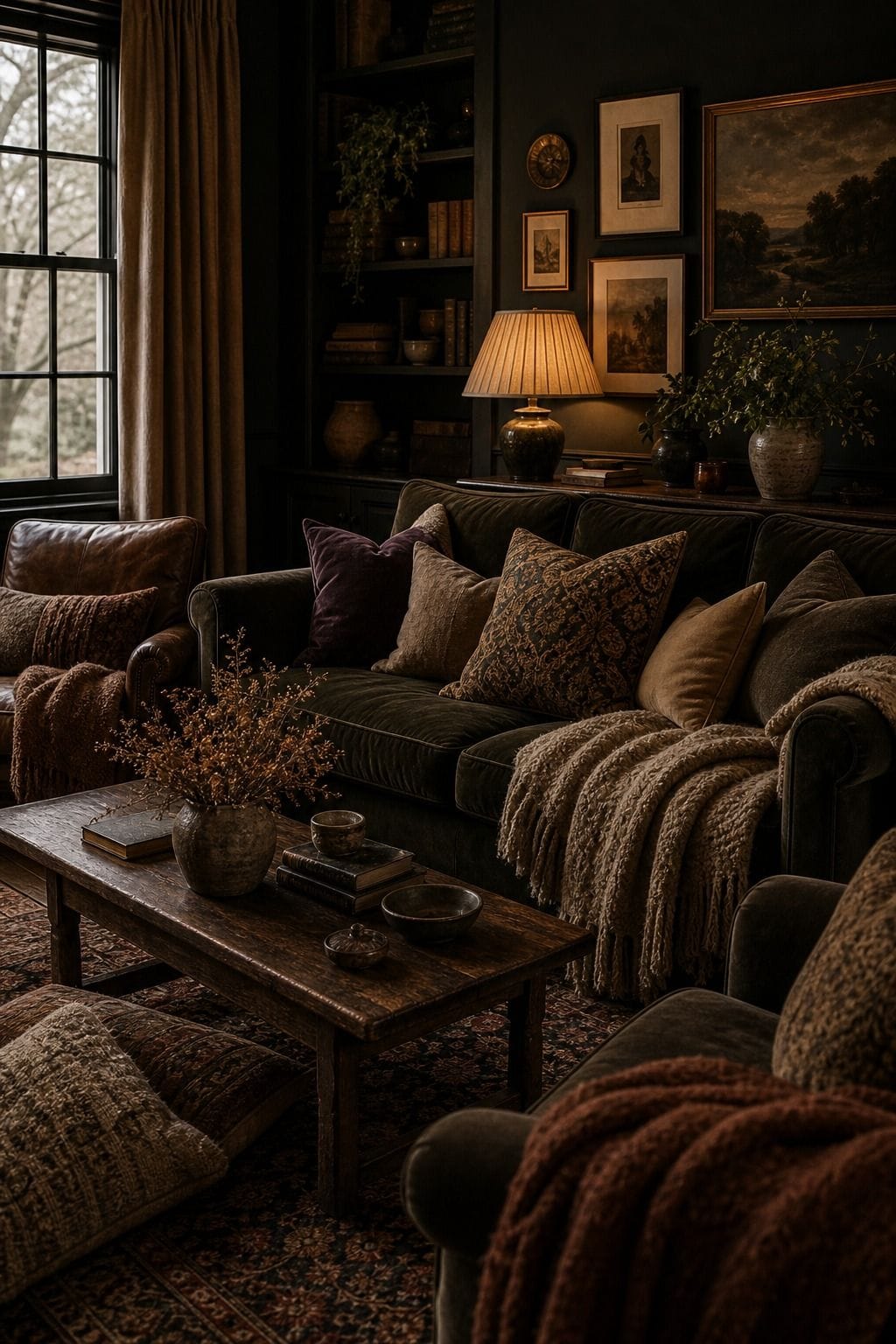


Beyond the sofa, layer in throws, cushions in mixed textures, and a smaller rug over a larger one. Layered textiles add the warmth and softness that keep a dark living room from feeling hard, and they catch light unevenly so the room reads rich. Mix velvet, wool, heavy linen, and a chunky knit, the texture contrast is doing the visual work that pattern does in a brighter room.
12. Candlelight and Firelight
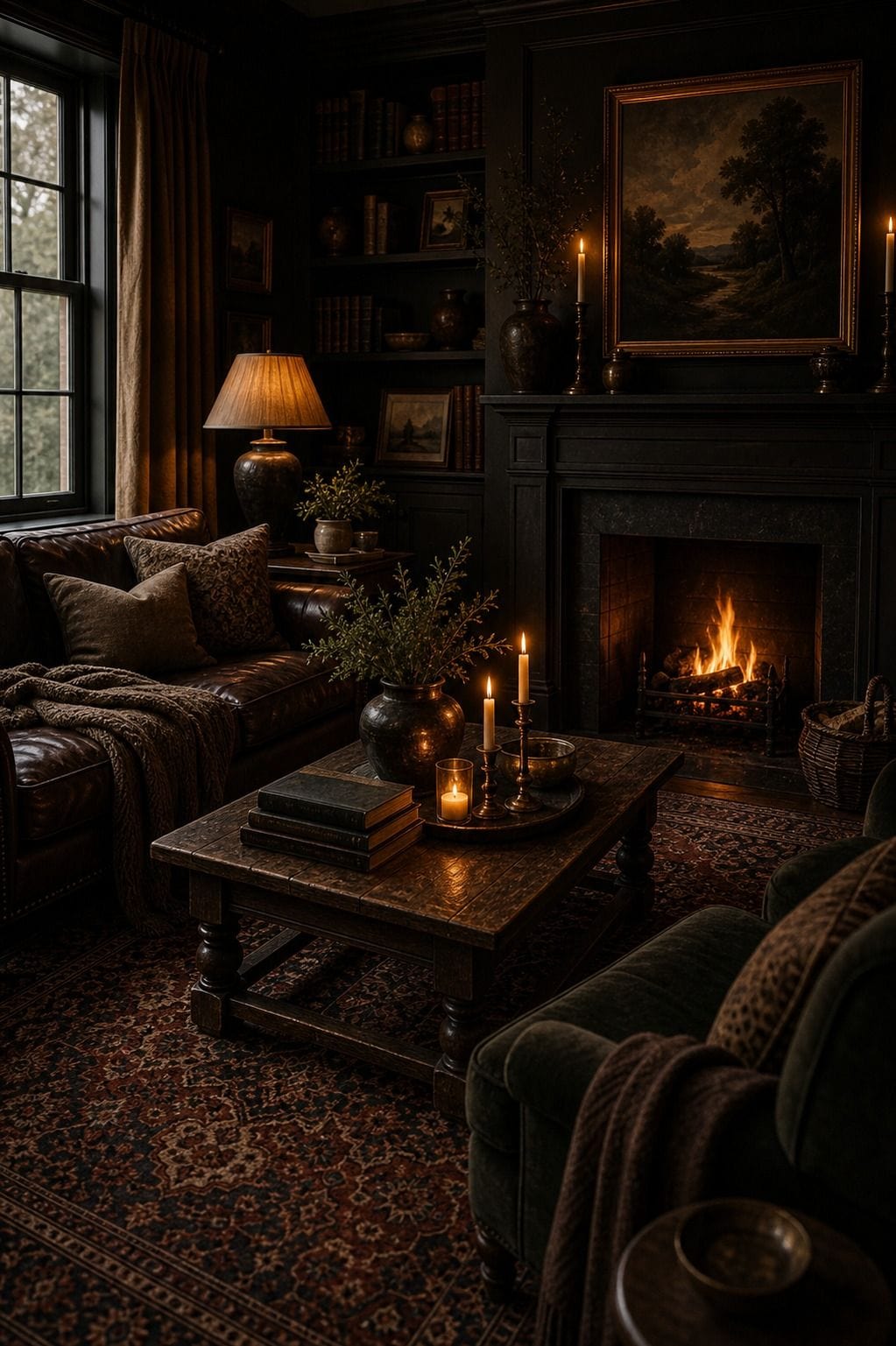
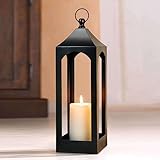


The lowest, warmest light a dark living room can have. A cluster of candles on the mantel or coffee table, real or LED, and a fireplace if you have one, give the room its evening glow. This low flickering light is what makes a dark living room feel genuinely cocooning at night, and a candle cluster costs almost nothing, you can build it one thrifted candlestick at a time.
13. Plants for Life
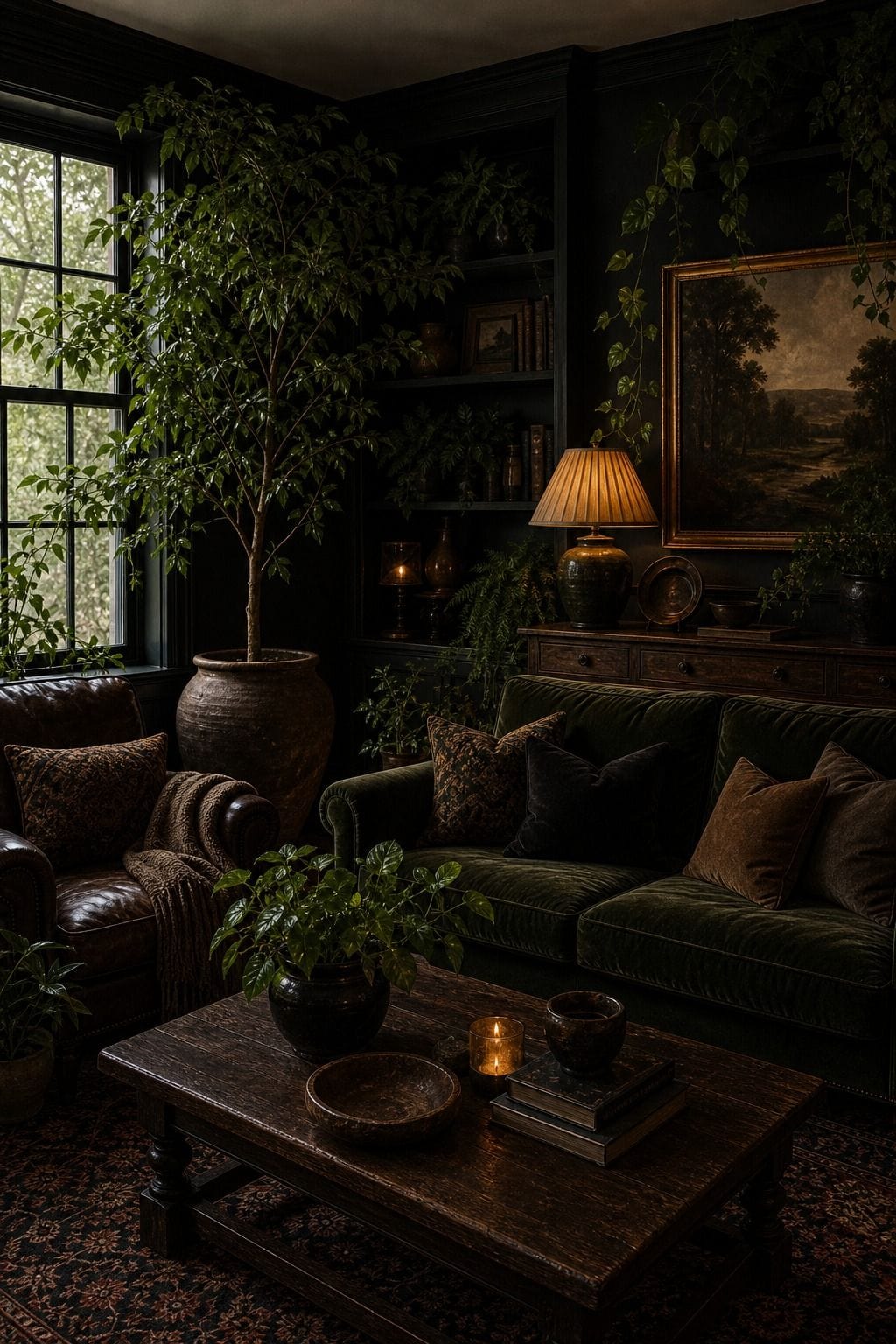
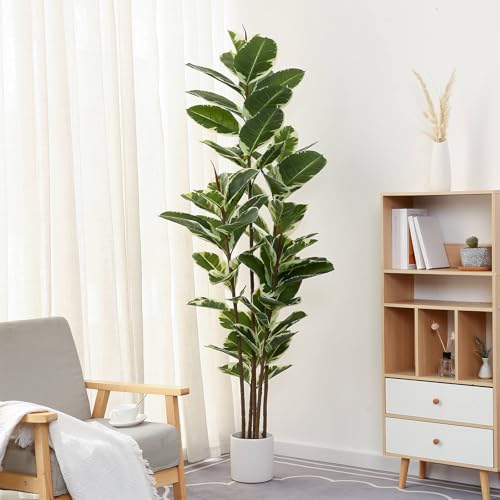
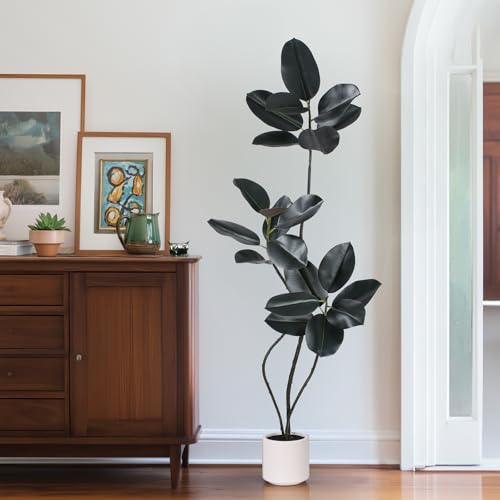

Plants keep a dark living room from feeling static or heavy. Deep green foliage reads beautifully against dark walls, and a large leafy plant in a corner, trailing plants on shelves, or a cluster in warm-toned pots adds organic life a richly layered room can otherwise lack. Greenery is the one element that grows and changes, so it keeps a dark living room feeling alive rather than like a sealed set.
14. A Pale Contrast Point
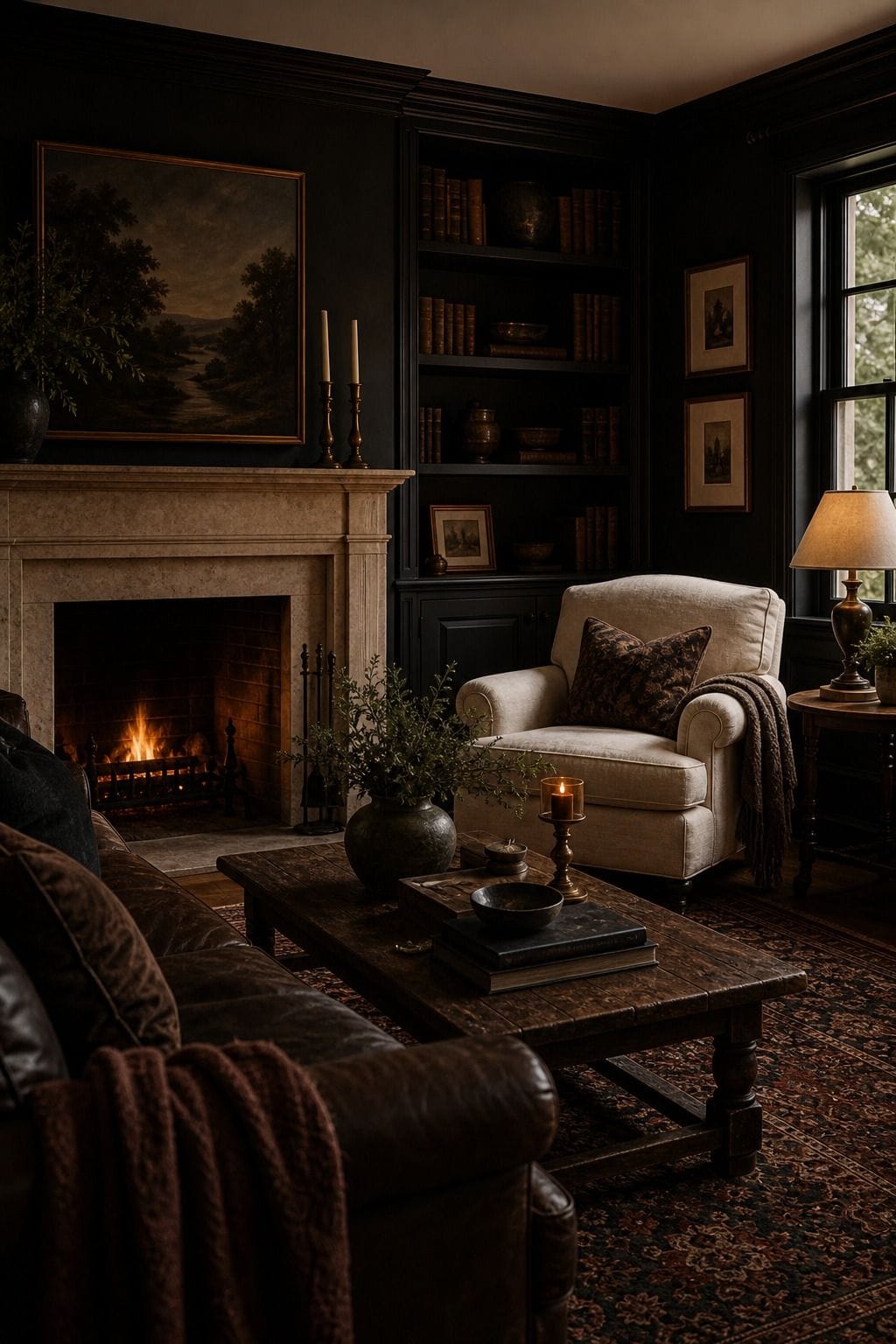


Every dark living room needs somewhere light for the eye to land. A pale ceramic, a cream throw, a stack of light-spined books, a piece of pale stone, gives the darkness contrast and keeps the room from reading as one solid block. The pale point does not lighten the scheme, it sharpens it, the darks read deeper and richer when there is one bright thing nearby for comparison.
15. Collected Objects With Age
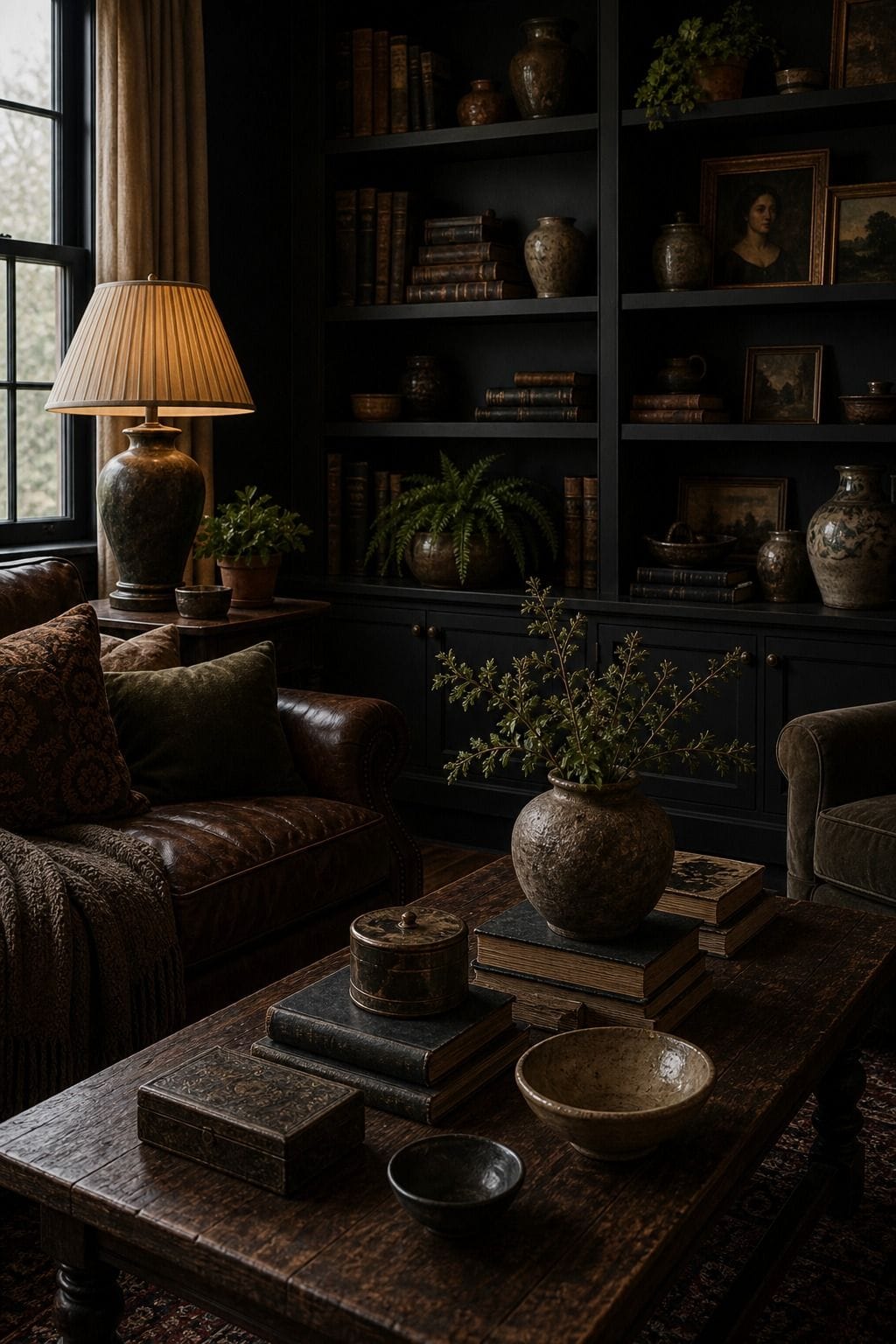


A dark living room rewards objects with patina, aged brass, worn leather, old ceramics, vintage books, weathered stone, grouped on the coffee table, shelves, and mantel. These collected pieces give the room its lived-in, gathered-over-time quality, and they are usually cheap secondhand. They are also what stop a deeply styled dark living room from reading like a showroom, the age in the objects is the personality.
16. A Statement Floor Lamp in a Corner
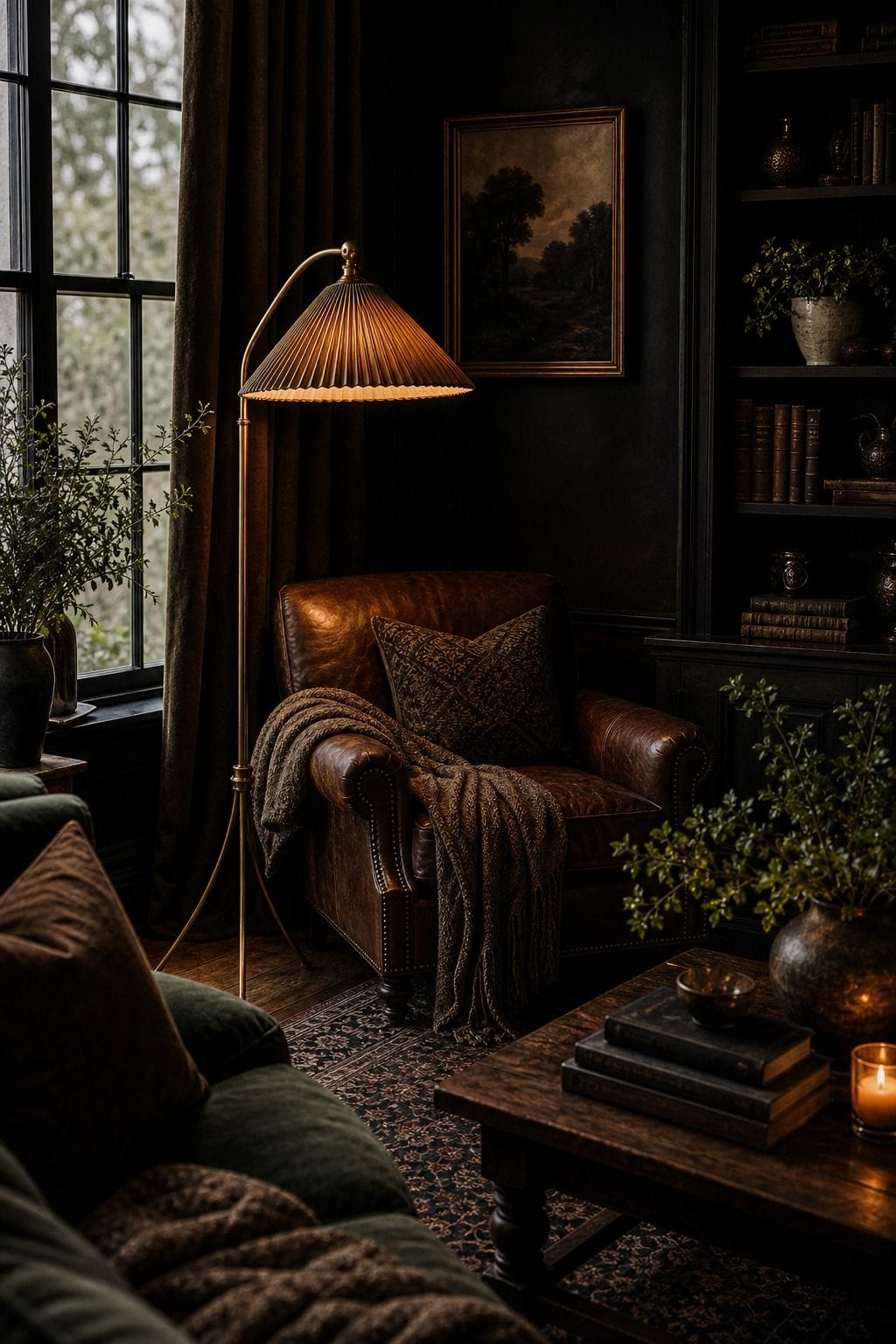
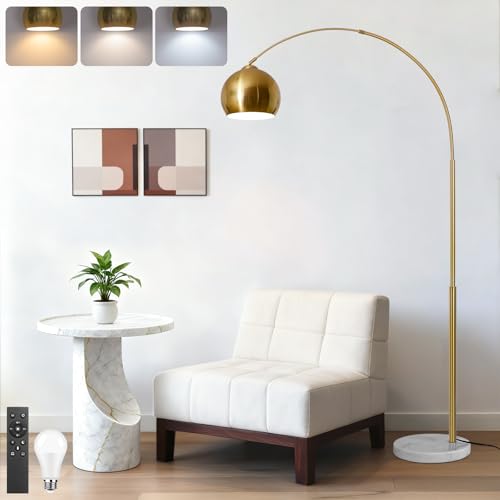


Corners are the darkest, most neglected part of a living room. A statement floor lamp, an arc form, a sculptural base, a vintage shape, fills that dead space with both warm light and presence. It turns the part of the room that would otherwise read as a black void into a warm, considered moment, and it adds one more layer to the room’s warm lighting at the same time.
Want the living room to tie into the rest of the home?
The Aesthetic Apartment Makeover Guide breaks the whole home down room by room, so every space ties into one cohesive scheme. Worth every penny at $17, and the price goes up to $27 soon.
The Cave-Avoidance Checklist
Run a dark living room through five quick checks. One, are the colors warm-leaning, browns over blue-blacks, olives over cool greens? Two, is the room lit by several warm sources at different heights rather than one overhead? Three, is there real texture, velvet, wool, aged wood, catching light around the room? Four, is there at least one pale point for the eye to land on? Five, is there a mirror bouncing light around?
If the answer to all five is yes, a dark living room reads cocooning. If any answer is no, that is exactly where the cave effect is creeping in, and it is also exactly what to fix first. The checklist works because the cave effect is never really about the darkness, it is about warmth, light, and texture being missing. Add those back and the same dark room turns inviting. For the affordable version, our guide to how to achieve the moody aesthetic covers building it step by step.
Frequently Asked Questions
Can a living room be dark and still cozy?
Yes, a dark living room can be the coziest room in the house. The key is warm-leaning color, generous warm layered light, and rich texture like velvet and wool. The cave effect comes from cold colors, cold light, or no texture, not from the darkness itself.
What dark color for a living room?
Choose a deep color with warmth in it: a charcoal that leans brown, a forest green, a deep aubergine, or an oxblood. Avoid cold blue-blacks, which read cave-like. The warm undertone is what decides whether the room feels enveloping or oppressive, more than the depth of the color.
Does a dark living room need more light?
It needs more light planning, not necessarily more brightness. Dark surfaces absorb light, so a dark living room wants many small warm pools of light at different heights rather than one bright overhead. Layer floor lamps, table lamps, and sconces, all warm, all ideally dimmable.
How do I do a dark living room on a budget?
Dark paint is the cheapest high-impact change. Use a velvet cover to transform a plain sofa, thrift warm wood furniture and aged objects, swap every bulb to warm 2700K, add plug-in sconces, and build candle clusters one thrifted candlestick at a time. The look builds in layers.
Does dark make a living room look smaller?
Not necessarily. Dark walls can blur a room’s edges and make it feel more enveloping rather than smaller. The trick is warm light returned to the room with lamps and sconces, plus mirrors to bounce light around, so the room reads cocooning instead of cramped.
Key Takeaways
- A dark living room stays warm through three things: warm-leaning color, generous warm layered light, and rich texture.
- The 16 ideas range from a warm-deep wall color and velvet sofa to layered lighting, mirrors, warm wood, and a pale contrast point.
- The cave effect comes from cold color, cold light, or missing texture, never from the darkness itself.
- A dark living room needs more light planning, not less, many warm pools at different heights rather than one bright overhead.
- Run the cave-avoidance checklist, warm colors, layered light, real texture, a pale point, a mirror, to test if it is working.
Final Thoughts
A dark living room is only a cave if you let it be one. Build it from warm-leaning color, a deep velvet sofa, layered warm lighting, rich texture, and a pale point for the eye, and run it through the cave-avoidance checklist before you call it done. Done right, a dark living room is the most cocooning, inviting room in the house. When you are ready for the rest of the home, the moody color palette guide and the moody furniture guide cover color and pieces in full.