Quick Answer: The most fairytale-like towns in Europe sort into five categories. Half-timbered medieval (Rothenburg, Colmar, Quedlinburg). Cliff-edge or mountain (Hallstatt, Civita di Bagnoregio, Castellfollit de la Roca). Lakeside or water (Bled, Annecy, Sintra). Pastel-painted fishing villages (Reine, Manarola, Burano). Walled medieval strongholds (Carcassonne, Sortelha, Albarracín, Mont-Saint-Michel). Most are at their most photogenic in late October to mid-November when the crowds thin out.
Last updated: May 2026 · Bavarian Palaces of Ludwig II UNESCO inscribed in 2025, lifting Neuschwanstein and the Bavarian fairytale corner.
I walked into Rothenburg ob der Tauber a few years ago on a wet October morning, came around the corner at the Plönlein, looked up at the half-timbered house with the two converging towers and the cobbled lane sloping down to the wall gate, and actually said “what” out loud. The cliché town. The Brothers Grimm illustration come to life. The whole town has been there since the 12th century and looks exactly like the Disney concept artists copied it twice.
The trick with European fairytale towns is that there are dozens of them and most “Best Of” lists recycle the same five. There’s a whole second tier of villages that are equally beautiful and a fraction as crowded. Sortelha in Portugal. Albarracín in Spain. Eguisheim in Alsace. Reine in Norway. Most of them require a rental car or a long awkward bus ride, and most of them are at their best in shoulder season when the tour groups have left.
Below: 22 towns sorted by what makes each one magical, with the best time to visit each, the transit reality, and a few alternatives if the famous version is overrun.
Building a fairytale-towns road trip and need the routing?
The Ultimate Europe Trip Planner has road-trip templates for the German Romantic Road, the Alsace fairytale loop, and the Slovenian-Austrian lake-castle circuit. $17 currently before it goes back to $27.
Travel Kit for Fairytale Towns
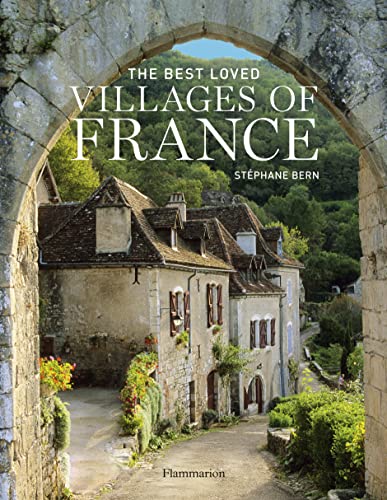
These towns share three travel realities: cobblestones everywhere, light that changes every five minutes, and weather that turns. Six pieces of kit make the photography and the walking work. A wide phone lens for the narrow lanes. Comfortable walking shoes that handle cobbles. A reliable Europe small-villages guidebook for the practical timings. An instant camera for the keepsake polaroids. A European villages coffee-table book for the post-trip nostalgia. A compact wind-resistant umbrella for the sudden showers.





Recommended blogs to read:
- Smallest cities in Europe
- Hidden gems in Europe
- Unique places to visit in Europe
- Europe’s less-visited destinations
- 37 Europe travel tips
Which Half-Timbered Medieval Towns Are the Most Magical?
The half-timbered town is the platonic ideal of the European fairytale: dark wooden beams crisscrossing pastel-painted plaster, steep gabled roofs, narrow lanes that twist between leaning houses. Germany, Alsace, and the Czech borderlands have the densest concentration.
1. Rothenburg ob der Tauber, Germany
The Plönlein corner with the wooden Siebersturm tower and the cobbled lane sloping down to the city wall is the photograph that defined fairytale-Europe in collective memory. The intact medieval walls, the Käthe Wohlfahrt year-round Christmas store, and the Night Watchman tour at 8 PM. The German Romantic Road’s headline town. 90 minutes by train from Würzburg or 90 minutes from Nuremberg. October-November light is best; July tour groups overwhelm.
2. Colmar, France
Alsace’s poster town. The Little Venice quarter (La Petite Venise) along the Lauch river has the canalside half-timbered houses in blue, green, pink, ochre. Direct train from Strasbourg in 30 minutes, or from Basel in 40 minutes. The Pfister House (1537) on Rue des Marchands is the most photographed individual building in Alsace. Late October vineyard color around the surrounding wine villages doubles the trip’s appeal.
3. Eguisheim, France
Colmar’s quieter neighbor and consistently voted one of France’s most beautiful villages. Concentric circular street pattern around the central castle. The houses are painted in flagrantly bright pastels: salmon, mint, marigold, periwinkle. 10 minutes by car from Colmar; bus 145 runs hourly. December Christmas market is one of the smallest in Alsace and one of the most magical.
4. Quedlinburg, Germany
UNESCO-listed since 1994 with 1,300 surviving half-timbered houses, the largest such concentration in Europe. The town sits below a castle on a sandstone rock outcrop. Far less tourist-heavy than Rothenburg because it’s further north (in former East Germany). Direct train from Berlin in 2h 45m. The Advent Christmas markets are a 24-courtyard treasure hunt across the old town.
5. Český Krumlov, Czech Republic
UNESCO-listed Renaissance castle complex perched above a tight bend in the Vltava River. The castle is the second-largest in Czechia after Prague. The town below has painted half-timbered facades, bridges over the river, an old-town square that hasn’t visibly changed since 1600. 3 hours by bus from Prague; the day-trip crush is intense, so stay overnight to get the early-morning and late-evening light without crowds.
Which Cliff-Edge and Mountain Towns Look the Most Magical?
Some of Europe’s most fairytale moments come from towns that look impossible: built on cliff edges, mountain saddles, or rock pillars where a town probably shouldn’t exist.
6. Hallstatt, Austria
The lakeside Austrian village that’s been on every desktop wallpaper since the early 2010s. Snow-dusted gabled houses on a steep slope, mirror-still alpine lake at the foot, mountain wall behind. 3.5 hours from Vienna by train and bus. The town’s permanent population is around 800; daily visitor numbers in summer exceed 10,000 and overwhelm the place. Visit in late October to early November or January (snow + low season) for the actual postcard experience.
7. Civita di Bagnoregio, Italy
The “dying town” perched on a tufa pillar in Lazio, accessible only by a long pedestrian bridge. The town’s population is officially under 20 permanent residents. The walk across the bridge at sunset is the keeper photograph. €5 entry to the town (the only walled town in Italy that charges admission). 2 hours by bus from Rome; you’ll want to stay overnight in nearby Bagnoregio.
8. Castellfollit de la Roca, Spain
A medieval village balanced on a 50-meter basalt cliff above the confluence of two rivers in Catalonia. The houses appear to grow out of the rock face. About 80km north of Girona; doable as a day-trip rental-car loop with Besalú (another fairytale Catalan town with a fortified medieval bridge). Volcano hiking in the surrounding Garrotxa Volcanic Zone is the secondary attraction.
9. Bled, Slovenia
Not strictly cliff-edge but castle-on-a-cliff-above-a-lake counts. The medieval Bled Castle on the rocky outcrop above the emerald Lake Bled, the island church in the middle of the lake with its 99-step staircase, the Triglav peaks beyond. 90 minutes by train from Ljubljana. Late autumn light makes the lake water look almost lit from inside.
10. Neuschwanstein and Hohenschwangau, Germany
Not a town strictly but the cluster of two castles in the foothills of the Bavarian Alps is the literal Sleeping Beauty Castle that Disney studied. The Bavarian Palaces of Ludwig II got UNESCO inscription in 2025, which means 2026 ticket demand is up 25%+ over 2024. Book entry tickets 4+ weeks ahead. The Marienbrücke bridge view of Neuschwanstein is the keeper photo; the bridge sometimes closes mid-winter for ice.
Which Lakeside and Water Towns Are the Most Photogenic?
Water reflections multiply a town’s beauty. Three towns make the water itself part of the fairytale.
11. Annecy, France
The “Venice of the Alps” with the canal system, the medieval Palais de l’Île on its triangular island, and the alpine Lake Annecy at the foot of the old town. 40 minutes from Geneva by train. The lakeside path around Annecy is one of the prettiest walks in the French Alps. June for the swimming, October for the autumn color in the surrounding Bauges mountains.
12. Sintra, Portugal
The literal romantic-era fairyland built by Portuguese kings on a misty Atlantic hilltop. The Pena Palace (yellow and pink with crenelations) is the headline. The Quinta da Regaleira’s underground initiation well is the most-photographed garden in Portugal. The Moorish Castle ruins along the ridge. 40 minutes from Lisbon by train. October-November mist is exactly the atmosphere the castles were designed for.
13. Giethoorn, Netherlands
The “Dutch Venice” where there are no roads in the historic center, only canals. Wooden footbridges connect thatched-roof farmhouses. 90 minutes from Amsterdam by train + bus. Rent an electric “whisper boat” for €40 and putter the canal network. Best in April-May when the gardens are blooming or October when the trees turn.
Which Pastel-Painted Fishing Villages Should You Visit?
The technicolor fishing village is a particular European subgenre: brightly painted houses tumbling down to a working harbor. Norway, Italy’s Ligurian coast, and Venice’s lagoon hold the standouts.
14. Reine, Norway (Lofoten Islands)
The most photographed fishing village in Norway. Red rorbu (traditional fisherman’s huts on stilts) lined up along the harbor with the granite Reinebringen peak looming behind. Fly from Oslo to Leknes airport, then 90 minutes by car. June for the midnight sun, January-March for Northern Lights from the harbor. The Reinebringen hike (1,500 stone steps to the summit) is the keeper photograph day.
15. Manarola, Italy (Cinque Terre)
The most photographed of the five Cinque Terre villages, with the pink-yellow-ochre houses cascading down to the small harbor. The Nessun Dorma terrace above the village at sunset is the photo location. Reach by train from La Spezia. Visit early morning (before 9 AM) or late afternoon (after 5 PM) to avoid the cruise-ship crush. Off-season October-March is materially different and far better.
16. Burano, Italy (Venice Lagoon)
The island in the Venetian lagoon where every house is painted a different vivid color. The legend says fishermen painted their houses bright so they could spot them from sea. 40 minutes by vaporetto from Venice. The lace tradition (Museo del Merletto) is the heritage craft. Pair with Murano (glass) for a day trip. Best in late afternoon when the harsh midday light softens.
17. Nyhavn, Copenhagen (Denmark)
Not a fishing village but the harbor row at the heart of Copenhagen is so painted-postcard that it counts. Wooden sailing boats moored against red, yellow, pink townhouses where Hans Christian Andersen lived for parts of his life. Densely touristy at midday; sunrise and the hour after sunset are the photographer’s windows.
Which Walled Medieval Strongholds Look Most Like a Fortress in a Storybook?
Five towns sit inside intact medieval walls or on rocky outcrops with castles attached. Each one feels like stepping into a different illustrated history book.
18. Carcassonne, France
The biggest walled medieval town in Europe. 52 towers, 3km of double walls, and a chateau within the walls. UNESCO-listed since 1997. Two hours from Toulouse by train. The town inside the walls is touristic; the medieval town outside the walls (bastide) is where locals actually live. Lit up at night the whole hill becomes a storybook castle.
19. Mont-Saint-Michel, France
The medieval abbey-island in Normandy that becomes accessible only at low tide (the causeway and shuttle bridge now provide year-round access, but the island still gets surrounded by water at high tide). Best photographed at golden hour from the visitor center on the coast. 3 hours from Paris by train + shuttle. Visit between 6-10 PM after the day-trippers have left for the night-illumination experience.
20. Sortelha, Portugal
One of Portugal’s twelve “historic villages” along the Spanish border. Granite houses inside a medieval wall, perched on a rocky hilltop with castle ramparts. Population around 80. The whole village can be walked in 20 minutes. Far off the standard tourist circuit; requires a rental car from Guarda or Castelo Branco. October-November is the peak season for the surrounding chestnut harvest festivals.
21. Albarracín, Spain
The pink-red walled medieval town in the mountains of Aragón, often called “the prettiest village in Spain.” Houses painted in red earth pigment that matches the surrounding rock face. The town sits inside a meander of the Guadalaviar river and the medieval walls climb up the surrounding hills. 90 minutes from Teruel; requires a rental car. Late October-November light is exceptional.
22. Trenčín, Slovakia
European Capital of Culture 2026 (with Oulu, Finland) under the theme “Curiosity.” The medieval castle (Trenčiansky hrad) above the town is one of Slovakia’s largest. Direct train from Vienna in 1h 45m, from Bratislava in 1h 30m. Cheap accommodation and excellent Slovak wine country surrounding. The 2026 Capital of Culture program means heightened arts programming and English-language exhibits all year.
When Should You Visit Each Fairytale Town?
Four windows handle most of the calendar. Picking the right window matters because the same town in August versus November is two different experiences.
23. Late October to Mid-November (The Best Window)
The shoulder-season sweet spot for most fairytale towns. Light is golden. Tour groups have left. Autumn color frames the medieval architecture. Most attractions still open. Hotels at 30-40% below summer rates. Hallstatt, Rothenburg, Český Krumlov, Albarracín, Sortelha all peak here.
24. Mid-December (For Christmas Markets)
Rothenburg, Colmar, Eguisheim, Quedlinburg, Český Krumlov all hold Christmas markets that double as the town’s most photogenic moment of the year. Snow odds are best in the Alpine and Czech towns. Plan around December 24 closures.
25. May to Early June (For Lakeside Towns)
Bled, Annecy, Hallstatt, and Giethoorn shine in late spring. Long days, warming weather, snowmelt finishing in the surrounding mountains, gardens at peak. Hotel rates lower than the July-August peak, fewer cruise tours, alpine wildflowers blooming on the surrounding mountainsides.
26. Avoid: Mid-July through August
The famous towns get overwhelmed in summer. Hallstatt sees 10,000+ daily visitors, Rothenburg 7,000+, Cinque Terre’s footpaths become unwalkable. Hotel rates double. The atmosphere that makes these towns fairytale-quiet is lost. If you must travel in summer, pick the lesser-known picks (Sortelha, Albarracín, Quedlinburg) where summer crowds are still manageable.
Mapping a fairytale-towns trip and need the routing?
The Ultimate Europe Trip Planner has road-trip templates for the German Romantic Road, the Alsace fairytale loop, and a Portugal historic villages route. $17 currently.
European Fairytale Towns FAQ
What is the most fairytale town in Europe?
Rothenburg ob der Tauber in Germany regularly tops the lists. The intact medieval walls, the Plönlein corner with the half-timbered houses, and the year-round Christmas store make it the textbook fairytale European village. Hallstatt in Austria is a close second for the lakeside-fairytale category, and Colmar in France is the most photogenic of the Alsatian villages.
Where in Europe looks like a Disney movie?
Neuschwanstein Castle in Bavaria was the literal inspiration for Sleeping Beauty Castle. The villages of Rothenburg ob der Tauber, Colmar, and Eguisheim look like Disney concept artists copied them. Sintra’s Pena Palace in Portugal looks like Walt Disney World on a hill. Český Krumlov’s castle complex looks like a Tangled-era animated film.
What is the prettiest medieval village in Europe?
Quedlinburg in Germany has the highest concentration of half-timbered medieval houses in Europe (1,300 surviving) and is UNESCO-listed. Albarracín in Spain, Sortelha in Portugal, and Eguisheim in France often appear at the top of the “prettiest” rankings for tourists who want fairytale beauty without the crush of Rothenburg or Český Krumlov.
Is Hallstatt worth visiting in 2026?
Yes, with caveats. Hallstatt remains stunning, especially in late October-November or January. The summer crush of 10,000+ daily visitors makes June-September unpleasant; the town now enforces day-visitor caps in peak weeks. Visit shoulder season, stay overnight rather than day-tripping, and arrive before 9 AM or after 4 PM for the photo light without tour groups.
Which European fairytale town is best for Instagram?
The Plönlein corner in Rothenburg and the Little Venice quarter in Colmar are the most-photographed individual locations. For lakeside-castle Instagram, Hallstatt and Bled tie. For pastel fishing village, Manarola in Cinque Terre and Burano in Venice’s lagoon. For “Disney castle” Instagram, Neuschwanstein from the Marienbrücke bridge.
How do you get to small European villages without a car?
Most famous villages (Rothenburg, Colmar, Eguisheim, Bled, Hallstatt, Český Krumlov, Sintra) reach by train or train + short bus. Lesser-known villages (Sortelha, Albarracín, Castellfollit, Civita di Bagnoregio, Reine) generally need a rental car or a long awkward bus connection. If you’re car-free, plan trips around the train-accessible towns; rent a car for one day from a regional hub for the others.
Key Takeaways
- Rothenburg ob der Tauber, Colmar, Hallstatt, Bled, and Sintra are the headline fairytale destinations. Each gets crowded; visit shoulder season.
- Lesser-known picks (Sortelha, Albarracín, Eguisheim, Quedlinburg, Reine) deliver the same beauty with a fraction of the tourist density.
- Late October to mid-November is the universal sweet spot: golden light, autumn color, lower hotel rates, no tour groups.
- Neuschwanstein got UNESCO inscription in 2025, lifting Bavarian fairytale demand 25%+ in 2026; book entry tickets 4+ weeks ahead.
- Trenčín is European Capital of Culture 2026, a fresh fairytale-Slovak option with elevated arts programming.
- Most lesser-known villages require a rental car; the famous ones are train-accessible.
- Hallstatt sees 10,000+ daily visitors in summer; the town now caps day-visitor entries in peak weeks.
Final Thoughts on European Fairytale Towns
The fairytale-town circuit in Europe is one of the more rewarding trip designs there is, but it’s also one of the easiest to get wrong. Show up in Hallstatt in mid-July and you’ll find yourself in a slow-moving river of selfie sticks. Show up in the same town in early November and you’ll have one of the prettiest small places on earth nearly to yourself.
The advice that holds across every town on this list: visit in shoulder season, stay overnight rather than day-tripping, and pair one famous town with two lesser-known ones nearby. A trip that hits Colmar plus Eguisheim plus a third Alsatian village beats a trip that hits Colmar plus Rothenburg plus Hallstatt and burns three full travel days on logistics. Pick a region, go deep on the second-tier picks, and you’ll come home with the photographs and the stories that actually feel like a storybook.
Did you take all these amazing photos yourself ? They are fantastic
I love this list! I’ve pinned it so I can refer back to it on upcoming trips to Europe. I’ve been to the Cinque Terre, Zahara de la Sierra and Ronda…so many more to go!
Wow now that I have spent over five months ın Europe thıs year- I have only heard of seven of these….and vısıted a bıg fat 0!
Never heard of Annecy, but the capıtal of outdoor sports…I am in!
Well Jub, its time to go and see these places then! 😀 I’m rooting for you!