
Quick Answer: The best Europe travel tips for 2026 cover the new ETIAS and EES border rules, the cash-versus-card map by country, the cultural etiquette that catches first-timers out (tipping, dress codes, dining hours), and the smart packing decisions that save you a week of regret. Most mistakes happen in the first 48 hours, and almost all of them are avoidable.
Last updated: May 2026 · ETIAS Q4 2026 launch, EES live April 10 2026, UK ETA mandatory January 8 2025.
The first time I ordered an espresso at a Rome café, I paid €1.50 standing at the bar like a local, then went to sit at one of the empty tables outside. The barista followed me out and politely explained that table service is a different price entirely. I’d been on the continent six hours. Lesson one of every Europe trip lands fast.
There’s a hundred small things like that. The dynamic-conversion trap at the ATM. The Schengen 90-day rule that quietly counts your stamps. The fingerprint scan at every border now. Most of it nobody warns you about until you’ve already paid for it.
I’m pulling together everything I wish someone had told me before my first European trip, plus the stuff that’s changed in 2026. Pack a coffee. You’re going to use this one.
Planning your first Europe trip and feeling slightly overwhelmed?
The Ultimate Europe Trip Planner is a step-by-step blueprint covering routing, budgeting, the new EES timing, packing, and the cultural prep most blogs skip. Currently just $17 before the price goes up to $27.
Europe Travel Essentials We Actually Recommend
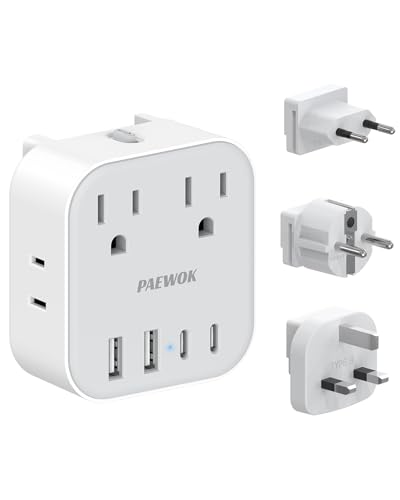
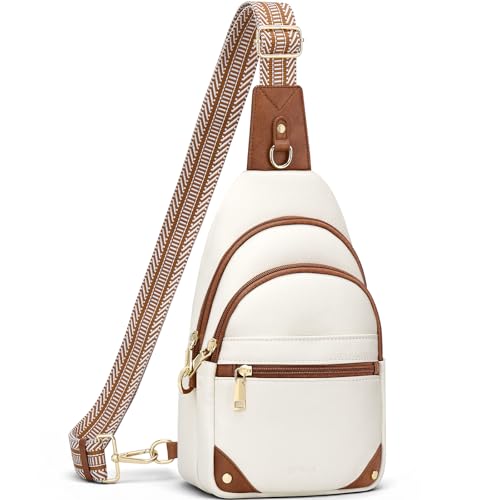
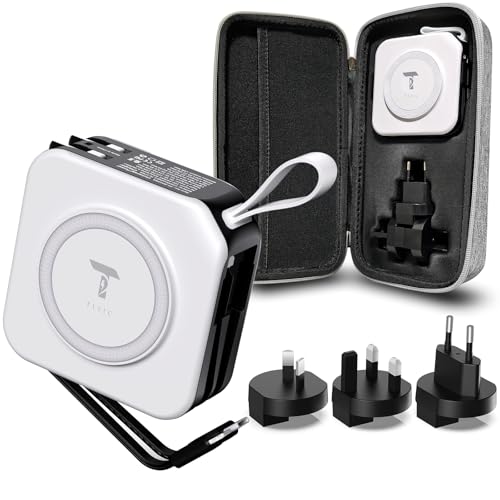
A first Europe trip rewards the right small kit. A universal adapter that handles the UK three-pin, the Swiss three-pin (yes it’s different), and the standard EU two-pin. A money belt for the longer train days. Walking shoes that survive eight hours on cobblestones without making you wish you’d worn boots. A crossbody anti-theft purse for the metros. Compression cubes that triple the suitcase capacity. A portable charger so your phone doesn’t die mid-Google-Translate. Six picks below.


Recommended blogs to read:
- The complete Europe travel checklist
- How to plan your first Europe trip
- The most beautiful countries in Europe
- Eastern Europe on a budget
- How to plan an Interrail trip
What Should You Sort Out Before You Even Book?
The number-one Europe trip-killer is showing up at the airport with a document problem. Most are easy to fix six weeks ahead and almost impossible to fix the day before. Run this quick list before you book anything.
1. Check Your Passport Validity First
Your passport needs to be valid for at least six months past your planned return date for almost every European country. Three months past return works for some non-Schengen states (UK, Ireland) but six is the safe rule. Check your renewal queue at home, US passports are taking 8-11 weeks routine, 5-7 weeks expedited in 2026.
2. The New EES Fingerprint Scan Adds 25 Minutes to Your Queue
Every non-EU traveler entering the Schengen Area now gets fingerprinted and face-scanned at first entry of each 180-day window. The scan itself takes 30 seconds. The queue at major hubs (Paris CDG, Frankfurt, Munich, Amsterdam, Zurich) is running 15 to 25 minutes longer than it did in 2024. Subsequent entries inside the same window are a 5-second face check. Land 30 minutes earlier than your old instinct for first entry.
3. ETIAS Is Coming Late 2026 (And You Probably Need It)
The pre-travel authorization (€20, three-year validity, 96-hour processing) goes live for non-EU travelers in October or November 2026 with a six-month grace period running into early 2027. Most US, UK, Canadian, Australian, New Zealand, Japanese passport holders will need it. Check etias-euvisa.com for the current launch date before your trip.
4. The UK ETA Is Already Mandatory and Easy to Forget
If your trip includes the UK and you’re a non-UK passport holder from most countries, you need a UK ETA approval before flying. £10, two-year validity, applied for through the official UK government site. Several airlines won’t let you board without it. Don’t confuse this with ETIAS, they’re separate.
5. Don’t Skimp on Travel Insurance
Healthcare in Europe is excellent and not free. A broken ankle in Italy without insurance runs €4,000-€8,000 out of pocket. World Nomads, SafetyWing, and Allianz are the three most-recommended providers for short-term Europe trips. Read the COVID/cancellation clauses, they changed industry-wide after 2022.
How Should You Handle Money Across Europe in 2026?
The cash-versus-card map looks different than it did even three years ago. Knowing where to use what saves you both money and stress.
6. The Card-First Countries (You Won’t Need Cash)
Sweden, Norway, Denmark, Iceland, the UK, the Netherlands, Estonia, and increasingly Germany run almost fully cashless in 2026. You can spend two weeks in Stockholm without touching a krone if your card has no foreign-transaction fees. The exception in these countries is small markets and a few rural cafes that still ask for cash, but they’re outliers.
7. Where Cash Still Wins in 2026
Rural Italy, the Greek islands, Czech beer halls, Hungarian small towns, all of Albania and Bosnia, most of Bulgaria, and the entire ferry network on the Adriatic still run heavily on cash. Carry €100 to €150 in small euro notes plus your card. The same applies to taxi drivers in most countries (Bolt and FreeNow are card-friendly, hailed taxis aren’t always).
8. Always Decline Dynamic Currency Conversion
Every ATM and card machine in Europe will offer to charge you in your home currency instead of the local one. Always decline. Always pay in local. The dynamic conversion rate adds 5 to 12% to every transaction. It’s the single biggest hidden cost most first-timers pay, and you can avoid it entirely with one button push. The button to decline usually reads “without conversion” or “continue in local currency.”
9. Pick Bank ATMs, Skip the Euronets
Bank-affiliated ATMs (Raiffeisen, Erste, OTP, BNP Paribas, Santander) charge 0 to 2% on top of your home bank’s withdrawal fee. Freestanding non-bank ATMs in tourist squares (Euronet is the most common) charge 4 to 7%. Look for the bank logo on the side. If the ATM only displays a brand name like Euronet, skip it.
10. The Best Cards for European Travel
Charles Schwab Investor Checking refunds all ATM fees worldwide and has no foreign transaction fees. Chime, Capital One 360, and Fidelity Cash Management work similarly. For non-US travelers, Wise and Revolut are the standard. Pick one of these before your trip.
How Do You Actually Get Between Cities?
Trains, low-cost flights, FlixBus, and night trains all have their place. Pick the wrong one for your route and you’ll lose half a day to logistics.
11. Take the Train (Especially in Western Europe)
The Western European rail network is the densest in the world. Eurostar (London-Paris-Brussels-Amsterdam), TGV (across France), ICE (Germany), Frecciarossa (Italy), ÖBB (Austria), SBB (Switzerland), and Renfe AVE (Spain) run frequent high-speed services. A Paris-Amsterdam Eurostar takes 3h 22m at speeds the airport equivalent can’t match once you add airport-to-city time. Book through national operator sites (sncf-connect.com, bahn.de, italiarail.com) instead of aggregators like Omio, which add 8 to 15% markup.
12. The Night Train Comeback Is Real and Worth Booking
ÖBB Nightjet rebuilt the European sleeper map between 2023 and 2025. Brussels to Vienna, Berlin to Paris, Zurich to Amsterdam, Berlin to Krakow, and the Vienna-Prague-Hamburg corridor all run nightly with couchette and private cabin options. A couchette costs €69-€129, a two-bed cabin €189-€289. You save a hotel night and skip an EES queue. For the full breakdown, see the how-to-plan-an-Interrail-trip post.
13. Ryanair and Wizz Air for the Long Hops
Ryanair and Wizz Air dominate the budget short-haul map. London-Krakow for €35 return is normal. Watch the small print on baggage: a 20kg checked bag often costs more than the flight. The cheapest fares are mid-week (Tuesday-Wednesday) and 5-7 weeks ahead of departure.
14. FlixBus Wins on Short Hops and the Balkans
The dominant inter-city bus operator across Europe. Cheaper than trains for short hops (Vienna-Bratislava €9, Berlin-Prague €19) and the only viable inter-city transport across parts of the Balkans where train infrastructure thins out. Buses are modern, wifi-equipped, comfortable for legs under four hours.
15. Rental Cars Only for Rural Drives
Worth it for rural drives (the Italian countryside, Provence, Croatian coast, Scottish Highlands, Norwegian fjords, Andalusia). Not worth it for city-to-city travel in Western Europe (parking is expensive, traffic in city centers is restricted by ZTL zones in Italy and equivalent in France). Watch the cross-border restrictions: Croatian rentals usually can’t enter Kosovo or Albania without paperwork. Always book before you arrive, walk-up rates double.
What Are the Cultural Etiquette Mistakes First-Timers Always Make?
Every country has unwritten rules that locals follow without thinking. Knowing the basics keeps you from accidentally being the rude tourist.
16. Tipping (Way Less Than You Think)
Europe is not the US. In Italy a service charge (servizio compreso) is often included; if not, €1-€2 per person is generous. In France service is built in by law (service compris); rounding up or adding 5% is the local norm. In Germany and Austria, 5-10% is fine, hand it directly to the server. In the UK, 10-12.5% is added to most restaurant bills automatically (check before tipping again). In the Balkans, 10% is generous. Nowhere in Europe expects 20%.
17. Local Dining Hours by Country
Lunch in Spain runs 2pm-4pm, dinner from 9pm onward. In Italy, lunch is 12:30pm-2:30pm, dinner from 7:30pm. In Germany and Austria, dinner often starts by 6pm. France splits the difference at 7pm-9pm. Restaurants outside those windows are either tourist traps or closed entirely.
18. Pack a Scarf for the Churches
Catholic and Orthodox churches across Italy, Spain, Greece, and the Balkans enforce shoulders-and-knees-covered rules at the door. Carry a light scarf, problem solved. The Vatican, Duomo Milan, Sagrada Familia, and most major basilicas turn away inappropriately dressed visitors at the entrance.
19. Greetings (Handshakes Mostly, Cheek Kisses Sometimes)
A handshake works almost everywhere. In France, Belgium, and southern Italy, close friends and family greet with two cheek kisses (one each cheek). In the Netherlands, three kisses are normal. Locals are forgiving with foreigners, follow their lead.
20. The Queuing Rules Are Stricter Than You Think
Brits famously queue with religious dedication. Germans, Dutch, and Scandinavians the same. Southern Europe is more flexible (Italy especially) but still has unwritten norms at bars and counters. Watch and follow.
21. Outdoor Smoking Is Still a Thing in Southern Europe
Indoor smoking is banned across the EU (and most of Europe), but outdoor smoking on terraces is still normal in France, Spain, Italy, Greece, and the Balkans. If smoke bothers you, ask for inside seating.
What Should You Actually Pack for a Multi-Country Trip?
The pack-light gospel is correct. A bag you can carry up four flights of stairs is non-negotiable for old European apartment hotels. Most stick to a 40L backpack or a 22-inch wheeled carry-on plus a small day bag.
22. Clothes (Layers, Layers, Layers)
Layers. Even in summer, evening temperatures drop fast in the Alps, on the Adriatic, and across the British Isles. Plan around 4-5 day capsule: two pairs of pants, four tops, one nice outfit, one waterproof jacket, one warm layer. Wash everything mid-trip. Don’t bring an outfit for every day, you’ll wear the same three favorites anyway.
23. Two Pairs of Shoes, Pre-Broken-In
Two pairs. Walking shoes you’ve already broken in (Allbirds, Veja, On Cloud, Tropicfeel, or a leather sneaker that survived training walks at home) plus one pair of nice shoes for dinners and museums. New shoes plus cobblestones equals blisters by day three.
24. A Universal Adapter (Type C, F, G, J, L)
Most of continental Europe uses Type C or Type F sockets. The UK and Ireland use Type G. Switzerland uses Type J (different from Type C). Italy still has the older Type L in older buildings. A universal adapter handles all of them. Apple chargers are the exception, they have built-in compatibility if you swap the plug head.
25. Documents (Carry Some, Store Most Digitally)
Carry your passport, your ETIAS confirmation (when applicable), your UK ETA confirmation (when applicable), and printouts of your hotel addresses for the first night of each country. Store digital copies in Google Drive or iCloud. Photograph your passport’s ID page on your phone.
26. Buy an eSIM Before You Fly
Airalo eSIMs run €5-€15 for 7-14 days of multi-country data. Holafly and Saily are competitors. Buy and install before you fly. Local SIMs at airport kiosks are usually overpriced; if you need one, buy in town the next day.
The full packing list with the 8-week countdown lives in the Europe travel checklist post.
How Long Should Your First Europe Trip Be?
A common mistake is trying to see too much. Five cities in 10 days sounds doable until you’re spending half your trip in transit. The rule that holds: 1 city per 3 days minimum for a first trip.
27. One Week: Pick One City Plus a Day Trip
One city, plus 1-2 day trips. Paris with Versailles. London with Oxford. Rome with Tivoli. Lisbon with Sintra. You’ll actually see the city.
28. Ten Days: The First-Timer Sweet Spot
Two cities, one in each region. Paris and Amsterdam. London and Edinburgh. Rome and Florence. Lisbon and Porto. Barcelona and Madrid. Connect by train or short flight.
29. Two Weeks: Three Cities, One Region
Three cities in one geographic cluster. The Visegrad loop (Prague, Vienna, Budapest). The Iberian loop (Lisbon, Seville, Madrid). The Italian classic (Rome, Florence, Venice). The Western Europe quartet (Paris, Brussels, Amsterdam, Berlin).
30. Three Weeks: Add the Rural Detour
Four cities plus rural detours. Now you have time for the Cinque Terre, Lake Bled, the Cotswolds, the Highlands, the Algarve, or the Bavarian palaces day trip.
31. A Full Month: Slow Travel Territory
Slow travel territory. One city per week works better than five days each, you settle in, you find favorite cafes, you stop being a tourist. The Schengen 90-day rule is your only ceiling.
Which Common Mistakes Should You Specifically Avoid?
A short list of things that have ruined other people’s trips, so they don’t ruin yours.
32. Don’t Book the Tourist-Heavy Old Town
Tourist-heavy old-town hotels are expensive, noisy, and often inconvenient. The neighborhoods one tram stop out (Trastevere in Rome, Belleville in Paris, Kreuzberg in Berlin, Kazimierz in Krakow, Príncipe Real in Lisbon, Vinohrady in Prague) are usually cheaper, quieter, and more interesting.
33. Skip the Restaurants With Five-Language Menus
A reliable rule: menus translated into English, Russian, Chinese, Japanese, and Korean usually mean tourist menu with tourist prices. Walk two streets in any direction and the local restaurants are obvious.
34. Check Museum Closing Days Before You Book
Most major museums close one day a week, almost always Monday or Tuesday. The Louvre closes Tuesdays, the Vatican Museums close Sundays (except the last Sunday of the month), the Uffizi closes Mondays. Check before you plan.
35. The Cheapest Flight Is Often the Most Expensive
Saving €40 on a midnight arrival into Charleroi (not Brussels) or Bergamo (not Milan) costs you the price difference in the airport transfer plus a wasted travel day. Check which airport you’re actually landing at.
36. Leave Two Unscheduled Mornings Per City
Build in two unscheduled mornings per city. The trips you remember are the wandering ones, not the ones where you ran from booked timed entry to booked timed entry.
37. Trust the National Operator Over the Aggregator
The Trainline app, Omio, and Rail Planner are useful but not always current with strikes and reroutes. When in doubt, check the national operator’s site (bahn.de, sncf-connect.com, italiarail.com) for the actual timetable.
Want every Europe travel tip mapped onto your actual itinerary?
The Ultimate Europe Trip Planner pairs the practical rules (EES timing, budget brackets, city pacing, packing decisions) with a day-by-day itinerary template that fits any trip length. Currently just $17 before the price goes up to $27.
Europe Travel FAQ
Do you need ETIAS to visit Europe in 2026?
Not yet for most of 2026, but yes by year-end. ETIAS launches in Q4 2026 with a six-month grace period running into early 2027. The fee is €20, valid for three years, processing time 96 hours. It applies to non-EU passport holders from around 60 countries including the US, UK, Canada, Australia, New Zealand, and Japan. EES (the fingerprint and face-scan system) is already live as of April 10, 2026.
What is the cheapest way to travel around Europe?
FlixBus for short hops (Vienna-Bratislava €9, Berlin-Prague €19). Night trains via ÖBB Nightjet for legs over six hours, with couchettes from €69 (you save a hotel night too). Ryanair and Wizz Air for longer routes (London-Krakow €35 return is normal). Book trains directly through national operators (sncf-connect.com, bahn.de) rather than aggregators like Omio that add 8-15% markup.
Is it better to use cash or card in Europe?
Card-first in Scandinavia, the UK, the Netherlands, Estonia, and most of Germany. Cash-still-king in rural Italy, the Greek islands, Albania, Bosnia, and Hungarian or Czech beer halls. Carry €100-€150 in small euro notes as backup. Always decline dynamic currency conversion (the prompt that asks if you want to pay in your home currency). Use bank-affiliated ATMs (Raiffeisen, Erste, BNP Paribas) rather than Euronet, which charges 4-7%.
How much should you tip in European countries?
Less than you think. In Italy a service charge is usually included; if not, €1-€2 per person. In France service is built into the price by law; rounding up or 5% is the norm. Germany and Austria: 5-10% handed directly to the server. UK: 10-12.5% is often added automatically (check before tipping again). Balkans: 10% is generous. Nowhere in Europe expects 20%.
What is the safest country in Europe to visit?
Iceland, Switzerland, Norway, Denmark, and Finland top every safety index. Slovenia, Czech Republic, Portugal, and Austria are close behind. Tourist-targeted crime across Europe is almost entirely pickpocketing in major tourist sites (Rome, Paris, Barcelona). Violent crime against tourists is extremely rare anywhere in Europe. The standard precautions (don’t leave valuables visible, avoid empty alleys late at night) cover almost everything.
How many days do you need for a first Europe trip?
Ten days is the sweet spot for a first trip. Two cities in one region (Paris and Amsterdam, Rome and Florence, Lisbon and Porto, Barcelona and Madrid) connected by train or short flight. You see each city properly without the burnout that comes from packing four cities into ten days. If you only have a week, do one city plus a day trip.
Key Takeaways
- EES went live April 10, 2026 with fingerprint and face-scan at every Schengen border. Add 15-25 minutes to your first-entry queue.
- ETIAS launches Q4 2026 at €20 for three-year validity. UK ETA is already mandatory at £10 for non-UK passport holders.
- Always decline dynamic currency conversion at ATMs and card machines. The 5-12% hidden fee is the single biggest avoidable cost.
- Card-first countries: Scandinavia, UK, Netherlands, Estonia, much of Germany. Cash-still-king: rural Italy, Greek islands, Albania, Bosnia, Czech beer halls.
- Book trains via national operator sites (sncf-connect.com, bahn.de) instead of aggregators like Omio that add 8-15% markup.
- Tipping rule: nowhere in Europe expects 20%. Italy €1-€2, France service compris, Germany/Austria 5-10%, UK auto-added 10-12.5%, Balkans 10%.
- One city per 3 days minimum for a first trip. Two cities in 10 days is the sweet spot.
Final Thoughts on Making a Europe Trip Actually Work
The honest secret of Europe travel is that almost every mistake is small and recoverable. You’ll pay the table rate by accident once, then never again. You’ll overpack the itinerary the first time and learn to slow down by the third city. You’ll figure out the dynamic-conversion trap after your second ATM withdrawal. The trips that go wrong are the ones where you didn’t prep for the documents (EES, ETIAS, UK ETA) or didn’t budget for the actual cost of food and transit. Get those right and the rest is improvising. Have fun out there.