
Quick Answer: A great Europe trip works backward from how long you have. Ten days fits two cities; two weeks fits three; three weeks fits four plus rural detours. Pick a geographic region (Western, Central, Eastern, Iberian, Italian) and stick to it. Budget €100-€200 a day per person depending on country and style. Book flights last, accommodation first.
Last updated: May 2026 · ETIAS Q4 2026 launch, EES live April 10 2026, new night-train routes verified.
The first Europe trip I planned, I tried to fit Paris, London, Amsterdam, Rome, Florence, and Barcelona into 12 days. By day five I’d seen the inside of three airports more than the inside of any museum. By day eight I was so tired I sat in a café in Florence for four hours, drank three cappuccinos, and didn’t see the Duomo at all. The cappuccinos were excellent. The trip was a mess.
Planning a Europe trip well comes down to one thing: pick fewer places, stay longer in each. The continent isn’t going anywhere. You’ll come back. The trip you remember is the slow one where you found a café you returned to three mornings in a row, not the one where you ticked 12 cities off a list.
Walking through how to actually plan a Europe trip below, the way it works in 2026 with the new EES border math and the night-train comeback.
Want the full Europe trip-planning workbook with templates?
The Ultimate Europe Trip Planner walks you through routing, daily budgets, packing, EES timing, and city-by-city pacing for trips from 7 to 30 days. Currently just $17 before the price goes up to $27.
Europe Trip Planning Kit We Recommend
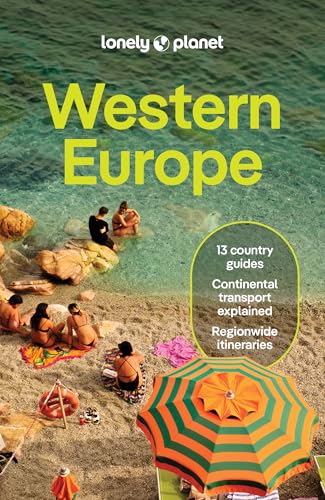
A first Europe trip wants the right tools. A Lonely Planet or DK Europe guide for the bedside-table research. A money belt for the dense crowds. A universal travel adapter that handles every plug type. A 40L carry-on backpack that doubles as your only bag. A subscription to a travel-insurance provider before you book the flights. Comfortable walking shoes already broken in. Six picks below.




Recommended blogs to read:
- 37 Europe travel tips that save your trip
- The complete Europe travel checklist
- How to plan an Interrail trip
- The most beautiful countries in Europe
- Best cities in Europe to visit
How Long Should Your First Europe Trip Be?
The number-one decision shapes everything else. Match the length to your time, budget, and energy.
1. One Week (Two Cities Max)
Seven days fits one city plus a day trip, or two cities connected by train. Paris with Versailles. London with Oxford. Rome with Tivoli. Lisbon with Sintra. Two-city version: Paris and Amsterdam, Madrid and Barcelona, Florence and Rome. Any more and you’re spending half the trip in transit.
2. Ten Days (The First-Timer Sweet Spot)
Ten days is the answer for most first trips. Two cities in one region, 4-5 nights each, connected by a single train or short flight. Lisbon and Porto. London and Edinburgh. Rome and Florence. Barcelona and Madrid. You actually see both cities properly.
3. Two Weeks (Three Cities, One Region)
Fourteen days fits a coherent three-city loop. The Italian classic: Rome, Florence, Venice. The Visegrad: Prague, Vienna, Budapest. The Iberian: Lisbon, Madrid, Seville. The Western quartet: Paris, Brussels, Amsterdam, Berlin (push to four if you skip one of the day-trips). Same region, real train connections.
4. Three Weeks (Add the Rural Detour)
Twenty-one days lets you breathe. Four cities plus a rural week: the Cinque Terre after Florence, the Cotswolds after London, the Algarve after Lisbon, the Highlands after Edinburgh, Bavarian palaces after Munich, Lake Bled after Ljubljana. The slow week is the one that turns into the favorite memory.
5. A Full Month (Slow Travel Territory)
Thirty days is the secret length. You stop being a tourist by week two. You find favorite cafés. You learn 50 words of the local language. The Schengen 90-day visa-free allowance is your only ceiling. One city per week beats five days each. The slowest version of Europe travel is the most worthwhile.
When Should You Actually Go to Europe in 2026?
Month-by-month math beats general “best time to visit” advice. Weather, crowds, and prices all shift on a calendar.
6. The Shoulder Months Win (April-May, September-October)
Mid-April to early June and September to mid-October are the sweet spots for almost any European trip. Weather is warm but not punishing, accommodation runs 30-50% below July-August peaks, crowds are manageable. Tuscany, Provence, Andalusia, the Adriatic coast all peak in these months.
7. July-August Heatwaves Are Now Routine
Southern Europe (Spain, Italy, Greece, southern France) regularly hits 38-42°C in July and August. Tuscany at 40°C is uncomfortable, not romantic. The Acropolis closes early in the worst heatwaves. Plan around shade, water, and morning sightseeing. The cooler Northern alternatives (Scandinavia, the Alps, UK, Ireland) are at their best these months.
8. December for Christmas Markets and New Year
Late November through December 23 is Christmas-market season across Germany, Austria, Czech Republic, France, and Scandinavia. After December 24 most attractions close until January 2-3. New Year’s Eve in Vienna, Edinburgh (Hogmanay), Berlin, or Lisbon are the legendary European NYE cities.
9. January-February for Winter Sun or Snow
The Canary Islands (22°C in February), Madeira, Malta, southern Spain stay mild and quiet. Alpine ski season runs December through March. Northern Lights season in Iceland and Finnish Lapland peaks December through February. City breaks are dirt cheap in January (Prague, Budapest, Berlin, Krakow all 50% off summer rates).
How Do You Choose Where to Actually Go?
Europe is not one trip. It’s six or seven different trips wearing the same name. Pick a region and commit.
10. The Western Europe Classic (First-Time Anchor)
Paris, London, Amsterdam, Brussels, Bruges. The grand capitals plus the canal cities. Most expensive region in Europe; also the most polished. English everywhere. Trains connect everything (Eurostar London-Paris, Thalys Paris-Amsterdam). Best for a first trip that mostly wants iconic monuments and museums.
11. The Italian Loop (Slow Down for the Food)
Rome, Florence, Venice, Cinque Terre, Lake Como, Tuscany hill towns. The country deserves three weeks minimum if you’re including the south or Sicily. Food culture is the trip, not a sidebar. Crowds in Rome and Venice are extreme May-September; mid-October is the sweet spot.
12. The Iberian Sweep (Underrated and Affordable)
Lisbon, Porto, Madrid, Seville, Granada, Barcelona. Portugal and Spain together fit a two- or three-week trip. Cheaper than France or Italy. Better beaches than Northern Europe. Food culture rivals Italy. The 2024 anti-tourism protests in Barcelona changed the dynamic; respect the locals and avoid the most overcrowded districts.
13. The Central Europe Loop (Visegrad and Sleeper Trains)
Berlin, Prague, Vienna, Budapest, Krakow. The new night trains (Berlin-Krakow, Brussels-Vienna) make this loop easier than ever. Mid-range pricing. English coverage at major hotels and restaurants. Strong food and drink culture in each city. Best for a second-trip-to-Europe vibe.
14. The Balkan Adventure (Cheap and Wide-Open)
Sarajevo, Belgrade, Tirana, Pristina, Skopje, Sofia. Sarajevo is the cheapest 2026 European city break (€288 for a 12-item Post Office basket). The new Vlora airport in Albania opened the Riviera. Train infrastructure thins out; FlixBus dominates. Best for travelers who want experiences over comfort.
15. The Scandinavian Summer (Light and Expensive)
Copenhagen, Stockholm, Oslo, Bergen, Helsinki. The most expensive region in Europe; also the cleanest, safest, and most design-conscious. White nights in June (Stockholm gets 4 hours of dusk between sunsets). Norway’s fjords are best in late June through August. Budget €150-€250/day per person.
What Should You Budget for a Europe Trip?
Budget varies hugely by region. Same daily activities cost twice in Oslo what they cost in Belgrade. The bracket math by region matters.
16. Budget Region (€40-€60 per day)
Albania, Bosnia, North Macedonia, Bulgaria, Romania (outside Bucharest centre). Hostel dorm, two restaurant meals, public transit, museum entries. The Albanian Riviera in shoulder season costs around €40 a day all-in.
17. Mid-Range Region (€70-€110 per day)
Spain, Portugal, Hungary, Czech Republic, Poland, Slovakia, Slovenia, Croatia, southern Italy. Mid-range hotel, two restaurant meals, transit pass, attraction tickets. The Visegrad capitals (Prague, Vienna, Budapest) all sit in this bracket.
18. Comfort Region (€120-€180 per day)
Northern Italy, France, Germany, Austria, Belgium, Netherlands, Ireland. Three-star hotel in a good neighborhood, two proper meals, daily museum entry, occasional taxi. Paris and Amsterdam push toward the top of this range; Munich and Vienna sit at the lower end.
19. Premium Region (€180-€300 per day)
UK (London especially), Switzerland, Norway, Denmark, Iceland, Sweden. Hotel rates double what they are in continental Europe. A coffee in Oslo runs €5-€7 versus €2-€3 in Lisbon. Budget €30-€50 per meal in mid-range restaurants.
20. Where Your Money Disappears
Accommodation eats 40-50% of the budget in mid-range trips. Food another 25-30%. Transit 10-15%. Attractions 5-10%. The mistake everyone makes is overestimating food and underestimating accommodation. The fix is to book good-value places early and eat one restaurant meal a day instead of three.
What About the New 2026 Border Rules?
The biggest practical change to Europe travel in a decade. Document right before you book.
21. EES Is Already Live
The Entry/Exit System went live April 10, 2026. Fingerprint and face scan at every Schengen border for non-EU travelers. Adds 15-25 minutes to your first-entry queue at major hubs (Paris CDG, Frankfurt, Munich, Amsterdam, Zurich). Subsequent entries inside the same 180-day window are a 5-second face check.
22. ETIAS Launches Q4 2026
Pre-travel authorization required for non-EU visitors from around 60 countries (US, UK, Canada, Australia, NZ, Japan included). €20, three-year validity, 96-hour processing. Apply through etias-euvisa.com. Six-month grace period from launch.
23. UK ETA Has Been Live Since January 2025
£10, two-year validity. Mandatory for non-UK passport holders from most countries entering Britain. Apply through the UK government site, not third parties. Airlines won’t let you board without approval.
24. The 90/180 Schengen Rule
Non-EU visitors can stay 90 days within any 180-day window in the Schengen Area. Days are counted across all Schengen countries combined. Non-Schengen countries (UK, Ireland, Bulgaria until 2025, Romania until 2025, all Balkans) have their own separate visa-free allowances.
What Should You Book in What Order?
The booking sequence matters. Flights last, not first.
25. Lock the Route First
Cities, dates, order. Print a one-page version. Adjust until it’s actually feasible (not five cities in 10 days).
26. Book Accommodation Next
3-6 months ahead for popular dates and cities. Free-cancellation rates on Booking.com give flexibility. Airbnbs in popular neighborhoods (Trastevere, Marais, Kazimierz, Plaka) book out 6-9 months ahead in peak season.
27. Book Trains and Major Attractions
Eurostar opens 365 days ahead, most other high-speed and night trains 90-120 days. The Vatican Museums, Sagrada Familia, Anne Frank House, Alhambra, Uffizi, and Last Supper all need timed tickets booked 30-60 days ahead.
28. Book Flights Last
Flights are usually the most flexible part of the trip. Once accommodation and trains are locked, find flights that match those dates. Watch for Skyscanner’s “anywhere” search and Google Flights’ “explore” function to find unexpected deals.
29. Apply for ETIAS, UK ETA, Insurance Last Two Weeks
ETIAS processing is 96 hours, so do it 1-2 weeks ahead. UK ETA processing is 72 hours. Travel insurance can be bought up to the day before but doesn’t cover pre-existing trip cancellations if you book it too late.
What Mistakes Should You Specifically Avoid?
Trip-killers worth knowing in advance.
30. Trying to See Too Much
The Paris-London-Rome-Amsterdam-Barcelona-Berlin mistake. Five flight days in a 10-day trip means no real city days. One city per 3 days minimum.
31. Booking the Cheapest Airport Without Checking
Bergamo is not Milan. Charleroi is not Brussels. Beauvais is not Paris. The €40 savings goes straight into the €25 transfer to the actual city. Always check which airport you’re flying into.
32. Skipping the Reservation Window
Eurostar London-Paris in July sells out 60-90 days ahead. The Vatican Museums sell summer slots months in advance. Sagrada Familia and the Anne Frank House the same. Book the moment the calendar opens.
33. Overbooking the Itinerary
Two booked attractions per day, maximum. Build in unscheduled mornings. The best memories are usually the unplanned café or the wandering.
34. Choosing Hotels in the Tourist Old Town
Expensive, noisy, often inconvenient. The neighborhoods one tram stop out (Trastevere in Rome, Belleville in Paris, Kazimierz in Krakow, Vinohrady in Prague) are usually cheaper, quieter, and more interesting.
Want all this in one printable workbook?
The Ultimate Europe Trip Planner packages every part of trip planning (route, budget, accommodation, transit, packing, documents) into a day-by-day workbook. Currently just $17 before the price goes up to $27.
Europe Trip Planning FAQ
How long do you need to see Europe properly?
Two weeks fits three cities in one region. Three weeks fits four plus a rural week. A month is the secret sweet spot for slow travel. You will not see all of Europe in any single trip. The continent isn’t a country; pick a region and commit.
What is the best month to visit Europe in 2026?
Mid-April through early June and September through mid-October are the sweet spots for most regions. Weather is warm but not punishing, accommodation runs 30-50% below July-August peaks, crowds are manageable. July-August heatwaves regularly hit 40°C in southern Europe.
Is it cheaper to travel Europe by train or flight?
Trains win on shorter European legs (under 600km) once you add airport-to-city transit time. Ryanair and Wizz Air win on longer routes. Night trains via ÖBB Nightjet beat both for legs over 6 hours because you save a hotel night. FlixBus is cheapest for short hops where train infrastructure thins out.
How much should you budget for a Europe trip?
Budget Region (Albania, Bosnia, Bulgaria): €40-€60 per day. Mid-Range (Spain, Portugal, Czech, Hungary, Poland): €70-€110. Comfort (France, Germany, Austria, Italy): €120-€180. Premium (UK, Switzerland, Norway, Iceland): €180-€300. Accommodation eats 40-50% of any budget.
Do you need a visa to visit Europe from the US?
US passport holders don’t need a visa for stays under 90 days in any 180-day window. ETIAS pre-travel authorization launches Q4 2026 at €20 for non-EU travelers. UK ETA at £10 is already mandatory for stays in Britain. EES fingerprint scans happen at every Schengen border now.
Which European country is best for first-time visitors?
France, Italy, the UK, and Spain top almost every first-timer list. Easy English coverage, dense tourist infrastructure, iconic monuments, good food. Portugal and Czech Republic are the underrated alternatives, with lower prices and slightly fewer crowds.
Key Takeaways
- One city per 3 days minimum for a first trip. Ten days = two cities, 14 = three, 21 = four plus a rural week.
- Pick a region (Western, Italian, Iberian, Central, Balkan, Scandinavian) and commit. Don’t try to circle Europe.
- April-May and September-October are the sweet spots for weather, crowds, and prices.
- Budget brackets by region: €40-€60 (Balkans), €70-€110 (Iberia/Visegrad), €120-€180 (France/Germany/Italy), €180-€300 (UK/Scandinavia).
- Book in order: route, accommodation, trains, attractions, flights last.
- EES live April 10 2026 (adds 15-25 min to first entry). ETIAS launches Q4 2026 (€20). UK ETA already mandatory (£10).
- Accommodation eats 40-50% of any budget. Book good-value places early and eat one restaurant meal a day.
Final Thoughts on Planning the Europe Trip Right
The single best piece of Europe trip-planning advice is the boring one: pick fewer places, stay longer in each. The continent will reward slow over fast every time. Lock the route, book the bed, get the documents sorted, board the plane with nothing on your mind. Then the trip becomes the part you remember, not the planning you survived.