
Quick Answer: To plan an Interrail trip in 2026, start with how many days you have and what kind of trip you want (slow and scenic vs many cities), then pick a Flexi or Continuous pass, book your seat reservations 60-120 days ahead for high-speed and night trains, and lean into the new sleeper routes that opened between 2023 and 2025. The pass costs €212-€522 depending on age and length.
Last updated: May 2026 · 2026 Interrail pass pricing, new night-train map, Beira Alta line opened October 2025.
The first time I looked at an Interrail pass, I closed the tab in about three minutes. The website threw fifteen types of pass at me, each with different rules about what counts as a travel day, plus a price chart that needed a spreadsheet. I gave up and booked individual train tickets like a normal person. Two summers later, I tried again. The pass is way simpler than the website makes it look.
Interrail is having a real moment in 2026. The new night trains between Brussels and Vienna, Berlin and Paris, and Berlin and Krakow are running nightly. Portugal opened the Beira Alta line in October 2025. Even the legacy routes through France, Italy, and the Alps got faster and better-connected. If you’ve been waiting for a sign to actually do the train trip, this is it.
Walking through how to plan one start to finish below, the way it actually works rather than how the official site explains it.
Planning a multi-city Interrail trip and want the route mapped out?
The Ultimate Europe Trip Planner has the sleeper-train timetables, the city-by-city pacing, and the reservation booking windows all in one workbook. Currently just $17 before the price goes up to $27.
Interrail Travel Kit We Actually Use
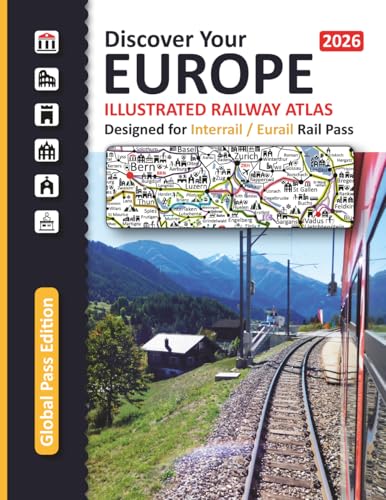
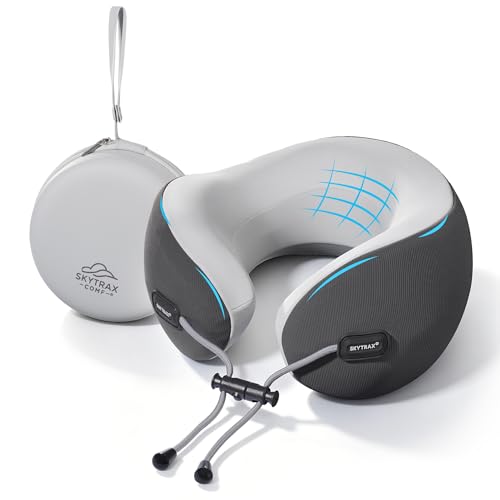
The train carry-on is a different beast than a flight carry-on. You’re walking on, stowing on overhead racks or shoving under your seat, and lifting it onto sleeper bunks. A 40L flight-carry backpack instead of wheels. A memory-foam neck pillow for the daytime legs. A travel pillow-blanket combo for the night trains. A compact EU adapter. Compression cubes to keep clean and dirty separate. A proper interrail guidebook with the routes laid out. Six picks below.




Recommended blogs to read:
- 37 Europe travel tips that save your trip
- The complete Europe travel checklist
- Places to visit in Central Europe by sleeper corridor
- Eastern Europe on a budget
- Places to visit in East Europe
Is the Interrail Pass Actually Worth It in 2026?
The honest answer: it depends on your trip length and route. For some itineraries the pass is brilliant value; for others, point-to-point tickets win.
1. When the Pass Beats Point-to-Point
The pass wins when you’re taking 4+ trains in a 2-3 week trip, especially across multiple countries. A continuous-month Global Pass at €522 saves serious money against full-price tickets if you’re doing Lisbon-Madrid-Barcelona-Paris-Amsterdam-Berlin. It also gives you flexibility to change plans mid-trip without rebooking penalties.
2. When Point-to-Point Wins
If you’re doing 2-3 specific routes and you can book them 60+ days ahead, advance-purchase tickets on Trenitalia, Renfe, Deutsche Bahn, and SNCF often beat the pass. A Paris-Amsterdam Eurostar at €35 advance fare plus a Berlin-Prague at €19 plus a Vienna-Budapest at €15 totals €69 for three legs. A four-day Flexi pass starts at €212.
3. The Reservation Math Nobody Tells You
The Interrail pass covers the seat on most trains. High-speed trains (TGV, Frecciarossa, AVE, ICE) and all night trains require a separate reservation fee on top: €4-€30 per leg depending on the route. A Paris-Marseille TGV reservation is €20. A Brussels-Vienna Nightjet couchette is €29-€89 on top of the pass. Budget €60-€150 in reservation fees across a typical trip.
Which Pass Should You Actually Buy?
Interrail sells two main pass types: Global (covers 33 countries) and One Country (covers one country only). Within Global, you choose Flexi (specific travel days within a window) or Continuous (every day of a fixed period).
4. Global Flexi Pass
The Flexi pass gives you 4, 5, 7, 10, or 15 travel days within a 1-month or 2-month window. 2026 prices: 4 days within 1 month is €212 (under-27, 2nd class) or €330 (adult, 2nd class). 7 days within 1 month is €293/€405. Best for trips where you stay 3-4 nights per city, only using train days to move between.
5. Global Continuous Pass
The Continuous pass covers 15, 22, or 30 consecutive days. 2026 prices: 15 days is €352/€501, 22 days is €430/€606, 1 month is €522/€729. Best for fast-paced trips with overnight trains or where you’re moving every 1-2 days. Includes weekend and overnight legs without burning extra days.
6. One Country Pass
Covers a single country (Spain, Italy, France, Germany, etc.) for 3, 4, 5, 6, or 8 travel days within a month. Cheaper than a Global pass if you’re staying in one country. Italy is the most popular (€124 for 3 days, €198 for 8 days, adult 2nd class).
7. Under-27 vs Adult Pricing
Significant savings if you’re 27 or under. The under-27 discount runs 25-35% off adult prices across every pass type. Buy the pass before your 28th birthday and you can use it after. Senior pass (60+) is also available at roughly 10% off adult prices.
Which Routes Should You Actually Plan?
The best routes match your trip length to a coherent geographic loop. Trying to circle all of Europe in 10 days kills the trip.
8. The 7-Day Italy Loop
Rome to Florence (1.5 hours), Florence to Venice (2 hours), Venice to Milan (2.5 hours), Milan back to Rome (3 hours). Four cities, six full days of exploring, easy pacing. Use a One Country Italy pass for 4 travel days at €145 adult 2nd class.
9. The 10-Day Iberian Loop
Lisbon to Porto (3 hours), Porto to Madrid (overnight bus or fly, no direct train), Madrid to Seville (2.5 hours AVE), Seville to Barcelona (5.5 hours), Barcelona to Paris (6.5 hours TGV). Mixes Spain and France so a Global Flexi pass works best (4 days within 1 month, €212 under-27).
10. The 14-Day Central Europe Loop
Berlin to Prague (4 hours), Prague to Vienna (4 hours), Vienna to Budapest (2.5 hours), Budapest to Krakow (overnight on the new Berlin-Krakow Nightjet routing), Krakow back to Berlin (overnight). Five cities, two nights on trains, perfect for a Global Flexi 5-day pass at €246.
11. The 21-Day Grand Tour
Paris to Amsterdam (Eurostar, 3h 22m), Amsterdam to Berlin (6.5 hours), Berlin to Prague (4 hours), Prague to Vienna (4 hours), Vienna to Venice (overnight via ÖBB Nightjet), Venice to Rome (4 hours), Rome to Florence (1.5 hours), Florence to Cinque Terre (3 hours). Eight cities, three night trains, Global Continuous 22-day pass at €430.
12. The Slow Train Route Through Provence
The Chemins de Fer de Provence runs from Nice into the heart of Provence to Digne-les-Bains, a 3-hour mountain ride that the Interrail pass covers. Pair with the coastal route from Marseille to Toulon to Nice for a 4-5 day Provence-only trip. Cheaper as point-to-point unless combined with other regions.
When Do You Need Seat Reservations?
The single biggest source of confusion. Most regional trains don’t need them. Most high-speed and night trains do. Pre-booking saves you both the train and the panic at the station.
13. Trains That Require Reservations
Eurostar (London-Paris-Brussels-Amsterdam) requires a reservation 365 days ahead, often €30-€40 with the pass. TGV INOUI (France high-speed) requires €20-€30 reservations. Frecciarossa and Italo (Italy high-speed) require €10-€15. AVE (Spain high-speed) requires €10-€23. All ÖBB Nightjet sleepers require €29-€89 depending on couchette or cabin. SNCB Thalys (Brussels-Paris-Amsterdam) requires €20-€30.
14. Trains That Usually Don’t Need Reservations
Most regional trains and slower long-distance services run reservation-free. German ICE trains don’t require reservations (though they’re recommended on weekends). Swiss SBB doesn’t require them. Austrian Railjet often doesn’t. Most local and S-Bahn services across Europe are walk-on.
15. How Far Ahead to Book
Eurostar reservations open 365 days ahead. Most other trains open 90-120 days ahead. Peak summer popular routes (Paris-Provence, Rome-Florence, Eurostar to London) sell out 30-60 days ahead. Book the reservation immediately after the booking window opens for these routes. Off-season and weekday-evening trains are usually fine 1-2 weeks ahead.
16. Where to Book Reservations
Through the Interrail Rail Planner app for most routes. The app charges a €2-€5 fee per reservation on top of the operator fee. Or book directly through the national operator site (bahn.de for German trains, sncf-connect.com for France, italiarail.com for Italy) using your pass number as proof. National sites are slightly cheaper but more fiddly.
Why the Night Train Comeback Is the Best Part of 2026?
The European sleeper network all but died between 2000 and 2018. The ÖBB Nightjet rebuild between 2023 and 2025 changed everything. The map looks closer to 1985 than 2018.
17. The Brussels-Vienna Corridor
The original new ÖBB Nightjet, restarted in December 2023. Leaves Brussels at 7:22 p.m., arrives Vienna at 8:38 a.m. A couchette runs €69-€129, a two-bed private cabin €189-€289. Saves a hotel night and an EES queue at a major airport. The best sleeper deal in continental Europe.
18. The Berlin-Paris Sleeper
Restarted in late 2024. Leaves Berlin at 8:18 p.m., arrives Paris at 9:24 a.m. Same couchette and private cabin pricing as the Brussels route. Often sold out 30 days ahead in summer, so book early.
19. The Berlin-Krakow Sleeper
Opened in March 2025. Connects Berlin Hauptbahnhof to Krakow Główny via Wroclaw overnight. Leaves Berlin at 10:30 p.m., arrives Krakow at 7:48 a.m. The Eastern Europe sleeper route was missing from the network for 30 years. Now it’s back, and it’s an easy add to a Central Europe loop.
20. The Vienna-Rome Nightjet
One of the longest-running ÖBB sleepers, going strong. Leaves Vienna at 8:35 p.m., arrives Rome at 9:32 a.m. The classic Alpine sleeper crosses the Brenner pass overnight. Wake up to the Italian countryside.
21. How to Choose Between Couchette and Private Cabin
The couchette is 4 or 6 bunks in a shared compartment. You sleep among strangers. Earplugs and a sleep mask matter. Costs €69-€129 on top of the pass. The private cabin (Schlafwagen) is a 1-2 bed enclosed room with sink and breakfast included. Costs €189-€289 on top. For solo travelers or anyone who sleeps lightly, the cabin is worth the extra.
What Do First-Timers Get Wrong?
The mistakes worth knowing in advance. None of these are obvious if you’ve never done it.
22. Trying to See Too Many Cities
A 7-day Flexi pass with 7 travel days sounds like 7 cities. It’s actually 4 cities maximum if you want to enjoy them. Travel days eat half the day; arrival and departure logistics eat the other half. Plan for 1 city per 3 days minimum.
23. Booking Seated Class on Long Night Trains
The seated class on ÖBB Nightjet is included in the Interrail pass with no reservation fee, which sounds great. It is rough above 4 hours. The seats don’t fully recline, lights stay on, people walk through. Always book at least a couchette for any night over 4 hours.
24. Skipping the Rail Planner App
The official Interrail Rail Planner app holds your mobile pass and shows train times, platforms, and disruption alerts. Download before you fly. The app needs your pass added before your first travel day; you activate the day on the app each morning of travel.
25. Not Booking Eurostar in Time
Eurostar reservations are limited and sell out faster than other routes. Summer Paris-London evening departures book out 60-90 days ahead. If London is in your itinerary, book the Eurostar reservation the day your trip is locked in.
26. Forgetting to Validate (For Paper Passes)
The Interrail pass is now almost entirely mobile, but if you bought a paper pass you must activate it at a train station before your first journey. Failure to do so means a fine on board. Mobile pass users activate per travel day in the app.
Want the new sleeper-train map built into your itinerary?
The Ultimate Europe Trip Planner pairs the 2026 Nightjet routes with city pacing and reservation booking windows in a printable workbook. Currently just $17 before the price goes up to $27.
Interrail Planning FAQ
Is the Interrail pass worth it in 2026?
It’s worth it for trips taking 4+ trains across 2-3 weeks in multiple countries. The pass also adds flexibility. For shorter or single-country trips, advance-purchase point-to-point tickets often win on cost. Run the math against the routes you actually want.
How much does an Interrail trip cost?
The pass itself runs €212-€522 depending on age, days, and Flexi vs Continuous. Add €60-€150 in reservation fees for high-speed and night trains across a typical trip. Plus accommodation, food, attractions. A two-week Interrail trip for one person budgets around €1,400-€2,200 all-in including the pass.
Do you need to book seats with an Interrail pass?
Yes for high-speed and night trains (Eurostar, TGV, Frecciarossa, AVE, ÖBB Nightjet). No for most regional trains, slower long-distance, German ICE, Swiss SBB, and most Austrian Railjet. Book reservations 60-120 days ahead for popular summer routes.
What is the best Interrail route for first-timers?
The 14-day Central Europe loop (Berlin, Prague, Vienna, Budapest, Krakow) is the easiest first trip. Short legs between cities, good infrastructure, English everywhere, mid-range prices. Use a Global Flexi 5-day pass.
Can you sleep on Interrail trains?
Yes, on ÖBB Nightjet sleepers. Couchettes (4-6 bunks shared) are €29-€89 on top of the pass. Private cabins (1-2 beds with sink and breakfast) are €99-€289 on top. The seated class is included with no reservation fee but uncomfortable above 4 hours.
What is the difference between Interrail and Eurail?
Interrail is for European residents. Eurail is for non-European residents. Same trains, same routes, similar prices, almost identical apps. If you live in Europe, buy Interrail. If you don’t, buy Eurail. The websites look nearly identical.
Key Takeaways
- Pass prices for 2026: 4-day Flexi €212 (under-27) / €330 (adult); 1-month Continuous €522/€729 second class.
- Pass wins for 4+ trains across 2-3 weeks in multiple countries. Point-to-point wins for shorter or single-country trips.
- Budget €60-€150 in reservation fees on top of the pass for high-speed and night trains.
- The new ÖBB Nightjet routes (Brussels-Vienna, Berlin-Paris, Berlin-Krakow) are the best part of the 2026 map.
- Always book at least a couchette for night trains over 4 hours. Seated class is rough.
- Eurostar reservations sell out 60-90 days ahead in summer. Book the day your itinerary locks in.
- One city per 3 days minimum for a first trip. The pass-day count doesn’t equal cities.
Final Thoughts on Actually Planning the Interrail Trip
The Interrail trip everyone romanticizes is achievable on a normal budget if you plan the boring bits right. Pick the pass that matches your route. Book the reservations the day your trip locks in. Sleep on the night trains. Don’t try to see all of Europe in 14 days. The slow version is always the better version.