
Quick Answer: Is Rome Safe for Travel? Yes, Rome is safe for travel. Violent crime rates are low compared to most major cities, and millions of tourists visit each year without incident. The biggest risks are pickpocketing and tourist scams, both of which are easy to avoid with basic awareness. Keep your belongings close, stay alert in crowded areas, and you will have a great time in this city.
You have probably typed “is Rome safe” into Google at least once while planning your trip. Fair enough. Rome is loud, chaotic, packed with people, and the traffic alone can feel like a contact sport. But here is the thing: Rome is one of the most visited cities on the planet for a reason, and the vast majority of travelers leave with nothing worse than a gelato-induced stomachache.
That said, it is not a city where you can wander around completely oblivious. Pickpockets are real, tourist scams exist, and certain neighborhoods feel different after dark. This guide breaks down exactly what you need to watch for, how to avoid the common traps, and where to be a little more careful. If you are planning your first trip, check out our Europe travel tips for a broader overview before diving into Rome specifics.
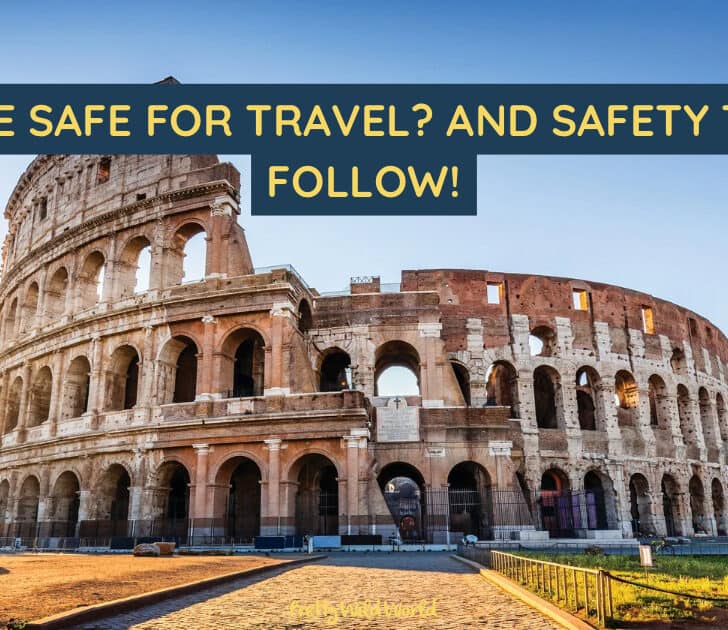
How Safe Is Rome Compared to Other Major Cities?
Rome consistently ranks as one of the safer major European cities for tourists. The city has a lower violent crime rate than London, Paris, and Barcelona. Most crime that affects visitors falls squarely into the “petty theft” category, and even that tends to concentrate around a handful of well-known hotspots.
The Italian National Police maintain a visible presence throughout the historic center, especially around the Vatican, the Colosseum, and Piazza Navona. Carabinieri patrols are common in tourist-heavy zones, and you will often spot armed military personnel at major landmarks and transit hubs. That level of security is standard across Italian cities and reflects general precaution rather than any active threat.
According to travel safety indexes, Rome scores well for overall safety, with most risk categories falling into the “low” or “moderate” range. The one exception is petty crime, which sits higher than average due to the sheer volume of tourists concentrated in small areas. More on that below.
Pickpocketing in Rome: Where It Happens and How to Avoid It
Pickpocketing is, without question, the number one safety concern for tourists in Rome. It is not violent, it is not dangerous, but it is extremely frustrating when it happens. Professional pickpockets in Rome are skilled, fast, and they specifically target distracted tourists.
The highest-risk areas include Termini Station (Rome’s main train hub), the Metro lines (especially Line A between Termini and Vatican), the areas immediately surrounding the Colosseum, Trevi Fountain at peak hours, and crowded buses like the 64 and 40 routes that run between Termini and St. Peter’s.
Here is how to protect yourself: carry a crossbody bag with a zip closure rather than a backpack or open tote. Keep your phone in a front pocket, not a back pocket. Leave your passport in the hotel safe and carry a photocopy instead. Do not put your wallet in an outer jacket pocket. If someone bumps into you or creates an unusual distraction, check your belongings immediately.
For more on what to bring and how to pack smart, our Europe travel packing list covers everything from anti-theft bags to document organization.
Common Tourist Scams in Rome (And How to Shut Them Down)
Scams in Rome are annoying but rarely dangerous. Once you know the playbook, they are easy to dodge. The most common ones show up around the same tourist hotspots year after year.
The friendship bracelet scam happens near the Spanish Steps and the Colosseum. Someone ties a bracelet on your wrist while chatting you up, then demands payment. The fix: do not let anyone put anything on your wrist. Just say “no grazie” and keep walking.
The petition scam involves someone asking you to sign a clipboard for a fake charity. While you are distracted reading it, an accomplice goes through your pockets. Decline and move on.
Fake gladiators outside the Colosseum will pose for photos and then demand 20 to 50 euros. If you want a photo, agree on a price beforehand, though most experienced travelers just skip this entirely.
Restaurant scams happen less frequently but still pop up near major attractions. Some restaurants add a “service charge” plus a “cover charge” plus a tip line, effectively triple-charging for service. Always check the menu for coperto (cover charge) pricing and know that tipping is not expected in Italy the way it is in the US.
Is Public Transportation Safe in Rome?
Rome’s public transportation is safe to use, including the Metro, buses, and trams. The main risk, again, is pickpocketing on crowded vehicles rather than any physical danger. The Metro shuts down around 11:30 PM on weekdays (extended to 1:30 AM on Fridays and Saturdays), so plan accordingly for late nights.
Taxis in Rome are generally safe when you use official ones: white cars with the “TAXI” sign on top and a meter running. Avoid anyone who approaches you outside Termini or the airport offering a “taxi” ride, because unlicensed drivers are known to overcharge significantly. Better yet, use apps like FreeNow or Uber (which operates through licensed local drivers in Rome) for transparent pricing.
Walking is the best way to experience most of Rome’s historic center, and the streets feel safe during the day and well into the evening. The areas around the Colosseum, Trastevere, Campo de’ Fiori, and Piazza Navona are lively and well-lit until late. Just watch your step on the cobblestones, especially after rain.
Safest Neighborhoods in Rome for Tourists
Not all neighborhoods in Rome feel the same after dark, and choosing the right base can make a real difference in your comfort level. The historic center (Centro Storico) is the safest and most convenient option for first-time visitors. Everything is walkable, the streets stay busy late, and you are never far from a restaurant or a landmark.
Trastevere is a favorite for its narrow cobblestone streets, excellent food scene, and relaxed atmosphere. It gets lively at night with bars and restaurants, which means plenty of people around. Monti, Rome’s oldest neighborhood, has a similar charm with less tourist traffic and a more local feel. Prati, just north of Vatican City, is quieter and residential with a more upscale vibe.
Areas to be more cautious around include the immediate vicinity of Termini Station (especially late at night), parts of Esquilino after dark, and the outskirts like Tor Bella Monaca or San Basilio, though tourists rarely have reason to visit those areas. None of these places are dangerous in the way that word gets used in some cities, but they are grittier and less comfortable for solo wandering at 2 AM.
If you are still deciding on your itinerary, our guide to the best things to do in Rome covers the top attractions across the safest and most walkable neighborhoods.
Is Rome Safe for Solo Female Travelers?
Rome is a popular destination for solo female travelers, and most women report feeling safe throughout their trip. Italian culture does involve more direct social interaction than some visitors expect, which can occasionally mean unsolicited comments or attention. It is rarely threatening, but it can be uncomfortable if you are not used to it.
Practical tips: stick to well-lit, populated streets after dark. The historic center and Trastevere feel safe well into the night because of the restaurant and bar traffic. Avoid walking alone through quieter residential areas or near Termini late at night. If someone is making you uncomfortable, ducking into a shop, restaurant, or hotel lobby is the easiest way to end the interaction.
For group travel ideas in Europe, our best girls’ trip destinations in Europe list features Rome alongside other cities worth adding to your itinerary.
Health and Emergency Information for Rome
Italy’s universal emergency number is 112, which connects you to police, fire, and ambulance services. Pharmacies (farmacie) are easy to find and marked with a green cross. They can advise on minor ailments and sell many medications over the counter that would require a prescription elsewhere.
Tap water in Rome is safe to drink. The city has hundreds of small public fountains called nasoni scattered throughout the streets, providing free, cold, clean drinking water. This is genuinely one of the best things about Rome in summer, so bring a refillable bottle.
Travel insurance is worth getting before any European trip. A broken ankle on cobblestones, a stolen bag, or a cancelled flight can get expensive fast. Most policies cover all three for a reasonable daily rate.
10 Practical Safety Tips for Visiting Rome
These tips come from years of travel experience and feedback from readers who have visited Rome recently. None of them require paranoia, just a baseline level of awareness that serves you well in any major city.
- Use a crossbody bag with a zipper. Backpacks and open totes are the easiest targets for pickpockets in Rome.
- Leave your passport in the hotel safe. Carry a photocopy or a photo on your phone instead.
- Download offline maps before you arrive. Google Maps works offline in Rome if you download the area beforehand.
- Book skip-the-line tickets for the Colosseum, Vatican Museums, and Borghese Gallery. The queues attract scammers and pickpockets.
- Eat where the locals eat. Restaurants one block off the main piazzas are usually cheaper, better, and less likely to pull pricing tricks.
- Keep your phone in your front pocket or inside your bag. Never leave it sitting on a cafe table, especially at outdoor seating.
- Use official taxis (white, metered, with TAXI sign) or rideshare apps. Decline anyone approaching you at airports or stations offering rides.
- Learn a few Italian phrases. Even “no grazie” and “quanto costa” go a long way in shutting down scams and showing respect.
- Stay hydrated from the nasoni fountains. Free, clean, cold water all over the city. Bring a reusable bottle.
- Trust your instincts. If a situation feels off, walk away. Rome is full of people and well-lit streets, so help is never far.
Staying Safe on Day Trips from Rome
If you are planning day trips from Rome to places like Pompeii, Florence, or the Amalfi Coast, the same basic safety rules apply. Trains are safe and reliable (Trenitalia and Italo are the main operators), though the same pickpocketing warnings apply at busy stations. Keep your bags close on regional trains, and try to avoid putting luggage out of sight on overhead racks during nap-worthy rides.
For a full list of options, our best day trips from Rome guide covers everything from coastal escapes to wine country tours, all reachable in under two hours.
Planning a trip to Rome on a budget?
Get your finances sorted before you go with The Ultimate Budget Planner — your go-to tool for tracking travel expenses and saving smarter.
Recommended Travel Safety Gear for Rome


Final Verdict: Is Rome Safe for Travel?
Rome is safe. Not perfectly safe (no major city is), but safe enough that millions of people visit every year and have the time of their lives. The risks are manageable, predictable, and almost entirely preventable with basic common sense.
Pickpocketing is the main concern, and it concentrates in the same well-known areas. Scams follow a familiar script. Violent crime targeting tourists is extremely rare. The streets feel alive and safe well into the evening, the food is incredible, the history is literally everywhere, and the city rewards anyone willing to slow down and pay attention.
Go to Rome. Stay aware, pack smart, and spend your energy worrying about which gelato flavor to try rather than whether you will be safe. You will be fine.
Planning your Rome trip budget? Grab The Ultimate Budget Planner to track flights, hotels, food, and activities before you book anything. Get it here →
Frequently Asked Questions
Is Rome safe to walk around at night?
Most central areas like Trastevere, Centro Storico, and Monti are safe for evening strolls. Stick to well-lit streets and stay alert near Termini station after dark.
Is public transport in Rome safe?
Yes, but buses and metro lines can get crowded, making them a target for pickpockets. Keep bags zipped and in front of you, especially on the 64 bus and Metro Line A.
Are taxis safe in Rome?
Official white taxis are safe and regulated. Always check for the meter or agree on a fixed fare before getting in. Avoid unmarked cars offering rides near tourist spots.
What are the most common scams in Rome?
Watch out for fake petitions, friendship bracelet sellers near the Colosseum, and restaurant staff who add unexplained charges. If something feels off, walk away.
Key Takeaways
- Rome is safe for tourists, with violent crime being rare and petty theft being the main concern
- Pickpocketing is most common around the Colosseum, Termini Station, Vatican City, and crowded buses
- Tourist scams include fake petitions, friendship bracelets, and unlicensed taxi drivers overcharging fares
- Solo female travelers are generally safe but should avoid poorly lit streets in Termini area after midnight
- Italy’s emergency number is 112 for police, fire, and medical emergencies
Final Thoughts
Rome is one of those cities that rewards the prepared traveler. The safety concerns are real but manageable — stick to well-lit streets after dark, keep your valuables close in crowded tourist spots, and trust your instincts the same way you would in any major European city. The food alone is worth whatever minor hassles come with navigating a busy capital.