70s kitchen decor means warm wood, earthy color, geometric pattern, globe lighting, brass hardware, and a little rattan and greenery. The 16 ideas below build a warm retro kitchen, most of them renter-friendly, plus a section on getting the look on a budget.
It is a Saturday morning and the kitchen is doing its best work. Warm wood cabinets catch the light, there is a globe pendant glowing over the table, a row of ceramic crocks on the counter, and a trailing plant by the window. Nothing in the room is loud. It is just deeply, comfortably warm.
That is the 70s kitchen worth copying. Not the avocado-appliance time capsule, but the warm, textured, lived-in version, all earthy color, natural wood, and pattern with a sense of humor. The 16 ideas below pull from the real era, and the section at the end covers how to get there on a budget, because the look leans on warmth, not on a renovation.
Want a warm retro kitchen without gutting the one you have?
The Aesthetic Apartment Makeover Guide walks you through styling a room with what you already have, so a 70s kitchen comes together with decor and small swaps instead of a renovation.
Recommended 70s Kitchen Decor Products
Six pieces that bring the warm retro look without a renovation, from a globe pendant to brass cabinet hardware.



Recommended blogs to read:
- the full 70s home decor guide
- retro 70s dining room ideas
- the 70s color palette
- 70s pendant and globe lighting
- a cleaner mid-century kitchen
What Makes a Kitchen Feel 70s
A 70s kitchen is warm before it is anything else. The cabinets are wood, not white, the colors run earthy, harvest gold, avocado, burnt orange, brown, and the surfaces carry pattern and grain rather than flat gloss. It feels like a room people actually cooked and gathered in.
The details fill in the era. Globe and pendant lighting, brass hardware, geometric or floral wallpaper, ceramic canisters, rattan stools, and a trailing plant are the pieces that read instantly retro. Tie the colors to the rest of the house with our guide to the retro 70s living room, which shows the same earthy palette in the next room over.
One rule before the list: warmth over accuracy. You are not recreating a 1974 showroom, you are borrowing the era’s warmth. Pick the ideas that make the kitchen feel cozy and characterful, and skip anything that only reads as a museum piece.
16 Retro 70s Kitchen Ideas
Mix a handful of these rather than all sixteen. The budget section after the list covers where to start cheap.
1. Warm Wood Cabinets
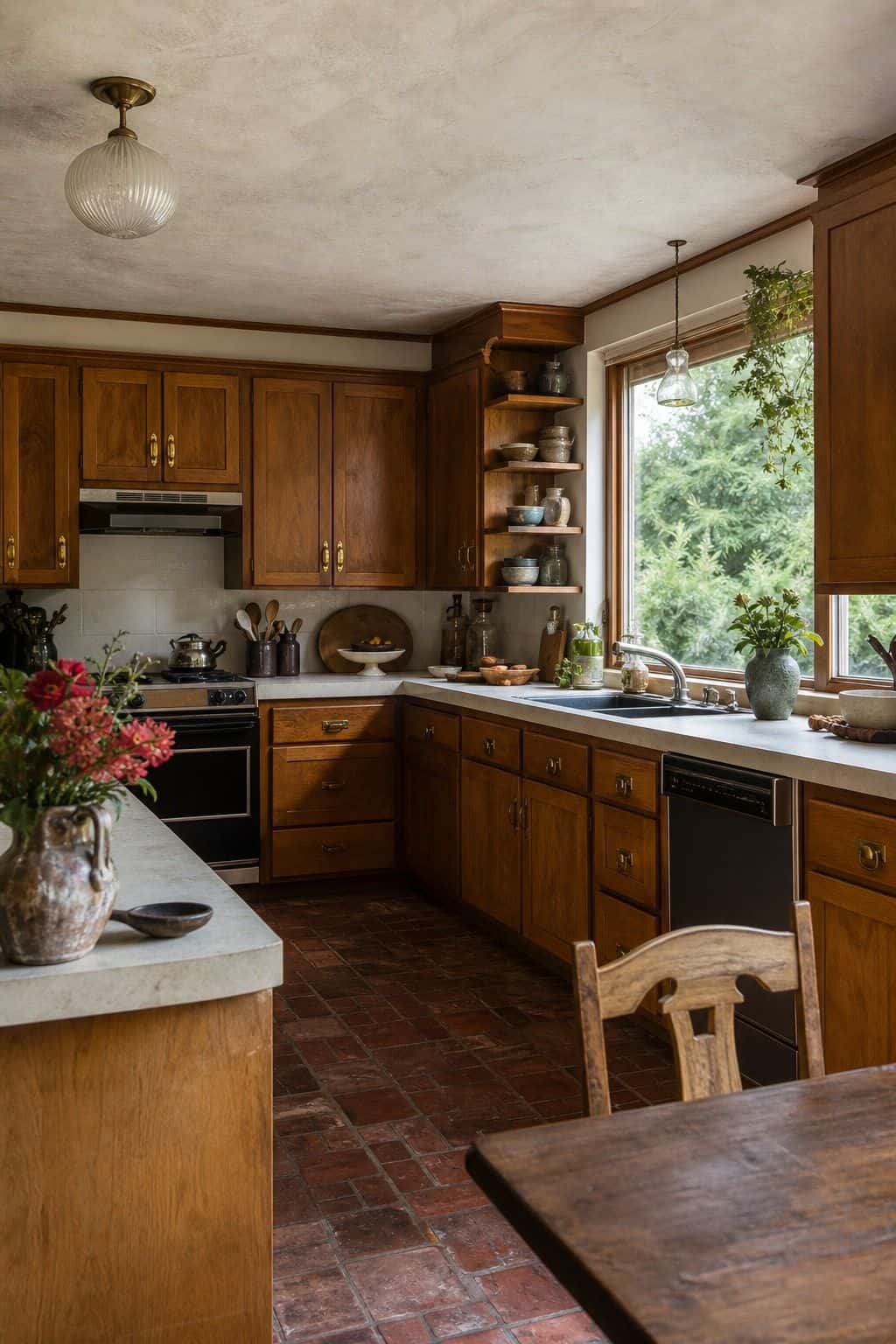


Wood cabinets are the backbone of a 70s kitchen. The era loved warm oak, walnut, and pine with visible grain, the opposite of today’s flat white. If you have wood cabinets already, you are most of the way there, just clean them up rather than painting over them. If yours are white or laminate, a warm wood-tone peel-and-stick film on the cabinet fronts gets the effect for renters, and a stained wood island or open shelf adds the tone if the cabinets cannot change.
2. Harvest Gold or Avocado Accents
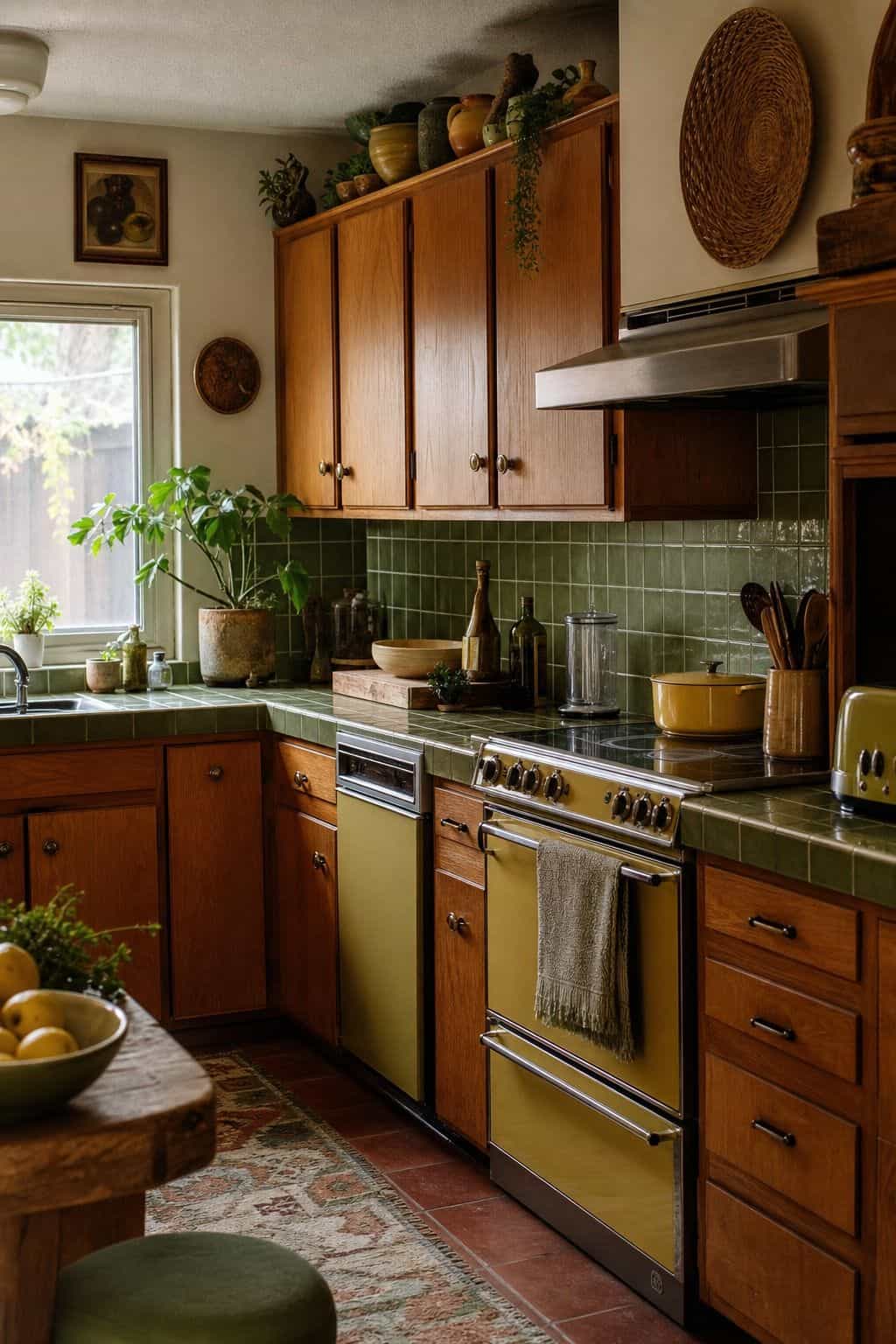


You do not need a gold fridge to signal the era. A harvest-gold kettle, an avocado-green stand mixer, a set of burnt-orange canisters, the era’s colors land best in small, swappable doses. Choose the muted, dusty version of each shade rather than the loud one, that single choice keeps the kitchen retro instead of dated. A few colored pieces on an open shelf do more than a whole wall of paint.
3. Geometric or Floral Wallpaper
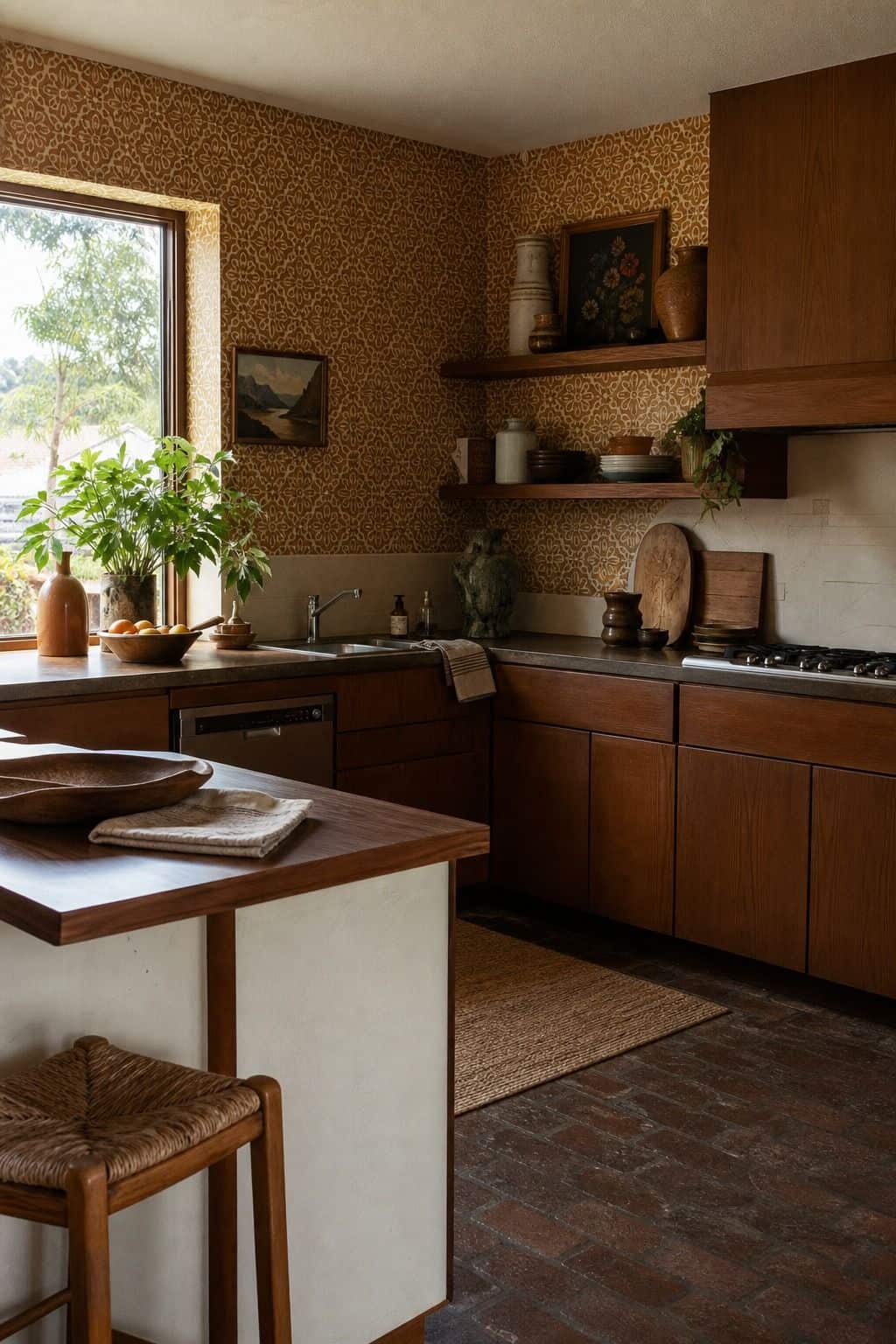


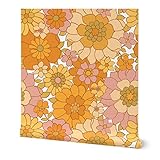
Wallpaper made 70s kitchens, and one papered wall still does the most retro work for the least money. Big repeating geometrics, oversized florals, and abstract patterns in mustard, rust, and brown are deeply of the era. Paper a single wall, a breakfast nook, or the area above open shelving rather than the whole room. Peel-and-stick versions make this fully renter-safe, so it is one of the best low-commitment ideas here.
4. A Globe or Pendant Light
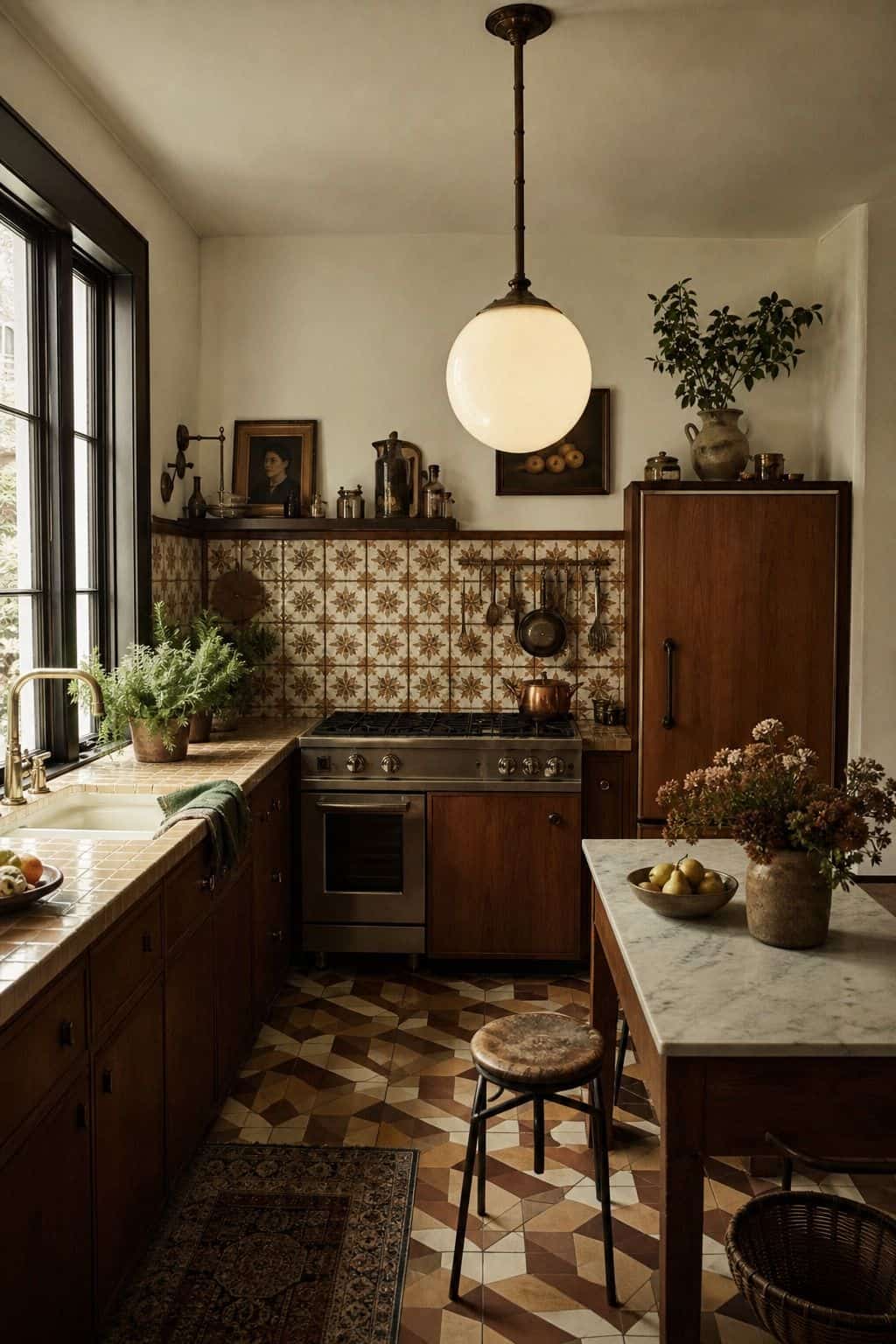
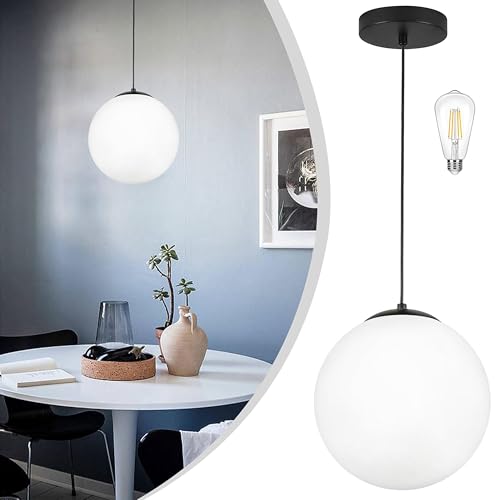


Lighting is one of the fastest era swaps in a kitchen. A round globe pendant, a smoked-glass fixture, or a row of warm pendants over an island or table reads instantly 70s. Hang it lower than feels normal, the era liked light dropped close to the table for an intimate glow. Use a warm 2700K bulb so the light stays golden. The same warm-fixture approach carries into a retro 70s bedroom, where low golden light matters most.
5. Brass Hardware
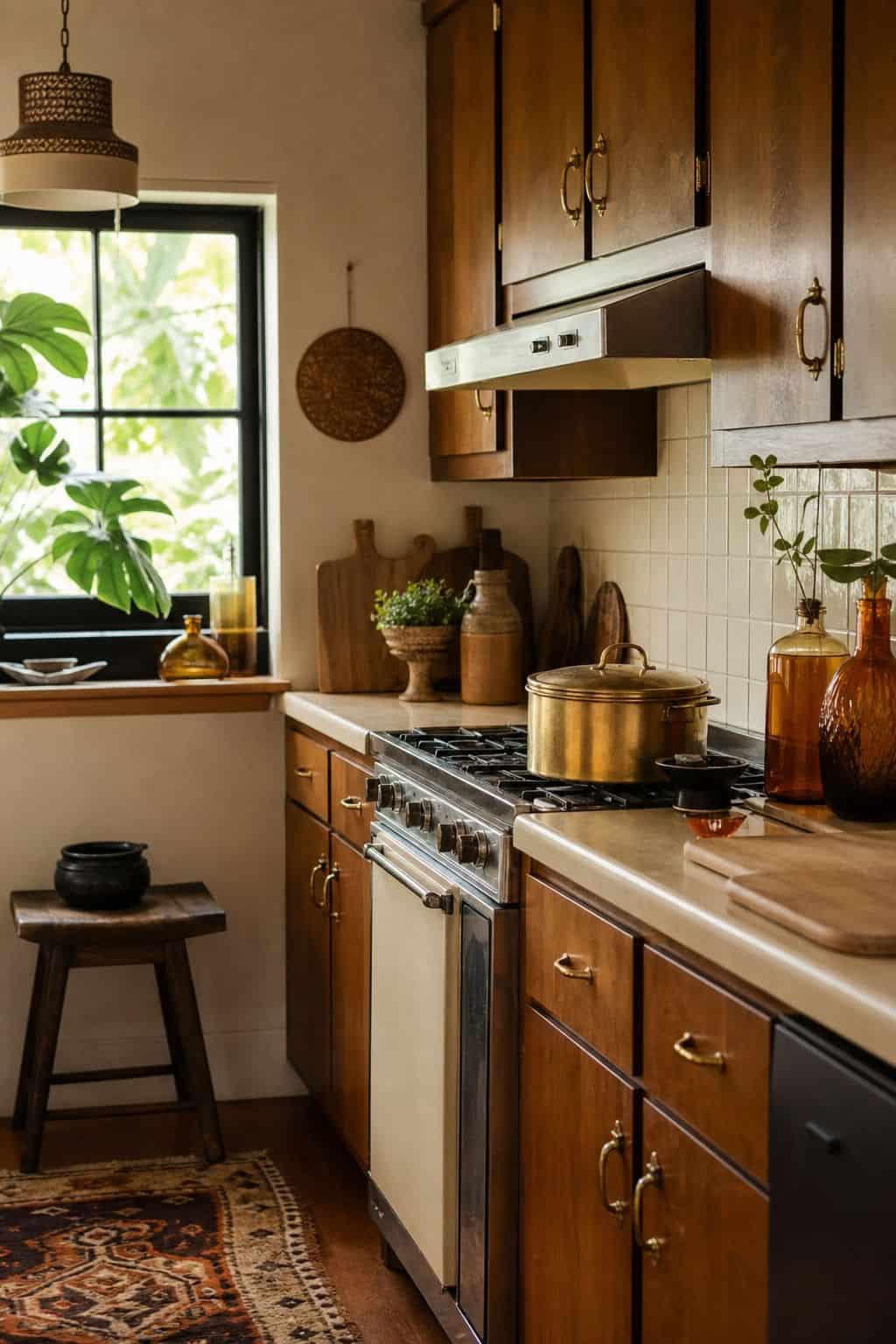

Cabinet hardware is the cheapest swap with the biggest reach, every door and drawer gets touched by it. Trading chrome or black pulls for warm brass or gold instantly shifts the kitchen toward the era. A full set of pulls is inexpensive and takes an afternoon with a screwdriver. The warmth of the metal ties into the wood cabinets and the brass faucet if you have one, so the whole kitchen reads more cohesive.
6. Open Shelving With Vintage Glassware
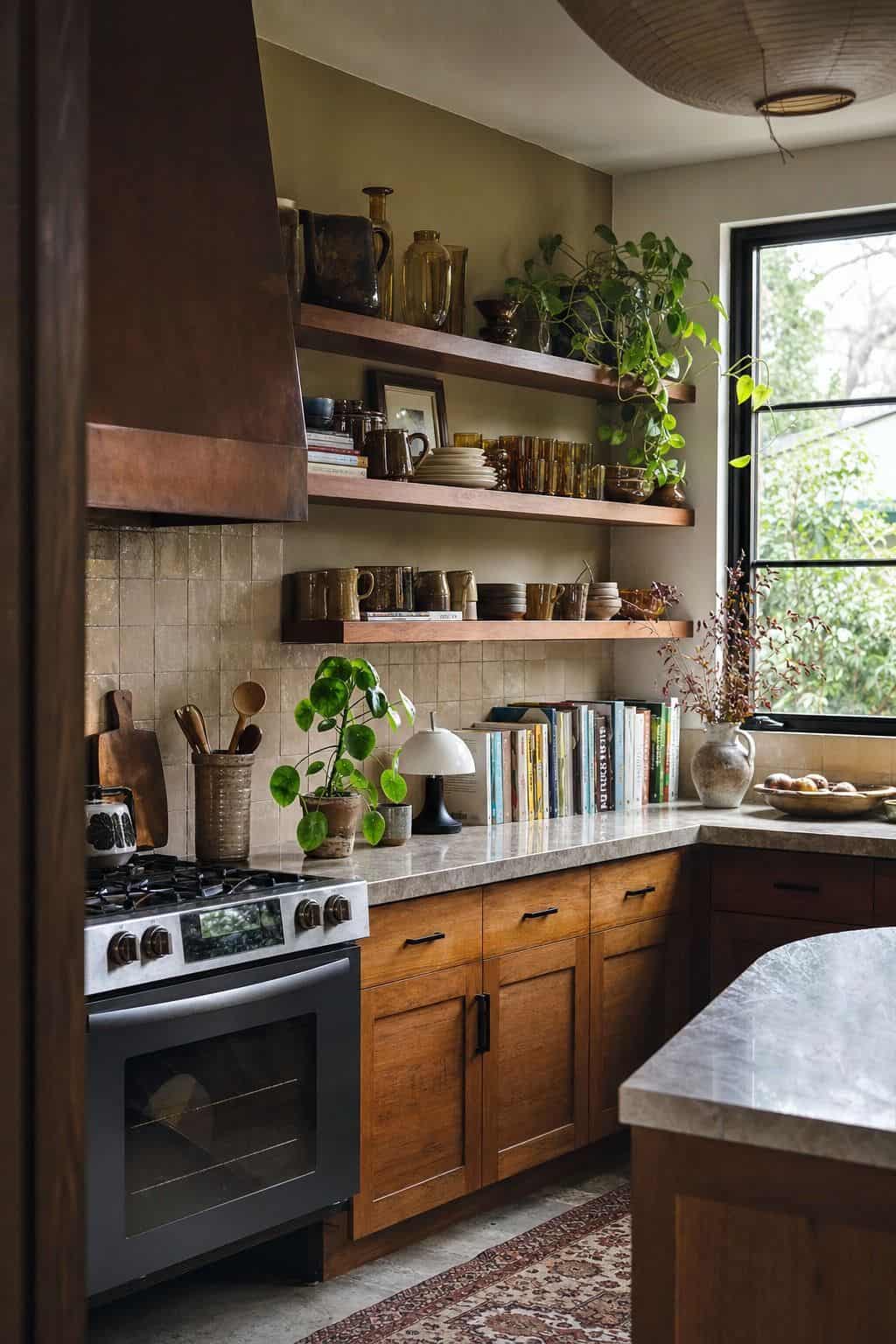


The 70s loved a display, and open shelving is where it lives. A shelf or two of amber and smoked glassware, ceramic mugs, and patterned dishware turns everyday items into decor. Thrift stores are full of cheap 70s glassware in exactly the right tones. Keep the shelf edited rather than crammed, the goal is a warm, collected look, not clutter. It also makes the kitchen feel personal in a way closed cabinets never do.
7. A Terracotta or Checkerboard Floor
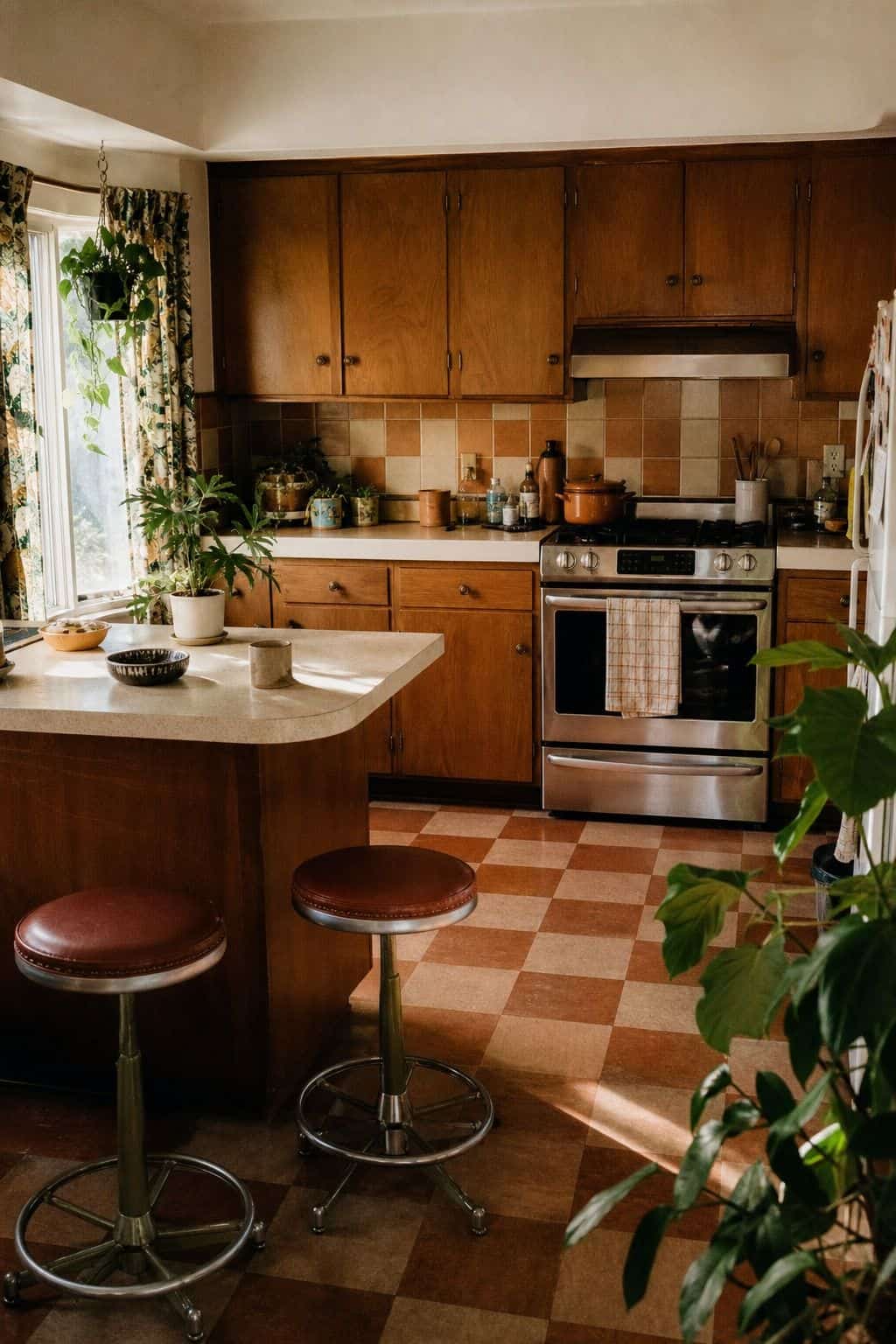

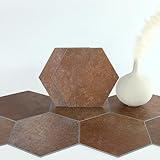

70s floors had personality. Terracotta tile, warm brick-look flooring, and bold checkerboards in earthy colors all read of the era. If you are renovating, a terracotta or patterned tile floor anchors the whole kitchen. If you are renting, peel-and-stick vinyl floor tile in a checkerboard or terracotta tone gets the same effect and lifts cleanly when you leave. The floor is a big surface, so even a subtle pattern shifts the room.
8. A Patterned Tile Backsplash


The backsplash is a small surface that punches above its size. A patterned tile, a band of geometric tile, or even a mosaic in earthy color brings the era’s love of pattern into the kitchen without a big commitment. Renters can use tile-effect peel-and-stick panels for the same look. Keep the pattern small-scale and the color warm, so the backsplash reads as a thoughtful detail rather than a loud statement.
9. Retro Canisters and Crocks


The countertop is prime retro real estate. A set of ceramic canisters, a stoneware crock for utensils, and a few patterned tins in harvest gold and brown scatter the era’s color and texture across the counter. These are cheap, easy to thrift, and completely swappable. A coordinated set looks intentional, while a mix of thrifted finds in the same tones looks collected over time, both work for the era.
10. Rattan Barstools


If you have an island or a counter, rattan or cane stools bring the natural texture the era leaned on. The woven material softens all the hard cabinet and counter surfaces, and the warm tone pairs naturally with wood cabinets. Rattan stools are also easy to find secondhand. Two or three of them at a counter do real era work and stay genuinely useful, which makes them one of the better-value ideas on the list.
11. A Breakfast Nook

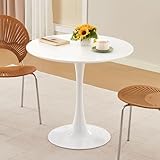

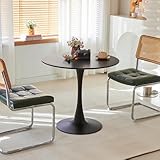
The breakfast nook is a 70s signature, a cozy built-in or table-and-bench tucked into a corner. If you have the space, a small round table with a bench, a couple of chairs, and a low pendant overhead creates the era’s most inviting feature. Add a patterned cushion on the bench and the nook becomes the warmest spot in the kitchen. Even a compact version in a small kitchen carries the retro feeling.
12. Macrame and Trailing Plants


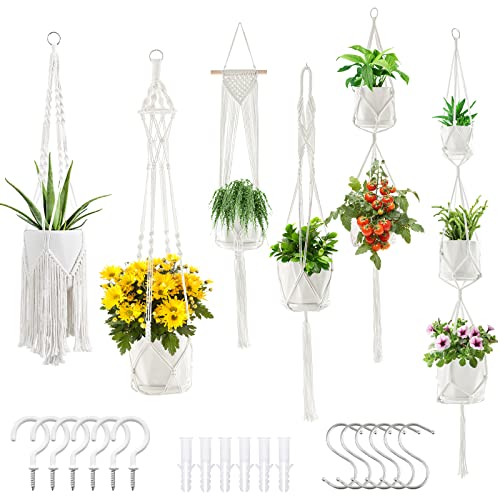
No 70s kitchen is finished without greenery. A trailing pothos in a macrame hanger by the window, a herb pot on the sill, or a plant on top of the cabinets brings the living element the era loved. The macrame hanger itself is a retro signal, so it pulls double duty. Kitchens are forgiving for plants thanks to the natural light and humidity, and the green is a fresh counterpoint to all the warm earthy tone.
13. A Sunburst or Starburst Clock




The starburst clock is pure 70s, and a kitchen is the natural home for it. A brass or wood sunburst clock on a free stretch of wall adds the era’s radiating geometry and a functional piece at once. It is a small, single purchase that signals the era clearly. If you use the sunburst shape elsewhere, like in a retro entryway, the clock ties the kitchen into the rest of the home.
14. Warm Pendant Lighting Over the Sink


The sink usually gets harsh overhead light and nothing else. A small warm pendant or a sconce above the sink adds a layer of golden light exactly where you spend time, and it breaks up the flat ceiling lighting most kitchens default to. The era lit rooms in layers, several warm points rather than one bright source. A pendant over the sink is a small move that makes the whole kitchen feel softer at night.
15. Earthy Textiles


Fabric softens a hard-surfaced room. A patterned tea towel, a striped or geometric runner on the table, a cushion on the bench, and a small shag-style mat by the sink bring warmth and era color underfoot and on the counter. Textiles are cheap, swappable, and fully renter-safe, so they are an easy place to start. Keep the patterns in the same earthy family so they read as coordinated rather than busy.
16. The Renter-Friendly Version


If you cannot touch the cabinets, the floor, or the fixtures, the look still comes together. Combine wood-tone film on the cabinet fronts, peel-and-stick wallpaper on one wall, brass hardware, retro canisters and vintage glassware on open shelves, rattan stools, earthy textiles, a sunburst clock, and a trailing plant. Every one of those lifts out when you move. Stacked together, they read as a fully committed 70s kitchen that happens to be completely reversible.
How to Get the Retro Kitchen Look on a Budget
A 70s kitchen is one of the cheapest period looks to pull off, because the era runs on warmth and texture rather than expensive materials. Start with the swaps that cost almost nothing: a set of brass hardware, retro canisters, vintage glassware on a shelf, earthy tea towels, and a trailing plant in a macrame hanger. That handful alone shifts the room.
Thrift stores are the secret here. 70s glassware, ceramic crocks, sunburst clocks, and rattan stools turn up constantly and cheaply, because the era produced so much of it. For the bigger surfaces, peel-and-stick wallpaper and floor tile give you pattern without renovation cost. Spend real money on only one or two things, a good globe pendant, a set of rattan stools, and thrift or DIY the rest. For the same budget-minded approach across a whole home, our 70s retro home decor guide shows it room by room.
Want the retro kitchen to feel pulled together, not just thrown together?
The Aesthetic Apartment Makeover Guide helps you style a room so thrifted finds and small swaps read as a cohesive look instead of a pile of pieces.
Frequently Asked Questions
What did 70s kitchens look like?
70s kitchens were warm and textured: wood cabinets with visible grain, earthy colors like harvest gold and avocado, geometric or floral wallpaper, globe and pendant lighting, brass hardware, patterned tile, and open shelves of amber glassware, usually with a breakfast nook and trailing plants.
What colors were 70s kitchens?
70s kitchens ran earthy: harvest gold, avocado green, burnt orange, mustard, and warm brown, anchored by natural wood cabinets. The modern, current version uses the muted, dusty version of each shade rather than the loud, saturated original, which is what reads as dated.
How do I make my kitchen look retro?
Start with warm wood tones on cabinets or shelving, swap hardware to brass, hang a globe pendant, and add peel-and-stick geometric wallpaper on one wall. Then layer in retro canisters, vintage glassware on open shelves, rattan stools, earthy textiles, and a trailing plant in a macrame hanger.
Is the 70s kitchen trend back?
Yes, the 70s revival is one of the strongest retro trends right now, and kitchens are a big part of it. The modern version is warmer and more restrained than the original: muted earthy color, wood tones, geometric pattern, and brass, rather than loud all-over avocado appliances.
How do I do a 70s kitchen on a budget?
The 70s kitchen is cheap to pull off because it runs on warmth and texture. Start with brass hardware, thrifted retro canisters and glassware, earthy tea towels, and a trailing plant. Add peel-and-stick wallpaper and floor tile for pattern, and spend real money on just a globe pendant and rattan stools.
Key Takeaways
- A 70s kitchen is warm before anything else: wood cabinets, earthy color, geometric pattern, globe lighting, brass hardware, and a trailing plant or two.
- The 16 ideas range from permanent moves like wood cabinets and patterned floors to fully reversible ones like wallpaper, hardware, canisters, and textiles.
- Aim for warmth over accuracy, you are borrowing the era’s cozy character, not recreating a 1974 showroom.
- The renter version stacks wood-tone film, peel-and-stick wallpaper, brass hardware, vintage glassware, rattan stools, and plants for a committed look that is fully reversible.
- It is one of the cheapest period looks to pull off, thrift the glassware, canisters, and stools, use peel-and-stick for pattern, and spend real money on just a pendant and stools.
Final Thoughts
A 70s kitchen done well is warm, characterful, and genuinely welcoming, the kind of room that makes a Saturday morning better. Lean on wood tones and earthy color, layer in pattern and brass, thrift the small stuff, and keep the muted version of every shade. That gets you a kitchen with real retro warmth that still feels current. To carry the look into the rooms around it, the 70s wall decor guide and the 70s home office ideas guide pick up where the kitchen leaves off.
If you are carrying the retro look further, groovy 70s bathroom decor ideas keep the same warm, groovy feeling room to room.