Quick Answer: The best places to visit in the Balkans sort by the working zone you cross into, not by the country flag at the border. The Adriatic coast (Croatia, Montenegro, Albania) runs the beach trip. The inland mountains (Slovenia, BiH, Serbia, Montenegro) run the alpine and canyon trip. The Greek north and the eastern tier (Bulgaria, North Macedonia) run the cultural city trip. Pick a zone first.
Last updated: May 2026 · Prices and opening hours verified May 2026.
The countries of the Balkans share a recent history but no longer share a present. The Ottoman empire ran most of them for four hundred years. Yugoslavia held six of them together from 1945 to 1991. The Cold War froze the political map in place until 1989. None of that history travels with you anymore. Croatia joined the eurozone in 2023 and the Schengen passport zone in 2023. Albania has been a NATO member since 2009. Serbia stays outside the EU and uses the dinar. Bulgaria has been in the EU since 2007 but uses the lev. The practical trip depends entirely on which present you cross into.
This is why country-by-country Balkans guides feel a step out of date. They tell you about Croatia and then about Bosnia as if the two trips ran parallel. In practice they run very differently. Croatian rental cars charge a fee to enter Albania (or refuse the crossing entirely on some contracts). Bosnian guesthouses run cash-only past the second largest cities. The Albanian Riviera is now reachable from Italian airports for less than the Croatian coast. The trip you book depends more on which zone you commit to than which country you list.
So this is a Balkans guide sorted by the working zone the trip actually crosses. Five zones: the Adriatic coast where the beach trip runs, the inland mountains where the hiking-and-canyon trip runs, the Greek north where the cultural anchor sits, the eastern tier where Bulgaria and North Macedonia hold the underrated cities, and the cross-border layover hubs (Belgrade, Skopje, Sarajevo, Pristina) where most multi-country routes converge. For the route-by-day version of the same conversation, the Balkans itinerary guide handles that.
Balkans Travel Kit
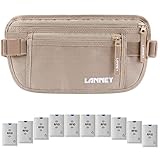
A Balkans trip rewards small, layered kit. A road-trip atlas map for the inland routes where Google Maps occasionally guesses wrong. Lightweight hiking boots for the mountain stretches (Theth, Tara Canyon, Rila). A cash money belt for the Bosnian and Albanian inland villages where card readers are still rare. Collapsible trekking poles for the day hikes. Pieces below earn their suitcase room.




What Does the Adriatic Coast Zone Cover?
The Adriatic shore runs about 1,250 miles from northern Italy down through Slovenia, the full length of Croatia, Bosnia’s small coastal strip at Neum, Montenegro’s Bay of Kotor, and the Albanian Riviera that ends at the Greek border. The zone delivers the classic Balkans beach trip: walled cities, pebble coves, island ferries, and seafood dinners on harbor-side terraces.
1. The Dalmatian Coast and Islands (Croatia)
The defining stretch of the entire zone runs 350 miles from Zadar down to Dubrovnik. Split anchors the central section: Diocletian’s Palace forms the actual working old town, you eat dinner inside the 1,700-year-old emperor’s retirement complex. Hvar, Brač, Vis, and Korčula are the four islands worth a multi-day stop each. Plitvice Lakes inland delivers the wooden-walkway day trip across turquoise travertine pools. Croatia joined the euro in 2023 and the Schengen zone the same year, which simplified the entry logistics but pushed prices up to Italian-Adriatic levels.
Read also: things to do in Croatia.
2. The Bay of Kotor (Montenegro)
A natural harbor cuts 18 miles inland from the Adriatic into a fjord-like inlet where the mountains drop 5,500 feet straight to the water. Kotor the walled town anchors the head of the bay, with city walls climbing 850 feet up the hillside to the San Giovanni fortress at the top. Perast across the water holds a 17th-century Venetian-port architecture so well-preserved it could pass for a film set. Day-boat trips run to the two small islands in the middle of the bay (Our Lady of the Rocks, a man-made islet built up over four centuries of fishermen dropping stones). The 25-hairpin Kotor-to-Lovćen road climbs the mountain ridge in 45 minutes.
Read also: places to visit in the Mediterranean.
3. The Albanian Riviera
The same Ionian Sea that washes the Greek side of the strait washes a coast 30 miles east at one-third the cost. The Riviera runs 100 miles south from Vlorë down to the Greek border, with Himarë and Dhërmi as the main village bases, Ksamil as the photographed Maldives-shade water at the southern end, and Saranda as the rough-around-the-edges regional port. Gjipe between Himarë and Dhërmi is the standout wilderness cove. Tourist numbers tripled between 2018 and 2026; the standard prediction is they triple again by 2030. The window for the affordable version is closing.
Read also: best beach destinations in Europe.
Where Are the Best Mountain Trips in the Balkans?
The Dinaric Alps run a 400-mile mountain spine from Slovenia through Bosnia and Montenegro into northern Albania. The zone delivers the opposite of the coast trip: alpine hiking, canyon-rafting, fortified hilltop towns, hot-spring tekijas, and a road network slow enough that two cities a day is the working pace. Prices run a third to a half below the coastal zone.
4. The Julian Alps (Slovenia)
An island church on a glacial pool at the foot of a mountain range that climbs to 9,400 feet anchors the tourist version of the Slovenian alpine northwest. Bled the village runs the postcard scene. Bohinj seven miles further into the range holds the quieter, larger, deeper water. Triglav National Park covers the heart of the high country. The Soča River valley west of the park runs turquoise-water gorges and adventure-sport bases (Bovec for rafting and canyoning). Slovenian roads run smooth and fast; Slovenian prices run 30% below Austrian Alpine equivalents.
Read also: places to visit in central Europe.
5. Mostar and the Herzegovinian Mountains
The rebuilt Stari Most bridge arches an impossible turquoise across the Neretva River, with divers leaping from it on summer afternoons (it’s a paid local tradition; €30 to watch one go, €60 to do it yourself with a quick rope-tied-to-the-ankle safety briefing). Mostar the town layers Ottoman bazaar, Habsburg-era streets, and rebuilt-after-the-1990s war architecture into a small grid you can walk in two hours. Blagaj’s tekija (Dervish monastery built into a cliff at the source of the Buna River) sits 15 minutes south. Pocitelj’s fortified hilltop sits 30 minutes further. Kravice Falls runs an hour east.
Read also: places to visit in the Balkans.
6. The Tara Canyon and Durmitor (Montenegro)
The deepest gorge on the continent carves 4,300 feet down through a river valley in the country’s northern half. The road across the Tara canyon at the Đurđevića Bridge in Montenegro runs 558 feet above the water on a 1937 concrete-arch span that was rebuilt twice in the 20th century. Durmitor National Park covers the high-mountain plateau north of the canyon, with 48 peaks above 6,500 feet and the Black Lake (Crno Jezero) as the photographed glacial pool at the foot of Mount Meded. Žabljak the regional town sits at 4,750 feet and runs as the ski-and-hiking base.
Read also: places to visit in southern Europe.
7. Theth and the Accursed Mountains (Albania)
An alpine range earns its dramatic name in the country’s far north. Shepherds in the high villages still know their goats individually, and the famous Theth-to-Valbona hike across Albania’s Accursed Mountains crosses an 11-mile pass through alpine pasture above the tree line. Theth the village sits at the head of a glacial valley with the Grunas Waterfall a 30-minute walk from the church. The road in from Shkodër is a paved switchback that takes 2.5 hours; the road on to Valbona requires either the day-hike or a multi-hour drive around the range. June through September is the working season; the pass closes under snow from November through May.
Read also: underrated countries in Europe.
The Greek North
Northern Greece runs differently from the islands the country is famous for. The food is more Ottoman-influenced. The landscape is more Balkan than Mediterranean. The architecture layers Byzantine, Roman, Ottoman, and 20th-century-Greek in one urban grid. Foreign visitors mostly skip this corner; Greek and Balkan travelers know it well.
8. Thessaloniki
The second city of the country sits on the Thermaic Gulf and runs as the cultural anchor of the entire Greek north. Roman ruins (the Rotunda of Galerius, the Triumphal Arch) sit in the middle of the modern grid. The White Tower on the seafront is the city’s symbol. Tsimiski boulevard runs as the high-street shopping spine. The Modiano food market layers Greek, Sephardic Jewish (50,000 Jews lived here before 1943), and Ottoman influences. Day trip to Vergina to see Philip II of Macedon’s tomb, or to Meteora’s cliff-top monasteries 2 hours west.
Read also: things to do in Greece.
9. The Halkidiki Peninsulas
Three thin fingers reach south from the mainland into the Aegean. Kassandra the western prong runs the family-resort version with long golden-sand beaches. Sithonia the middle prong holds the village-and-cove quieter version. Mount Athos the eastern prong is a self-governing monastic republic that women can’t visit and men can only enter with a permit (the day-cruise boats run along the coast and photograph the monasteries from sea distance). Possidi beach and the cape at Sani anchor the most photographed coves. Greek and Bulgarian families drive in for the weekend; foreign visitors are rare.
Read also: best beach destinations in Europe.
Why Visit Bulgaria and North Macedonia?
Bulgaria and North Macedonia hold the eastern edge of the Balkans. Both are underrated relative to their actual offering: Roman amphitheaters in Plovdiv, Byzantine monasteries in the Rhodope and Rila mountains, Soviet-era municipal architecture in Sofia, and the strangely beautiful Skopje that was rebuilt in neoclassical statuary after 2010.
10. Plovdiv (Bulgaria)
The oldest continuously inhabited city in Europe was founded over 6,000 years ago and still runs as a working regional capital. Plovdiv layers Thracian foundations, a Roman amphitheater (the Theatre of Philippopolis seats 7,000 and still hosts concerts), Ottoman bathhouses, and 19th-century National Revival merchant houses into a small old-town grid called Stari Grad. The 2019 European Capital of Culture year left a creative-arts district (Kapana) and a steady run of independent galleries. Pricing runs less than half the Western European city-break average.
Read also: underrated countries in Europe.
11. The Rila Monastery and Rhodope Mountains (Bulgaria)
A 10th-century Orthodox sanctuary sits at 3,800 feet in the mountains 70 miles south of Sofia, its painted walls and arched balconies covering an entire courtyard. The Rila Monastery is the heart of Bulgarian Orthodoxy. Saint John of Rila founded the monastery; Bulgarian national identity was kept alive here through five centuries of Ottoman rule. The Seven Rila Lakes hike further up into the range covers a circuit of glacial pools at 7,200 feet (4-5 hours round trip from the chairlift). The Rhodope range to the east holds smaller painted churches and isolated village hot-spring spas (Velingrad, Hisarya).
Read also: hidden gems in Europe.
12. Lake Ohrid and Skopje (North Macedonia)
One of the world’s oldest bodies of water (estimated 2-3 million years) holds an improbable jade color at 2,300 feet of altitude in the country’s southwest. Ohrid the old town climbs the hillside above the shore with Byzantine churches piled at the upper levels (Saint John at Kaneo on its limestone outcrop is the photographed angle). The capital Skopje runs polarizing: the 2014 government program added neoclassical statuary and bridge sculptures across the central core, which most architecture critics hate and most travelers find genuinely interesting in a weird way. The country renamed itself in 2019 (from “Macedonia” to “North Macedonia”) to resolve a 27-year dispute with Greece.
Read also: most beautiful countries in Europe.
The Cross-Border Layover Cities
Some Balkan capitals exist mainly as transit hubs for multi-country trips. They earn the overnight stop on a longer itinerary even if they wouldn’t justify a dedicated trip. Belgrade, Sarajevo, and Pristina all fit this category. All three reward two days more than they reward four.
13. Belgrade (Serbia)
The confluence of the Danube and Sava rivers anchors a working capital that runs harder than its press. The Kalemegdan fortress sits where the two rivers meet, with the old town stacked behind it. Skadarlija the bohemian quarter holds the 19th-century kafanas (taverns where the writers and painters spent their nights). The floating-club scene along the Sava (the splavovi) runs the strongest nightlife on the continent and doesn’t get going until 2am. The Nikola Tesla Museum holds the inventor’s ashes in a metal sphere on display. Prices run a quarter of Western European equivalents.
Read also: best beach cities in Europe.
14. Sarajevo (Bosnia and Herzegovina)
A small cup of coffee in a courtyard built in 1462 sits five minutes from a still-pockmarked apartment building, and Sarajevo is quietly one of the most affecting cities in Europe for that exact reason. The Baščaršija old Ottoman bazaar runs as the historic core, all coppersmiths and burek and call-to-prayer drifting over the rooftops at dusk. The Tunnel of Hope museum on the edge of town preserves the 800-meter siege-era passage under the runway. The Yellow Fortress overlook above Vratnik gives the city’s best evening view across the river bowl. Trebević cable car runs back up the mountain that used to hold the 1984 Olympic bobsled track.
Read also: hidden gems in Europe.
15. Pristina (Kosovo)
Europe’s youngest capital declared independence in 2008 and is still negotiating its place in the international community. Pristina the city doesn’t photograph well at first glance: post-Soviet architecture, a National Library that looks like an industrial fortress wrapped in chain-link, and a Cathedral of Mother Teresa half-finished for years. The point is the energy, not the postcard. The Newborn monument changes its paint job every February. The day trip to Prizren 60 miles south delivers the Ottoman-era charm with cobbled lanes and the Sinan Pasha Mosque. Visa-free for almost all Western passports.
Read also: underrated countries in Europe.
| Zone | Countries | Currency | Trip type |
|---|---|---|---|
| Adriatic coast | Croatia, Montenegro, Albania | Euro, Euro, Lek | Beach + walled cities |
| Inland mountains | Slovenia, BiH, Serbia, Montenegro | Euro, Mark, Dinar, Euro | Alpine + canyon hiking |
| Greek north | Greece (Thessaloniki to Epirus) | Euro | Cultural + food |
| Eastern tier | Bulgaria, North Macedonia | Lev, Denar | Underrated cities |
| Cross-border hubs | Belgrade, Skopje, Sarajevo, Pristina | Mixed | Stopover cities |
FAQ
Which countries are in the Balkans?
The working list is Croatia, Slovenia, Bosnia and Herzegovina, Serbia, Montenegro, North Macedonia, Kosovo, Albania, Bulgaria, Romania, and parts of Greece (the northern half). Twelve countries if you count Kosovo as independent (most countries do; five EU members and Serbia don’t). Romania is sometimes classified separately. Slovenia is sometimes excluded as being more Central European.
Is Croatia part of the Balkans?
Geographically yes, politically and culturally Croatians often prefer “Central European” or “Adriatic” to “Balkan.” The Balkan terminology carries Ottoman and Yugoslav connotations that Croatian identity has actively distanced from since the 1990s. Travel content still groups Croatia with the Balkans because the geography, the food, and the linked history all sit in that frame, but the country reads more EU-aligned than its southern neighbors.
Is the Balkans safe to visit?
Yes, with the exception of a few specific places (the Kosovo-Serbia border around northern Mitrovica runs occasional flare-ups). Croatia, Slovenia, Bulgaria, Romania, Montenegro, North Macedonia, and Greece all rank above Western European averages on personal-safety indices. Albania and Bosnia rank slightly below but still safer than most Latin American or Asian travel destinations. Standard travel-safety practice applies.
How many days do you need in the Balkans?
Ten days minimum for one zone (Adriatic coast, or Inland Mountains, or Eastern Tier). Two weeks for a two-zone combination (Adriatic plus a Bosnian or Montenegrin inland leg). Three weeks for the full traverse from Slovenia down to Greece. Less than ten days locks you into Croatia coast only.
Which Balkan country has the best food?
Bulgaria for the Mediterranean-meets-Anatolian fusion (shopska salad, banitsa, kavarma). Bosnia for the cevapi-and-burek street food. Serbia for the grilled-meat heritage (ćevapi, pljeskavica, ajvar relish). Croatia and Albania run Italian-influenced. Each Balkan country has its own version of rakia (Albanian raki, Serbian rakija, Bulgarian rakia, Croatian rakija); the local distillate is always different.
Can you use the euro across the Balkans?
Partly. Croatia and Montenegro use the euro officially. Slovenia and Greece too (both EU members). Bosnia uses the convertible mark (pegged to the euro). Albania uses the lek. Serbia uses the dinar. North Macedonia uses the denar. Bulgaria uses the lev. Romania uses the leu. Kosovo uses the euro unofficially. Carry cash for the inland sections of Bosnia, Albania, and Serbia where card readers are still rare past the major cities.
Key Takeaways
- The Balkans share a recent history but no longer share a present. The practical trip depends entirely on the zone you cross into.
- Five working zones: Adriatic coast, Inland Mountains, Greek North, Eastern Tier, and the cross-border layover capitals.
- Croatia joined the euro and Schengen in 2023, pushing prices up to Italian-Adriatic levels. Albania and the inland zones run a third the cost.
- Carry cash for the inland sections of Bosnia, Albania, and Serbia. Card readers are still rare past the major cities.
- Bulgaria’s Plovdiv and North Macedonia’s Lake Ohrid are the two most underrated destinations in the eastern tier.
- Ten days minimum for one zone; two weeks for two zones; three weeks for the full traverse.
Reading the Balkans Without the History Lesson Getting in the Way
The Balkans punish itinerary thinking that treats the region as one country. The five zones run different trips with different currencies, different infrastructure, different prices, and different visa rules. Pick a zone, commit to it, and the trip falls into place. Try to do all five in one fortnight and the trip turns into a series of bus stations.
The history is real and worth reading on the plane in. It is also not the destination. The current Balkans run as 12 different working countries with different EU statuses, currencies, and visa rules. The trip you book depends on which present you cross into, not which past the guidebooks lead with.
Pick a zone, pick the working countries that sit inside it, and the practical trip writes itself. For the day-by-day itinerary version, the Balkans itinerary guide handles that. For the broader regional anchor, the most beautiful countries in Europe is the sibling read.