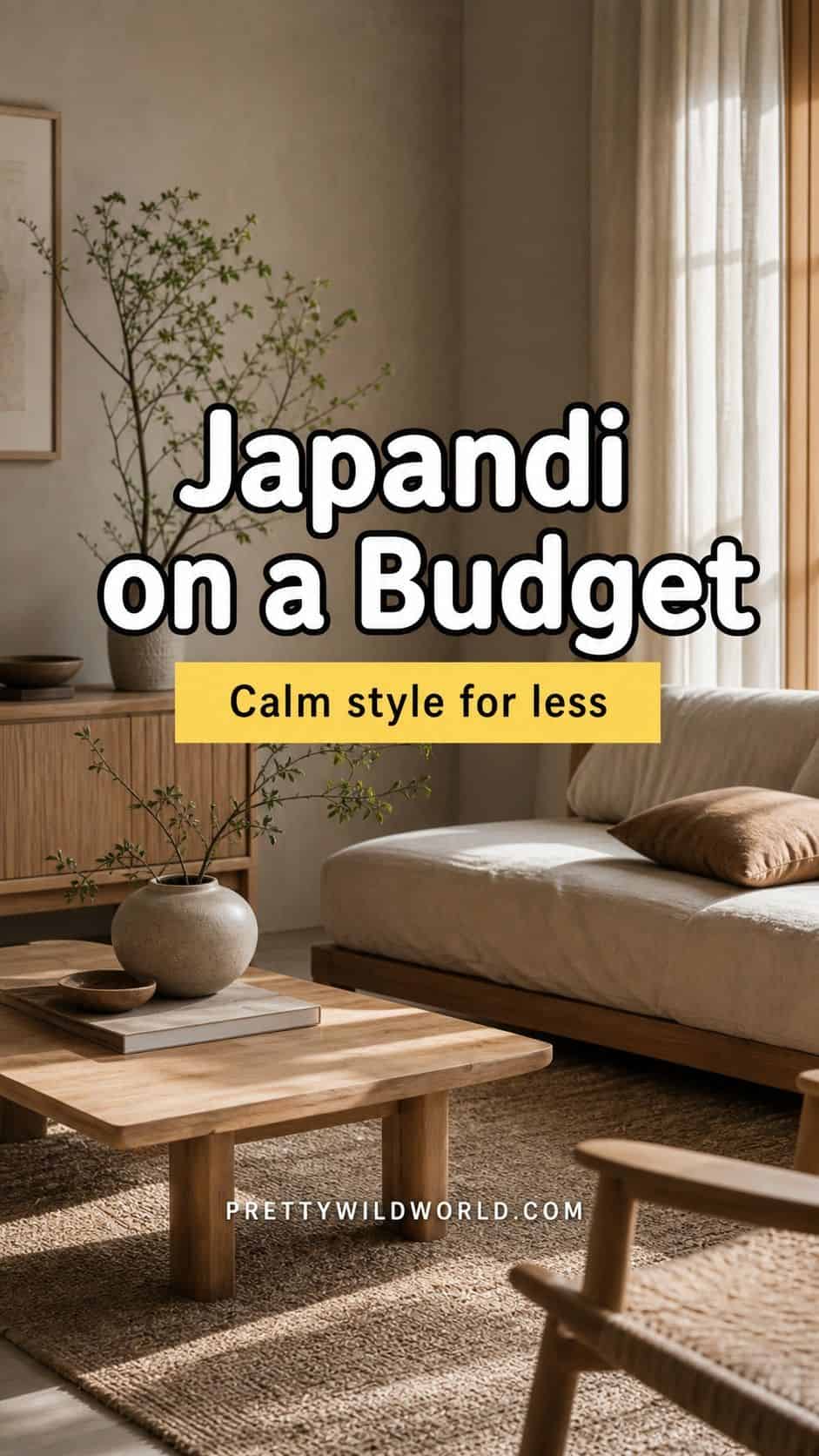
Japandi is one of the most budget-friendly looks there is, because it starts with decluttering, which is free. The 16 moves below build the calm, warm look for less, plus a worked itemized room refresh.
Most aesthetics cost money because they ask you to add things. Japandi is different, it asks you to take things away first. The look is built on calm, empty space and a few warm natural pieces, which means the single most important step, decluttering, costs nothing at all. That makes japandi genuinely cheap to do well.
The 16 moves below cover the cheapest ways to get the calm, warm look, starting with what you remove. The section at the end is a worked, itemized room refresh showing how little it actually takes.
Doing japandi on a budget and not sure where to start?
The Ultimate Budget Planner helps you plan a room refresh around real numbers, so a calm, warm makeover stays on budget from the first declutter to the last piece.
Recommended Budget Japandi Decor
Six affordable pieces that build the calm, warm look, from a linen slipcover to a paper lantern.




Recommended blogs to read:
- a calmer zen home
- zen modern decor
- a japandi living room
- japanese zen decor
- a small-space apartment refresh
Why Japandi Is Budget-Friendly
Japandi is cheap for one core reason: it is a subtractive look, not an additive one. The defining quality is calm, empty space, and emptiness costs nothing. The single biggest step toward a japandi room, clearing the clutter and editing down what is on display, is completely free, and it is also the step that does the most.
Beyond that, the look uses few pieces, so the money you do spend stretches further, and it relies on humble natural materials, linen, wood, paper, woven fiber, rather than anything precious. It shares this logic with zen decor, so our guide to a calmer zen home is a useful companion for the same approach.
One rule before the list: subtract before you add. Do the free decluttering work first, live with the cleared room, and only then buy the few pieces it still needs. You will spend less, because an edited room reveals it needs less.
16 Budget Japandi Moves
Start with the free moves. The worked refresh after the list shows how little the rest costs.
1. Declutter First, and Hard
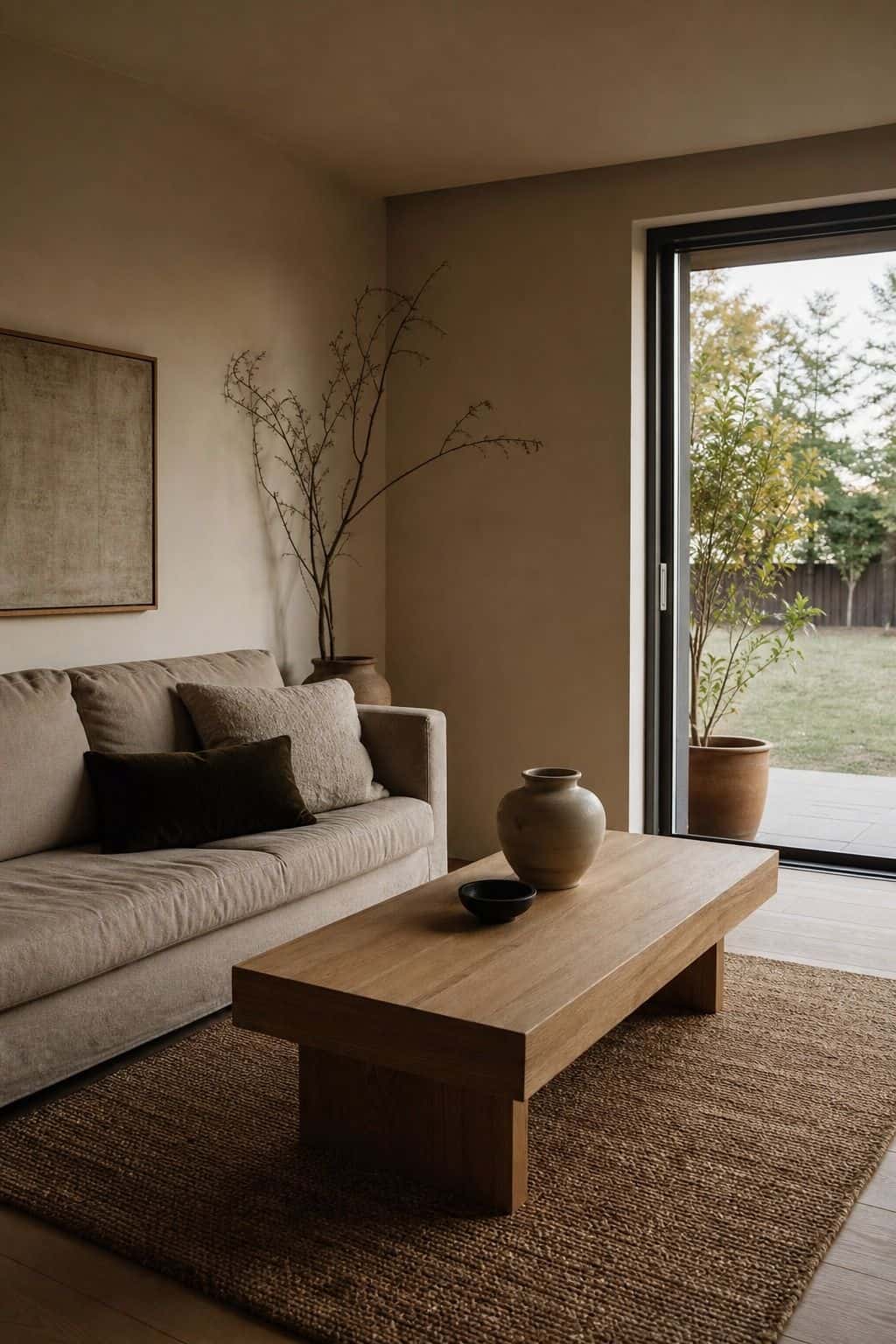

The cheapest and most important japandi move costs nothing. Clear the surfaces, edit the shelves down to a few chosen objects, empty a corner, take half the things off the walls. Decluttering is not a step toward japandi, it is most of the look itself, and a thoroughly edited room is already two-thirds of the way there before you spend a cent.
2. Paint a Wall a Warm Neutral
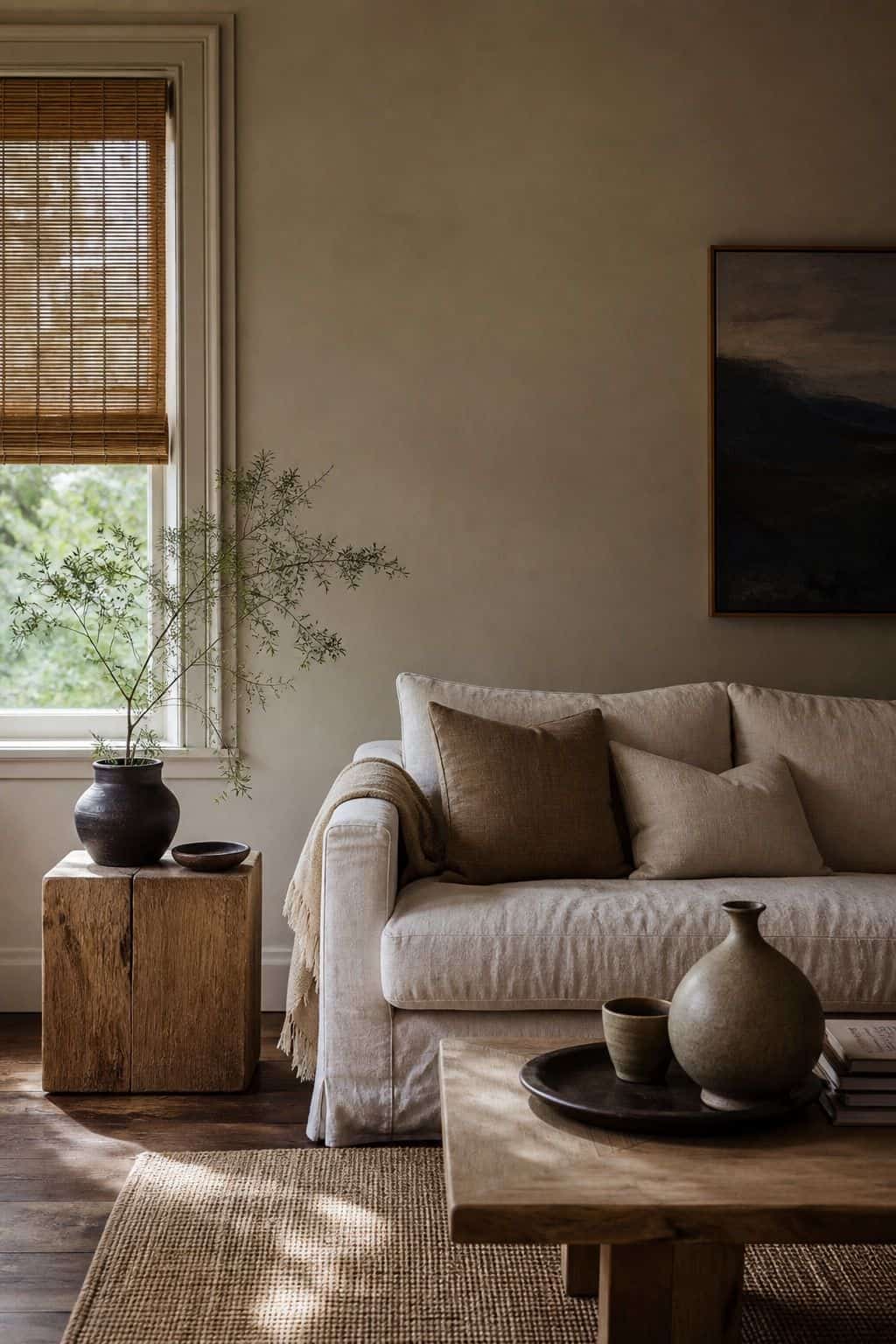
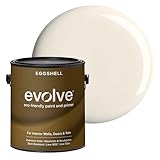

A single can of paint in a warm neutral, oat, mushroom, warm white, resets the whole base of a room cheaply. Warm-toned walls are the japandi foundation, and one room’s worth of paint is a modest cost for a big shift. Renters can use peel-and-stick in a warm neutral, though often a rental’s existing pale walls are close enough to leave alone.
3. Slipcover the Sofa in Linen
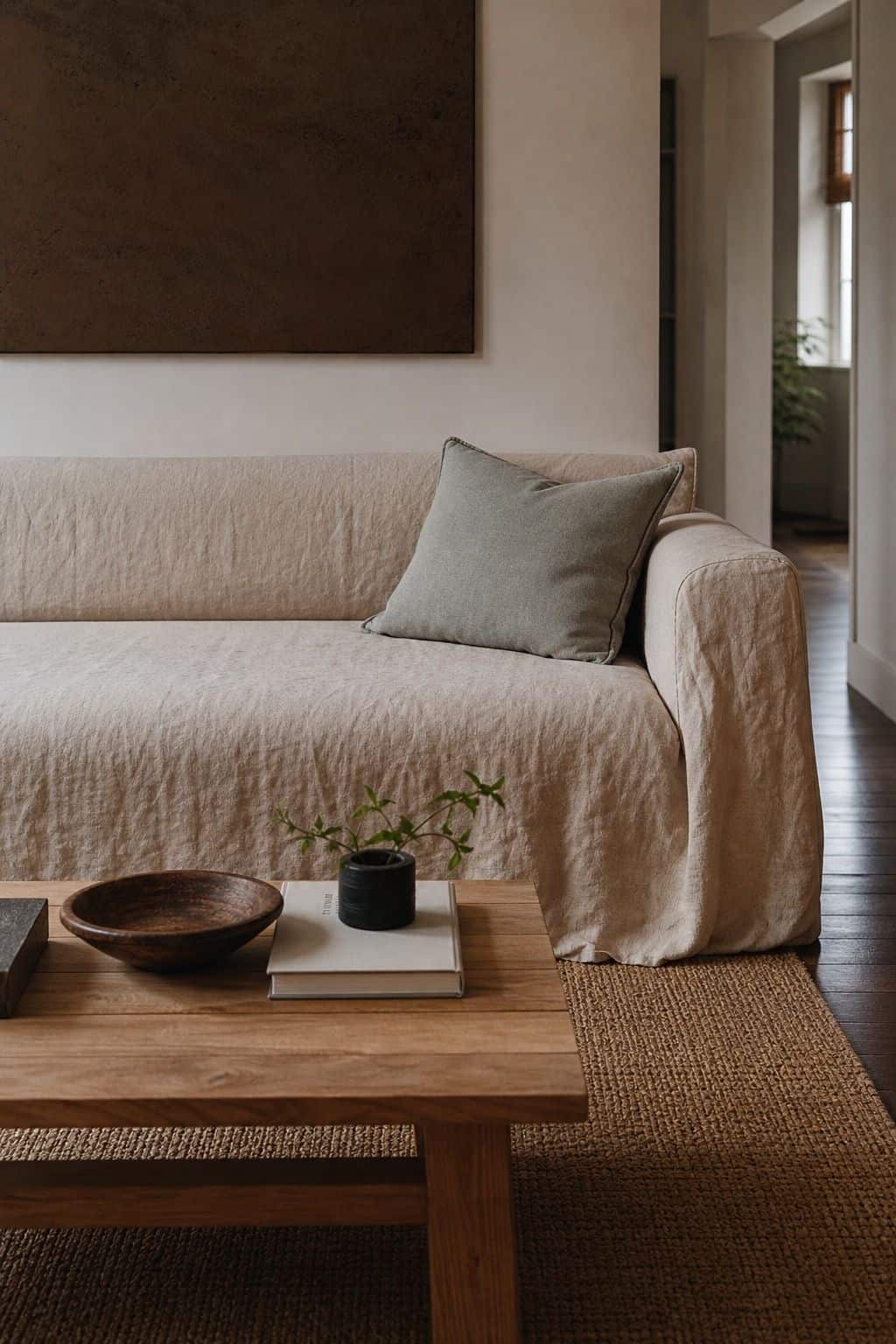


You do not need a new low linen sofa. A linen slipcover in oat or warm grey transforms a plain existing sofa into a japandi piece for a fraction of the cost. The soft warm-neutral linen is exactly the right material and color, and a slipcover is washable and reversible. It is the budget shortcut to the room’s biggest piece.
4. Thrift Light Wood Pieces


Simple light and mid-tone wood furniture turns up cheaply secondhand, and japandi wants exactly that, plain shapes, warm wood, no ornament. A thrifted wood side table, stool, or low shelf with clean lines fits the look for very little. Judge pieces on their shape and wood tone, and a quick sand and oil refreshes a tired finish.
5. Swap to Warm Bulbs
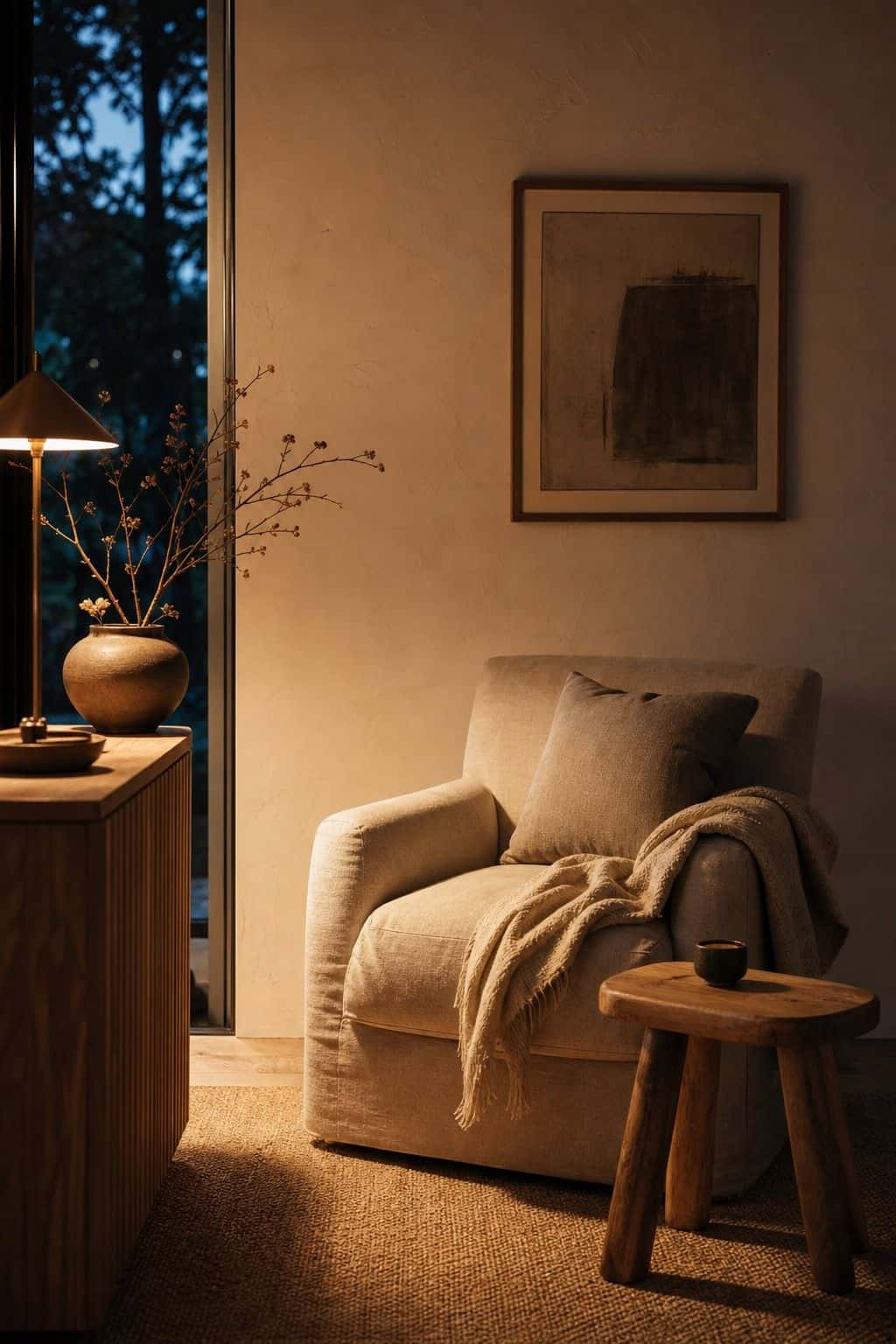


Japandi light is warm and soft, and swapping every bulb to warm 2700K costs the price of a bulb pack. Cool white light makes the warm neutrals and wood read flat and cold, undoing the whole calm effect. Before buying a single lamp, change the bulbs, it is the highest-value few dollars you can spend on a japandi room.
6. Add Woven Baskets
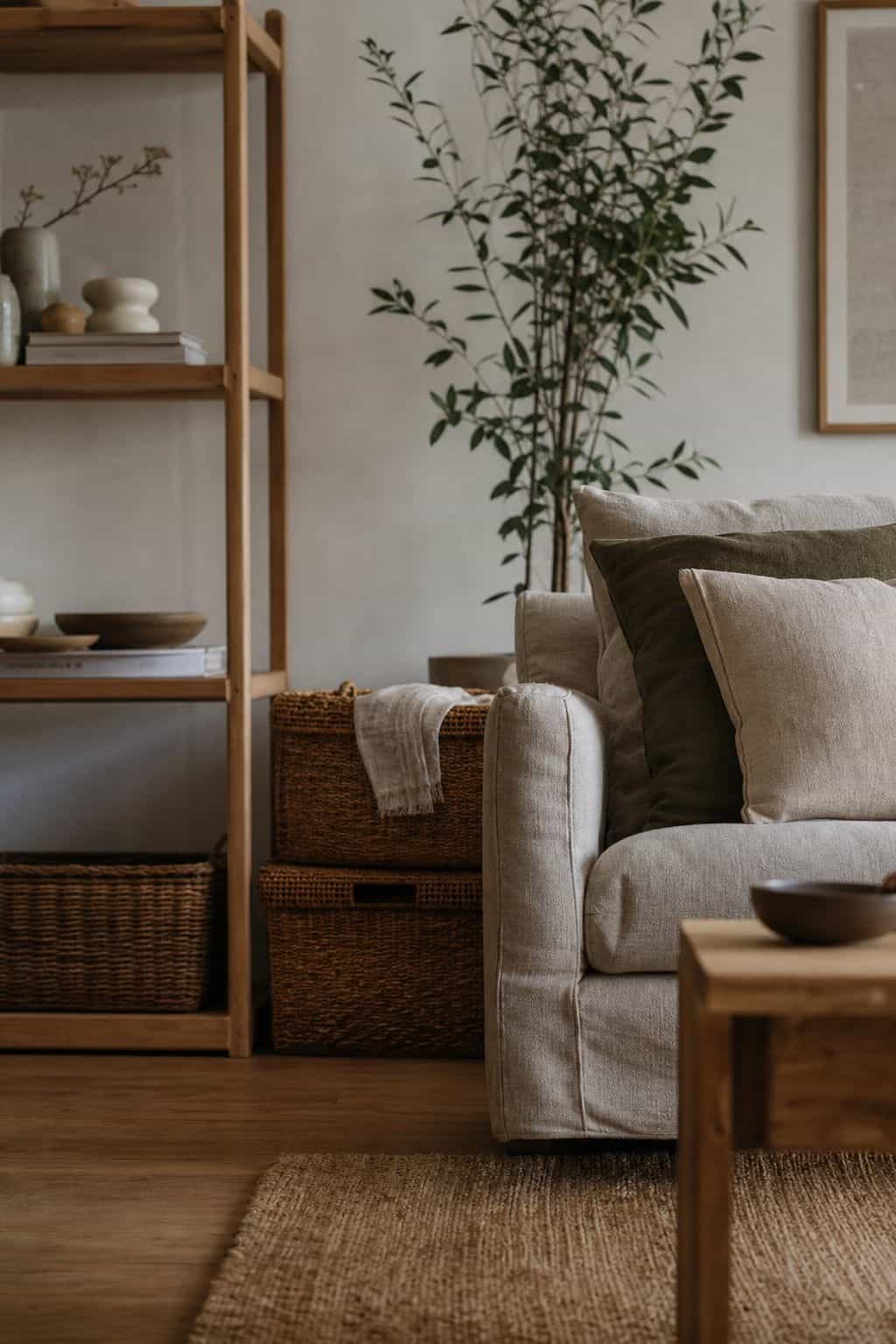


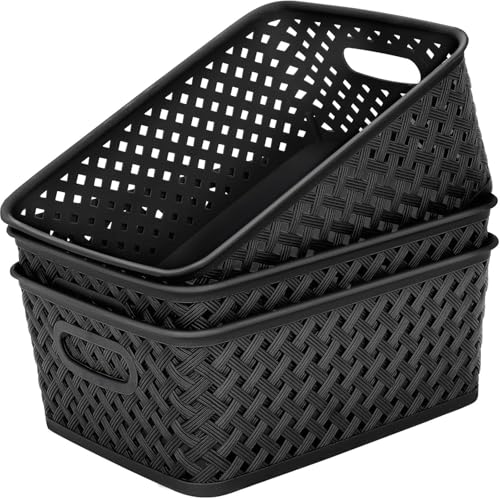
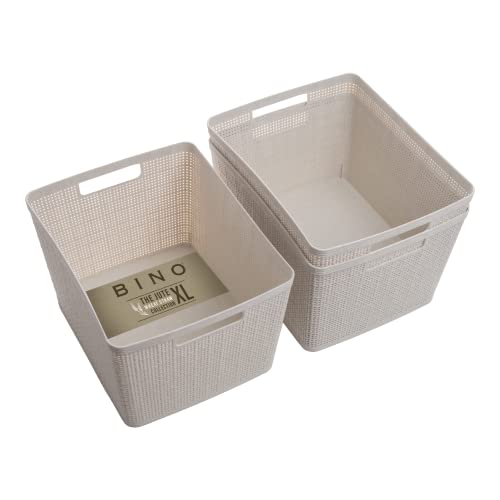
Cheap woven baskets do double duty in a budget japandi room, they hide the clutter you cannot bear to part with, and they read as warm, natural objects in their own right. Seagrass and rattan baskets are inexpensive new and common secondhand. A few baskets keep a room uncluttered without the cost of built-in storage furniture.
7. Use a Paper Lantern Light
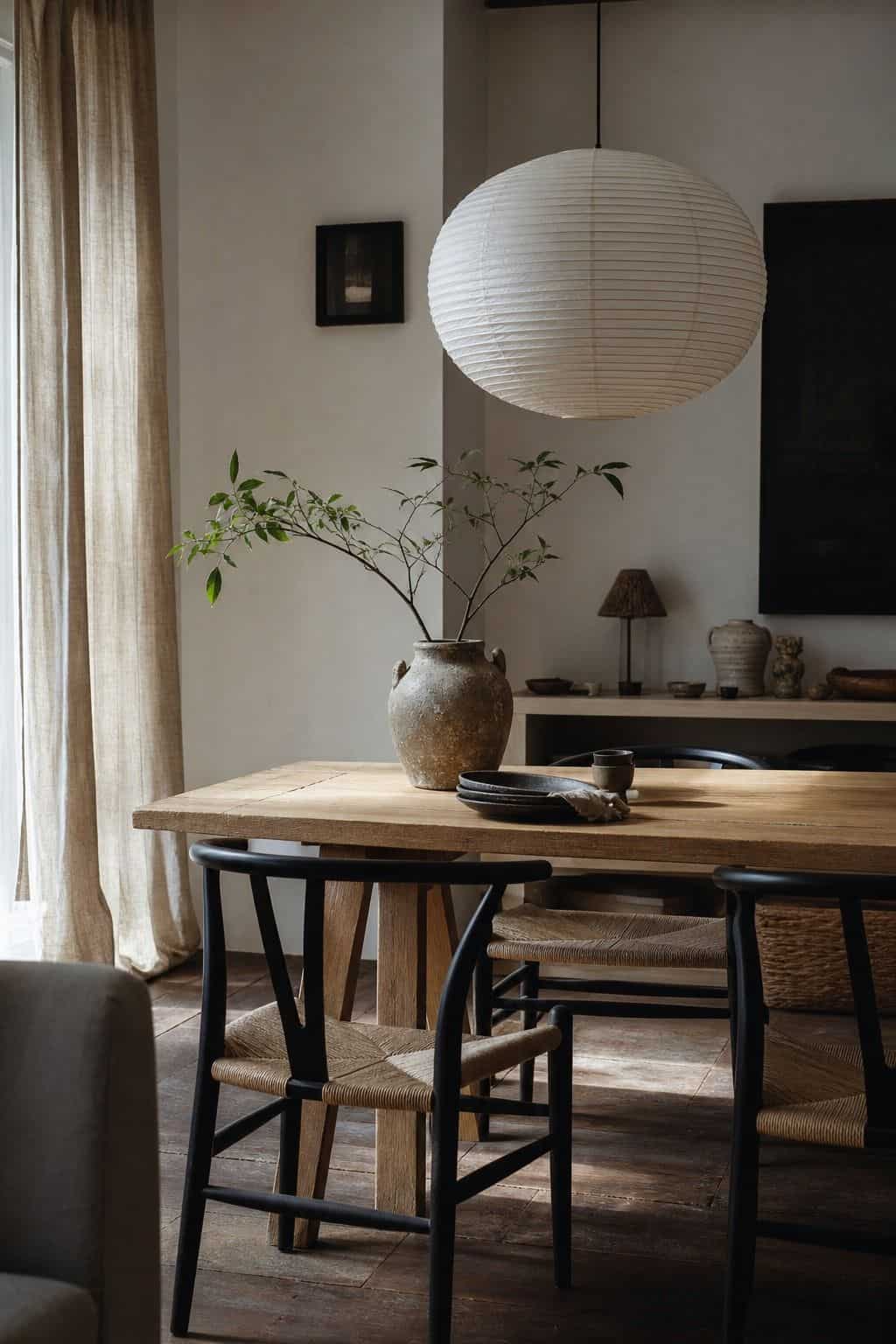



The classic round paper lantern pendant is genuinely cheap and genuinely japandi, a direct piece of Japanese influence that costs very little. Its soft diffused glow and simple sculptural shape suit the look perfectly. One paper lantern in place of a dated, builder-grade overhead fixture is one of the highest-impact and lowest-cost japandi changes you can make in any room.
8. Layer Linen Textiles
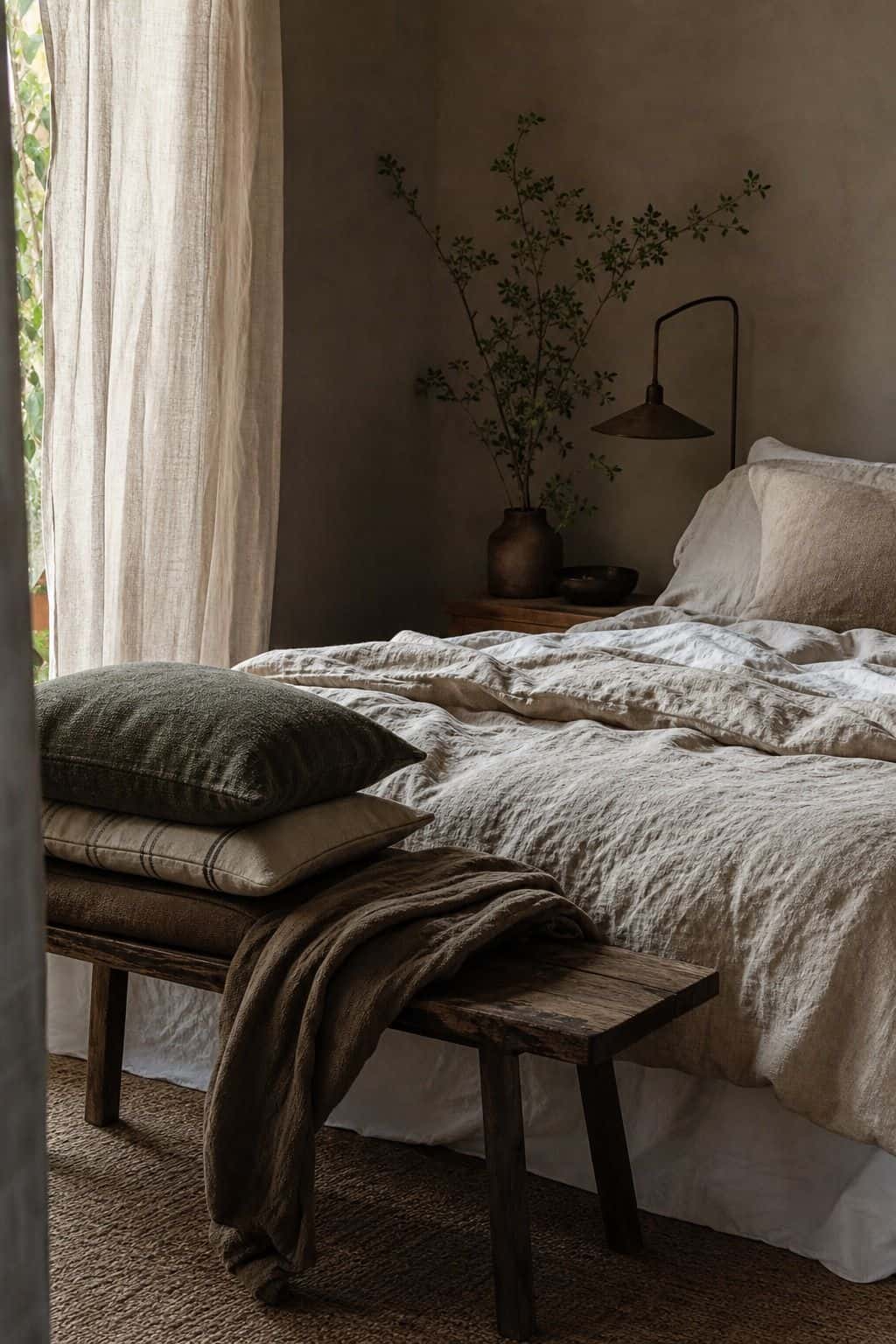
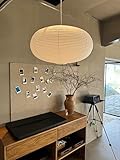
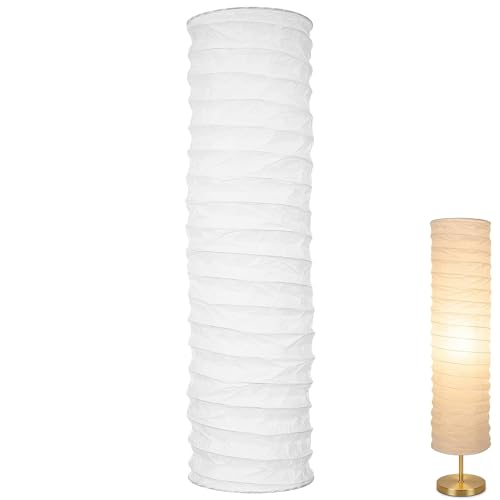

Soft linen and cotton textiles in warm neutrals, a throw, a couple of cushion covers, a simple bed cover, bring the right texture and color cheaply. Buy covers rather than full pieces, and watch for natural-fiber textiles in thrift stores and budget ranges. A few warm-neutral linen layers add the soft, calm quality japandi depends on.
9. Choose a Few Simple Ceramics
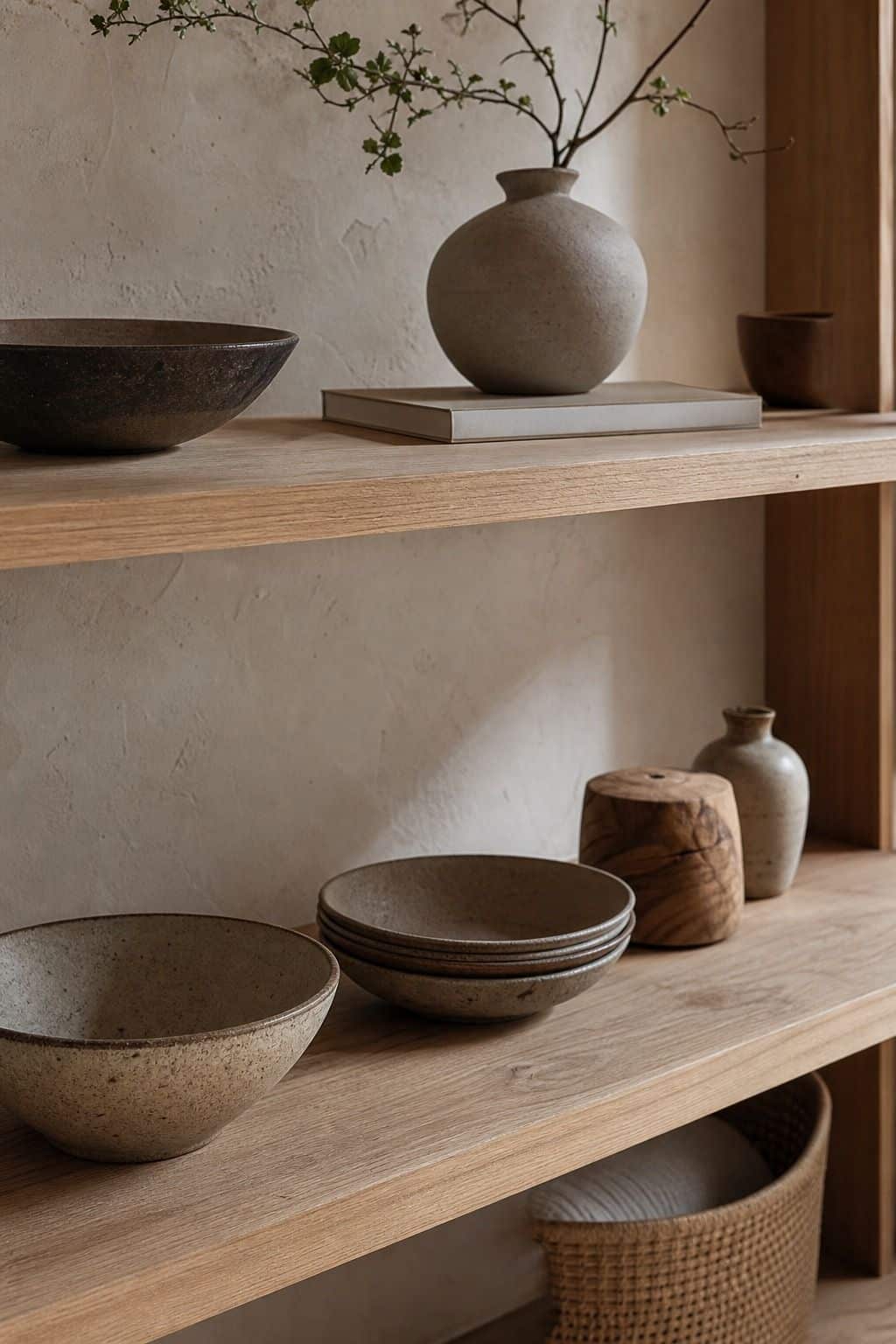


A small handful of simple ceramic pieces, a matte vase, a plain bowl, a textured pot, in earthy glazes brings craft and quiet character. Thrift stores are full of plain ceramics for very little, and japandi only wants a few, so you do not need many. One or two well-chosen ceramic pieces on a cleared surface is the whole styling job.
10. Bring in Cheap Greenery
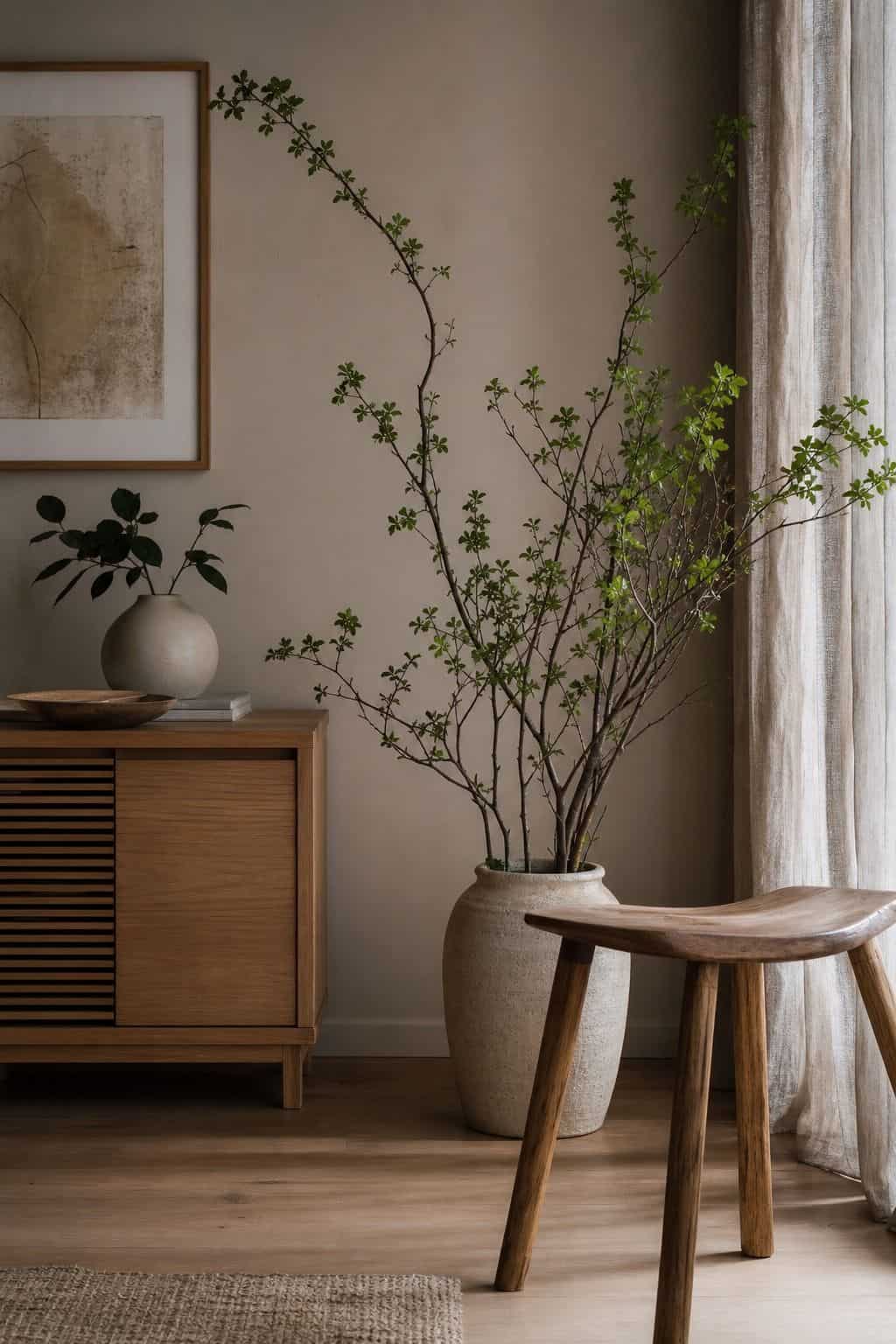


One simple plant, or even a single dried branch, brings the quiet piece of nature japandi wants, and it costs almost nothing. A cutting in a plain pot, a branch in a simple vase, a low plant on the floor, japandi greenery is sparse and calm, not lush, so a few cheap or free plants are all a room needs.
11. Lay Down an Oat-Tone Rug
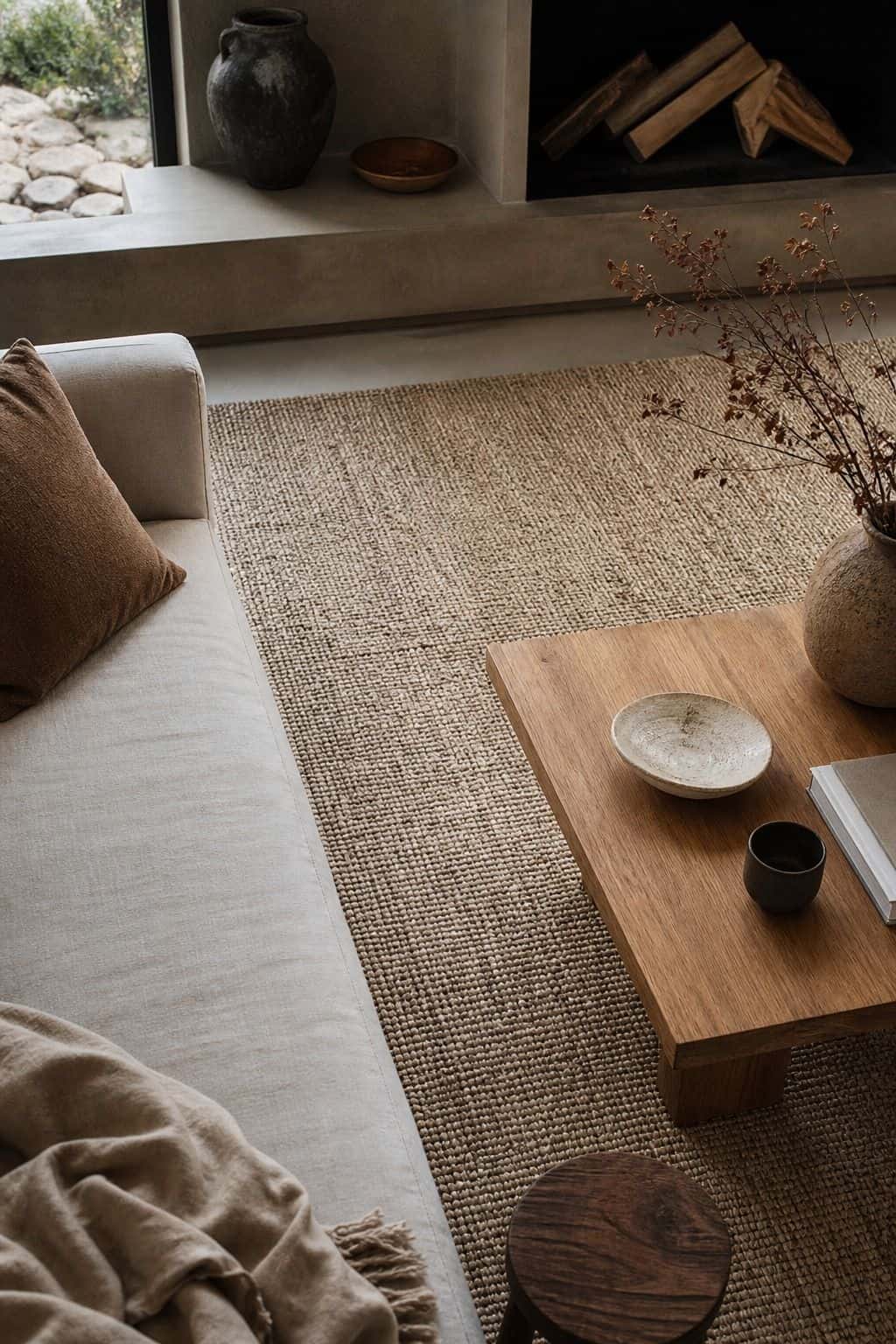


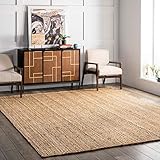
A simple flatweave or low-pile rug in oat, sand, or warm grey grounds a japandi room and quietly covers a rental’s bad flooring. Budget natural-fiber and warm-neutral rugs are widely available cheaply, and the plain tone and texture are exactly right. One warm-neutral rug pulls the whole floor into the calm palette without a big spend. A flatweave reads more japandi than a thick shag, since the look wants a quiet, low-profile floor.
12. Hang One Large Affordable Print
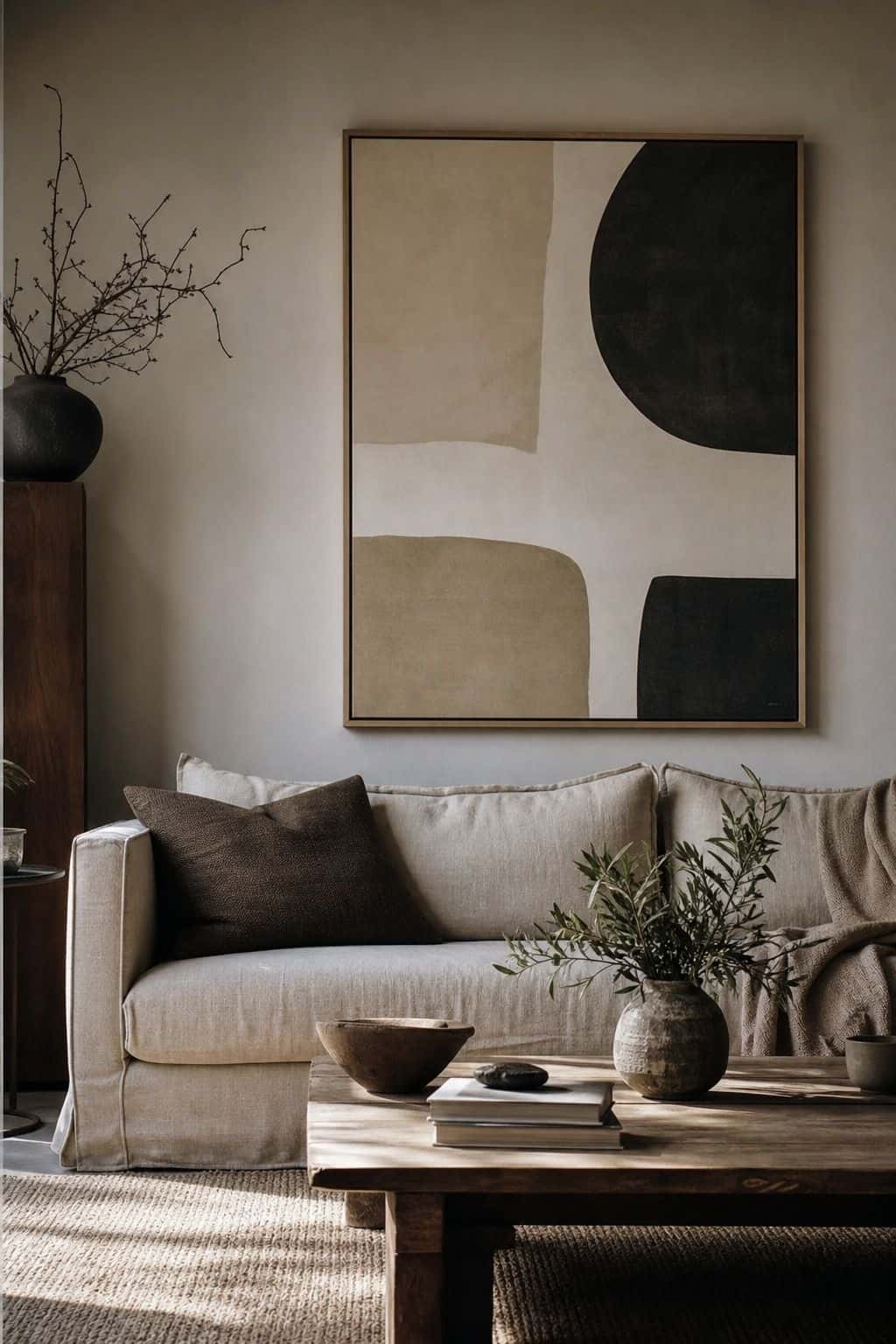


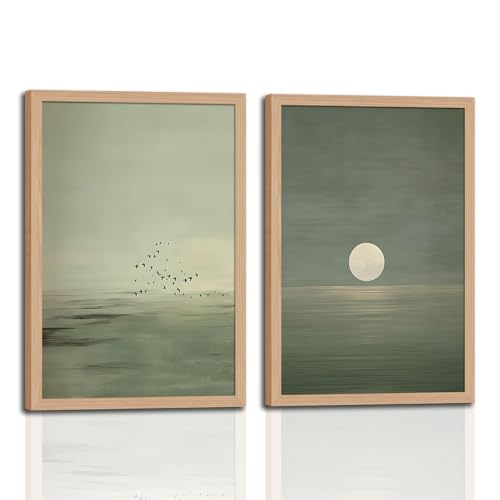
Japandi walls need almost nothing, so the wall budget is tiny. One large, calm, muted print in a plain wood frame holds a whole wall, and a single affordable print or even a free printable, well chosen, is enough. Since the look wants bare walls, you are buying one piece, not a gallery, which keeps the cost down.
13. Repurpose What You Already Own
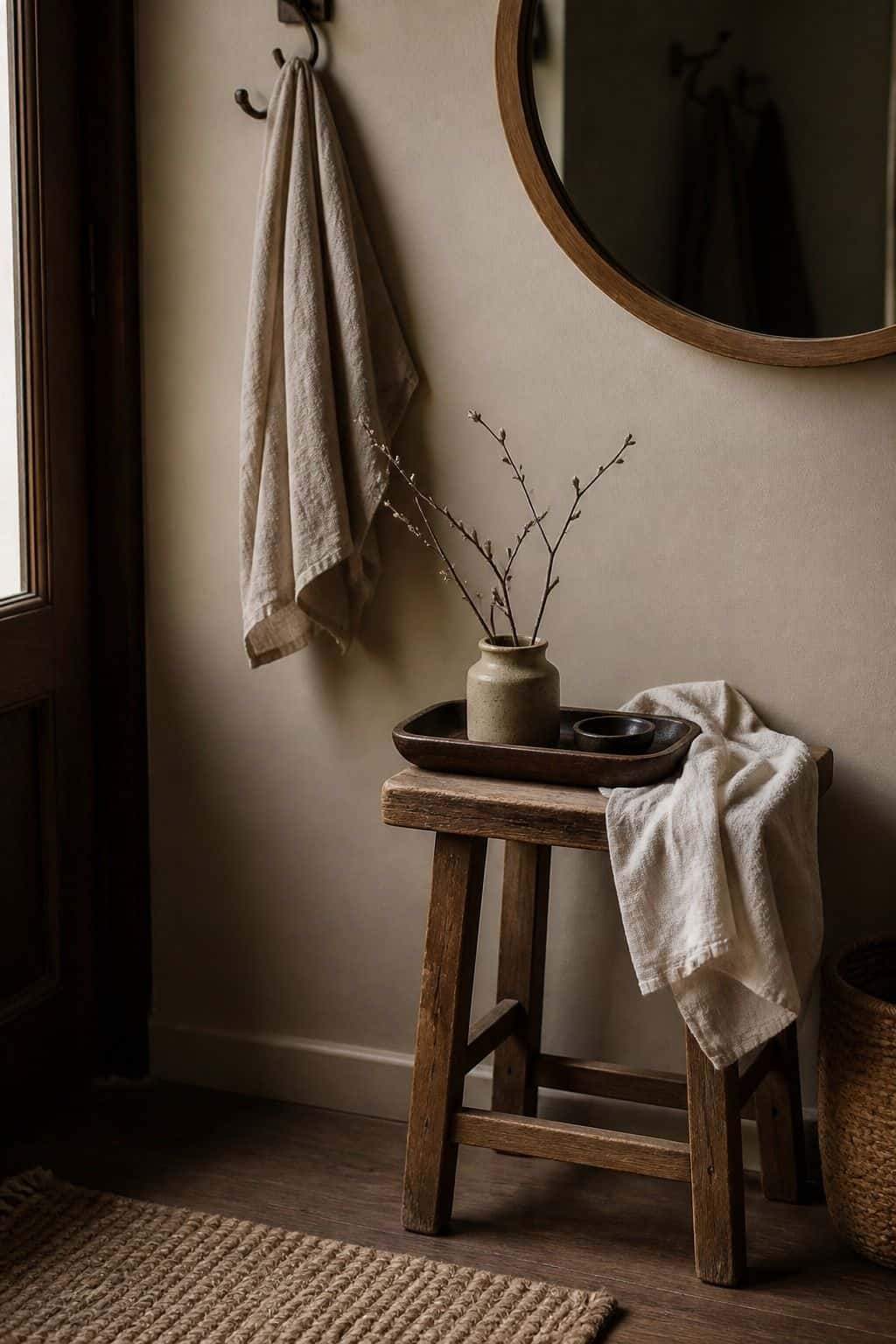


A budget japandi room often needs less buying than editing and re-choosing. The plain wood stool you already have, the simple linen cushion, the one good ceramic, pull the calm, natural things you own to the front and put the rest away. Repurposing what already fits the look costs nothing and is genuinely how japandi rooms come together.
14. Make a Simple Wood Ledge
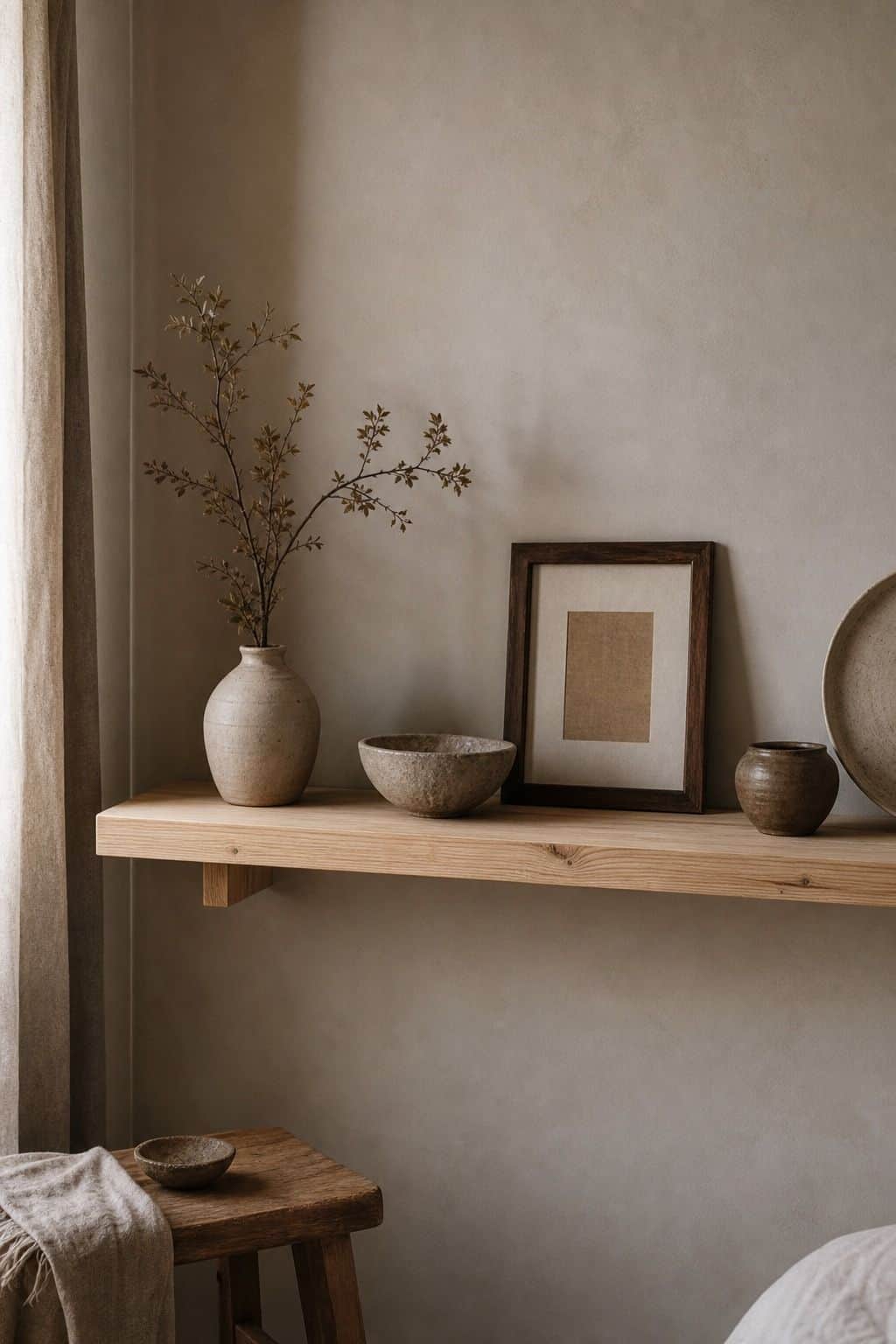


A plain wood shelf or ledge, cheap to buy or simple to make from a single board and two brackets, gives a japandi room a spot for a few chosen objects. Styled with just a ceramic and a small plant and a lot of bare wood, it reads calm and considered. It is a low-cost way to add quiet, intentional display space.
15. Add One Floor Cushion
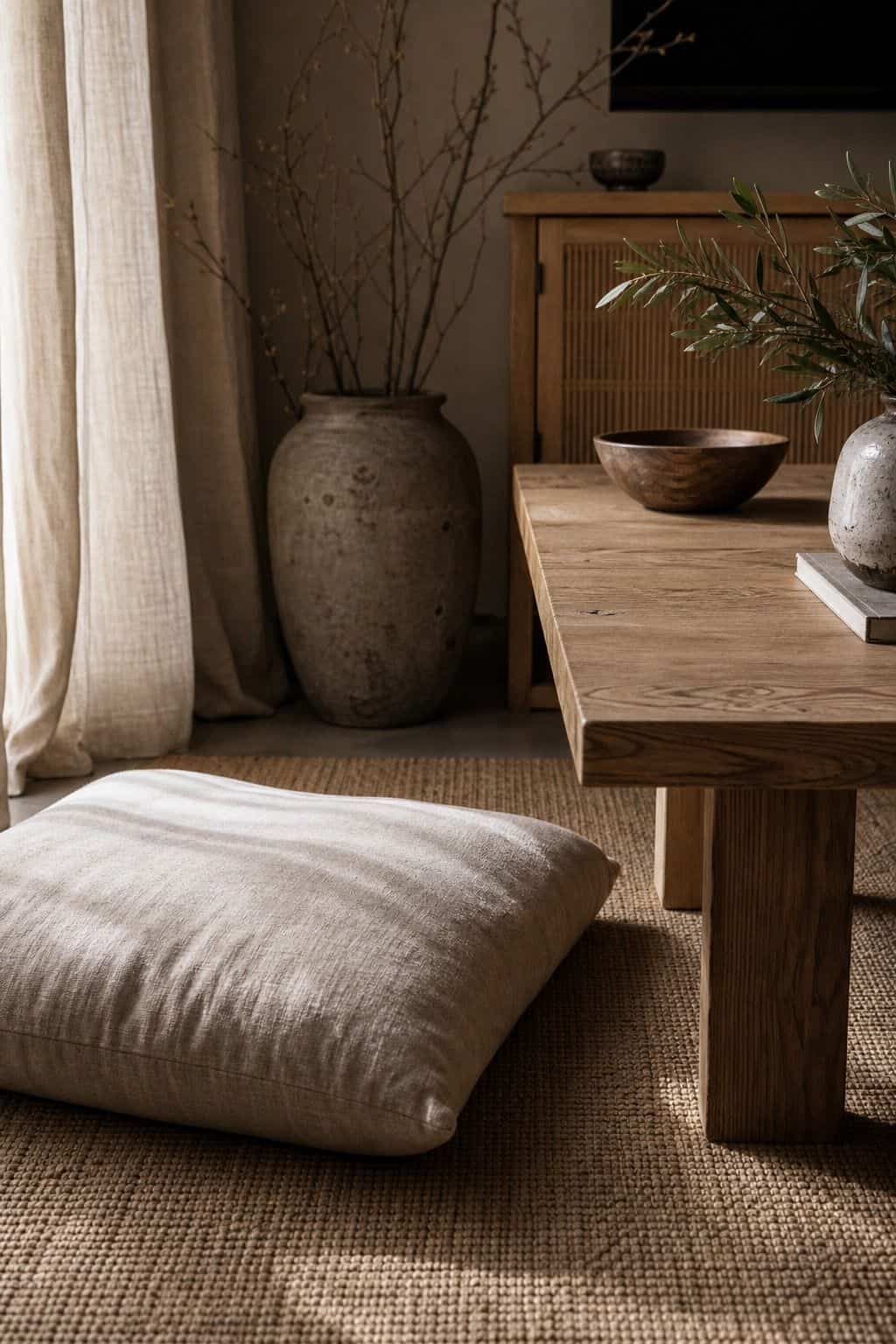


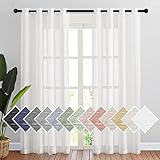
A single linen floor cushion brings the low, ground-level japandi habit into a room cheaply and flexibly. It is casual extra seating that tucks away, and it reinforces the grounded, close-to-the-floor feeling. One warm-neutral floor cushion by a low table or a window is an inexpensive way to add comfort and texture without buying furniture.
16. Leave Things Empty
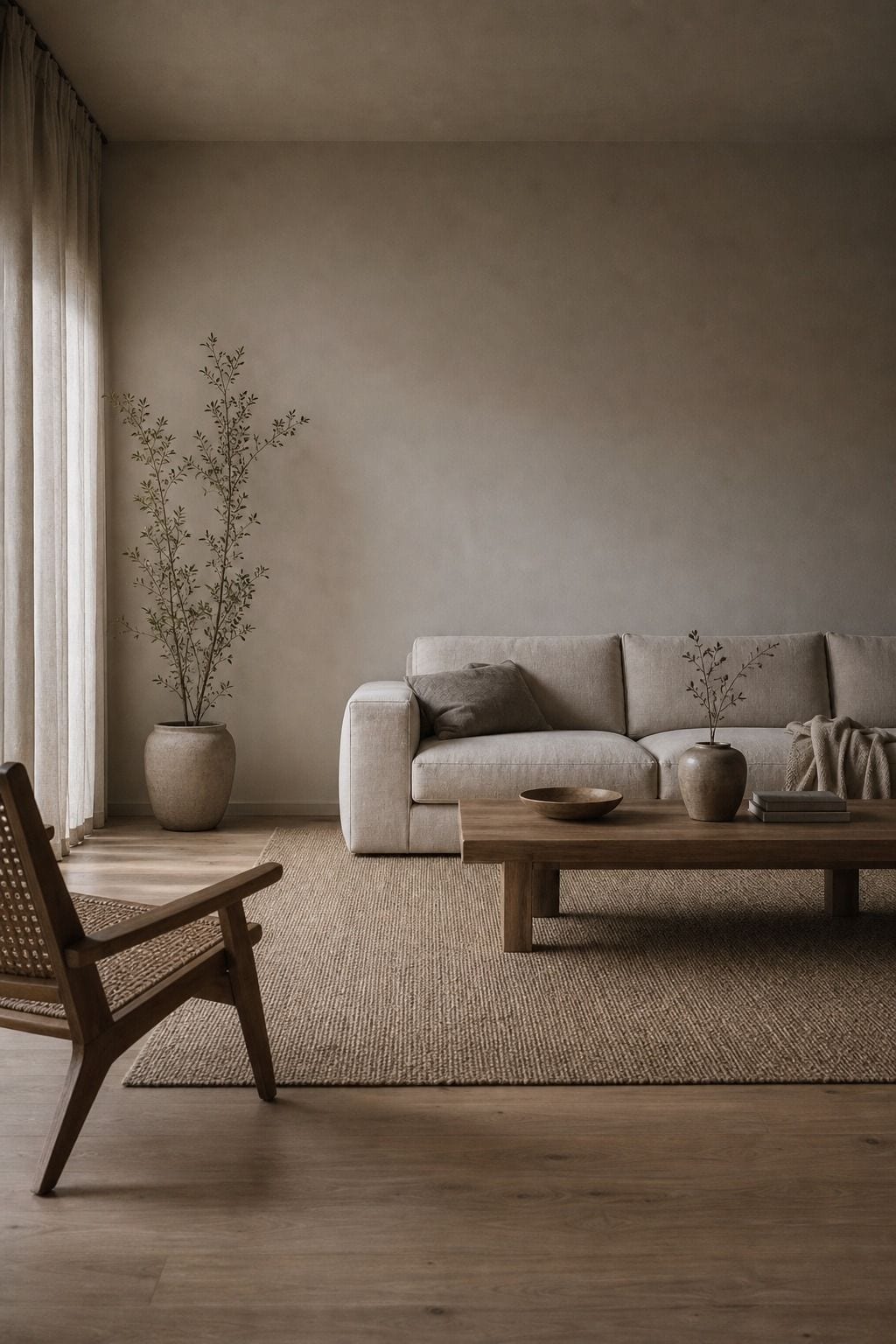


The final budget move is free and the most japandi of all: leave the empty corner empty, leave the cleared surface clear, leave the bare wall bare. The instinct to fill space costs money and undoes the look. Resisting it costs nothing and is the entire point. An edited, calm, half-empty room is the goal, not a stop along the way.
Want the whole home to tie together?
The Aesthetic Apartment Makeover Guide breaks the whole home down room by room, so every space ties into one cohesive scheme. Worth every penny at $17, and the price goes up to $27 soon.
A Worked Japandi Room Refresh on a Budget
Here is how little it takes in a living room. Start with the free work: a hard declutter of every surface and shelf, and swap every bulb to warm 2700K. That alone shifts the room dramatically toward japandi for no spend at all. Then the cheap base: one can of warm-neutral paint on the walls, or skip it if the rental walls are close enough.
Then a small handful of modest buys: a linen slipcover over the existing sofa, an oat-tone budget rug, a paper lantern in place of the overhead fixture, two or three woven baskets, a couple of linen cushion covers, one or two simple ceramics, and one large calm print. Pull the plain wood pieces you already own to the front, and leave a corner and a wall deliberately empty. That is a complete japandi living room for the cost of a slipcover, a rug, a light, and a few small things. For the wider look, our guide to the japandi furniture guide covers the pieces, and the japandi color palette guide covers the colors.
Frequently Asked Questions
How do I do japandi cheaply?
Start with the free work: declutter hard and swap every bulb to warm 2700K. Then make a few modest buys, a linen slipcover for the sofa, an oat-tone rug, a paper lantern, woven baskets, linen cushion covers, and one large calm print. Japandi uses few pieces, so the budget stretches.
Is decluttering really part of japandi?
It is most of the look. Japandi is a subtractive aesthetic built on calm, empty space, so clearing clutter and editing down what is on display is not a step toward japandi, it is the largest part of it, and it is completely free.
What’s the cheapest japandi change?
Decluttering, which costs nothing and does the most, followed by swapping every bulb to warm 2700K for the price of a bulb pack. Both are nearly free and together they shift a room dramatically toward the calm, warm japandi feeling before you buy a single thing.
Can renters do japandi?
Yes, easily. Most of japandi is decluttering, warm bulbs, textiles, and a few freestanding natural pieces, all renter-safe. A rental’s existing pale walls are often close enough to leave alone, or peel-and-stick in a warm neutral works, so even the paint step is covered.
How much does a japandi room cost?
Less than almost any other aesthetic, because the biggest step, decluttering, is free and the look uses few pieces. A complete japandi room can come together for the cost of a linen slipcover, a budget rug, a paper light, and a few small natural objects.
Key Takeaways
- Japandi is budget-friendly because it is a subtractive look, and its biggest step, decluttering, is completely free.
- The 16 moves start with the free work, decluttering and warm bulbs, then a few modest buys like a linen slipcover and a paper lantern.
- Subtract before you add, do the free editing first and an edited room reveals it needs less than you thought.
- The look uses few pieces and humble natural materials, so the money you do spend stretches much further.
- A complete japandi room can come together for the cost of a slipcover, a budget rug, a paper light, and a few small natural objects.
Final Thoughts
Japandi is the rare aesthetic that gets cheaper the more closely you follow it, because its heart is calm, empty space, and emptiness is free. Declutter hard, swap to warm bulbs, then add only the few warm natural pieces the edited room still needs, a linen slipcover, a paper light, an oat rug, a handful of ceramics. Subtract before you add, and a calm, warm japandi room comes together for very little. When you are ready for more, the japandi furniture guide and the japandi wall decor guide cover furniture and walls in full.