
Quick Answer: The best capital cities in Europe sort into three working tiers. Tier 1 is the Big Five (Paris, London, Rome, Madrid, Berlin) where the iconography and infrastructure are unmatched. Tier 2 is the Refined Seven (Vienna, Prague, Stockholm, Copenhagen, Amsterdam, Lisbon, Athens) where the cultural depth runs as deep at smaller scale. Tier 3 is the Underrated Eight (Helsinki, Oslo, Tallinn, Reykjavík, Zagreb, Riga, Vilnius, Bratislava) where you get a real capital city without the crowd-and-cost penalty.
Last updated: May 2026 · Prices and opening hours verified May 2026.
If you put me on the spot and told me to rank Europe’s capital cities right now, the top three would be Vienna, Lisbon, and Rome. Vienna because the cultural density per square kilometer is the highest of any European capital and the coffeehouse-imperial-architecture combination doesn’t exist anywhere else. Lisbon because the climb has been so consistent for so long that the city now competes with Paris on the second-trip-to-Europe decision. Rome because the layered ancient depth is uncatchable. Paris and London come fourth and fifth, with the caveat that both have been raised so high by international tourism that the actual visit often underdelivers against the expectation.
That ranking won’t match anyone else’s perfectly, which is the point. Capital-city rankings depend on what you weight. International prestige and iconography puts Paris and London on top. Cultural depth per square kilometer reorders the list toward Vienna and Prague. Value-for-money pushes Lisbon, Athens, and the Baltic capitals up. Walkability rewards the smaller capitals (Tallinn, Reykjavík, Ljubljana). The honest answer for any individual trip is that the best capital depends on what kind of capital experience you actually want.
What follows sorts the European capitals into three working tiers. Tier 1 covers the five that anchor most travelers’ Europe images. Tier 2 covers the seven that deliver as much depth at smaller scale and often more reasonable prices. Tier 3 covers the eight rising or underrated capitals where a serious capital-city trip costs less and runs quieter than the headline destinations. For the broader city-break question that includes non-capitals, the best cities in Europe guide covers the wider set. For country-level context, the most beautiful countries in Europe guide handles the bigger picture.
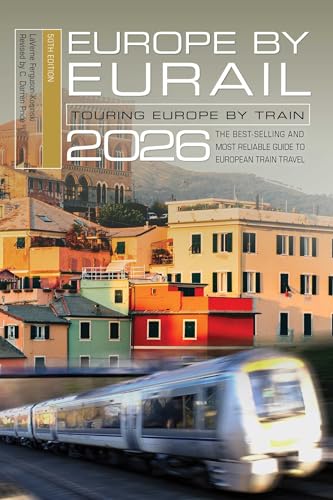
Putting together a multi-capital European tour and trying to make the rail pass actually pay off?
The Ultimate Europe Trip Planner pairs the capital shortlist with the train connections, the recommended stay lengths, and the seasonality so the route makes geographic sense and the rail pass earns its cost. The capitals chain together cleanly instead of demanding constant flights.
Travel Kit for the Multi-Capital Trip
Capital-hopping puts unusual demands on the kit. Walking distance accumulates across multiple cobblestoned cores, the weather varies across the route, public transit cards stack up, and the carry-on size matters because budget airlines run strict between European capitals.





Which Are the Big Five European Capitals?
The five capitals that carry the international image of European travel. Visiting them at least once across a lifetime of European trips is a near-universal traveler ambition. The cost is high, the queues are long, and the cities mostly deliver. They earn the tier on iconography and depth, not just on size.
Paris, France
Consensus first European capital for most travellers, and still earning the title. From the top of the Tour Eiffel at twilight you can see the whole city laid out in cream stone, the Seine snaking through it, and the floodlights coming on one quarter at a time. The Louvre, the Marais, the Latin Quarter, the rooftops of Montmartre, the long perspective up the Champs-Élysées to the Arc de Triomphe. Five nights minimum on a first visit, six if you can. Pricey since 2005, still pricey in 2026 (peak-season mid-range hotels run €280-€450 a night and a proper dinner clocks in around €70-€90 per person). Pre-book the major monument tickets: the Louvre, Versailles, and the Eiffel Tower summit all run 90-minute walk-up queues. Eat at lunch when the prix fixe is gentler. Drink the house wine.
London, United Kingdom
Not so much a capital city as a federation of 32 boroughs that have agreed to share a Tube map. The British capital rewards a strategy: pick three or four neighbourhoods, anchor on one, and use the Underground (or a bus, if you have the time) to ferry between the others. Westminster and the City do the postcards: Big Ben across Westminster Bridge, the Tower, Trafalgar Square, the Thames running through it all. Camden and Shoreditch do the creative-nightlife layer. Kensington and Notting Hill do the colour-block-house residential elegance. South Bank packs the modern cultural cluster (Tate Modern, National Theatre, Borough Market on Saturdays) into one walkable strand. Five nights minimum, and the museums are free, which buys you back some of what you paid for the hotel. The pound is strong; 2026 prices are higher than Paris.
Rome, Italy
The Italian capital crams more layered ancient and architectural depth into a small walkable core than any other capital on the continent, and it still half-runs on the bureaucracy of 753 BC. Anchor the ancient side at the Colosseum, the Forum and the Palatine Hill; cross the river to the Vatican for St Peter’s and the Sistine Chapel; spend the afternoon wandering between Piazza Navona, the Trevi Fountain (toss the coin over your left shoulder), the Pantheon’s two-thousand-year-old dome, and the Spanish Steps. Cross the Tiber to Trastevere for dinner where the streets are too narrow for cars and the ivy-covered restaurants spill onto cobblestones. Four to five nights. Avoid July and August if you can; the heat now regularly tops 35°C and walking-heavy itineraries become punitive. Shoulder season is the move. The Italy travel guide covers the country.
Madrid, Spain
The Spanish capital does the urban side of Spain at its biggest, hottest, and latest. Three world-class museums sit within five minutes of each other: the Prado holds the entire Spanish royal collection (Velázquez’s Las Meninas alone is worth the trip), the Reina Sofía holds Picasso’s Guernica, and the Thyssen-Bornemisza fills in the gaps between them. Outside the museum district, four neighbourhoods each carry their own register: Barrio de las Letras (Cervantes-era literary quarter), La Latina (the Sunday tapas crawl), Malasaña (vintage shops and indie-music bars), Chueca (the LGBTQ+ heart of the city). The Mercado de San Miguel and Mercado de la Cebada deliver the food side. Above all, learn the rhythm: lunch at 2pm, drinks at 8pm, dinner at 10pm, never the other way round. Three to four nights. The Spain travel guide covers the country.
Berlin, Germany
The Big Five contender that opted out of competing for the iconic-Europe image and decided to be the contemporary one instead. The German capital was reunified in 1990 and the city has spent every year since rebuilding itself: gallery clusters across Mitte and Kreuzberg, the techno scene that radiates from Berghain, the food markets that turn Markthalle Neun into the city’s best dinner room on Thursdays, the public realm that’s quietly become one of the most carefully designed in any capital. The spread is genuine; the central urban core runs roughly 12 kilometres across the former East-West line, and the city only works if you plan trip structure around the U-Bahn rather than try to walk it. Four nights minimum. Cheap by Western European standards, with a sharper edge than any of the others.
Which Refined European Capitals Are Worth the Trip?
Capital cities that deliver the same depth at smaller scale, with more walkable centers, lower costs (most cases), and less of the queues-and-overtourism pressure. Several of them edge ahead of the Big Five on a per-day-of-trip basis.
Vienna, Austria
If you measured European capitals by cultural density per square kilometre, this one would win quietly, gloved hand raised. Schönbrunn Palace at the edge of town with its formal yellow facade and gardens spilling out behind; the Hofburg in the centre where the Habsburgs ran an empire for 600 years; the State Opera still doing nightly performances at world-class level; the Belvedere holding Klimt’s “The Kiss” inside a baroque palace; the Kunsthistorisches Museum, the Albertina, the Naschmarkt market on Saturday mornings. Then the coffeehouses, almost a hundred and fifty years old, still doing the unbroken Viennese ritual of small marble tables, melange in a glass with a tiny biscotti, newspapers on wooden racks, and waiters in tuxedos who’ll let you sit for three hours nursing one drink. Four to five nights. Refined, civilised, slightly haughty. Beautiful at any season.
Prague, Czech Republic
The breakout European capital of the 2010s, still one of the most architecturally striking in the lot. Stand on the Charles Bridge at dawn and the spires of the Old Town stack up on one bank while the castle and the cathedral rise on the other, all in pale stone catching the early light. Mala Strana below the castle hill holds baroque churches and steep cobbled lanes; the Jewish Quarter holds six synagogues and the old cemetery layered with leaning headstones. Step out beyond the Old Town crush (which can be intense in summer) and Vinohrady and Žižkov absorb the overflow into proper neighbourhood streets full of pubs and apartment blocks. Costs run roughly half of Vienna’s and a third of Paris’s. The strongest budget-friendly headliner capital in Europe. Drink the dark beer; it’s better than the famous lagers.
Stockholm, Sweden
You don’t realise how much of this capital is water until you spend a day in it. Fourteen islands held together by 57 bridges, the Baltic running in slate-grey ribbons through the middle. Gamla Stan, the medieval Old Town on its own small island, ochre houses crowded around the Royal Palace. Södermalm across the southern bridges, where vintage shops and indie cafés have made it the city’s creative quarter. Östermalm to the north for the upscale shopping. Djurgården, the green royal island, holds the Vasa Museum (a 17th-century warship raised from the harbour bottom, almost completely intact) and the ABBA Museum (the kind of unironic fun the Swedes do very well). The rhythm of ferries and bridges between districts gives the city a character no inland capital matches. Three or four nights, plus a couple more for the archipelago.
Copenhagen, Denmark
The colourful waterfront at Nyhavn is the photograph most people arrive with in their heads, and the place does still deliver on it: gabled 17th-century townhouses painted in mustard, ochre and tomato red lined up along the harbour, with wooden boats moored in front. Beyond the postcard, the Danish capital has spent twenty years reshaping itself. The Opera House and the Royal Library’s Black Diamond extension face each other across the water. The old meatpacking district has turned into Kødbyen, the city’s creative-and-dining cluster. The Christianshavn canals deliver a Dutch-looking quieter version of the centre, and Tivoli Gardens (the world’s second-oldest amusement park) still illuminates summer evenings with thousands of small lights. Sixty-two percent of locals commute by bike, which is what happens when a city is properly designed for it. Pricey but worth it. Three or four nights. The Denmark travel guide covers the country.
Amsterdam, Netherlands
Cycle along one of the canals on a Sunday morning when the bells are ringing in three directions at once and you’ll see why the canal ring earned UNESCO status. Tall narrow houses with crow-stepped gables lean slightly forward over the water (built that way on purpose, to hoist furniture up to the upper floors), pleasure boats putter under the arches, and the trees turn green tunnels over the cobbled streets. The Anne Frank House sits on the Prinsengracht and still books out weeks ahead. The Rijksmuseum holds Rembrandt and Vermeer; the Van Gogh Museum holds 200 of the man’s paintings. Wander beyond the centre to the Jordaan and De Pijp for the lived-in side. Tourism regulation has tightened since 2024 (cruise-ship limits, reduced budget-flight slots, apartment-rental caps) which has marginally cooled the crowds. Three nights covers it, four with a day-trip to Haarlem or Utrecht.
Lisbon, Portugal
Ten years ago this Portuguese capital was the affordable European city break; now it’s competing with Paris on the second-trip-to-Europe decision, and most travellers come away saying it earned the upgrade. Seven hills covered in pastel houses, cobblestoned streets that wind unreasonably, the yellow tram rattling through Alfama under the castle, fado seeping out of restaurant doors after dinner. Down in Belém: the Jerónimos Monastery in its Manueline lace-stone glory, plus the original Pastéis de Belém pastry shop where they’ve been making custard tarts to the same secret recipe since 1837. The Atlantic light gives this city a different quality than the Mediterranean capitals (longer, cooler, more golden in the late afternoon). Four nights minimum, with a day-trip up to the fairy-tale colour-soaked palaces of Sintra. The Portugal travel guide covers the country.
Athens, Greece
Five years ago this Greek capital was a stopover between flight and ferry. Now it’s a proper destination, with a creative-and-food scene that has been quietly reinventing itself across Pangrati, Koukaki and Psyri. The Acropolis is still the rock everything else orbits around (climb Filopappou Hill at 6am to watch the Parthenon catch first light, as the city wakes up below). Wander down to the Plaka old town for tavernas hung with grapevines, then up into Anafiotika, the tiny whitewashed neighbourhood at the foot of the Acropolis that looks like a Cycladic village was airlifted into the city. The flea market at Monastiraki on Sunday morning rewards the patient browser. A natural pairing with the Greek islands: three or four nights here, then a week in the Cyclades. The Greece travel guide covers the country.
Which European Capitals Are Most Underrated?
Capital cities that earn their visit on substance but get less attention than the bigger names. Each of them is a real capital city with serious cultural depth, just at smaller scale and lower cost than the Tier 1 and Tier 2 cities. These are often the strongest second-trip or third-trip capitals for travelers building a longer Europe loop.
Helsinki, Finland
The design-led version of the Nordic capital experience, sat on a fistful of peninsulas with the Baltic visible from most central viewpoints. The Oodi Central Library is the building everyone wants to photograph, a wooden-and-glass civic living room that’s been voted the world’s best new library more than once. Senate Square holds the white Cathedral above neoclassical government buildings; the Design District around Punavuori clusters small ceramic studios and clean-line clothing boutiques. Out in the harbour, the Suomenlinna sea fortress (UNESCO-listed) spreads across six small islands and makes for a long afternoon by ferry. Natural pairings: Tallinn (two hours by ferry south) or Stockholm (overnight ferry west, with a cabin and a karaoke bar). Three nights is enough. The Finland travel guide and Helsinki city guide go deeper.
Oslo, Norway
Fifteen years of serious architectural reinvention has reshaped the Norwegian capital from sleepy administrative town into one of Europe’s most quietly interesting urban experiences. The Opera House slopes up out of the fjord at one end of the harbour, a vast white-marble building you can walk to the top of as if it were a hill. The new Munch Museum opened in 2021 to hold 26,000 of Edvard’s works. The Aker Brygge harbour district turned old shipyards into restaurants and apartments. Out at Vigeland Sculpture Park, Gustav Vigeland left 200 bronze and granite human figures in a public garden, all naked and various ages, climbing on each other. The Viking Ship and Fram polar-expedition museums on Bygdøy peninsula are the maritime side. Prices run the highest of any European capital (a beer is €13 and dinner can cross €100 fast), but there’s substance behind the cost. Three nights covers it.
Tallinn, Estonia
One of Europe’s most perfectly preserved medieval old towns sits inside the original 13th-century walls of this Estonian capital, with cobblestoned lanes winding between gothic guildhalls and merchant houses that have been doing the same job for 700 years. The Town Hall Square is the centre; the steep climb up to the Upper Town (Toompea) gets you the photograph across red-tiled roofs to the slate-grey Baltic beyond. Beyond the medieval core, the Telliskivi Creative City has emerged from a derelict factory complex into the cultural hub, with galleries, indie shops, weekend food markets and a flea on Saturdays. A proper capital city experience in two or three nights at a fraction of what Stockholm or Copenhagen would cost. The Helsinki ferry makes pairing easy. The Estonia travel guide covers the country.
Reykjavík, Iceland
The smallest national capital on this list, with about 130,000 people, which gives it the strange and pleasing quality of a small town that has somehow accumulated an opera house, a national museum, and a serious international restaurant scene. The Harpa concert hall on the waterfront catches the changing Arctic light in its glass-honeycomb facade. The Hallgrímskirkja church stands on the hill above town in pale concrete, modeled after Iceland’s basalt columns, with a lift up the tower for a view across coloured corrugated-iron rooftops to the bay. Walk the downtown blocks and the murals appear on every gable end. The food scene works at New Nordic quality across more restaurants than the population would suggest. Best used as the start or end of a Ring Road trip, two or three nights. The Iceland travel guide covers the country.
Zagreb, Croatia
Most travellers fly straight from this Croatian capital to the coast without bothering to look at the place itself, which is a small tragedy because the city does its own quiet thing very well. The Upper Town (Gornji Grad) on its hill holds the medieval core, the parliament, and St Mark’s Church with the red, white and blue tile mosaic on its sloping roof spelling out the coats of arms of historic Croatia. The Lower Town (Donji Grad) does the 19th-century Austro-Hungarian elegance, with parks and museums laid out in a green belt. The Museum of Broken Relationships displays the objects strangers donate when their relationships end (a wedding dress, an ex’s last text printed and framed), which is funnier and sadder than it sounds. Café culture along Tkalčićeva street fills every afternoon. Prices run a fraction of what Dubrovnik charges. Two or three nights before continuing south. The Croatia travel guide covers the country.
Riga, Latvia
Wander up Alberta iela on a quiet morning and the entire street turns into one long sustained shout of Art Nouveau. This Latvian capital holds the largest concentration of the style anywhere in Europe (around 800 buildings), with whole blocks of stone facades carved with peacocks, sphinxes and gargoyles by Mikhail Eisenstein (the filmmaker’s father, oddly). The old town does the medieval-Hanseatic side with cobbled lanes, guildhalls and red-brick churches. The central market sits inside five former zeppelin hangars at the edge of the centre and runs as one of Europe’s biggest indoor markets. The Miera iela district carries the contemporary creative scene, with proper bars and a serious coffee culture. Pairs naturally with Tallinn and Vilnius on a Baltic trip. Two or three nights covers it.
Vilnius, Lithuania
One of the largest UNESCO-listed medieval old towns in Europe sits at the heart of this Lithuanian capital, with churches in more than a dozen architectural styles (Gothic, Renaissance, Baroque, Classical) crowded into a few square kilometres. Then there’s the Užupis quarter, an entire neighbourhood across the small Vilnia river that unilaterally declared itself an independent art republic in 1997, complete with its own tongue-in-cheek constitution (carved on a wall in 23 languages), a sculpture of an angel, and an annual independence day on April 1st. Painters and dreamers live cheaply alongside artisanal bakers. The most underrated of the three Baltic capitals, partly because it’s the furthest south and the most easily missed on a Baltic loop. Two or three nights.
Bratislava, Slovakia
An hour by train from Vienna and three from Budapest, this Slovakian capital sits on a curve of the Danube and does its modest version of central-European charm at one-third the cost of either neighbour. The compact old town carries Habsburg-era pastel buildings and a few good cafés where the goulash arrives in proper bread bowls. The castle on the hill above the river anchors the skyline, lit white at night. The Blue Church just east of the centre is a small Art Nouveau confection painted entirely in cornflower blue and ringed by blue tile. Two nights covers it. Easy day-trip from Vienna if you’d rather not stay overnight, but the dinner-and-evening rhythm here is gentler than the Austrian one across the border.
Public Transport and Walkability Across the Capitals
Capital cities vary widely in how easy they’re to navigate on foot versus by transit. A quick summary by city for trip planning.
Walking-anchored capitals (visit on foot, transit only for outliers): Tallinn, Reykjavík, Bratislava, Ljubljana, Bruges, Florence, Vilnius. The historic cores cover everything you’ll likely visit.
Walkable centers with strong transit (walk in core, transit to outer attractions): Vienna, Prague, Lisbon, Amsterdam, Copenhagen, Helsinki, Stockholm, Athens, Madrid, Rome, Dublin. Multi-day transit passes pay off.
Transit-essential capitals (city is too big to walk): London, Berlin, Paris, Moscow. Strong metro systems, but plan trip structure around the metro lines rather than trying to walk between attractions.
The cheapest capital transit cards in 2026: Riga’s 90-minute single ticket is €1.15. The most expensive: London’s daily cap on Oyster is £8.10 (€9.45). Most European capitals run multi-day tourist transit passes at €20-€35 for 3 days of unlimited transit, often paired with discounts on major attractions.
Building Your Capital City Tour
Capital-tour itineraries that consistently work for travelers building a Europe trip.
The Classic First-Trip Tour (14 nights): London (5) → Paris (5) → Amsterdam (4). High-speed rail connects all three. Captures the iconic European capital experience for first-time visitors.
The Central European Loop (12 nights): Vienna (4) → Prague (3) → Budapest (3) → Bratislava (2). Tightest single rail loop in Europe, all connected by short train hops. The Tier 2-3 alternative to the classic trip at substantially lower cost.
The Mediterranean Tour (13 nights): Lisbon (4) → Madrid (4) → Barcelona (3) → side trip to Sevilla (2). Captures the southwestern European capital experience.
The Nordic Capital Loop (12 nights): Copenhagen (3) → Stockholm (3) → ferry to Helsinki (3) → ferry to Tallinn (3). Combines four capitals with two scenic ferry crossings. The Nordic regional guide covers the wider context.
The Baltic Tour (10 nights): Tallinn (3) → Riga (3) → Vilnius (3) → side trip to Trakai or Kaunas (1). Smallest distances of any European capital loop.
The Italian Capital Tour (10-12 nights): Rome (5) → Florence (3) → Bologna (2). Florence isn’t a capital but functions as one; Bologna fills the food-capital slot.
Building your own capital tour and stuck on the sequencing?
The Ultimate Europe Trip Planner runs the train-and-flight options between any pair of European capitals, plus the seasonality and weather of each one, so the trip lands at each capital when it actually looks the way you imagined. The route comes together fast.
| Tier | Capitals | Why they’re grouped |
|---|---|---|
| Big Five | Paris, Rome, London, Madrid, Berlin | Largest international draw |
| Refined Seven | Amsterdam, Vienna, Lisbon, Prague, Athens, Copenhagen, Stockholm | Best for second-time visitors |
| Underrated Eight | Tallinn, Ljubljana, Valletta, Vilnius, Riga, Sofia, Bucharest, Tirana | Cheaper, less crowded, growing fast |
Questions That Come Up About European Capitals
What is the most beautiful capital city in Europe?
Prague holds the consensus on architectural beauty thanks to the medieval-baroque density of the historic center plus the Vltava River and Prague Castle skyline. Paris carries the iconic-elegance version. Vienna delivers refined imperial beauty. Stockholm wins on the unique waterway-city visual. The “most beautiful” answer depends on the type of beauty being weighted; Prague edges out the others on architectural density at the country-capital level.
Which European capital has the best public transport?
Vienna and Helsinki lead the rankings on integrated transit (single ticket covers metro, tram, bus, and city trains; punctuality is consistently high). Berlin has the largest network. London has the most iconic system (the Tube) but the most expensive single tickets. Madrid’s metro is among the cleanest and most modern. Copenhagen’s metro is automated and runs 24 hours on weekends. For sheer reliability-plus-coverage, Vienna usually wins.
Are capitals more expensive than other European cities?
Usually yes, by 20-40 percent. Tourist-anchor capitals (Paris, London, Amsterdam, Rome, Copenhagen) run at the top of the cost curve. Tier 2-3 capitals (Lisbon, Athens, Tallinn, Vilnius, Bratislava, Zagreb) can run at or below regional city costs. Second-cities (Porto vs Lisbon, Florence vs Rome, Hamburg vs Berlin) typically run 15-25 percent cheaper than their respective capitals.
How long should I stay in each capital?
Tier 1 capitals (Paris, London, Rome, Madrid, Berlin) reward 4-5 nights minimum. Tier 2 capitals (Vienna, Prague, Stockholm, Copenhagen, Amsterdam, Lisbon, Athens) work in 3-4 nights. Tier 3 capitals (Tallinn, Reykjavík, Zagreb, Bratislava, Vilnius, Riga, Ljubljana) work in 2-3 nights. Helsinki and Oslo fall between Tier 2 and Tier 3 at 3 nights.
Are smaller European capitals safer than the big ones?
Generally yes for pickpocketing and tourist-targeted petty crime, which scales with tourist concentration. The Nordic capitals (Copenhagen, Stockholm, Helsinki, Oslo, Reykjavík) consistently rank as Europe’s safest. The Baltic capitals also rank highly. Mediterranean tourist hubs (Rome, Barcelona, Athens) have elevated pickpocketing rates in transit zones and tourist districts. None of the European capitals carry serious personal-safety concerns for visitors following standard travel practices.
What is the most underrated European capital?
Tallinn for medieval old-town character at a tier above what travelers expect from a Baltic capital. Vilnius for the variety of architectural styles and the Užupis quirk. Zagreb for being a serious Croatian capital that gets skipped for the coast. Ljubljana in Slovenia for the river-and-castle European-village feel at capital scale. All four deliver capital-city experiences that the city’s tourism numbers under-represent. The underrated countries guide covers the wider underrated angle.
Key Takeaways
- The Big Five (Paris, London, Rome, Madrid, Berlin) carry the iconic European capital experience and reward 4-5 nights each.
- Tier 2 capitals (Vienna, Prague, Stockholm, Copenhagen, Amsterdam, Lisbon, Athens) deliver equal depth at smaller scale, often at lower cost.
- Tier 3 capitals (Helsinki, Oslo, Tallinn, Reykjavík, Zagreb, Riga, Vilnius, Bratislava) are the second-trip and third-trip picks for repeat European travelers.
- The Nordic capitals consistently rank as the safest European cities. Mediterranean tourist hubs have higher pickpocketing rates in transit and tourist zones.
- Five capital-city tour loops work consistently: the Classic, Central European, Mediterranean, Nordic, and Baltic routes.
- Trains beat flights for European capital pairs within 4 hours by rail. Budget flights handle the longer hops.
Final Thoughts on the Capital Pick
The best European capital for any single trip is the one that matches what you actually want from a capital city. Iconic-prestige and unmatched depth point to the Big Five. Refined-cultural-density at lower cost points to Tier 2. Compact-walkable-character at the lowest costs and crowds points to Tier 3. Many travelers find the best Europe trips mix tiers (one Tier 1 anchor plus two Tier 2 or Tier 3 cities) rather than chase the headline names back-to-back.
For the wider city-break question that includes non-capitals, the best cities in Europe to visit guide goes broader. For the country-level version, the most beautiful countries in Europe guide handles the bigger picture. The beautiful cities in Europe breakdown covers the aesthetic angle on city selection.