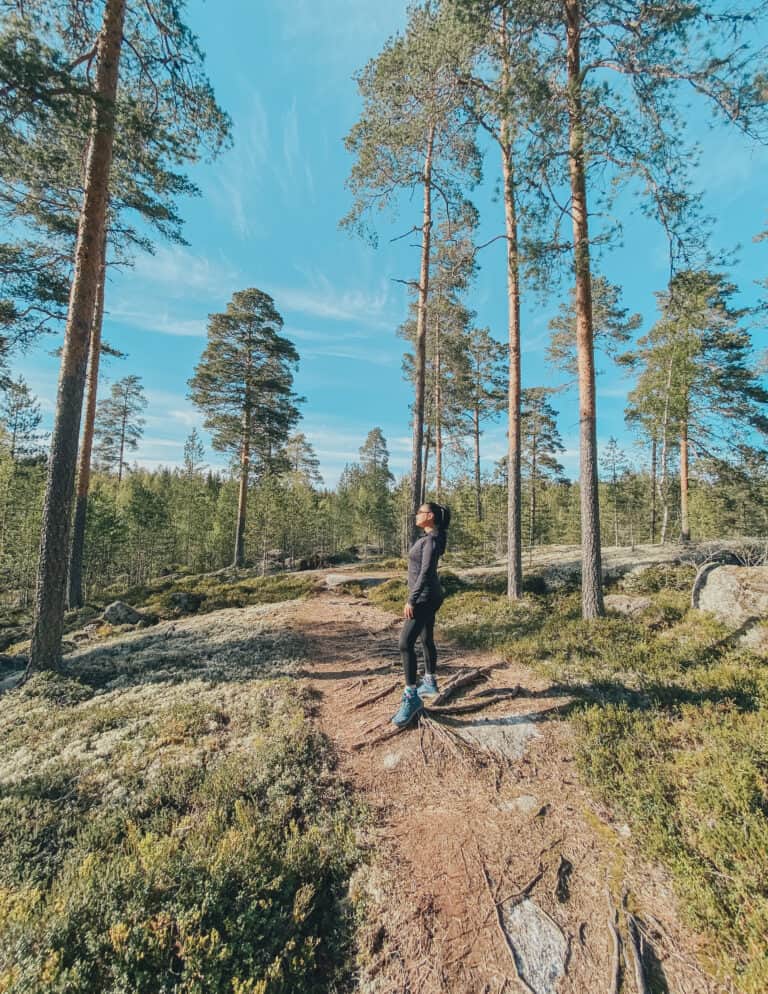
Quick Answer: Cross-country skiing is the real Finnish national winter sport, and the 10 best beginner-friendly destinations span from Lapland (Ylläs, Levi, Saariselkä, Pyhä-Luosto, Ruka, Rovaniemi/Ounasvaara, Pallas-Yllästunturi) to central Finland (Vuokatti with its year-round ski tunnel, Tahko, Jyväskylä’s Laajavuori urban network). Beginners should start with classic technique (the parallel-groove version, easier than skating), book a 1.5-hour group lesson at €78 to €110, rent gear at €25 to €35 per day, and start at Vuokatti or Ylläs for the friendliest beginner terrain. Most municipal track networks (Ruka, Jyväskylä, Oulu, Tampere) are free; resort networks charge €20 to €30 per week. Trail seasons run November through early May in Lapland, December through March in central Finland.
Finland is famous internationally for downhill skiing at Levi, husky safaris in Rovaniemi, and aurora viewing from glass igloos. Inside Finland, none of those are what Finns actually do in winter. The real Finnish national winter sport is cross-country skiing on the dense network of municipal track loops that crisscross almost every town, lit for evening use, free at most centers, and packed every Saturday morning with locals from age 4 to 84. The country has 50,000 kilometers of marked cross-country trails. The downhill scene at Levi runs 230 kilometers of pistes. The math gives you the cultural weight.
The distinction matters for visitors because it changes what you should actually book. Cross-country is the version travelers should try not because it is more “authentic” in some abstract sense, but because the entry barrier is lower than downhill (no expensive lift passes, no metal-edged skis to handle), the cardio is more rewarding, and the trail networks take you through actual Finnish forest rather than over manicured pistes. Downhill is the activity Finland exports to international tourists; cross-country is the activity Finns themselves do every weekend through the four-to-six-month winter season.
2026 happens to be a good year to try the sport in Finland. Finland is Lonely Planet’s #1 country in Best in Travel 2026, the country sits near peak of the 11-year solar cycle so aurora odds across Lapland are high (lit evening tracks pair naturally with aurora viewing on clear nights), and Vuokatti’s Olympic Training Center has expanded its English-language coaching schedule. The 10 destinations below cover the full range from beginner-friendliest to most-challenging, with the practical lesson and rental pricing for each.
Building a cross-country skiing week into a Lapland trip and trying to sequence the lessons, the lit-track evenings, and the aurora viewing around the rest of the activities?
The Ultimate Europe Trip Planner sequences the ski-lesson booking with the lit-track evenings and the aurora windows so the cross-country days fit cleanly with the husky and reindeer activities.
Recommended Cross-Country Ski Travel Gear
Six pieces worth packing for a cross-country ski week, where the layering rule is different than for static-cold activities since you are generating heat constantly.




Recommended blogs to read:
- Finland ski resorts overview
- things to do in Lapland
- winter in Finland overview
- best time to visit Finland
- unique hotels in Finland
The 10 Best Cross-Country Skiing Destinations in Finland
Ten destinations across Lapland and central Finland, sorted by overall beginner-friendliness and infrastructure depth.
1. Vuokatti (Central Finland)
Vuokatti in Kainuu is Finland’s Olympic cross-country training center and the friendliest destination for absolute beginners thanks to its indoor ski tunnel. The 1.2-kilometer tunnel runs year-round at controlled snow conditions, which lets first-time visitors learn the basic technique without weather worries before moving outside to the 190-kilometer outdoor network. Vuokatti Sport offers private lessons with Olympic coaches at premium pricing (around €110 per hour) but the standard group-lesson rate runs €78 to €95 for 1.5 hours including gear. The 32 kilometers of lit evening tracks make the lit-Track + dinner format work for travelers who want to keep skiing after 4 PM darkness. Access is via train to Sotkamo (4 hours from Helsinki) or via Kajaani airport. Best pick for first-time skiers, families, and anyone who wants the most-coached version of the experience.
2. Ylläs (Lapland)
Ylläs has 330 kilometers of trails and the gentlest gradients of the major Lapland resorts, which makes it the right Lapland-based pick for beginner skiers who want the Arctic-setting version of the experience without the steeper terrain at Ruka or Pyhä. The trail network includes 38 kilometers of lit evening tracks, with the classic-track grooming considered the best in Finland (the parallel grooves are deeper and more consistent than at most other resorts). Group skiing safaris run €75 to €95 for 2 hours including gear and a guide. The Pallas-Yllästunturi National Park sits adjacent to the resort and adds another 500 kilometers of national-park trails for travelers who want to extend beyond the resort network on day three or four of a multi-day visit.
3. Levi (Lapland)
Levi runs 230 kilometers of cross-country trails alongside the famous downhill resort, with 28 kilometers lit for evening use. The Levi Ski School (operating under the Werneri name) is the largest cross-country instruction operation in Lapland, with bilingual Finnish-English coaching and beginner-specific trails near the village core for the first lessons. Private XC lessons run €90 to €110 per hour. The unique pull of Levi is the integration with the downhill resort: you can do a downhill morning and a cross-country afternoon (or vice versa) without changing the base. The village itself has the strongest restaurant and bar scene in Lapland, which makes Levi the right pick for travelers who want the social après-ski layer in addition to the ski activity.
4. Saariselkä (Far North Lapland)
Saariselkä runs 200-plus kilometers of cross-country trails through the Urho Kekkonen National Park edge terrain, with 34 kilometers lit for evening use. The Vuotso Trail is the standard beginner pick: 8 kilometers of well-groomed classic-track terrain that loops back to the village. The Saariselkä Ski & Sport Resort offers 1.5-hour beginner lessons at €78 to €85 with gear included, taught by English-speaking instructors. The deep-Lapland latitude (above the 68th parallel) means the trail network includes routes through proper Arctic landscape (bare-snow tundra, scattered pine), which gives Saariselkä cross-country a different visual character than the more forest-dominated Ylläs or Levi networks. Pair with a glass-igloo stay at one of the Saariselkä-cluster properties for the full Saariselkä trip.
5. Pyhä-Luosto (Lapland)
Pyhä-Luosto runs 150 kilometers of cross-country trails (split roughly 14 kilometers each across Pyhä and Luosto lit-track networks) through Pyhä-Luosto National Park terrain. The destination is noticeably quieter than Levi or Ylläs, which makes it the right pick for travelers who want the wilderness-feel version of cross-country without the crowds at the bigger resorts. The Pyhätunturi fell and the Luosto amethyst-mining tradition add cultural-context layers that the busier resorts have crowded out. Pricing is in the standard €25 to €35 per day rental range. Best for second-time Lapland cross-country skiers who want to escape the resort scene, or first-time skiers who specifically want the quieter version of the activity from day one.
6. Ruka-Kuusamo (Northeastern Finland)
Ruka has Finland’s longest cross-country trail network at 500-plus kilometers, all free to use (no trail-pass required), with about 40 kilometers lit for evening use. The Ruka season is also the longest in Finland: tracks open in October when the rest of the country has not yet seen snow, and stay groomed through late April. The trail network includes some steeper FIS-grade racing sections that beginners should avoid, but the green-marked beginner loops are well-signed and connect cleanly with the village core. The remoteness of Kuusamo (closest airport, 30 minutes by bus to the village) makes Ruka the right pick for travelers who want the longest possible ski season and the largest possible trail network, especially for early November or late April trips when Ylläs and Levi have less reliable conditions.
7. Rovaniemi / Ounasvaara (Lapland)
The Ounasvaara hill area immediately outside Rovaniemi has 100 kilometers of cross-country trails (200 in the wider Rovaniemi area), with the highest lit-track ratio in Finland (50 kilometers lit for evening use). The Santasport Olympic Training Centre on the hill runs cross-country lessons with Olympic coaches at premium pricing (around €100 to €120 per hour) but the standard group lessons through Rovaniemi tourism operators run €70 to €90. The Rovaniemi base means easy combination with the Santa Claus Village, the husky kennels, and the rest of the Lapland tourism menu, which makes Ounasvaara the right cross-country option for travelers based in Rovaniemi who want a half-day of skiing alongside the other activities. Best for first-time Lapland visitors who want everything in one base.
8. Pallas-Yllästunturi National Park (Lapland)
Pallas-Yllästunturi National Park covers about 500 kilometers of trails (overlapping with the Ylläs resort network on the south side, extending further into the park on the north side). The national-park trails are wilder and less serviced than the resort networks, with limited lit tracks due to dark-sky rules and longer routes between rest huts. This is the version for travelers who want a proper wilderness ski experience rather than a resort-day version, with the trade-off of more self-sufficiency requirements: bring a map, plan around hut locations, dress for longer exposure. Best for intermediate skiers and travelers who have already done one resort-based ski week. Pair with a Hetta Huskies expedition for the deep-Lapland wilderness trip.
9. Tahko (North Savo, Central Finland)
Tahko in North Savo has 67 kilometers of cross-country trails, including 20 lit kilometers, with the December-through-March season. The compact size and the family-friendly resort orientation make Tahko a good pick for short cross-country trips from Helsinki or Kuopio (1 hour from Kuopio airport) where you want a few days of skiing without committing to the longer Lapland transfer. The trail network is easier than the major Lapland resorts and pairs naturally with the on-site downhill operation for travelers who want both formats. SkiMac is the local rental shop with English-friendly service for international visitors. Best for travelers who want a long-weekend cross-country trip rather than a full Lapland week.
10. Jyväskylä Laajavuori (Central Finland)
Laajavuori is the urban cross-country network in Jyväskylä, with about 60 kilometers of city-edge trails including a fully lit evening network. The format is different from the Lapland resorts: this is the version of cross-country that Finns actually do on a weekday evening after work, with the trail network integrated into the city’s broader municipal sports infrastructure. Trails are free to use. Best for travelers visiting central Finland (Jyväskylä is 3 hours from Helsinki by train) who want to combine a city trip with the cross-country experience without committing to a Lapland or resort-based trip. The Laajavuori downhill area is also on the same hill, which makes the combination day workable.
Classic vs Skating: What to Actually Learn First
Cross-country skiing splits into two techniques, and which one you learn first matters more than first-time visitors realize. Classic technique (called kaksoispotku or the diagonal stride) involves skis sitting in two parallel grooves cut into the snow. The grooves prevent the skis from sliding sideways, which gives the technique a built-in stability that beginners need. You essentially walk-and-glide: push one ski forward, transfer weight, glide briefly, repeat with the other ski. Classic is what every beginner should learn first.
Skating technique (called luistelu or the “free technique”) looks like ice-skating on snow. The skis push outward at angles rather than running parallel, the motion involves heavy use of core muscles and balance, and the speed achievable is significantly higher than classic. The trade-off is that skating is meaningfully harder to learn and almost impossible without a coached lesson. Skip skating on day one of any first-time visitor trip. By day three or four, if you are taking to classic well and want to try the faster format, ask your instructor to add a 90-minute skating intro. Most Finns who ski regularly do both techniques and switch based on trail conditions and what they feel like that day.
Gear differences from downhill skiing matter for first-timers used to alpine equipment. Cross-country skis are skinnier, longer, and lighter with no metal edges (the parallel grooves do the steering job that metal edges do on downhill skis). Boots are flexible like running shoes, with only the toe clipping into the binding so the heel can lift freely for the walking motion. Poles are taller (armpit-height for classic, chin-height for skate) than downhill poles. None of this matters if you are renting (the rental shop sets you up correctly) but it explains why borrowing downhill gear from a friend does not work for cross-country.
Pairing a Vuokatti or Ylläs cross-country week with a Lapland tour and a Helsinki stop for the full Finnish winter trip?
The Ultimate Europe Trip Planner sequences the ski-week dates with the rest of the Finland itinerary so the days fit cleanly.
Frequently Asked Questions
How much does cross-country skiing in Finland cost?
Standard adult rental (skis, boots, poles) costs €25 to €35 per day or €90 to €110 per week. Group beginner lessons run €78 to €110 for 1.5 hours including gear. Private lessons €90 to €120 per hour. Most municipal trail networks (Ruka, Jyväskylä, Oulu, Tampere) are free; resort networks at Saariselkä, Ylläs, Levi charge €20 to €30 per week for a trail pass. Vuokatti’s indoor ski tunnel is the year-round option (works in summer for early-season practice) and adds a per-session fee.
What is the best place to learn cross-country skiing in Finland?
Vuokatti is the Olympic Training Center with the friendliest beginner infrastructure (including the year-round indoor ski tunnel). Ylläs in Lapland has the gentlest gradients of the major Lapland resorts. Levi has the largest ski school operation in Lapland with bilingual Finnish-English coaching. Saariselkä Ski & Sport Resort offers the best Lapland beginner-lesson pricing at €78 to €85 for 1.5 hours. Pick by trip context: Vuokatti for absolute beginners, Ylläs or Levi for the Lapland setting.
Classic or skating technique for beginners?
Classic. The parallel-groove tracks built into Finnish cross-country trails give classic technique a built-in stability that beginners need. Classic is essentially walk-and-glide with the skis running parallel forward. Skating technique looks like ice-skating on snow, requires significant core strength and balance, and is meaningfully harder to learn. Skip skating on day one and consider adding a 90-minute skating intro by day three or four if you want to try the faster format.
When is the cross-country ski season in Finland?
November through early May in Lapland (Ylläs, Levi, Saariselkä, Pyhä-Luosto, Rovaniemi). Ruka has the longest season, October through late April. Central Finland resorts (Vuokatti, Tahko) run December through March. The Vuokatti indoor ski tunnel works year-round, which makes it the right pick for summer or early-autumn ski-tourism trips. The cheapest months are late March and early April when daylight is back but snow still covers the trails.
Do you need lessons to cross-country ski in Finland?
For absolute beginners, yes. A 1.5-hour group lesson at €78 to €110 covers the basic technique, the gear setup, and the trail-marker conventions, all of which would take a self-taught beginner several days to figure out. After one lesson most travelers are competent on green-marked beginner trails. For travelers with cross-country background from another country (especially the Nordic skiers from Norway, Sweden, or Canada), the Finnish trail conventions are similar enough that a lesson is optional rather than essential.
Key Takeaways
- 10 cross-country destinations across Lapland and central Finland. Vuokatti and Ylläs are the friendliest beginner picks; Ruka has the longest season and largest trail network; Levi has the biggest ski school operation.
- Rental €25 to €35 per day. Group beginner lessons €78 to €110 for 1.5 hours. Most municipal networks free; resort networks €20 to €30 per week.
- Learn classic technique first (parallel-groove tracks, easier stability). Skating technique looks like ice-skating on snow and is meaningfully harder, save it for day three or four.
- Cross-country is the real Finnish national winter sport, not downhill. 50,000 kilometers of marked trails versus 230 kilometers of pistes at Levi.
- Season runs October to early May in Lapland, December through March in central Finland. Vuokatti’s indoor ski tunnel works year-round.
Final Thoughts
Cross-country skiing in Finland is the activity that visiting downhill skiers and aurora hunters tend to skip and then regret skipping. The cardio is rewarding, the trail-network depth is unmatched anywhere in Europe, and the cultural connection to actual Finnish weekly life is the closest you will get without being invited to a sauna. Book the 1.5-hour group lesson on day one of the trip, treat the first afternoon as the real learning curve, and the rest of the ski week pays it back.
For the wider Finland trip context, the things to do in Finland guide covers how a ski week fits with a Helsinki stop, and the things to do in Helsinki guide covers what to add on either end of the trip.