Quick Answer: Planning a trip to Spain in 2026 comes down to 10 steps: pick a season (April to June and September to October are ideal per the best time to visit Spain), pick a trip length (7 days minimum, 10 to 14 days for first-timers), book AVE trains plus the Alhambra 60 to 90 days ahead, get your IDP if renting a car, prep for the EES biometric scan, and budget €100 to €150 per day mid-range. Most US, UK, Australian, and Canadian passport holders need no visa for stays under 90 days.
Spain is one of Europe’s easiest first-trip destinations once you get the pre-trip sequence right. The country has the longest high-speed rail network on the continent (which makes city hopping fast), more UNESCO World Heritage Sites than any country except Italy and China (which gives you the cultural depth), and an extraordinary food scene that swings from Basque pintxos in San Sebastian to free Granada tapas to Catalan modernist tasting menus in Barcelona.
The catch is that the most-loved attractions sell out 60 to 90 days ahead (the Alhambra, Sagrada Familia, paradores) and the new 2026 EES biometric entry system adds a step at the airport. Our broader Spain travel tips guide covers the on-the-ground cultural codes; this guide focuses on the planning sequence before you fly.
The 10-step framework below is the same one I use for every Spain trip. It maps season to region (April to June for Andalusia, July to August for the north coast, September to October for the country at large), trip length to city count (5 days = 1 city, 7 days = 2, 10 days = 4, 14 days = 6), and budget tier to accommodation style (hostels at €15 to €40, mid-range hotels €70 to €250, paradores and palace hotels €100 to €450).
Plus the four big-ticket bookings that need to happen 60 to 90 days before departure. Our full transport breakdown for Spain covers the AVE-versus-ALSA-versus-rental-car decision in detail; this planner ties everything together end to end.
Planning your first trip to Spain in 2026?
The Ultimate Europe Trip Planner gives you a 13-month booking timeline (AVE, Alhambra, Sagrada, paradores), a season-by-region decision matrix, and city-by-city day-by-day plans for 7, 10, and 14-day trips. Limited time, save $10 today (originally $27).
Best Hotels for a First Spain Trip
Five centrally located picks across the cities most first-time itineraries cover, mapped from our wider guide to the best hotels in Spain.
- Hotel URSO (Madrid), boutique five-star in Chamberí, doubles from €180, walkable to the Prado.
- Hotel Casa Camper (Barcelona), central Raval with 24-hour pantry service, doubles from €250.
- Hotel Casa 1800 Sevilla, restored mansion in Santa Cruz with rooftop plunge pool, doubles from €200.
- Parador de Granada, former convent inside the Alhambra walls, doubles from €350 (book 6 months ahead).
- Hotel Marqués House (Valencia), boutique in the old town with rooftop terrace, doubles from €150.
Top Tours for First-Time Spain Travelers
Five high-rated tours that fit perfectly into our recommended 10 days in Spain itinerary and handle the trickier logistics for first-timers.
- Madrid Royal Palace and Prado Priority Entry Combo, half-day skip-the-line that beats the morning queues.
- Barcelona Sagrada Familia plus Park Güell Skip-the-Line, handles both Gaudí ticket bottlenecks in one package.
- Granada Alhambra Pre-Booked Tickets plus Nasrid Palaces Tour, includes the 90-day-ahead Alhambra ticket plus a licensed guide.
- Seville Cathedral and Royal Alcázar Priority Entry, two of the city’s three core sights in one ticket.
- Madrid to Toledo Full-Day AVE Day Trip, 33-minute high-speed train each way plus old town walking with a guide.
Recommended Travel Essentials for Planning a Spain Trip
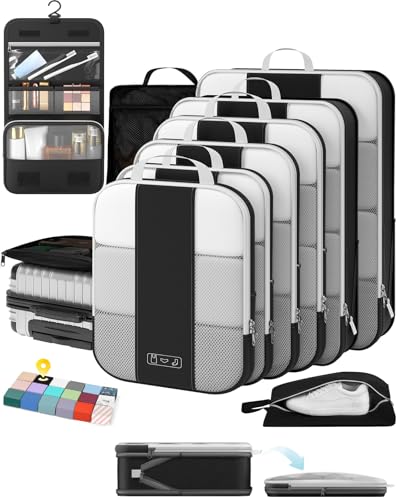
These five essentials cover the Type F outlet, the entry paperwork checklist, the packing system, the anti-pickpocket basics, and the international driving permit.


Plan your full Spain trip:
- Cost calculator, Spain budget guide.
- Full transport breakdown, transportation in Spain.
- Sample 10-day route, 10 days in Spain itinerary.
- Pick your season, best time to visit Spain.
Step 1: Pick Your Season
Spain runs four distinct travel seasons. Shoulder season (April to June and September to October) is the country’s sweet spot: 20 to 28°C across most regions, thin crowds, shoulder-season AVE fares, and harvest-tied food specials in La Rioja and the Basque Country. High summer (July to August) is brutal in the south (Sevilla, Cordoba, and Madrid regularly hit 40°C) but perfect for the north coast (San Sebastian, Bilbao, Asturias, Galicia stay 22 to 26°C) and the Balearic and Canary Islands.
Winter (November to March) gets you the cheapest fares, the lightest crowds, and proper Christmas markets in Madrid and Barcelona; the Canaries and southern Andalusia stay mild at 16 to 22°C. Shoulder months break down beautifully in our Spain in May guide and Spain in September guide.
Step 2: Decide Your Trip Length
Spain rewards longer trips because the AVE makes city-hopping fast, but the math breaks down predictably. Five days = one city (Madrid or Barcelona for the first-timer; Sevilla or Granada for the second visit). Seven days = two cities plus a day trip (Madrid plus Barcelona, or Madrid plus Sevilla, or Barcelona plus Valencia). Ten days = the classic four-city route (Madrid, Sevilla, Granada, Barcelona) with Toledo and Cordoba day trips.
Two weeks = the same four cities plus an extension into Valencia, Mallorca, San Sebastian, or the Costa Brava. Three weeks = full country with the north coast plus white villages plus an island. Our detailed 10 days in Spain itinerary route maps the four-city classic with hotel picks and AVE booking windows.
Step 3: Set Your Budget
Spain comes in at roughly three tiers in 2026. Budget travelers do the country on €50 to €70 per day (hostel dorms €15 to €40, menú del día lunch €12 to €18, metro plus walking, free museum hours). Mid-range €100 to €150 per day (three-star or boutique hotels €70 to €250, sit-down restaurants, paid attractions, occasional Cabify). Luxury €200 to €350 plus per day (palace hotels and paradores €250 to €450, fine dining and pintxos crawls, private guides, AVE first-class).
The single biggest cost-control variable is the season: shoulder season hotel rates run 30 to 50 percent below July and August in coastal cities. Our complete Spain budget guide breaks down the daily, weekly, and 10-day costs by tier.
Step 4: Confirm Visa and EES Entry Rules
US, UK, Australian, and Canadian passport holders need no visa for stays under 90 days in any rolling 180-day window across the Schengen area. Spain is one of 27 Schengen countries; the 90-day clock counts every Schengen day cumulatively. As of April 10, 2026, the EU’s Entry/Exit System (EES) replaced passport stamps with a biometric fingerprint plus photo scan at every airport and seaport (free, 60 to 90 seconds at a kiosk, valid for three years).
ETIAS (the pre-authorization, €7 fee) launches late 2026 for non-EU travelers. Your passport must be valid at least three months past your return date. EU passport holders need only a valid ID. Our Spain travel tips guide covers the EES walk-through in detail.
Step 5: Book the Big-Ticket Items 60 to 90 Days Out
Four bookings have a 60 to 90-day lead time and sell out at peak season. AVE, AVLO, iryo, and OUIGO trains: advance fares from €15 to €20 on the Madrid-Barcelona, Madrid-Seville, and Madrid-Valencia routes if booked 60 to 90 days ahead (last-minute fares jump to €90 plus). The Alhambra in Granada: 8,000 daily tickets at €19 from alhambra-patronato.es sell out 60 to 90 days ahead.
The Sagrada Familia in Barcelona: 12,000 daily tickets at €28 from sagradafamilia.org sell out 30 to 60 days ahead. Paradores (historic state-run hotels): book direct at paradores.es for 5 to 10 percent better rates than third-party sites. Together with other historic stays at the Alhambra and other Spanish castles, these four bookings shape the rest of the trip.
Step 6: Book Your Flights
The cheapest US gateway to Spain in 2026 is Barcelona ($254 average round-trip from Boston, NY-JFK, or Miami on Iberia in shoulder season), followed by Madrid ($289 avg). The cheapest UK gateway is Málaga (£30 to £80 one-way on Ryanair from Stansted, Manchester, or Birmingham), followed by Barcelona (£40 to £100 on EasyJet). Best month for flight pricing: September, followed by January.
Worst month: July to mid-August (peak summer surcharge). Open-jaw flights are the single biggest time-saver for first-timers: fly into Madrid (MAD), fly out of Barcelona (BCN) so you don’t backtrack on the final AVE. Our guide to which Spanish city is cheapest to fly into covers the full international gateway pricing with 2026 averages.
Step 7: Plan Your Transport Mix
Spain’s transport network is the most-developed in Europe outside Switzerland, with four high-speed rail operators competing on the main intercity routes (Renfe AVE, AVLO, iryo, OUIGO), ALSA buses covering everywhere the trains skip, four domestic airlines for the Canaries and Mallorca, a Mediterranean ferry network, and rental cars for the road-trip routes. Most first-timers do not need a car: AVE plus ALSA plus city metros handle every major destination.
Cars are only essential for the Andalusian white villages, La Rioja wine country, Mallorca interior, and the Costa Brava cove-hopping routes. US and non-EU drivers need an International Driving Permit ($20 from AAA, valid 1 year). Our full Spain transportation guide walks through each mode with 2026 pricing.
Step 8: Pick Your Cities or Route
The route depends on what you came for. First-timer culture-and-food: Madrid plus Sevilla plus Granada plus Barcelona (the classic 10-day route). Beach: Costa del Sol (Málaga, Marbella) plus Costa Brava (Cadaqués, Begur) plus Mallorca or Ibiza. Foodie: Sevilla plus Madrid plus San Sebastian plus La Rioja. Architecture and history: Toledo plus Cordoba plus Granada plus Sevilla (Andalusia).
Family: Barcelona plus Costa Brava plus the Aquopolis water parks or Mallorca. Wine: La Rioja plus Penedès plus Ribera del Duero. Madrid and Barcelona almost always anchor a first trip; the case for each is well-covered in our deep dives on whether Madrid is worth visiting and whether Barcelona is worth visiting.
Step 9: Book Hotels by City Cluster
One hotel per city, central location, walkable to the AVE station. In Madrid, Sol, Malasaña, or Salamanca districts work best; in Barcelona, Eixample, Gothic Quarter, or Born; in Sevilla, Santa Cruz or Triana; in Granada, Albaicín or the city center near the cathedral. Mix paradores (Spain’s state-run historic hotels) for one or two nights of palace-or-castle stays plus boutique hotels for the rest of the trip.
Most cities recommend booking 60 to 90 days ahead for shoulder season, 90 to 120 days ahead for July and August. Paradores book up earliest (6 to 9 months for the Granada Alhambra and Santiago de Compostela locations). For the full breakdown by city, our guide to the best hotels in Spain covers boutique to paradores to budget.
Step 10: Pack and Prep Your Documents
The packing list breaks down by season and region. Universal: Type F adapter, smart-casual outfits (linen button-downs, dark denim, leather sneakers), church-modesty layer (a scarf or long-sleeved cardigan), real walking shoes (not running sneakers), and an anti-theft crossbody bag for the pickpocket hotspots. Spring and autumn add a light jacket. Summer adds sun protection plus a wide-brim hat.
Winter in the south stays mild (sweater plus light coat); winter in the north needs a proper coat plus waterproof shoes. Documents: passport, IDP (if driving), travel insurance card, two passport photocopies stored in separate bags, and printed AVE plus Alhambra plus Sagrada tickets. For the season-by-season full list, our complete Spain packing list covers everything.
Pack and prep for Spain from scratch.
The Ultimate Europe Trip Planner includes a packing module by season and region, an EES plus IDP paperwork checklist, and a budget tracker covering hotels, AVE fares, and skip-the-line tickets. Limited time, save $10 today (originally $27).
Extra Spain Trip Planning Tips
- Travel insurance will be required when ETIAS launches late 2026 and is recommended for everyone in 2026. World Nomads and SafetyWing both cover Spain for €30 to €70 per week. See our Spain travel tips guide for the full pre-trip checklist.
- Pre-buy mobile data with an Orange Holiday Europe eSIM (€20 for 20GB, 14 days) before flying. Cheaper than US carrier roaming and works across Spain plus the rest of the EU. Combine with our Spain budget guide for the rest of the cost-trim playbook.
- Photocopy your passport twice and store the copies in two separate bags. Email a scanned copy to yourself plus a trusted contact. For the broader entry-mistake list, see our guide to what to avoid in Spain at entry.
- Book paradores direct at paradores.es (5 to 10 percent better rates than Booking.com for these state-run historic hotels). The full hotel landscape including boutique-versus-parador picks is in our best hotels in Spain guide.
- Use Skyscanner’s “Everywhere” search to find the cheapest US-to-Spain entry city in your travel window. Pair with our analysis of the cheapest Spanish city to fly into for the open-jaw routing options.
For official tourism information including visa rules, regional events, and city event calendars, check Spain’s official tourism portal.
Frequently Asked Questions
How far in advance should I plan a trip to Spain?
Start planning 3 to 6 months ahead for peak season (July to August and major holidays) and 2 to 3 months ahead for shoulder season (April to June, September to October). The Alhambra ticket plus AVE seats plus paradores all need 60 to 90 days of lead time.
Last-minute trips (under 30 days) are possible in winter but limit your options on the Alhambra and palace hotels. For the season breakdown plus weather-by-month context, our best time to visit Spain guide walks through every month.
How many days do you need in Spain?
Seven days is the minimum to see two cities plus a day trip without rushing. Ten to 14 days is ideal for a first-time visit (the classic Madrid plus Sevilla plus Granada plus Barcelona route fits perfectly in 10). Three weeks lets you add the Costa Brava, La Rioja wine country, or San Sebastian and the Basque Country.
Less than seven days works only if you stick to one city plus its day trips. Our day-by-day 10 days in Spain itinerary gives you the proven first-timer template.
What is the best time of year to visit Spain?
April to June and September to October are the country’s shoulder-season sweet spots: 20 to 28°C across most regions, thin crowds, shoulder-season AVE plus hotel pricing. May is the most balanced month of the year for the country as a whole. July to August is the peak (and dangerously hot in the south, but ideal for the north coast and islands).
November to March gets you the cheapest fares and the fewest crowds. Our deep dive on Spain in May covers the shoulder-season specifics by region.
Do I need travel insurance for Spain?
It is strongly recommended in 2026 and will be required when ETIAS launches late 2026. Travel insurance covers medical emergencies, trip cancellation, lost luggage, and rental car damage. World Nomads and SafetyWing both run €30 to €70 per week.
Spain’s public health system is excellent but private hospital bills for tourists run €200 to €1,500 without insurance. For the document checklist plus entry-rule overview, our guide to what to avoid in Spain covers the entry-mistakes side.
How much does a 10-day Spain trip cost in 2026?
A 10-day Spain trip in 2026 runs around $2,400 to $3,500 per person mid-range including flights from the US, hotels, food, AVE plus ALSA transport, and attractions. Budget travelers can do it for $1,400 to $2,000 (hostels, menú del día, free museum hours). Luxury travelers €4,500 plus (palace hotels and paradores, fine dining, private guides).
Sevilla and Granada run 25 to 40 percent cheaper than Barcelona and Madrid on accommodation, so route order affects the total. For the full breakdown by day and tier, our complete Spain budget guide covers every cost line.

Key Takeaways
- The 10-step framework: pick a season, decide trip length, set a budget, confirm visa plus EES, book the big-ticket items 60 to 90 days out, book flights, plan transport mix, pick cities, book hotels by cluster, and pack plus prep documents. Our 10 days in Spain itinerary is the proven first-time template.
- The four 60-to-90 day bookings: AVE plus AVLO plus iryo plus OUIGO trains, Alhambra (alhambra-patronato.es), Sagrada Familia (sagradafamilia.org), and paradores (paradores.es). Full transport context in our Spain transportation breakdown.
- Shoulder season (April to June and September to October) is the budget plus weather sweet spot. Summer in the north coast, winter in the Canaries and Andalusia. Per-month detail in our best time to visit Spain guide.
- US, UK, Australian, and Canadian passport holders need no visa under 90 days but must complete the EES biometric scan on entry (live since April 10, 2026). ETIAS pre-authorization (€7) launches late 2026. Pack a Type F adapter and dress smart-casual per our complete Spain packing list.
- Open-jaw flights (into Madrid, out of Barcelona) save 6 plus hours of backtracking. Cheapest US gateway is Barcelona ($254 avg round-trip from major US airports in shoulder season). Madrid and Barcelona almost always anchor a first trip, with hubs like things to do in Barcelona covering the highlights.
Final Thoughts
Planning a trip to Spain in 2026 is straightforward when you follow the 10-step sequence: shoulder season for the best weather plus pricing, 10 to 14 days for first-timers, AVE plus Alhambra plus Sagrada plus paradores booked 60 to 90 days ahead, the EES biometric scan prepped, and a Type F adapter packed. The cheapest US entry is Barcelona ($254 average) and the proven first-time route is Madrid to Sevilla to Granada to Barcelona over 10 days with Toledo and Cordoba day trips.
Travel insurance becomes mandatory when ETIAS launches late 2026. For the on-the-ground cultural codes (dinner timing, siesta reality, tipping, free tapas) once you arrive, our broader Spain travel tips guide covers everything that happens after you land.