Quick Answer: Jyväskylä is a central Finland university city of about 145,000 residents on Lake Päijänne, 270 km north of Helsinki. The city is the Alvar Aalto architecture capital of Finland with over 30 Aalto-designed buildings in and around the central area. Reach Jyväskylä via train from Helsinki (3 hours, €25 to €60 advance). The 9 top experiences cover the Alvar Aalto Museum, the Aalto-designed University of Jyväskylä campus, the Säynätsalo Town Hall (Aalto’s masterpiece), Lake Päijänne cruises, the Jyväskylä Cathedral, the historic Toivola Old Courtyard, the Harju Ridge viewpoint, the Craft Museum of Finland, and the annual Neste Rally Finland (early August).
Jyväskylä is the Alvar Aalto city. The Finnish architect Alvar Aalto lived and worked in Jyväskylä for much of his early career, and the city now contains the highest concentration of Aalto-designed buildings anywhere in the world. The Alvar Aalto Museum in the central city, the University of Jyväskylä campus (which Aalto designed in stages between 1951 and 1971), and the Säynätsalo Town Hall (15 km outside the city, often cited as Aalto’s single most-important building) together justify a 2 to 3-day trip independent of the broader central Finland appeal.
Beyond the Aalto architecture, Jyväskylä functions as the cultural anchor of central Finland with Lake Päijänne (Finland’s second-largest lake) providing the lake-cruise and beach-swimming layer, the University of Jyväskylä providing the student-and-cafe scene that gives the city a younger feel than most Finnish regional capitals, and the annual Neste Rally Finland bringing World Rally Championship racing to the surrounding forest roads each early August.
Jyväskylä lands as a 2 to 3-day stay or as a single-night stop on a longer central Finland trip combining Tampere, Kuopio, and the broader Lakeland. The train from Helsinki takes 3 hours and is the standard travel method; Finnair operates one daily flight from Helsinki to Jyväskylä Airport but the time savings versus the train is minimal once airport transfers factor in.
Planning the central Finland trip combining Jyväskylä’s Aalto architecture with Tampere, Kuopio, and the broader Lakeland?
The Ultimate Europe Trip Planner sequences the central Finland trip in one editable document.
Jyväskylä Travel Essentials
Six items worth packing for the Jyväskylä trip; the camera with wide-angle lens for Aalto architecture photography and the comfortable walking shoes for the campus tour are the two highest-value items.



Recommended blogs to read:
- famous Finnish people
- lakes in Finland guide
- things to do in Tampere
- best museums in Finland
- things to do in Finland
9 Top Things to Do in Jyväskylä
The 9 things to do below cover the realistic 2 to 3-day Jyväskylä visit with Alvar Aalto architecture as the headline thread running through multiple stops.
1. The Alvar Aalto Museum
The Alvar Aalto Museum (Alvar Aalto-museo) is the central anchor for any Aalto-focused Jyväskylä visit. The museum sits in a 1973 Aalto-designed building near the university campus and houses the largest Aalto archive in the world including original drawings, furniture prototypes, glass and ceramic designs, and biographical exhibits. Entry €15 adult; closed Mondays. Allow 2 to 3 hours for the full visit. The museum store sells authentic Iittala glass and Artek furniture at standard Finnish retail pricing. The on-site Cafe Alvar serves Finnish-Nordic lunch (€12 to €22) in a fully Aalto-designed dining room. Reach the museum via local bus 24 from the central station (10 minutes, €4) or a 25-minute walk.
Read also: things to do in Espoo for more Aalto architecture at Hvitträsk and Tapiola.
2. The University of Jyväskylä Aalto Campus
The University of Jyväskylä campus is one of Alvar Aalto’s most-complete master-planning projects, designed in stages between 1951 and 1971 across approximately 30 connected buildings. The campus walking tour (free, self-guided) covers the main administration building, the Aalto Hall auditorium, the library, the swimming hall, and the original Aalto-designed dormitories. The university tourism office at the central campus building provides a free walking-tour map (in English) covering the recommended 90-minute route. The campus stays open to public visitors year-round; allow 90 minutes for the architecture-focused walk plus 30 to 45 minutes for the cafe break at the Aalto-designed Lyhty student cafe.
Read also: sightseeing in Helsinki for more Aalto-designed buildings around the capital.
3. Säynätsalo Town Hall (Aalto’s Masterpiece)
The Säynätsalo Town Hall (Säynätsalon kunnantalo), 15 km south of central Jyväskylä, is often cited as Alvar Aalto’s single most-important building. Completed in 1952, the brick-and-wood civic complex demonstrates Aalto’s mature design language: the central courtyard, the integration with the surrounding forest, the careful interior light handling, and the human-scale detailing that defined Finnish modernist architecture. Entry €12 adult; guided tours run summer weekends, self-guided weekday access. Allow 2 to 3 hours including the round-trip travel from central Jyväskylä. Reach via local bus 16 from the central station (35 minutes, €4) or a 25-minute drive. The building is in active municipal use as a heritage-preserved town hall.
Read also: UNESCO World Heritage sites in Finland for the broader Finnish architectural-heritage planning.
4. Lake Päijänne Cruises and Beach Swimming
Lake Päijänne is Finland’s second-largest lake by surface area and the central geographic feature of Jyväskylä. The city’s central harbor provides direct access to summer scenic cruises (€20 to €35 per person, 2 to 3 hours) and the longer Päijänne ferry to Lahti (8 hours, €55 to €85, runs Wednesdays and Saturdays in summer). Swimming access from the central beach at Tuomiojärvi is free with basic facilities; the Köhniö beach 4 km from the central city is the quieter alternative. Water temperatures reach 17 to 20°C in late July through August. The Päijänne ferry to Lahti is the strongest single scenic-transport experience in central Finland for travelers extending the trip south toward Helsinki.
Read also: best beaches in Finland for the broader Finnish-summer-swim context.
5. The Jyväskylä Cathedral
The Jyväskylä Cathedral (Jyväskylän kaupunginkirkko) is the central religious landmark of the city, built in 1880 in neo-Gothic style and modified in the 1900s during multiple restorations. The yellow-painted wooden interior contrasts sharply with the brick-and-stone exterior; the 1880 organ and the restored Finnish religious paintings define the interior visit. Free entry, open daily 10:00 to 18:00 in summer (reduced winter hours). Allow 45 minutes. The cathedral is in active religious use; check service times. The adjacent cathedral square hosts the weekly summer market and provides the natural orientation point for first-time visitors arriving by train.
Read also: castles in Finland for the broader Finnish-historic-architecture tour planning.
6. The Toivola Old Courtyard
The Toivola Old Courtyard (Toivolan vanha piha) is a restored 1800s wooden courtyard complex in the central Jyväskylä Old Town area. The courtyard preserves the traditional wooden Finnish-town architecture that dominated central Finland before the early-1900s urban modernization; the buildings now house small craft shops, cafes, and the small Old Courtyard Museum (free entry). Allow 90 minutes including the cafe stop at Cafe Pikku-Toivola (€4 to €10 for baked goods and coffee). The courtyard is walking distance from the central station and provides the natural counterpoint to the dominant Aalto-modernist architecture elsewhere in the city.
Read also: things to do in Porvoo for the larger wooden-Old-Town day-trip comparison.
7. The Harju Ridge Viewpoint
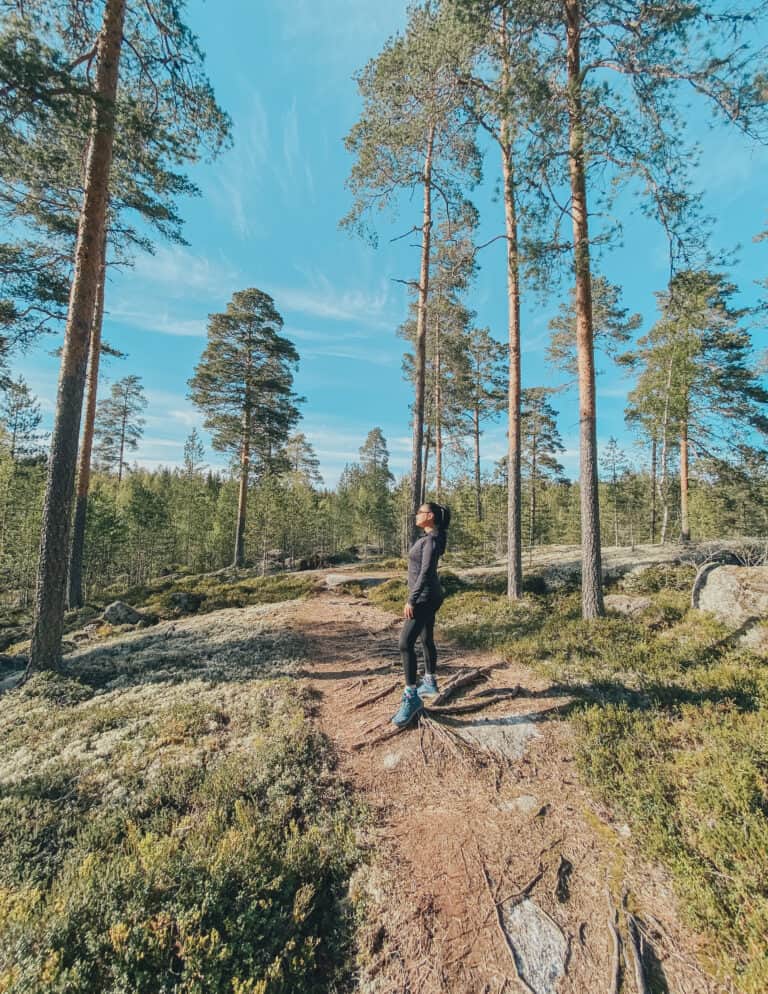
The Harju Ridge (Harju) is a low forested ridge in central Jyväskylä providing panoramic views of Lake Päijänne and the surrounding city. The ridge rises 50 meters above the central city and is reached by a 10-minute walk from the central station up the marked path. The Vesilinna lookout tower at the ridge summit (free entry, open daily) provides the strongest single viewpoint with 360-degree views; the adjacent Vesilinna Café operates summer hours with coffee and basic snacks at €4 to €10. The ridge walking trails continue beyond the main viewpoint with marked routes through pine and birch forest. Allow 90 minutes for the full ridge walk including viewing time.
Read also: best hikes in Finland for the broader Finnish-trail context.
8. The Craft Museum of Finland
The Craft Museum of Finland (Suomen käsityön museo) covers traditional and contemporary Finnish handicrafts including textiles, ceramics, metalwork, and wood. The museum sits in a restored 1888 school building near the central city; entry €10 adult; closed Mondays. The permanent exhibits cover Finnish folk-craft traditions, the 20th-century craft revival movement that influenced Aalto and the broader Finnish design generation, and contemporary Finnish craft work. Allow 90 minutes for the full visit. The museum shop sells authentic Finnish-made craft items at fair pricing; this is the strongest single Finnish-craft souvenir shopping venue outside Helsinki.
Read also: souvenirs from Finland for the broader Finnish-craft shopping tips.
9. Neste Rally Finland (Early August)
Neste Rally Finland is the annual World Rally Championship event held in the forests around Jyväskylä each early August. The rally has been part of the WRC since 1973 and is known as the fastest event on the calendar with average stage speeds of 125+ km/h on gravel forest roads. The event runs Friday through Sunday with multiple stages spread across the central Finland forests; spectator tickets €25 to €85 per stage; full-event passes at €180. The town atmosphere across the rally weekend is festive with live music, food stalls, and the broader motorsport-fan crowd filling the city. Book accommodation 6 to 9 months ahead for rally weekend.
Read also: summer in Finland for the broader summer-festival planning.
Getting to Jyväskylä from Helsinki
Train via VR Group from Helsinki Central to Jyväskylä takes 3 hours with hourly departures at €25 to €60 advance booking. The Pendolino high-speed trains complete the route in 2 hours 45 minutes; standard trains take 3 hours. Finnair operates one daily flight from Helsinki to Jyväskylä Airport (50 minutes flight time, €80 to €170); the airport bus connects to the central station in 25 minutes at €5 single ticket, so total transit time of roughly 2.5 hours offers minimal time savings versus the direct train. By rental car, the Helsinki to Jyväskylä drive takes 3 hours via Highway 4 and works well for travelers planning a longer central Finland circuit.
Extending Jyväskylä with Tampere, Kuopio, and the broader central Finland circuit for a 7-day trip?
The Ultimate Europe Trip Planner sequences the central Finland trip in one editable document.
Frequently Asked Questions
Why is Jyväskylä the Alvar Aalto city?
Alvar Aalto lived and worked in Jyväskylä for much of his early career, and the city now contains the highest concentration of Aalto-designed buildings anywhere in the world (over 30 buildings). The Alvar Aalto Museum, the University of Jyväskylä campus, and the Säynätsalo Town Hall are the three anchor Aalto experiences. Aalto attended the Jyväskylä Lyceum before architecture school and returned to Jyväskylä for major commissions throughout his career.
How do I get to Jyväskylä from Helsinki?
Train via VR Group takes 3 hours with hourly departures at €25 to €60 advance booking. The Pendolino high-speed trains complete the route in 2 hours 45 minutes. Finnair operates one daily flight (50 minutes, €80 to €170) but the time savings over the train is minimal. By rental car, the drive takes 3 hours via Highway 4.
Is the Säynätsalo Town Hall worth the day-trip from Jyväskylä?
Yes for any traveler interested in architecture. The Säynätsalo Town Hall is often cited as Alvar Aalto’s single most-important building, with the central courtyard, forest integration, and human-scale detailing that defined Finnish modernist architecture. Allow 2 to 3 hours including round-trip travel. Reach via local bus 16 (35 minutes, €4) or rental car (25 minutes).
When is the Neste Rally Finland?
Early August annually. The World Rally Championship event runs Friday through Sunday with multiple stages in the forests around Jyväskylä. Spectator tickets €25 to €85 per stage; full-event passes at €180. Book accommodation 6 to 9 months ahead for rally weekend; the city fills with motorsport fans and atmosphere is festive across the weekend.
How many days do I need in Jyväskylä?
2 to 3 days for the standard visit covering the Alvar Aalto Museum, university campus, Säynätsalo Town Hall, Lake Päijänne cruise, and the central Old Town. 4 to 5 days during Neste Rally Finland weekend for the rally-spectator extension. Single-night stops work for travelers passing through on the Helsinki-Kuopio-Oulu train route but undersell the city.
When is the best time to visit Jyväskylä?
Late May through August for the warm-weather Lake Päijänne cruises and beach swimming. Early August covers the Neste Rally Finland weekend. September catches autumn color across the Harju Ridge with quieter conditions. Winter visits work for the indoor Alvar Aalto Museum and university campus walks but reduce the outdoor lake-and-ridge experiences.
Key Takeaways
- Jyväskylä is the Alvar Aalto architecture capital of Finland with over 30 Aalto-designed buildings; population 145,000; 3 hours by train from Helsinki.
- Top 9 experiences: Alvar Aalto Museum, University of Jyväskylä campus, Säynätsalo Town Hall (Aalto’s masterpiece), Lake Päijänne cruises, Jyväskylä Cathedral, Toivola Old Courtyard, Harju Ridge viewpoint, Craft Museum of Finland, Neste Rally Finland.
- Reach via train (3h, €25-€60) or rental car (3h via Highway 4) from Helsinki.
- Allow 2 to 3 days for the standard visit; 4 to 5 days during the Neste Rally Finland weekend (early August).
- Best months: late May through August for Lake Päijänne and ridge walks; September for autumn color; year-round for indoor Aalto architecture visits.
Final Thoughts
Jyväskylä rewards travelers interested in architecture and the broader Alvar Aalto cultural legacy. Build the visit around 2 to 3 days covering the Alvar Aalto Museum, the University of Jyväskylä campus tour, and the Säynätsalo Town Hall day-trip; add the Lake Päijänne cruise and the Harju Ridge viewpoint for the lake-and-landscape layer. Time the trip for early August if you want the Neste Rally Finland atmosphere; otherwise late June through August delivers the warm-weather standard visit. Combine with Tampere and Kuopio for the broader central Finland trip.
For the broader central Finland trip context, the places to visit in Finland guide covers regional destinations across the country, and the best time to visit Finland guide covers seasonal timing trade-offs.