Quick Answer: Spain has 50 UNESCO World Heritage Sites in 2026, the 5th most globally. The top 15 to prioritize are the Alhambra (Granada), Works of Gaudí (Barcelona), Historic Córdoba plus the Mezquita-Catedral, Cathedral plus Alcázar of Sevilla, Historic Toledo, Aqueduct of Segovia, Old City of Salamanca, Walled Town of Cuenca, Avila, Tarragona Roman ensemble, Mudéjar Aragon, Santiago de Compostela, Routes of Santiago, Altamira plus Palaeolithic caves, and Mont Perdu (Pyrenees). Pair with our guide to architecture in Spain for the era-by-era backstory.
Spain ranks 5th globally for UNESCO World Heritage Sites with 50 total, behind Italy (61), China (59), Germany (54), and France (53). The sites trace the country’s full historical arc from Roman Hispania through Al-Andalus and Gothic Castile to Modernisme.
Most travelers will not visit all 50. The top 15 below are ranked by visit-worthiness, accessibility, and 2026 ticket pricing. They chain neatly into three regional loops: Andalusia (Alhambra plus Mezquita plus Sevilla plus Úbeda), Castile plus Madrid (Toledo plus Segovia plus Salamanca plus Avila plus Cuenca), and Catalonia plus Aragon (Gaudí plus Tarragona plus Teruel).
Two specifics for 2026. The Gaudí Centenary (the 100-year anniversary of the architect’s death) adds a €2 to €5 surcharge to Barcelona’s Modernisme sites June through December. The Sagrada Familia is scheduled to top out structurally this year. Book 4 plus weeks ahead through September. For the wider pre-trip framework, see our complete Spain planning guide.
The Cave of Altamira (Spain’s prehistoric art masterpiece) has restricted access to the original, with a daily lottery for 5 visitors. Most travelers see the high-quality replica next door (€3). The Pyrenees-Mont Perdu site requires hiking; access from Ordesa y Monte Perdido National Park in Aragon. For the wider cultural-context framework, see our culture in Spain guide.
Building a UNESCO-themed Spain itinerary?
The Ultimate Europe Trip Planner chains Spain’s top 15 UNESCO sites into 3 regional loops (Andalusia, Castile, Catalonia) with timed-entry booking calendars (Alhambra 2 to 4 weeks, Sagrada 4 plus weeks for the 2026 centenary) and 2026 pricing. Limited time, save $10 today (originally $27).
Best Hotels Near Spain’s Top UNESCO Sites
Five hotels walkable to flagship UNESCO sites, from our wider guide to the best hotels in Spain.
- Parador de Granada, 15th-century convent inside the Alhambra walls, doubles from €350.
- Hotel Alfonso XIII (Sevilla), 1928 palace 5 minutes from the Real Alcázar plus Cathedral, doubles from €450.
- Hotel Casa Camper (Barcelona), walkable to Sagrada Familia plus the Gaudí trail, doubles from €250.
- Hospes Palacio del Bailío (Cordoba), palace near the Mezquita, doubles from €220.
- Parador de Toledo, hilltop hotel with panoramic Toledo views, doubles from €180.
Top UNESCO Tours in Spain
Five tours that cover flagship UNESCO sites with skip-the-line access, from our 10 days in Spain itinerary.
- Granada Alhambra Skip-the-Line plus Nasrid Palaces, with the 60 to 90-day pre-booked entry slot.
- Barcelona Gaudí Trail Sagrada Familia plus Park Güell, both UNESCO Gaudí works.
- Sevilla Cathedral plus Real Alcázar Priority Entry, two UNESCO sites in one ticket.
- Toledo Day Trip from Madrid by AVE, the medieval UNESCO city in 33 minutes each way.
- Cordoba Mezquita-Cathedral Guided Tour, the architectural fusion across three religions.
Recommended Travel Essentials for UNESCO Spain
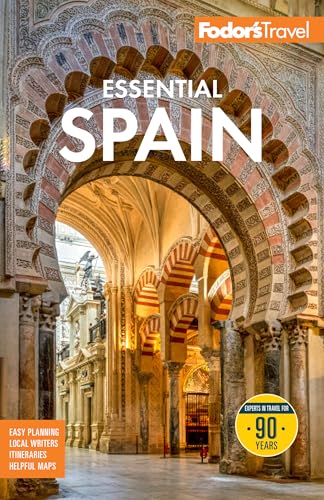
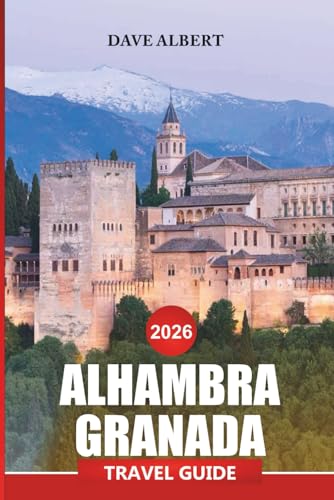
These five essentials prep you for the UNESCO-heavy Spain trip: a Spain travel guide, an Alhambra guidebook, the Gaudí Barcelona book, real walking shoes, and a crossbody anti-theft bag.



Plan your full Spain trip:
- Architecture timeline, architecture in Spain.
- Cultural pillars, culture in Spain.
- History timeline, history of Spain.
- Spain tourist places, Spain tourist places.
1. Alhambra, Generalife and Albaicín (Granada)
UNESCO 1984. Spain’s most-visited paid monument with 2.7 million visitors per year. The Alhambra is a Moorish palace-citadel built between 1238 and 1492, with the Nasrid Palaces, the Alcazaba fortress, the Generalife summer gardens, and the Carlos V palace. €22.27 general admission. Nasrid Palaces have timed-entry; book 60 to 90 days ahead.
The Albaicín (the Moorish quarter across the river) is part of the UNESCO inscription. Walk up at sunset for the Mirador de San Nicolás view back across to the Alhambra. For the city case in full, see our whether Granada is worth visiting guide.
2. Works of Antoni Gaudí (Barcelona)
UNESCO 1984 (Park Güell, Casa Milà, Casa Vicens) plus 2005 expansion (Sagrada Familia Nativity Façade plus Crypt, Casa Batlló, Crypt of Colònia Güell). Seven Gaudí works in total. 2026 is the centenary of Gaudí’s death; the Sagrada Familia is scheduled to top out structurally this year.
Sagrada Familia €26 base, €36 with towers, plus €2 to €5 centenary surcharge June through December. Park Güell €18. Casa Batlló €35 to €49. Casa Milà €28. Book 4 plus weeks ahead. For the full Gaudí trail, see our guide to Gaudí buildings in Barcelona.
3. Historic Centre of Cordoba and the Mezquita-Catedral
UNESCO 1984 (Mezquita) expanded 1994 (full historic centre). The Mezquita-Catedral is the architectural fusion of an 8th-century mosque with a 16th-century Christian cathedral built directly inside it. 850 columns. €13 entry, free 8:30 to 9:30am Mon to Sat (cathedral excluded).
The Jewish Quarter (Judería) wraps around the Mezquita; the Roman Bridge crosses the Guadalquivir below. For the wider Andalusia context, see our places to visit in southern Spain guide.
4. Cathedral, Alcázar and Archivo de Indias (Sevilla)
UNESCO 1987. Three sites in one inscription: the Sevilla Cathedral (largest Gothic cathedral by volume, with the Giralda bell tower), the Real Alcázar (Mudéjar palace, €15.50, where Game of Thrones filmed), and the Archivo de Indias (the colonial-era Indies archive).
The Cathedral plus Giralda climb runs €13. The complete UNESCO trio fits a half-day. For the city case in full, see our whether Seville is worth visiting guide.
5. Historic City of Toledo
UNESCO 1986. Spain’s old imperial capital, perched on a hill above the Tagus River, surrounded by medieval walls. 33-minute AVE from Madrid (€26 return). The “city of three cultures” (Christian, Jewish, Muslim) with a Gothic cathedral, the El Greco Museum, and the Alcázar of Toledo.
Toledo Cathedral €12.50, all-monument bracelet €13.50. Best as a Madrid day-trip. For the wider context plus day-trip logistics, see our guide to day trips from Barcelona (Toledo from Madrid follows the same model).
6. Old Town of Segovia and the Aqueduct
UNESCO 1985. The Aqueduct of Segovia (1st century AD, 167 arches, 28 meters tall) is held together by gravity alone, no mortar. Free and walkable. The Alcázar of Segovia (Disney’s Snow White castle inspiration) €10. The Cathedral the latest Gothic in Spain (16th century).
45-minute AVE from Madrid Chamartín (€16 return). Pair with cochinillo asado (suckling pig) at Mesón de Cándido. For the broader small-town context, see our prettiest small towns in Spain guide.
7. Old City of Salamanca
UNESCO 1988. The Plateresque university façade (€10 to enter the Casa de las Conchas plus University) is the era’s masterpiece. The Plaza Mayor (built 1729 to 1755) is widely considered the most-beautiful in Spain. Salamanca University is Europe’s third-oldest, founded in 1218.
90 minutes from Madrid by Alvia train. The frog on the University façade is the city’s famous Where’s-Waldo find. For the wider Castile context, see our cities in Spain to visit guide.
8. Historic Walled Town of Cuenca
UNESCO 1996. The medieval walled town hangs on a limestone gorge above the Júcar and Huécar rivers. The “hanging houses” (Casas Colgadas) jut out over the cliff. The Museum of Spanish Abstract Art (€5) sits inside one of them.
1 hour by AVE from Madrid. Best as an overnight stop. Pair with a Toledo overnight for a 2-day Castile loop. Off-the-beaten-path context in our Spain off the beaten path guide.
9. Old Town of Avila
UNESCO 1985. The 11th-century medieval walls run 2.5 kilometers around the Old Town with 88 towers, fully walkable. €5 to walk the walls. The Cathedral of Avila is the country’s first Gothic cathedral (1091). Saint Teresa was born here in 1515.
90 minutes by Avant train from Madrid Chamartín. Avila is also the highest provincial capital in Spain (1,131 meters). For the wider towns context, see our prettiest small towns in Spain guide.
10. Archaeological Ensemble of Tarragona
UNESCO 2000. The Roman capital of Hispania Citerior. The Roman amphitheatre overlooks the Mediterranean, the circus is partially preserved, and the city walls run 1.1 kilometers. €12 combined ticket for all the Roman sites.
1 hour by AVE from Barcelona. Pair with a beach lunch at El Serrallo (the fisherman’s quarter). For the wider Catalan context, see our day trips from Barcelona guide.
11. Mudéjar Architecture of Aragon
UNESCO 1986. The hybrid Christian-plus-Moorish-craftsmen style. The Aljafería Palace in Zaragoza (€5) plus Teruel’s tower-and-church Mudéjar complex are the era’s masterpieces. Distinctive brick towers with geometric patterns and glazed ceramic inlays.
Zaragoza is 90 minutes from Madrid by AVE; Teruel is 2 hours from Zaragoza by car or train. For the wider history context, see our history of Spain guide.
12. Old Town of Santiago de Compostela
UNESCO 1985. The end of the Camino de Santiago. The Cathedral (free, Pórtico de la Gloria timed-entry €12) holds the relics of Saint James the Apostle. The 12th-century Cathedral façade is the destination of every Camino route.
Reach by AVE from Madrid (3 hours) or by foot via the Camino. Free to enter the Cathedral plus most of the historic centre. For the wider northern context, see our places to visit in northern Spain guide.
13. Routes of Santiago de Compostela
UNESCO 1993. The Camino itself is a UNESCO site, with all the main routes inscribed. The Camino Francés (the most-walked route, 800km from Saint-Jean-Pied-de-Port) plus the Camino del Norte (the Cantabrian coast route) plus the Camino Portugués (from Porto). Compostela certificate requires 100km on foot or 200km by bike.
Albergue stays €10 to €18 per night. The 2027 Holy Year (Año Santo) is anticipated to boost pilgrim numbers by 30 percent over 2026. For the wider hiking context, see our hiking in Spain guide.
14. Cave of Altamira and Northern Spain Palaeolithic Cave Art
UNESCO 1985. The original Cave of Altamira (35,000-year-old polychrome bison paintings) is restricted to 5 visitors per day by lottery. Most travelers see the high-quality replica plus the National Museum and Research Centre (€3) next door.
30 minutes from Santander by car. The wider UNESCO inscription includes 17 other Palaeolithic caves across northern Spain. For the wider Cantabria context, see our places to visit in northern Spain guide.
15. Pyrénées-Mont Perdu
UNESCO 1997. The cross-border Spain-France natural site centered on Monte Perdido (3,355 meters). Accessible from the Ordesa y Monte Perdido National Park in Aragon. Hiking required; the Cola de Caballo waterfall plus the Brèche de Roland are the canonical day-hikes.
Free park entry. Allow 1 to 2 full days plus a hiking-suitable base (Torla-Ordesa). For the wider national park context, see our national parks in Spain guide.
Pack and prep for Spain’s UNESCO sites.
The Ultimate Europe Trip Planner includes a packing module for cathedral dress codes, the Alhambra Nasrid Palaces timing window, the Sagrada Familia tower-or-not decision tree, and the Altamira-replica advance booking protocol. Limited time, save $10 today (originally $27).
Spain UNESCO Sites Travel Tips
- Book the Alhambra plus the Sagrada Familia before booking flights; sold-out tickets dictate dates. Cost framework in our Spain budget guide.
- Andalusia loop: Sevilla then Cordoba then Granada gets you 4 UNESCO sites in 7 days via AVE. Full route in our Andalusia itinerary guide.
- The Mezquita is free 8:30 to 9:30am Mon to Sat (cathedral access excluded). Beat the heat plus the crowd. Cultural codes context in our Spain travel tips guide.
- The Cave of Altamira original has a daily lottery for 5 visitors. Most travelers see the replica. Pair with the broader northern itinerary in our places to visit in northern Spain guide.
- Cathedral dress codes year-round: shoulders plus knees covered. Sagrada Familia is strict. Packing context in our complete Spain packing list.
For the full official Spain UNESCO catalog covering all 50 sites with maps plus visit information, check UNESCO’s World Heritage Convention Spain page.

Frequently Asked Questions
How many UNESCO sites are in Spain?
50 in 2026. Spain ranks 5th globally for UNESCO World Heritage Sites behind Italy (61), China (59), Germany (54), and France (53). The 50 sites trace the country’s full historical arc from Roman Hispania through Al-Andalus and Gothic Castile to Modernisme. Wider heritage context in our history of Spain guide.
What is the most famous UNESCO site in Spain?
The Alhambra in Granada and the Works of Gaudí in Barcelona share the top spot. The Alhambra is the most-visited paid monument in Spain (2.7 million visitors per year); the Sagrada Familia is the most-photographed building. For the Modernisme deep dive, see our architecture in Spain guide.
Can you visit the Cave of Altamira?
The original Cave of Altamira is restricted to 5 visitors per day, selected by lottery. The high-quality replica plus the National Museum and Research Centre next door is open to everyone for €3 entry. The replica reproduces the original ceiling at full scale. Wider Cantabria context in our places to visit in northern Spain guide.
How long do you need to see Spain’s main UNESCO sites?
10 to 14 days for the top 10 (Alhambra plus Gaudí plus Mezquita plus Sevilla Cathedral plus Toledo plus Segovia plus Salamanca plus Cuenca plus Avila plus Tarragona). 21 days for all 15 top picks including the Pyrenees plus Camino plus Altamira. For the framework, see our 10 days in Spain itinerary.
Are Spain’s UNESCO sites free?
The Aqueduct of Segovia plus the Avila walls plus most of Santiago’s Old Town are free. Most cathedrals plus palace-museums charge €10 to €36 (Sagrada Familia €26 to €36 with 2026 centenary surcharge, Alhambra €22.27, Casa Batlló €35 to €49). Cost framework in our Spain budget guide.

Key Takeaways
- Spain has 50 UNESCO World Heritage Sites in 2026 (5th globally) spanning 2,000 years from Roman aqueducts to Gaudí’s Modernisme. The top 15 chain into 3 regional loops: Andalusia, Castile-Madrid, Catalonia-Aragon. History backstory in our history of Spain guide.
- Book the Alhambra (€22.27) and the Sagrada Familia (€26 to €36 plus 2026 centenary surcharge) before booking flights. Sold-out tickets dictate trip dates. Full Gaudí trail in our Gaudí buildings in Barcelona guide.
- Andalusia loop covers 4 UNESCO sites in 7 days: Sevilla Cathedral plus Real Alcázar plus Mezquita Cordoba plus Alhambra Granada. AVE plus rental car combine the legs. Route in our Andalusia itinerary guide.
- The Mezquita is free 8:30 to 9:30am Mon to Sat; the Cave of Altamira original is a 5-per-day lottery (most see the replica). Cultural codes plus dress code requirements in our culture in Spain guide.
- The Routes of Santiago plus Pyrenees-Mont Perdu are Spain’s two pilgrimage plus natural UNESCO sites. The 2027 Holy Year boosts Camino numbers; book Santiago accommodation 6 plus months ahead. Hiking framework in our hiking in Spain guide.
Final Thoughts
Spain’s 50 UNESCO sites span 2,000 years and three regional loops. The top 15 chain into 14 to 21 days of travel that doubles as a complete history tour: Roman aqueducts, Moorish palaces, Gothic cathedrals, Gaudí’s Modernisme, Palaeolithic cave art, and the Pyrenees themselves. Book the Alhambra and the Sagrada Familia first; everything else flexes around them. The 2026 Gaudí Centenary makes Barcelona especially busy from June onwards. For the era-by-era architectural backstory that frames every UNESCO site, our architecture in Spain guide covers everything from Roman through contemporary.