Quick Answer: Europe has over 500 UNESCO World Heritage sites, the highest concentration of any continent. Italy leads with 60 sites. Five new European sites were inscribed in July 2025: Bavarian Palaces of Ludwig II (Germany), Megaliths of Carnac (France), six Minoan archaeological sites in Crete (Greece), Funerary Tradition in Prehistoric Sardinia (Italy), and Møns Klint (Denmark). The 47th UNESCO session brought the global total to 1,248 sites across 170+ countries.
Last updated: May 2026 · 5 new European UNESCO sites inscribed July 2025 at the Paris 47th session; next session Busan 2026.
Most travelers think UNESCO sites are the famous ones. The Acropolis. The Vatican. Stonehenge. Versailles. The reality is the opposite. Of Europe’s 500+ World Heritage sites, the famous twenty get 80% of the visitor traffic, and the other 480 deliver some of the most rewarding low-crowd travel experiences on the continent. Quedlinburg in Germany. Bardejov in Slovakia. Sintra’s cultural landscape in Portugal. Tre Cime di Lavaredo in Italy. Each one inscribed for a specific reason, each one still surprisingly empty most weekdays.
July 2025 added five new European sites at the UNESCO 47th session in Paris. Bavarian Palaces of Ludwig II (including Neuschwanstein), the Megaliths of Carnac in France, six Minoan archaeological sites across Crete, the Funerary Tradition of Prehistoric Sardinia, and Denmark’s Møns Klint chalk cliffs. Each one was already worth visiting and now carries the UNESCO weight.
Where this goes: the headline five new July 2025 inscriptions, the Italian heavyweights (60 sites, the world’s most), the French cultural giants, the Spanish Islamic-Christian standouts, the lesser-known picks worth a real detour, the natural sites Europe gets right, and the multi-site itineraries that let you stack four or five UNESCOs in a single road trip.
Planning a multi-UNESCO road trip?
The Ultimate Europe Trip Planner has multi-UNESCO itinerary templates for Andalusia (3 sites in 4 days), Sicily (4 sites in 5 days), Bavaria (5 sites in 6 days), and the Loire Valley. $17 currently.
UNESCO Travel Kit
UNESCO sites span medieval old towns with cobblestones, archaeological sites with limited shade, art-stuffed museums with strict no-flash rules, and natural sites with proper hiking conditions. Six things make most UNESCO trips work. A solid UNESCO Europe travel guide for the practical rules per site. Walking shoes that handle cobblestones and trails. A wide phone lens for the architectural shots. A European travel coffee table book for post-trip reference. A museum-friendly travel backpack. A portable phone tripod for the slower exposure shots.






Recommended blogs to read:
- Beautiful castles in Europe
- Fairytale towns in Europe
- Places to visit in Greece
- Places to visit in Germany
- 37 Europe travel tips
What Are the Five New European UNESCO Sites from 2025?
The 47th UNESCO World Heritage Committee session in Paris July 2025 inscribed 26 new sites globally, five of which are in Europe. Each addresses a previously under-represented category.
1. Bavarian Palaces of Ludwig II, Germany
Inscribed July 2025. Three palaces and one mountain residence built by King Ludwig II of Bavaria between 1864 and 1886: Neuschwanstein, Linderhof, Herrenchiemsee, and the Königshaus am Schachen. Bavarian Palaces demand is up 25% for 2026; Neuschwanstein needs tickets booked 4+ weeks ahead. Linderhof is the most-livable of the four (Ludwig II actually lived in it). Herrenchiemsee on Herrenchiemsee Island is the most-spectacular Versailles-homage in Europe and the least-visited of the four.
Read also: beautiful castles in Europe and places to visit in Germany.
2. Megaliths of Carnac and the Shores of Morbihan, France
Inscribed July 2025. Around 3,000 standing stones (menhirs) in Brittany, dating to 4500-3300 BC, older than Stonehenge by about 2,000 years. The largest concentration of prehistoric megalithic monuments in the world. Free to visit October through March; €13 guided tour required April-September. The site has the Maison des Mégalithes visitor center next to the main alignments. Combine with the medieval town of Vannes and the Gulf of Morbihan island-hop.
Read also: places to visit in western Europe and hidden gems in Europe.
3. Minoan Archaeological Sites in Crete, Greece
Six Minoan archaeological sites inscribed July 2025: Knossos, Phaistos, Malia, Zakros, Zominthos, and Kydonia. Together they document the Minoan civilization (2700-1100 BC), Europe’s first advanced civilization. Knossos near Heraklion (€15 entry) is the largest and most-visited. Phaistos (€8) has the famous Phaistos Disc (still undeciphered Bronze Age writing). The combined Heraklion Archaeological Museum (€16) holds the artifacts from all six sites and is the essential companion visit.
Read also: places to visit in Greece and things to do in Heraklion.
4. Funerary Tradition of Prehistoric Sardinia, Italy
Inscribed July 2025. The domus de janas (rock-cut tombs) and giants’ tombs (tombe dei giganti) of the prehistoric Sardinian Nuragic culture, dating to the 4th-1st millennium BC. Scattered across the island, with concentrations around Anghelu Ruju (north Sardinia) and S’Ena ‘e Thomes (central Sardinia). Less famous than the Nuraghi (the stone defensive towers, already separately UNESCO-listed since 1997). Best combined with Su Nuraxi at Barumini for a fuller Nuragic-archaeology day.
Read also: beautiful islands in Europe and hidden gems in Europe.
5. Møns Klint, Denmark
Inscribed July 2025. The 6km stretch of white chalk cliffs on the Danish island of Møn, rising 128 meters above the Baltic Sea, the largest exposed chalk cliffs in Northern Europe. The GeoCenter Møns Klint visitor center has fossils, dinosaur skeletons, and the natural history of the cliffs (€16 entry). Hiking trails along the clifftop and down to the beach. 90 minutes by car from Copenhagen; doable as a day trip or overnight in Stege village.
Read also: European destinations for nature lovers and hidden gems in Europe.
Which Italian UNESCO Sites Should You Visit?
Italy holds 60 UNESCO sites, the highest national total in the world. Four anchors cover the iconic Italian heritage; you could spend a year visiting them all.
6. Historic Centre of Rome and the Vatican
The Roman Forum, Colosseum, Palatine Hill, and Pantheon all sit within walking distance. Combined Colosseum-Forum-Palatine ticket €18, valid 24 hours. Vatican Museums + Sistine Chapel €25; book online 4+ weeks ahead. St. Peter’s Basilica free entry but the dome climb €10. Three full days minimum to do justice to the Rome and Vatican layer alone. Pair with day-trips to Tivoli (Hadrian’s Villa + Villa d’Este, both UNESCO) and Ostia Antica.
Read also: places to visit in the Mediterranean and things to do in Rome.
7. Venice and Its Lagoon
The entire city of Venice plus the lagoon (Murano, Burano, Torcello islands) is one of Italy’s largest UNESCO inscriptions. The Doge’s Palace + Basilica San Marco combined ticket €30. Venice now charges a €5-€10 day-tripper fee on peak days (May-July 2026 confirmed). St. Mark’s Square floods to ankle-depth on average 10 days per year; the wooden boardwalks come out. Stay overnight on Giudecca for the price differential, or in Burano if you want the quietest lagoon-base.
Read also: beautiful islands in Europe and things to do in Venice.
8. Historic Centre of Florence
The Duomo (€20 combined ticket includes cathedral, baptistery, campanile, crypt, and museum). Uffizi Gallery (€20, plus €4 reservation fee, book online). Ponte Vecchio. Piazzale Michelangelo for the sunset view across the city. Pair Florence with day-trips to Siena (separately UNESCO-listed), San Gimignano, and the Pienza valley (Val d’Orcia, UNESCO-listed). 3 days minimum for Florence; 5-7 for the full Tuscan UNESCO loop.
Read also: places to visit in southern Europe and things to do in Florence.
9. Pompeii, Herculaneum, and the Amalfi Coast
Pompeii is one of Italy’s most-visited UNESCO sites; the Amalfi Coast from Positano to Salerno is also UNESCO-listed for its cultural landscape. Pompeii entry €22, day pass adds Herculaneum and Oplontis. Herculaneum (smaller, better-preserved than Pompeii because the volcanic mud sealed everything) gets a fraction of the visitor traffic; arguably the more rewarding visit. Naples (the gateway and the food capital) is itself UNESCO-listed.
Read also: places to visit in the Mediterranean and things to do in Naples.
Which French UNESCO Sites Are Must-See?
France has 53 UNESCO sites, second to Italy. The French heritage spans Versailles and the Loire châteaux, the Mont-Saint-Michel monastic island, and the new 2025 Carnac megaliths.
10. Palace of Versailles
30 minutes from Paris by RER C. Entry to palace + gardens €21, palace + gardens + Trianon + Marie-Antoinette estate €24. The Musical Gardens (fountain shows) and Musical Fountains nights run April-October Tuesdays, Saturdays, Sundays. Avoid Tuesdays in low season (Versailles closed). Go at opening (9 AM) or after 3:30 PM to avoid the worst tour-group volume. The gardens alone (free outside fountain hours) are worth a full afternoon walk.
Read also: places to visit in western Europe and things to do in Paris.
11. Mont-Saint-Michel
The medieval Benedictine abbey on a tidal island off the Normandy coast. UNESCO World Heritage since 1979. Causeway access via shuttle bus from the mainland visitor center (€16.50 combined access + abbey entry). High tide cuts the island off about twice a month with the highest tides at the equinoxes. Visit 6-10 PM after the day-trippers leave for the night-illuminated experience. The Mère Poulard restaurant on the island, famous for its omelettes, is touristy and overpriced; skip it.
Read also: beautiful castles in Europe and unique places to visit in Europe.
12. The Loire Valley
The entire Loire Valley between Sully-sur-Loire and Chalonnes is UNESCO World Heritage for its cultural landscape. Within the inscription: Chambord, Chenonceau, Villandry, Amboise, Azay-le-Rideau, Blois, and over 70 smaller châteaux. 3-day driving loop covers the top 5. The Sancerre and Vouvray wine regions sit within the inscription area; combine châteaux with vineyards for a single trip.
Read also: beautiful castles in Europe and places to visit in western Europe.
Which Spanish UNESCO Sites Are Worth a Trip?
Spain has 50 UNESCO sites, third globally. The Spanish heritage is heavy on Islamic-Christian fusion and on the Camino de Santiago.
13. The Alhambra and Granada
The Alhambra (Islamic palace complex of the Nasrid dynasty, 1238-1492) sits on a hill above Granada. UNESCO World Heritage since 1984. Entry €19, booked online weeks ahead in peak season. The Nasrid Palaces require a timed entry; if you only see one part, see this. Generalife (the summer palace gardens) is the photo-bookend. The Albaicín (the historic Moorish quarter across the valley) is itself UNESCO-listed and gives the iconic Alhambra-at-sunset photograph from the San Nicolás viewpoint.
Read also: places to visit in southern Europe and things to do in Granada.
14. Works of Antoni Gaudí, Barcelona
Seven Gaudí buildings in and around Barcelona are collectively UNESCO-listed: Sagrada Família, Park Güell, Casa Batlló, Casa Milà (La Pedrera), Palau Güell, Crypt of Colònia Güell, and the Park Güell colony. Sagrada Família entry €33 (tower access €36); book 4+ weeks ahead. Park Güell timed-entry €11, book ahead. Casa Batlló €35, Casa Milà €28. Spreading the four iconic Gaudí buildings over 3 days lets you see them at the right light without rushing.
Read also: places to visit in the Mediterranean and things to do in Barcelona.
15. Historic Centre of Toledo
30 minutes from Madrid by AVE high-speed train. The hilltop walled medieval city where Christian, Islamic, and Jewish cultures coexisted for 800 years. The Gothic Cathedral (€12.50), the Synagogue of Santa María la Blanca, the Mosque of Cristo de la Luz, and El Greco’s house and museum are the four religious-heritage anchors. Walk the Senda Ecológica around the Tagus river loop for the postcard view of the entire town across the gorge.
Read also: places to visit in southern Europe and things to do in Madrid.
Which Lesser-Known UNESCO Sites Deserve a Detour?
Four sites that get a fraction of the famous-UNESCO tourist traffic and deliver more of the actual heritage experience. Most need a rental car or an out-of-the-way train.
16. Quedlinburg Old Town, Germany
UNESCO-inscribed 1994. 1,300 surviving half-timbered medieval houses, the largest such concentration in Europe. Sits below an 11th-century Romanesque castle and Stiftskirche church complex on a sandstone outcrop. Direct train from Berlin 2 hours 45 minutes. December Christmas market in the 24 historic courtyards is a treasure-hunt-style event. Far quieter than Rothenburg, with arguably better architectural variety.
Read also: fairytale towns in Europe and places to visit in central Europe.
17. Cultural Landscape of Sintra, Portugal
UNESCO-inscribed 1995. The hilltop town of Sintra outside Lisbon, with the romantic-era Pena Palace, Moorish Castle ruins, Quinta da Regaleira (with the famous initiation well that you descend into the earth), Monserrate Palace, and the surrounding Serra de Sintra mountain landscape. 40 minutes by train from Lisbon. Best in spring (April-May mist) or autumn (October fog). Two days minimum for a real visit.
Read also: fairytale towns in Europe and things to do in Sintra.
18. Bardejov Town, Slovakia
UNESCO-inscribed 2000. Northeast Slovak medieval town with intact fortifications and a remarkably preserved Renaissance main square. Population 33,000. Far off the standard tourist routes. The Šariš Museum holds folk-art and icon collections. Pair with Levoča (also UNESCO-listed, 120km west) for a two-town eastern-Slovak heritage trip. Train from Košice 90 minutes; from Bratislava 5 hours.
Read also: places to visit in east Europe and hidden gems in Europe.
19. Vlkolínec Village, Slovakia
UNESCO-inscribed 1993. A 45-house wooden-log Carpathian mountain village in central Slovakia, 50 inhabitants, traditional Slovak rural architecture preserved as a living museum. Entry €3. 90 minutes drive from Banská Bystrica. Combine with the surrounding Veľká Fatra National Park for the hiking-and-heritage trip.
Read also: less-visited destinations in Europe and hidden gems in Europe.
Which Natural UNESCO Sites Are the Best in Europe?
Europe’s natural UNESCO sites are often overlooked next to the architectural heavyweights. Three deliver some of the continent’s best landscape travel.
20. Plitvice Lakes National Park, Croatia
UNESCO-inscribed 1979. 16 terraced turquoise lakes connected by waterfalls, walkable on a 18km wooden boardwalk system. Entry €23 high season, €10 low season. Best in spring (April-May, full water flow plus wildflowers) or autumn (October, foliage). Avoid the July-August peak (8,000 visitors per day, single-file boardwalks). Easy 2-hour drive from Zagreb. Pair with Krka National Park (also UNESCO) further south for a 2-day Croatian-waterfall trip.
Read also: European destinations for nature lovers and things to do in Zagreb.
21. Dolomites, Italy
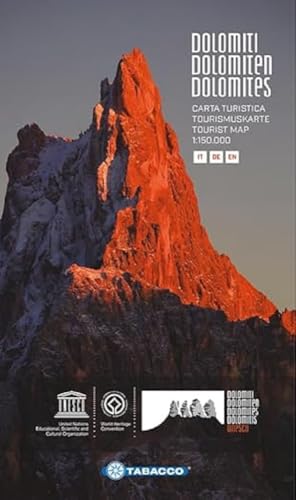
UNESCO-inscribed 2009. The northeastern Italian Alps, with the rose-colored limestone-and-dolomite peaks turning crimson at sunrise and sunset (the Enrosadira effect). Tre Cime di Lavaredo, Seceda ridge, Lago di Braies, and the Cinque Torri are the headline visits. Best months June-September (full hiking, lifts open) or December-March (skiing). 2026 Winter Olympics February 2026 in Cortina d’Ampezzo drove infrastructure upgrades; post-Olympics is a strong year.
Read also: European destinations for nature lovers and most beautiful countries in Europe.
22. Skocjan Caves, Slovenia
UNESCO-inscribed 1986. One of the largest underground river canyons in the world, with the Reka River flowing 100 meters below the surface through a 6km-long cave system. Entry €23 for the standard guided tour (90 minutes). 90 minutes drive from Ljubljana, or train + 20-minute walk from Divača station. Pair with Postojna Cave (Slovenia’s bigger and more famous cave system, separately listed) for a 2-cave Slovenian day.
Read also: unique places to visit in Europe and places to visit in central Europe.
Want multi-UNESCO trip templates?
The Ultimate Europe Trip Planner has 3+ UNESCO itineraries for Andalusia (Alhambra + Toledo + Córdoba), Sicily (4 sites in 5 days), Bavaria (5 sites including the new Ludwig II palaces), and the Loire Valley. $17.
UNESCO Sites in Europe FAQ
How many UNESCO sites are in Europe?
Over 500 UNESCO World Heritage sites are in Europe, the highest concentration of any continent. The total global count is 1,248 sites across 170+ countries after the July 2025 inscriptions. Europe represents about 40% of all UNESCO sites despite being only 7% of global land area.
Which European country has the most UNESCO sites?
Italy holds the most UNESCO sites globally with 60 total. France has 53, Spain 50, Germany 54 (after the July 2025 Bavarian Palaces addition), and the United Kingdom 33. Turkey, Greece, Poland, and Portugal all sit in the 18-19 range. Switzerland has 13, Netherlands 12.
What is the newest UNESCO site in Europe?
Five European sites were inscribed at the 47th UNESCO session in Paris, July 2025: Bavarian Palaces of Ludwig II (Germany), Megaliths of Carnac (France), six Minoan archaeological sites in Crete (Greece), Funerary Tradition in Prehistoric Sardinia (Italy), and Møns Klint (Denmark). The next UNESCO inscription session is in Busan, South Korea in summer 2026.
What UNESCO sites are in Italy?
Italy’s 60 UNESCO sites include the historic centers of Rome, Florence, Venice, Naples, Pisa, Siena, San Gimignano, Urbino, and Mantua; the archaeological sites of Pompeii, Herculaneum, Paestum, Agrigento, and the new 2025 Sardinian funerary tradition; the Amalfi Coast and Cinque Terre cultural landscapes; the Dolomites; and Vatican City’s Vatican Museums and St. Peter’s.
Are UNESCO sites free to visit?
Mixed. Many town centers and cultural landscapes are free (Venice, Florence, Sintra, the Loire Valley landscape). Major individual buildings or archaeological sites usually charge entry (Colosseum €18, Acropolis €30, Alhambra €19, Versailles €21, Neuschwanstein €23). Natural sites and parks usually have visitor center or trail fees (Plitvice €23, Skocjan Caves €23, Møns Klint €16).
How are UNESCO sites chosen?
UNESCO World Heritage sites are nominated by their host country and reviewed against ten criteria measuring outstanding universal value. The annual World Heritage Committee session (21 elected country representatives) decides inscription. Sites can be cultural, natural, or mixed. After inscription, a country commits to preservation; sites can be added to the In Danger list if threatened (Venice was on the watch list in 2021 over cruise-ship impact).
Key Takeaways
- Europe has 500+ UNESCO sites, about 40% of the global total of 1,248.
- Five new European sites added July 2025: Bavarian Palaces, Carnac Megaliths, Crete Minoan, Sardinia Funerary, Møns Klint.
- Italy leads with 60 UNESCO sites; France 53, Spain 50, Germany 54.
- Headliner UNESCO trips: Rome + Vatican (3 days), Venice + Lagoon (2-3 days), Florence + Tuscan loop (5-7 days), Alhambra + Andalusia loop (3-4 days).
- Lesser-known UNESCO trips: Quedlinburg, Sintra cultural landscape, Bardejov, Vlkolínec, Plitvice, Skocjan Caves.
- Many UNESCO town centers and cultural landscapes are free; individual sites €15-€30 typical.
- Next UNESCO inscription session July 2026 in Busan, South Korea.
Final Thoughts on UNESCO Sites in Europe
The UNESCO list is the world’s most carefully curated travel guide. Sites land on it because thousands of preservation experts decided they hold outstanding universal value. The 500+ European sites cover everything from the Acropolis at Athens to a 45-house Slovak village to a German rococo palace to Bronze Age Sardinian tombs. The famous ones earn the visitor numbers. The unfamous ones reward the travelers who put in the extra hour of driving.
For 2026, prioritize the five new July 2025 inscriptions, especially if they sit on your existing trip route. A Bavaria trip should include all four Ludwig II palaces. A Crete trip should hit Knossos plus at least one of the other Minoan sites. A Brittany trip should include Carnac. The new inscriptions are quieter for one year before the rest of the tourist world catches up.