Quick Answer: The best places to visit in Germany in 2026 are Berlin, Munich, the Bavarian Palaces of Ludwig II (UNESCO-inscribed July 2025), the Romantic Road (Rothenburg, Würzburg, Dinkelsbühl), the Black Forest, the Rhine Valley, Hamburg, Dresden, and Cologne. Hohenzollern Castle hits its 750th anniversary in 2026. Berlin-Munich now runs 4 hours by ICE high-speed rail after the 2025 line upgrade.
Last updated: May 2026 · Bavarian Palaces of Ludwig II UNESCO-inscribed July 2025; Hohenzollern Castle 750th anniversary; ICE Berlin-Munich now 4 hours direct.
“Two Helles, bitte.” The waiter, white shirt and dark vest, repeats the order back without looking at me, sets down two pretzels and a small dish of mustard, and is back with the beers in 90 seconds. The garden at Augustiner-Keller in Munich is mostly locals on a Wednesday evening in May. A long wooden table, four old men in working clothes who have ordered their food without looking at a menu, a baby in a stroller asleep under a chestnut tree. The sun is still up. The Helles is cold enough to bead the glass.
That’s one Germany. The other Germany is Berlin, midnight in Kreuzberg, döner kebab at 1 AM, club queues forming by midnight on Friday. Another Germany is Rothenburg ob der Tauber in mid-November, snow on the medieval rooftops, no tourists, just the night watchman doing his 8 PM tour in a black cape. Another is Hamburg in winter, the Speicherstadt brick warehouses lit at night across the canals, fog rolling in off the Elbe. Germany is sixteen countries pretending to be one.
Six regions worth knowing: Berlin and the East (Dresden, Leipzig, Potsdam), Bavaria and the Alps (Munich, Neuschwanstein, Berchtesgaden), the Romantic Road (Rothenburg, Würzburg, Nuremberg), the Rhine Valley wine country, the Black Forest (Freiburg, Triberg, Baden-Baden), and the Hanseatic north (Hamburg, Lübeck, Heidelberg).
Planning a Germany road or rail trip?
The Ultimate Europe Trip Planner has German rail-pass templates, Romantic Road driving routes, Berlin-Munich sequence options, and the Bavarian UNESCO castle loop. $17 currently.
Germany Travel Kit
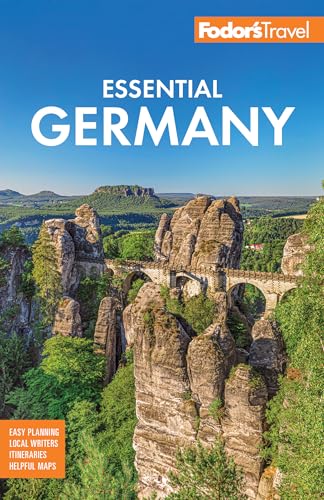
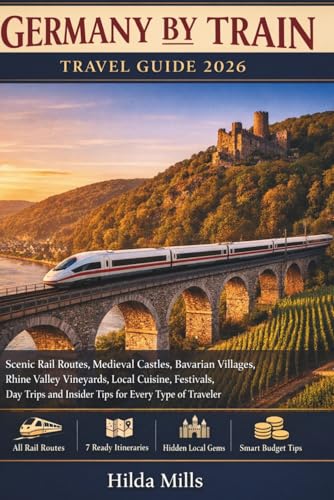
Germany covers everything from Alpine ski villages to Hanseatic ports to Bavarian beer gardens. Six essentials cover most trips. A Germany guidebook with the regional splits explained. Walking shoes that handle cobblestones (every German old town has them). A German phrasebook for ordering at small-town restaurants where English isn’t a given. A 25L travel backpack for the cabin-friendly intercity train. A rail Europe travel guide for the ICE/Bundesbahn ticket logic. A Lederhosen-or-Dirndl-style travel piece for Oktoberfest or Bavarian visits.



Recommended blogs to read:
- Beautiful castles in Europe
- Christmas markets in Europe
- Places to visit in central Europe
- How to plan an Interrail trip
- 37 Europe travel tips
What Should You See in Berlin and East Germany?
Berlin alone takes 3-4 days minimum. The wider eastern German circuit (Dresden, Leipzig, Potsdam) needs another 3-5 days. The east is the cheaper half of Germany and gets a fraction of the western tourist traffic.
1. Berlin (3-4 Days Minimum)
The Brandenburg Gate. The East Side Gallery (1.3km of the Berlin Wall painted by 118 artists). Museum Island (UNESCO World Heritage, 5 museums on one Spree-river island). The Holocaust Memorial. The Reichstag with the Foster-designed glass dome (free, book in advance). Kreuzberg and Neukölln for the food and bar scenes. Tempelhof Park (a decommissioned airport now used as a public space). Berlin Wall Memorial at Bernauer Straße for the historical depth. Allow 3-4 days minimum; a week if you want to understand the city.
Read also: places to visit in central Europe and things to do in Berlin.
2. Dresden
Often called the Florence on the Elbe for its baroque architecture restored after the WWII bombing. The Frauenkirche, rebuilt 1994-2005 from the original stones (each numbered and placed back), is the centerpiece. Zwinger Palace holds the Old Masters Gallery (Raphael, Vermeer, Rubens). Striezelmarkt is Germany’s oldest documented Christmas market (1434). 2 hours from Berlin by ICE.
Read also: Christmas markets in Europe and places to visit in east Europe.
3. Leipzig
The Bach city, where Johann Sebastian Bach worked as music director of the Thomanerchor from 1723 until his death in 1750. St. Thomas Church holds his remains. Leipzig’s Spinnerei (a former cotton mill turned contemporary art complex) has become one of Germany’s biggest art scenes. Karli (Karl-Liebknecht-Straße) is the main bar street. Quieter and cheaper than Berlin with the same eastern-German indie sensibility. 80 minutes from Berlin by ICE.
Read also: places to visit in central Europe and hidden gems in Europe.
4. Potsdam
Easy day-trip from Berlin (40 minutes by S-Bahn). Sanssouci Palace and gardens (UNESCO World Heritage), the rococo summer palace of Frederick the Great. Cecilienhof Palace, where the 1945 Potsdam Conference happened. The Dutch Quarter and Russian colony Alexandrowka are surprising architectural moments to find in a German town. Combine with a half-day in Berlin Mitte either side.
Read also: UNESCO sites in Europe and things to do in Berlin.
What Should You Visit in the Bavarian Alps?
Bavaria contains both Munich’s beer-and-baroque culture and the Alps’ fairytale castles. The Bavarian Palaces of Ludwig II UNESCO inscription in July 2025 has lifted demand sharply for 2026.
5. Munich
The Marienplatz (with the daily 11 AM Glockenspiel performance), Frauenkirche, Hofbräuhaus (always crowded, always worth one visit), Englischer Garten (the surfing wave at the Eisbach), Pinakothek museums, BMW Welt. Oktoberfest runs September 20 to October 5, 2026; the city books out 8+ months in advance for those weeks. Best season for a non-Oktoberfest visit is May-June or September. Day trip to the Wieskirche or Neuschwanstein.
Read also: places to visit in central Europe and things to do in Munich.
6. Neuschwanstein and Hohenschwangau
The Sleeping-Beauty-Castle reference and Ludwig II’s childhood castle, both visited in the same morning from Füssen. Neuschwanstein UNESCO-inscribed July 2025; entry €23, book online 4+ weeks ahead in peak season. The Marienbrücke view of Neuschwanstein is the keeper photograph (bridge sometimes closed November-March for ice). Hohenschwangau (€21) feels more authentically Bavarian; smaller, less crowded, and a working royal residence rather than a fantasy. Day-trip from Munich 2 hours by train + bus.
Read also: beautiful castles in Europe and fairytale towns in Europe.
7. Berchtesgaden
Small Alpine town near the Austrian border with the Königssee fjord-style lake (electric boats only, you can hear the echoed trumpet from the captain bouncing off the cliffs), the Salt Mines (still working since 1517, you ride wooden slides into the underground caverns), and the Kehlsteinhaus (Eagle’s Nest, Hitler’s mountain retreat, now a tea-house restaurant) at 1,834m. 90 minutes from Salzburg or 2 hours from Munich.
Read also: European destinations for nature lovers and hidden gems in Europe.
8. Garmisch-Partenkirchen and the Zugspitze
The Bavarian Alps’ main mountain-resort town. The Zugspitze (Germany’s highest mountain at 2,962m) is reached by cogwheel train and cable car from Garmisch (€68 round trip); the summit has 360-degree views into four countries. The Partnach Gorge (Partnachklamm) is a 1km canyon walk worth a half-day. December-March for skiing; June-October for hiking and the Wettersteinbahn.
Read also: European destinations for nature lovers and places to visit in central Europe.
Which Towns Are on the Romantic Road?
The Romantic Road (Romantische Straße) runs 350km from Würzburg to Füssen through the most-photographed medieval Bavarian towns. Five anchors do the work; the rest are filler villages between them.
9. Rothenburg ob der Tauber
The textbook half-timbered medieval Bavarian town, with intact walls you can walk on (free) and the Plönlein corner that defines fairytale Europe in photographs. Night Watchman tour 8 PM nightly (€10), conducted by Hans Georg Baumgartner in costume since 1979. The Käthe Wohlfahrt Christmas store sells year-round. 90 minutes by train from Nuremberg or Würzburg. November-December is the most magical visit (Reiterlesmarkt Christmas market); July is the most overrun.
Read also: fairytale towns in Europe and Christmas markets in Europe.
10. Würzburg
The northern terminus of the Romantic Road and a serious wine-region city. The Würzburg Residence (UNESCO World Heritage) is one of Europe’s finest baroque palaces, with the world’s largest ceiling fresco painted by Tiepolo. Marienberg Fortress on the hill above the city. Würzburg’s Franconian Silvaner white wines are excellent and barely exported. Half-day on foot covers the headline sights; book a wine tasting in the surrounding Franken region for a fuller stay.
Read also: UNESCO sites in Europe and European foods.
11. Nuremberg
The Old Town has the Imperial Castle (Kaiserburg) and the gabled houses radiating out from it. The Christkindlesmarkt (November 27 to December 24, 2026) is the Bavarian Christmas market gold standard. Documentation Center Nazi Party Rally Grounds is the heaviest of the city’s historical sites. Bratwurst drei im Weckla (three small bratwursts in a bun) at Bratwursthäusle €4. Nuremberg is also the main hub for the Romantic Road’s middle section, with quick rail links to Rothenburg and Bamberg.
Read also: Christmas markets in Europe and things to do in Nuremberg.
12. Dinkelsbühl
The smaller, quieter alternative to Rothenburg, 50km south on the Romantic Road. Intact medieval walls. Gabled houses painted pastel cream, mint, and pink. The Kinderzeche festival in July (commemorating the children who saved the town during the Thirty Years War) is the cultural highlight of the year. Half-day on foot covers the entire walled town. Pair Rothenburg + Dinkelsbühl in a 2-day Romantic Road sequence.
Read also: fairytale towns in Europe and hidden gems in Europe.
13. Augsburg
One of Germany’s oldest cities (founded 15 BC by Emperor Augustus). The Fuggerei (founded 1521 by the Fugger banking family, the world’s oldest social housing complex still in use, where residents pay €0.88 annual rent plus three daily prayers) is the unique anchor. The Renaissance city hall and Augsburger Puppenkiste marionette theater complete the day. 30 minutes by ICE from Munich.
Read also: unique places to visit in Europe and hidden gems in Europe.
What Should You See in the Rhine Valley and Cologne?
The Rhine Gorge from Bingen to Koblenz is UNESCO World Heritage and the iconic German river drive (or boat). Cologne and the Rhine Valley together make a 4-5 day trip.
14. Cologne (Köln)
The cathedral (Kölner Dom) is the most-photographed church in Germany. Climb the south tower (533 steps, €6) for the view across the Rhine and the Hohenzollern Bridge with its lover’s locks. The Romano-Germanic Museum holds Roman mosaics found under the city. Kölsch beer (the local light ale) served in 0.2L stange glasses, refilled until you put your coaster on top, at Päffgen, Lommerzheim, or the Hänneschen. Karneval February 12-18, 2026.
Read also: places to visit in western Europe and things to do in Cologne.
15. The Rhine Gorge (Bingen to Koblenz)
The 65km UNESCO-listed stretch of the Rhine, with castles on every hilltop (40 in this section alone), Loreley Rock, and Bacharach and Sankt Goar as the photogenic stopover villages. Best done as a slow Rhine-cruise (KD Line, €40-€70 day pass between Bingen and Koblenz) or a rental car following the B9 road on the west bank. Burg Eltz is a 30-minute drive inland from the gorge and worth the detour.
Read also: beautiful castles in Europe and UNESCO sites in Europe.
16. Rüdesheim and the Mosel Wine Region
Rüdesheim is the main Rhine wine-town, with Drosselgasse (a 144m pedestrian alley packed with wine bars and music). The cable car up to the Niederwald Monument has best valley views. The neighboring Mosel Valley (Trier to Koblenz, technically a separate river) has the steepest Riesling vineyards in Germany. Cycle the 244km Mosel Radweg from Trier to Koblenz over 4-5 days. Bernkastel-Kues, Cochem, and Traben-Trarbach are the major stops.
Read also: European foods and Europe in October.
What Should You Visit in the Black Forest?
The Black Forest (Schwarzwald) in the southwest is Germany’s storybook forest region. Three towns and one scenic drive cover most of it.
17. Freiburg
The most southerly major German city, in the Black Forest’s western edge. The Münster Square (with the Gothic cathedral and twice-weekly farmers market), the Bächle (the tiny water channels running through every street, said to bring you a Freiburger spouse if you accidentally step in one), and the easy access to the Black Forest hiking trails. Freiburg has more sunshine than any other German city (1,775 hours/year average).
Read also: places to visit in central Europe and hidden gems in Europe.
18. Triberg and the Cuckoo Clock Country
Triberg has Germany’s highest waterfall (Triberger Wasserfälle, 163m in seven cascades) and the world’s largest cuckoo clock. The Black Forest is the original home of the cuckoo clock and you can visit working clockmakers’ workshops (Hubert Herr, House of 1,000 Clocks). The cuckoo-clock museums are unironically interesting; the craft has been continuous in this region since the 1730s. Black Forest cake (Schwarzwälder Kirschtorte) at Café Schäfer is the local birthplace.
Read also: unique places to visit in Europe and European foods.
19. Baden-Baden
The Black Forest spa town. Friedrichsbad (Roman-Irish baths in a 19th-century thermal-bath palace, €25 for the 3-hour ritual) and Caracalla Therme (the more modern thermal-pool complex) are the two anchors. The casino at Baden-Baden Kurhaus is one of Europe’s oldest. Combine with a half-day at the surrounding Schwarzwald hiking trails. 90 minutes by ICE from Stuttgart.
Read also: European winter sun destinations and hidden gems in Europe.
What About Hamburg and the North?
Northern Germany operates on different culture and architecture from the south. Hamburg and the Hanseatic coast (Lübeck, Wismar, Rostock) are the anchors.
20. Hamburg
Germany’s second city and most underrated. The Speicherstadt (the world’s largest warehouse complex, UNESCO World Heritage 2015) lit at night across the canals is the iconic Hamburg photograph. The Elbphilharmonie concert hall (designed by Herzog & de Meuron, opened 2017) has a free public Plaza viewing deck. Sankt Pauli neighborhood and the Reeperbahn for nightlife. The Sunday Fischmarkt at the harbor (5 AM-9:30 AM) is the city’s institutional weekly event.
Read also: places to visit in western Europe and things to do in Hamburg.
21. Lübeck
The Hanseatic League’s traditional capital, on the Baltic coast 60km northeast of Hamburg. UNESCO World Heritage for the medieval brick-Gothic Old Town on an island in the Trave river. The Holstentor (twin-towered city gate) appears on the German €2 coin. Marzipan capital of Germany (Niederegger has the original 1806 recipe). Thomas Mann’s Buddenbrooks family home is a museum. Direct train from Hamburg 45 minutes.
Read also: UNESCO sites in Europe and fairytale towns in Europe.
22. Heidelberg
Germany’s oldest university town (founded 1386), on the Neckar River south of Frankfurt. The half-ruined Heidelberg Castle (Schloss Heidelberg) above the Old Town. The Philosopher’s Walk (Philosophenweg) along the river offers the postcard view of the castle, river, Old Bridge, and town. The Studentenkarzer (the medieval student-jail, where misbehaving students were locked up overnight with playing-card etchings still on the walls) is a quirky museum. Day-trip from Frankfurt 1 hour by ICE.
Read also: places to visit in central Europe and things to do in Heidelberg.
Sequencing a Germany trip on the ICE rail network?
The Ultimate Europe Trip Planner has Germany rail-pass templates with ICE timing between every major city, the Romantic Road driving sequence, and Berlin-Munich-Hamburg combinations for 7, 10, and 14-day trips. $17.
Places to Visit in Germany FAQ
What is the most beautiful place in Germany?
Subjective, but Neuschwanstein Castle, Rothenburg ob der Tauber, the Rhine Gorge, and Heidelberg lead most rankings. Hamburg’s Speicherstadt at night and Dresden’s restored Old Town also feature heavily. The Bavarian Alps + Bavarian Palaces of Ludwig II (UNESCO-inscribed July 2025) deliver the most of the postcard Germany.
How many days do you need in Germany?
Minimum 7 days for the Berlin-Munich axis with one day-trip to Neuschwanstein. 10 days adds the Romantic Road or Rhine Valley. 14 days lets you add Hamburg, Dresden, or the Black Forest. Germany is large; the Berlin-Munich rail journey alone takes 4 hours direct.
Is Germany expensive to visit in 2026?
Mid-range. Cheaper than France, Switzerland, or the UK; comparable to Spain or Italy. Mid-range hotel rooms €100-€150 per night in major cities; €70-€100 in smaller towns. Restaurant dinners €15-€30 for mid-tier. ICE high-speed rail tickets booked 90+ days ahead from €30; walk-up €70-€120. The Deutschland-Ticket (€58/month) covers all regional trains and city transport.
What is the most famous landmark in Germany?
Neuschwanstein Castle is the most-photographed German landmark and the Disney castle reference. The Brandenburg Gate in Berlin is the most-photographed German urban landmark. The Cologne Cathedral is the most-visited single building. The Bavarian Palaces of Ludwig II UNESCO inscription in July 2025 has lifted Neuschwanstein demand 25% for 2026.
Is the German Romantic Road worth driving?
Yes, especially in late October to mid-November for autumn color, or late November through December 24 for the Christmas markets along the route. The full 350km Romantic Road takes 3-5 days with stops. Rothenburg + Dinkelsbühl + Würzburg in 2 days is the short version; add Nuremberg for the 3-day version.
Can you visit Neuschwanstein without booking ahead?
Not easily in peak season. Since the July 2025 UNESCO inscription, 2026 demand is up roughly 25%. Book online 4+ weeks ahead for May-September visits. November-March walk-up tickets are sometimes available but not guaranteed. The exterior view from Marienbrücke is free; only the interior tour requires a timed ticket.
Key Takeaways
- Berlin (3-4 days) and Munich (2-3 days) are the headline city stops; pair with Neuschwanstein day-trip.
- Bavarian Palaces of Ludwig II UNESCO-inscribed July 2025; book Neuschwanstein 4+ weeks ahead.
- Romantic Road (Rothenburg, Würzburg, Dinkelsbühl) is the iconic medieval-Bavarian road trip.
- Rhine Gorge UNESCO stretch (Bingen-Koblenz) is the iconic German river drive.
- Black Forest (Freiburg, Triberg, Baden-Baden) is the storybook forest region in the southwest.
- Hamburg’s Speicherstadt (UNESCO 2015) is Germany’s most underrated city for art and food.
- ICE Berlin-Munich now runs 4 hours direct after the 2025 line upgrade; Deutschland-Ticket €58/month covers regional rail.
Final Thoughts on Places to Visit in Germany
Germany is the European country that rewards picking a region and going deep instead of trying to see everything. The Berlin-Munich split is real; the two cities feel like different nations. The Romantic Road’s villages preserve a 1450s Bavaria that no other country has at this scale. The Rhine and Mosel valleys offer some of the best wine country in Europe without the Bordeaux price tag.
For 2026, the Bavarian Palaces UNESCO upgrade makes Neuschwanstein the headline pick. Book the timed-entry tickets early, leave time for the smaller Romantic Road towns, and order the local beer at the village brewery rather than the chain restaurant downtown.
I loved going through this handy exhaustive guide along with the beautiful pictures. I need to plan a journey to Germany soon.
Glad you enjoyed this post! You should visit Germany very soon 🙂
Great selection of beautiful places in Germany, but there are many more 🙂
I agree, there are tons! Next time we update this article, we’ll make sure to add more!
awesome site, I love reading all content consist and pics are beautiful. Thanks for sharing I really would like to visit once in my life.
Thanks a lot!