Quick Answer: Six places in Europe pass the functional-country test and are also small enough to walk across in a day: Vatican City (0.44 km², half-day visit), Monaco (2.0 km², a weekend), San Marino (61 km², half-day to a day), Liechtenstein (160 km², a week), Andorra (468 km², a week), Malta (316 km², two full weeks with Gozo and Comino). Luxembourg sits in the honorable mention bracket as almost-microstate. The 2026 hook is post-Jubilee Vatican access; the Holy Year closed January 6, 2026 with 33 million pilgrims logged.
Last updated: May 2026 · Post-Jubilee Vatican access conditions and ETIAS microstate rules verified May 2026.
Vatican City fits inside a square half a kilometer on each side. Monaco is barely bigger than a few New York neighborhoods. San Marino is older than every other country on this list combined and somehow still mints its own postage stamps.
Europe’s microstates are some of the strangest, most charming little corners of the continent, and most travelers either skip them entirely or rush through in a single afternoon. I think that’s a mistake. In this post, I’m sharing which ones you can do in a half day, which deserve a full weekend, and which are weirdly perfect for a whole week. Six tiny countries, six totally different trips.
Slotting one or two European microstates into the larger Europe trip so each one lands properly instead of becoming a one-hour photo stop?
The Ultimate Europe Trip Planner does the day-trip math (Vatican from Rome, San Marino from Rimini, Monaco from Nice), the ETIAS rules per microstate, and the multi-day pacing for Andorra and Malta. Currently just $17 before the price goes up to $27.
European Microstate Travel Kit
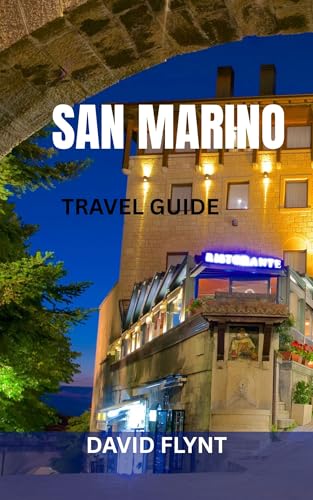
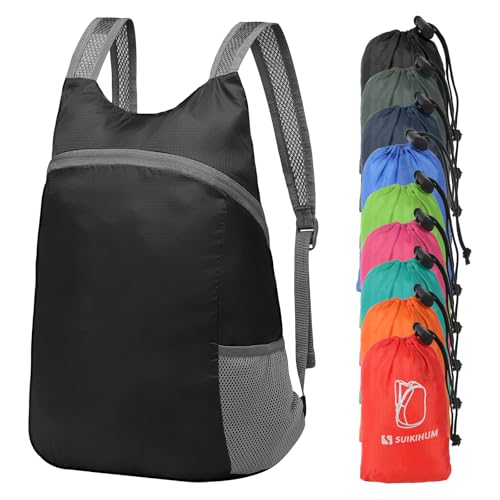
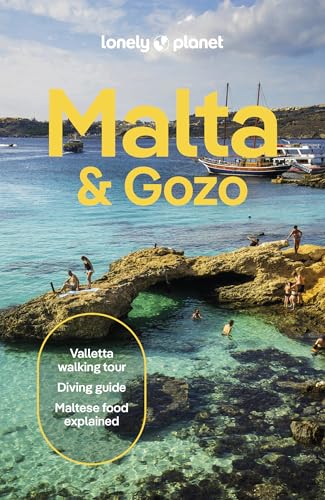
A microstate-hopping trip wants kit that’s compact enough for the day-trip mode but durable enough for the multi-day stays in Andorra and Malta. A small foldable daypack for the Vatican and San Marino half-days. A lightweight travel scarf for the Vatican dress code in the basilica. Comfortable loafers that survive marble floors and cobblestones equally. A Malta-Gozo cruise guidebook for the Maltese week. A Liechtenstein hiking trail map for the Alpine half-week. A proper microstates handbook. Six picks below cover the kit.




| Microstate | Area | Population | Trip length | Visit from |
|---|---|---|---|---|
| Vatican City | 0.44 km² | ~900 | 4-6 hours | Rome (within Rome) |
| Monaco | 2.0 km² | 36,000 | 2 days | Nice (30 min) |
| San Marino | 61 km² | 34,000 | 4-6 hours | Rimini (45 min) |
| Liechtenstein | 160 km² | 38,000 | 1 week | Zurich (90 min) |
| Andorra | 468 km² | 80,000 | 1 week | Barcelona (3 hrs) |
| Malta | 316 km² | 530,000 | 2 weeks (with Gozo) | Direct flight |
Which Microstates Fill a Half-Day Trip?
Two microstates fit a half-day visit comfortably: Vatican City and San Marino City. Both are walkable end-to-end in under two hours including the major sites. Both are reachable as a day-trip from a nearby Italian city (Rome for the Vatican, Rimini for San Marino). Both deliver a coherent “I visited a country today” experience inside a half-day window. Neither one needs an overnight stay although you could book one for the dawn-light photographs.
1. Vatican City
The world’s smallest sovereign state at 0.44 square kilometers. Population under 900 (mostly Swiss Guards, members of the Roman Curia, and the Pope). The Holy See, separately, exercises ecclesiastical sovereignty over Catholics worldwide. The Vatican Museums entrance is on Viale Vaticano on the north side; the basilica entrance is in St Peter’s Square. Allow a full visiting day for both, with the Sistine Chapel timed entry booked 60 days ahead to skip the 90-minute queue.
2026 specific: the Jubilee Year closed January 6, 2026 after 33 million pilgrims (a new record). Post-Jubilee Vatican access from March onward is the most relaxed since 2023. The Holy Door is closed for the next 25 years. Pope Leo XIV’s Wednesday general audiences at 9 a.m. continue. Vatican has no land border or visa regime separate from Italy; you cross from Rome into Vatican simply by walking through St Peter’s Square.
Read also: places to visit in Italy and Rome itinerary.
2. San Marino
The world’s oldest sovereign republic, founded by Saint Marinus in 301 AD on a defensible peak called Monte Titano. The country covers 61 km² and holds 34,000 citizens. The capital, San Marino City, holds 4,100 residents and the three famous medieval towers (Guaita, Cesta, Montale) visible from the autostrada miles before you arrive. UNESCO World Heritage since 2008. Two captains-regent serve as joint heads of state for six-month terms. The country has never been conquered (Napoleon left it alone, Mussolini did too).
Drive or bus from Rimini in 45 minutes. Visit the three medieval towers in sequence. Eat at Il Beccafico for Sammarinese specialties. San Marino is not in Schengen but a non-EU traveler entering from Italy (already in Schengen) does not get a separate passport check on entry. A day trip works; overnight if you want the towers without other visitors at dawn.
Read also: smallest cities in Europe and places to visit in Italy.
Which Microstate Fills a Two-Day Weekend?
Monaco fits the two-day weekend bracket. Small enough that you can walk most of it in a single day (the principality measures 2 kilometers along the coast and a half kilometer wide at the broadest point), but interesting enough that a single day doesn’t catch the casino-and-yacht-watching evening rhythm or the morning visit to the Prince’s Palace. Two days delivers the Old Town (Monaco-Ville on the rock), the casino (Monte Carlo), the Oceanographic Museum, and a full-day swing through the Exotic Garden and the Larvotto beach.
3. Monaco
The second-smallest country in the world by area (2.0 km²) and the densest country on Earth (18,000 people per km²). Population 36,000. The Grimaldi family has ruled the principality since 1297. The Monte Carlo Casino (built 1863, the same architect as the Paris Opera) is a working casino that requires entry fees and a passport. The Oceanographic Museum on the cliff was founded by Prince Albert I (the great-grandfather of the current sovereign Prince Albert II) and directed for years by Jacques Cousteau. The Grand Prix circuit runs through the city streets in late May and turns the principality into a global spectacle for ten days.
Train from Nice runs 30 minutes (€5.40 each way). Stay at the Hôtel Hermitage Monte-Carlo for the Belle Époque experience or at the simpler Novotel Monte-Carlo. Eat at Le Louis XV (Alain Ducasse, 3 Michelin stars) or at the simpler Café de Paris. Monaco is in the EU customs union but not in the EU itself; ETIAS does not apply for entry. Two days.
Read also: places to visit in Western Europe, things to do in France, thing to do in monaco, and top day trips from monaco.
Which Microstates Earn a Week?
Two microstates earn a full week. Liechtenstein, the Alpine principality between Switzerland and Austria, has enough villages, hiking trails and ski lifts to fill seven days. Andorra, sitting at 1,000+ meters elevation in the Pyrenees between Spain and France, has six valleys, three ski areas and 3,000 kilometers of marked trails. Both reward the multi-day stay because the country is the trip; you’re not using it as a base for excursions, you’re exploring the whole microstate.
4. Liechtenstein
The Alpine principality sits 160 square kilometers between Switzerland and Austria, with 38,000 residents and a constitutional monarchy headed by Prince Hans-Adam II. The country has 11 communes, no airport, and the world’s only sovereign nation that you can walk across in 3 hours (from the Rhine-side border with Switzerland at Schaan to the Alpine border with Austria at Malbun, about 18 km). The Liechtenstein Trail, opened 2019, is a 75-kilometer national hiking path that touches every commune in sequence.
Train to Sargans (Switzerland) from Zurich runs 90 minutes; bus from Sargans to Vaduz runs 30 minutes. Stay at the Park Hotel Sonnenhof in Vaduz or at the Hotel Gorfion in Malbun for the alpine option. Hike the Liechtenstein Trail in segments. Liechtenstein is in Schengen via Switzerland; ETIAS does not apply. Six days to a week.
Read also: things to do in Switzerland, places to visit in Western Europe, castles in luxembourg, and is luxembourg worth visiting.
5. Andorra
The Pyrenean co-principality (the two co-princes are the President of France and the Bishop of Urgell in Spain, a constitutional arrangement unchanged since the 13th century) covers 468 square kilometers and holds 80,000 residents. The country has six valleys (parròquies), three major ski areas (Grandvalira, Vallnord, Pal-Arinsal), 65 lakes, and a 3,000-kilometer trail network. The capital, Andorra la Vella, sits at 1,023 meters elevation and is the highest capital city in Europe. The country uses the euro despite not being in the EU.
Bus from Barcelona runs 3 hours; bus from Toulouse runs 3.5 hours. Stay at the Andorra Park Hotel in Andorra la Vella or at the Sport Hotel Hermitage in Soldeu for the ski-area base. Hike in summer, ski in winter. Andorra is not in Schengen and stamps passports for non-EU travelers; the standard 90-day visa-free entry applies for most Western passports. ETIAS does not apply directly because Andorra is non-EU, but you do cross out of and back into Schengen at the borders. Seven days.
Read also: things to do in Spain, things to do in France, and things to do in andorra.
Which Microstate Fills Two Weeks?
One microstate works as the full two-week holiday. Malta, with its main island plus Gozo and Comino, holds 316 square kilometers of Mediterranean coast, three islands, 7,000 years of human history (the oldest free-standing structures in the world predate the Egyptian pyramids by 1,000 years), seven UNESCO sites, and a working summer-holiday infrastructure that competes with the Spanish Costa del Sol on volume. Malta is the only microstate that fills a real holiday rather than a day trip or a long weekend.
6. Malta (with Gozo and Comino)
The Mediterranean archipelago southeast of Sicily holds three inhabited islands (Malta, Gozo, Comino) plus several uninhabited rocks. Population 530,000, two-thirds of which lives on Malta proper. The capital, Valletta (population 5,800 inside the historic city walls, 16,000 in the greater city area), is UNESCO inscribed (1980) and was the 2018 European Capital of Culture. The country is full EU member since 2004 and uses the euro since 2008. English is one of the two official languages alongside Maltese.
Fly direct from most major European cities. Stay in Valletta at the Phoenicia for the historic option, or in Sliema for the modern coastal base. Eat at Ġuże Bistro in Valletta or at Diar il-Bniet for the agricultural Maltese cuisine. Day-trip to Gozo by ferry (25 minutes from Cirkewwa) and to Comino for the Blue Lagoon. Two weeks for the full archipelago.
Read also: places to visit in the Mediterranean, things to do in Malta, best places to visit in malta, castles in malta, and is malta worth visiting.
6b. Gozo and Comino
Gozo is the second-largest island in the Maltese archipelago (67 km², population 37,000) and runs at a slower pace than Malta proper. The Ġgantija temples (3600 BC) predate Stonehenge and the Egyptian pyramids. Comino (3.5 km², population 2) sits between Malta and Gozo and is famous for the Blue Lagoon between the island and its smaller neighbor Cominotto. The 2026 Melita Mariana Pilgrimage, a 3-day 60-kilometer Malta+Gozo route, carries the Jubilee-tail traffic at a calmer pace than 2025.
Ferry from Cirkewwa (Malta) to Mġarr (Gozo) runs every 45 minutes, 25-minute crossing. Stay in Victoria (Rabat) or Marsalforn on Gozo. Comino is a day trip only (no overnight accommodation). Eat at Ta’ Frenc on Gozo for the slow-food Maltese.
Read also: best beach destinations in Europe, Europe bucket list, best places to visit in malta, castles in malta, and is malta worth visiting.
Which Honorable Mentions Fall Just Outside the Microstate Bracket?
Three countries sit just above the microstate threshold but deserve a mention because the size still feels small by European standards. Luxembourg at 2,586 km² and 670,000 residents (the smallest non-microstate sovereign country in Western Europe). Cyprus at 9,251 km² and 1.2 million residents (split between the Republic and Northern Cyprus). Kosovo at 10,887 km² and 1.8 million residents (the newest sovereign country in Europe, independent since 2008). All three earn a paragraph but don’t compete with the six full microstates above.
Luxembourg
The Grand Duchy of Luxembourg covers 2,586 km² and 670,000 residents. The capital, Luxembourg City, is one of the three official EU institutional seats (alongside Brussels and Strasbourg). The historic Old Town and fortifications are UNESCO inscribed (1994). The country runs the world’s first nationwide free public transport (since March 2020). Three official languages (French, German, Luxembourgish). Wine country in the Moselle Valley along the German border. Two days for the city; four with the Moselle and the Mullerthal hiking trails.
Read also: things to do in Luxembourg, places to visit in Western Europe, castles in luxembourg, and is luxembourg worth visiting.
What Are the Microstate Visa and Currency Rules?
Each microstate handles entry, currency and visa-rules slightly differently. Vatican has no border control separate from Italy; you walk in from St Peter’s Square. Monaco is in the EU customs union but not in Schengen; entry from France is uncontrolled in practice. San Marino is non-EU but enters via Italy (already in Schengen) without a separate check. Liechtenstein is in Schengen via Switzerland, with no separate stamp. Andorra is non-EU and non-Schengen, stamps passports for non-EU travelers, uses the euro unilaterally. Malta is full EU and Schengen.
ETIAS coverage by microstate (Q4 2026 onward)
ETIAS (€20, three-year validity) launches in Q4 2026 and applies to non-EU travelers entering the Schengen zone. The microstates handle it as follows: Vatican (no direct ETIAS, enters via Italy), Monaco (no direct ETIAS, in EU customs union but not Schengen, enter via France which is Schengen), San Marino (no direct ETIAS, enter via Italy), Liechtenstein (covered by ETIAS via Schengen), Andorra (no direct ETIAS, but cross into Schengen at the borders, so ETIAS applies for entering Spain or France), Malta (covered by ETIAS as full Schengen member).
Currency by microstate
Euro: Monaco, San Marino, Vatican (all by special agreement with the EU), Malta (since 2008), Andorra (unilaterally since 2002). Swiss franc: Liechtenstein (in customs union with Switzerland). All six microstates accept euro cards everywhere; only Liechtenstein requires the occasional franc for small purchases like the bus or a Vaduz cafe.
Want to combine three or four microstates on a single Europe trip without the connections eating the days?
The Ultimate Europe Trip Planner does the routing math (Vatican from Rome, San Marino from Rimini, Monaco from Nice, Liechtenstein from Zurich, Andorra from Barcelona, Malta as the standalone) and the optimal sequence for stacking them. Currently just $17 before the price goes up to $27.
European Microstates FAQ
What is the smallest country in Europe?
Vatican City at 0.44 square kilometers and under 900 residents. It is also the smallest sovereign state in the world. Monaco is second-smallest in Europe at 2.0 km², followed by San Marino at 61 km², Liechtenstein at 160 km², Malta at 316 km² and Andorra at 468 km².
How many microstates are in Europe?
Six places pass all six functional-country tests (sovereign, recognized, passport, parliament, currency, head of state) and are small enough to walk across in a day: Vatican City, Monaco, San Marino, Liechtenstein, Malta, Andorra. Luxembourg at 2,586 km² is the smallest non-microstate sovereign country in Western Europe and sits in the honorable mention bracket.
Can you visit the Vatican without going to Rome?
Not in practice. Vatican City has no airport, no train station, and no border crossing other than the St Peter’s Square pedestrian boundary. You enter the Vatican from Rome by walking across the square. Any visit therefore requires a flight to Rome (Fiumicino or Ciampino) followed by metro/taxi to Ottaviano station, which is two blocks from the Vatican Museums entrance.
Read also: best rome outfit ideas, day trips from rome, and is rome safe for travel.
Is Liechtenstein worth visiting for a week?
Yes if you hike. The 75-kilometer Liechtenstein Trail (opened 2019) touches every commune in the country in sequence and can be walked in segments over 5-7 days. The Malbun alpine area at 1,600 meters elevation has summer hiking and winter skiing. Vaduz the capital can be seen in a day. Without hiking interest, four days is enough.
Read also: castles in luxembourg and is luxembourg worth visiting.
Do you need ETIAS to enter Andorra or San Marino?
Not directly. Both are non-EU and non-Schengen. However, you cross into and out of the Schengen zone at the entry borders (Spain or France for Andorra, Italy for San Marino), so ETIAS applies for the Schengen crossing whether or not your final destination is the microstate. ETIAS launches in Q4 2026 with a six-month grace period running into early 2027. €20, three-year validity, 96-hour processing.
Read also: things to do in andorra.
Which microstate is best for a full holiday rather than a day trip?
Malta delivers a real two-week holiday with the Maltese main island plus Gozo and Comino. Andorra delivers a one-week Pyrenean mountain holiday with hiking in summer or skiing in winter. Liechtenstein delivers a one-week Alpine hiking holiday if you walk the Liechtenstein Trail. Monaco delivers a two-day luxury weekend. Vatican and San Marino each fit a half day.
Key Takeaways
- Six European microstates pass the functional-country test: Vatican (0.44 km²), Monaco (2.0 km²), San Marino (61 km²), Liechtenstein (160 km²), Malta (316 km²), Andorra (468 km²).
- Half-day visits: Vatican City (within Rome) and San Marino City (from Rimini).
- Two-day weekend: Monaco (from Nice).
- One-week trips: Liechtenstein (Alpine hiking via the 75-km Liechtenstein Trail) and Andorra (Pyrenean hiking or skiing).
- Two-week trip: Malta with Gozo and Comino.
- Vatican Holy Year closed January 6, 2026 after 33 million pilgrims; post-Jubilee Vatican access is more relaxed from March onward.
- ETIAS launches Q4 2026 with six-month grace period; applies for Schengen crossings into and out of each microstate.
Booking the Microstate So It Earns Its Day in the Itinerary
European microstates work when they get the time they actually need. Vatican and San Marino want half-days slotted into a Rome or Rimini visit. Monaco wants a proper two-day weekend out of Nice. Liechtenstein and Andorra each want a full week of hiking or skiing or both. Malta wants two weeks with Gozo and Comino. The 2026 specifics that change the math: Vatican is more visitable post-Jubilee, ETIAS launches Q4 with Schengen-side implications for Andorra and San Marino, and Monaco gets its Grand Prix surge in late May. Slot each microstate at the right scale or skip it; the one-hour photo stop wastes the country.