Quick Answer: Europe’s most beautiful castles split into five categories. Disney-inspiration fairytales (Neuschwanstein, Hohenzollern, Pena, Chenonceau). Working medieval fortresses (Edinburgh, Eilean Donan, Bran, Trakai). Cliff-edge legends (Predjama, Castillo de Almodóvar, Bled). Loire Valley royal residences (Chambord, Chenonceau, Villandry, Amboise). The Bavarian Palaces of Ludwig II were inscribed on the UNESCO World Heritage list in July 2025, pushing Neuschwanstein demand up 25% in 2026.
Last updated: May 2026 · Bavarian Palaces of Ludwig II UNESCO-inscribed July 2025; Hohenzollern Castle 750th anniversary in 2026.
The first time I saw Neuschwanstein from the Marienbrücke bridge, I was 19 and on a Eurail pass with about €40 left for two more days. I had hiked up from Hohenschwangau because the bus line stretched longer than the entry queue. The castle came into view as I rounded the last switchback. Mist around the lower towers, a clean band of snow on the roof line, and the Bavarian Alps stacked behind it like stage flats. I stood there for about ten minutes, not taking photos, just looking. The German backpackers next to me did the same thing. We didn’t speak. There was nothing to say.
That’s the thing about European castles. The pictures don’t prepare you. The dimensional reality, the way the stonework picks up afternoon light, the scale of the staircases, the small details of crenellation patterns nobody photographs. Most of these places were never tourist attractions. They were defensive seats, royal retreats, working monasteries with thick walls. The ones built purely for show (Neuschwanstein, Pena, Chenonceau) are the exception, and even those are now treated as serious cultural monuments rather than pretty buildings.
Five categories worth knowing: Disney-inspiration fairytales (Neuschwanstein, Hohenzollern, Pena, Chenonceau). Working medieval fortresses (Edinburgh, Bran, Eilean Donan, Trakai). Cliff-edge legends (Predjama, Bled, Almodóvar, Hohenwerfen). The Loire Valley road trip. The lesser-known picks worth a real detour.
Planning a castle-focused trip and need the routing?
The Ultimate Europe Trip Planner has multi-castle road-trip templates for the Bavarian Alps, the Loire Valley, Romania’s Transylvania, and Scotland’s Highlands, with timed-entry booking deadlines for each. $17 right now.
Castle Travel Kit
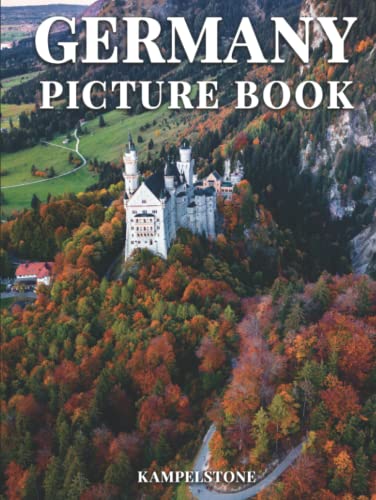
European castles share three travel realities: cobblestones that wreck unprepared shoes, light that shifts hour by hour, and weather that turns even in summer. Six things make the photography and the walking work. A good European castles guidebook with timed-entry rules. A wide phone lens for the courtyard shots. Cobblestone-rated walking shoes. A crossbody bag for museum visits with hands free. A coffee-table castles book for the post-trip nostalgia. A small portable tripod.




Recommended blogs to read:
- Fairytale towns in Europe
- Beautiful cities in Europe
- Hidden gems in Europe
- Places to visit in Germany
- 37 Europe travel tips
Which European Castles Are the Disney-Inspiration Fairytales?
Five castles directly inspired the Disney castle look, either by documented studio reference or by the unmistakable family-resemblance everyone notices. Each one is a different fairytale.
1. Neuschwanstein Castle, Germany
The literal Sleeping Beauty Castle reference. King Ludwig II commissioned it in 1869 and lived in it for just 172 days before his death in 1886. UNESCO inscribed it in July 2025 as part of the Bavarian Palaces of Ludwig II, which has pushed 2026 ticket demand up 25%. Entry €23, booked online four weeks ahead minimum during peak season. The Marienbrücke bridge view is the keeper photograph, though the bridge sometimes closes November-March for ice. Best paired with Hohenschwangau Castle 1km down the slope.
Read also: places to visit in Germany and things to do in Munich.
2. Pena Palace, Sintra, Portugal
The pink, yellow, and ochre castle on a mountaintop above Sintra. Ferdinand II’s romantic-era folly built between 1836 and 1854, blending Gothic, Moorish, Renaissance, and Manueline architecture in a way that should not work and somehow does. UNESCO World Heritage. Entry €17, palace plus park combo €20. Book a 9 AM slot to beat the day-trippers from Lisbon. The morning mist that rolls in off the Atlantic gives the parapets their famous photographic atmosphere, peaking in spring and autumn.
Read also: places to visit in southern Europe and things to do in Sintra.
3. Hohenzollern Castle, Germany
The ancestral seat of the Prussian royal family, rebuilt 1850-1867 in neo-Gothic style on a 855-meter conical hill in the Swabian Alb. 2026 marks the 750th anniversary of the first castle on this site (the current building is the third iteration). Entry €25, including the crown of Wilhelm II. The cloud-around-the-towers photograph requires patience and good autumn-morning timing. Day trip from Stuttgart or Tübingen; one hour by car.
Read also: places to visit in central Europe and places to visit in Germany.
4. Chenonceau Castle, France
The Loire Valley’s most photographed château. A 60-meter gallery spans the River Cher on three arches, built in 1556 by Diane de Poitiers and extended by Catherine de’ Medici. UNESCO World Heritage. Entry €17.50. The reflection of the gallery in the still river at sunrise is the iconic image; arrive at 9 AM opening for the photograph before the boatload of tour buses. Combine with Amboise, 12km west, and Villandry, 35km west.
Read also: places to visit in western Europe and things to do in the Loire Valley.
5. Linderhof Palace, Germany
Ludwig II’s smaller, more livable Versailles homage in the Ammer Mountains 50km west of Garmisch. UNESCO-inscribed July 2025 as part of the Bavarian Palaces. Single rococo-style residence with hall of mirrors, Venus Grotto (a candlelit underground lake), Moorish Kiosk in the gardens. Entry €11. Less crowded than Neuschwanstein. The neighboring Königshaus am Schachen (Ludwig II’s mountain hunting lodge at 1,866m) is a worthwhile day hike from Garmisch.
Read also: places to visit in Germany and unique places to visit in Europe.
Which Castles Are the Working Medieval Fortresses?
These castles were built to be defensible. They served as royal courts, military strongholds, prisons, and treasuries. The architecture is honest about its purpose: thick walls, narrow windows, towers positioned for crossbow lines.
6. Edinburgh Castle, Scotland
Perched on Castle Rock above Edinburgh, with continuous fortification dating back to the 12th century. Holds the Honours of Scotland (the crown jewels) and the Stone of Destiny. Entry €25 advance, €28 walk-up; tickets release 90 days out. The One O’Clock Gun fires every Monday-Saturday at 13:00 from the Half Moon Battery, a tradition since 1861. Climb Arthur’s Seat the same afternoon for the castle-from-distance counterpoint photograph.
Read also: places to visit in western Europe and things to do in Edinburgh.
7. Bran Castle, Romania
The Transylvanian castle marketed as Dracula’s home, though Bram Stoker never visited and Vlad the Impaler probably never lived here. Built in 1377 on a 60-meter rocky outcrop in the Carpathians. Entry RON 70 (around €14). The interior is small and the audio guide takes 40 minutes; the queue takes longer. Better than the castle itself is the surrounding Carpathian forest, with the Râșnov Citadel 12km away and Peles Castle (a far more lavish Romanian royal residence) 50km north in Sinaia.
Read also: places to visit in east Europe and things to do in Bucharest.
8. Eilean Donan Castle, Scotland
The most-photographed castle in Scotland, sitting on a small tidal island where three sea lochs meet (Loch Duich, Loch Long, Loch Alsh). Built 13th century, destroyed in the 1719 Jacobite uprising, restored 1912-1932. Entry €18. Crossing the stone footbridge at sunset with the Highlands behind the castle is one of the better travel-photo moments in Europe. Used as a film location for The World Is Not Enough, Highlander, Made of Honor. Drive the road from Skye in late afternoon.
Read also: places to visit in western Europe and hidden gems in Europe.
9. Trakai Island Castle, Lithuania
Red-brick Gothic castle on an island in Lake Galvė, 28km west of Vilnius. Built 14th century by Grand Duke Vytautas as the Lithuanian capital. Reached by a 300-meter wooden footbridge. Entry €12 high season, €7 low season. The historical museum inside the castle is small but well-curated. Hire a kayak or rowboat on the lake to photograph the castle from the water; €15 per hour from the lakeside boathouse next to the bridge.
Read also: places to visit in east Europe and things to do in Vilnius.
Which Castles Are the Cliff-Edge Legends?
Four castles where the location does half the work. Built on cliff faces, rocky outcrops, or impossible mountain saddles, they reward you the moment you round the last bend in the road.
10. Predjama Castle, Slovenia
A 15th-century castle built directly into the mouth of a 123-meter cliff face cave, 60km west of Ljubljana. The largest cave castle in the world. Entry €17, combo with adjacent Postojna Cave €40. Slovenian knight Erazem Lueger held a year-long siege here in 1484 with the help of a secret tunnel through the cave to receive supplies. Visit the cave system below the castle for the bat-and-stalactite tour. Best paired with Lake Bled and Ljubljana.
Read also: places to visit in central Europe and things to do in Ljubljana.
11. Bled Castle, Slovenia
Medieval castle on a 130-meter rocky outcrop above Lake Bled, oldest documented Slovene castle (1011). Entry €18. The two terraces give different angles on the lake island church 90 meters below. The castle restaurant serves traditional Slovenian (potica, štruklji) at fair prices for the view. Pair the castle visit with rowing out to Bled Island (€18-€20 round trip) and ringing the 99-step staircase wish bell, a Slovenian tradition.
Read also: places to visit in central Europe and beautiful islands in Europe.
12. Castillo de Almodóvar del Río, Spain
Andalusian castle on a hilltop above the Guadalquivir Valley, 25km west of Córdoba. Built originally by the Moors in the 8th century, restored in early 20th. Used as the High Sept of Highgarden in Game of Thrones. Entry €11. The view from the keep across the Andalusian plain is enormous, especially at sunset. Easy half-day from Córdoba; train + 15-minute walk.
Read also: places to visit in southern Europe and things to do in Córdoba.
13. Hohenwerfen Castle, Austria
11th-century fortress on a 155-meter rocky outcrop above the Salzach Valley, 40km south of Salzburg. Used as the cavalry barracks in The Sound of Music opening sequence. Entry €18.50, including the falconry demonstration twice daily (a real working program with about 30 birds of prey). The Where Eagles Dare film used the exterior. Pair with a half-day in Werfen town below.
Read also: places to visit in central Europe and things to do in Salzburg.
Can You See Multiple Loire Valley Castles in One Trip?
The Loire Valley has more than 300 châteaux. Five do most of the work, sitting within a 70km radius along the Loire and Cher rivers. A car-based 3-day loop visits all five with time for the gardens and a tasting in the surrounding Sancerre and Vouvray wine regions.
14. Château de Chambord
The biggest of the Loire châteaux, 440 rooms in a 156-meter facade. Built 1519 as Francis I’s hunting lodge, with a double-helix central staircase reportedly designed by Leonardo da Vinci, who lived nearby at Clos Lucé in his final years. Entry €17.50, gardens free. The 5,440-hectare wooded estate behind the château is one of the largest enclosed parks in Europe; rent bikes (€8 half-day) and ride the trails. Roof terrace has the best château-roof-detail views in the Loire.
Read also: places to visit in western Europe and things to do in the Loire Valley.
15. Château de Villandry
The Loire’s garden château, with Renaissance vegetable, ornamental, and water gardens covering 6 hectares. Less famous than Chambord but the gardens are unmatched in France. Best visited in late spring (May for tulips, June for roses) or early autumn (September for the vegetable garden at peak). Entry €13.50 château plus gardens, €8 gardens only. The aerial-view photograph from the keep terrace is the Instagram shot, but the human-scale walking tour at ground level is the actual experience.
Read also: places to visit in western Europe and European destinations for nature lovers.
16. Château d’Amboise
The royal residence where Charles VIII, Louis XII, and Francis I held court, and where Leonardo da Vinci is buried (Chapel of Saint-Hubert in the castle grounds). Entry €15.50. Smaller and more intimate than Chambord, with a more historically dense interior. Walk down from the château to Clos Lucé (Leonardo’s last home) for the second half of the day.
Read also: places to visit in western Europe and things to do in Paris.
17. Château d’Azay-le-Rideau
A small, intricate Renaissance château built on an island in the Indre River, 27km southwest of Tours. Honoré de Balzac called it “the multifaceted diamond of the Indre,” which translates to “small and very pretty.” Entry €11.50. Less crowded than the headline châteaux, an easy 90-minute visit. Stay nearby in Saumur or Tours; the local sparkling Vouvray pairs unfairly well with the local goat cheese (Sainte-Maure de Touraine).
Read also: places to visit in western Europe and European foods.
Which Lesser-Known European Castles Are Worth the Detour?
Five castles that get a fraction of the Neuschwanstein crowds and deliver more of the actual castle-visit experience. Most need a rental car or an out-of-the-way train.
18. Bojnice Castle, Slovakia
The most fairytale-looking castle in Eastern Europe, restored in late-19th-century Romantic style on 13th-century foundations. 165km northeast of Bratislava, near the spa town of Bojnice. Entry €15. The International Festival of Ghosts and Spirits runs late April through May with night tours, costumed actors, and theatrical lighting. Bojnice Zoo, the oldest in Slovakia, is next door.
Read also: places to visit in east Europe and things to do in Bratislava.
19. Burg Eltz, Germany
Medieval castle in the Mosel Valley, 35km southwest of Koblenz. Owned by the same family since the 12th century, never destroyed in war, never substantially modernized. The walk from the parking lot follows a forested path along a small river, with the castle appearing gradually through the trees. Entry €14. Featured on the 500 Deutsche Mark note before the euro. Pair with a Mosel wine drive between Cochem and Bernkastel-Kues.
Read also: places to visit in Germany and hidden gems in Europe.
20. Castillo de Coca, Spain
The finest Mudéjar military architecture in Europe, a brick-and-stucco fairytale built in the 1450s in the small Castilian village of Coca, 55km north of Segovia. Entry €4. The contrast between the warm-brick Islamic-style decorative work and the heavy Christian-fortress mass makes this castle architecturally unique. Half-day from Segovia; combine with the Alcázar of Segovia, which is itself one of Spain’s iconic castles.
Read also: places to visit in southern Europe and things to do in Segovia.
21. Karlštejn Castle, Czech Republic
Built 1348 by Holy Roman Emperor Charles IV to safeguard the Imperial Regalia. 30km southwest of Prague. Entry CZK 280-580 (€11-€24) depending on tour level. The Chapel of the Holy Cross, encrusted with 2,300 semi-precious stones, requires advance booking and only opens for high-tier tours. Easy day-trip by train from Prague (45 minutes + 25-minute uphill walk).
Read also: places to visit in central Europe and things to do in Prague.
22. Quedlinburg Castle, Germany
Romanesque castle and church complex above the half-timbered UNESCO-listed town of Quedlinburg in Saxony-Anhalt. Founded in 922 by King Henry I. The town below the castle has 1,300 surviving half-timbered houses, the largest such concentration in Europe. Castle entry €5. Direct train from Berlin in 2h 45m. Far quieter than the headline castles, and the surrounding Harz Mountains add a half-day to the trip.
Read also: fairytale towns in Europe and UNESCO sites in Europe.
Trying to schedule a multi-castle trip with timed entries?
The Ultimate Europe Trip Planner has detailed castle road-trip templates with timed-entry booking deadlines, gas-pump distances, and overnight pairings. Currently $17.
European Castles FAQ
What is the most famous castle in Europe?
Neuschwanstein Castle in Bavaria, Germany is the most famous European castle by a wide margin. Built 1869-1886 by King Ludwig II, it inspired the Disney castle silhouette and now hosts over 1.4 million annual visitors. UNESCO inscribed it in July 2025 as part of the Bavarian Palaces of Ludwig II, which raised 2026 demand by roughly 25%. Edinburgh Castle, Pena Palace in Sintra, and Bran Castle in Romania round out the top five most-visited.
Which castle in Europe inspired Disney?
Neuschwanstein Castle in Bavaria was the direct documented inspiration for the Sleeping Beauty Castle at Disneyland Anaheim (1955) and indirectly for Cinderella’s Castle at Walt Disney World (1971). Walt Disney visited Neuschwanstein in person and reference photographs are in the Disney archives. Other castles that look Disney-coded: Pena Palace (Portugal), Hohenzollern (Germany), Eilean Donan (Scotland), and the Loire Valley châteaux.
Can you stay overnight in a European castle?
Yes, dozens of European castles operate as hotels. Top picks: Ashford Castle (Ireland, from €595/night), Schloss Elmau (Bavaria, from €450), Château de Bagnols (Burgundy, from €350), Castello di Velona (Tuscany, from €420), Parador de Cardona (Catalonia, from €170, a 9th-century cliff-edge castle), and Castle Hotel Ehrenfels (Rhine Valley, from €280). Book directly with the hotel for the best rates; aggregators inflate.
How many castles are in Europe?
Estimates vary widely, between 30,000 and 100,000 castles across Europe depending on what counts as a castle (fortified manor houses, ruined keeps, palaces). Germany alone has around 25,000 castles, palaces, and fortresses; France has roughly 11,000 châteaux; Spain has 2,500 castles; Italy has 6,500; the UK has around 1,500. Many are ruins or private property; about 1,500 across Europe are open for daily public visits.
What is the oldest castle in Europe?
The oldest documented castle still standing in Europe is the Reichsburg Cochem in Germany, founded around 1000 AD, though much of the current structure is a 19th-century restoration. Older candidates with debated authenticity include the Citadelle de Carcassonne (Roman foundations 1st century, medieval walls 13th century) and Doune Castle in Scotland (12th century). For a continuously-inhabited castle, Trim Castle in Ireland (1172) and Windsor Castle (1070) compete for the title.
Is Neuschwanstein worth visiting in 2026?
Yes, with caveats. The exterior view from Marienbrücke is genuinely stunning and worth the trip. The interior tour is only 30 minutes and the rooms are sparser than the exterior suggests. UNESCO inscription in July 2025 has pushed 2026 demand up 25%, so book the timed-entry ticket online 4+ weeks ahead during peak season (May-September). Combine with Hohenschwangau Castle (Ludwig II’s childhood home, just down the slope) and Linderhof Palace for a fuller picture.
Key Takeaways
- Neuschwanstein, Pena Palace, Hohenzollern, Chenonceau, and Linderhof are the headline Disney-inspiration castles.
- Edinburgh, Bran, Eilean Donan, and Trakai are the working medieval fortresses with the strongest historical depth.
- Predjama, Bled, Castillo de Almodóvar, and Hohenwerfen are the cliff-edge legends where the location does half the work.
- The Loire Valley five-château loop (Chambord, Chenonceau, Villandry, Amboise, Azay-le-Rideau) is doable in 3 days by car.
- Lesser-known picks (Bojnice, Burg Eltz, Castillo de Coca, Karlštejn, Quedlinburg) deliver the same beauty with fraction of the tourist density.
- Bavarian Palaces UNESCO-inscribed July 2025; book Neuschwanstein 4+ weeks ahead for 2026.
- Hohenzollern Castle hits its 750th anniversary in 2026.
Final Thoughts on European Castles
The reason European castles still feel like fairytales is that most of them were already old when fairytales were being written down. The Brothers Grimm collected their stories in the 1810s, in the same German countryside where Burg Eltz and Hohenzollern were already five hundred years on the landscape. The buildings were the inspiration, not the other way around.
Pick a region, build a loop, book the timed entries 4+ weeks out, and leave time for the slow walks between the castle and the village it overlooks. The buildings themselves are remarkable. The half-hour standing on a bridge watching the light change is the part you’ll remember.
That is cool travel theme, me and my team want to do this theme after we got a better blog that contained our previous travels 🙂 now, just writing, good post, thanks 🙂
No probs! Glad having you around 🙂
This is really cool. We went to Miramare Castle last summer and it was stunning. Can’t wait to tick off the rest of the bucket list. 🙂
Thanks for dropping by Annie!
I love Europe :)I can also see one castle in my country – Poland. Zamek Ksiaż is really beautiful, I’m glad it’s one the list 🙂
Hi Kasia! Thanks for dropping by! I’ve heard great things about Poland, you’re lucky to be from there 🙂
Wowww… this is amazing place..
Thanks for dropping by!
Wow! These lists are beautiful! Not sure when I can visit them all, but goo to know! Thanks for sharing.
Thanks for dropping by Marina! Glad you liked this list 🙂
Wow – We have visited a couple of these magnificent castles, but would love to see them all! The stories behind some of them are just as enticing as the views, and make us want to go even more. I sense a themed Castle Trip through Europe coming up! 😉
Hi, Rob and Ann! You certainly should visit all of these magnificent castles and share your post about them to me via email, I’d love to hear your stories!
I have always wanted to go to Europe and experience their rich history, architecture, and landscapes. The pictures of these beautiful castles boosts my desire to go there myself. I loved reading about their histories and each picture captures the beauty and wonder of these amazing buildings.
Thanks, Kez! Europe is so magical!
Wow! I’m generally more into nature travel, but those gems are just too beautiful to pass! I will have to try and include them into my future travels and hikes!
Thank you 🙂
Thanks, Ioanna! Europe is a beautiful place 🙂