Quick Answer: The best things to do in Paris in 2026 are the reopened Notre-Dame bell towers (free, 60-90 day waitlist), Seine swimming at three official sites (Bras Marie, Bercy, Grenelle), the Eiffel Tower (€29.40), the Louvre, the Musée d’Orsay, Versailles day-trip, the Marais and Montmartre neighborhoods, and the Tour de France Champs-Élysées finish on July 26. Paris hosted 47 million visitors in 2025 and adds three new headline draws this year.
Last updated: May 2026 · Notre-Dame bell towers reopened 2026; Seine swimming permitted at three official sites since summer 2025; Tour de France 2026 finishes Champs-Élysées July 26.
Paris hosted 47 million visitors in 2025, the highest year on record, riding the post-2024-Olympics infrastructure investment that left the city with a permanently pedestrianized Champ de Mars, restored Notre-Dame, and a Seine clean enough to legally swim in for the first time in over 100 years. 2026 adds three more draws on top: the Notre-Dame bell towers reopening to the public for the first time since the 2019 fire, the Seine swim sites now established at Bras Marie, Bercy, and Grenelle for the second consecutive summer, and the Tour de France Champs-Élysées finish on Sunday July 26 (the 113th edition).
What that means for visitors: the Paris of 2026 is the most Paris Paris has been in a decade. The post-Olympics changes are now baked into the city, the famous icons have all reopened, and the calendar of one-off 2026 moments (a swimmable Seine on a July Saturday, a bell-tower view of the rebuilt cathedral, a yellow-jersey rider down the Champs at sunset) adds genuine reasons to time your trip rather than just go.
Seven sections cover the city: what’s new for 2026, the classic icons, the museum day worth committing to, the neighborhoods worth a half-day, the day trips that pay off, the food and café hours that make Paris feel like Paris, and the hidden Paris most tourists miss.
Planning Paris in 2026 around the new draws?
The Ultimate Europe Trip Planner has a Paris 4-day, 7-day, and 10-day itinerary with the Notre-Dame bell-tower booking timeline, Seine-swim site schedule, Tour de France July 26 finish logistics, and the morning-vs-afternoon timed-entry slot map for the Louvre and Sainte-Chapelle. $17 currently.
Paris Travel Kit
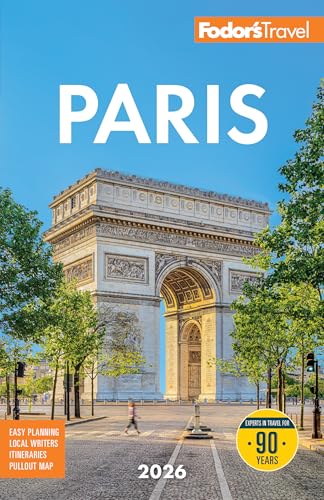
Paris runs on 25,000-step days, cobblestone pavements, café-terrace afternoons, and metro pickpocket awareness around the major tourist lines. Six items cover most trips. A solid Paris guidebook for 2026 with the new bell-tower and Seine-swim details. Comfortable cobblestone walking shoes for women. An anti-theft crossbody bag worn in front on Métro Line 1 and at the Eiffel base. A French phrasebook for ordering at neighborhood restaurants. A compact travel umbrella for the spring showers. A phone wide-angle lens for the Haussmann boulevard shots.




Recommended blogs to read:
- Places to visit in western Europe
- Tourist attractions in Europe
- Culinary destinations in Europe
- Best city breaks in Europe
- 37 Europe travel tips
What’s New in Paris for 2026?
Three things make 2026 the right year to time a Paris trip rather than just take one. Each is a once-or-once-in-a-decade thing the city is offering for the first time.
1. The Notre-Dame Bell Towers Reopen
Notre-Dame de Paris reopened its bell towers in 2026, the first public access since the 2019 fire. Free timed reservations on the official cathedral website; waitlist runs 60-90 days at peak. The North Tower climb (387 steps, no elevator) opens up views across the Île de la Cité and the cathedral’s restored gargoyles. The cathedral interior itself remained free entry (no ticket required) since the December 2024 reopening. The Crypte Archéologique under the parvis (€10) is the under-visited add-on with the Gallo-Roman ruins of the original Île de la Cité settlement.
Read also: tourist attractions in Europe and places to visit in western Europe.
2. Seine Swimming Returns (Three Official Sites)
The Seine became legally swimmable for the first time since 1923 in summer 2025, the result of a €1.4 billion clean-up project that ran for the Paris Olympics. Three official swim sites operate July-August: Bras Marie (Île Saint-Louis), Bercy (12th arrondissement), and Grenelle (15th arrondissement, with the Eiffel Tower view). Free entry, no reservation required, lifeguards on duty 11 AM-9 PM. Water quality is tested daily; sites close after heavy rain. Bring water shoes for the riverbed.
Read also: unique places to visit in Europe and summer in Europe.
3. The Tour de France Champs-Élysées Finish, July 26, 2026
The 113th Tour de France finishes on the Champs-Élysées on Sunday July 26, 2026. The 8-lap circuit through central Paris starts at the Place de la Concorde at around 5 PM with the riders arriving at the finish line around 7 PM. Free public viewing along the Champs (arrive 2-3 hours early for a front-row spot at the barriers). Hotels on the Champs and surrounding streets book out 6+ months ahead for the finish weekend; the Concorde-area Crillon and Meurice charge 2-3x normal rates.
Read also: summer in Europe and best events in Europe.
Which Classic Paris Icons Should You See First?
Four headline icons run on every Paris trip. Each one earns it for a specific reason and each one needs different timing.
4. The Eiffel Tower
Entry €29.40 for the summit elevator, €18.90 for the second-floor lift, €11.80 if you climb the 674 stairs to the second floor. Best photographs from the Trocadéro fountain at sunset, or from the Pont de Bir-Hakeim at golden hour, or from the bridge upriver at Pont d’Iéna. The hourly sparkle lasts five minutes at the top of every hour after dusk until 1 AM. Restaurant Le Jules Verne on the second floor (Alain Ducasse, 1 Michelin star) books 90 days ahead.
Read also: tourist attractions in Europe and beautiful cities in Europe.
5. The Louvre
The world’s most-visited museum (9.6 million visitors in 2024). Entry €22 timed-slot, €17 for under-26 EU residents, free for everyone the first Friday of every month after 6 PM (insane crowds). The Mona Lisa room is the morning bottleneck; arrive at 9 AM opening and walk directly. Less-crowded greatest-hits route: Cour Marly sculpture courtyard, Winged Victory of Samothrace, Venus de Milo, Liberty Leading the People, then Mona Lisa. Allow 3-4 hours minimum.
Read also: tourist attractions in Europe and UNESCO sites in Europe.
6. Sainte-Chapelle
The 13th-century Gothic royal chapel on the Île de la Cité, with 15-meter stained-glass windows depicting 1,113 biblical scenes. Built 1242-1248 by Louis IX to house the Crown of Thorns relic. Entry €11.50, €15 combined with the Conciergerie next door. Best visited late morning when the sunlight fills the upper-chapel windows; the effect of standing inside a glass jewel-box is the photograph that defines the visit. Sainte-Chapelle runs evening classical music concerts (€30-€60) about 100 times per year.
Read also: UNESCO sites in Europe and hidden gems in Europe.
7. Sacré-Cœur and Montmartre
The white-domed basilica on the highest hill in Paris (130m), with the panoramic view across the whole city. Free entry to the basilica, €8 for the dome climb (300 steps). Best at sunrise or sunset. Montmartre below holds the Place du Tertre (the cobblestone artist square that runs touristy by midday but is genuinely quiet and atmospheric at 7 AM) and the small remaining wine vineyard Clos Montmartre on Rue des Saules. The Sacré-Cœur funicular runs from Square Louise Michel; the climb on foot (220 steps) is the alternative.
Read also: beautiful cities in Europe and places to visit in western Europe.
Which Paris Museum Day Should You Commit To?
Beyond the Louvre, four museums do the heavy lifting for what Paris’s museum culture actually offers. Pick two for a one-week visit, three for ten days.
8. Musée d’Orsay
The Impressionist and Post-Impressionist collection in the converted 1900 Beaux-Arts railway station on the Left Bank of the Seine. Entry €16. Monet, Renoir, Degas, Van Gogh, Cézanne, Gauguin, Manet all in concentrated rooms on the upper floors. The clock-face panoramic window on the fifth floor framing the city across the Seine is the iconic photograph. Allow 3 hours minimum.
Read also: tourist attractions in Europe and UNESCO sites in Europe.
9. The Musée Rodin
Auguste Rodin’s sculpture in the Hôtel Biron mansion and surrounding garden on the Left Bank (7th arrondissement). Entry €14 (museum + garden), €5 garden only. The Thinker, The Kiss, The Gates of Hell, The Burghers of Calais all in the garden surrounded by lavender, roses, and clipped hedges. The under-photographed inner courtyard is where most visitors find their best Rodin photographs. Best for travelers who want a slower, smaller-museum afternoon after the Louvre crush.
Read also: hidden gems in Europe and beautiful cities in Europe.
10. Musée de l’Orangerie
The two oval rooms with Monet’s Water Lilies cycle (the eight large panels Monet painted in his Giverny garden between 1914 and 1926, installed at the Orangerie at his specific instruction in 1927). Entry €12.50. Located at the western end of the Tuileries Gardens, an easy add-on after the Louvre or before a Place de la Concorde walk. Best in the first 30 minutes of opening when the rooms are nearly empty.
Read also: unique places to visit in Europe and most beautiful countries in Europe.
11. Centre Pompidou
The 1977 inside-out modernist building in the Marais (with the colored exterior pipes that have made the Renzo Piano + Richard Rogers design as photographed as the art inside). The Musée National d’Art Moderne (Europe’s largest collection of 20th-21st century art) is on floors 4-5. Entry €15. The rooftop terrace gives one of the best free Paris panoramas. The Pompidou closes for a 4-year renovation in October 2026; visit before then.
Read also: beautiful cities in Europe and places to visit in western Europe.
Which Paris Neighborhoods Reward a Half-Day?
Four neighborhoods give Paris’s actual character, which the headline icons can sometimes obscure.
12. Le Marais (3rd and 4th Arrondissements)
The pre-Revolution noble quarter, the city’s traditional Jewish neighborhood, and Paris’s gay capital, all overlapping in the same 1km2 area. Place des Vosges (the oldest planned square in Paris, 1612) is the postcard photograph. Rue des Rosiers for falafel at L’As du Fallafel (since 1979, €8-€10 for the takeaway). The Musée Picasso, Carnavalet Museum (Paris history, free entry), and Musée Cognacq-Jay (18th-century art) all sit within a 10-minute walk.
Read also: beautiful cities in Europe and culinary destinations in Europe.
13. Saint-Germain-des-Prés (6th Arrondissement)
The 1920s-1950s literary heart of Paris. Café de Flore and Les Deux Magots on the same street corner (Boulevard Saint-Germain) where Sartre, de Beauvoir, Camus, Hemingway, Picasso wrote and argued. The Luxembourg Gardens five blocks south give the city’s prettiest park hour. Église Saint-Sulpice (the second-largest church in Paris) sits inside the neighborhood with the Da Vinci Code gnomon and the Delacroix murals in the side chapel.
Read also: places to visit in western Europe and most beautiful countries in Europe.
14. Canal Saint-Martin (10th Arrondissement)
The 4.5km canal lined with iron footbridges, locks, and the cafés that defined the early-2010s Paris hipster moment. Du Pain et des Idées (the bakery, 34 Rue Yves Toudic) is a 5-minute walk for a morning croissant. Best on Sunday morning when the road along the canal closes to cars and becomes a walking, jogging, and roller-skating space. The Hotel du Nord at 102 Quai de Jemmapes is the literary anchor (Marcel Carné’s 1938 film set).
Read also: hidden gems in Europe and best city breaks in Europe.
15. Belleville (20th Arrondissement)
The city’s most multicultural neighborhood, with the largest Chinatown in continental Europe, North African and Tunisian food, and the working-class artist studios that rents in central Paris pushed east. Parc de Belleville on the hilltop gives the city’s other best free panorama after Sacré-Cœur. Édith Piaf was born here. La Bellevilloise on Rue Boyer is the cultural venue for the neighborhood’s music scene.
Read also: hidden gems in Europe and beautiful cities in Europe.
Which Day Trips from Paris Pay Off?
Four day trips from Paris are worth a full day each. All reachable by direct train in under 90 minutes.
16. Versailles
30 minutes from central Paris by RER C. Entry €21 palace + gardens, €24 palace + gardens + Trianon + Marie-Antoinette estate. The Musical Gardens (fountain shows) operate Tuesdays, Saturdays, Sundays April-October. Arrive at 9 AM opening, do the State Apartments first, walk the gardens through afternoon, finish at the Trianon in late light. Closed Mondays.
Read also: beautiful castles in Europe and UNESCO sites in Europe.
17. Giverny (Monet’s Garden)
Claude Monet’s home and water garden 80km west of Paris, where he painted the Water Lilies cycle. 90 minutes by train from Saint-Lazare to Vernon, then a 20-minute shuttle bus or rental bike. Open April-November, entry €13. Best in May-June when the wisteria peaks over the Japanese footbridge and the lily pads are in full bloom. Closed Mondays.
Read also: European destinations for nature lovers and unique places to visit in Europe.
18. Reims for Champagne
45 minutes from Gare de l’Est by TGV. The Notre-Dame de Reims cathedral (where the kings of France were crowned for 1,000 years) is a UNESCO World Heritage site. The Champagne house tours run all year: Taittinger, Pommery, Vranken Pommery, and Veuve Clicquot all offer cellar tours and tastings (€25-€60 depending on the producer). Day trip works easily; overnight in Reims for the full Champagne-region weekend.
Read also: culinary destinations in Europe and Europe in October.
19. Fontainebleau
The medieval-through-Napoleonic royal château 55km southeast of Paris. 35 minutes by RER train to Fontainebleau-Avon, then a 15-minute bus. Entry €14. Less famous than Versailles, less crowded, with a more diverse architectural history (the same building shows medieval, Renaissance, Baroque, and Napoleonic additions). The surrounding Fontainebleau Forest is the world’s first established protected forest (1861) and the birthplace of bouldering.
Read also: beautiful castles in Europe and hidden gems in Europe.
What Are the Food and Café Hours That Make Paris Feel Like Paris?
Three institutional Paris food rituals that genuinely make the trip. Each is a different time of day.
20. Croissant and Café Crème at 8 AM
Du Pain et des Idées (Canal Saint-Martin) for the chausson aux pommes and the best croissant in the city per multiple annual rankings. Cyril Lignac’s La Pâtisserie (multiple locations) for the more luxurious pastries. Stohrer (since 1730, the oldest pastry shop in Paris) for the baba au rhum. €1.50-€2.50 for a croissant. Order yours “pas trop cuit” (not too brown) if you prefer the lighter buttery version. Pair with a café crème at a sidewalk table.
Read also: European foods and culinary destinations in Europe.
21. Brasserie Lunch with a Glass of Sancerre
The two-course brasserie lunch (entrée + plat or plat + dessert) is Paris’s most under-experienced food ritual for foreign visitors. €19-€26 for the formula. Try Le Bouillon Chartier (since 1896, the institutional cheap-classic brasserie), Le Train Bleu in Gare de Lyon (the painted-ceiling Belle Époque train-station brasserie), or Brasserie Lipp on Boulevard Saint-Germain. Order the oeufs mayonnaise, then the steak frites, with a small carafe of house Sancerre. Half the price of dinner and twice the atmosphere.
Read also: culinary destinations in Europe and best city breaks in Europe.
22. Wine Bar After 8 PM
Paris’s natural-wine bar scene is the post-2015 evolution that local food critics now consider the city’s strongest dining trend. Le Verre Volé (Canal Saint-Martin), Septime La Cave (11th arrondissement), and La Compagnie des Vins Surnaturels (Saint-Germain) are the three institutional anchors. €6-€9 per glass, small plates €8-€16. Order whatever the staff recommends; Paris natural-wine bars are essentially serendipity-driven.
Read also: culinary destinations in Europe and beautiful cities in Europe.
Timing Paris around the 2026 calendar?
The Ultimate Europe Trip Planner has the Notre-Dame bell-tower booking timeline, Tour de France July 26 finish logistics, Seine swim site schedule, and museum-by-museum timed-entry slot recommendations. $17 currently.
Things to Do in Paris FAQ
What is the #1 thing to do in Paris in 2026?
The single can’t-miss 2026 thing is the reopened Notre-Dame bell towers (free, 60-90 day waitlist for the reservation). The Eiffel Tower sunset photo from Trocadéro remains the most-photographed Paris moment. For one-off 2026 timing: a Seine swim at Bercy or Bras Marie on a July afternoon, or the Tour de France Champs-Élysées finish on Sunday July 26.
Can you visit Notre-Dame in 2026?
Yes. The cathedral reopened in December 2024 after the 2019 fire restoration. The bell towers reopened in 2026 for the first time since the fire, with timed reservations free but waitlisted 60-90 days. The cathedral itself is free entry, no ticket. The Crypte Archéologique under the parvis (€10) is the under-visited add-on with the Gallo-Roman ruins.
Can you really swim in the Seine now?
Yes. The Seine became legally swimmable for the first time since 1923 in summer 2025. Three official sites operate July-August: Bras Marie (Île Saint-Louis), Bercy (12th arrondissement), and Grenelle (15th arrondissement, with the Eiffel Tower view). Free entry, no reservation required, lifeguards on duty 11 AM-9 PM. Water quality is tested daily; sites close after heavy rain.
How many days do you need in Paris?
Minimum 4 days for the icons (Eiffel, Louvre, Notre-Dame, Sainte-Chapelle, Sacré-Cœur, Versailles day-trip). 7 days adds Giverny or Reims plus two more museums plus a serious neighborhood exploration. 10 days lets the city pace you with proper lunch breaks and late-evening wine-bar hours. Most first-time visitors underbook Paris.
Is Paris expensive in 2026?
Mid-range Western European pricing. Hotel rooms €120-€250 mid-tier in the central arrondissements (1st-8th, plus 11th and 18th); €70-€120 in the outer arrondissements (12th-20th). Restaurant lunch formulas €19-€26; dinner mains €18-€32. Métro single ticket €2.50, 10-pack €17.35. Sites and museums €11-€33 per entry. Paris hits the post-Olympics pricing reset in 2026 with some sites cheaper than 2024.
When is the best month to visit Paris?
May, June, September, and October are the sweet spots. May for the spring blossoms and cool evenings. June for the long daylight hours and outdoor cafés. September for the Indian-summer warmth after the August holiday emptying. October for the autumn light and the post-rentrée cultural calendar. Avoid August (most Parisians are on vacation and many small restaurants close). Avoid July 26 weekend unless you’re going for the Tour de France finish.
Key Takeaways
- Paris hosted 47M visitors in 2025; 2026 adds three new draws (Notre-Dame bell towers, Seine swimming, Tour de France July 26 finish).
- Notre-Dame bell towers reopened 2026; free timed reservations 60-90 day waitlist.
- Seine officially swimmable at three sites: Bras Marie, Bercy, Grenelle (July-August).
- Tour de France 2026 finishes Champs-Élysées Sunday July 26; arrive 2-3 hours early for free viewing.
- Classic icons: Eiffel Tower, Louvre, Sainte-Chapelle, Sacré-Cœur, Versailles day-trip.
- Museum day picks: Musée d’Orsay, Rodin, Orangerie, Pompidou (closing October 2026 for 4-year renovation).
- Neighborhood half-days: Marais, Saint-Germain, Canal Saint-Martin, Belleville.
- May-June and September-October are the best months; August empties out; avoid July 26 unless going for the Tour.
Final Thoughts on Things to Do in Paris
Paris in 2026 is the most Paris Paris has been in a decade. The post-Olympics infrastructure that locked in during 2024 has now been baked into a city that’s swimmable in the river, has its cathedral bell towers back, and is hosting the Tour de France finish in July. The headline icons are all open and operating at full capacity. The neighborhood food and wine-bar culture is the strongest it has been in living memory. The visitor numbers (47M in 2025) say the world has figured this out.
For 2026, plan around the timed-entry stuff (book the Notre-Dame bell tower reservation as soon as you have flights), pick two museums rather than four, leave time for the long Parisian lunches that turn into long Parisian afternoons, and don’t try to see everything in one trip. Paris rewards travelers who slow down. The icons will still be there next year.
Wow, these are very pretty pictures. I could never be in Paris without tasting French cuisine, in fact I think that’s the reason number 1 why I would go there. I really like the photo of Ile de la cité and I’d definitely go there too – not much for the celebrities, but because it seems so pretty and unusual.
Certainly one of the popular places in Europe indeed
oh wow the luxembourg garden looks amazing. im more interested in things to see and do that arnt always what everyone does. theres lot of hidden jewels. thanks for sharing some
Thanks for dropping by Joseph
Where is the tower? ha ha. At least you featured other spots. France Yes but something new.
You mean the Eiffel tower?
The one that got me was those lovely macarons. Also even if I don’t drink, the nightscape of the city is lovely. Hopefully I’d be able to visit it soon!
I’m rooting for you Chorell
Thank you so much for this very informative post. Seeing the pictures made me want to visit Paris sooner!
Thanks!