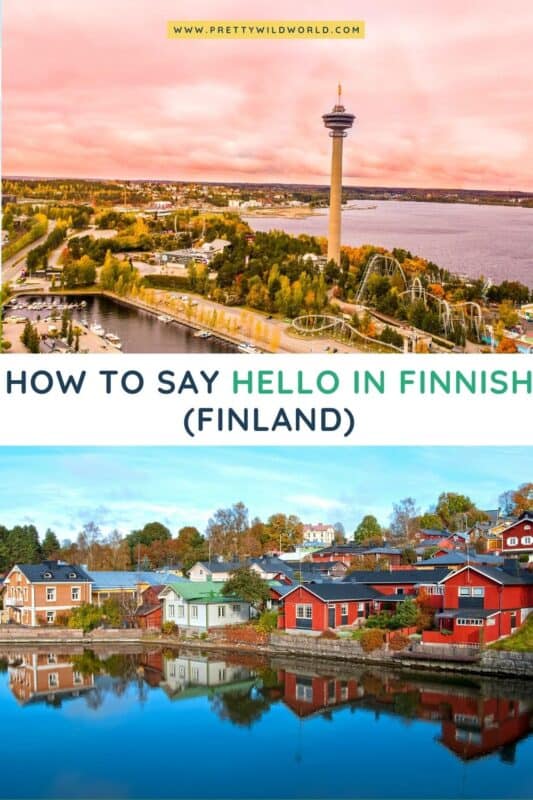
Quick Answer: The essential Finnish greetings: hei (hi/hello, all-purpose), moi (informal hi), hyvää päivää (formal good day), hyvää huomenta (good morning), hyvää iltaa (good evening), terve (plain hello), kiitos (thank you), anteeksi (excuse me/sorry), kyllä or joo (yes), ei (no), hauska tutustua (pleased to meet you), and näkemiin or hei hei (goodbye). Hei is the single safest word for travelers, used across every setting. Pronunciation tip: Finnish stress always falls on the first syllable.
Finnish is one of the few European languages outside the Indo-European family, related distantly to Estonian and Hungarian rather than English, Swedish, or Russian. The 15 grammatical cases and the agglutinative word structure make full sentences hard for non-speakers, but the greeting vocabulary is small, regular, and easy to pronounce. Most Finns speak excellent English, but the cultural appreciation for a traveler attempting hei or kiitos runs genuine. Helsinki shopkeepers, Lapland safari guides, and Tampere cafe staff all notice the small effort.
The shortlist below covers the 12 greetings and core phrases worth memorizing for any Finland trip. Pronunciation is straightforward: Finnish stress always falls on the first syllable, every letter is pronounced (no silent letters), and the language has roughly 8 vowel sounds and 13 consonants. The doubled letters (kk, ll, ss) mean a held consonant, and the umlaut vowels (ä, ö) have distinct sounds that don’t quite match any English equivalent.
The phrases listed run from most-essential (hei, kiitos) to situational (hauska tutustua, näkemiin). Travelers spending 3+ days in Finland will use hei, kiitos, and anteeksi multiple times per day. The other phrases pop up situationally in restaurant interactions, hotel check-ins, and street directions.
Planning the Finland trip and want the language tips slotted into the right city days?
The Ultimate Europe Trip Planner sequences the language-friendly stops alongside the city walking days.
Recommended Finland Trip Essentials
Six items worth packing for the Finland trip across cultural, city, and outdoor stops.





Recommended blogs to read:
- Glass igloo stays in Finland
- things to do in Finland
- best cities in Finland
- best time to visit Finland
- 7-day Finland itinerary
12 Items
The shortlist below covers the realistic candidates with practical context for each.
1. Hei, the All-Purpose Hello
Hei (pronounced ‘hay’) is the most-used Finnish greeting and works across every situation: street greetings, shop interactions, business meetings, friend encounters, phone calls. The word doubles as goodbye in casual contexts, similar to Italian ciao. Hei runs through both formal and informal settings and is by far the safest single Finnish word to learn for travelers. The doubled version hei hei works equally as goodbye. The variant moi (also ‘hay’ but slightly softer in tone, pronounced ‘moy’) runs more informal and is broadly preferred by young people and in casual settings across the country.
Read also: Sami culture in Finland · Best cafes in Helsinki
2. Hyvää Päivää, the Formal Good Day
Hyvää päivää (pronounced ‘HOO-vaa PAI-vaa’) means ‘good day’ and runs as the formal greeting equivalent of ‘good afternoon’ in English. Finns use it in formal business settings, when greeting older people, when entering a small shop where the owner is present, or when meeting someone for the first time in a professional context. The phrase works across the daylight hours roughly 10am to 6pm. Outside that window, hyvää huomenta (good morning) and hyvää iltaa (good evening) replace it. The formal greeting tradition runs less strict in modern Finland than in older European cultures, but the phrase is still appreciated.
Read also: Best restaurants in Helsinki · Day-trips from Helsinki
3. Moi, the Casual Hi
Moi (pronounced ‘moy’) is the most-used informal greeting among friends, family, and casual acquaintances. Moi runs warmer and more familiar than hei and is the standard greeting in cafes, pubs, between coworkers in an informal setting, and across most everyday social interactions. The variant moikka adds a diminutive that runs even more casual. Finns answering the phone often say moi rather than hei. Travelers can use moi safely in any casual context without worrying about being too informal; the worst case is sounding slightly young, which Finnish-speakers find endearing rather than rude.
Read also: Best bars in Helsinki · Helsinki neighborhoods
4. Terve, the Plainspoken Hello
Terve (pronounced ‘TER-veh’) translates literally as ‘healthy’ and runs as a plainspoken greeting somewhere between hei and moi in register. The word originates from the same root as the Finnish word for health (terveys) and ties back to historical greeting traditions wishing someone good health on meeting. Terve runs more common in older generations and in rural settings than in urban Helsinki. The phrase pairs well with men greeting men in a casual but not-overly-warm setting. Younger Finns use it less often than moi or hei but still recognize it as standard.
Read also: Things to do in Rovaniemi · Things to do in Tampere
5. Hyvää Huomenta, the Good Morning
Hyvää huomenta (pronounced ‘HOO-vaa HOO-oh-men-tah’) means ‘good morning’ and runs across the early hours up to roughly 10am. The phrase appears on hotel reception greetings, breakfast service interactions, and morning meetings. Finns use it across both formal and informal morning settings. Within close relationships and casual contexts, the shortened huomenta runs more common. The morning-greeting window closes earlier in Finland than in some Mediterranean countries; by 11am most Finns shift to hyvää päivää or just hei. Hotel breakfast servers and morning cafe baristas use the phrase as the standard greeting through the early hours. The phrase pairs naturally with hyvää aamua (good early morning), which runs more common between 5am and 7am before the standard huomenta window opens.
Read also: Autumn in Finland · Spring in Finland
6. Hyvää Iltaa, the Good Evening
Hyvää iltaa (pronounced ‘HOO-vaa IL-tah’) means ‘good evening’ and runs from roughly 6pm onward. The phrase appears in restaurant service interactions, evening business events, and theater or concert venue greetings. Finns shorten it to iltaa in casual settings. The phrase pairs naturally with the broader evening sauna-and-cocktail tradition that defines Finnish social life. After roughly 10pm, the phrase shifts to hyvää yötä (good night), which doubles as ‘goodbye’ when leaving an evening gathering. Pairing the phrase with a small nod or a brief eye-contact moment runs as the standard Finnish evening-greeting etiquette across restaurants, theatres, and concert venues. Tourist-facing staff use the phrase in English-translated form (good evening) but appreciate the original Finnish version when offered.
Read also: Winter in Finland · 10-day Finland itinerary
7. Kiitos, the Universal Thank You
Kiitos (pronounced ‘KEE-toss’) means ‘thank you’ and runs across every Finnish social interaction. The word is the single most-important Finnish phrase for travelers after hei because it appears in every shop, restaurant, hotel, and street interaction. The doubled kiitos kiitos emphasizes gratitude. The variant kiitos paljon means ‘thank you very much’ and adds genuine warmth. Finns use kiitos liberally even in routine transactions, and travelers who use the word naturally come across as respectful regardless of accent or pronunciation. The phrase ole hyvä (you’re welcome, literally ‘be good’) runs as the standard response to kiitos. The shortened mahtavaa (excellent) or hienoa (great) can substitute for kiitos when expressing enthusiasm rather than gratitude.
Read also: Is Finland expensive · Finland currency guide
8. Anteeksi, the Excuse Me and Sorry
Anteeksi (pronounced ‘AHN-teh-ek-see’) covers both ‘excuse me’ (to get attention) and ‘sorry’ (to apologize), depending on context. The phrase works in shops, on public transport, when bumping into someone on the street, or when asking a stranger for directions. Finns use anteeksi to interrupt politely before asking a question, which makes it the second-most-useful word for travelers after kiitos. The longer variant anteeksi pyydän adds ‘I apologize’ for more serious situations, and ole hyvä (please/here you go) pairs naturally with anteeksi in service interactions. The phrase pahoittelut (apologies) runs as the formal alternative for more serious situations. Travelers can pair anteeksi with a brief hand gesture or smile to soften the directness of the word, though Finns generally find the plain word sufficient.
Read also: Helsinki Airport · How to get around Finland
9. Kyllä and Joo, the Yes Variants
Kyllä (pronounced ‘KOO-lah’) is the formal ‘yes’ and runs in business, polite, or emphatic contexts. Joo (pronounced ‘yo’) is the casual ‘yes’ and runs across everyday conversation, similar to English ‘yeah’. Both work in shops, restaurants, and conversations. The doubled joo joo signals agreement or acknowledgment without committing strongly to anything. Finns also use the curt mm-mm to mean yes in informal contexts, which can confuse foreigners expecting clearer affirmation. The Finnish ‘yes’ tradition runs more measured than the enthusiastic confirmation common in Mediterranean cultures. The variant juu adds a casual confirmation similar to English ‘yeah.’ The English speaker’s instinct to soften ‘yes’ with ‘well’ or ‘I think so’ does not translate naturally into Finnish; the language prefers direct confirmation or refusal.
Read also: Best museums in Finland · Where to stay in Helsinki
10. Ei, the Definitive No
Ei (pronounced ‘ay’) means ‘no’ and runs across every refusal, denial, or negative statement in Finnish. The single word does most of the work that English handles with ‘no’, ‘not’, and ‘don’t’. Finns use ei plainly without softening; the directness reflects the broader cultural preference for clear communication over polite circumlocution. The phrase ei kiitos (no thank you) is the polite refusal used to decline offers in shops, restaurants, or social settings. Anglophones often find Finnish ‘no’ delivery uncomfortably direct at first, but it carries no offense or rudeness in Finnish context.
Read also: Solo female travel in Finland · ETIAS visa guide
11. Hauska Tutustua, the Pleased to Meet You
Hauska tutustua (pronounced ‘HOW-skah TOO-toos-too-ah’) means ‘pleased to meet you’ and runs in introduction settings: business meetings, social gatherings, when meeting friends-of-friends. The phrase pairs with a handshake (still standard in Finnish formal introductions) and direct eye contact. Finns introduce themselves with their first name only in casual settings and with full name in business settings. The phrase runs as a polite-but-not-formal middle ground that works across most introduction contexts. The response is usually mukava tavata (nice to meet you) or just hauska tutustua back. The phrase olen + name (I am + name) precedes the introduction phrase in casual contexts. Business introductions in Finland still use full first-name plus last-name; casual social introductions use first-name only across most age groups.
Read also: Finland with kids · Midsummer Juhannus
12. Näkemiin and Hei Hei, the Goodbyes
Näkemiin (pronounced ‘NAH-keh-meen’) is the formal ‘goodbye’ and runs in business settings, formal interactions, or when expecting not to see someone again soon. The phrase translates literally as ‘until we see each other.’ Hei hei (the doubled hei) runs as the standard casual goodbye and works across most everyday interactions. Moi moi runs more familiar still. The phrase nähdään (we’ll see each other) runs as the casual ‘see you’ for short-term goodbyes. The Finnish goodbye tradition runs less elaborate than southern European cultures; a single hei hei works for almost any exit.
Read also: Mökki cottage culture · Aurora forecast apps
Mapping the Finnish-language milestones across the multi-city trip?
The Ultimate Europe Trip Planner covers where the language interactions cluster.
Frequently Asked Questions
How do you say hello in Finnish?
Hei (pronounced ‘hay’) is the most-used Finnish greeting. Moi (informal) works among friends. Hyvää päivää (formal good day) runs in business or older-generation settings. Hei is the safest single word for travelers.
How do you say thank you in Finnish?
Kiitos (pronounced ‘KEE-toss’). Kiitos paljon adds ‘very much.’ The word runs across every Finnish service interaction.
Do Finns speak English?
Yes, broadly. Roughly 70% of Finns speak conversational English, with near-universal English among young people and in tourist-facing roles. Helsinki, Rovaniemi, and university towns run effectively bilingual.
Is Finnish hard to learn?
Yes for full fluency: 15 grammatical cases and Uralic word structure make sentences hard for Indo-European speakers. No for tourist phrases: pronunciation is regular, stress always on first syllable, every letter pronounced. The greeting vocabulary in this guide takes about 30 minutes to learn.
What language is spoken in Finland?
Finnish (87% first language) and Swedish (5.2%) are both official languages. Sami languages have official status in the Sami Domicile Area in Lapland. English is widely spoken across Helsinki and tourist areas.
Key Takeaways
- Hei is the universal Finnish greeting; works in every situation.
- Stress always falls on the first syllable; every letter is pronounced.
- Kiitos (thank you) and anteeksi (sorry/excuse me) handle most travel interactions.
- Most Finns speak excellent English; attempting Finnish is appreciated, not required.
- Finnish is from the Uralic language family, not related to Swedish, Russian, or English.
Final Thoughts
Finnish greetings run small, regular, and easy to pronounce. Hei works across every situation; kiitos and anteeksi handle the next most-common needs; the other 9 phrases pop up situationally. Pronunciation stress always lands on the first syllable. Most Finns speak excellent English, but the cultural appreciation for a traveler attempting hei or kiitos is genuine across cafes, hotels, and shops. For the broader cultural-stop layer, the Finnish phrases for travelers guide covers the next vocabulary layer after these 12 greetings.