Quick Answer: The best places to visit in Central Europe in 2026 thread onto the new night-train map. The Vienna-Prague Axis, the Berlin-Krakow Sleeper, the Budapest-Munich-Zurich Triangle and the Ljubljana-Trieste crossover each carry a coherent five-to-seven-day loop. Trenčín, Slovakia is the year’s wildcard as European Capital of Culture, and the Bavarian palaces of Ludwig II finally landed on the UNESCO list in 2025.
Last updated: May 2026 · ÖBB Nightjet timetables and Trenčín 2026 schedule verified May 2026.
Central Europe is where the continent gets a little weirder, a little wine-ier, a little more lived-in. Prague at dawn before the day-trippers arrive. Vienna’s coffeehouses where the waiter sets down a Mélange without you asking. Budapest’s thermal baths at 11 p.m. on a Saturday. This is the part of Europe I keep coming back to.
I’ve rounded up my favorite places to visit across the region in this post, the obvious capitals, the smaller medieval towns, the new night-train routes that make hopping between cities almost too easy. Grab a coffee, get comfortable. Let’s plan something.
Building a Central Europe trip around the ÖBB Nightjet timetable so the moves between cities happen overnight?
The Ultimate Europe Trip Planner has the sleeper map pre-mapped to four city loops with pricing, booking windows, and the cabin upgrade math on the Nightjet vs second-class chair. Currently just $17 before the price goes up to $27.
Central Europe Travel Kit
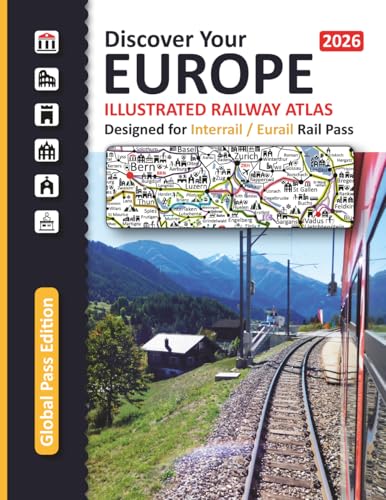
A Central Europe trip on the sleeper map needs different kit than a flight-and-Airbnb itinerary. A compression cube for the carry-on so the soft duffel actually packs onto the luggage rack above the bunk. Folding dress shoes for the one nice Vienna dinner. A pocket notebook for the cafe lists and the museum names you’ll forget by Bratislava. A Lonely Planet for the train hours when your phone runs dry. Six pieces below earn their place in the compartment.





| Sleeper corridor | Anchor cities | Loop length | Average mid-range week |
|---|---|---|---|
| Vienna–Prague Axis | Vienna, Brno, Prague | 5–6 days | €1,200–€1,700 |
| Berlin–Krakow Sleeper | Berlin, Wroclaw, Krakow | 6–7 days | €1,000–€1,500 |
| Budapest–Munich–Zurich Triangle | Budapest, Salzburg, Munich, Zurich | 7 days | €1,800–€2,500 |
| Ljubljana–Trieste Crossover | Ljubljana, Lake Bled, Trieste edge | 4–5 days | €900–€1,300 |
| The Trenčín 2026 Anchor | Trenčín, Bratislava, Vienna | 5 days | €800–€1,200 |
| Small-town detours | Telč, Český Krumlov, Hallstatt, Sopron | +1–2 days per city | €150–€280/day |
Which Sleeper Corridor Anchors the Vienna–Prague Trip?
The oldest Habsburg-era rail line in the region runs four and a half hours between two of the prettiest capitals in Europe, and the ÖBB Nightjet now extends it both ways. You can board in Brussels at 7:22 p.m. and wake up in Vienna. You can board in Vienna at 10:14 p.m. and wake up in Prague. This axis is where most first trips to Central Europe should start, because the two cities anchor opposite ends of the same imperial story and the middle stop, Brno, is the underrated capital of Moravia.
1. Vienna, Austria
A coffeehouse waiter named Robert at Café Sperl has been carrying the same tray since 1989. He sets down a Mélange and a glass of water without looking, because there is always a glass of water, and the regulars know not to ask for it. That’s Vienna: a city built on a hundred small habits that survived two world wars and three currencies. The State Opera still requires evening dress. The 9 a.m. dog walkers still loop the same Stadtpark path. The Belvedere’s Klimts are still hung exactly where they were in 1903.
The current shift: the new Wien Museum reopening, which finally tells the city’s story from Celtic settlement to Habsburg collapse in chronological order rather than the previous mess. Allow a full afternoon. Pair it with a Naschmarkt lunch and an evening at Café Schwarzenberg, which serves the schnitzel that other schnitzels measure themselves against. Three days holds the city. Four if you side-trip to Schönbrunn.
Read also: best capital cities in Europe, Vienna itinerary, and things to do in vienna.
2. Brno, Czech Republic
The Mendel Genetics Museum sits inside an Augustinian abbey at the foot of a hill on the south side of town, and on a Wednesday afternoon in May the courtyard is empty except for one biology teacher from Linz showing his students where pea-pod inheritance was figured out in 1856. That’s Brno in one frame: an absolutely first-rate cultural city that almost nobody outside Moravia visits, with the second-biggest UNESCO site in Czech (the Tugendhat villa) sitting on a hill three tram stops north.
The cafe culture is denser per capita than Prague. Cafe Era, Cafe Podnebí and the new Industra coffee roastery on the eastern edge all rival Vienna for quality at half the price. The Špilberk Castle holds the city’s best terrace view. A long weekend works. Two days if you’re stopping mid-axis between Vienna and Prague.
Read also: things to do in Czech Republic and hidden gems in Europe.
3. Prague, Czech Republic
The Charles Bridge at 6 a.m. holds about thirty people. By 10 a.m., it holds three thousand. That gap is the entire Prague visiting strategy: the city’s prettiest set pieces (Astronomical Clock, Old Town Square, the bridge, the castle approach) handle dawn beautifully and turn into a rugby scrum by lunchtime. The locals shifted their own routines decades ago. Karlin and Vinohrady do most of the heavy lifting for breakfast and dinner now, leaving the Old Town to the tour groups.
The new National Museum wing on Wenceslas Square opened in late 2025 and gives you a coherent ground-up tour of Bohemian history without the dust-coated exhibits the building was famous for in the 1990s. Spend two mornings on the castle side, two evenings on the Karlin side. A river cruise at sunset clears the city for the next train. Four days is the working number.
Read also: best cities in Europe to visit, Prague itinerary, and is prague worth visiting.
What Does the Berlin–Krakow Sleeper Open Up?
The Berlin-Krakow night train started running again in March 2025 after a thirty-year gap. It leaves Berlin Hauptbahnhof at 10:46 p.m. and pulls into Krakow Główny at 7:35 the next morning, with a single stop in Wroclaw at 4:12 a.m. for the night owls. The route reopens the most important political-cultural corridor in Central Europe, the one that connects post-Wall Berlin to the cultural heart of Poland through Silesia. Three cities, one sleeper ticket, and a whole 20th-century history lesson sitting at the windows.
4. Berlin, Germany
A flea market vendor on Mauerpark on a Sunday morning is selling a Soviet typewriter, a vinyl copy of Nina Hagen’s first album, and a hand-stitched jacket cut from an East German army blanket. The buyer is twenty-three and pays in cash. That little transaction is most of what makes Berlin work in 2026: the city’s reluctance to be tidied up. The east-west scars are still visible. The squat-derived clubs in Friedrichshain are still operational. The Tempelhof airfield is still a public park because the public voted for that twice.
The big museum island gets the headlines (Pergamon, Neues, the now-open Humboldt Forum), but the city’s real museum is the streets themselves. Walk the Berliner Mauerweg for an afternoon, eat a doner kebab at Mustafa’s on Mehringdamm, drink a beer at Klunkerkranich on top of the Neukölln parking garage at dusk. Four days at minimum. Five if you push out to Sachsenhausen on a day trip.
Read also: most visited countries in Europe, Berlin itinerary, is berlin worth visiting, and things to do in berlin.
5. Wroclaw, Poland
Three hundred bronze dwarves are hidden across the old town. Children with maps spend Sunday mornings finding them. The dwarves started as a 1980s anti-communist protest symbol and stayed because the city kept them around. Now they are the local cipher for a place that was German until 1945, Polish since 1945, and quietly comfortable with both halves of its biography. The Market Square is one of the largest medieval squares in Europe, the riverbanks of the Oder are walkable in both directions, and the Centennial Hall (a 1913 reinforced-concrete dome) reads more like architecture school homework than tourist attraction.
Eat at Bernard, the Czech-Silesian beer hall on the corner of the Market Square. Visit the Panorama of Racławice, a 19th-century 360-degree painting housed in a purpose-built rotunda. Two days is right. Three if you cross the river to the cathedral district at dusk.
Read also: things to do in Poland and underrated countries in Europe.
6. Krakow, Poland
A morning at Wawel Castle starts with the dragon. There’s a bronze fire-breathing one at the river end of the hill, and the local children climb on it before the school day starts. The cathedral above holds the tombs of every Polish king worth naming. That’s Krakow’s whole tonal trick: the casual mix of the absolutely serious (the Wawel coronation history, the Schindler factory, the Auschwitz day trip) with the absolutely lighthearted (the dragon, the milk bars, the Vodka Museum on Florianska Street).
The Jewish quarter of Kazimierz works as a different city after dark. Wash down pierogi at Pierogarnia Krakowiacy, drink at Alchemia, sleep at one of the boutique hotels around Plac Nowy. Four days holds it. Five if you do the Wieliczka salt mine and Auschwitz both.
Read also: Europe bucket list, Krakow itinerary, and things to do in krakow.
How Does the Budapest–Munich–Zurich Triangle Work?
Three of the wealthiest, prettiest, and structurally different cities in Central Europe sit at the corners of a triangle that the sleeper map now stitches together properly. The Nightjet from Budapest reaches Munich at 7:13 a.m. The connecting daytime EuroCity to Zurich runs the scenic route through the Vorarlberg and Lake Constance. The return leg via the Salzburg-Linz-Vienna axis closes the loop. A seven-day version of this trip uses three sleeper nights and seven hotel nights, and the cost-per-day works out near a flight-and-Airbnb itinerary that includes none of the train scenery.
7. Budapest, Hungary
An old thermal bath called Rudas has a Turkish dome built in 1550 and a sundeck that overlooks the Danube. On Friday and Saturday nights it stays open until 4 a.m. as a swim-and-disco hybrid, which is an experience the rest of Europe does not really offer. By day, Rudas reverts to a quiet medical-bath complex where pensioners soak in the marble pools and discuss the football. That single building captures most of what makes Budapest unusual: a city of dual personalities living in the same architecture without anyone seeming to mind.
Walk the Buda side in the morning (Fisherman’s Bastion, Matthias Church, the funicular down) and the Pest side in the afternoon (the Great Market Hall, the Parliament tour, the Dohány Street Synagogue). Eat goulash at Bestia in District VII. Four days holds it. Five if you slot in the Margaret Island bike loop.
Read also: things to do in Hungary, Budapest guide, best food in budapest, budapest itinerary for first time visitors, and day trips from budapest.
8. Salzburg, Austria
A teenage girl on a school trip is humming “Sixteen Going on Seventeen” in the Mirabell Gardens, and her two friends are pretending not to know her. That happens roughly every twenty minutes during high season. The town built a cottage industry around Sound-of-Music tourism that the locals roll their eyes at, but the underlying city is more interesting than the film hints. Mozart’s birth house, the Hohensalzburg Fortress on the hill, the Old Town squeezed against the river: this is one of the densest 90-minute walking tours in Central Europe.
Skip the Sound-of-Music bus. Walk the Mönchsberg trail above the city for the postcard angle. Eat trout at Stiftskeller St. Peter, supposedly the oldest restaurant in continuous operation in central Europe (since 803 AD). Two days is the working number, three if you side-trip to the Hallein salt mine or to Hallstatt.
Read also: things to do in Austria and places to visit in Western Europe.
9. Munich, Germany
A Tuesday-morning beer garden at the Hofgarten holds about forty regulars at 11 a.m. drinking half-liters before lunch. Three of them are wearing actual lederhosen, two of them are reading the FAZ, the rest are arguing about the Bayern coach. That’s Munich’s working trick: the city operates on a slower clock than its Berlin and Hamburg counterparts and refuses to apologize for it. Half-day office hours, two-hour lunches, the English Garden running the length of the city for the bicyclists.
Worth flagging: the freshly inscribed UNESCO trail of the Bavarian Palaces of King Ludwig II (Neuschwanstein, Linderhof, Herrenchiemsee), which sit ninety minutes south of the city as the day-trip everyone now wants. Allow three days for Munich itself plus one full day for the palace trail. The Viktualienmarkt for picnic supplies. Schmalznudel for the fried-dough breakfast.
Read also: most beautiful countries in Europe, Munich guide, is munich worth visiting, and things to do in munich.
10. Zurich, Switzerland
The Limmat River runs perfectly clear straight through the center of town, and on a hot August afternoon the office workers swim in it during their lunch breaks. The Frauenbad and Männerbad swim platforms have been operating since 1837. That single fact contradicts everything most travelers assume about Zurich, which usually involves the words “expensive” and “banking” and “boring.” The reality is a small, walkable, lake-edge city with first-rate Swiss precision and the best museum culture in the German-speaking world after Berlin.
The Kunsthaus expansion (the Bührle collection annex opened in 2021) doubles as one of Europe’s best modern collections. The Lindenhof terrace for the postcard. Take the boat from Bürkliplatz to Rapperswil for an afternoon if the weather holds. Two days is enough. Three if you add a day trip to Lucerne, which sits 50 minutes away by train and is worth half a day on its own.
Read also: things to do in Switzerland, Zurich guide, and things to do in zurich.
Where Does the Ljubljana–Trieste Crossover Lead?
The smallest sleeper corridor on this list runs only about three hours by daytime train, but it carries an outsized share of the region’s beauty. Ljubljana, Lake Bled and the Italian-Slovenian border city of Trieste sit inside a 100-mile triangle that contains an Alpine lake, a near-Mediterranean port, and one of the most underrated capitals in Europe. The Bohinj-Bled rail extension (modernized in 2024) now puts the lake within ninety minutes of Ljubljana on the new tilting trains.
11. Ljubljana, Slovenia
The triple bridge designed by Jože Plečnik in 1929 splits into three pedestrian spans across the Ljubljanica River, which is the kind of architectural showing-off that smaller capital cities almost never get to do. The whole city center is Plečnik’s: the National Library, the Central Market arcade, the cone of the cemetery chapel. He worked at the scale of his hometown, and the result is a 60,000-person urban core that reads like a coherent design portfolio rather than a hodgepodge.
Walk the Tivoli Park promenade in the morning, take the funicular up to the castle in the afternoon, eat dinner at Druga Violina on Stari Trg for the open-faced sandwiches and the casual fact that the staff includes adults with intellectual disabilities and serves the best price-to-quality plate in the old town. Two days is right. Three with the side trip to Bled or Postojna.
Read also: hidden gems in Europe, Ljubljana guide, things to do in ljubljana, and top day trips from ljubljana.
12. Lake Bled, Slovenia
An island church sits in the middle of a glacial lake at the foot of an Alpine ridge. Behind the lake, a cliff-top castle holds the angle that has been on every Slovenia poster since 1992. The Pletna boatmen (a hereditary guild that has rowed pilgrims to the island since the 1740s) still operate the only sanctioned way to reach the chapel. The honking of the lake’s swans is constant. The dessert at the lakeside hotels (a cream-and-vanilla pastry called the Bled cream cake or Kremšnita) has been served unchanged since 1953.
Stay one night to catch the lake before the day-trip crowds arrive at 11 a.m. Walk the 6km lakeside trail at 7 a.m. Climb to the castle at sundown. If the weather is doubtful, take the train ninety minutes further to Bohinj, which sits at the foot of Triglav and gets a tenth of the traffic.
Read also: things to do in Slovenia and Europe bucket list.
13. Trieste, Italy
A grand seafront piazza opens directly onto the Adriatic, and the cafe waiters wear white aprons and walk between tables carrying espresso in glass cups instead of porcelain. The city was Habsburg until 1918 and Italian since 1945, and it never quite committed to either identity. The result is the only Italian city with a Viennese coffee culture, a Slovenian-speaking minority of about a third, and the central European architecture of a regional capital that lost its empire and kept the buildings.
Caffè San Marco for the literary history (James Joyce wrote here for ten years, Italo Svevo published here). The Castello di Miramare on the headland for the view. The Risiera di San Sabba for the sobering 20th-century history. Two days is enough. Three if you cross into the Karst plateau for the wine cellars.
Read also: places to visit in Italy, places to visit in East Europe, and is trieste worth visiting.
Why Does the Trenčín 2026 Anchor Matter?
A castle on a limestone outcrop above a small Slovak town normally rates a single line in a regional guide. For 2026, that single line turned into a year-long program because Trenčín was named European Capital of Culture (jointly with Oulu, Finland) under the theme of Curiosity. The program runs from February through November and includes The Well of Love light-and-sound piece in the castle wells, a Light Art Festival in April, the Splanekor public-art floats on the Váh River in July, and the Fiesta Bridge Festival in September. The town also clocked in as the fifth-cheapest European city break for 2026 in the Post Office Travel barometer, at €314 for the standard 12-item basket.
14. Trenčín, Slovakia
The medieval castle above the town predates the Reformation, and the Roman inscription carved into the rock at its base (dating to 179 AD, from a passing Roman legion) is the northernmost piece of Roman writing in continental Europe. That inscription was the genesis of the Capital of Culture bid: a town curious about itself, with the receipts to back it up. The 2026 program treats the castle as a contemporary art venue, which is why the Well of Love installation lives in the well shaft now.
Add a half day for the Trenčianske Teplice spa town (15 minutes by train), which the Habsburgs used as a thermal retreat. Eat at Fatima for the fusion-Slovak menu. Three days, mid-2026, lands every major event. The train from Vienna runs 90 minutes via Bratislava on the morning EuroCity.
Read also: hidden gems in Europe and things to do in Slovakia.
15. Bratislava, Slovakia
An hour by hydrofoil from Vienna, an hour by train, two and a half by bike along the Danube path. Few European capitals sit this close to another European capital, and Bratislava has spent thirty years figuring out how to be more than Vienna’s quirky little sister. The Old Town is genuinely small, walkable in two hours, and dotted with the kind of statues nobody else has (Čumil the manhole man peering out from a sewer cover at the corner of Panská and Rybárska, since 1997).
The castle on the hill, the Blue Church (Hundertwasser-adjacent Art Nouveau, 1913), the UFO restaurant on the SNP Bridge for the panorama. Eat at Modrá Hviezda below the castle for traditional Slovak. Two days. Three if you bike the Danube path back to Vienna.
Read also: best capital cities in Europe, smallest cities in Europe, is bratislava worth visiting, and things to do in bratislava.
Which Small-Town Detours Sit Off the Mainline?
Four Central European villages that nobody quite manages to put on the same list, even though they all sit between 90 minutes and three hours from one of the sleeper-route anchors. Telč in Moravia, Český Krumlov in southern Bohemia, Hallstatt above the Salzkammergut lake, and Sopron on the Hungarian-Austrian border. Each adds a day to the trip and resets the pace after three or four city stops. Each is a UNESCO inscription (Telč since 1992, Krumlov since 1992, Hallstatt-Dachstein since 1997). Sopron isn’t UNESCO but punches well above its size.
16. Telč, Czech Republic
A long medieval square painted in pastel sgraffito sits behind a chateau, and on a quiet weekday in May the only sound is the church bells and a small fountain. The town has 5,000 people and survives on tourism that barely arrives because the railway connection is awkward. That awkwardness is the gift: a UNESCO-listed Renaissance-era town square with no crowds for most of the year. The chateau itself runs guided tours through the painted ballrooms, which feel like walking through someone’s private dream of a 16th-century life.
Eat lunch at Roštěnka behind the square. Stay overnight at the Pension Steidler if you want the sunrise on the painted facades. The train from Brno takes about two hours via Jihlava.
Read also: things to do in Czech Republic and hidden gems in Europe.
17. Český Krumlov, Czech Republic
The Vltava River loops around an outcrop in a tight horseshoe, and the medieval town inside the loop is built around a castle complex that sits on the cliff above. The setting is so absurdly photogenic that the day-trip crowds out of Prague have made it the most over-visited small town in Czech Republic. The trick is to sleep over: between 6 p.m. and 9 a.m. the place empties out, the cobbles ring underfoot, and the castle terrace holds two or three people instead of two hundred.
Stay at the Old Inn on the main square. Climb the castle tower at first light. Eat dinner at Krčma v Šatlavské, a candlelit medieval-style cellar. Two nights catches the place properly. The train from Prague is three hours via České Budějovice.
Read also: most beautiful countries in Europe and places to visit in Czech Republic.
18. Hallstatt, Austria
A cluster of pastel houses clings to the wedge of land between a Salzkammergut lake and a mountain wall. The town is so famous that a Chinese company built a full-scale replica of it in Guangdong province in 2012. The original holds 800 residents and is now visitor-managed: a 2026 quota system limits parking and bus arrivals between June and October. Visit on the shoulder-season weeks (May, October) for the photographs without the queues. Stay one night to catch the early light on the boathouses.
The Salzwelten salt mine is 7,000 years old and runs guided tours that include a wooden slide down through the seams. The Skywalk platform above the village holds the postcard angle. Lunch at Bräugasthof on the lakefront. The connecting train from Salzburg is two hours via Attnang-Puchheim.
Read also: things to do in Austria and Europe bucket list.
19. Sopron, Hungary
An hour by train from Vienna, the smallest Hungarian wine-and-medieval town sits inside a half-circle of cobbled streets surrounded by the Lővér hills. It voted to remain Hungarian in a 1921 plebiscite (the only Hungarian town to do so when the larger Burgenland chose Austria), and the locals still wear the historic “loyalest town” badge. The Firewatch Tower at the top of the main square holds a Habsburg-era panorama platform. The Storno House holds a 15th-century Italianate facade. The Liszt Center hosts the small annual classical festival in late June.
Eat at Cézár Pince, a wine cellar built into the medieval walls. Walk the Lővér hills for a half day. The train from Vienna runs 75 minutes via Wiener Neustadt. One night. Two if the wine tasting takes hold.
Read also: things to do in Hungary and smallest cities in Europe.
Want the sleeper-route loop pre-built into a working seven-day itinerary?
The Ultimate Europe Trip Planner does the Nightjet booking windows, the cabin-class math, the in-city pacing, and the Bavarian palace day-trip slots, with the 2026 EES timing baked in. Currently just $17 before the price goes up to $27.
Central Europe Trip Questions, Answered
Which countries are in Central Europe?
The working 2026 list is Austria, Czech Republic, Hungary, Slovakia, Poland, Slovenia, Germany (the south, Bavaria especially), Switzerland (the German-speaking side) and Liechtenstein. The Visegrad Group definition narrows it to Czech Republic, Hungary, Poland and Slovakia. The broader cultural definition adds Slovenia and parts of Croatia. There’s no UN-style hard boundary because the term is cultural, not administrative.
Is Trenčín worth visiting in 2026?
Yes, this is the single best year to go. The European Capital of Culture program runs February through November and includes The Well of Love (light-and-sound piece inside the castle wells), a Light Art Festival in April, Splanekor floats on the Váh in July and the Fiesta Bridge Festival in September. The city is also the fifth-cheapest European city break for 2026 at €314 in the Post Office Travel barometer.
Can you do Prague, Vienna and Budapest in one week?
Yes, but only if you use the night-train legs and accept that “doing” a city in two days means hitting four sites instead of fifteen. The working pacing is two nights Prague, two nights Vienna, two nights Budapest, one travel night on the Brussels-Vienna Nightjet leg if you’re arriving from the west. Skip if you want one of the three to feel unhurried. Add three days if you want all three to feel right.
Read also: is prague worth visiting.
Is Slovenia in Central Europe?
Geographically and culturally yes, although the European Union groups it with Southern Europe statistically. The country was part of the Austro-Hungarian Empire until 1918, sits north of the 46th parallel, and shares its rail and road network with Austria more than with Croatia. The Slovenian language belongs to the South Slavic family, which complicates the categorization, but on a working travel-planning level, Slovenia is Central Europe.
Are the Central European night trains worth it for tourists?
Yes, if you book a couchette or sleeper cabin (not the seated class). A six-bunk couchette on the Vienna-Brussels Nightjet runs €69-€129 depending on booking window. A two-bed private cabin runs €189-€289. You save a hotel night and a daytime travel slot, you avoid an EES queue at the airport, and the cabin breakfast is included. The seated class is uncomfortable for more than four hours and not recommended.
What is the prettiest small town in Central Europe?
Telč in Moravia and Hallstatt in Austria split the title depending on what kind of pretty you mean. Telč is the painted-Renaissance-square version with almost no crowds. Hallstatt is the lake-and-mountain postcard version with a 2026 quota system to manage the visitor load. Český Krumlov sits between the two as the medieval-castle option. Sopron is the wildcard if you want the place that nobody else on the bus knows about.
Key Takeaways
- The 2024-2025 ÖBB Nightjet expansion (Brussels-Vienna, Berlin-Paris, Zurich-Amsterdam, Berlin-Krakow) put the sleeper map back in play for Central Europe and reshaped how the trip stitches together.
- Trenčín, Slovakia is European Capital of Culture 2026 jointly with Oulu, Finland, with the program running February through November under the theme of Curiosity.
- The Bavarian Palaces of Ludwig II (Neuschwanstein, Linderhof, Herrenchiemsee) gained UNESCO inscription in 2025 and now anchor the day-trip slot from Munich.
- The Berlin-Krakow sleeper, reopened in March 2025, restores the most important political-cultural corridor in Central Europe after a thirty-year gap.
- Sleeper class matters: book the couchette or private cabin, not the seated option, for any leg over four hours.
- Small-town detours (Telč, Český Krumlov, Hallstatt, Sopron) reset the pace after three city stops and each clear UNESCO inscription thresholds.
Letting the Sleeper Timetable Shape the Central Europe Loop
Central Europe in 2026 finally has the train map it deserved twenty years ago. Six sleeper corridors, six versions of the trip, all stitched between cities that already had the museums and the cafes and the architecture. Pick the corridor before you pick the airline. The Vienna-Prague Axis suits the first-time traveler who wants a coherent imperial-history loop. The Berlin-Krakow Sleeper carries the 20th-century weight class. The Budapest-Munich-Zurich Triangle is the prosperity loop. The Ljubljana-Trieste Crossover is the small-scale wildcard. The Trenčín 2026 Anchor is this year’s window. The small-town detours catch the pace between them. The trip works when the sleeper timetable does the planning.