Spanish celebrations are one-of-a-kind not only for the upbeat ambiance, overflowing foods at festivals, but also for the unique traditions. It’s almost impossible not to be drawn by its enchanting charm, overpowered by religious extravaganza, solemn processions, and amazing sights.
The Holy Week celebration or Semana Santa for the locals, has this vibrant local scene, spanning from traditional attire, crowds spilling from the streets, and the celebrated pasos or floats. There’s this grand scheme of things that envelopes the whole country, combining the rich culture and history.
For the most part, the celebrations are special and distinct from region to region. Visiting during the Semana Santa season brings out a whole new side of Spain that’s not highlighted enough in normal days—devotion and Catholic faith.
To have the best time in Spain, here are the best things to see and do in Holy Week.
Spanish Celebrations in Holy Week: 10 Things to Do and See
Viernes de Dolores Procession in Toledo
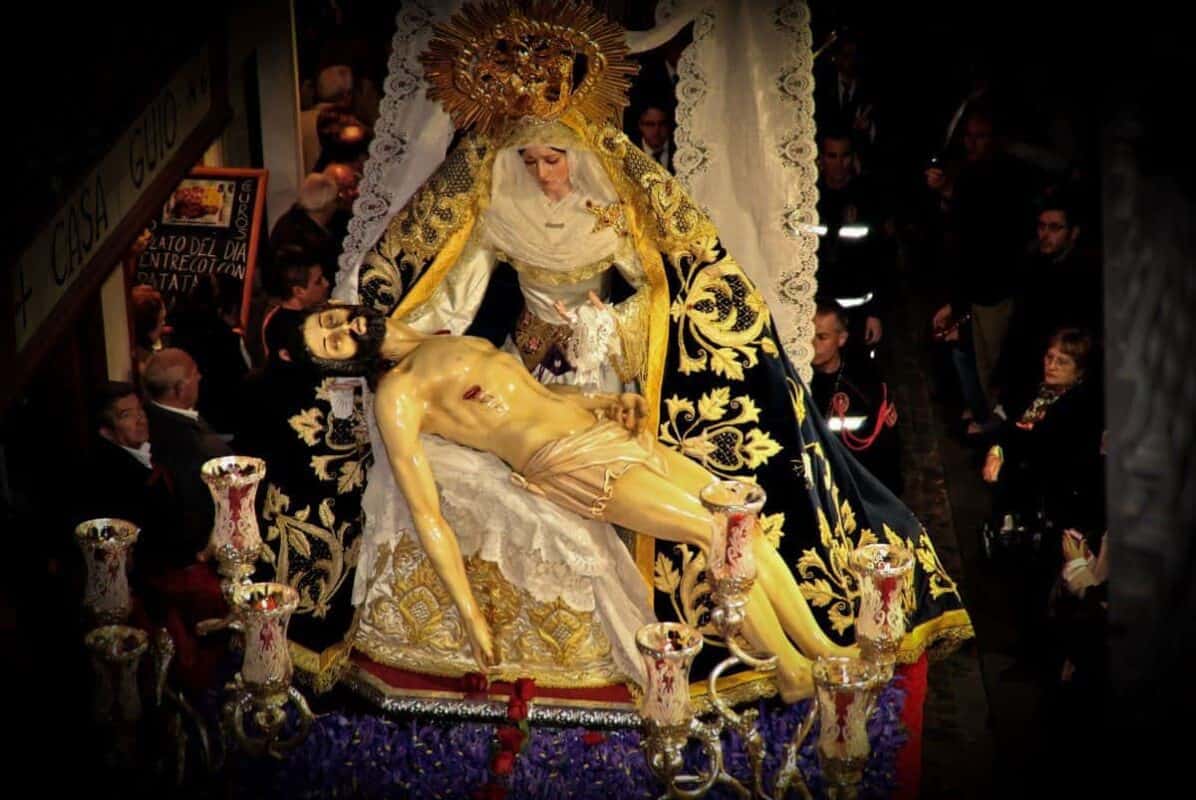
Travelers who want to feel the vibe of the Semana Santa can head to Toledo for the grand processions and unique rituals happening left and right. Part of the religious celebration is witnessing the city’s solemn parades, featuring several Biblical characters.
Unlike other cities that start the Holy Week celebration on Palm Sunday, Toledo is quite early with a two-week head on. The Viernes de Dolores or Friday of Sorrows presents Virgin Mary’s mourning, three days before Palm Sunday. The procession is solemn as locals try to sympathize with Mary, and pray for Jesus Christ.
[irp]
Maze of Streets in Toledo City Center
While in Toledo, be sure to explore the city center, which features traditional and ancient Spanish residences, cobblestone and narrow streets, quaint cafes, and other alley stores. Here’s where travelers can find the heart of the city, for the food is glorious and the sights are truly unique.
The best part is probably seeing the cathedrals, heavily decorated during the Semana Santa. People are coming here to pray, see the new decorations, and to admire the centuries-old infrastructures.
[irp]
Dive into the Christian Heritage of Locals
No particular city is the same, and travelers can pinpoint certain differences that make each Spanish city or town special. Going around, there’s a whole circus of local scenes that describes the culture and history of locals. Holy Week is a perfect time to dive deeper into the Christian heritage of locals, passed from one generation to another.
Spanish celebrations like the Semana Santa focus on the spiritual heritage of the residents, showcasing a glimpse of their beliefs, traditions, and culture.
Without appreciating the littlest of details, travelers are simply looking at beautiful architecture with no meaning. So, invest more time seeing through artworks, local sceneries, and start connecting to locals.
[irp]
Appreciate the Fusion of Culture and Food

Spain is the playground of the culinary gods for the glorious feasts of food, ranging from filling tapas, stews, fried desserts, and sumptuous seafoods. After all, the celebration becomes more meaningful and enjoyable with a colorful spread of food to devour.
In exploring the gastronomy of Spain, travelers can discover that locals are creative in reimagining food; they maximize the use of local produce to create delicious entries.
In Semana Santa, there’s a whole lot of traditional dishes that are served in almost every restaurant. Because meat is considered forbidden during the Holy Week or Good Friday, locals treat themselves with vegetable and seafood dishes that taste incredible.
In between tasting sessions or restaurant crawl, travelers can experience this fusion of culture and food. The key areas to visit are definitely local markets, and restaurants away from the limelight of the city centrals.
[irp posts=”2230″ name=”Top 15 MUST-TRY Famous Food in Spain”]
Elaborate Parades Everywhere
It’s no secret that the Andalucia region has the best and grandest processions in the whole country. Seville and Malaga are the best cities to see, showcasing towering floats, unique Holy Week costumes, and more traditional events. A feast of colors, sounds, and music fills the air, and visitors can have the best time.
While having fun, be sure to respect the local’s traditions and observe silence for Andalusian processions are more solemn compared to other regions. Here, making unnecessary sounds like shouting is considered rude, so act civil and don’t ruin the mood for everybody.
Spanish celebrations to see are Nuestro Padre Jesus Cautivo de Malaga procession, Dawn of Seville, Legionaries of Malaga, Silent Procession of Granada, and Holy Last Supper in Huelva.
[irp]
Late Mealtime Culture
Even if it’s Holy Week, the locals’ still follow a late mealtime schedule. This is one thing to experience when visiting Spain. Travelers need to be ready with snacks as meal times are later than usual.
The lunch, the heaviest meal of the day, starts at 2 PM or 3 PM to 5 PM. Although there are restaurants and fast food chains open to serve people, most restaurants follow the late mealtime schedule. So, for those who want to eat at a famous restaurant need to wait a little longer to dine for lunch or dinner.
Appreciate Art

Home to the world’s most phenomenal artworks, be it painting, sculpture, or architecture, Spain is truly worth visiting. Art geeks and enthusiasts can find joy in seeing a myriad of museums and art galleries in almost every town or city. Major museums house the historic paintings of renowned artists El Greco, Picasso, Salvador Dalí, Miró, and others.
Take note that some museums may be closed during Holy Week because it’s considered a national holiday. Check out the special exhibitions in some galleries and cathedrals to see religious artworks from earlier centuries.
[irp]
Discover the Wonders of Tapas

Devouring food during vacation hits differently, especially if the dishes are delicious and memorable to the palate. Spain is known for its mouth-watering tapas or appetizers, best paired with the main dishes or local wines. Different cities and regions boast of regional tapas that are truly special.
Coming to Spain in Holy Week is a good excuse to try all the sumptuous snacks, desserts, and tasty side dishes. From the Iberian ham, olives, pintxos, patatas bravas, croquettes, to fried squid, sheep cheeses, and Spanish omelette, travelers can enjoy Spanish celebrations with these snacks.
[irp]
Vibrant Local Scenes
While food is constantly mentioned, along with the incredible sights, the highlight of the visit during Semana Santa is the local scene.
People are dressed in bizarre outfits, traditional clothing, holding candles, walking slowly, and praying deeply—these are nothing ordinary. In fact, this only happens during Holy Week and a few festivals.
Coming here, it’s crucial to understand the local culture, how people act, and their devotion to the creator. Spaniards are known religious people, and during religious events like Semana Santa, travelers can see clearly why more people come here.
It is to see the beautiful parades, feel the emotional sounds, and celebrate with the locals during the resurrection of Jesus Christ.
Everything comes together in this beautiful affair, taking visitors to a different world where people show their respect to God and feel his presence from the towering pasos.
[irp]
Brotherhoods from Churches

The participants and brotherhoods are responsible for carrying the heavy pasos and parading them across the cities. It’s a kind of sacrifice to pay for their sins, while honoring the creator, Jesus Christ. The brotherhoods wear a traditional outfit that resembles the history of the church and their ranking.
Travelers can see coned hats and hooded robes, covering the faces of the penitents. There’s a reason for this costume, and has been worn by brotherhoods from early centuries. Spanish celebrations during Semana Santa are graced by these brotherhoods, walking for hours from town to town.
Check out these activities in Spain