Quick Answer: Spain in 2026 is the world’s second most-visited country (80 million tourists annually), the home of 50 UNESCO World Heritage Sites (5th globally), and the source of 40 percent of the world’s olive oil. Spain has four official languages, the oldest restaurant in the world (Sobrino de Botín, 1725), and the Sagrada Familia finally tops out this year, 144 years after construction started. Pair with our broader culture in Spain guide for the cultural backstory behind every fact.
Spain is a country of superlatives. Most vineyard area in the world, 2nd most-visited country on Earth, 5th-most UNESCO heritage sites, the oldest continuously operating restaurant, and an anthem with no lyrics.
2026 adds three centenary milestones: the Sagrada Familia structurally tops out 144 years after construction started, Camp Nou (the largest stadium in Europe at 105,000 capacity) partially reopens after a multi-year renovation, and Antoni Gaudí’s death is exactly 100 years old. Our broader things you should know before visiting Spain guide covers the practical brief; this guide covers the trivia you can actually use on the trip.
The 22 facts below are split into five themes: people plus culture, geography plus economy, food plus drink, history plus landmarks, and quirky plus 2026-specific. Each fact includes a “use this on your trip” hook so the trivia translates into actual itinerary moves.
For the wider pre-trip framework, see our complete Spain planning guide. For the per-month travel context including the Sagrada Familia centenary surcharge that runs June through December, see our best time to visit Spain guide.
Turn Spain trivia into a Spain itinerary.
The Ultimate Europe Trip Planner converts Spain’s 50 UNESCO sites, 17 regions, and 4 language zones into a workable route, with Andalusia plus Catalonia plus Madrid loops, booking calendars, and 2026 pricing. Limited time, save $10 today (originally $27).
Best Hotels for a Spain Trivia Trip
Five hotels in cities where the iconic facts come to life, from our wider guide to the best hotels in Spain.
- Hotel URSO (Madrid), walking distance to Sobrino de Botín (world’s oldest restaurant since 1725), doubles from €180.
- Hotel Casa Camper (Barcelona), near the Sagrada Familia centenary topping-out, doubles from €250.
- Parador de Granada, inside the Alhambra walls, doubles from €350.
- Hotel Alfonso XIII (Sevilla), 1928 palace built for King Alfonso XIII, doubles from €450.
- Hotel María Cristina (San Sebastián), gateway to the four-language region, doubles from €450.
Top Tours That Pair with Spain’s Most Famous Facts
Five tours that turn trivia into experiences, from our 10 days in Spain itinerary.
- Madrid Royal Palace plus Prado Priority Entry, the largest functioning royal palace in Europe (135,000 sqm).
- Segovia Aqueduct plus Alcázar Day Trip from Madrid, the 1st-century AD Roman aqueduct held together without mortar.
- Barcelona Sagrada Familia plus Park Güell Skip-the-Line, the centenary year topping-out site.
- Buñol La Tomatina Festival Day Trip, the 150,000-kilo tomato fight on August 26, 2026.
- Granada Alhambra Skip-the-Line plus Nasrid Palaces, the country’s most-visited paid monument.
Recommended Travel Essentials for Spain Trivia Travel
These five essentials prep you for trivia-rich Spain trips: a Spain travel guide, a Spanish phrasebook, a Spain trivia book, premium Spanish olive oil to take home, and a Moleskine for the discoveries.
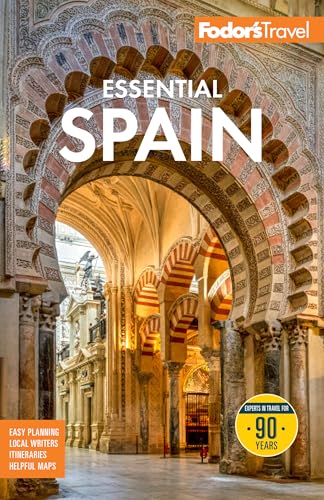




Plan your full Spain trip:
- Pre-trip checklist, things you should know before visiting Spain.
- History timeline, history of Spain.
- Cultural pillars, culture in Spain.
- Heritage catalog, UNESCO World Heritage sites in Spain.
People and Culture Facts (1 to 5)
1. Spain Has Four Official Languages
Castilian Spanish is the country-wide official language. Three more share co-official status in their regions: Catalan (Catalonia, Valencia, Balearic Islands), Basque or Euskara (Basque Country, Navarra), and Galician (Galicia). All four appear on signage, school curricula, and government documents.
For the lexicon plus a few courtesy words in each regional language, see our guide to basic Spanish phrases. Even one local greeting in Catalonia (Bon dia) or the Basque Country (Egun on) earns warmer service.
2. Spain’s National Anthem Has No Lyrics
The Marcha Real is one of only four national anthems in the world without official lyrics (Bosnia, San Marino, and Kosovo are the other three). The melody dates to 1761 and the lack of lyrics reflects Spain’s regional plus political diversity: any set of words would alienate at least one autonomous community.
You will hear the anthem at La Liga matches, royal events, and the Real Madrid plus FC Barcelona Champions League nights. For the broader cultural framework that explains the regional sensitivity, see our culture in Spain guide.
3. Spaniards Eat Two Main Meals Per Day
Lunch is the day’s biggest meal, served 2 to 4pm with the menú del día (3 courses plus drink plus bread for €12 to €18). Dinner runs 9 to 11pm and tends to be lighter. Breakfast is a quick café con leche plus a slice of toasted bread, eaten standing.
Restaurants do not fill before 9pm and the kitchen closes at midnight. If you show up at 6pm, you will eat among other confused tourists or find the kitchen shut. For the late-evening calendar, see our guide to things to do in Spain at night.
4. Sobremesa Is a Verb in Spanish
The most under-appreciated Spanish cultural concept. Sobremesa describes the conversation that happens at the table after the food is finished, often stretching for 2 to 3 hours over coffee, dessert wine, or a digestif. A proper Sunday family lunch plus sobremesa runs from 2pm to 5pm at one table.
Sobremesa is a verb, not a noun: “vamos a sobremesar” (let’s sobremesa). It is the most-underrated Spanish habit and probably explains why dinner can wait until 10pm. Cultural backstory in our culture in Spain guide.
5. Spain Has the Most Bars Per Capita in Europe
Roughly one bar for every 169 people across the country (per Spain’s National Statistics Institute, 2024). Granada plus Sevilla plus Madrid run higher than the national average. The “bar” definition is broader than the Anglo-American one: it covers cafés, tapas spots, pintxos counters, vermut bars, and traditional taverns.
The density makes a Calle Laurel (Logroño) or Calle Elvira (Granada) bar crawl genuinely walkable. For the tapas-bar deep dive across the country, see our guide to the best tapas bars in Spain.
Geography and Economy Facts (6 to 10)
6. Spain Is the Second-Largest EU Country by Area
Spain covers 505,990 square kilometers, making it the second-largest country in the European Union after France, and the fourth-largest in Europe overall (after Russia, Ukraine, and France). The country fits 17 autonomous regions plus 2 autonomous cities (Ceuta and Melilla in North Africa) into that footprint.
The size explains the climate range: from snowy Pyrenees in the north to subtropical Canaries in the south, the country spans almost every European climate zone. Per-region context in our cities in Spain to visit guide.
7. Spain Is the World’s Second Most-Visited Country
Around 80 million international tourists per year (per UNWTO 2024 data), behind France (90 million) and ahead of the USA (66 million). Tourism accounts for around 12 percent of Spanish GDP. Madrid plus Barcelona plus the Mediterranean coast plus the Balearic Islands plus the Canaries absorb most of the volume.
The crowd density at the Sagrada Familia, Alhambra, and Park Güell in summer 2026 will be elevated by the Gaudí Centenary. Book the bottleneck attractions 4 plus weeks ahead per our complete Spain planning guide.
8. Spain Has 17 Autonomous Regions
The 1978 Constitution organized Spain into 17 autonomous communities (Andalusia, Aragon, Asturias, Balearic Islands, Basque Country, Canary Islands, Cantabria, Castilla-La Mancha, Castilla y León, Catalonia, Extremadura, Galicia, La Rioja, Madrid, Murcia, Navarra, Valencia) plus 2 autonomous cities (Ceuta and Melilla on the North African coast).
Each region has its own parliament, president, and partial fiscal autonomy. Some (Catalonia, Basque Country) have stronger devolved powers; some (Navarra, Basque Country) collect their own taxes. Regional pride is part of the cultural identity covered in our culture in Spain guide.
9. The Canary Islands Are Closer to Africa Than to Mainland Spain
The Canary Islands sit 100 to 500 kilometers off the West African coast, around 1,750 kilometers from mainland Spain. The closest island (Fuerteventura) is just 97 kilometers from Morocco. The archipelago is volcanic, subtropical (16 to 24°C year-round), and politically Spanish since the 15th century.
The seven main islands (Tenerife, Gran Canaria, Lanzarote, Fuerteventura, La Palma, La Gomera, El Hierro) plus La Graciosa make the Canaries Spain’s best winter destination. For the island context, see our guide to the best islands in Spain.
10. Llívia Is a Spanish Town Surrounded by France
Llívia is a Catalan exclave in the French Pyrenees, surrounded entirely by French territory. The town stayed Spanish in the 1659 Treaty of the Pyrenees because the treaty transferred “villages” to France but Llívia’s status as a “town” exempted it. Around 1,500 residents live in the 13-square-kilometer exclave.
The geographic quirk is one of dozens of European exclaves but the only Spanish one on the European continent. Reach it by car from Puigcerdà (Catalonia) crossing a 2-kilometer French strip. For the broader off-the-beaten-path context, see our guide to Spain off the beaten path.
Food and Drink Facts (11 to 15)
11. Spain Produces 40 Percent of the World’s Olive Oil
Spain produces more olive oil than any other country, around 40 percent of global output (per the International Olive Council 2024 data). The province of Jaén in Andalusia alone produces more olive oil than the whole of Italy. The DOP (Denominación de Origen Protegida) regions to look for: Sierra Mágina, Baena, Priego de Córdoba, Les Garrigues.
Spain’s olive groves cover 2.7 million hectares. A 500ml bottle of DOP-grade extra virgin runs €15 to €40 at retail. For the food backdrop, see our guide to the most famous food in Spain.
12. Real Paella Is From Valencia and Never Has Chorizo
Paella valenciana is legally protected since 2021 with a fixed 10-ingredient list: rice, rabbit, chicken, snails, green beans, white beans, tomato, saffron, olive oil, and water. Chorizo is not included. The Jamie Oliver chorizo paella from 2016 is still treated as a cultural insult in Valencia.
Paella is also a lunch-only dish, served Sunday family-style direct from the pan. Restaurants advertising “paella for dinner” are tourist-facing. The traditional version uses bomba rice; saffron must be DOP “Azafrán de La Mancha.” See our deep dive on the traditional dishes in Spain to try.
13. The World’s Oldest Restaurant Is in Madrid
Sobrino de Botín on Calle de los Cuchilleros in Madrid has operated continuously since 1725, making it the oldest restaurant in the world per Guinness World Records. The original wood-fired oven has been running for 300 years. The signature dish is cochinillo asado (roast suckling pig).
Hemingway ate here regularly and mentions it in The Sun Also Rises. Goya worked as a dishwasher in the basement as a teenager. Lunch around €40 to €55. Reservations 1 to 2 weeks ahead. For the wider Madrid context, see our whether Madrid is worth visiting guide.
14. Spain Has More Vineyards Than Any Country on Earth
Spain has around 960,000 hectares of vineyards, more than France (790,000) or Italy (705,000). The country produces around 4 billion liters of wine per year but consumes less per capita than its neighbors, so most of it is exported. 70 plus DO (Denominación de Origen) regions plus 2 DOCa (the top tier: Rioja and Priorat).
Tempranillo is the flagship red, Albariño the flagship white, Cava the sparkling, and Sherry the fortified specialty of Jerez. For the wine tour context, see our guide to the best wines in Spain.
15. “Tapa” Means Lid or Cover
The Spanish word “tapa” literally means lid or cover. The tradition probably started in Andalusian taverns where the bartender placed a slice of bread (or jamón, or cheese) on top of a glass of wine to keep flies out. Eventually the bread became the appetizer and the tapas tradition was born.
The free-tapa cities (Granada, León, Almería, parts of Jaén) still preserve the original model: order a drink, the bar snack comes with it. Granada is the best-known. For the city-by-city tapa scene, see our deep dive on the best tapas bars in Spain.
History and Landmarks Facts (16 to 20)
16. Spain Has 50 UNESCO World Heritage Sites
Spain ranks 5th globally for UNESCO World Heritage Sites (50 total), behind Italy (61), China (59), Germany (54), and France (53). The list includes the Alhambra, Sagrada Familia, Cordoba’s Mezquita, Toledo, Avila, Santiago de Compostela, Aqueduct of Segovia, and many more.
The 50 sites trace the country’s full historical arc from Roman Hispania through Al-Andalus and Gothic Castile to Modernisme. For the full ranked list, see our guide to the UNESCO World Heritage sites in Spain.
17. The Aqueduct of Segovia Is Held Together Without Mortar
Roman engineers built the Aqueduct of Segovia in the 1st century AD (probably under Emperor Domitian, 81 to 96 AD). 167 stone arches, 28 meters tall at the highest, 813 meters long. Granite blocks held in place by gravity alone, no mortar. It carried water from the Frío River 17 kilometers to the city until 1973.
Free, walkable, and one of the best-preserved Roman engineering survivors in Europe. 45-minute AVE from Madrid. For the wider Roman context, see our guide to architecture in Spain.
18. The Sagrada Familia Tops Out in 2026 (144 Years After Construction Started)
Antoni Gaudí broke ground on the Sagrada Familia in March 1882. He worked on it until his death in 1926 (after being hit by a Barcelona tram). The structural topping-out (the placement of the central Tower of Jesus Christ at 172.5 meters) is scheduled for 2026, exactly 100 years after Gaudí’s death.
Final completion (including the Glory façade and decorative work) is now expected in the 2030s. Tickets €26 base, €36 with towers, plus €2 to €5 centenary surcharge June through December 2026. For the full Gaudí trail, see our guide to Gaudí buildings in Barcelona.
19. Camp Nou Is Europe’s Largest Stadium
FC Barcelona’s Camp Nou (officially Spotify Camp Nou since 2022) holds 105,000 spectators, making it the largest stadium in Europe and the third-largest in the world (behind Rungrado May Day Stadium in Pyongyang and Narendra Modi Stadium in India). A multi-year renovation closed it from 2023; partial reopening is scheduled late 2026.
The full renovation completes by 2027 with a roof, new lighting, plus expanded capacity. Match tickets €40 to €400. For the wider Barcelona context, see our things to do in Barcelona guide.
20. The Royal Palace of Madrid Is Europe’s Largest Functioning Royal Palace
The Palacio Real de Madrid covers 135,000 square meters with 3,418 rooms, making it the largest functioning royal palace by floor area in Europe (and the second-largest in the world after the Forbidden City in Beijing). The Spanish royal family no longer lives here (they use the smaller Palacio de la Zarzuela) but state ceremonies still happen at the Royal Palace.
Tickets €14, free for EU citizens on Mondays plus Wednesdays 4 to 6pm (October to March) or 5 to 7pm (April to September). Hours: 10am to 7pm Tue-Sun. For the wider Madrid case, see our whether Madrid is worth visiting guide.
Quirky and 2026-Specific Facts (21 to 22)
21. Spaniards Eat 12 Grapes at Midnight on New Year’s Eve
The tradition started in 1909 when Alicante’s grape growers had a surplus and marketed grapes as a New Year’s Eve luck ritual. The custom stuck. Every December 31 at midnight, Spaniards eat 12 grapes (one per chime of the Puerta del Sol clock in Madrid) for 12 months of good luck.
Supermarkets sell special grape tins of 12 in late December (€2 to €5 per tin). The Sol clock countdown is broadcast on Spanish TV; tens of thousands gather in the plaza. For the December tactical context, see our guide to Spain in December.
22. La Tomatina (August 26, 2026) Dumps 150,000 Kilos of Tomatoes on 20,000 People
The world’s largest food fight happens on the last Wednesday of August every year in Buñol (Valencia province). Trucks dump around 150,000 kilos of overripe tomatoes onto roughly 20,000 ticketed participants in the town’s main square. The fight lasts exactly one hour. Pre-bought tickets only since 2013 (around €12 to €15).
2026 date: Wednesday, August 26. Wear clothes you do not mind throwing away, goggles to protect your eyes, and shoes you can lose. For the wider festival context, see our guide to festivals in Spain.
Pack and prep for Spain like a local.
The Ultimate Europe Trip Planner includes a packing module for Spain’s 4 regional climates, a Spanish phrase plus regional language cheat sheet, and a 2026 events calendar covering the Gaudí Centenary, La Tomatina, San Fermín, and Three Kings Day. Limited time, save $10 today (originally $27).
Spain Facts Travel Tips
- Want to use these facts? Base in Madrid for 4 nights and you can hit Sobrino de Botín (oldest restaurant), Segovia (Roman aqueduct, 45-min AVE), and the Royal Palace in one trip. Cost math in our Spain budget guide.
- The Sagrada Familia topping-out date will draw centenary-year crowds. Book 6 plus weeks ahead through September 2026. Full Barcelona context in our things to do in Barcelona guide.
- Try the menú del día. Spain’s €12 to €18 lunch is built around the late-lunch culture and is the country’s best food value. Cultural codes in our Spain travel tips guide.
- New Year’s Eve grapes are sold in tins of 12 at supermarkets in late December. Pick up a tin for the ritual. Full supermarket guide at our supermarkets in Spain guide.
- Pick up a regional language phrasebook for your destination. Catalan in Barcelona, Basque in San Sebastián. Lexicon in our basic Spanish phrases guide.
For the official Spanish tourism portal covering events and travel facts year-round, check Spain’s official tourism portal.
Frequently Asked Questions
What is Spain famous for?
Flamenco, paella, La Tomatina, the Sagrada Familia, Real Madrid plus FC Barcelona, beaches, olive oil (40 percent of world production), and the running of the bulls in Pamplona. Plus the world’s oldest restaurant (Sobrino de Botín, 1725), the most bars per capita in Europe, and 50 UNESCO World Heritage Sites. For the wider cultural framework, see our culture in Spain guide.
What is the most surprising fact about Spain?
The national anthem (Marcha Real) has no lyrics. Spain is one of only four countries in the world without anthem words (the others are Bosnia and Herzegovina, San Marino, and Kosovo). The melody dates to 1761 and the lack of lyrics reflects the country’s regional plus political diversity. Cultural context in our culture in Spain guide.
How many tourists visit Spain per year?
Around 80 million international tourists per year (UNWTO 2024 data), making Spain the world’s second most-visited country behind France (around 90 million). Tourism contributes around 12 percent of Spanish GDP. Madrid plus Barcelona plus the Mediterranean coast plus the Balearics plus the Canaries absorb most of the volume. Pre-trip framework in our complete Spain planning guide.
What is special about Spain in 2026?
The Gaudí Centenary year. Antoni Gaudí died in 1926 (hit by a Barcelona tram), and 2026 marks 100 years. The Sagrada Familia is scheduled to top out structurally this year. Camp Nou (Europe’s largest stadium) partially reopens late 2026. Sagrada Familia plus Park Güell add a €2 to €5 centenary surcharge June to December. For the Modernisme deep dive, see our guide to architecture in Spain.
Is Spain the largest producer of olive oil?
Yes. Spain produces around 40 percent of the world’s olive oil (around 1.4 million tonnes per year), more than any other country. The province of Jaén in Andalusia alone produces more olive oil than the whole of Italy. Look for DOP designations (Sierra Mágina, Baena, Priego de Córdoba) for the top quality. Pair with our guide to the traditional dishes in Spain to try.

Key Takeaways
- Spain is a country of superlatives: 2nd most-visited (80M tourists), 5th-most UNESCO sites (50), biggest olive oil producer (40 percent of world output), most vineyards (960,000 hectares), and the oldest restaurant on earth (Sobrino de Botín, 1725). Heritage catalog in our UNESCO World Heritage sites in Spain guide.
- The Sagrada Familia tops out in 2026 (144 years after construction started) and Camp Nou partially reopens, both centenary milestones. Book Sagrada 6 plus weeks ahead per our Gaudí buildings in Barcelona guide.
- Spain has four official languages (Castilian, Catalan, Basque, Galician) plus 17 autonomous regions, more festivals than days in the year, and more bars per capita than anywhere in Europe. Cultural codes in our culture in Spain guide.
- Quirky facts that travel well: the national anthem has no lyrics, real paella never has chorizo, the word “tapa” means lid, and Spaniards eat 12 grapes at New Year’s midnight. For the food anchor, see our traditional dishes guide.
- La Tomatina (Wednesday August 26, 2026) is the world’s largest food fight (150,000 kilos of tomatoes on 20,000 people). Pre-bought tickets only. Full festival calendar in our festivals in Spain guide.
Final Thoughts
Spain is a country of superlatives, oddities, and 2026 milestones. 80 million tourists per year, 50 UNESCO sites, the world’s oldest restaurant, four official languages, an anthem with no lyrics, and the Sagrada Familia finally topping out 144 years after Gaudí broke ground. The Gaudí Centenary is the year’s biggest travel-news story. La Tomatina happens August 26. New Year’s Eve still demands 12 grapes at midnight. For the wider pre-trip framework that covers EES entry, AVE booking, and ZBE Low Emission Zones, our Spain travel tips guide covers everything beyond the trivia.