
Quick Answer: Best Cultural Cities in Europe
Europe’s 22 best cultural cities span the full spectrum from the classic grand tour (Rome, Paris, Vienna) to underrated gems most travelers skip (Valletta, Olomouc, Plovdiv). This guide organizes them by region and type so you can build a trip around what matters most to you: art, architecture, history, or the kind of city life that is impossible to find anywhere else.
Culture is the main reason most people visit Europe, and yet the same five cities get all the attention while extraordinary places sit relatively quiet waiting to be discovered. A city does not have to have a famous landmark to have a remarkable cultural life. Some of the best museums, best food scenes, and best urban walking in Europe are in cities that most travelers fly past on their way somewhere else.
This guide covers 22 of the best cultural cities in Europe, organized by region so you can plan a route rather than a random collection of stops. Whether you are building a grand tour or filling in the gaps from previous trips, this list covers cities that genuinely earn the label.
Planning a European culture trip on a budget?
Europe can be expensive, but the costs vary enormously between cities. The Ultimate Budget Planner is a simple tool for mapping out daily spend across multiple countries so you can allocate your money where it matters most and still see everything on your list.
Recommended Europe Travel Products


Classic Grand Tour Cities
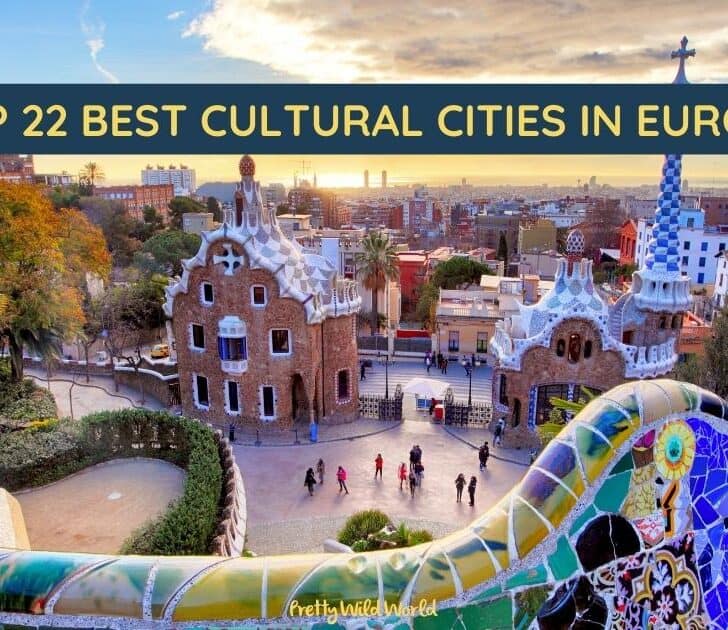
Rome is the obvious starting point, and it earns that position. The density of history here is unlike anywhere else on earth: a short walk covers two millennia without trying. The Vatican Museums, the Colosseum, and the Forum are the headline draws, but the neighborhood churches, the markets, and the food scene make up an equally strong argument for staying longer than you planned. Paris remains the cultural city that sets the standard for everything else. The Louvre, the Musée d’Orsay, Montmartre, the Marais, the food, the architecture: the city delivers on almost every count, and it is worth more than a long weekend to do it properly. Barcelona adds Gaudí’s impossible architecture to world-class food, Gothic Quarter alleyways, and one of the best urban beach situations in Europe.
Vienna is one of the great imperial cities and wears its history graciously. The Kunsthistorisches Museum alone could occupy a full day, and the Belvedere, the Naschmarkt, and the coffee house culture round out a city that feels both grand and genuinely livable. Prague rounds out the classic five with a medieval old town that survived the 20th century in better shape than almost anywhere else in central Europe. The density of Gothic, Baroque, and Art Nouveau architecture in a single walkable city center is extraordinary, and the castle district above the river is one of the great urban views on the continent.
Cities of Art and Architecture
Florence is where the Italian Renaissance concentrated itself into a single city, and the evidence is everywhere. The Uffizi Gallery, the Duomo, Michelangelo’s David, the Ponte Vecchio: the quantity of genuinely important art in a small walkable area is unmatched anywhere in the world. Amsterdam is the city that punches most above its weight culturally. The Rijksmuseum, the Van Gogh Museum, the Anne Frank House, and the canal architecture all operate at the highest level, and the city’s contemporary arts scene is among the strongest in northern Europe. Bruges is smaller but equally rich: a medieval city center so well preserved it feels slightly unreal, with exceptional Flemish art in the Groeninge Museum and a pace that rewards slow exploration.
Athens is the oldest city on this list and still one of the most arresting. The Acropolis and the National Archaeological Museum provide context for the origins of Western civilization in a way that no textbook can match. The neighborhoods of Monastiraki, Plaka, and Exarcheia each have a distinct character, and the food and coffee culture has become one of the best in southern Europe over the past decade.
Underrated Cultural Gems Worth the Detour
Porto is Portugal’s second city and has a stronger visual identity than almost anywhere in Europe. The azulejo tile facades, the Douro riverfront, the bookshop Livraria Lello, and the Vila Nova de Gaia wine cellars across the river make for a city that rewards slow exploration over several days. Valletta, Malta’s capital, is the smallest capital city in the European Union and one of the most concentrated collections of Baroque architecture anywhere. The Grand Master’s Palace, St. John’s Co-Cathedral (which houses two Caravaggio paintings), and the fortified city walls make it worth a visit even if you only have a day or two.
Ljubljana, Slovenia’s capital, is a compact, elegant city with a pedestrianized center, a castle on the hill, and a river promenade that is as pleasant as anything in the bigger European capitals. Ghent in Belgium is often passed over in favor of nearby Bruges or Brussels, but the medieval city center, the Ghent Altarpiece in St. Bavo’s Cathedral, and the SMAK contemporary art museum make it one of the most culturally complete small cities in northern Europe. Olomouc in the Czech Republic is the country’s most underrated city: a Baroque fountain ensemble, a functioning astronomical clock, and a university atmosphere that gives it a genuine energy that purely tourist cities lack.
Northern European Cultural Centers
Berlin is the most complex cultural city in Europe and possibly the most rewarding to spend real time in. The Museum Island alone justifies a multi-day visit: five world-class museums on a single island in the middle of the Spree, including the Pergamon and the Neues Museum. The city’s contemporary art scene, its architecture (which covers everything from Prussian classicism to Soviet modernism to 21st-century construction), and its nightlife and music culture are each significant. Edinburgh is Scotland’s capital and one of the most dramatically situated cities in Europe, with a medieval castle on a volcanic crag and a Georgian New Town laid out below. The Scottish National Galleries, the National Museum of Scotland, and the summer arts festival (the largest in the world) make the cultural offer genuinely exceptional.
Tallinn in Estonia has one of the best-preserved medieval old towns in Europe and a contemporary digital culture that sits in striking contrast to its 13th-century city walls. The city is small enough to cover on foot and rewarding at multiple levels: the towers, the churches, the food scene in the converted merchant buildings of the old town, and the Telliskivi creative district outside the walls. Copenhagen has world-class museums, one of the most influential food cultures in the world (the city that started the new Nordic movement), exceptional design and architecture, and a cycling culture that gives the city a pace and accessibility most capitals lack.
Eastern European Cultural Powerhouses
Budapest is one of the great European capitals and still underrated relative to its size and cultural offer. The Hungarian State Opera, the Museum of Fine Arts, the National Museum, the thermal baths, and the architecture along both banks of the Danube make it a city where you need at least four days to begin to cover the ground properly. Kraków in Poland is the best-preserved historical city center in central Europe and is anchored by a vast market square, Wawel Castle, and the Old Synagogue in the Kazimierz Jewish quarter. The Wieliczka Salt Mine nearby is one of the more extraordinary day trips in the region.
Sarajevo in Bosnia and Herzegovina is one of the most culturally layered cities in Europe. Ottoman mosques, Austro-Hungarian buildings, and Socialist modernist architecture exist within a few hundred meters of each other in a city that was at the center of 20th-century European history in ways that are felt everywhere you look. The Tunnel of Hope museum and the scars still visible in parts of the city make it a profoundly meaningful place to spend time. Plovdiv in Bulgaria is an ancient city with a beautifully preserved Old Town, a Roman amphitheater still in use for concerts, and a contemporary arts scene that earned it the title of European Capital of Culture in 2019.
How to Plan a Cultural Cities Itinerary
The most common mistake with a European cultural trip is trying to fit too many cities into too little time. Two days in a city like Florence or Budapest is enough to see the major sights but not enough to actually feel like you have been there. A more satisfying approach is to anchor your trip around two or three cities and use day trips or overnight stops for the smaller ones nearby. Rome and Florence work well together with Naples as a day trip. Amsterdam pairs with Ghent or Bruges on day trips. Prague connects naturally to Vienna by train in four hours.
Consider building your itinerary around a single cultural theme rather than a geographic route. If art is the priority, Florence, Amsterdam, Vienna, and Madrid (just outside this list) form a coherent trip. If architectural history is the focus, Athens, Rome, Prague, and Tallinn cover the span from ancient to medieval remarkably well. Booking major museum tickets in advance is essential for Rome (Colosseum and Vatican), Florence (Uffizi and Accademia), and Amsterdam (Rijksmuseum and Van Gogh). Most other cities on this list allow walk-up entry to their major attractions without significant queuing.
Planning a multi-city Europe trip?
Hopping between cities means tracking spending across currencies and countries. The Savings Tracker Planner keeps it all in one place.
Frequently Asked Questions About Cultural Cities in Europe
What is the most cultural city in Europe? That depends heavily on what you value. For classical art history it is hard to argue against Florence or Rome. For breadth of cultural offer across art, music, food, and contemporary culture, Paris and Berlin have the strongest cases. For value per cultural dollar spent, Budapest and Kraków are hard to beat.
What are the most underrated cultural cities in Europe? Valletta (Malta), Olomouc (Czech Republic), Plovdiv (Bulgaria), and Ghent (Belgium) consistently offer outstanding cultural experiences with far fewer crowds than the major cities. Ljubljana and Porto are also often overlooked given their quality.
What is the cheapest cultural city in Europe? Eastern European cities like Kraków, Budapest, Plovdiv, and Sarajevo offer world-class cultural experiences at a fraction of western European prices. Tallinn and Porto are also significantly cheaper than Paris, Amsterdam, or Vienna.
How many European cities can you visit in two weeks? Realistically, four to five cities in two weeks allows you to spend three to four days in each, which is enough time to see the major cultural sights and get a genuine feel for each place. More than that and the trip becomes about transportation rather than actually being somewhere.
Is a Eurail pass worth it for a cultural cities trip? It depends on your route. For a trip covering multiple countries with long distances, a Eurail pass can save money. For a focused regional trip within one or two countries, booking individual tickets in advance is usually cheaper. Check both options before committing.
Key Takeaways
- The classic five (Rome, Paris, Barcelona, Vienna, Prague) deserve their reputation but reward longer stays than most people give them
- Eastern European cities like Budapest, Kraków, and Plovdiv offer outstanding cultural depth at far lower prices
- Smaller cities like Valletta, Ghent, and Olomouc often deliver richer cultural experiences than expected
- Book major museum tickets in advance for Rome, Florence, and Amsterdam
- Two to three focused days in each city beats a whistle-stop tour of ten cities in a week
Final Thoughts on European Cultural Cities
Europe’s cultural cities are not a checklist to complete but a long conversation to have over many years and many trips. Each city teaches you something the last one didn’t, and returning to the same city a second or third time is often more rewarding than visiting a new one for the first time. The depth of what is available across these 22 cities is more than a single lifetime of travel can cover properly.
Start with what interests you most, go deep rather than wide, and let the cities surprise you. The best cultural experiences in Europe are rarely the obvious ones but they are always there if you give yourself enough time to find them.